
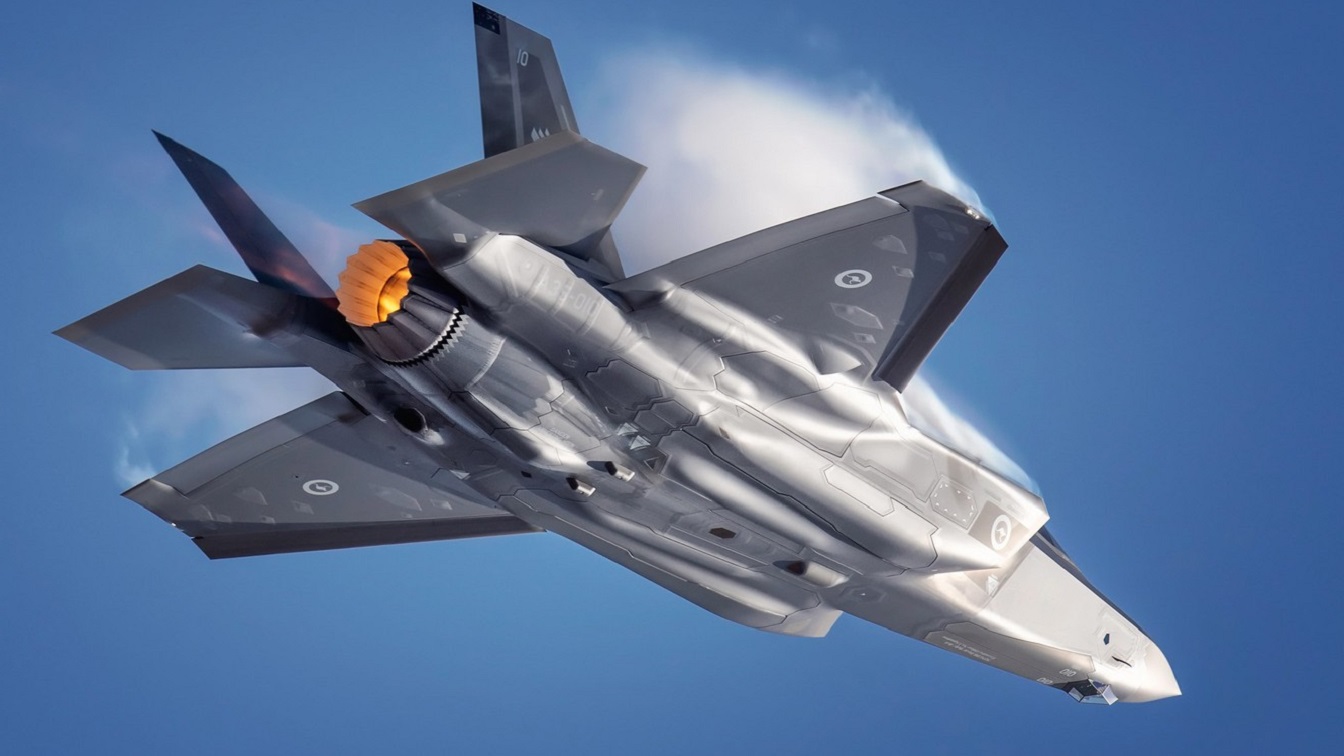
Synopsis: A new Defense Department Inspector General report says U.S. Air Force, Navy, and Marine Corps F-35 fighters were mission-capable only about half the time in fiscal year 2024—well below the program’s minimum target.
-The watchdog faults sustainment execution and oversight, arguing the Joint Program Office did not build clear, measurable readiness requirements into Lockheed Martin’s sustainment contract or enforce key inspection and reporting rules.

A crew chief assigned to the 158th Fighter Wing, taxis an F-35A Lightning II fifth generation aircraft assigned to the wing at the Vermont Air National Guard Base, South Burlington, Vermont, May 2, 2022. The aircraft departed to Spangdahlem Air Base, Germany, to continue NATO’s Enhanced Air Policing mission along the Eastern Flank. (U.S. Air Force photo by Tech. Sgt. Richard Mekkri)
-The piece argues the operational impact is real—training and contingency planning suffer—and warns the readiness gap could ripple outward as allies weigh costs, infrastructure burdens, and long-term support risk.
F-35 Fighter Availability Fell to 50% in 2024, Pentagon Watchdog Finds
A new report from the Defense Department’s Office of the Inspector General has revealed that U.S. Air Force, Navy, and Marine Corps F-35 fighter jets were mission-capable and available to fly only about half the time in fiscal year 2024 – a significant shortfall that is only intensifying scrutiny of the aircraft’s sustainment system and reviving broader concerns among international partners about readiness and procurement.
According to the Pentagon watchdog, the average availability rate for the F-35 was 50 percent in 2024 – roughly 17 percentage points below the minimum performance requirement established by the Pentagon for the stealth fighter program.
The watchdog concluded that persistent maintenance and sustainment issues, including weaknesses in contract oversight, were central to the problem.
The report specifically criticized the F-35 Joint Program Office (JPO) for failing to establish apparent, measurable readiness benchmarks in sustainment contracts with prime contractor Lockheed Martin, and for not enforcing contractual material inspection and government property reporting requirements.
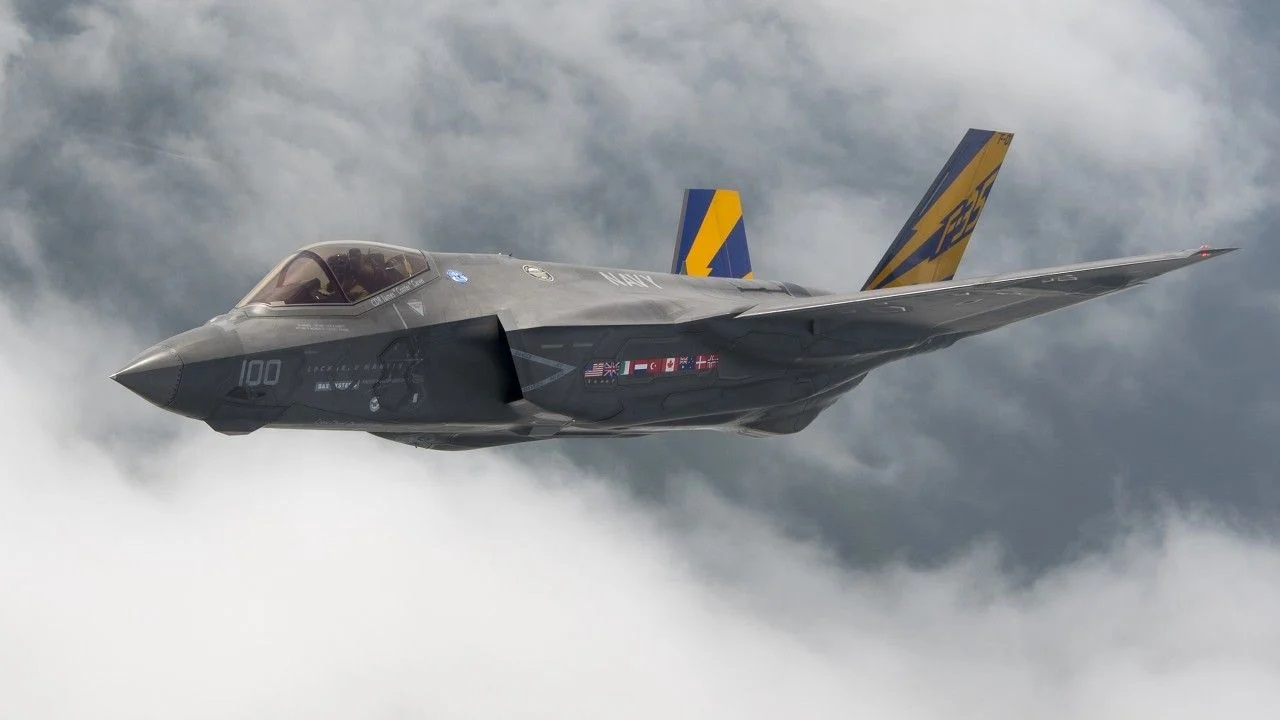
Stealth F-35C. Image Credit: Creative Commons.
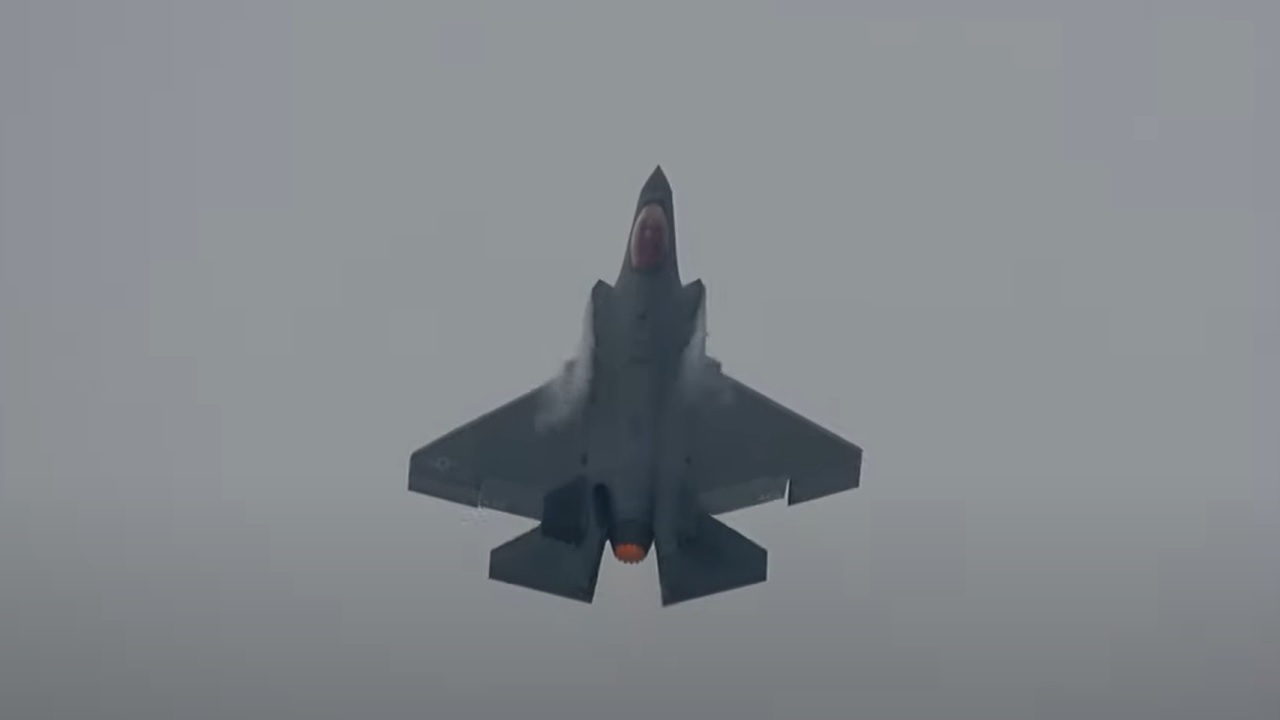
F-35C. Image Credit: YouTube Screenshot.
As a result, Lockheed Martin received approximately $1.7 billion in sustainment payouts in 2024 without financial penalties, even though the fleet repeatedly failed to meet basic service standards.
“The DoD did not adequately oversee contractor performance on the June 2024 air vehicle sustainment contract. Although the F-35 JPO monitored Lockheed Martin’s performance, it did not always hold Lockheed Martin accountable for poor performance related to F-35 sustainment,” the report’s findings revealed. “This occurred because the F-35 JPO did not include aircraft readiness performance or other measurable contract requirements and did not enforce material inspection and government property reporting requirements in the air vehicle sustainment contract.”
While availability rates are only one measure of an aircraft’s utility, for frontline operators and partner nations that figure drives everything from training schedules to contingency planning. These figures, therefore, truly matter.
An aircraft that exists on the books but remains grounded too frequently owing to maintenance constraints contributes little toward deterrence and rapid response. It’s no wonder, then, that the F-35 is being reconsidered by prospective partners all over the world.
The F-35 program is also the Department of Defense’s largest acquisition endeavor, with lifetime costs estimated to exceed $2 trillion for development, procurements, operation, and sustainment – and figures like this could therefore spell trouble.
Industrial Partners Grapple with Readiness and Procurement Decisions on F-35
The latest finding comes at a sensitive moment for several U.S. allies and partner nations that either operate or plan to purchase F-35 aircraft under the U.S. Foreign Military Sales framework.
Questions about readiness, long-term sustainment, and total lifecycle cost have featured prominently in recent defense debates overseas.
Countries including Canada, Switzerland, and Spain have all publicly reassessed aspects of their F-35 procurement plans amid concerns about cost increases, delivery schedules, and operational support infrastructure.
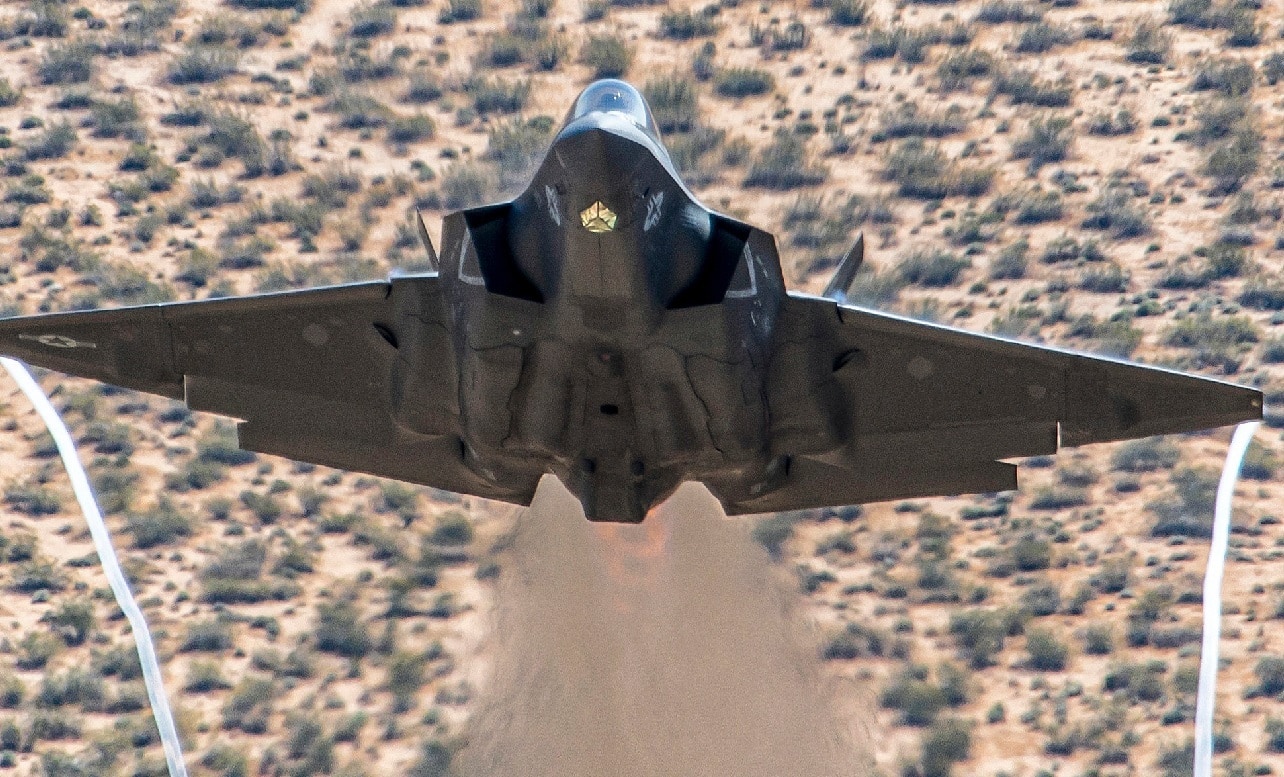
Two F-35C’s from VFA-125 “Rough Raiders”, based at NAS Lemoore, piloted by Major Derek “Shootsbe” Heinz A/C 430 and LT Alex “MoM” Daie A/C 411, Fly Low Level around Freemont Peak near Edwards AFB, Ca., 7 May 2019. The “Rough Raiders” are a Fleet Replacement Squadron flying F-35C Lightning II.
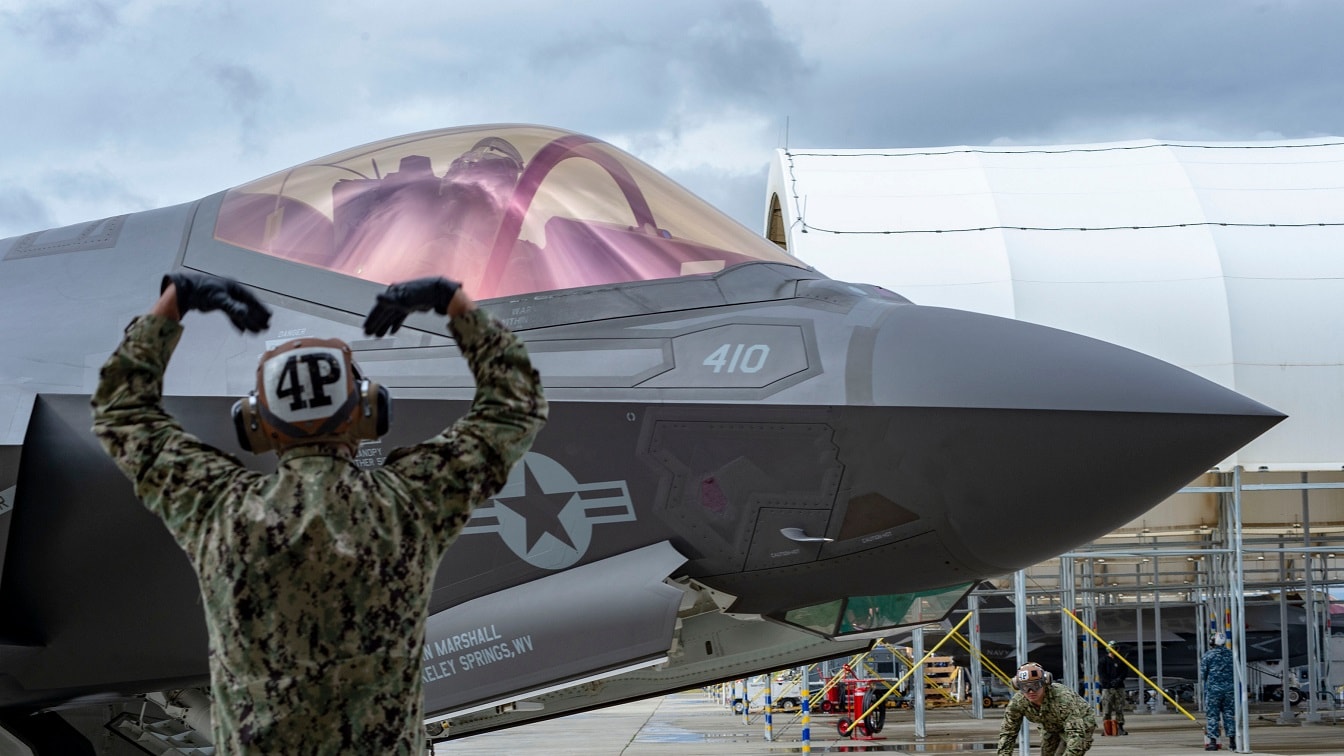
190221-N-WR119-0029 NAVAL AIR STATION LEMOORE, Calif. (Feb. 21, 2019) Airman Loren Price, a plane captain assigned to the “Argonauts” of Strike Fighter Squadron (VFA) 147, warns F-35C Lightning II pilot Cmdr. Patrick Corrgan of surrounding maintenance personnel after the aerial change of command. VFA-147 is the first Navy operational squadron for the F-35C carrier variant that sets new standards in weapon system integration, lethality, maintainability combat radius and payload that bring true multimission power projection capability from the sea. (U.S. Navy photo by Mass Communication 1st Class Gilbert Bolibol/Released)
Canada is by many measures the most extreme example, with Prime Minister Mark Carney considering scrapping plans to purchase an additional 76 F-35s.
Meanwhile in Switzerland, authorities have looked at alternatives and reconsidered the number of aircraft to acquire after negotiations with U.S. officials over rising cost estimates and contractual terms, even as Bern maintains that it intends to field the jets.
Smaller European air forces, in particular, are sensitive to readiness problems in the U.S. fleet because they rely on shared sustainment networks and long-distance logistical support.
A low availability rate in the United States has major practical consequences for allied operators who lack the size and depth of the U.S. military’s depot and repair infrastructure.
Some partner governments have also publicly flagged the complexity of F-35 maintenance and support systems as a factor in long-term strategy debates.
In the United Kingdom, for example, Royal Air Force F-35B aircraft deployment in challenging environmental conditions were reportedly returned to the United States for inspection after sustained exposure raised concerns about possible internal corrosion – a problem that reflects the intricate sustainment needs of the world’s most advanced stealth fighter aircraft.
The findings from the Inspector General, then, confirm that the central challenge facing the F-35 program today is largely a matter of credibility and sustainment. Despite billions of dollars in sustainment payments, the operational return for the Pentagon and its partners is far below expectations.
For international operators, these shortcomings carry a different weight; smaller fleets and reliance on shared logistics networks are leaving allies more exposed to readiness disruptions originating in the U.S. sustainment system – a problem that not only affects them, but the United States as an ally and NATO more broadly, too.
The F-35 Problems Keep Coming
Absent meaningful reforms to oversight and performance accountability, the F-35 program risks being overlooked by key global partners, and the United States’ massive investment may ultimately fall short of delivering the operational and strategic returns that were first envisioned.
About the Author:
Jack Buckby is a British author, counter-extremism researcher, and journalist based in New York who writes frequently for National Security Journal and 19FortyFive. Reporting on the U.K., Europe, and the U.S., he works to analyze and understand left-wing and right-wing radicalization, and reports on Western governments’ approaches to the pressing issues of today. His books and research papers explore these themes and propose pragmatic solutions to our increasingly polarized society. His latest book is The Truth Teller: RFK Jr. and the Case for a Post-Partisan Presidency.