
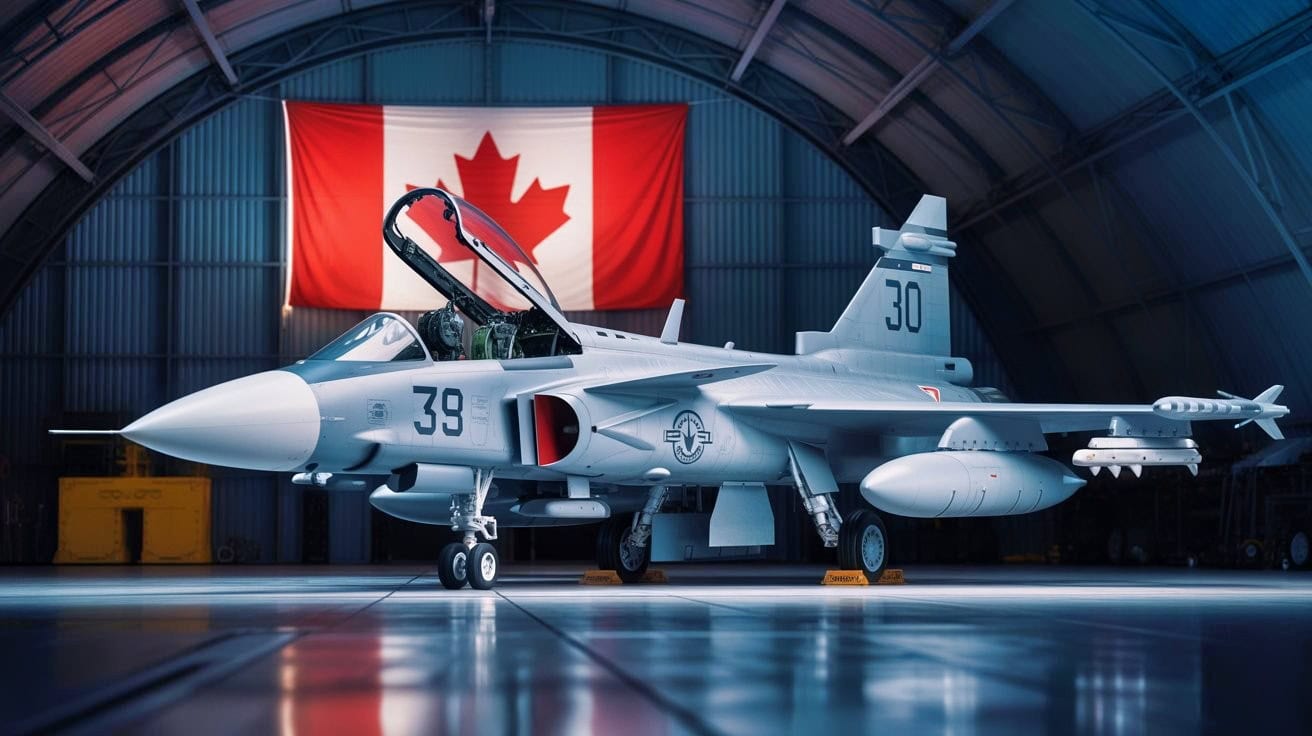
Key Points and Summary – Canada’s fighter debate is flaring again as critics push Ottawa to ditch the F-35 for Sweden’s cheaper Saab JAS 39 Gripen.
-On paper, the Gripen’s lower cost per flight hour, STOL basing flexibility, and NATO interoperability are attractive—especially under budget pressure and amid anger at Washington.
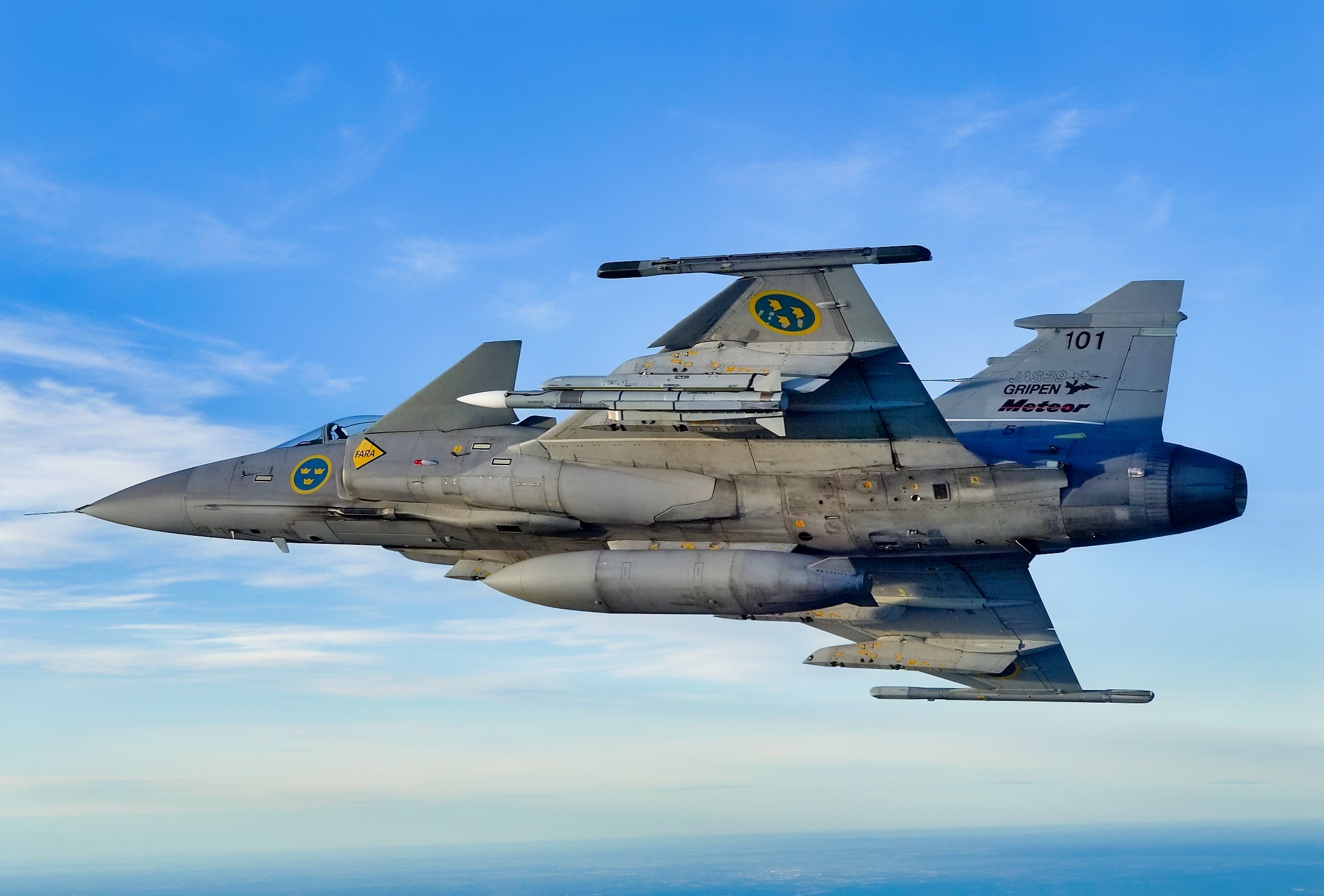
JAS 39 Gripen. Image Credit: Creative Commons.
-But the jet’s lack of stealth and vulnerability against modern threats, from PL-15-equipped fighters to Russia’s Su-57, would leave the RCAF badly outmatched in a high-end fight.
-Veteran test pilot Billie Flynn also warns that walking away from the F-35 program would devastate Canada’s aerospace base, costing billions and dozens of high-tech firms.
F-35 vs. JAS 39 Gripen: Who Wins in Canada?
The drama surrounding the Royal Canadian Air Force (RCAF), and whether it’ll continue to purchase the American-made Lockheed Martin F-35 Lightning II 5th-generation stealth fighter or jump ship (both literally and figuratively) to the Swedish-made Saab JAS 39 Gripen 4.5-generation non-stealth fighter, continues unabated.
Hence, at the risk of beating the proverbial dead horse, we continue to report on the ongoing controversy.
Accordingly, this writer now concludes a two-part series on the latest developments with the Canadian F-35 vs. Gripen controversy.
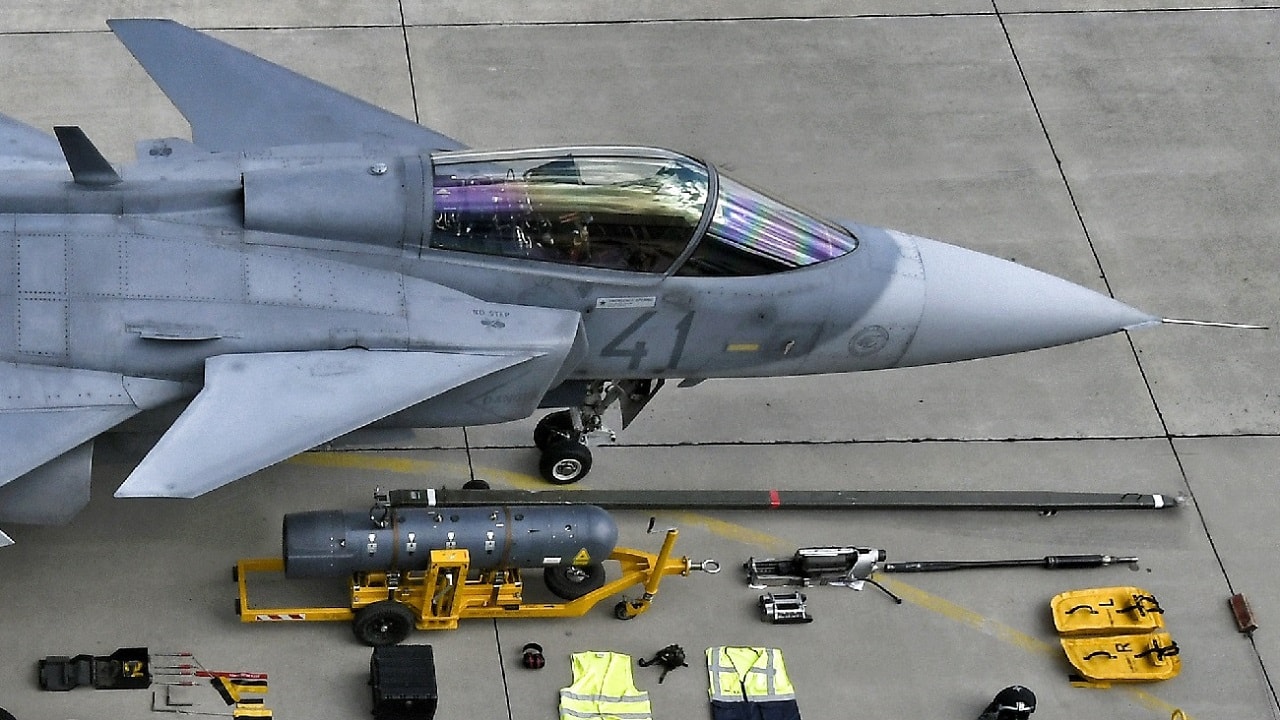
Sweden’s JAS-39 Gripen. Image Credit: Creative Commons.
We started with a story that the RCAF may have leaked a secret pro-Lightning II scoring chart report in order to pressure Canadian Prime Minister Mark Carney into sticking with the US stealth jet.
This time, we discuss how Plan B, i.e., going Gripen, would confer some distinct disadvantages upon the Canadian Forces.
JAS 39 Gripen Rationale Part I
The Saab product, the Gripen, would indeed confer certain advantages for the RCAF vis-à-vis the Lockheed Martin Skunk Works product:
-First and foremost, differential: the Lightning II’s operational cost per flight hour is a mind-numbing $33K USD, whilst the Gripen hourly rate is a mere $7.5K USD (at least according to Saab’s claims anyway).
The Canadian DND doesn’t have nearly as generous a budget as the U.S. Department of Defense (DOD), AKA the Department of War, so that’s a pretty significant consideration.
-The Swedish warbird is designed for short takeoff and landing (STOL) operations, which allows it to operate from improvised airstrips. (The flip side to that is, the US Marine Corps’ F-35B variant also happens to have short takeoff and vertical landing [STOVL] capability)
-The JAS 39 has been designed for interoperability with NATO forces via shared datalinks and standardized communication systems, as evidenced by Hungarian and Czech pilots conducting air policing operations over the Baltic since 2004.
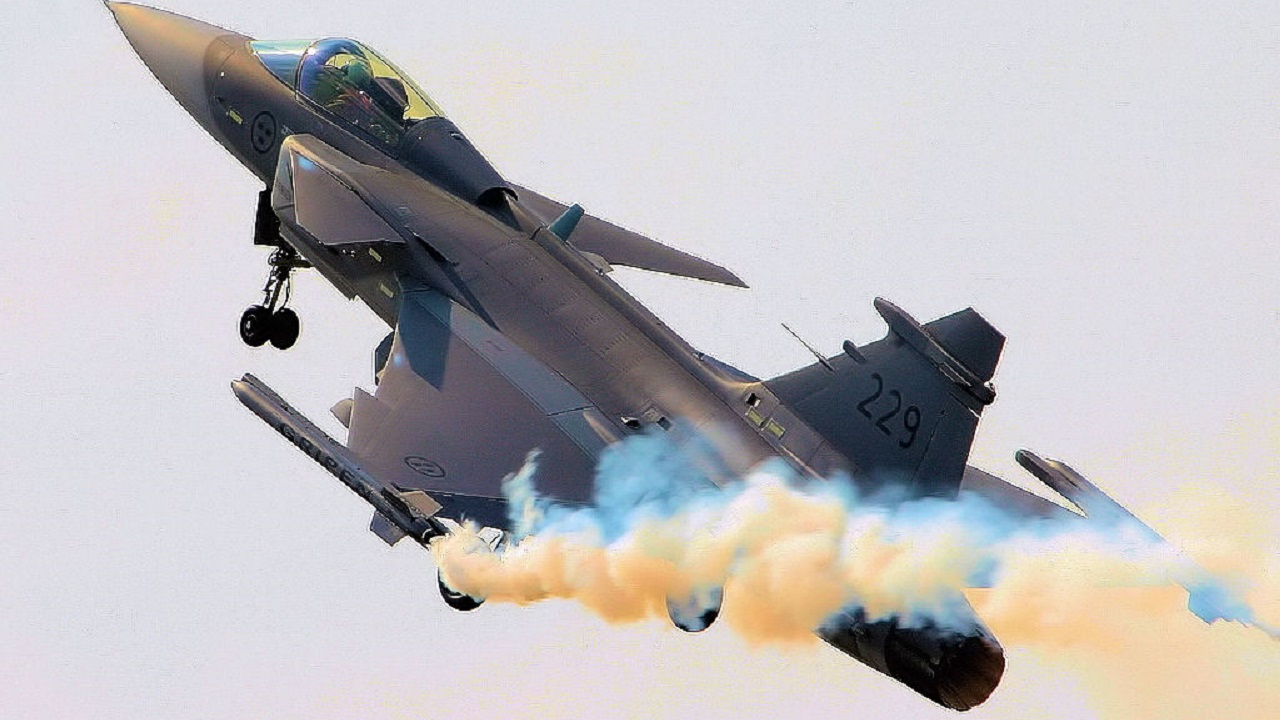
JAS 39 Gripen. Image Credit: Creative Commons.
Gripen Rationale Part II
Part two can be summed up in three words: petty power politics.
Canadian opponents of the F-35 deal argue that the purchase made sense when the US was a strong ally, and alliances were bolstered by American support.
But thanks to US President Donald Trump’s trolling about annexing Canada and seizing Greenland from NATO ally Denmark, these pundits deem the US as no longer trustworthy. Messrs. Trump and Carney are opposites on the political spectrum, further exacerbating the tension between the two heads of state.
Gripen Downside Part I: Technical Deficiencies (and Vulnerabilities)
The most obvious downside is the JAS 39’s lack of stealth.
To be sure, 4.5-generation fighters punch well above their proverbial weight in terms of deadliness and survivability, and they do have smaller radar cross-sections (RCS) compared to their pure Gen 4 and Gen 3 predecessors. And the Gripen is a top-notch member of the 4.5 Gen bunch.
However, despite their impressive attributes, 4.5-generation fighters are already showing vulnerability in real-world combat, even against non-stealthy adversaries.
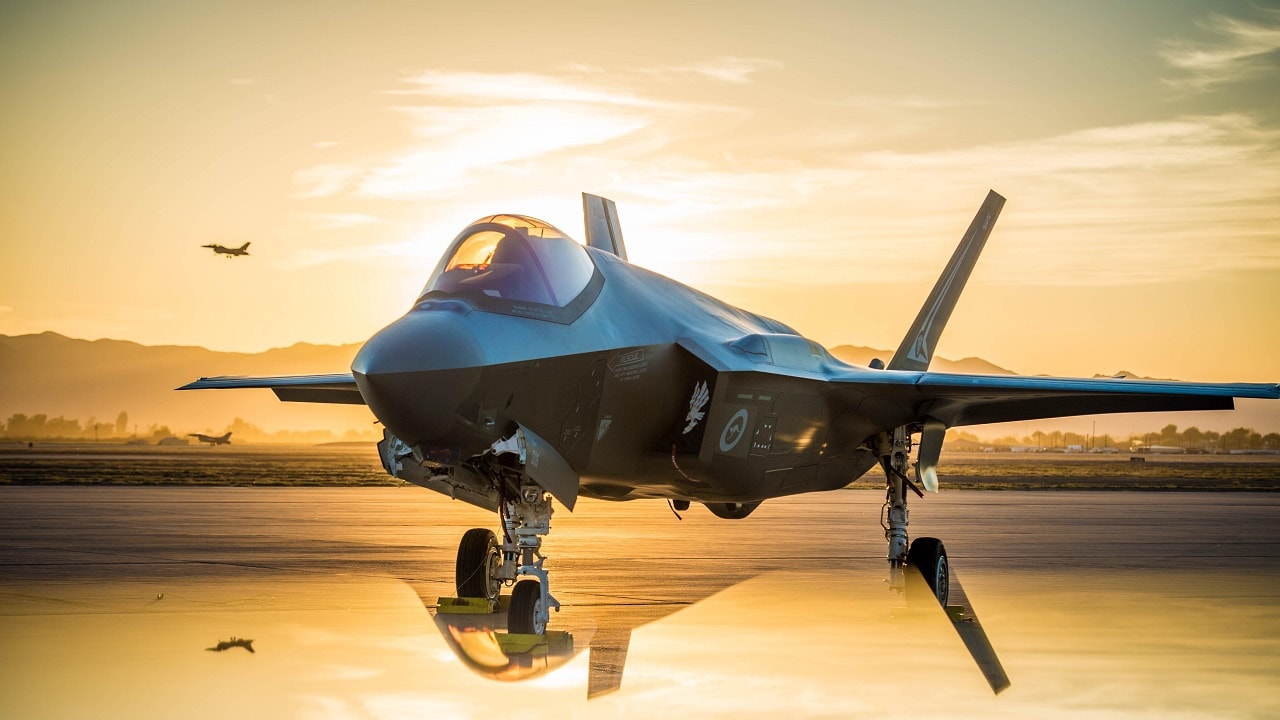
F-35 Fighter.
A prime example is another highly touted, European-made fighter, the French-built Dassault Aviation Rafale. During the latest Indo-Pakistani War, i.e., Operation Sindoor (which took place from 7 to May 10, 2025), the Indian Air Force’s (IAF) Rafale drivers were absolutely embarrassed by their Pakistani Air Force (PAF) adversaries, who were flying 4th-generation Chinese-made Chengdu J-10 Menglong (“Vigorous Dragon;” NATO reporting name “Firebird”); reportedly, the PAF Firebird fighter jocks, using PL-15 (“Thunderbolt-15”, NATO reporting name: CH-AA-10 “Abaddon”) air-to-air missiles shot down at least one and as many as three Rafales without losses to themselves.
Now then, imagine the Gripen going into battle against the Russian Federation’s 5th Gen stealth jet, the Sukhoi Su-57 “Felon.” Scary thought, eh?
JAS 39 Gripen Downside Part Deux: Bad Economics for Canada
This perspective has been best articulated by a highly outspoken member of the Canadian fighter pilot community, Billie Flynn, a retired RCAF lieutenant colonel (LCol) who served in uniform for 23 years (including combat action in the skies over Kosovo as commanding officer of the “Balkan Rats” during Operation Allied Force) and then spent 17 years as an F-35 test pilot for Lockheed Martin.
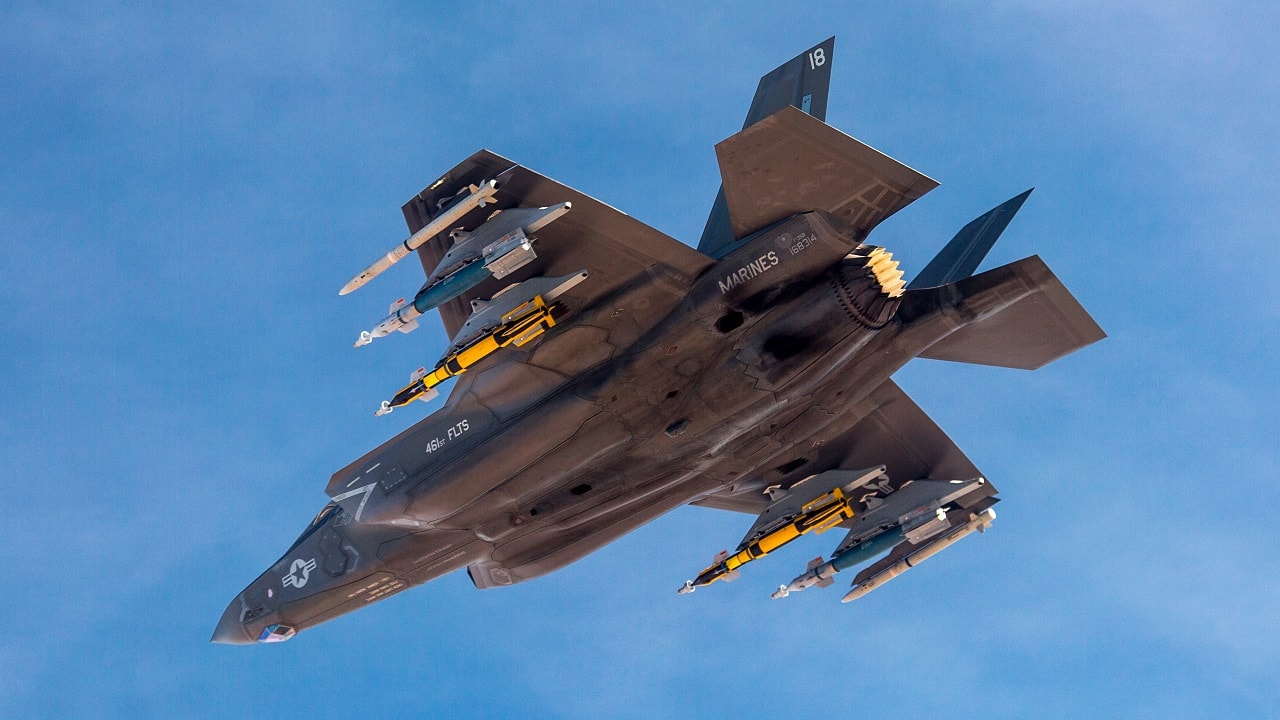
F-35 stealth fighter. Image Credit: Creative Commons.
Mind you, LCol (Ret.) Flynn is no fan of Donald Trump.
Nonetheless, Billie urges his country’s senior leadership to look beyond petty geopolitical squabbles and be mindful of the negative effects that choosing the JAS 39 over the F-35 would have on the Canadian economy.
I’ll let Billy have the last word: “Meanwhile, leaving Lockheed Martin F-35 program means Canadian firms lose their contracted work on a franchise program building over 3,000 aircraft. We’d defund 30+ Canadian high-tech firms already supporting F-35 production…The Damage? Billions to Bombardier’s primary competitor. Loss of sustained high-tech employment for 30+ Canadian aerospace firms. Abandonment of sovereign industrial capability when it matters most. The result would be catastrophic for Canadian aerospace; a failure of epic proportion.”
About the Author: Christian D. Orr, Defense Expert
Christian D. Orr is a Senior Defense Editor. He is a former Air Force Security Forces officer, Federal law enforcement officer, and private military contractor (with assignments worked in Iraq, the United Arab Emirates, Kosovo, Japan, Germany, and the Pentagon). Chris holds a B.A. in International Relations from the University of Southern California (USC) and an M.A. in Intelligence Studies (concentration in Terrorism Studies) from American Military University (AMU). He is also the author of the newly published book “Five Decades of a Fabulous Firearm: Celebrating the 50th Anniversary of the Beretta 92 Pistol Series.”