
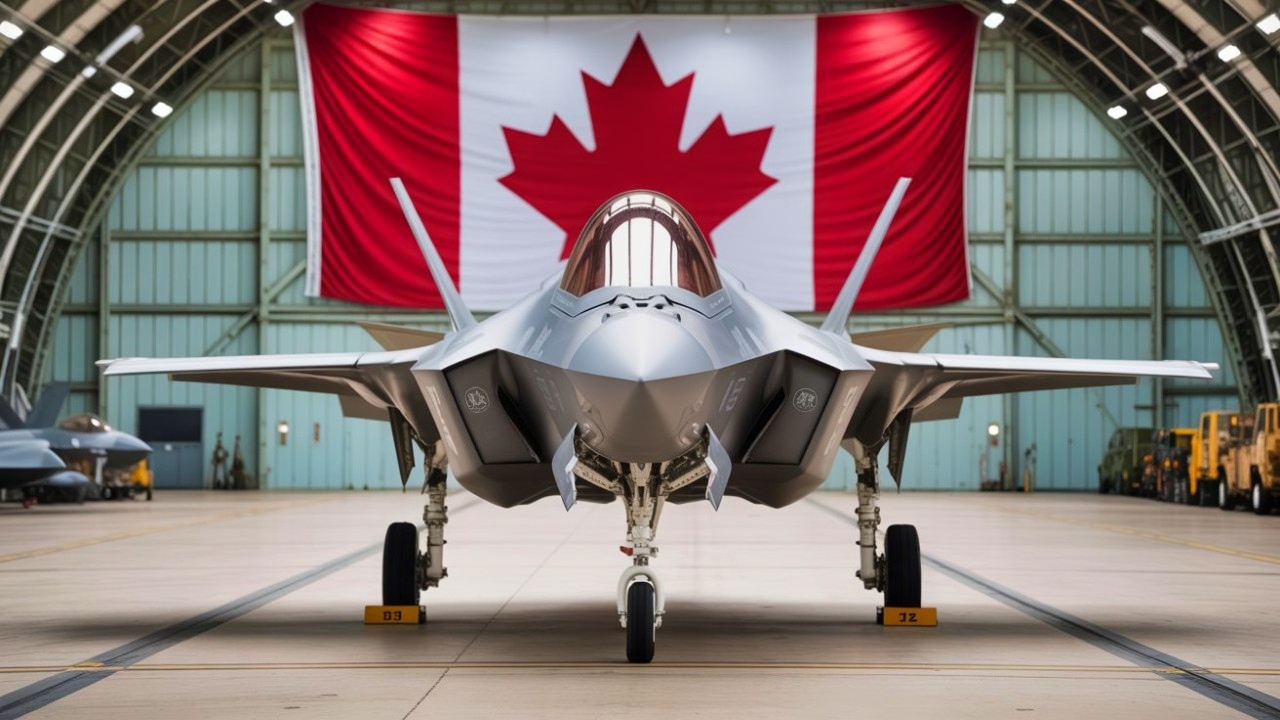
Key Points and Summary – A group of retired Royal Canadian Air Force leaders is urging Ottawa not to dilute its F-35A buy by adding Saab Gripen fighters, warning Prime Minister Mark Carney that a split fleet would weaken combat power and overburden already stretched pilots and maintainers.
-Their private letter, reported in Canadian media, lands as Carney reviews the $27 billion F-35 program amid trade tensions and Trump’s tariff threats.
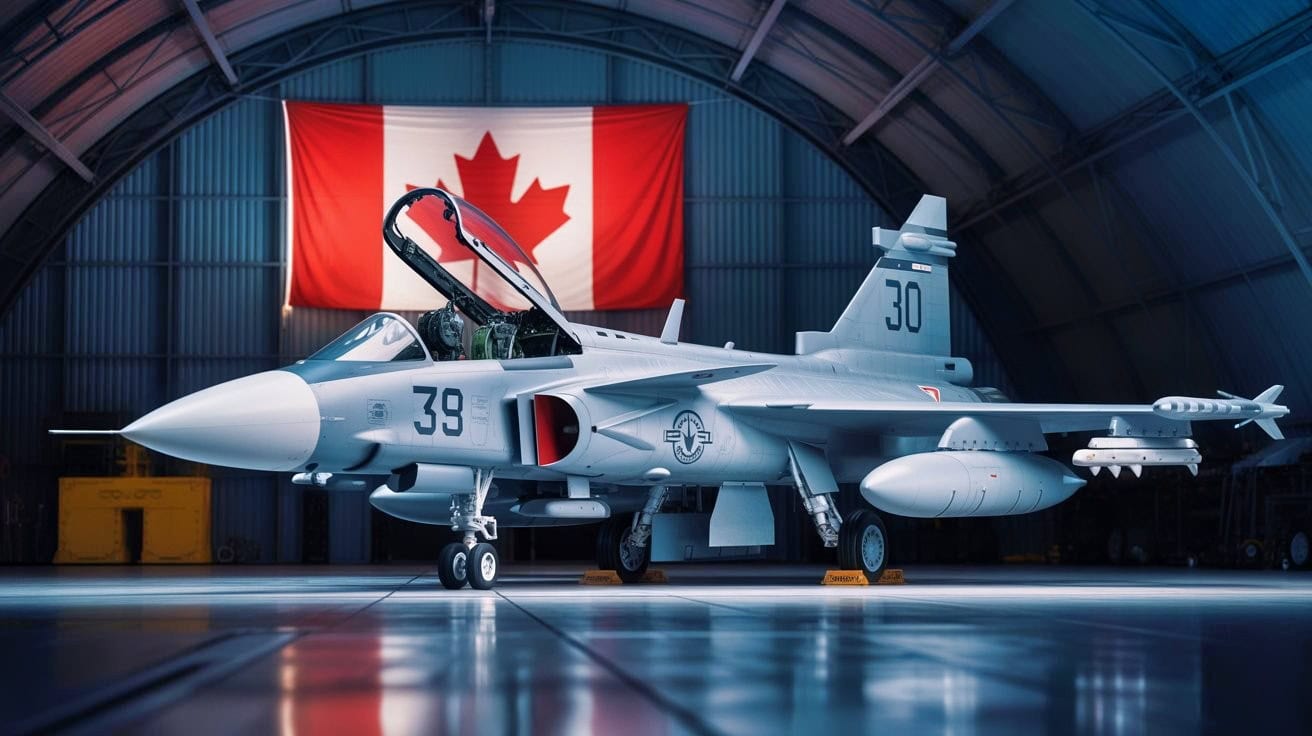
JAS 39 Gripen Fighter for Canada. Image Credit: Ideogram.
-Saab is dangling local assembly and jobs, but critics say Canada risks losing an F-35 sustainment hub, long-term industrial work, and NATO interoperability just to score political points against Washington.
Canada Gets Its Biggest Warning Against the JAS 39 Gripen Deal Yet
A group of retired Royal Canadian Air Force (RCAF) leaders is mounting a public pushback against Ottawa’s flirtation with the Swedish JAS 39 Gripen fighter, following months of uncertainty about the future of Canada’s fighter jet fleet.
Air Force officials have warned Prime Minister Mark Carney that cutting back Canada’s F-35 order would weaken the country’s airpower, strain military power, and undermine long-term industrial plans.
According to reports from Canadian media, a dozen former senior RCAF officers have written to the federal government urging it to proceed with the full acquisition of 88 F-35A Lightning II jets, rather than replacing part of that fleet with Saab’s JAS 39 Gripen.
The letter, which has not yet been publicly released, was reportedly sent this week to key decision-makers, including the Prime Minister’s Office, as Carney’s government reviews its fighter plans amid a broader trade dispute with Washington.
Canada has already purchased 16 F-35s under a 2023 deal.
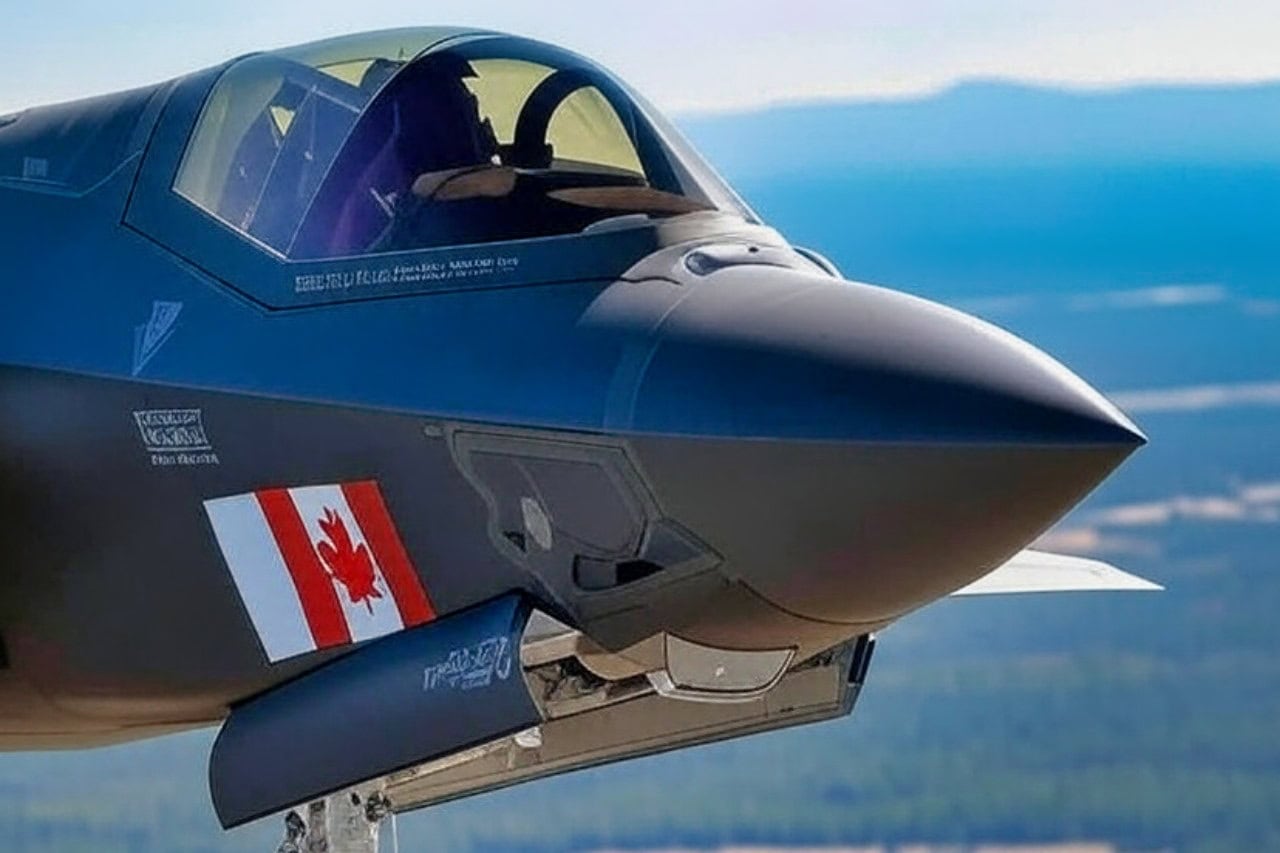
F-35A Fighter for Canada. Image Created by Grok 3.
Still, Carney, upon taking office, ordered a review of the full $27 billion program in March following threats from U.S. President Donald Trump of new tariffs.
Since trade arrangements between Canada and the United States came into question, Ottawa has held a series of high-profile talks with Saab, which is offering Gripen-E fighters and promising new assembly and aerospace facilities in Canada – along with thousands of jobs.
The problems with adopting Saab jets after already committing to 16 F-35s are well documented at this point, but the warning from former Canadian Air Force officials should serve as an even more potent warning. But will Carney listen?
“Nothing Comes Close to the F-35”
Tom Lawson, who served as chief of the defense staff from 2012 to 2015, is said to have been among the signatories of the letter.
Though Lawson declined to discuss the contents of the letter or confirm that he had indeed signed it, he made his position clear during a recent interview with CBC.
“Unfortunately, regarding the F-35, there just is nothing available in the free world that comes close to the quality of the F-35,” Lawson told reporters inquiring about the letter.
“The F-35 is so far beyond anything that the Gripen can provide that anything you’d be saving in terms of money by going to a second fleet would be lost, because that fleet would be close to useless in a wartime situation.”
F-35. Image Credit: Ideogram.
Lawson acknowledged the fact that, among the likely political reasons Ottawa is looking beyond the United States, there is one point that may be fair: diversifying away from U.S. suppliers.
However, he also questioned the logic of using the fighter program to send that signal. If Canada genuinely needs more combat airpower, he argued, then it should buy more F-35s rather than introduce a second type.
He also pointed to an issue that has surfaced repeatedly in internal RCAF discussions: manpower. Canada is already struggling to recruit and retain enough pilots and technicians to manage the F-35 transition.
Adding a second fleet type, with its own pilots, simulators, maintenance training, and supply chain, would only multiply that burden and complicate operations.
Is that a price worth paying to spite the U.S. president?
Those concerns mirror the arguments that Canadian officers and analysts have been making quietly for months now. A mixed F-35/Gripen fleet may seem politically attractive, but having a more diverse fleet isn’t necessarily a good thing. In fact, operationally, it’s a bad deal.
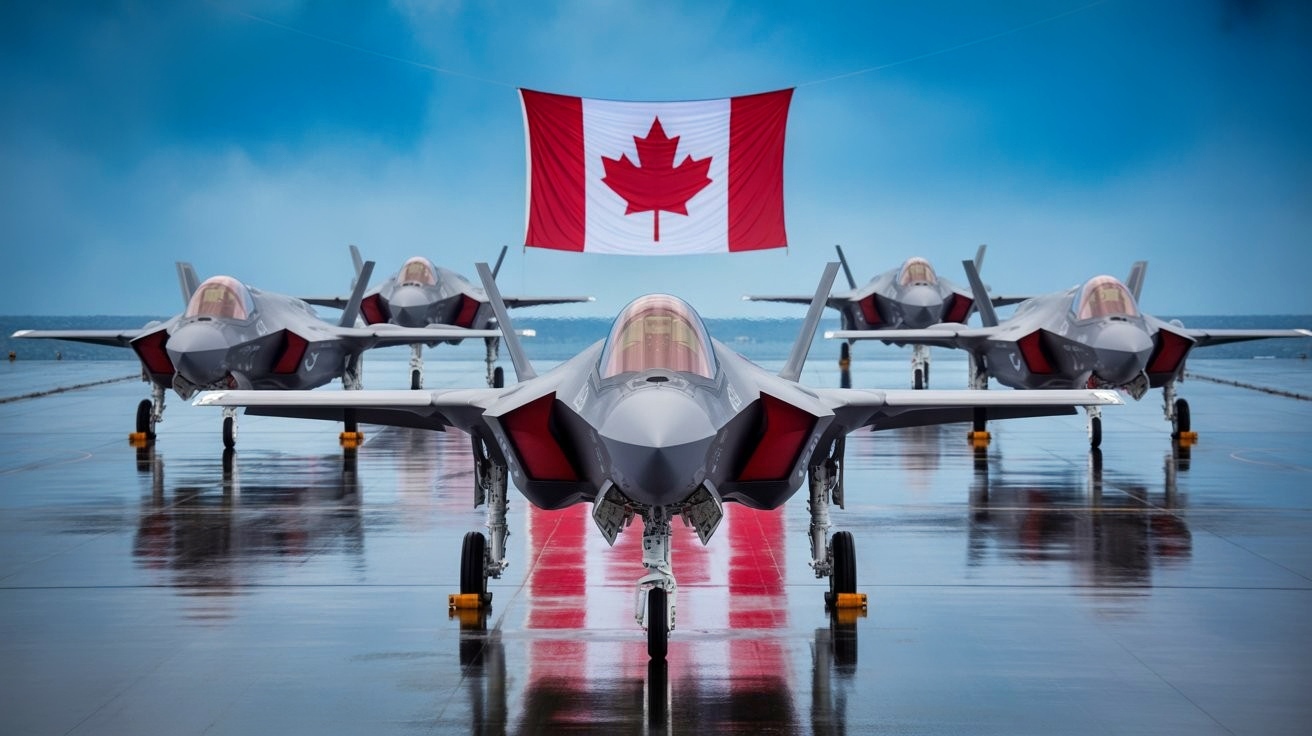
F-35 Fighters in Canada. Image Created by Ideogram.
Saab Fights for the Deal
Saab has been fighting for this deal for years and, after first losing out to Lockheed Martin, sees the election of President Trump in the United States as an opportunity to make its case again.
Saab’s pitch is an expanded version of its original offer: to assemble the Gripen in Canada, develop domestic partnerships, and provide intellectual property transfers should Ottawa accept the deal.
Since the offers were made, Ottawa has pressed Lockheed for better economic returns, but Saab’s offer – despite being bad in terms of preparedness – is attractive in the short term.
But the industrial equation is more complicated than some might think. L3Harris MAS in Mirabel is negotiating with Lockheed to establish an F-35 maintenance hub that could support Canadian jets and even be part of the U.S. fleet.
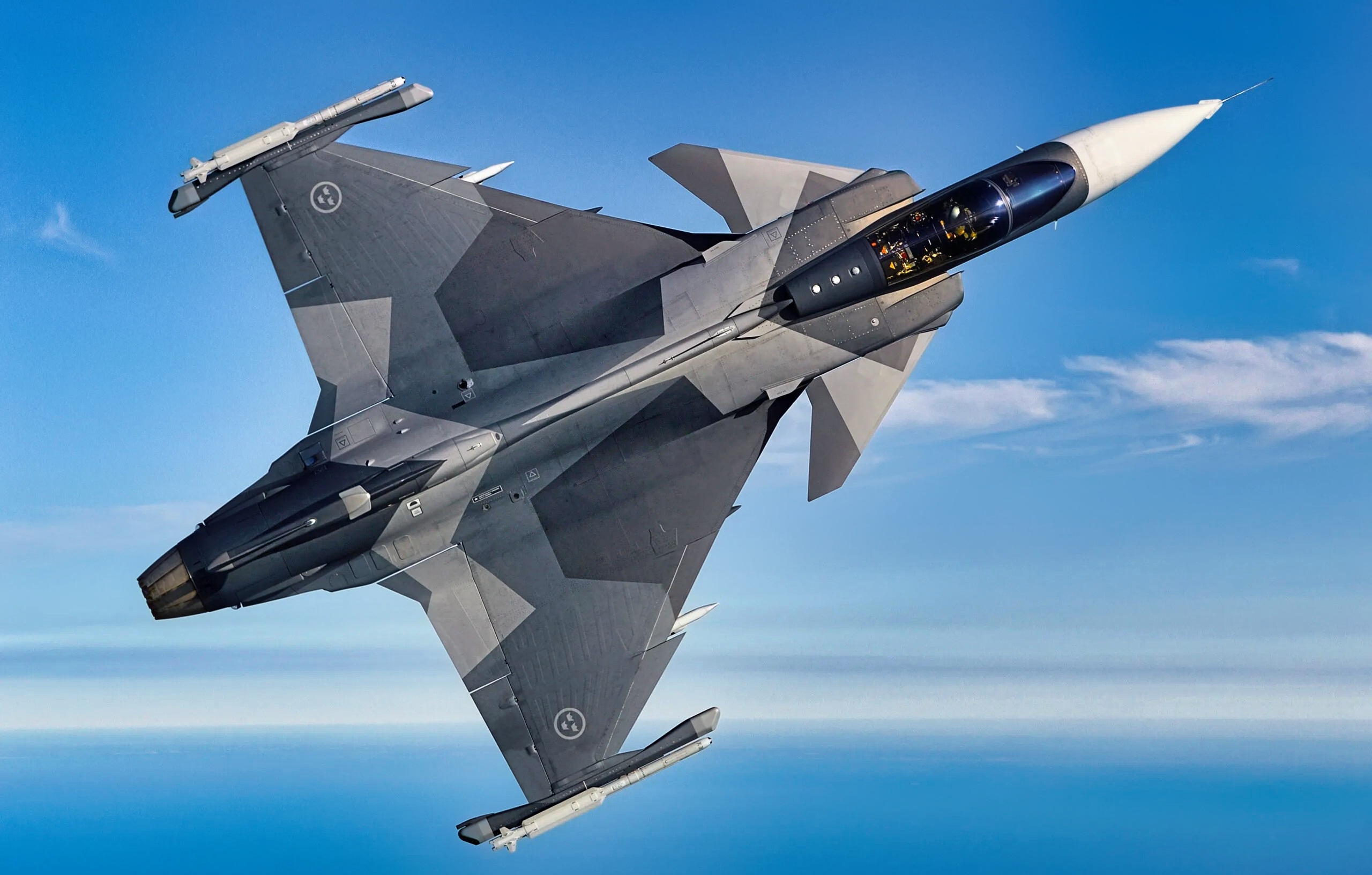
JAS 39 Gripen E Fighter. Image Credit: Saab.
The plan depends on Canada acquiring all 88 aircraft. A mixed Gripen/F-35 fleet would likely make the site uneconomical, risking 500 layoffs and up to 1,600 jobs, both direct and indirect.
While Saab’s assembly promises are finite, long-term sustainment tied to a global F-35 fleet could actually provide decades of high-skilled Canadian work. But that’s harder to sell to the public.
For Carney, the choice is this: prove to Donald Trump that Canada can survive without deep integration with – and reliability on – the United States, or accept reality, protect Canadian jobs, and maintain interoperability with a NATO fleet.
About the Author:
Jack Buckby is a British author, counter-extremism researcher, and journalist based in New York. Reporting on the U.K., Europe, and the U.S., he works to analyze and understand left-wing and right-wing radicalization, and reports on Western governments’ approaches to the pressing issues of today. His books and research papers explore these themes and propose pragmatic solutions to our increasingly polarized society. His latest book is The Truth Teller: RFK Jr. and the Case for a Post-Partisan Presidency.

