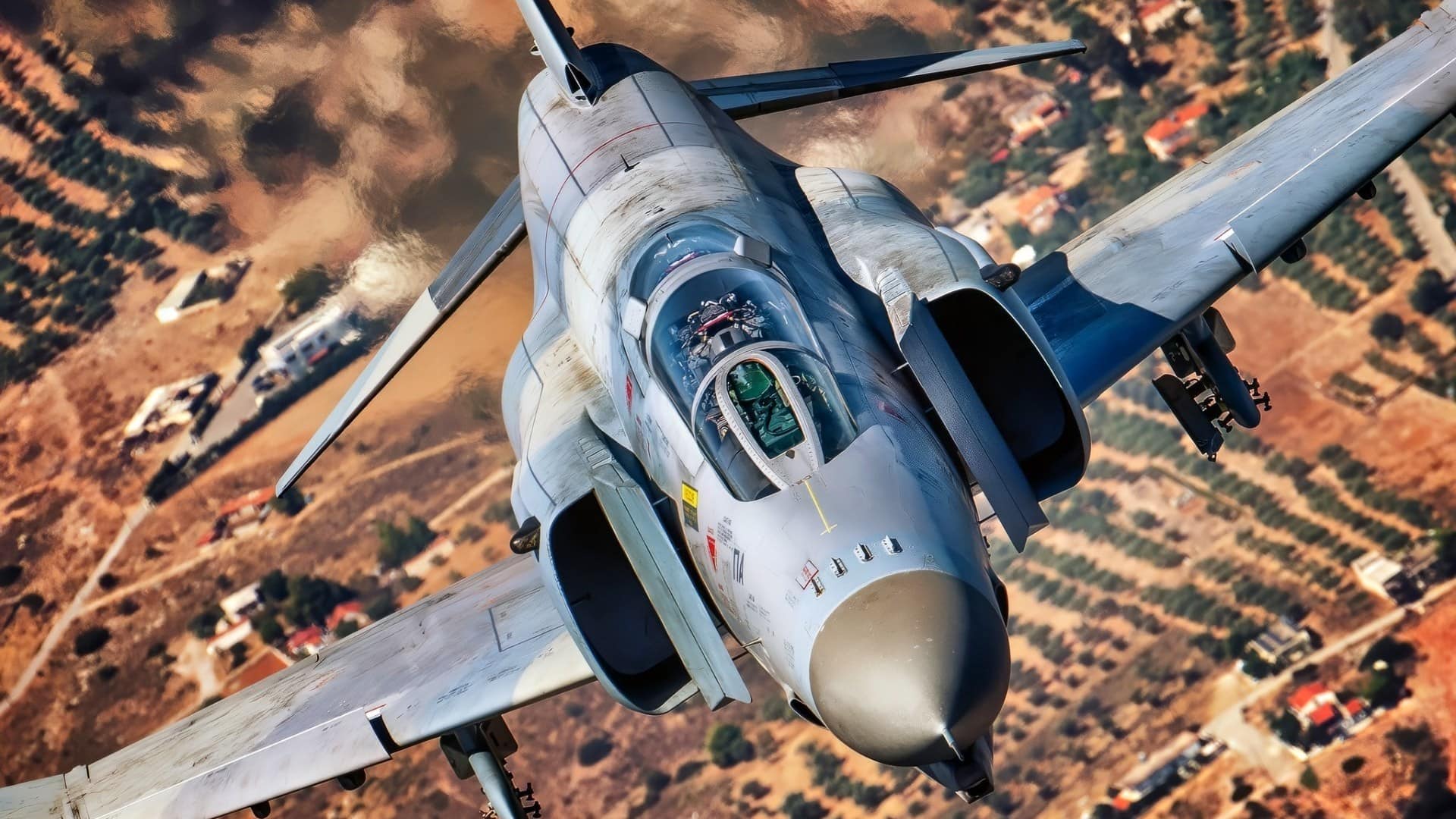
Key Points and Summary – The F-4 Phantom II, a “pivotal” third-generation fighter, built its “legendary” reputation in Vietnam and Operation Desert Storm with over 280 air-to-air victories.
-Unique among Mach 2 workhorses for serving the U.S. Navy, Air Force, and Marine Corps simultaneously, this “multi-role” aircraft pioneered advanced radar and missile warfare, influencing successors like the F-15 and F-35.
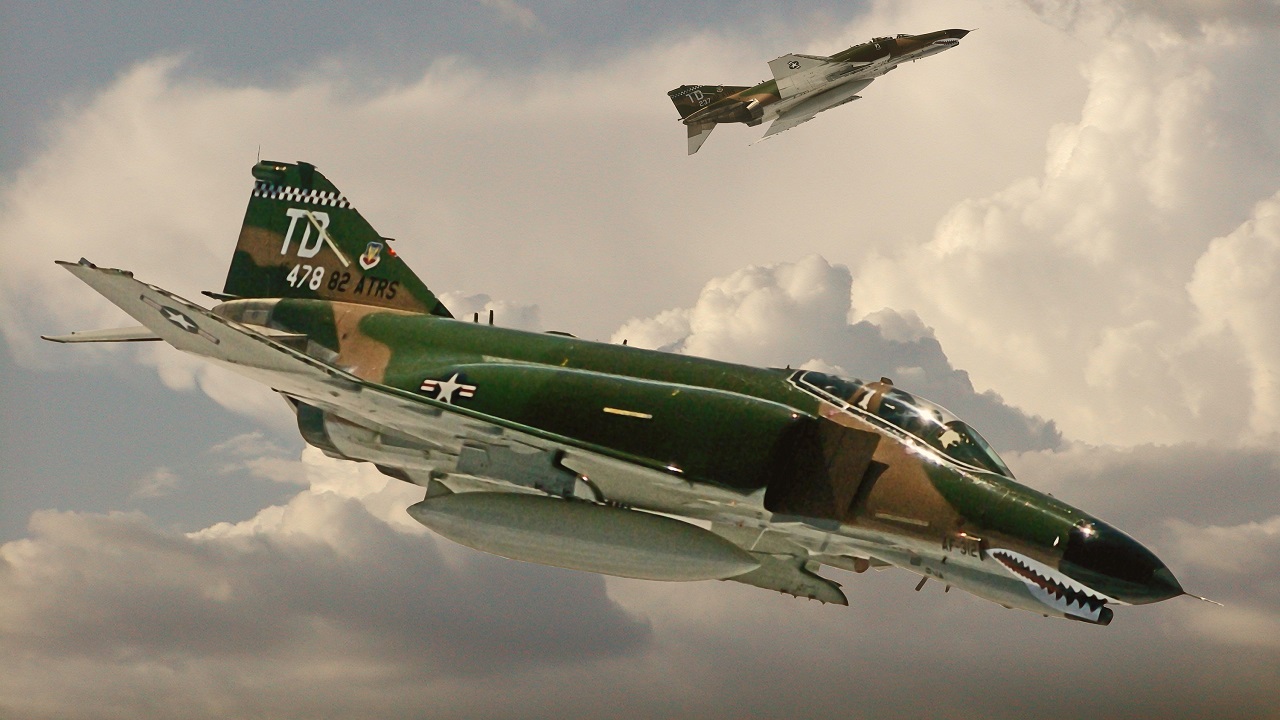
F-4 Phantom. Image Credit: U.S. Air Force.
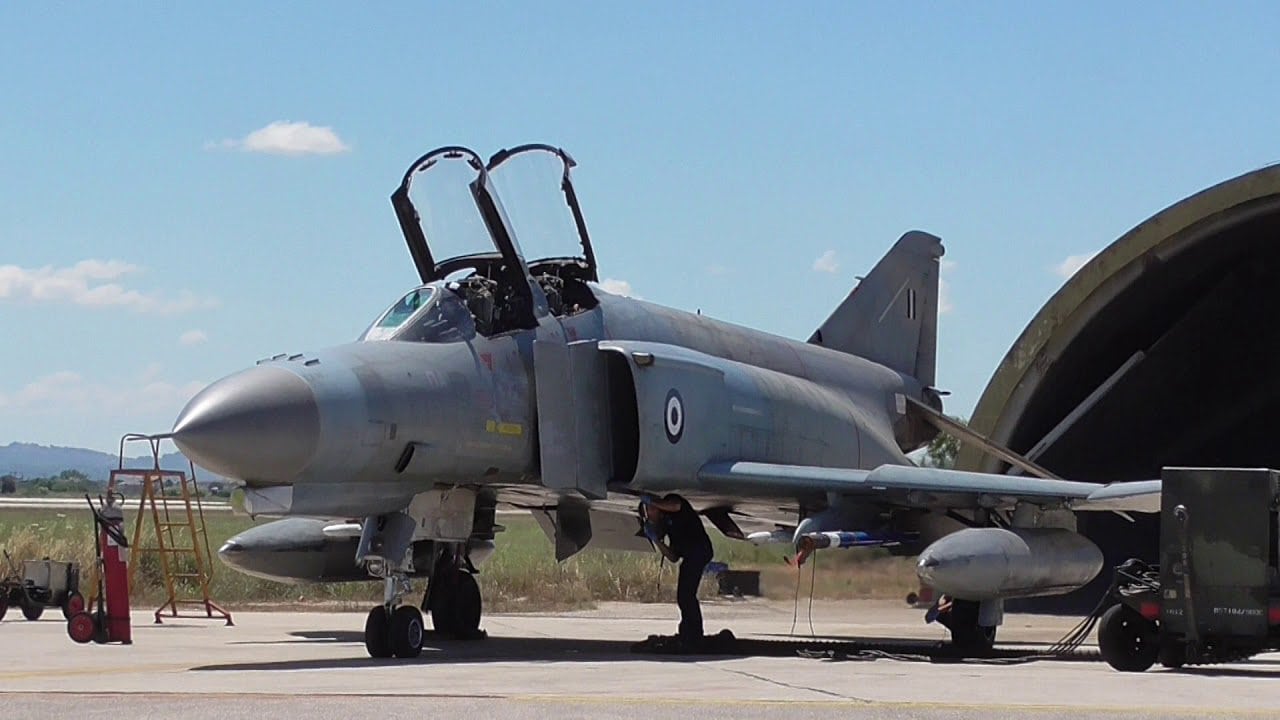
F-4E. Image Credit: Creative Commons.
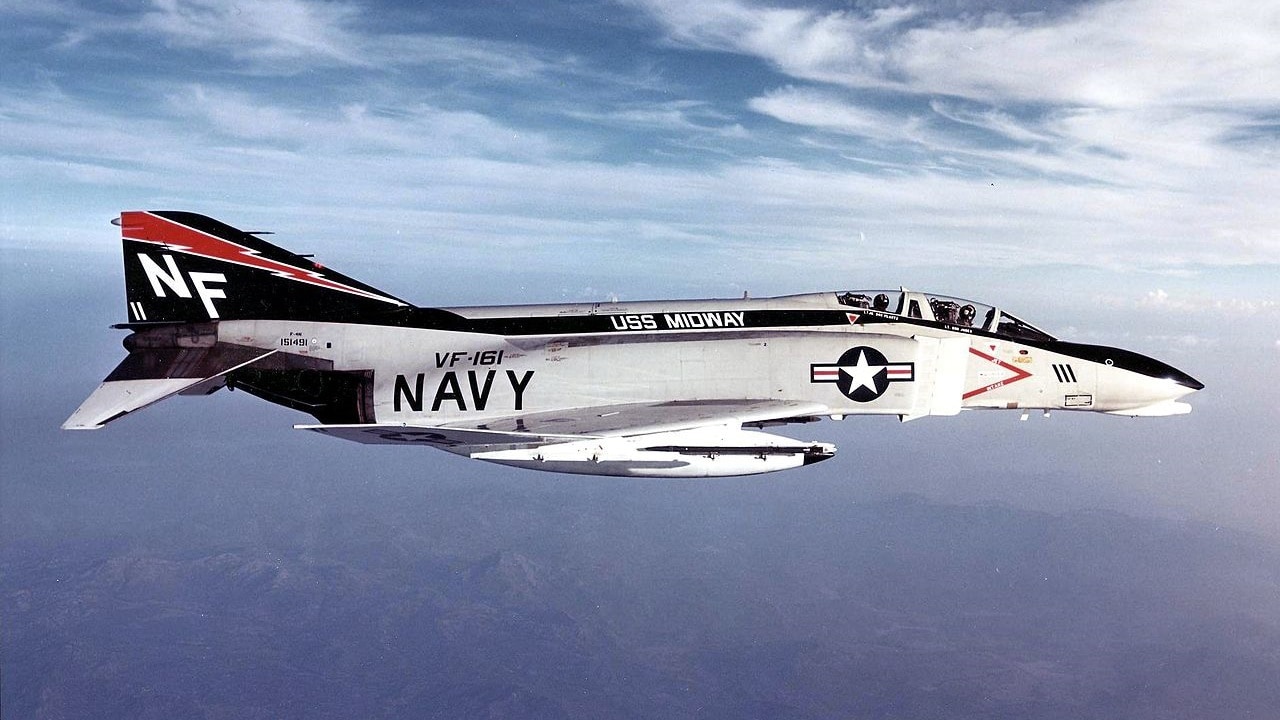
A U.S. Navy McDonnell F-4N Phantom II (BuNo 151491) of Fighter Squadron VF-161 “Chargers” in flight. 151491 was assigned to VF-161, Carrier Air Wing 5 (CVW-5), aboard the aircraft carrier USS Midway (CV-41) from 1973 to 1977. It was retired to the MASDC as 8F0077 on 3 November 1977.
-Though it retired in 1996 after decades of service, its versatility allowed it to perform everything from fleet defense to nuclear strikes for over a dozen nations.
The F-4 Phantom Fighter Could Hit Mach 2.2 and Made History
The F-4 Phantom II third-generation fighter jet built its fame in Vietnam and built on that renown during Operation Desert Storm in Iraq.
During these wars, the aircraft was credited with as many as 280 air-to-air victories and eliminated more than 200 anti-aircraft sites.
The Phantom II holds a pivotal place in the history of jet fighter development. It performed a wider range of functions than previous aircraft, was successfully upgraded over a period of years, and hit speeds of Mach 2.
Combat-Tested Phantom F-4
The Phantom saw decades of combat before it was finally retired from U.S. military service in 1996.
It first took to the sky in 1958, yet all the way into the late 1990s the aircraft continued to support the air forces of countries including Australia, Egypt, Germany, Great Britain, Greece, Iran, Israel, Japan, South Korea, Spain, and Turkey.
The Phantom II began life as a Navy jet. It evolved to carry out key ground-attack roles supporting Marines during firefights. One of the F-4 Phantom’s greatest strengths was its versatility. Unlike earlier fighters that were designed for a single role, the Phantom could perform multiple missions, including air superiority, ground attack, reconnaissance, and fleet defense.
This multi-role versatility allowed it to serve effectively in the U.S. Navy, Air Force, and Marine Corps, making it one of the few aircraft successfully operated by all three services. Its adaptability also led to widespread international adoption, with more than a dozen allied nations flying the Phantom.

F-4 Phantom. Image: Creative Commons.
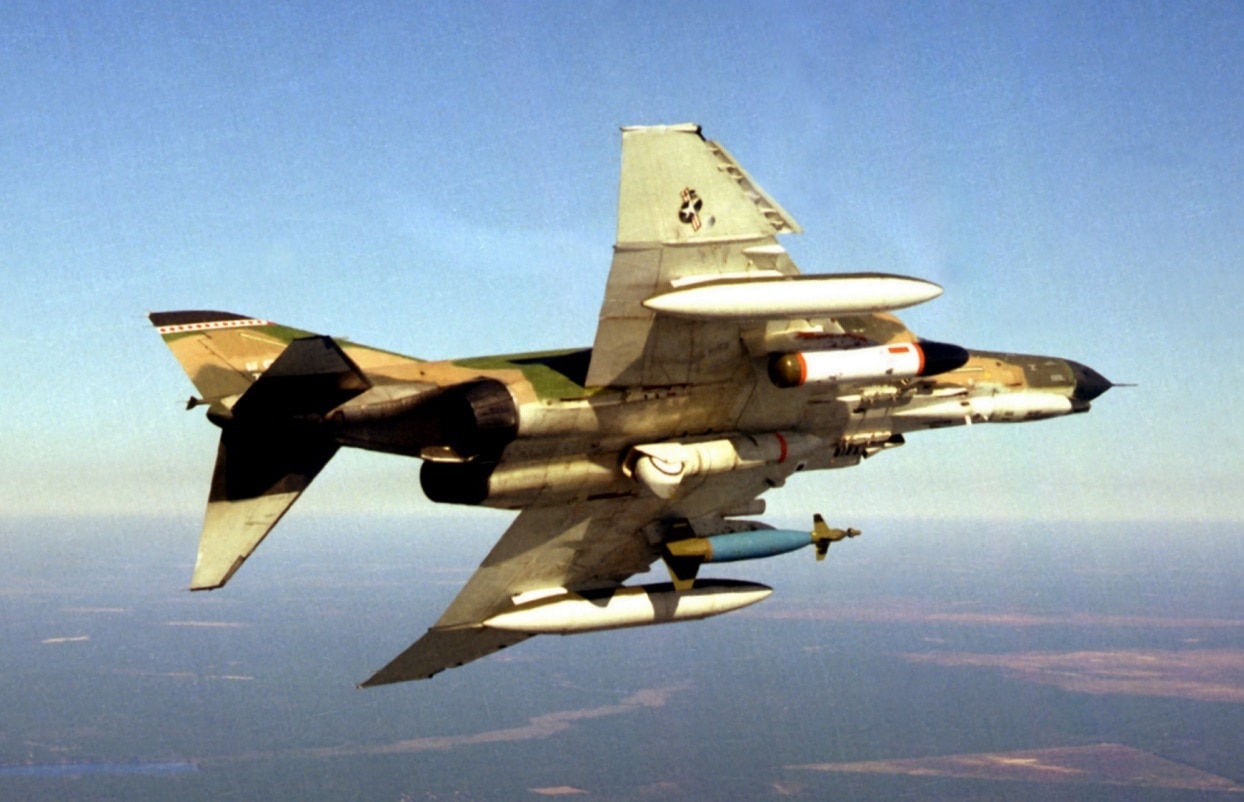
F-4 Phantom. Image: Creative Commons.
“The aircraft flew every traditional military mission: air superiority, close air support, interception, air defense suppression, long-range strike, fleet defense, attack and reconnaissance,” a Boeing essay on the aircraft states.
Several F-4 Phantom variants saw service, and modernization efforts were continually pursued over the decades. The first variant was the F-4J, a model powered by J79-GE-10 engines able to generate 17,900 pounds of afterburning thrust. The engines reportedly were heavy and generated a need for stronger landing gear with larger mainwheels.
Multi-Role Phantom F-4
Technologically, the F-4 Phantom was groundbreaking. It was among the first fighters designed around advanced radar and missile systems rather than traditional dogfighting with guns. Capable of flying faster than Mach 2, it set speed and altitude records and demonstrated the growing importance of beyond-visual-range combat.
Although early versions lacked an internal cannon—reflecting the belief that missiles would replace guns—combat experience in the Vietnam War netted important lessons that shaped future fighter designs.
As the aircraft further evolved, the F-4J was equipped with an upgraded bombing system, which added key ground-attack improvements and the ability to release nuclear weapons from all altitudes.
The aircraft’s AN/AWG-10 fire control system was housed in an enlarged front radome using an AN/APG-59 pulse-Doppler radar used to track low-flying aircraft.
The long and storied combat success of the F-4 influenced the development of the fourth-generation F-15, as well as carrier-launched planes such as the F/A-18. That widespread influence makes sense given the F-4’s wide range of roles, including ground-attack, air-to-air combat, and carrier-launched bombing missions.
The aircraft indeed exercised widespread influence on later fighters. Consider in particular that the fifth-generation F-35 is, after all, a “multi-role” fighter that also flies for multiple armed services.
About the Author: Kris Osborn
Kris Osborn is the President of Warrior Maven – Center for Military Modernization. Osborn previously served at the Pentagon as a highly qualified expert in the Office of the Assistant Secretary of the Army—Acquisition, Logistics & Technology. Osborn has also worked as an anchor and on-air military specialist at national TV networks. He has appeared as a guest military expert on Fox News, MSNBC, The Military Channel, and The History Channel. He also has a Masters Degree in Comparative Literature from Columbia University