
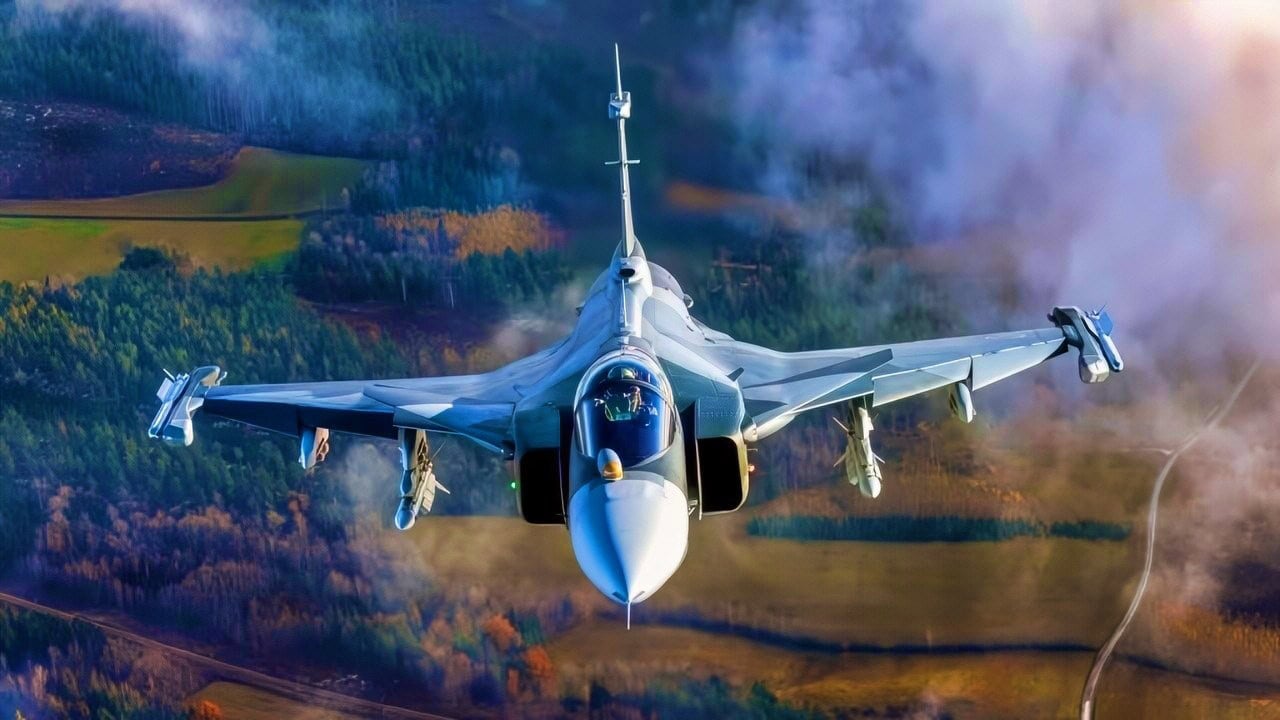
Summary: The F-35’s Mach 1.6 “Problem”: Why the Saab JAS 39 Gripen Is Faster
-The Saab JAS 39 Gripen E is technically faster than the F-35 Lightning II, capable of hitting Mach 2 while the U.S. stealth fighter tops out at Mach 1.6.
-As Canada reconsiders its fighter procurement, this speed gap has become a major talking point.
-However, the F-35 limits its top speed by design: sustained supersonic flight generates intense heat that can damage its stealth coatings and increase its infrared signature.
-With U.S. Ambassador Pete Hoekstra warning that choosing the Gripen could compromise NORAD, the choice comes down to raw speed versus survival in a networked, stealth-reliant battlefield.
The JAS 39 Gripen Is Faster than the F-35: Here’s Why That Doesn’t Matter
While Lockheed Martin’s fifth-generation F-35 fighter jet ultimately won out over Saab’s Gripen E platform “by a mile” in Canada’s 2021 Defence Department competition, there was one area in which the F-35 technically fell behind: speed. Saab’s 4.5-generation Gripen can indeed fly faster than the F-35 on paper – and as Ottawa reassesses its long-planned acquisition of 88 F-35As, that reality has been used by some commentators and analysts as one of several reasons the Swedish platform is a truly viable alternative.
But as U.S. Ambassador to Canada, Pete Hoekstra warns that Washington could be forced to fly more American F-35s in and around Canadian airspace if Ottawa fails to meet its NORAD commitments on its own – a scenario he envisions should Ottawa choose the Gripen – it’s important to address the technical capabilities of the two platforms in the context of their intended purposes.
At first glance, the argument might seem straightforward. The Gripen is often cited as being capable of reaching around Mach 2, while the F-35’s published top speed is about Mach 1.6. If Canada’s primary mission is Arctic air defense and rapid interception, why choose slower aircraft? The answer lies in air-combat design philosophy, and the F-35 still wins.
Canada’s Fighter Debate and the Role of Speed
Canada’s CF-18 replacement program has spanned multiple governments, in part because it seeks to address multiple competing priorities: sovereignty, cost control, industrial benefits, and deep integration with U.S. and NATO forces.

A CF-18 Hornet fighter jet soars through the clouds over Iraq before commencing the next mission during Operation IMPACT on January 23, 2015.
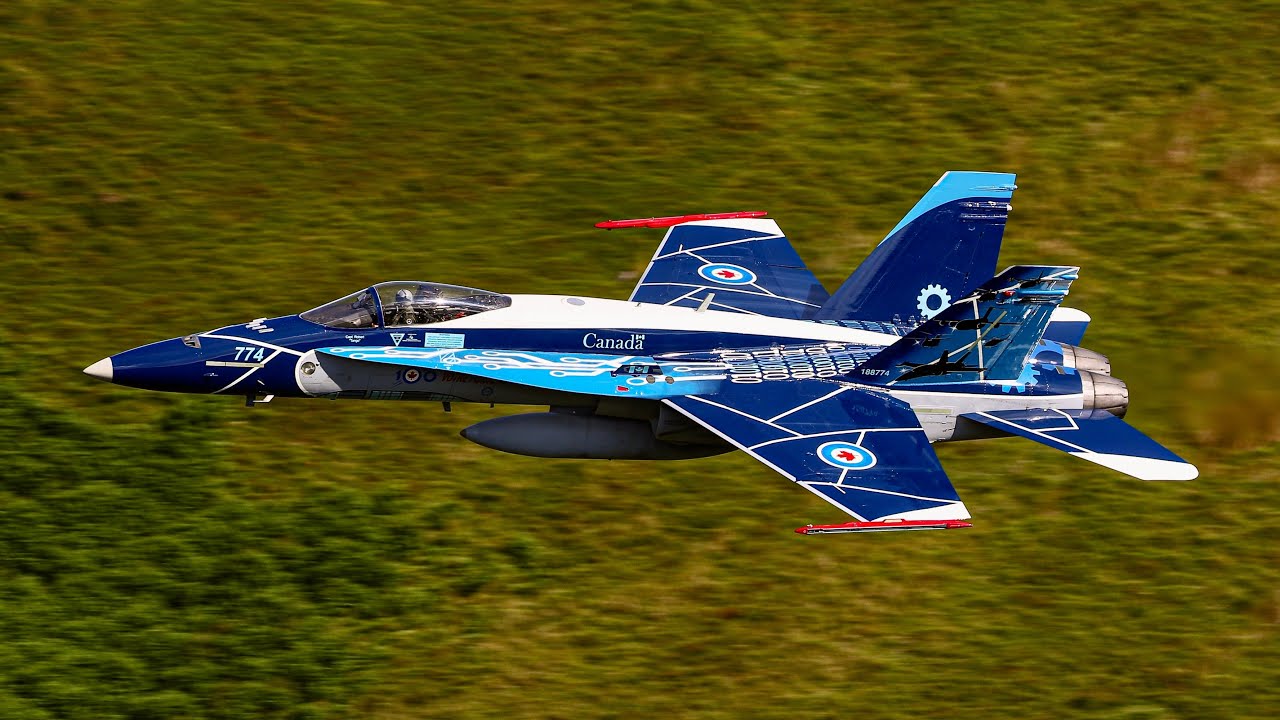
CF-18 Hornet Canada Air Force. Image Credit: Creative Commons.
The F-35 was selected in 2022 as the preferred replacement, with the strong endorsement of Royal Canadian Air Force officials. Ottawa cited the aircraft’s interoperability and survivability as key drivers of the decision, along with the platform’s longer-term relevance.
Yet the Gripen is politically attractive today. Saab has argued that the aircraft is well-suited to dispersed Arctic operations, offers lower operating costs, and could deliver significant domestic industrial benefits to the tune of 12,600 jobs.
Speed isn’t one of the top benefits of the Gripen cited by its advocates as a defining and crucial feature – but it certainly has appeared in the debates. Inevitably, it enters the discussion because it’s easier to understand: faster jets may seem better suited to covering Canada’s vast airspace.
However, speed alone does not determine success in, for example, interception. Detection range and sensor quality, however, do, as does the ability to operate in networked and contested environments.
That’s why the F-35 may be technically slower on paper than the JAS 39 Gripen, but superior in virtually every other way – including, crucially, its networking capabilities and overall interoperability with American and allied systems.
F-35 Fifth-Generation Jets Are “Slower” By Design
Fifth-generation aircraft are engineered around low observability. Their stealth shaping and internal weapons bays are part of a design philosophy that focuses on dramatically reducing radar cross-section.
Those features, however, impose some limitations at very high Mach numbers. Designing an aircraft to cruise or dash at Mach 2+ requires different inlet geometry and airframe compromises that would, in turn, increase radar and infrared signatures.
This problem was seen in 2019 when reports described how the F-35 Joint Program Office had recognized the fact that the U.S. Navy and Marine Corps’ versions of the F-35 were vulnerable when flying at supersonic speeds and high altitudes.
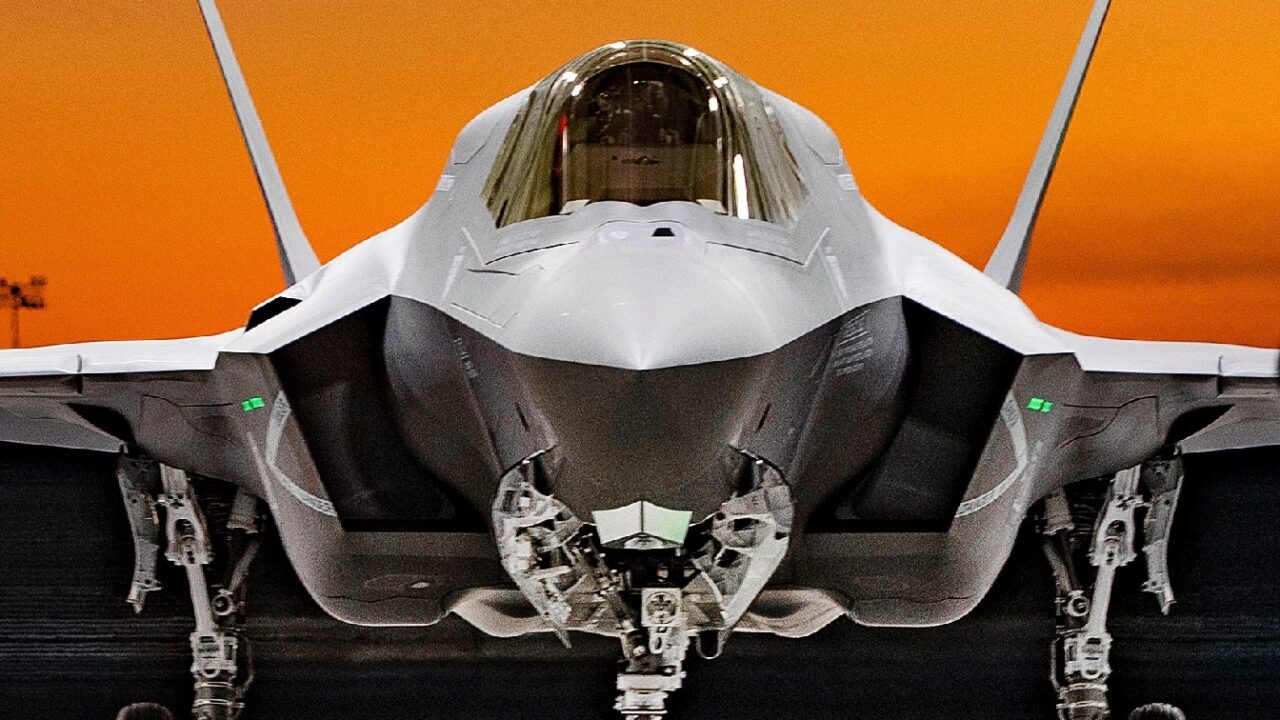
F-35 Stealth Fighter. Image Credit: Creative Commons.
Heat is one of the constraints at play here. Sustained high-speed flight generates intense heat on the aircraft’s surface, degrading stealth coatings and increasing infrared visibility.
Modern fighters are therefore optimized to fly fast enough to intercept and reposition without exceeding speeds that would undermine their core survivability advantage.
Crucially, modern air combat also no longer assumes that speed determines victory. Closing the distance the fastest matters less in a combat environment where drones, long-range missiles and automated technology exist.
Long-range sensors and networked data links come into play here too, meaning that the aircraft that detects and tracks first usually fires first – and succeeds. Speed still matters, of course, but it is no longer the dominant variable and hasn’t been for some time.
F-35 vs. Gripen
The Gripen is a highly capable 4.5-generation fighter. Its electronic warfare suite and compatibility with modern air-to-air missiles make it a credible air defense platform – particularly for nations prioritising cost and flexibility.
For Canada, advocates argue that those attributes make it the ideal option to operate alongside the 16 F-35sit has already agreed to purchase. Its overall capability makes it suitable for day-to-day sovereignty missions over the Arctic.
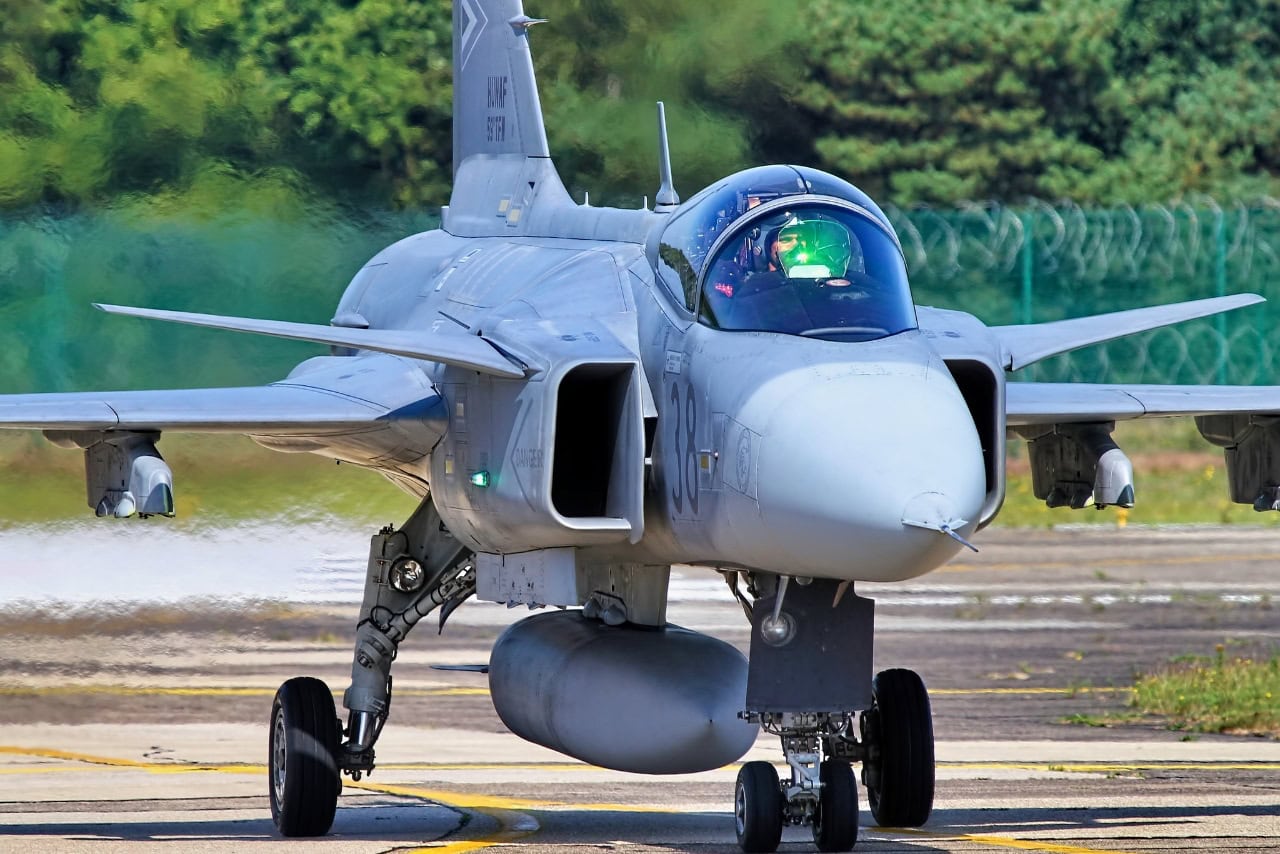
JAS 39 Gripen. Image Credit: Creative Commons.
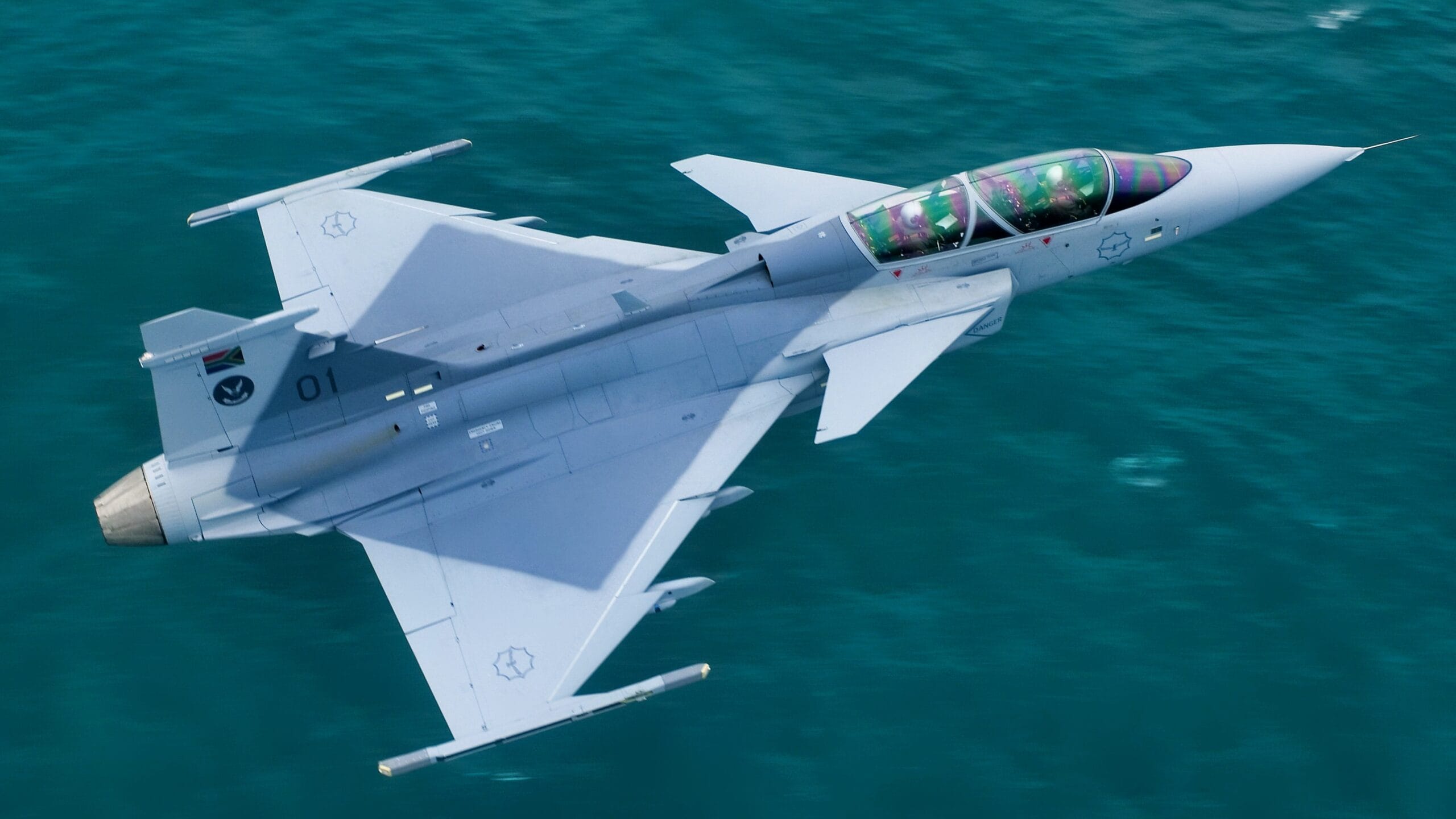
JAS 39 Gripen Fighter. Image Credit: Creative Commons.
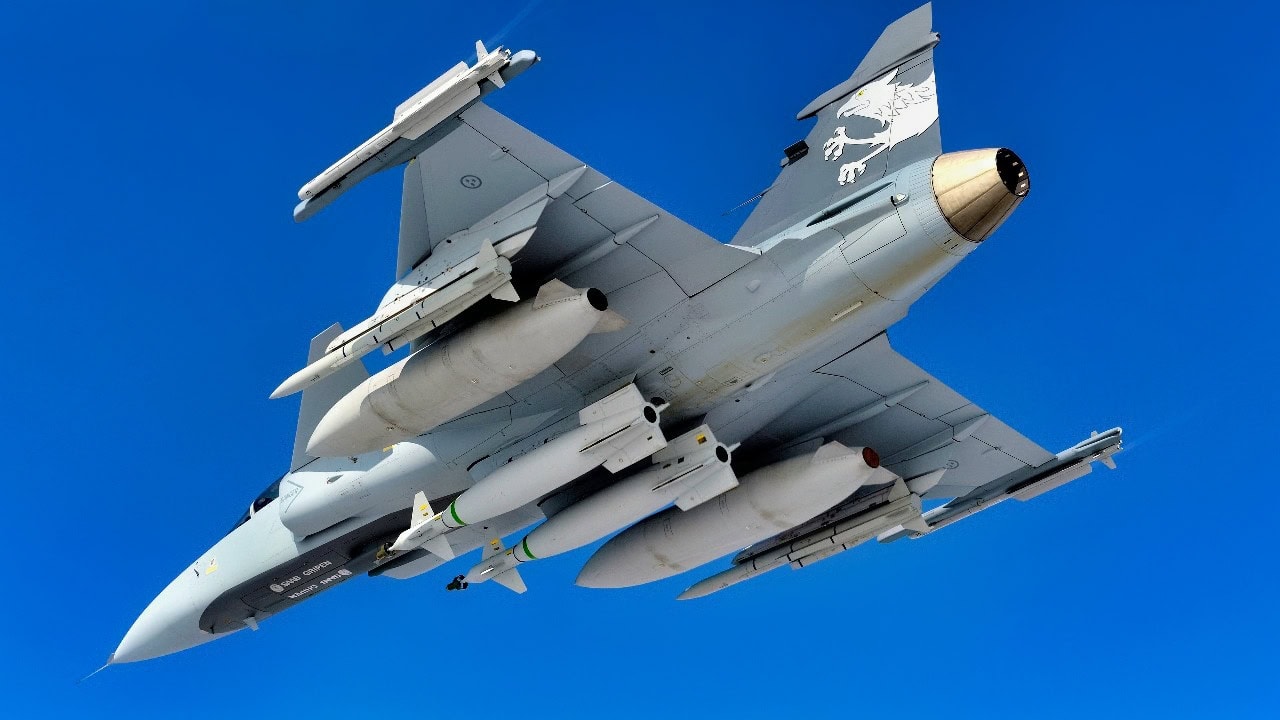
JAS 39 Gripen. Image Credit: Creative Commons.
The F-35, however, compensates for its lower top speed with a different set of advantages. Its sensor fusion capabilities enable it to combine radar, infrared, and electronic intelligence inputs into a single picture for the pilot, and that information can also be shared across the fleet via secure data links.
That capability is central to U.S. and NATO planning – and rather than replacing faster aircraft, the F-35 changes how they are used.
In Canada’s case, the choice between a faster Gripen and a slower F-35 is not about speed at all, but about whether Ottawa is interested in a platform that will remain relevant for longer, or one that is arguably more suited in a few politically convenient areas.
About the Author: Jack Buckby
Jack Buckby is a British researcher and analyst specialising in defence and national security, based in New York. His work focuses on military capability, procurement, and strategic competition, producing and editing analysis for policy and defence audiences. He brings extensive editorial experience, with a career output spanning over 1,000 articles at 19FortyFive and National Security Journal, and has previously authored books and papers on extremism and deradicalisation.

