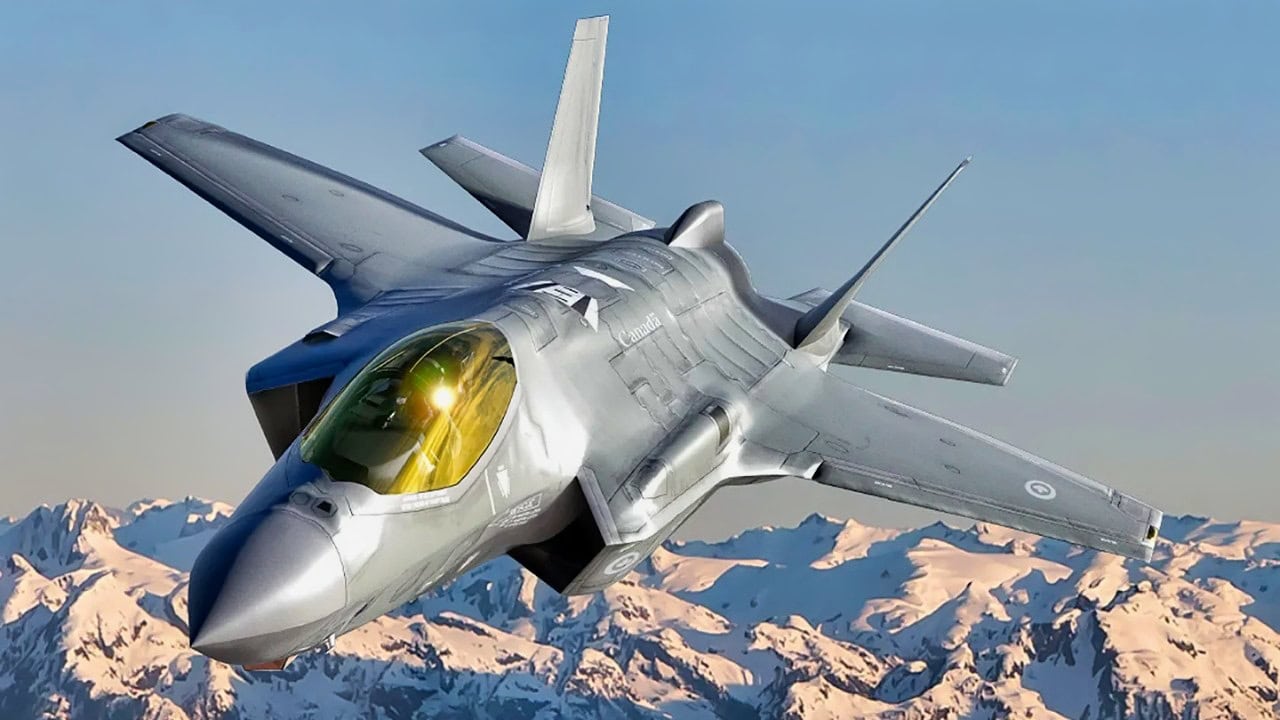
Synopsis: Canadian Industry Minister Mélanie Joly is traveling to the United States to negotiate job guarantees as Ottawa reevaluates its commitment to purchase 88 F-35 fighter jets.
-Amid damaging trade tariffs from the Trump administration, Canada is considering supplementing its initial 16 F-35s with Sweden’s Saab Gripen E, which promises local production jobs in Quebec.
-However, a leaked 2021 evaluation revealed the F-35 significantly outperformed the Gripen (95% to 33%), and experts warn that operating a mixed fleet would create a costly logistical and training nightmare for the Royal Canadian Air Force.
Canada Needs to Make An F-35 Fighter Call
In an effort to sweeten the terms of a pending F-35 deal with the United States, Mélanie Joly, the Canadian Minister of Industry, is headed to the United States to secure a jobs component for Canadian workers, reports Bloomberg.
Canada is in the midst of a spending splurge.
It is on the market for both new fighter jets to replace its aged, Cold War-era CF-18 Hornets, as well as new submarines that would replace the country’s Victoria-class diesel-electric submarines.
Though Canada previously made commitments to the United States to purchase 88 F-35 stealth jets, built by Lockheed Martin, an American firm, Ottawa has since reevaluated that decision after purchasing just 16 of the fifth-generation fighters.
Though the F-35 deal has not been definitively shot down, the impetus for reviewing the order stems from President Donald Trump’s damaging trade war against Canada, one of the United States’ oldest and most steadfast allies. Tariffs levied against Canada have soured relations with other allies worldwide and led to several F-35 cancellations, notably from Spain and Portugal.
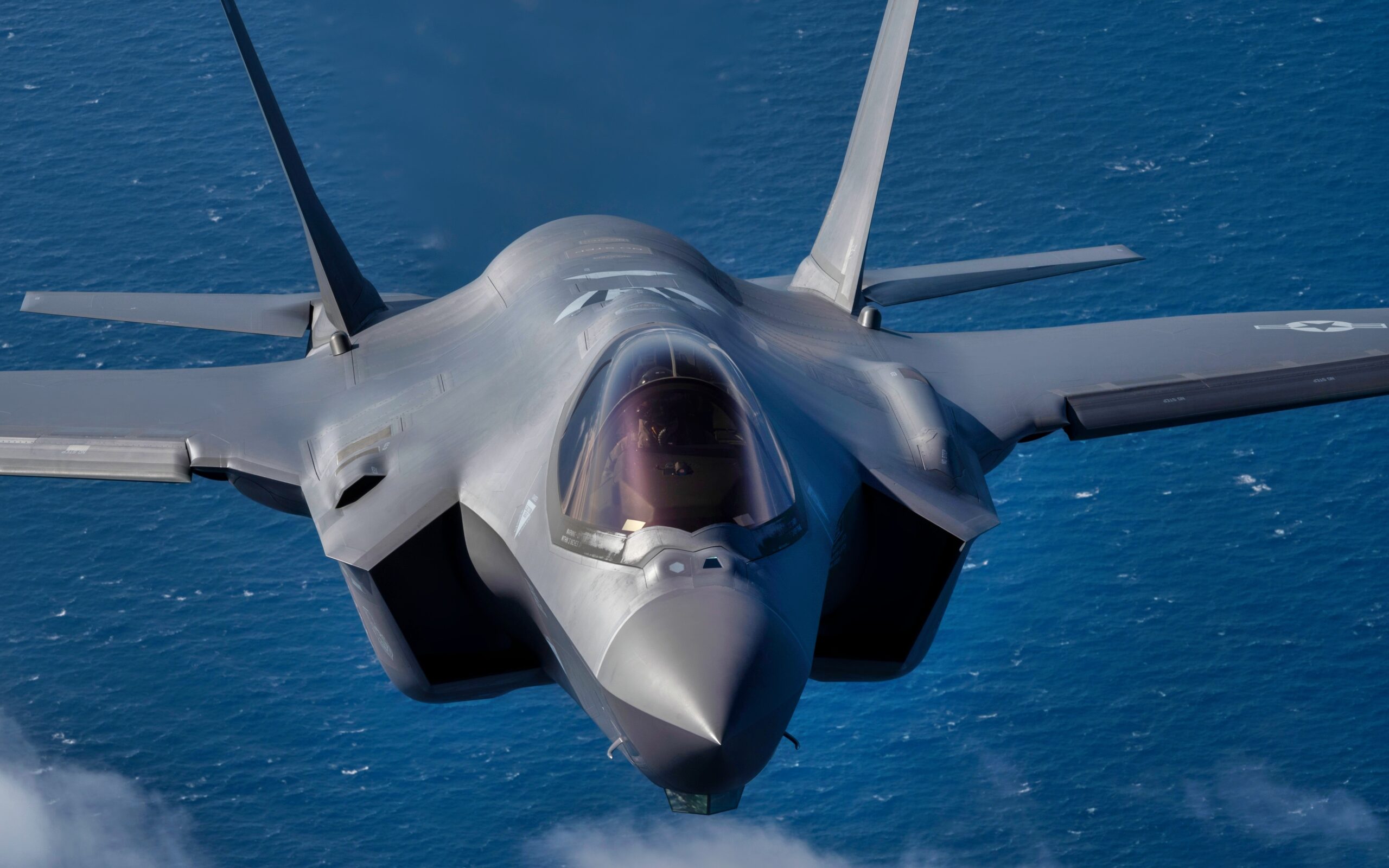
A U.S. Air Force F-35A Lightning II participating in NATO exercise Ramstein Flag 24 flies over the west coast of Greece, Oct. 4, 2024. Over 130 fighter and enabler aircraft from Greece, Canada, France, Hungary, Italy, Poland, Portugal, Romania, Spain, Sweden, United Kingdom and United States are training side by side to improve tactics and foster more robust integration, demonstrating NATO’s resolve, commitment and ability to deter potential adversaries and defend the Alliance. (U.S. Air Force photo by Tech. Sgt. Emili Koonce)
Switzerland recently downgraded its F-35 order, originally 36 in total, after it became apparent that the $7.6 billion price tag, secured in 2021, would not cover the entire three-decade jet order.
Though the reason for the price discrepancy is not entirely clear, the Trump administration chalked it up to a misunderstanding.
Instead, Bern will buy as many F-35s as it can without increasing the amount of money it is committing to the deal.
Similarly, Ottawa has affirmed that it will retain the first 16 F-35 fighters it purchased, but will also explore other fighter options to supplement those American fighters. But operating a mixed fleet of fighter jets would pose distinct sustainment and logistical challenges for the Royal Canadian Air Force.
Not only would the RCAF need to create two distinct training and qualification pipelines for a mixed fighter fleet, but it would also need to stand up training pipelines for maintainers to sustain a hypothetical mixed fighter fleet. Doing so would double the RCAF’s logistical footprint.
The F-35 Canada Debate Keeps Going…
Earlier last year, Pete Hoekstra, the United States Ambassador to Canada, said that he was “irritated” by Ottawa’s backtracking on the F-35 deal.
In comments given to the National Post, a Canadian newspaper, Ambassador Hoekstra seemingly eschewed the usual diplomatic niceties, saying, “Canada can do what it wants on the F-35, OK?”
“Does it irritate me, personally, that we’re revisiting this issue? Yeah, it’d be nice to put this one to bed and move forward,” Ambassador Hoekstra said, highlighting the decades of collaboration the two countries have invested in each other’s aerospace industries.
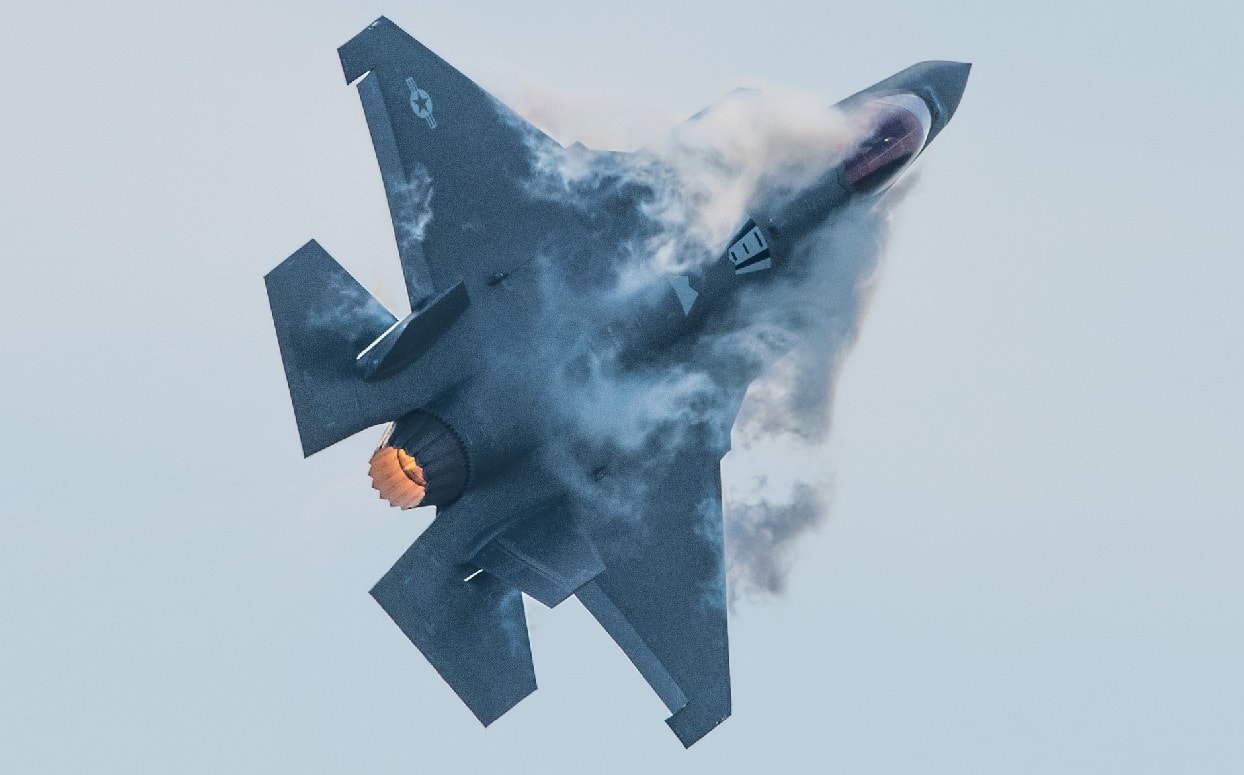
F-35. Image Credit: Lockheed Martin.
“It would be nice if Canada committed,” Ambassador Hoekstra added. “But if they want to go through another review, they can go through another review.”
F-35 vs. JAS 39 Gripen Fighter
Sweden is keen to capitalize on the fighter jet uncertainty by pitching its JAS 39 Gripen E fighter, built by Saab, the Swedish defense and aerospace company.
Their offering was the runner-up in a head-to-head evaluation against the F-35, and Saab is trying to entice the RCAF by offering to build the jet locally at a production line in Quebec.
Canada is also evaluating Saab’s GlobalEyes Airborne Early Warning & Control aircraft and says that over 12,000 jobs would be created if both aircraft were built in Canada.
But despite the economic allure of the Swedish pitch, their fourth-generation offering recently took a hit after a 2021 evaluation leaked, pitting the Gripen E and F-35 against each other. The results of that evaluation, reported by the Canadian Broadcasting Corporation, were decisive.
The F-35 outperformed the JAS 39 Gripen E in every evaluation category — and in several, the Swedish fighter was deeply outclassed.
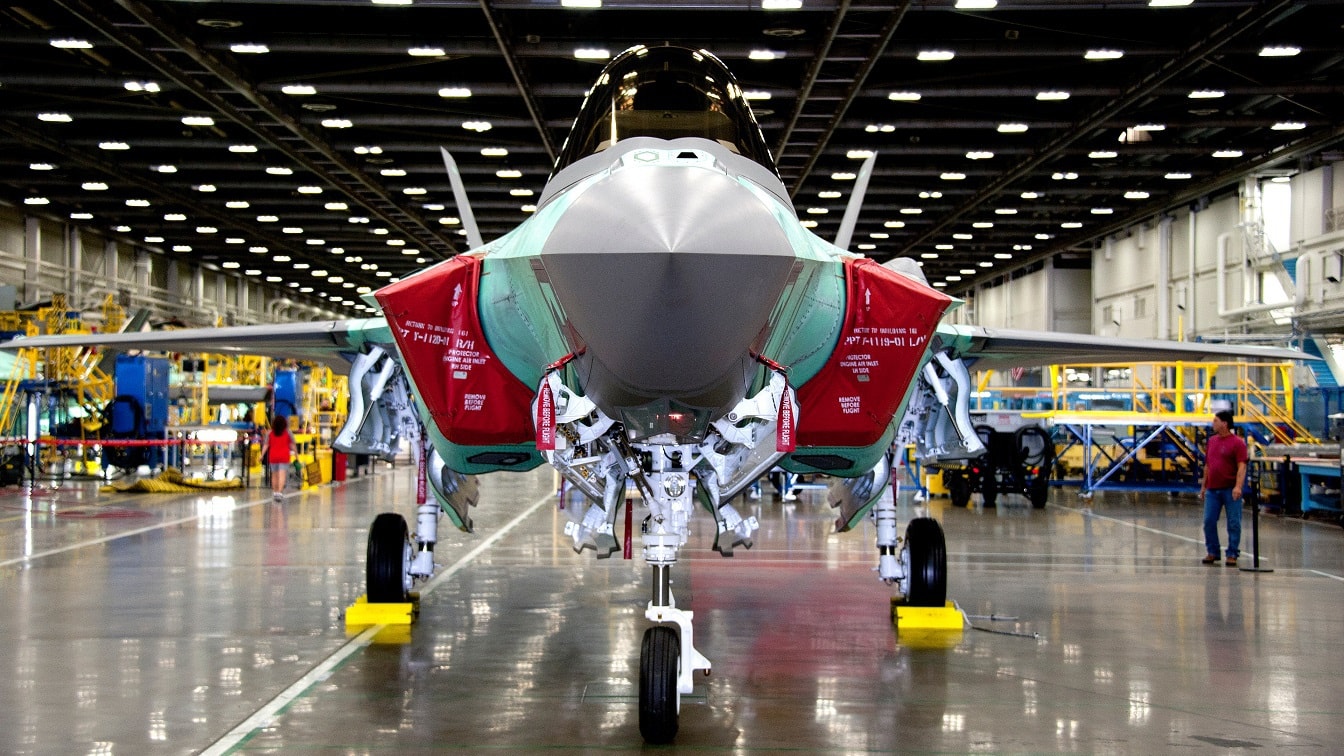
F-35A Joint Strike Fighter. Image Credit: Lockheed Martin.
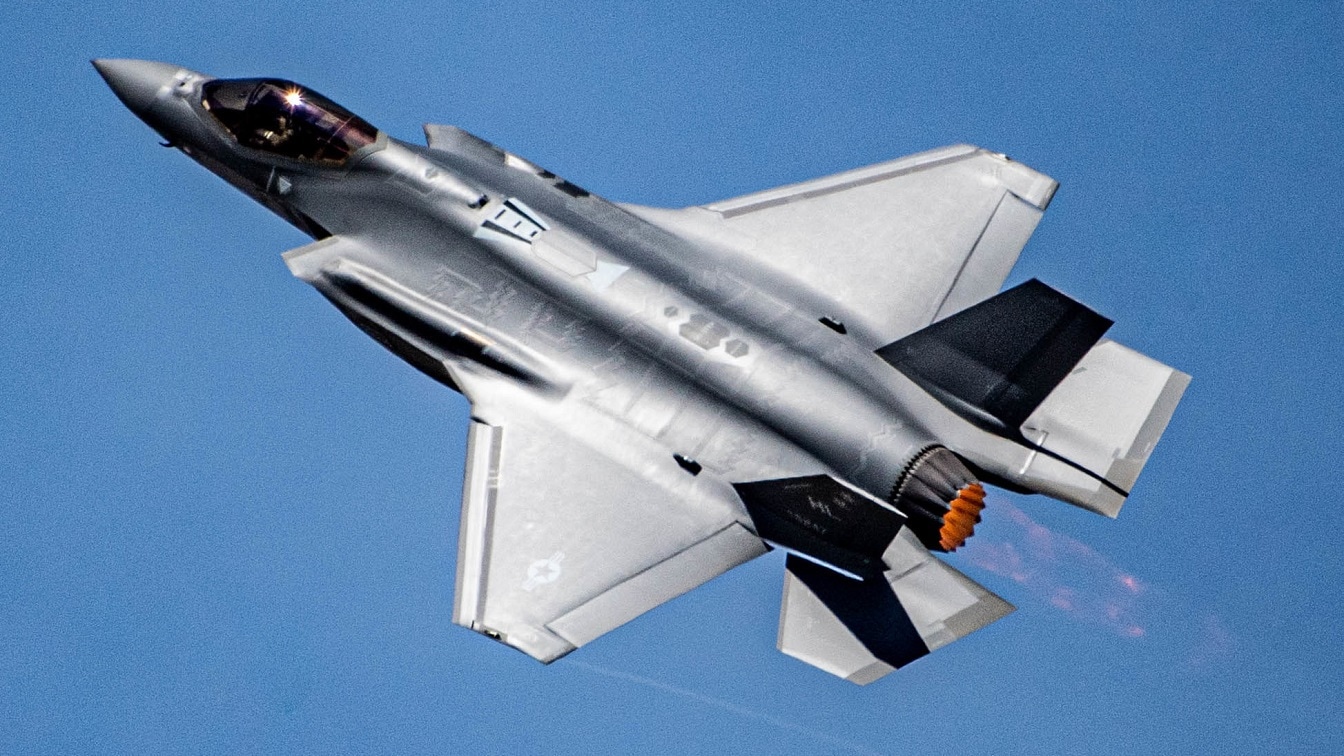
U.S. Air Force Maj. Kristin Wolfe performs a demonstration in the F-35A Lightning II during at the Reno Air Races in Reno, Nevada, September 19, 2021. The F-35 Lightning II Demonstration Team is based out of Hill Air Force Base, Utah. (U.S. Air Force photo by Tech. Sgt. Nicolas Myers)
The F-35’s averaged score across capability, delivery, technical criteria, sustainability, upgradability, and mission performance averaged 95 percent.
The Gripen E’s average was just 33 percent, with its lowest marks in upgradability and mission performance. But what the raw evaluation figures do not make explicit is the two jets’ exceedingly different capabilities.
The Gripen E is a fourth-generation fighter and lacks the radar-defeating features of the fifth-generation F-35 stealth fighter.
Instead, the Gripen E was tailor-made from the outset to meet Sweden’s unique defense needs — and does indeed fit neatly within Stockholm’s conscript-centric military. Made to be quickly serviceable by relatively inexperienced hands, the Gripen E’s design places a premium on simplicity and maneuverability.
And although Saab touts the Gripen E’s electronic warfare capabilities — and supposed ability to “render stealth useless” — the veracity of that claim is not shared by most experts.
If the Swedes can convince Ottawa that their older, fourth-generation fighter is a viable alternative to a stealth aircraft, it remains to be seen, even with a robust jobs component.
But given the pitfalls of operating a two-fighter fleet, particularly in a world that is adamantly moving toward fifth- and even sixth-generation aircraft, doing so would be a tall order indeed.
About the Author: Caleb Larson
Caleb Larson is an American multiformat journalist based in Berlin, Germany. His work covers the intersection of conflict and society, focusing on American foreign policy and European security. He has reported from Germany, Russia, and the United States. Most recently, he covered the war in Ukraine, reporting extensively on the war’s shifting battle lines from Donbas and writing on the war’s civilian and humanitarian toll. Previously, he worked as a Defense Reporter for POLITICO Europe. You can follow his latest work on X.