
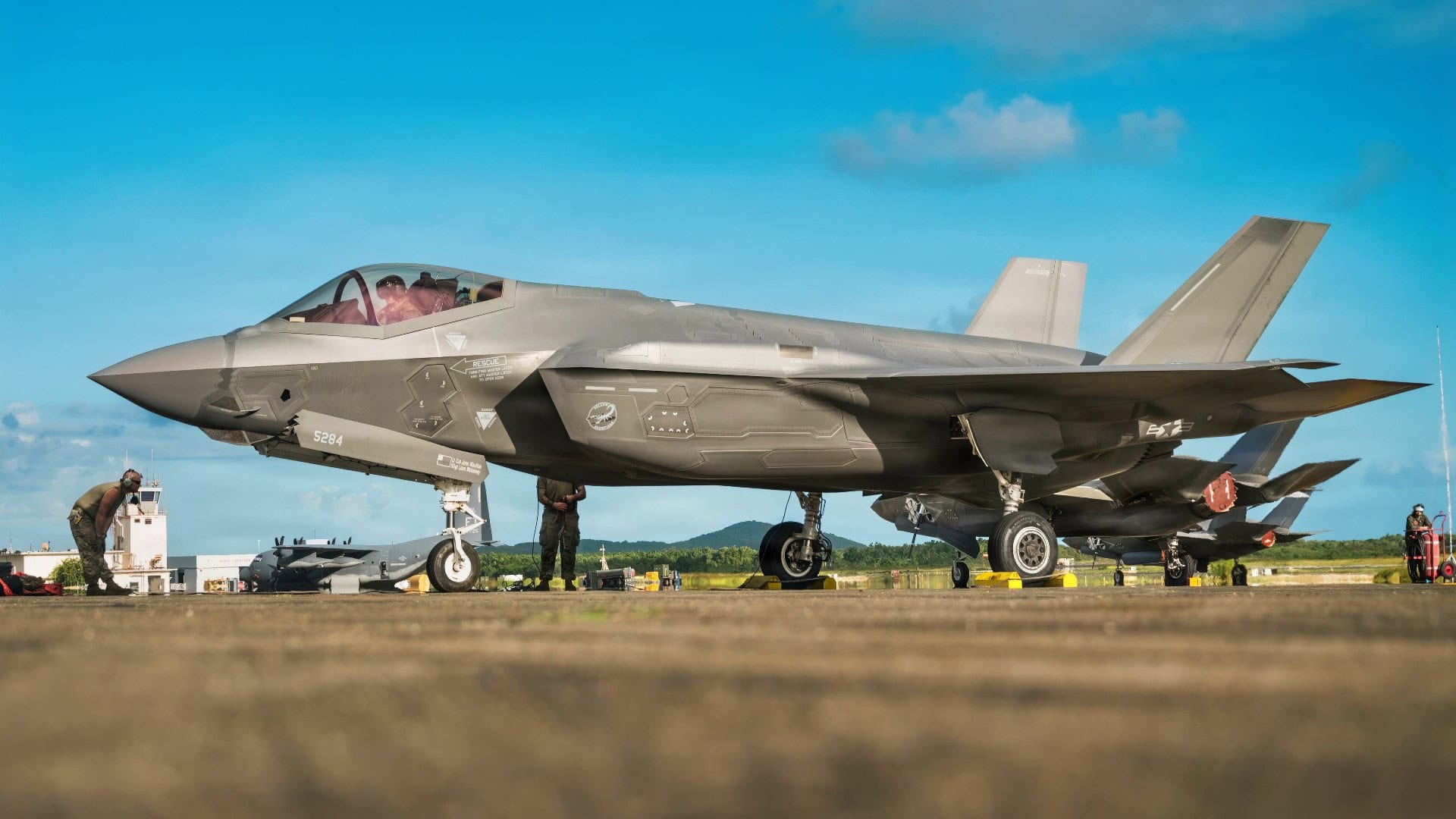
Summary and Key Points: An air force fighter replacement plan is back under review as the government reconsiders the remaining 72 F-35 fighters beyond the first 16 already funded.
-Officials are weighing a shift toward the Gripen E offer—framed around lower cost, local assembly, jobs, and tighter data control—potentially creating a mixed fleet.
-A new complication is a warning from the U.S. ambassador that if the country does not field the full capability, NORAD arrangements may need changes and U.S. fighters could fly more missions in national airspace.
-The fleet was once expected to be operational between 2032 and 2034, but the unresolved review keeps timelines—and the politics—uncertain.
Carney Just Got One More Excuse to Ditch the F-35
Replacing Canada’s aging CF-18 Hornet fighters didn’t need to be this complicated.
In fact, in 2023, Lockheed Martin’s F-35 Lightning II was formally chosen to form Canada’s newest fleet of multirole fighters after winning the multinational Joint Strike Fighter competition. Canada confirmed it had finalized an agreement with the United States and Lockheed Martin to procure 88 F-35A stealth fighter jets for the Royal Canadian Air Force.
Those fighter jets were expected to be delivered and operational between 2032 and 2034, but plans are now in doubt after Canadian Prime Minister Mark Carney ordered a review of the deal, even though the first 16 had already been funded and contractually agreed upon.
What began as a technical debate over what jets were the most capable and best suited to both Canadian and NORAD requirements has now devolved into a clear political spat – even if Carney says it isn’t. The Conservatives’ original plan to purchase 88 F-35As to form a single-platform fleet now appears to be in jeopardy, with Carney reportedly leaning toward accepting an offer to purchase 72 Swedish Saab JAS 39 Gripen Es to form a less technologically capable mixed fleet.
The formal review into the purchase was completed mid-2025, and the results have yet to be publicly released – likely because the government in Ottawa has either failed to reach a decision yet, or not quite perfected their reasoning for backing out of an established deal that actually makes sense. But recent comments from U.S. ambassador to Canada, Pete Hoekstra, may have just given Carney the excuse he needed – or, at least, an additional line of reasoning he can include in whatever he may already have prepared.
Where the F-35 – Gripen Debate Stands
When Canada chose the F-35, it ended nearly two decades of discussions and debates over the nature of Canada’s next fighter fleet. The procurement aimed to deliver 88 stealthy, sensor-fused Joint Strike Fighters to the Royal Canadian Air Force, satisfying NORAD and NATO obligations in the process.
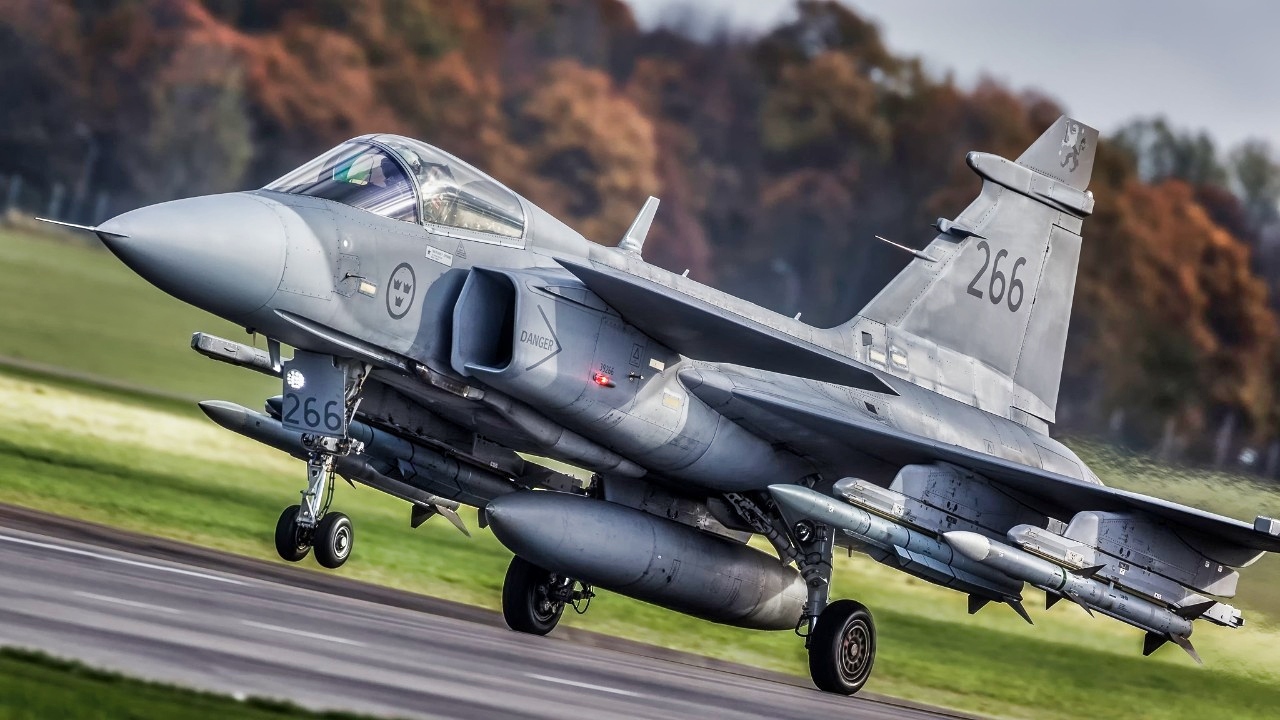
JAS 39 Gripen. Image Credit: Creative Commons.
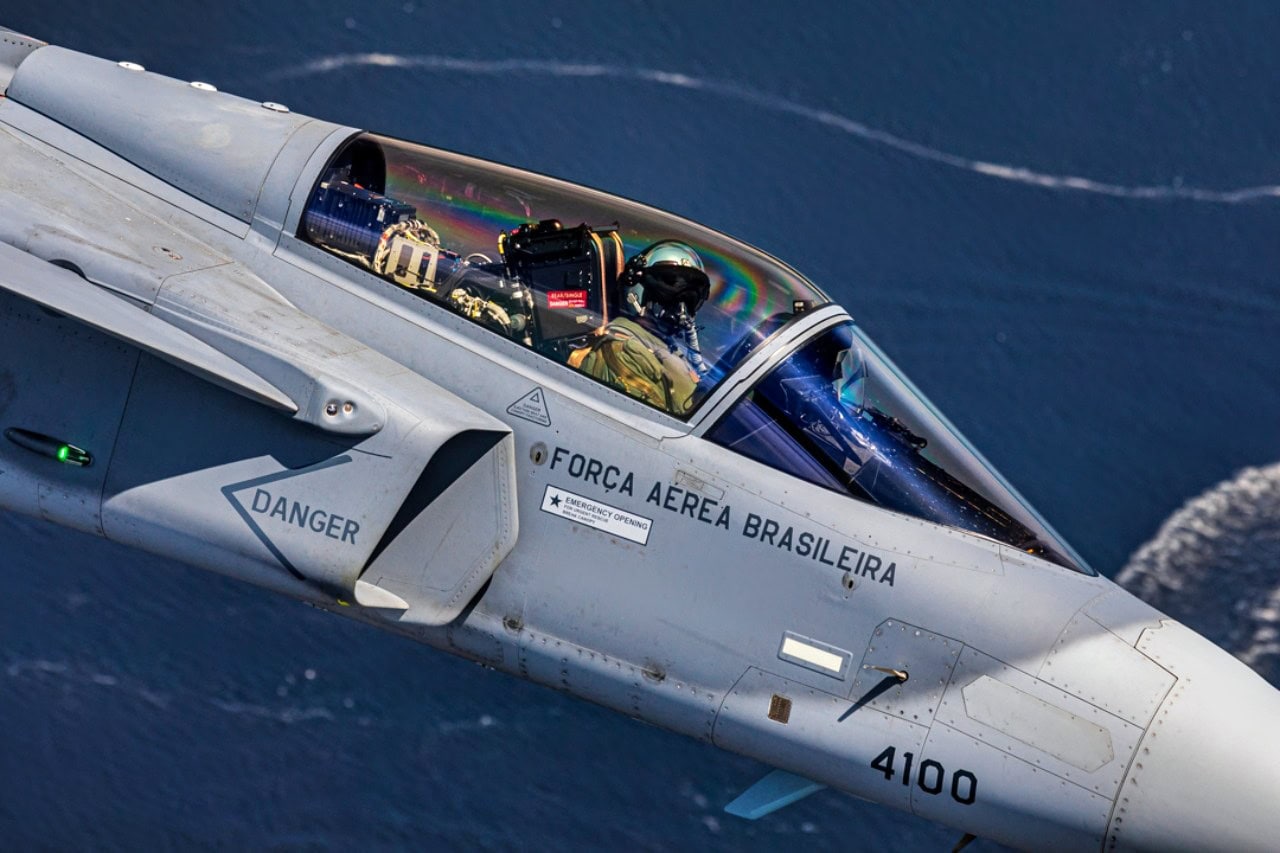
JAS 39 Gripen. Image Credit: Creative Commons.
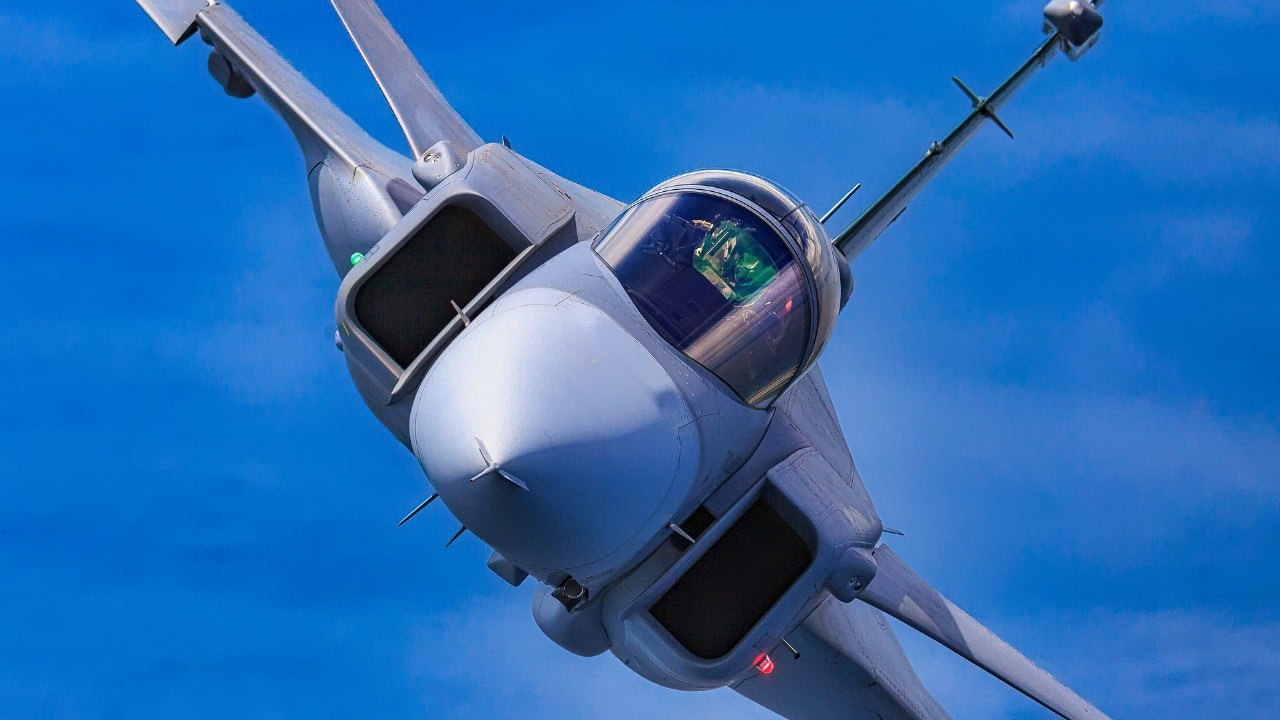
JAS 39 Gripen. Image Credit: Creative Commons.
16 F-35s have already been formally ordered and cannot be reneged on now, with deliveries expected to begin this year. The remaining order of 72 aircraft is under active review, despite Ottawa’s defense establishment, including high-ranking air force officials, consistently arguing that the F-35’s advanced stealth and integrated networking make it the best match for future threats in the Arctic and across theatres.
By contrast, Saab’s Gripen E – a lighter, 4.5-generation fighter – has been pitched as a less expensive alternative that provides greater data sovereignty and a break from the United States. Saab has repeatedly promised Canada it would also deliver industrial benefits tied to local assembly and jobs – an offer that has grown increasingly generous as time has gone by. Specifically, Saab’s offer ties Gripen production and associated systems – including the GlobalEye surveillance aircraft – to Canada’s aerospace sector. Saab says more than 12,000 manufacturing and maintenance jobs are at risk.
That argument will obviously be part of the official reasoning cited by Ottawa when (if) a decision is made to replace those remaining 72 F-35s with Gripens, but it’s not the only one Carney has up his sleeve: Hoekstra’s comments might be the icing on the cake for Carney’s government as it prepares for potential backlash in the event they announce Saab will get the deal they previously lost to Lockheed.
What the U.S. Said and How NORAD Actually Works
On January 26, the U.S. ambassador to Canada said that if Ottawa did not proceed with the full complement of F-35s, NORAD would need to be “altered” and the United States might have to fly its own F-35s more frequently into Canadian airspace to fill gaps.
“If Canada is no longer going to provide that (capability), then we have to fill those gaps,” Hoekstra told the CBC.
At its core, NORAD (the North American Aerospace Defense Command) is a bilateral air defense partnership between Canada and the United States responsible for aerospace warning and control over the continent. NORAD’s ability to detect and intercept potential threats – whether bombers, ballistic missiles, or cruise missiles – depends on sensor networks, radar, satellites, integrated command and control, and fighter aircraft operating under shared procedures.
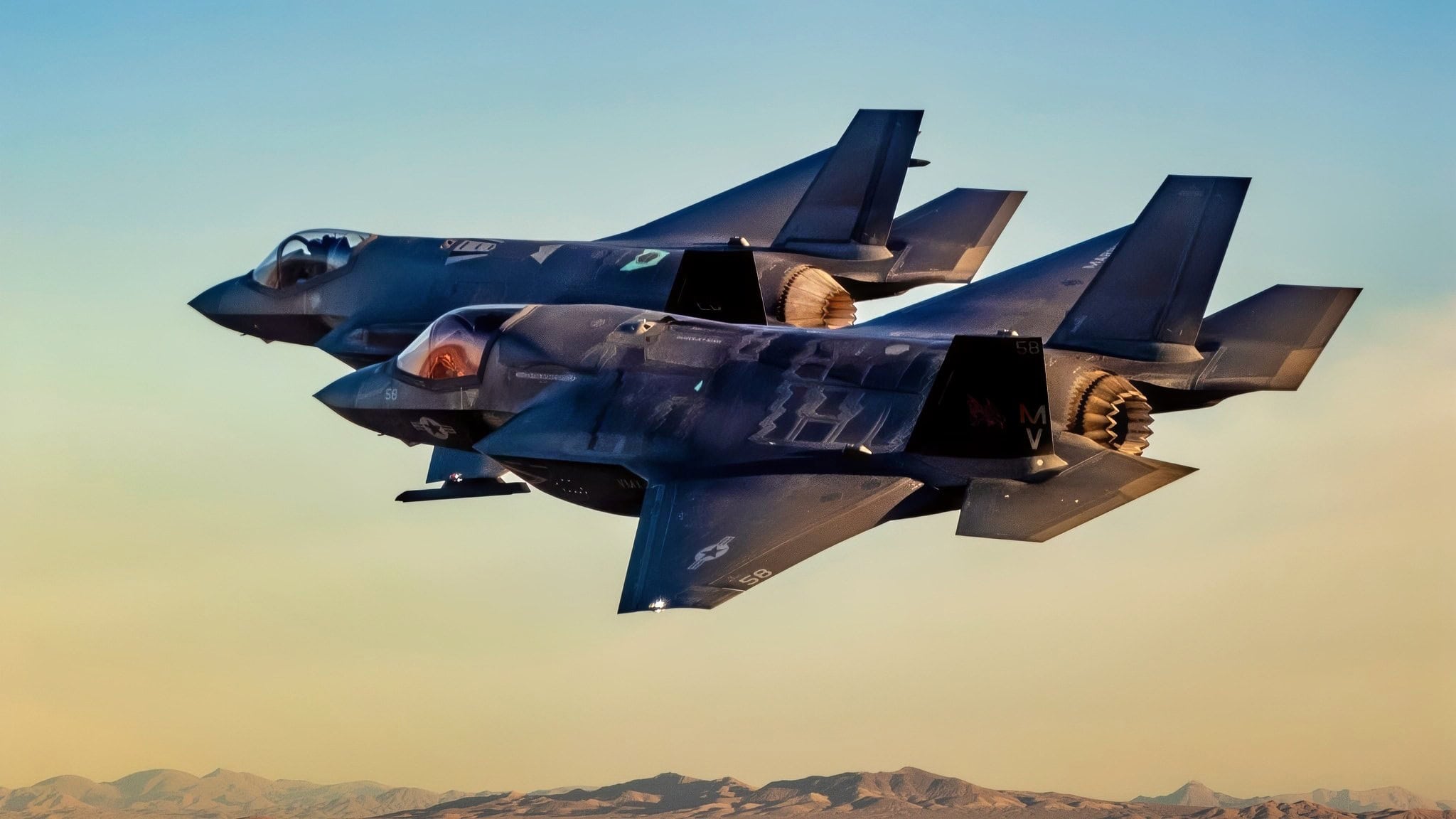
Test pilots with the 461st Flight Test Squadron, 412th Test Wing, return to Edwards Air Force Base, California, on January 21 after conducting a TR-3 AIM-120 live fire mission over the Pacific Test Range. The F-35 Integrated Test Force at Edwards is responsible for developmental testing of all three F-35 aircraft variants across the joint-services. (Courtesy Photo)
Aircraft interoperability, therefore, is not just helpful – it’s arguably necessary to make NORAD work seamlessly. Command has historically operated with different aircraft types on both sides of the border, but in 2026, as systems become more integrated than ever, interoperability is more crucial than ever. And, it’s about more than just fielding identical jets – it’s more about shared communication standards and systems, shared situational awareness systems, and cooperative training and doctrine. All of that is more easily achieved with a homogeneous fleet – especially one with the advanced data fusion and networking capabilities of the F-35.
Carney Has More Cover to Make A Political Decision
With all of this in mind, it’s clear that Carney choosing the Gripen would face backlash – not just from Washington and analysts watching him closely, but even from within the Royal Canadian Air Force. Perhaps that’s why it’s taking so long for a decision to be made: not only is Carney still navigating the Trump diplomacy fiasco, but he’s likely also looking for as many reasons as possible to withdraw from the existing deal, which he can then communicate to the defense establishment and public alike.
Between Carney’s viral speech at the World Economic Forum in Davos, his recent diplomatic efforts with the Chinese, and his efforts to work more closely with Europe, it’s clear Ottawa is looking to become less dependent on the United States.
Carney already had two great excuses to figuratively give President Trump and Washington the middle finger and scrap the F-35 deal: the promise of jobs from Saab and deepening ties beyond the continent. Now, he has another: the United States is ready to pick up the slack for NORAD, and the deal might be altered.
Way Beyond a Stealth Fighter
Whatever Canada’s decision ultimately proves to be, it was never really about airframes or interoperability. The rift with Trump that began before Carney even took office has dramatically influenced decision-making here – few would really deny this. The question now is whether those Gripens Carney seems to want to order will satisfy Canada’s operational needs – not just NORAD.
About the Author:
Jack Buckby is a British researcher and analyst specialising in defence and national security, based in New York. His work focuses on military capability, procurement, and strategic competition, producing and editing analysis for policy and defence audiences. He brings extensive editorial experience, with a career output spanning over 1,000 articles at 19FortyFive and National Security Journal, and has previously authored books and papers on extremism and deradicalisation.