
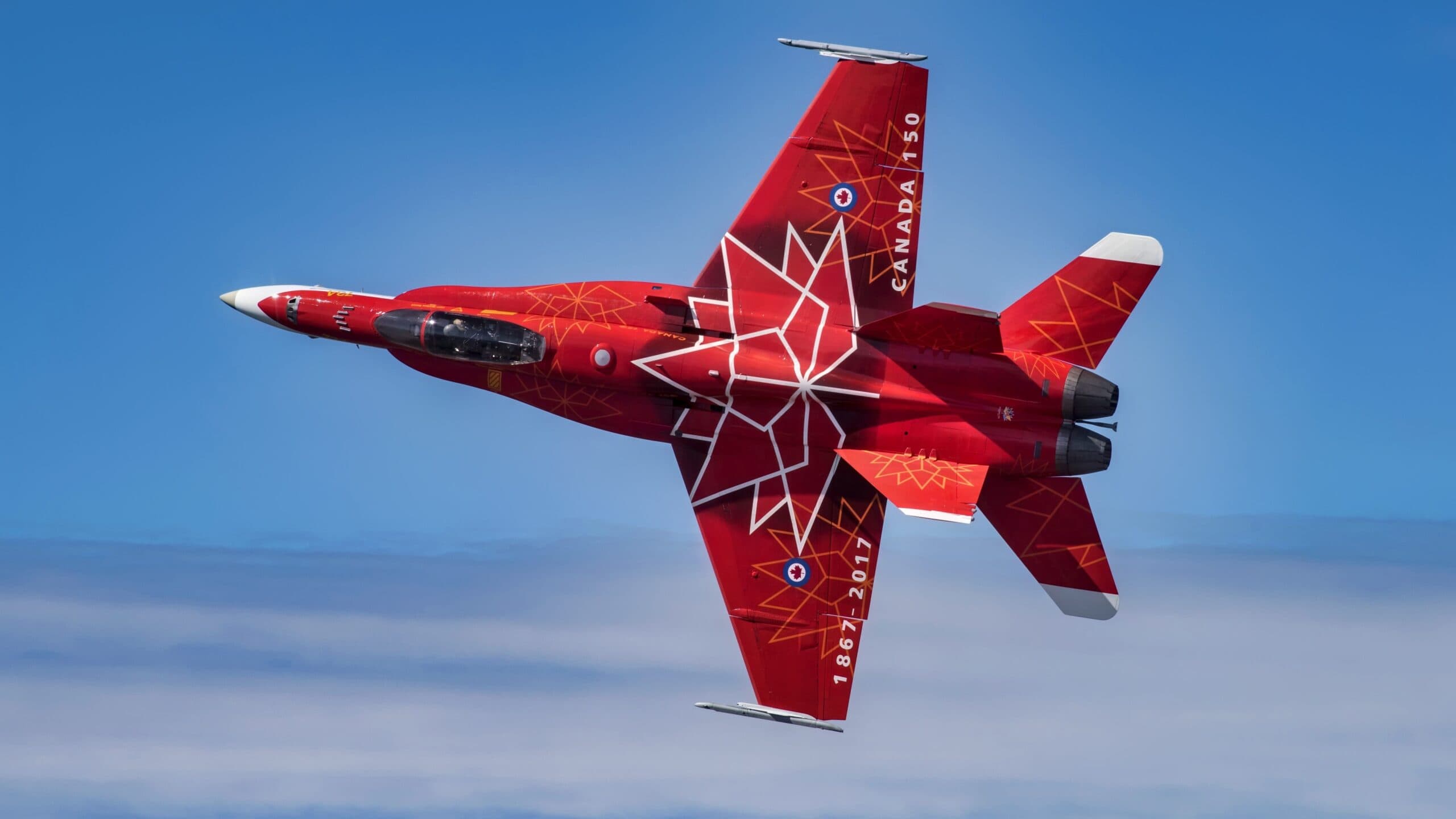
Key Points and Summary – U.S. Ambassador to Canada Pete Hoekstra has expressed personal frustration last month with Ottawa’s lingering indecision regarding the purchase of 88 F-35 fighter jets.
-Following a deterioration in U.S.-Canada relations after Donald Trump’s 2024 re-election, Prime Minister Mark Carney’s government launched a review of the agreement, weighing the American stealth fighter against Sweden’s Saab Gripen E.
-While Hoekstra emphasized that Canada is free to “do what it wants,” he urged a speedy resolution to replace the Royal Canadian Air Force’s aging CF-18 fleet amidst growing security concerns in the Arctic.
US Ambassador Hoekstra Pushes Canada to Finally Decide on F-35 Deal
U.S. Ambassador to Canada Pete Hoekstra recently shared his thoughts on Canada’s indecision regarding the F-35.
He noted that the U.S. will make the best sales pitch it can, and he hopes Canada will complete its planned purchase of 88 F-35s—but in the end, Canada is free to do what it wants.
He added that the whole debate was personally irritating to him, and he hopes Canada will make a final decision soon.
Canada Can Do What It Wants
In an interview with the National Post, Ambassador Hoekstra stated, “Canada can do what it wants on the F-35, OK?”
The F-35’s Canadian saga goes all the way back to 2011, when then-Prime Minister Stephen Harper first announced Canada’s intentions to procure the fighter. So controversial was the announcement, that it led to a vote of non-confidence in Parliament, and a new election.
During the 2015 federal elections, Justin Trudeau promised to cancel the deal.
However, Canada allowed the F-35 to remain in the competition for Canada’s next-generation fighter. In the meantime, the Royal Canadian Air Force (RCAF) acquired F/A-18s from Australia as a stopgap measure.
The matter seemed to mellow out, and it looked like the F-35 Lightning II would become Canada’s newest fighter.
Then U.S. President Donald Trump was elected for his second term, in 2024. Relations between the U.S. and Canada faltered significantly in the following months—when Trump took office, he made a number of inflammatory comments, including suggestions that Canada should become the 51st state of the union.
This harmed the F-35 deal, as Canada began exploring whether it should terminate the purchase of the Lightning II.
Under newly elected Prime Minister Mark Carney, the RCAF launched a review of the aircraft to determine whether it was really the best fit for Canada—and whether it was worth the high price tag.
F-35 or the Gripen?
Seeing an opportunity, Saab stepped in to pitch its JAS 39 Gripen E to Canada. The Gripen has received international praise for its success as an export, and its comparatively lower cost (though it should be noted that recent exports put the per-unit cost of the JAS 39 around the same as the F-35).
Despite being outperformed by the F-35 in several metrics in past competitions, geopolitical shifts positioned the Gripen as a viable alternative to the American stealth fighter.
The choice now stands between the F-35 and the JAS 39 after Canada eliminated the F/A-18E/F Super Hornet from the competition.
The U.S., meanwhile, still believes that the F-35 remains the best and most logical choice for the RCAF. According to Hoekstra, the U.S. will put forward “a strong case” as to why Canada should move forward with plans to purchase the F-35, and why Washington believes the American-made fighter jet to be the best option for Canada.
The ambassador pointed out that Canada was one of the few allies that does not currently fly the F-35; this is due to change soon, as Ottawa receives a batch of 16 aircraft that it is contractually obligated to accept.
Canada Must Make a Choice Soon
Above all, the ambassador to Canada expressed frustration with the Carney government’s refusal to make a final decision.
“Does it irritate me, personally, that we’re revisiting this issue again? Yeah, it’d be nice to put this one to bed and just move forward,” Hoekstra said. “It would be nice if Canada made a commitment, but if they want to go through another review, they can go through another review.”
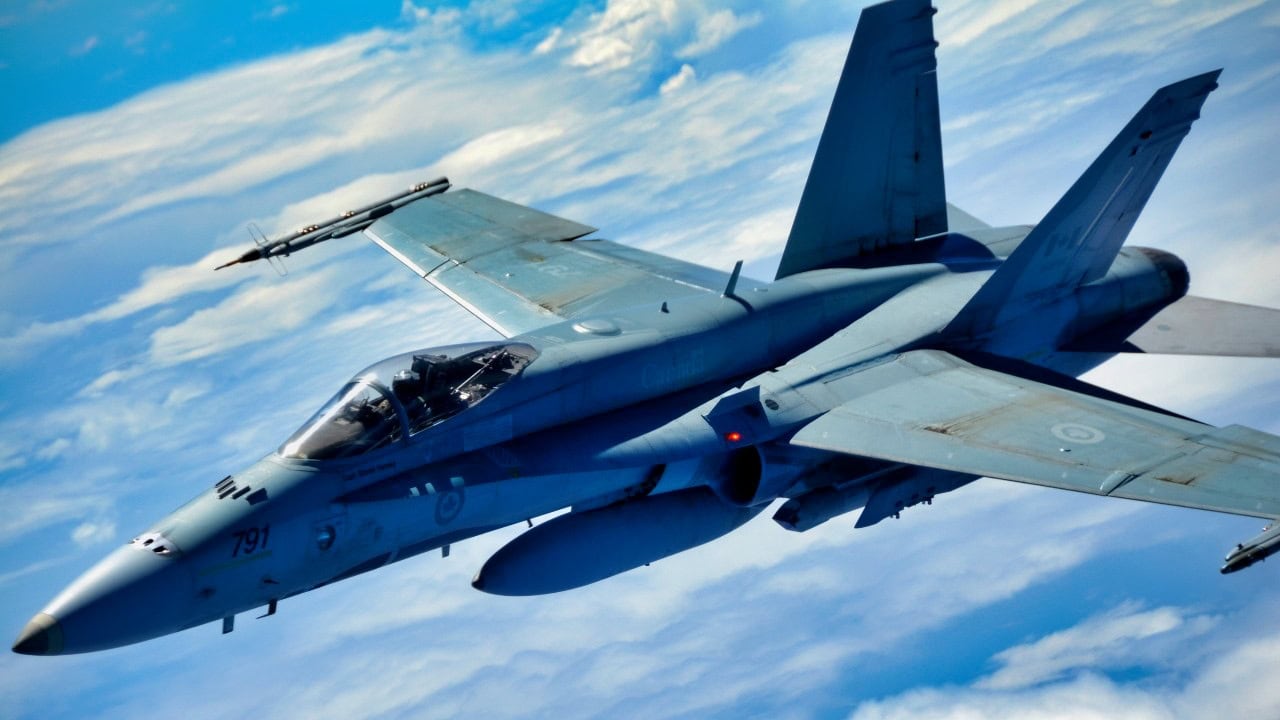
JOINT BASE PEARL HARBOR-HICKAM (July 11, 2016) A Royal Canadian Air Force CF-18 Hornet flies alongside a KC-135 Stratotanker flown by a crew from the 465th Air Refueling Squadron, Tinker Air Force Base, Okla., in support of Rim of the Pacific 2016. Twenty-six nations, more than 40 ships and submarines, more than 200 aircraft and 25,000 personnel are participating in RIMPAC from June 30 to Aug. 4, in and around the Hawaiian Islands and Southern California. The world’s largest international maritime exercise, RIMPAC provides a unique training opportunity that helps participants foster and sustain the cooperative relationships that are critical to ensuring the safety of sea lanes and security on the world’s oceans. RIMPAC 2016 is the 25th exercise in the series that began in 1971. (U.S. Air Force photo/Master Sgt. Grady Epperly)
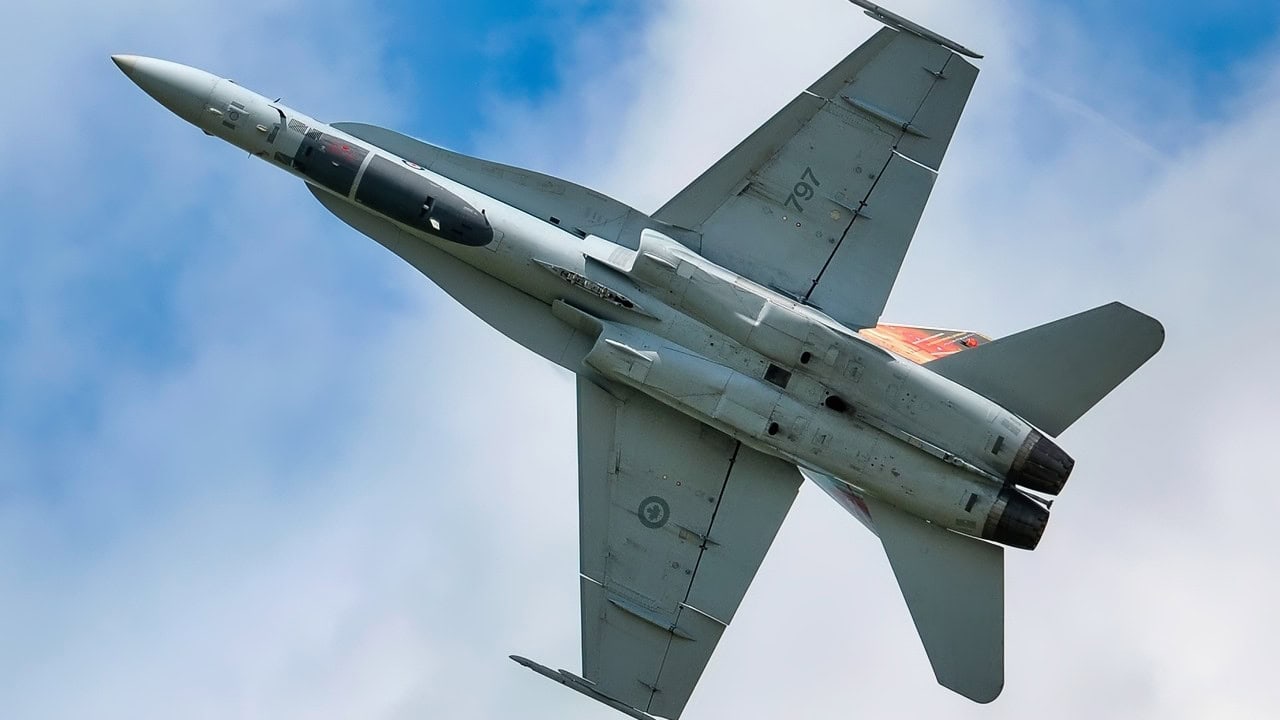
Canada CF-18 Hornet Fighter.
At this point, Canada has spent several years deliberating over the F-35—and the RCAF has expressed its preference for the stealth fighter numerous times.
Hoekstra’s views mirror my own on the topic. With Canada’s CF-18s growing older and older, Canada needs to make a final decision for the future of its Air Force.
With Russia expanding its presence in the Arctic, the decision is a matter of strategic importance.
Meanwhile, the review of the F-35 is still ongoing. The military was supposed to deliver its report by the end of summer, and while they made a case for sticking with the F-35, the final decision rests in the hands of the Carney government.
Currently, Canada is slated to receive a total of 88 F-35s unless the government cancels the order. Some argue that the aircraft is the most economically viable option due to its more mature production lots and the jobs it can create at maintenance facilities.
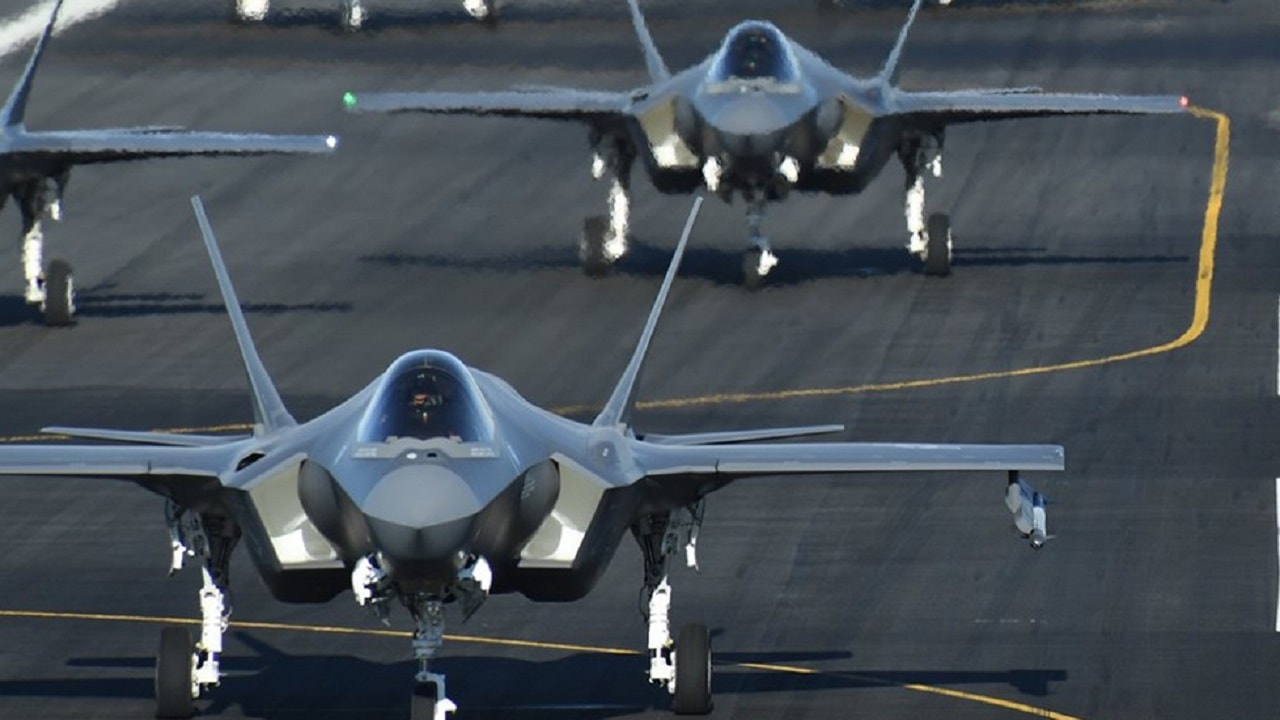
The active duty 388th and Reserve 419th Fighter Wings conducted an F-35A Combat Power Exercise with 52 aircraft at Hill AFB, Utah, Jan. 6, 2020. 388th Fighter Wing photo via Facebook.
The F-35 is also unmatched in its stealth and sensor-fusion capabilities, making it ideal for deterrence and allied interoperability.
Ultimately, Hoekstra is right: Canada is free to do whatever it wants.
Whether it selects the aircraft ultimately rests with the government of Canada, not the U.S. However, at the same time, Canada desperately needs a new aircraft to replace its old CF-18s.
China and Russia are both modernizing and expanding their own air forces, while Canada has spent years figuring out what to do. The debate needs to end, and action must be taken.
About the Author: Isaac Seitz
Isaac Seitz, a Defense Columnist, graduated from Patrick Henry College’s Strategic Intelligence and National Security program. He has also studied Russian at Middlebury Language Schools and has worked as an intelligence Analyst in the private sector.