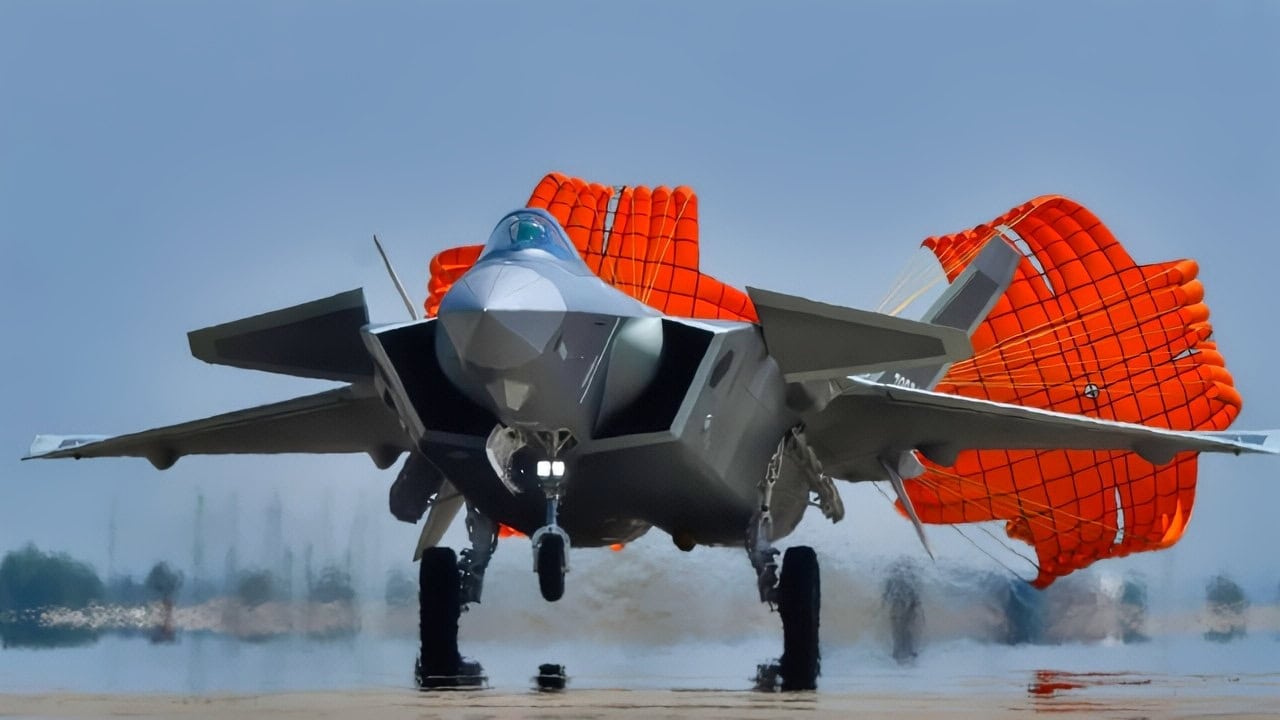
Summary and Key Points: Reuben F. Johnson, Director of Research at the Casimir Pulaski Foundation, evaluates the PLAAF’s massive Red Sword exercise based on analysis by J. Michael Dahm of the Mitchell Institute.
-Utilizing commercial satellite imagery, Dahm identified a 1,200-nautical-mile operational area involving J-20 stealth fighters, H-6 bombers, and KJ-500 AEW&C aircraft.
-This 19FortyFive report analyzes China’s staggering industrial expansion, noting that AVIC has added 8 million square feet of manufacturing space since 2021—surpassing the Lockheed Martin Fort Worth complex—as Beijing prepares to field the world’s largest fighter force by 2029.
Operation Red Sword: Inside the China Air Force Secret 200-Aircraft Exercise in Remote Western China
Recently obtained commercial satellite imagery reveals that in late 2025, the People’s Liberation Army Air Force (PLAAF) conducted a comprehensive five-week air exercise that encompassed eight air bases and included at least 200 aircraft. The training covered a 1,200-nautical-mile stretch of Chinese territory.
This operation, believed to have been conducted under the title of Red Sword, is a larger version of the U.S. Air Force’s Red Flag exercise. An assessment of the exercises was given at the Air & Space Forces Association Warfare Symposium on February 25 by J. Michael Dahm, a senior fellow at the Mitchell Institute for Aerospace Studies.
Dahm explained this is the largest exercise of Chinese air power that you never hear much about—because the PLAAF does not make a habit of discussing it publicly. It is also held far away from any prying eyes, in one of the most remote western regions of China—an almost uninhabited area.
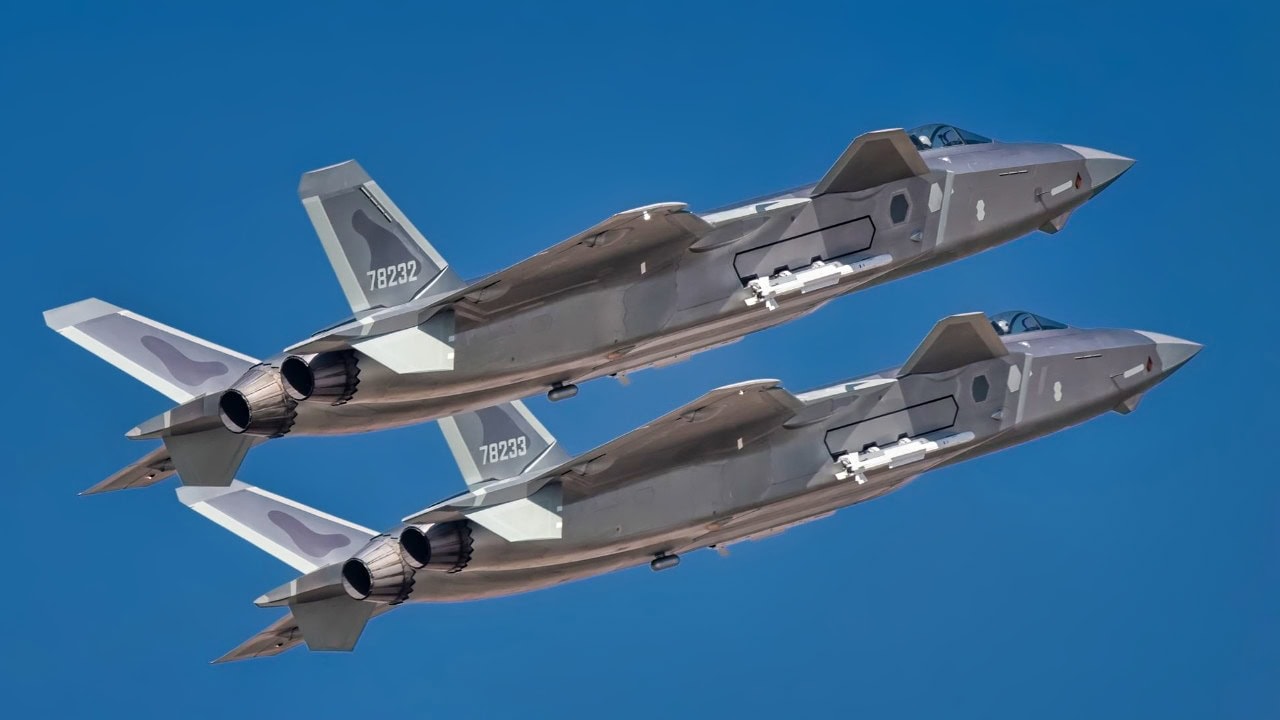
J-20 Mighty Dragon. Image Credit: Creative Commons
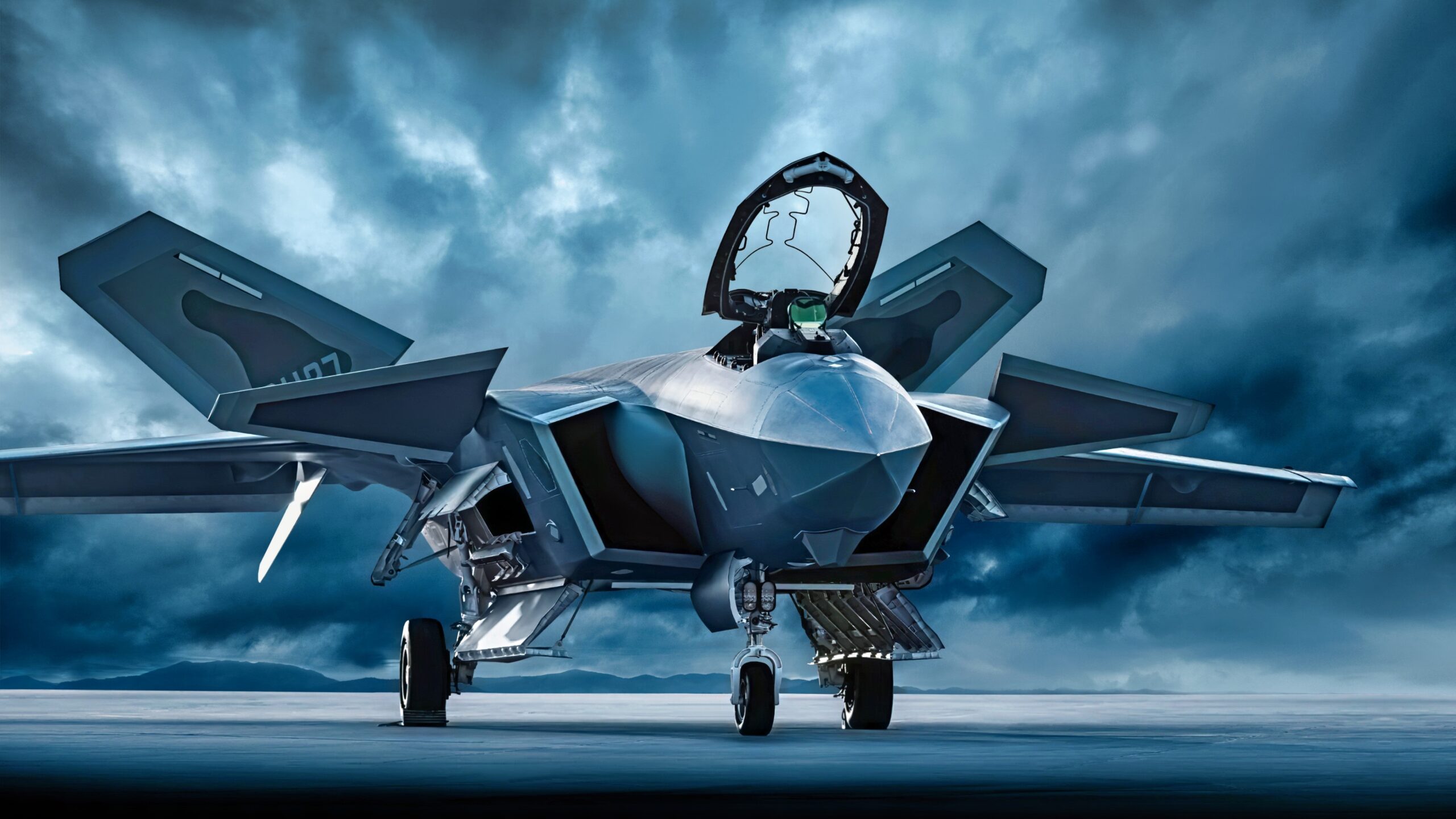
J-20 Fighter 2025 Artist Rendition. Image Credit: Creative Commons.
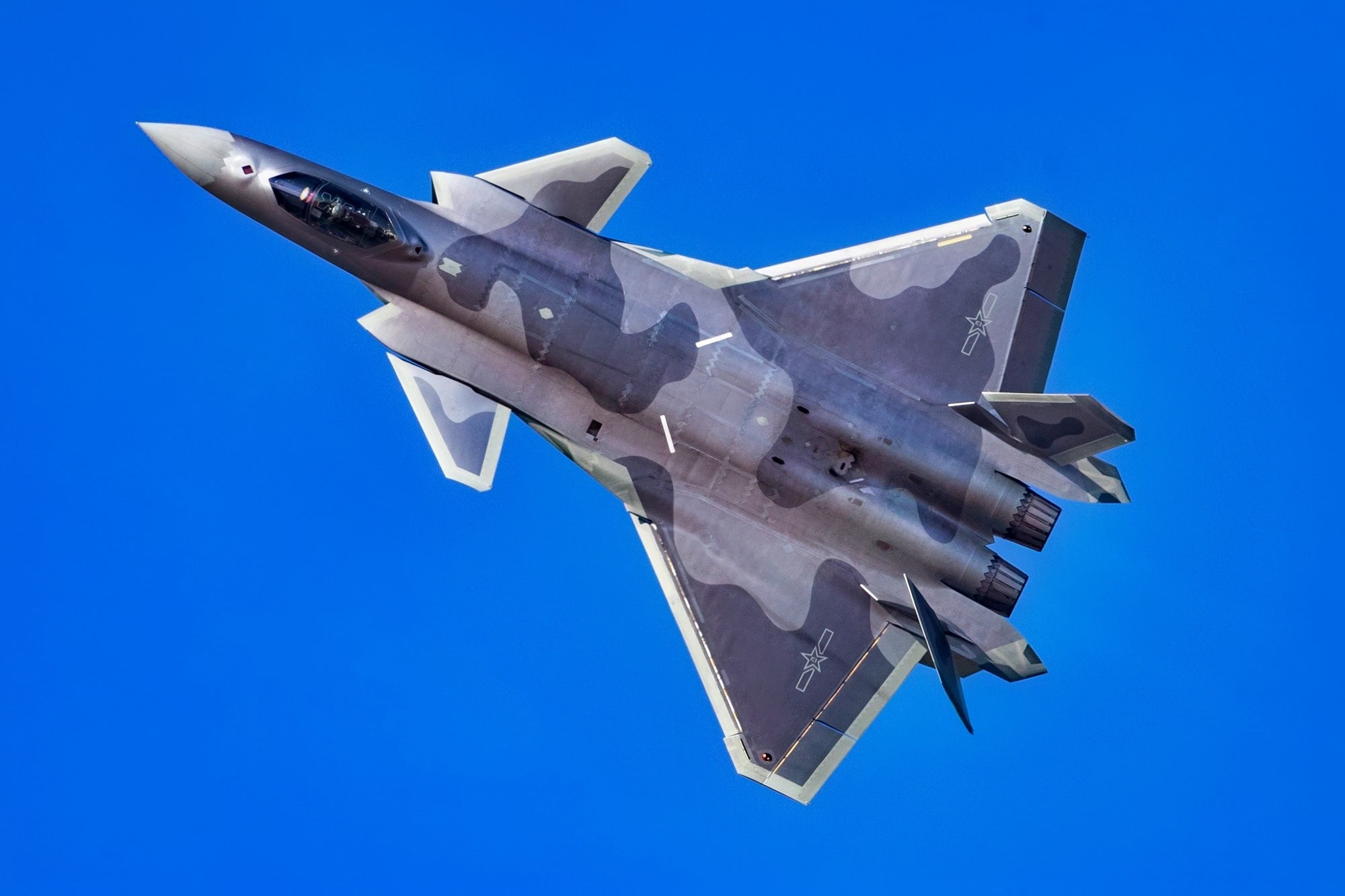
J-20 Fighter from China. Image Credit: Creative Commons.
Most of what is reported openly about the actions of the Chinese military are what Dahm describes as “the flashy one- or two-day exercises the PLA conducts on the Taiwan Strait.” That’s where the focus is, because that is “mostly because that’s what the PLA wants you to focus on,” Dahm explained.
Imagery Is The Tell
There are few details regarding the PLAAF’s previous exercises held in 2013, 2017, and 2020, but Dahm’s analysis of the 2025 event offers several new insights into the development of the PLAAF as a modern-day force.
One important insight comes from imagery of a base that is normally the home for Shenyang J-16 fighters. He discovered that an uncharacteristic flotilla of many other types—Chengdu J-20 fighters, Xi’an H-6 bombers and Y-20 transports, and Shaanxi KJ-500 airborne early warning and control aircraft—now appeared on the flightline.
“There was nothing in the news about tensions on the China-India border, or something that would justify a buildup [of air power] in western China,” he explained. “When I started looking at activity at other airfields in the western theater command, it became pretty obvious that I had found a major PLA Air Force exercise involving eight air bases.”
At each of those bases, he noticed similar mixes of aircraft, as if each base was supposed to play the role of one adversary group or another. Dahm counted 194 airframes in the open, and that did not include any aircraft, such as J-20s, that could have been parked in hangars. Stealthy aircraft are often sheltered whenever possible, as exposure to the elements can degrade special surface materials and compromise its radar signature.
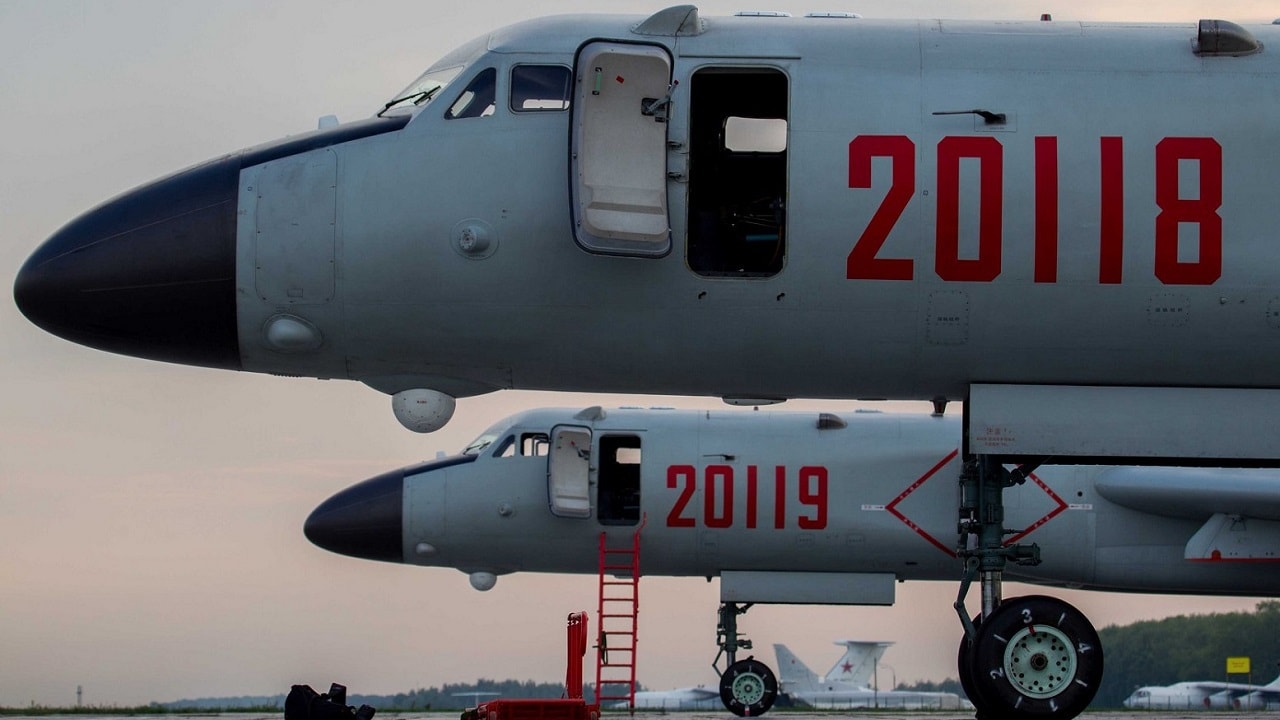
Image of Chinese JH-6 bombers on the ready. Image Credit: Creative Commons.
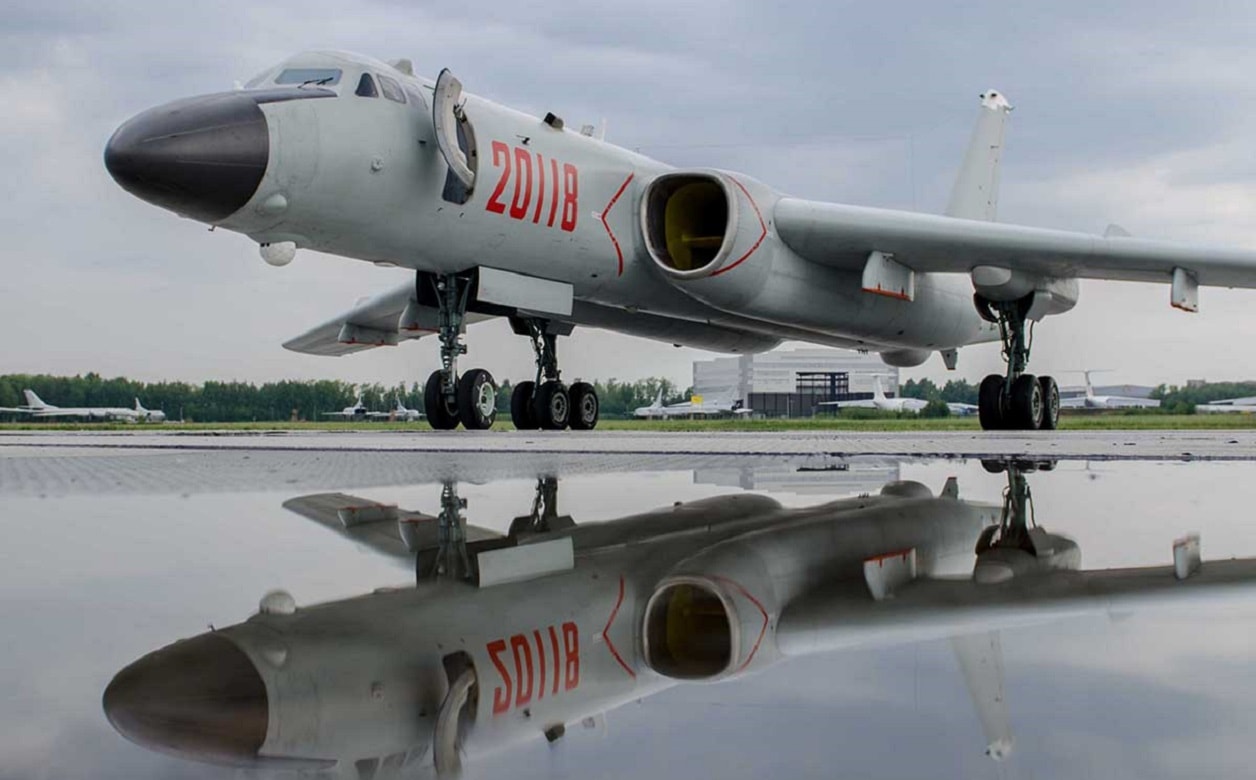
H-6 Bomber. Image Credit: Creative Commons.
“The total exercise count could be north of 200, maybe as many as 250” aircraft, Dahm said. “Maybe more impressive is that the exercise area in western China appeared to span an area of over 1,200 nautical miles. This is the largest Red Sword exercise we’ve observed over the past several years through [the use of] open source intelligence.”
For comparison, the latest Red Flag drill, held at Nellis Air Force Base earlier this month and combined with the new multinational Bamboo Eagle exercise, was conducted over a period of just three weeks and included only 150 aircraft. Most of the exercise was spread out over 1,000 miles across the western United States but also included units as far afield as Hawaii and Florida.
Increase in Capacity
By late November, Dahm said, he had observed most of the aircraft involved in the exercise forming up at Dingxin Air Base in the Gobi Desert. This base is sometimes compared to Nellis AFB in the United States and is also referred to as “China’s top-secret desert airbase.”
“We saw over 100 aircraft on the ramp, not counting those that might have been tucked away in hangars. Those aircraft operated out of the desert air base for a little over two weeks,” Dahm said.
“Saying this was a Red Sword exercise is an assessment. We can’t tell the name of the exercise just by looking at imagery, but when 200 aircraft walk into a bar in western China, there are only a couple of ways that that joke ends, and Red Sword is at the top of the list,” he continued.
The imagery he analyzed also indicated how the PLAAF was running the exercise, and the outcomes they were hoping it would generate. In one of the images, he showed small detachments of J-10, J-16, and J-20 fighters that could all be seen gathered at the same aerodrome.
Seeing so many mismatched types together indicates “these aircraft might be conducting dissimilar air combat training: fighters fighting different types of fighters,” he speculated.
“Worst case scenario, the PLA Air Force has moved on to fighter integration, developing tactics, techniques and procedures to combine the capabilities of fourth- and fifth-generation fighters.”
Perhaps even more alarming were the increases that he noticed in Chinese defense-industrial facilities owned by the state-run Aviation Industry Corporation of China (AVIC)—as well as expanded PLAAF test sites.
Dahm took note that in the past six months, the Chinese have built “an additional 60,000 square feet of hangar space and over 300,000 square feet of additional facility space” at a remote PLAAF base typically used to test and evaluate classified programs.
He observed prototype sixth-generation J-36 and J-50 fighters parked out in the open, despite the normal practice of keeping such aircraft out of sight in hangars. He wondered whether the PLAAF is trying to show off its latest developments.
J-36 X Screenshot
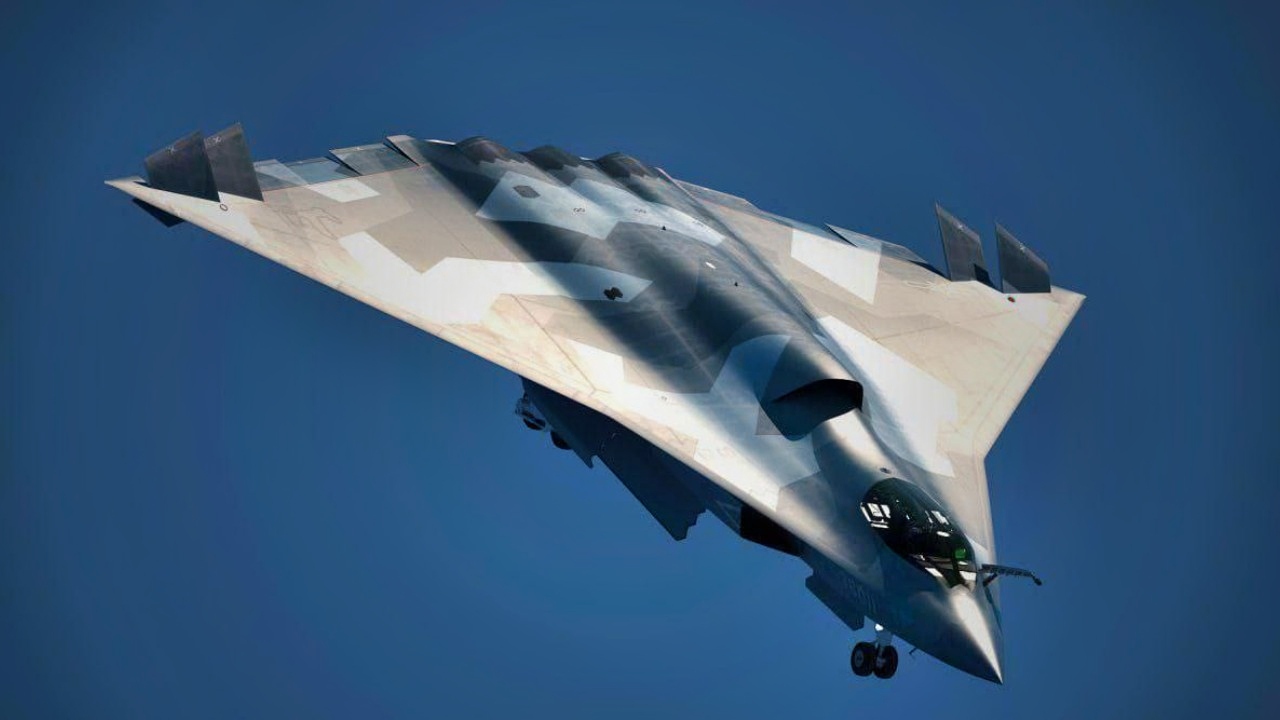
J-36 Fighter Artist Rendition. X Screenshot.
China’s commercial aerospace industry is also expanding rapidly, which he said could be seen in the comparison of satellite images of four facilities belonging to AVIC. Dahm estimated that the Chinese have added 8 million square feet in aircraft manufacturing space since 2021, which is “more than the entire [Lockeed Martin] F-35 manufacturing complex in Fort Worth, Texas.” This production space is in addition to the manufacturing and design capacity that AVIC already has.
This accelerated growth in airpower-production assets comes as the PLA is divesting itself of older aircraft types and replacing them with next-generation models. If Dahm’s briefing is any indication, the PLAAF is putting more resources into expanding and modernizing air power than the rest of the world combined.
“Based on the worst-case numbers, the PLA Navy and Air Force will have a fighter force as large as the US fighter force by 2028 that includes all US Navy, Marine Corps, and Air Force fighters. By 2029, China will have the largest fighter force on the planet and will continue to grow,” he stated.
About the Author: Reuben F. Johnson
Reuben F. Johnson has thirty-six years of experience analyzing and reporting on foreign weapons systems, defense technologies, and international arms export policy. Johnson is the Director of Research at the Casimir Pulaski Foundation. He is also a survivor of the Russian invasion of Ukraine in February 2022. He worked for years in the American defense industry as a foreign technology analyst and later as a consultant for the U.S. Department of Defense, the Departments of the Navy and Air Force, and the governments of the United Kingdom and Australia. In 2022-2023, he won two awards in a row for his defense reporting. He holds a bachelor’s degree from DePauw University and a master’s degree from Miami University in Ohio, specializing in Soviet and Russian studies. He lives in Warsaw.