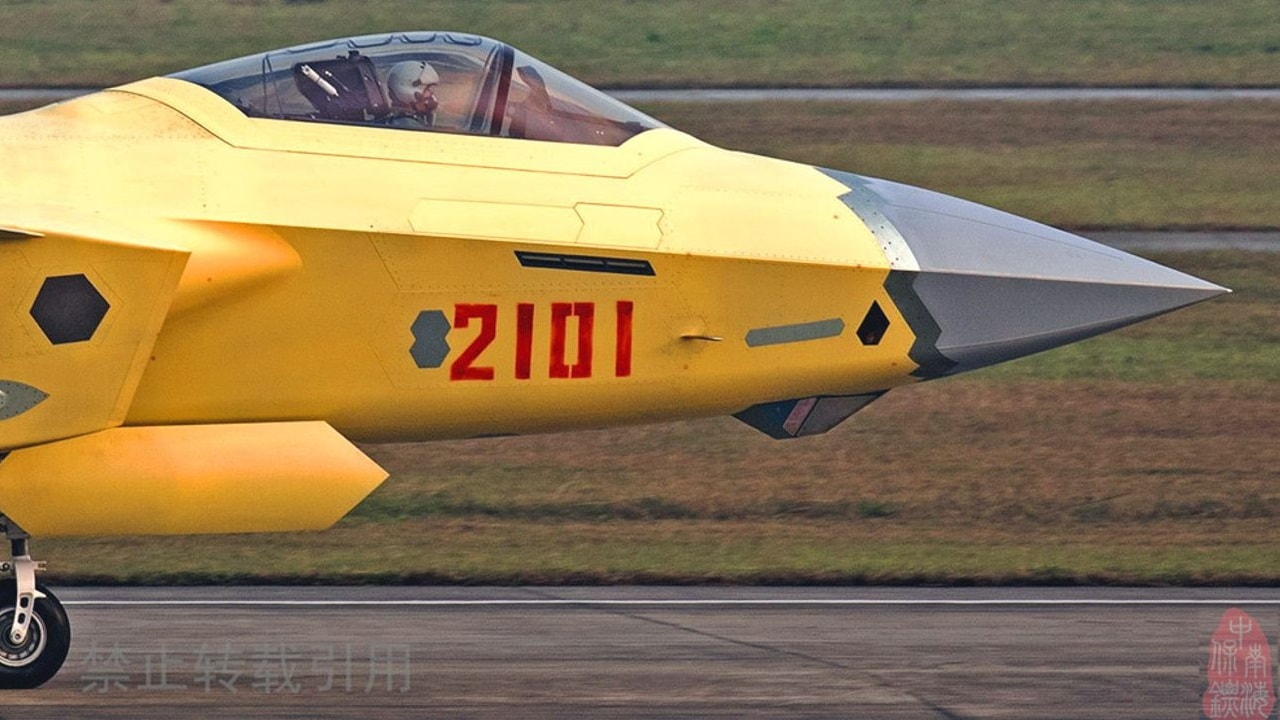
Synopsis: The dual-seat J-20S represents a major leap in PLAAF operational capacity, functioning as a high-altitude command-and-control node.
-By adding a second “aviator” seat, China is mirroring the U.S. Collaborative Combat Aircraft (CCA) strategy, allowing one pilot to focus on flight while the other directs drone swarms and manages complex sensor data.
-Reports from the Pentagon’s National Defense University in 2025 suggest the J-20’s larger radome accommodates 50% more T/R modules than the F-22, potentially offering superior standoff detection.
-This “bomb-truck” capability, combined with hypersonic integration, makes the J-20S a premier “carrier hunter” in the Pacific theater.
Aircraft Carrier Killer in the Clouds: How China’s Twin-Seat J-20S Stealth Jet Targets U.S. Flattops
The arrival of a twin-seat J-20S “Mighty Dragon” seems to suggest that the People’s Liberation Army Air Force (PLAAF) is intensively pursuing manned-unmanned teaming and the “loyal wingman” strategies employed by the United States, as well as aerial command and control, targeting, and potential “carrier killer” missions from the sky.
By adding an F-14-like “aviator” seat, the J-20S will likely operate as an aerial command-and-control node in the sky, able to direct drone attacks and network key data across multiple domains, in a manner similar to the F-47, F-22, and F-35.
U.S. Air Force Collaborative Combat Aircraft are already airborne, and the Pentagon has long maintained that its 6th-generation stealth fighter will be a “family of systems.”
The emerging F-47 is expected to operate many drones from the cockpit to test enemy air defenses, blanket areas with intelligence, surveillance, reconnaissance (ISR), and even fire weapons when directed by a human.
It seems entirely feasible that the PLA intends a similar operational capacity for its two-seat J-20S, as it could enable an “aviator” to focus on sensing, targeting, command and control, and air-to-surface attack.

USS John C. Stennis Aircraft Carrier. Image Credit: Creative Commons.
Hunting U.S. Navy Carriers
The J-20 is longer than an F-22 and can operate in a “bomb-truck“-like capacity, so it could potentially fire hypersonic weapons and a range of air-to-surface weapons designed to attack warships such as U.S. Navy carriers.
There is yet another dimension to the threat posed by the two-seat J-20S, and it relates to aerial missile attack, sensing technology, carrier “hunting,” and the possible integration of hypersonics. With an “S” variant that includes a pilot and an aviator working collaboratively, longer-range air-and-surface targets, such as U.S. Carrier Strike Groups, might be detected and attacked more easily.
J-20 AESA Radar Makes It All Possible
Detection range figures prominently in this equation, and the J-20 AESA radar appears to be equipped with long-range detection technology capable of “seeing” enemy aircraft and warships from greater standoff distances.
This might be the case because the J-20 operates with a larger nose radome that can accommodate a large number of densely packed transit-receive (T&R) modules. Academic research establishes a clear, linear relationship between T/R modules and radar effectiveness.
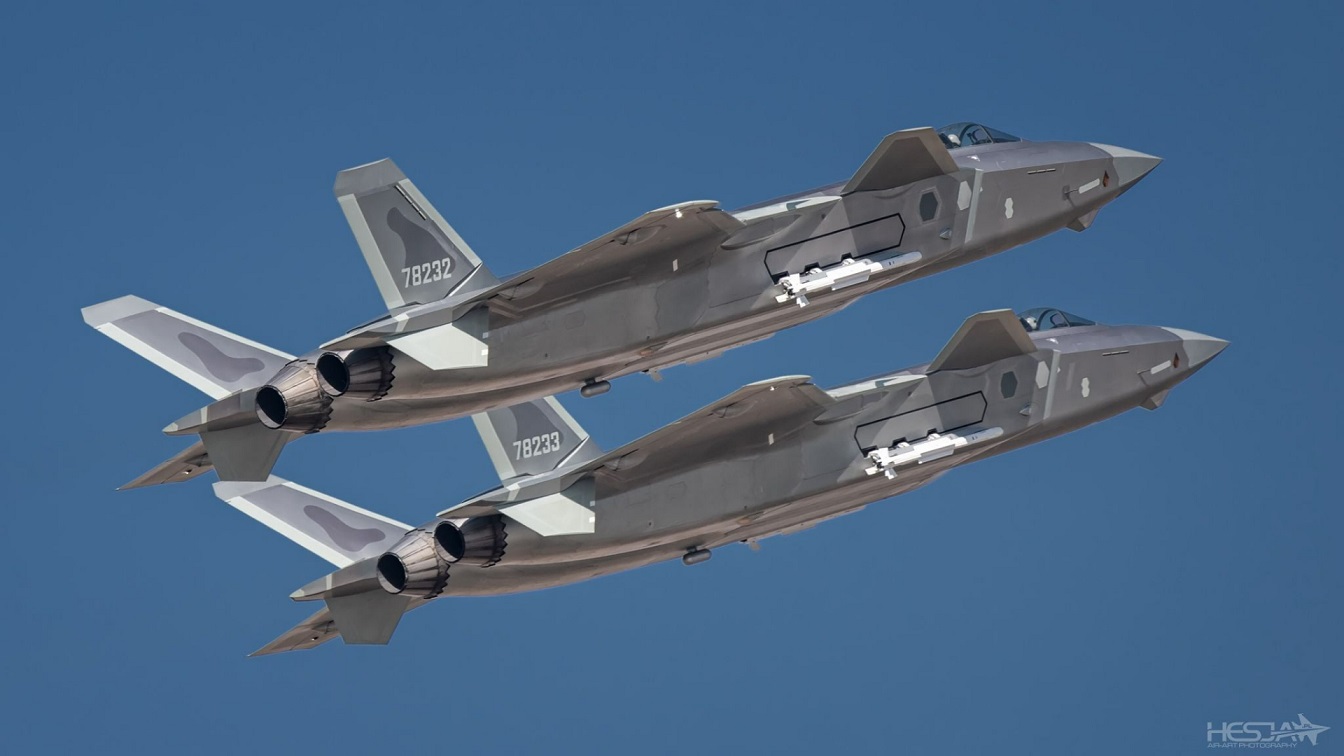
J-20 Stealth Fighter. Image Credit: Creative Commons.
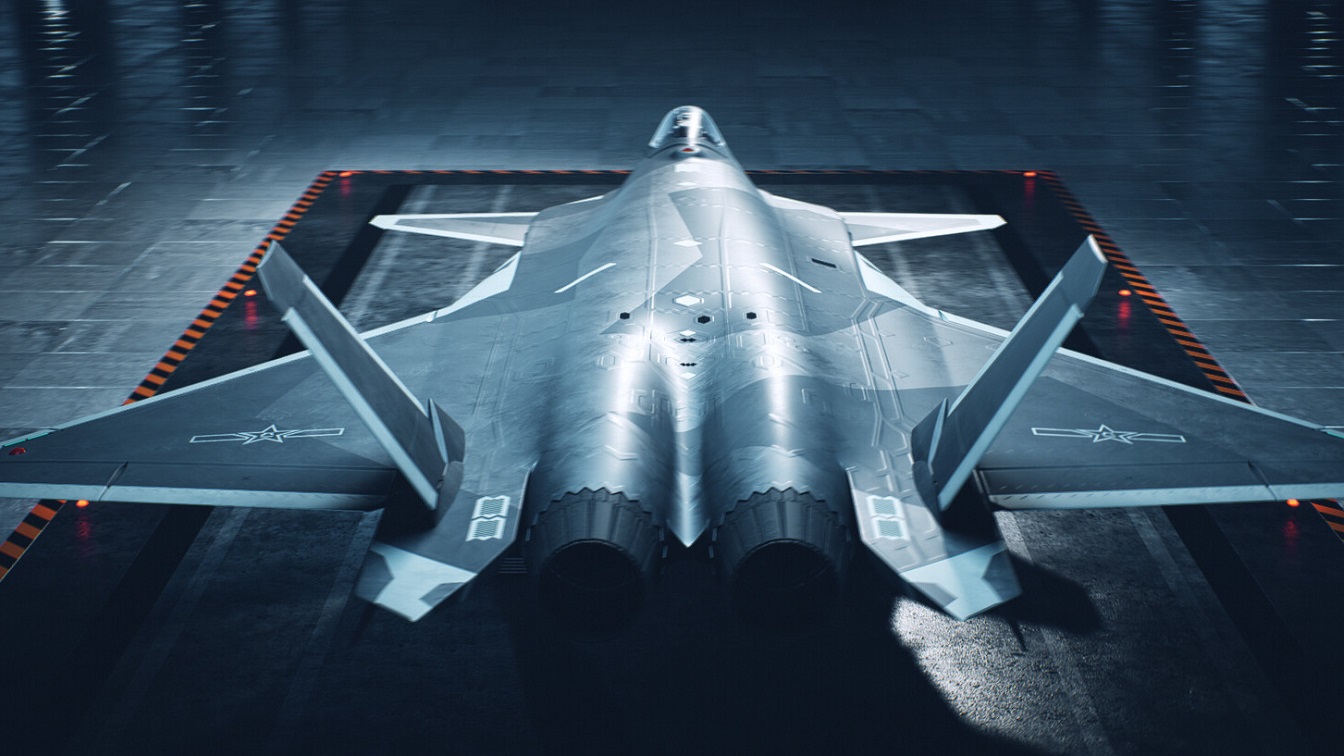
J-20. Image Credit: Chinese Internet.
A 2025 academic paper published by the Pentagon’s National Defense University’s Air University cites evidence that the J-20 AESA radar could be more powerful and longer range than its U.S. equivalents.
According to a 2016 essay in Sina Military News, the J-20 radar achieves 50-percent more power than the F-22 and reaches a comparatively longer detection range.
The essay further establishes a direct and clear connection between T/R modules and detection distance; ‘it can be seen that the number of T/R modules directly determines the size of the transmission power and the distance of the detection distance … the TR module is equivalent to a relay station and signal amplifier.'”
The presence of a longer-range or more powerful AESA radar does not mean a J-20 would prevail in an engagement with an F-22 or F-35, as there are many components to air superiority. Yet, it would suggest a “counter-interventionist” operational concept.
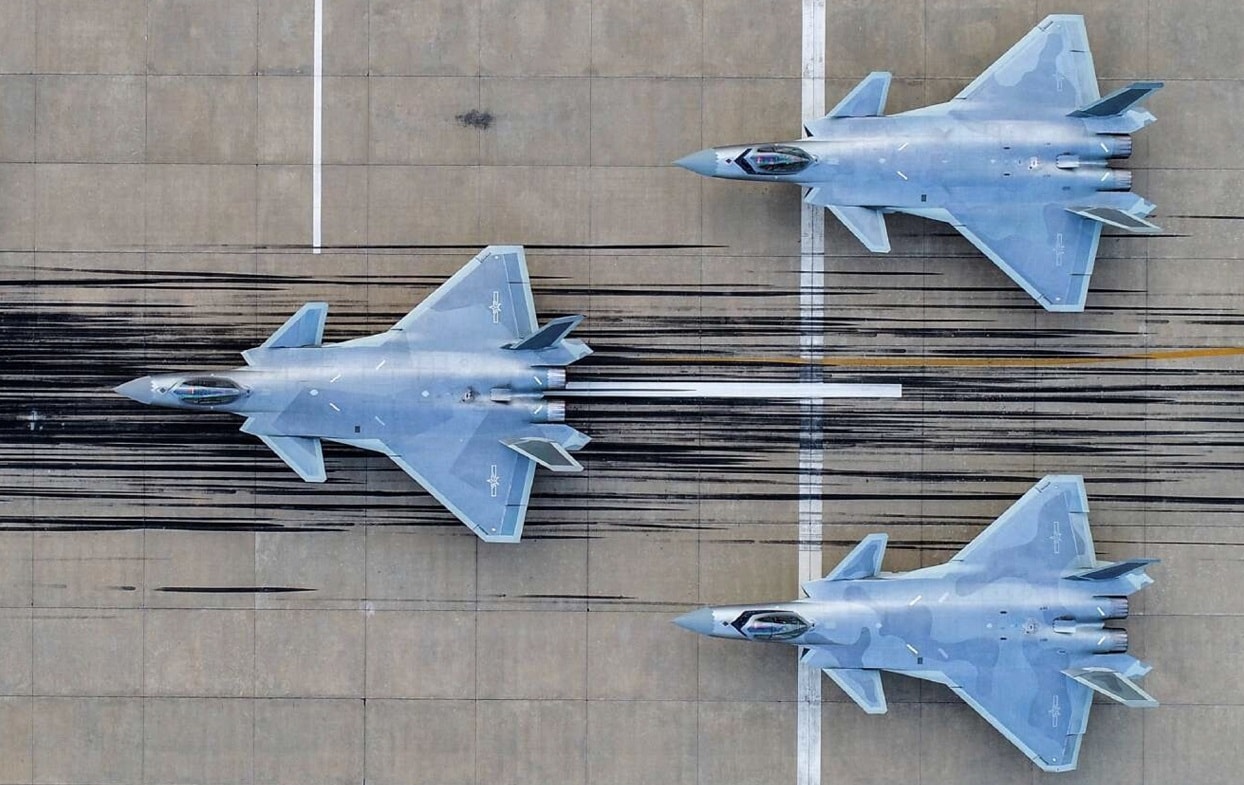
J-20. Image: Creative Commons.
This concept can also operate in a purely offensive capacity, enabling long-range air-to-surface attacks on U.S. carriers if the J-20 AESA radar generates high-fidelity images from standoff ranges.
J-20S Air-to-Surface Attack
Perhaps the PLA sees the J-20S as a key command-and-control, drone-controlling aerial node fighter able to defend the perimeter of mainland China and “see” and “attack” incoming threats from a longer standoff range.
A key concept here would be for the PLA AF to attempt to attack from distances where it would be more difficult for ship-based Aegis radar to “see.”
About the Author: Kris Osborn, Warrior Maven
Kris Osborn is the President of Warrior Maven – Center for Military Modernization. Osborn previously served at the Pentagon as a highly qualified expert in the Office of the Assistant Secretary of the Army—Acquisition, Logistics & Technology. Osborn has also worked as an anchor and on-air military specialist at national TV networks. He has appeared as a guest military expert on Fox News, MSNBC, The Military Channel, and The History Channel. He also has a Masters Degree in Comparative Literature from Columbia University.