
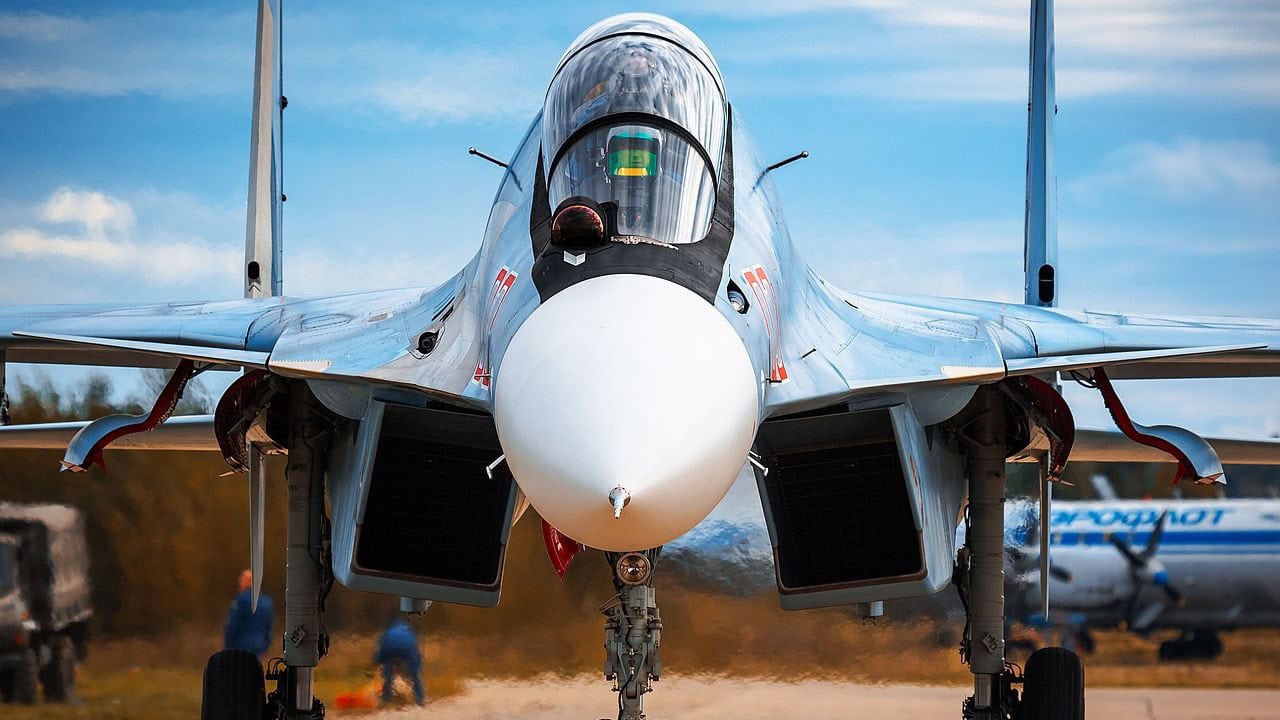
Rostec Just Delivered New Su-34s and Su-30SM2s to Russia’s Military. It Won’t Say How Many, and the Photos Suggest the Answer Is Four
On July 9, Russia’s state defense conglomerate Rostec announced that United Aircraft Corporation had delivered fresh batches of Su-30SM2 multirole fighters and Su-34 fighter-bombers to the Russian military, complete with factory-test boilerplate and a glowing testimonial from an unnamed pilot. The announcement did not include a number. Independent analysts counting airframes in UAC’s own photos and video put the batch at two to four aircraft, against more than 60 documented losses of these two types since 2022. The most informative fact in Rostec’s announcement is the one it leaves out, and the arithmetic explains the silence.
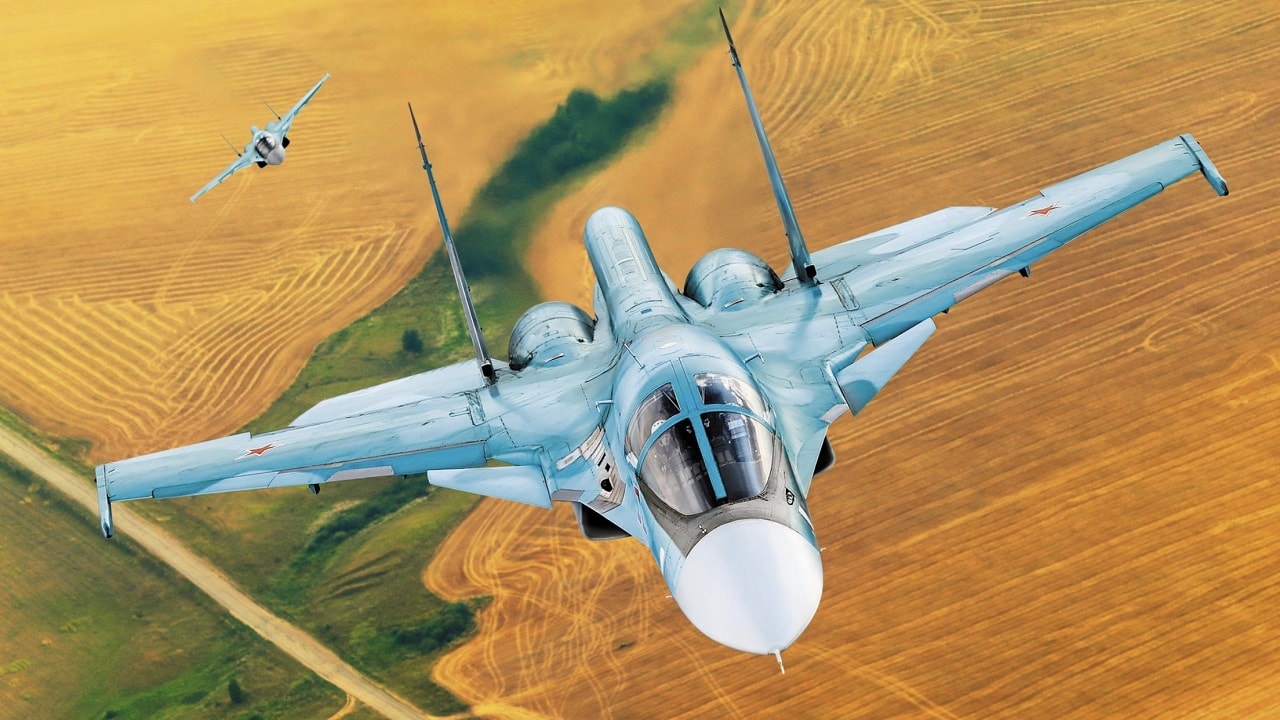
Russian Air Force Su-34 Fighter. Image Credit: Creative Commons.
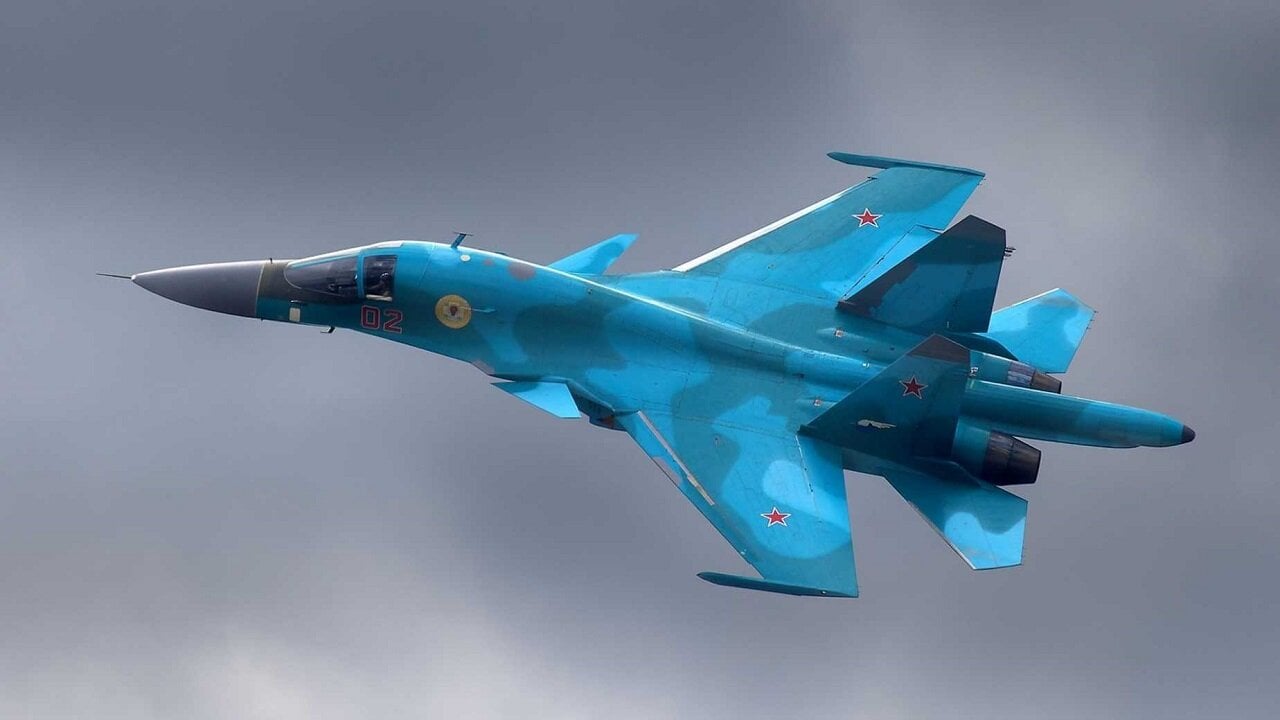
Su-34 Fullback. Image Credit: Creative Commons.
Russia’s Air Force Gets An Injection of New Warplanes
The delivery itself is real, and Rostec framed it confidently. The United Aircraft Corporation, the announcement said, had completed the full cycle of ground and flight factory tests before sending the jets to their duty stations under the state defense order, and UAC chief executive Vadim Badekha emphasized that the aircraft are continuously upgraded based on experience from the war in Ukraine, according to the statement carried by Russian state media. An unnamed Su-30SM2 pilot supplied the customary praise. This is the standard shape of a Russian delivery announcement in the fourth year of the war, and on its face, it reads as evidence that the aircraft industry is holding up its end. The more closely you read it, the more it reads as the opposite.
What Rostec Announced, and What It Left Out
Start with the details the announcement skipped or buried. The Ukrainian defense outlet Militarnyi, working from UAC’s own published imagery, noted that Russia is keeping the number of aircraft delivered under wraps and that the photos and videos suggest the batch consists of either two or four jets. The same reporting adds the quiet part: the new Su-34s are replacing aircraft destroyed or damaged in the war, along with airframes simply reaching the end of their service lives from constant use in bombing sorties against Ukrainian positions. A delivery announcement that specifies everything except the quantity, for a fleet that open-source trackers can count from wreckage photographs, is a choice, not an oversight.
There was one genuinely notable detail in the handover, and it went to the sea rather than the front. The new Su-30SM2s were formally accepted by Russian naval aviation crews rather than the Aerospace Forces, a reminder that the navy’s air arm, which has absorbed its own share of losses, is also waiting in the replacement queue. Two services are drawing on the same thin stream of new-build Flankers.
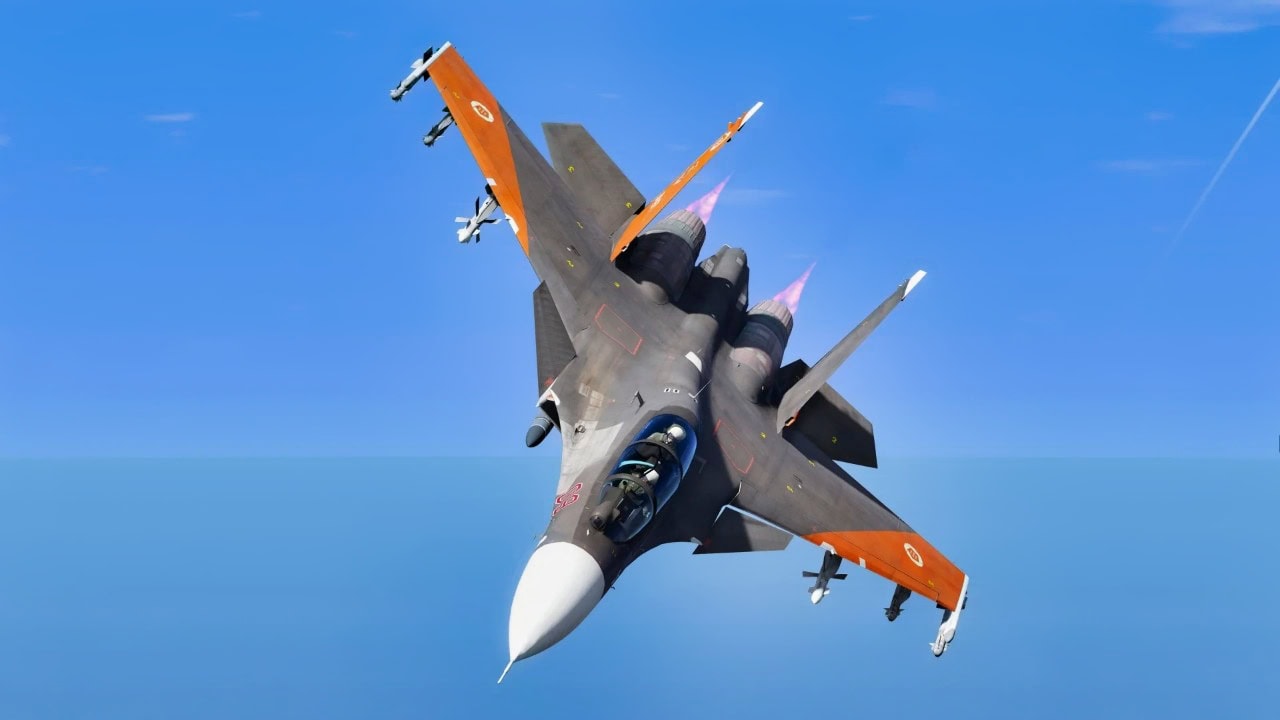
Su-30SM fighter. Image Credit: Creative Commons.
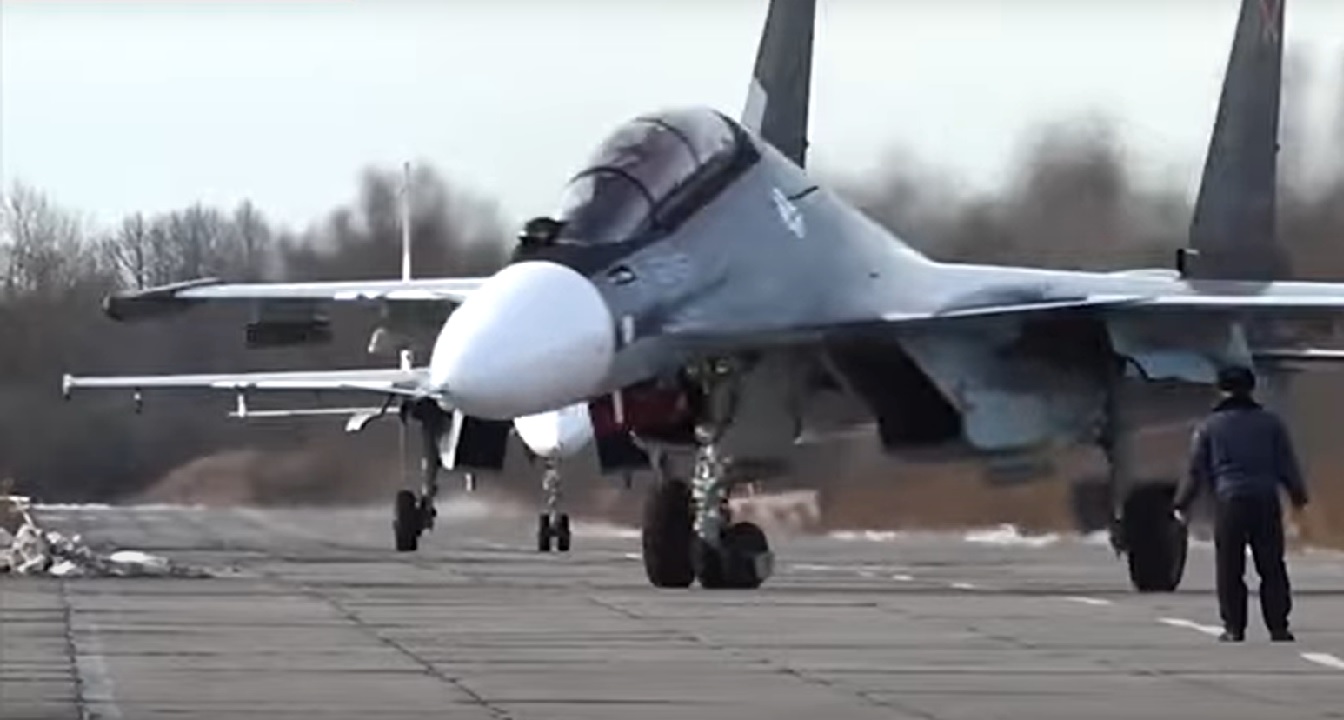
Su-30SM. Image Credit: YouTube Screenshot.
The Loss Side of the Ledger
The reason the quantity matters is that the other side of the ledger is public and counted. The open-source group Oryx, which logs only visually confirmed losses, documents at least 43 Su-34s and 21 Su-30s destroyed or damaged since the full-scale invasion began, and because visual confirmation requires photographic evidence, those figures are floors, not ceilings. Against a pre-war Su-34 fleet of roughly 140 aircraft, the confirmed losses alone approach a third of the inventory. Ukrainian Patriot batteries have knocked the jets down in pairs, and the capture of an intact Russian jamming pod early in the war compromised the electronic warfare systems both types depend on for survival, a breach Russian industry has never fully repaired.
And the aircraft no longer have to fly to be lost. Ukraine’s Operation Spiderweb drone strikes damaged or destroyed as many as 41 aircraft on Russian airbases in June 2025, and a glide-bomb strike on a Russian airbase in the Volgograd region weeks later was reported to have destroyed as many as four Su-34s on the ground. Militarnyi noted another Su-34 lost as recently as March of this year. The loss vectors have multiplied, from missiles at the front to drones a thousand kilometers behind it, while the replacement pipeline has not.
The Production Math, and Why the Numbers Vanished
That pipeline is the heart of the story. Acclaimed journalist David Axe wrote for Forbes that Russia’s sanctions-throttled aerospace industry struggles to build more than a couple of dozen new combat aircraft per year across all types, and the Su-34’s share of that output amounts to a handful of airframes annually, constrained by sanctioned components and a workforce the industry never rebuilt after the 1990s collapse. The Su-30SM2 line is thinner still. Open-source delivery tracking shows SM2 batches handed over twice in 2023, none reported in all of 2024, one in November 2025, and now this one, a cadence of roughly one small batch a year for a type Oryx has documented 21 losses against.
Run the numbers the announcement declined to provide. If the July 9 batch is four aircraft, split between two types and two services, it replaces roughly one month of the fleet’s average documented attrition since 2022, before counting the airframes wearing out from sortie tempo.
If it is two aircraft, the math is half that. This is why the batch size is omitted from the press release. Stating it would turn a modernization story into a subtraction problem, and the subtraction only runs one way. Russia has lost Su-34s in clusters of eight in a single twelve-day stretch during the worst periods of the war. No plausible production rate closes that gap, and the fleet arithmetic shows how Russia now flies.
The Upgrade That Admits the Problem
Which brings us to what the Su-30SM2 actually is, because the upgrade itself concedes the point. The SM2 carries the Irbis-E radar and the more powerful AL-41F-1S engines borrowed from the Su-35, and it can employ the long-range R-37M air-to-air missile.
Rostec’s statement leaned hard on one capability above all: the radar lets the fighter, in the company’s words, “see significantly further than its predecessor” and engage targets without entering the range of enemy air defenses. Read plainly, the manufacturer’s flagship selling point is that the aircraft no longer has to go where the war is. That is a sensible adaptation, and it is also an institutional admission that Russian aircraft cannot survive contested airspace over Ukraine, the same conclusion the VKS reached when it converted the Su-34 fleet into a standoff glide-bomb force lobbing UMPK-kitted munitions from behind its own lines.
What Happens Next for Russia’s Air Force?
None of this means the Russian air force is collapsing, and the fair reading cuts both ways. The deliveries are real, UAC has genuinely increased output since 2022, and the VKS continues to generate heavy glide-bomb sorties against Ukrainian positions every day, which is why Kyiv keeps spending precious air-defense missiles and long-range drones trying to attrit the fleet at its bases.
Russia’s air arm is thinning and adapting, not vanishing, and the standoff tactics that keep its jets alive also keep them militarily relevant. A slow subtraction remains a powerful force for years to come.
But the trajectory is what the July 9 announcement was written to obscure, and the obscuring is itself the evidence. A healthy program publishes its numbers. This one publishes testimonials, factory-test boilerplate, and photographs from which analysts must count the airframes themselves.
Two to four aircraft arrived this week against more than sixty documented losses of the same types, and until the quantities return to Rostec’s announcements, that imagery count is the most reliable measure available of how the race between Russia’s factories and Ukraine’s air defenses is actually going.
About the Author: Harry J. Kazianis
Harry J. Kazianis (@Grecianformula) was the former Senior Director of National Security Affairs at the Center for the National Interest (CFTNI), a foreign policy think tank founded by Richard Nixon based in Washington, DC. Harry has over a decade of experience in think tanks and national security publishing. His ideas have been published in the NY Times, The Washington Post, The Wall Street Journal, CNN, and many other outlets worldwide. He has held positions at CSIS, the Heritage Foundation, the University of Nottingham, and several other institutions related to national security research and studies. He is the former Executive Editor of the National Interest and the Diplomat. He holds a Master’s degree focusing on international affairs from Harvard University.

