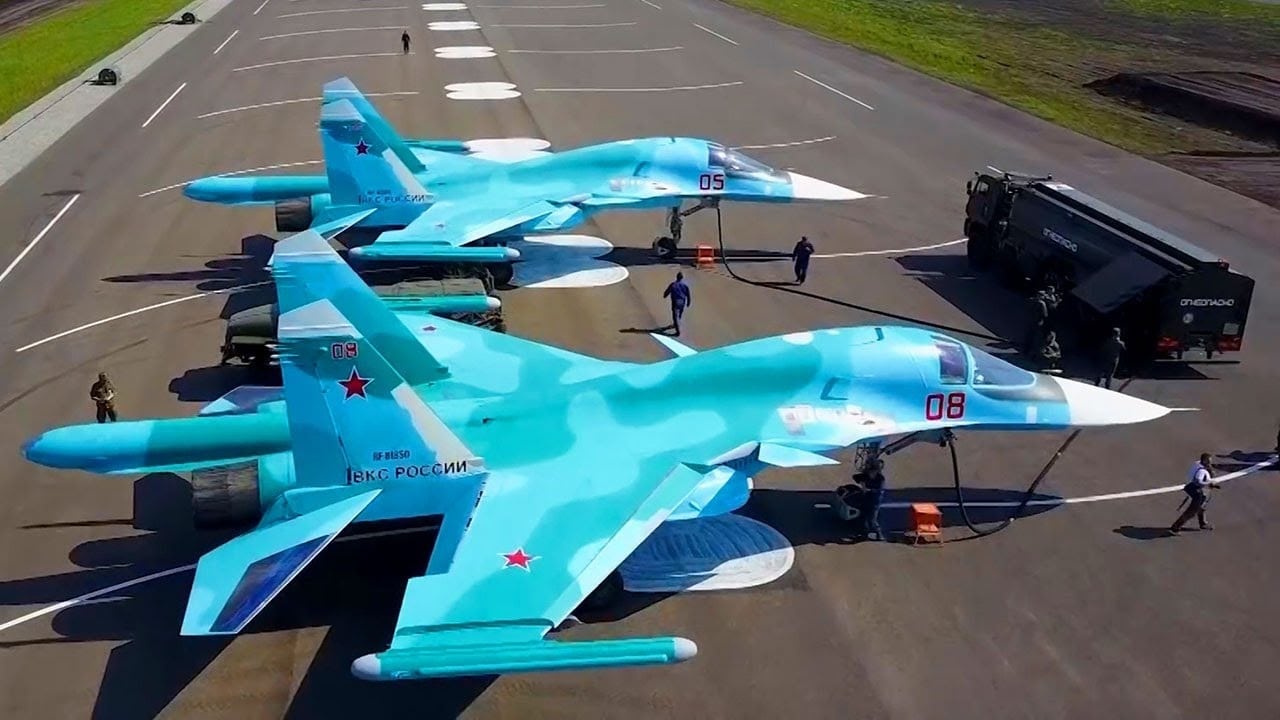
Summary and Key Points: Russia’s Aerospace Forces are absorbing punishing losses of two premium combat aircraft—the Su-34 fighter-bomber and the Su-35 “Super Flanker”—raising questions about protection, tactics, and adaptation.
-The Su-34, conceived as a rugged, theater-level strike workhorse and Su-24 replacement, found real-world use in Syria-style campaigns, then collided with Ukraine’s layered air defenses.
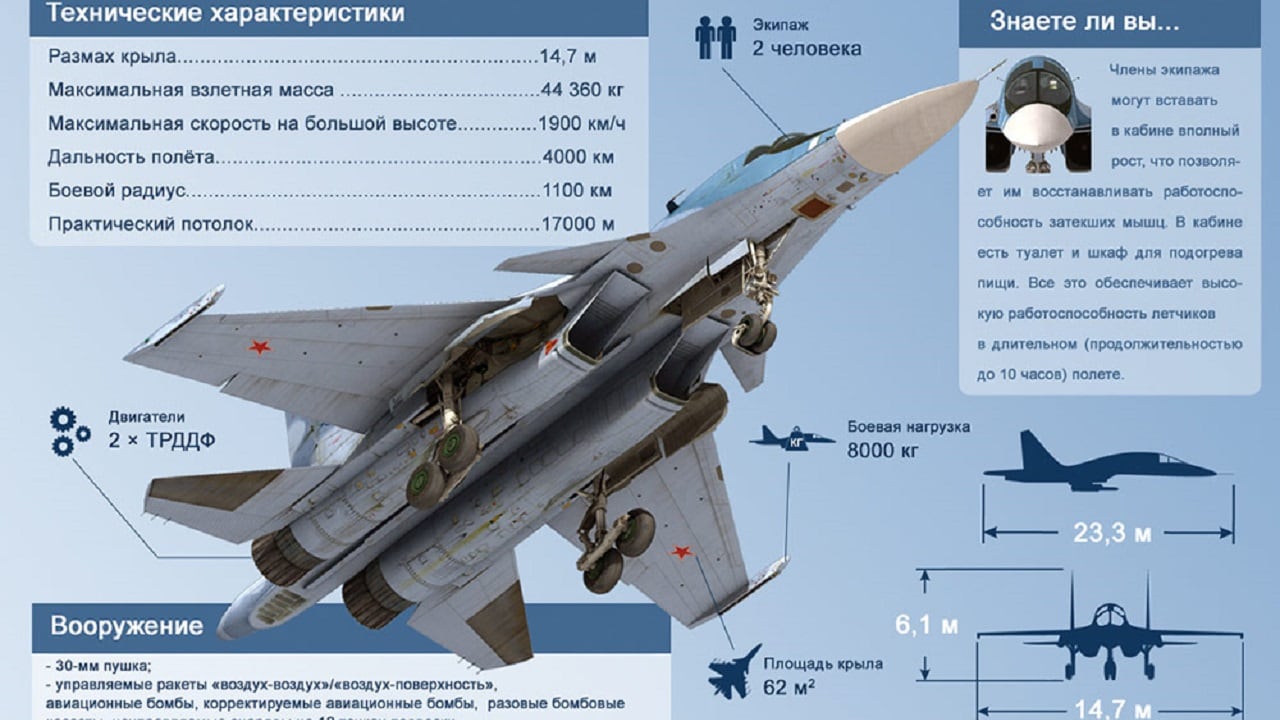
Russian Su-34. Image Credit: Russian Military.
-The Su-34’s attrition has become the war’s most glaring example of a platform repeatedly pushed into unfavorable engagement conditions.
-Su-35 losses, though smaller, still erode morale, readiness, and logistics—fueling a broader VKS performance decline.
Russia’s Air War Verdict: Su-34 and Su-35 Losses Are Gutting Readiness and Morale
In the annals of modern air power conflict, it’s the air forces that fail to find means to protect the most valuable platforms that seldom earn anything other than a failing grade for their service branch’s overall performance and effectiveness.
Given that reality, the Russian Aerospace Forces (VKS) may be in for that failing grade designation over the higher-than-justifiable losses of the Sukhoi Su-34 fighter bomber and the Su-35 “4+++ generation” Super Flanker in Moscow’s war with Ukraine.
Russia designed the Su-34, a twin-engine, heavyweight derivative of the Su-27, back in the waning days of the Cold War.
But it was not a Cold Warrior’s dream of Russian air power to be focused on NATO only as the enemy.
When it finally entered production, it was supposed to be one of the few designs from that era projected to be the best fit for the VKS’s longer-term requirements.
It was also regarded as a necessary replacement for the previous-generation Su-24.
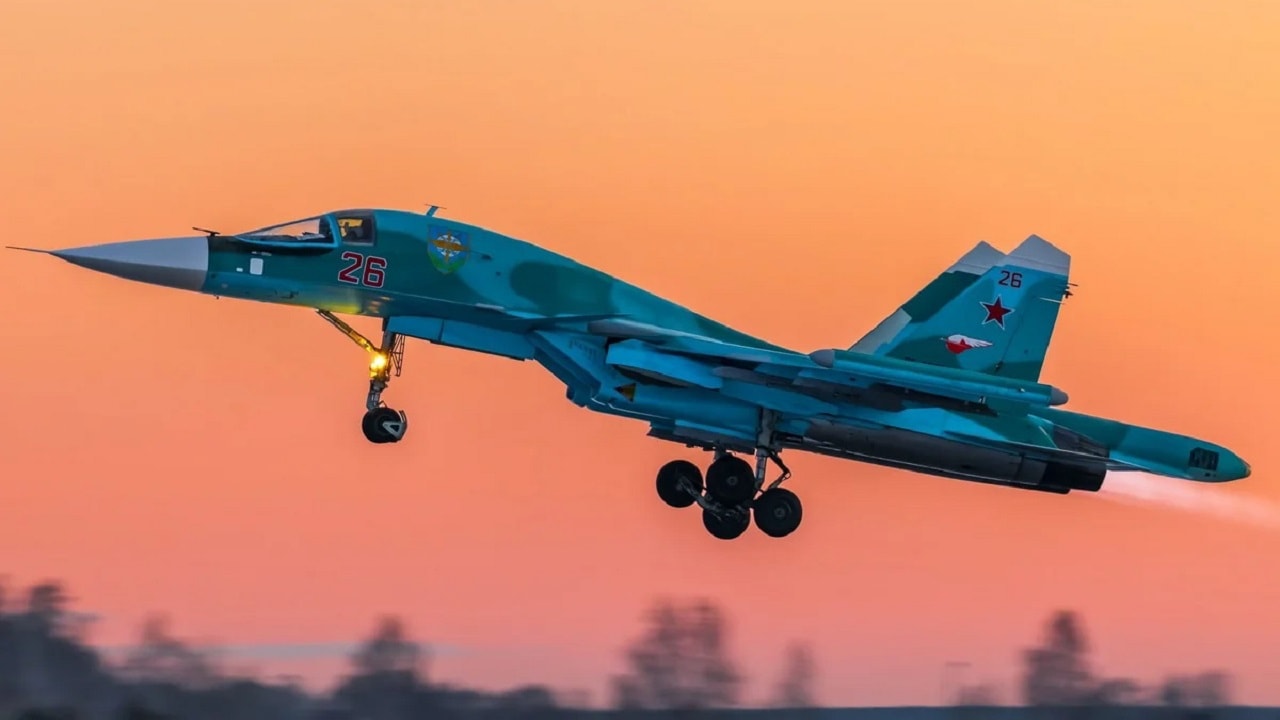
Russia’s Su-34 fighter-bomber. Image Credit: Creative Commons.
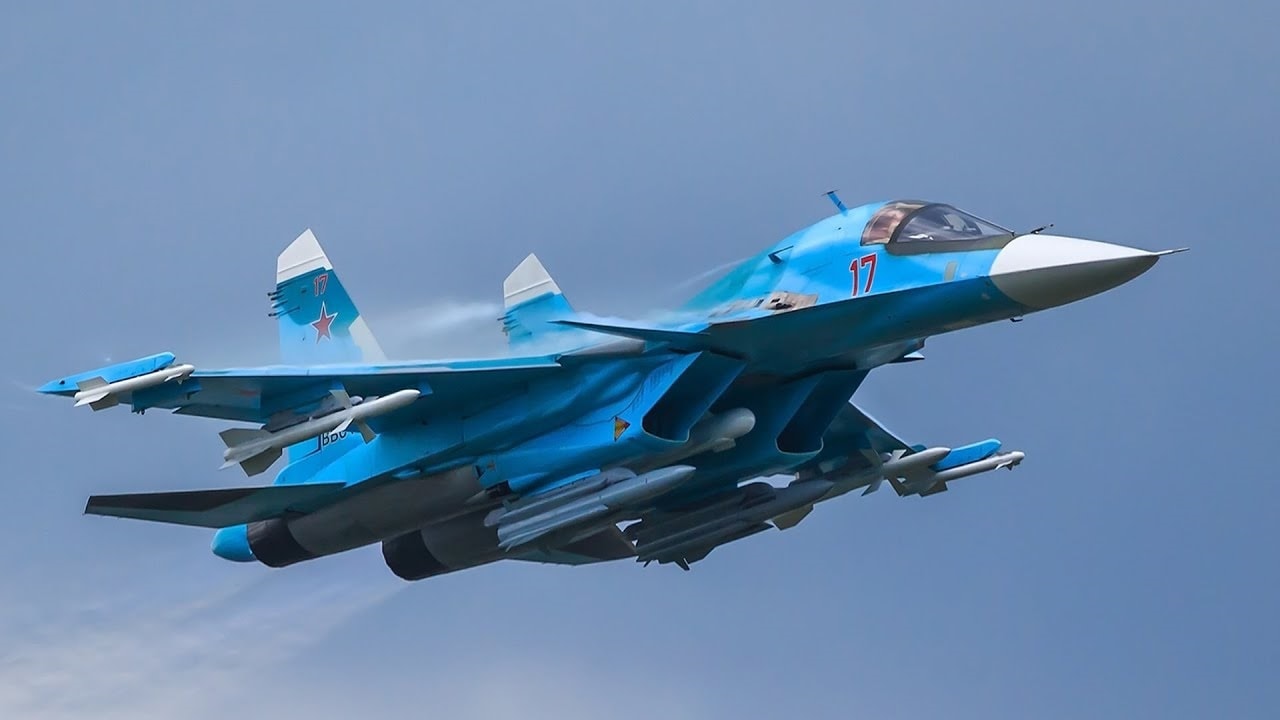
Su-34 fighter from Russian Air Force. Image Credit: Creative Commons.
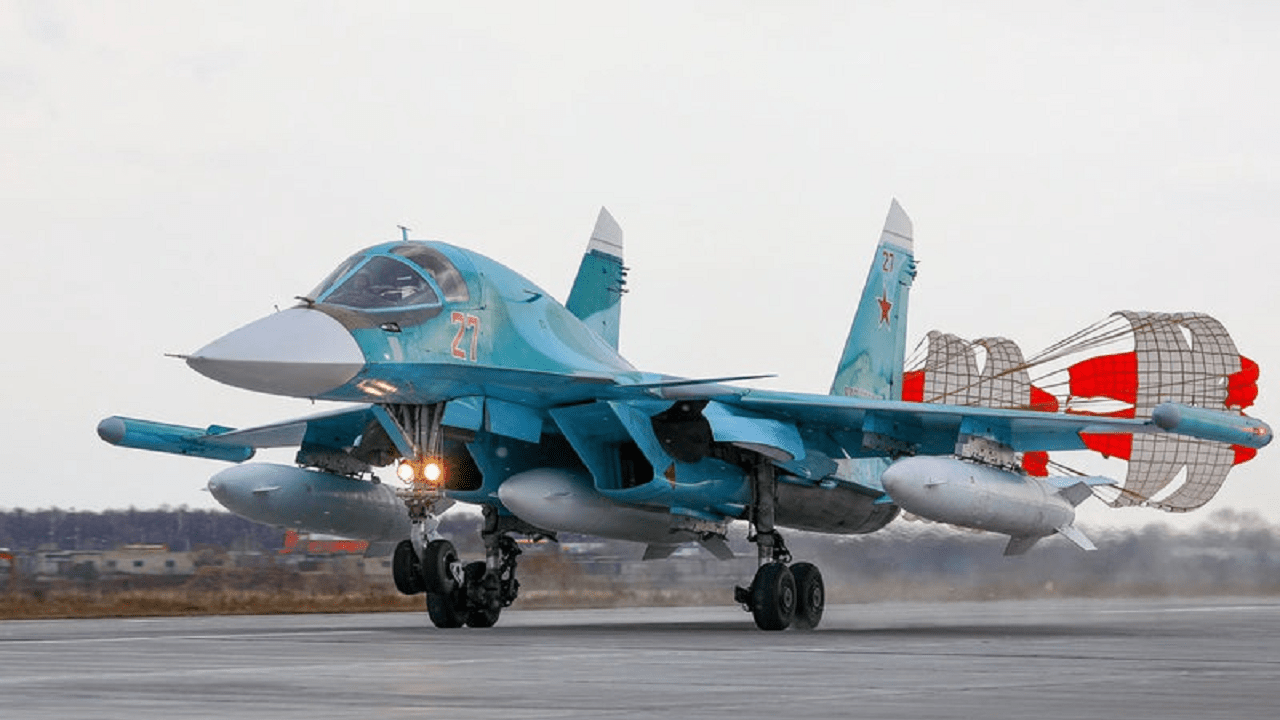
Russian Su-34 fighter-bomber. Image Credit: Creative Commons.
“It was anticipated that Russia would face threats from the less-than-stable nations on its southern borders and that this would be the major threat to Russia—not western nations,” said a US intelligence official with more than 40 years of experience in Russian airpower assessments. “The Central Asian states, Pakistan—these were cause for concern. Some in Moscow were concerned that the need to deliver ordnance on target from a tactical platform that could operate from almost any airbase became a high priority.”
This became characteristic of the missions to which the Su-34 was assigned. Conflicts like the engagements in Syria fought on behalf of the then-Bashar al-Assad regime became a laboratory for how to use this aircraft.
It became a strike platform against insurgent forces in regions where Moscow sought to retain its influence abroad.
Not Ready for Peer Conflicts
Despite its advertised advanced capabilities, the Su-34 has had the worst combat record of any VKS aircraft.
To date, 40 of the aircraft have been lost to enemy action since the Ukraine conflict began, despite supposedly being the best type of aircraft to be utilized in exactly this type of war. Thus, the level of losses for the Su-34 was not at all what was expected.
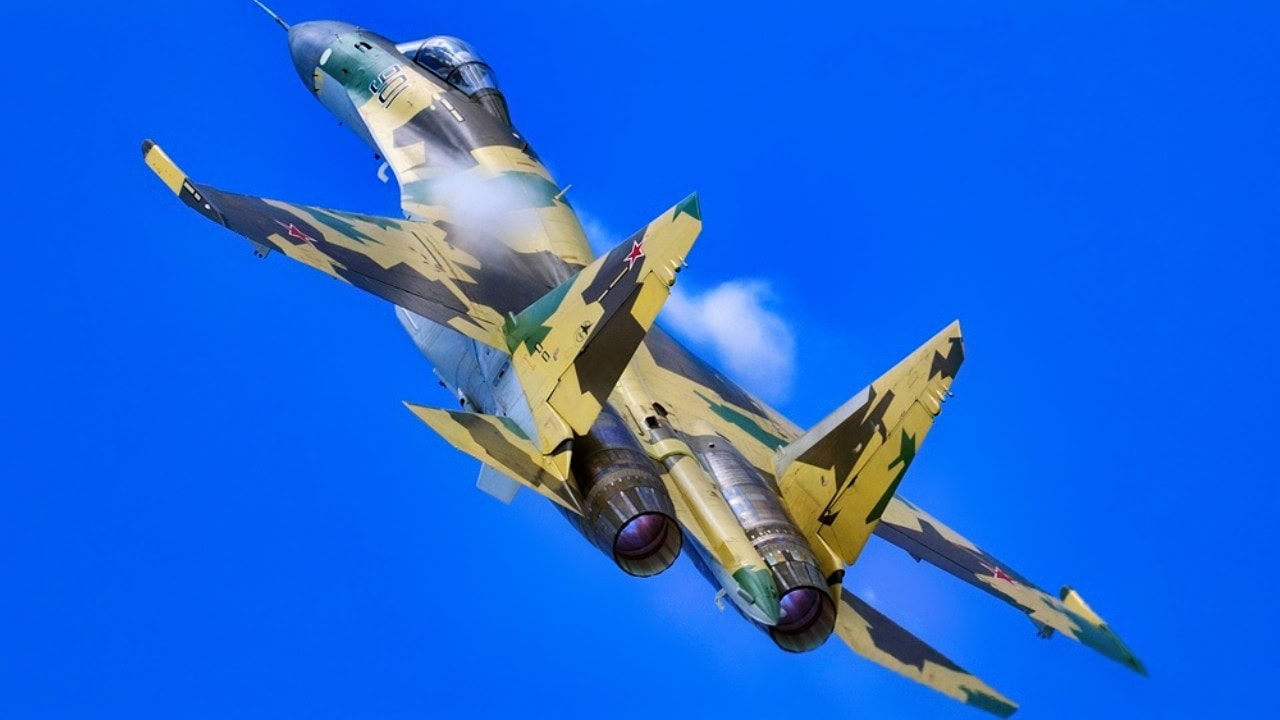
Su-35 Fighter from Russia. Image Credit: Creative Commons.
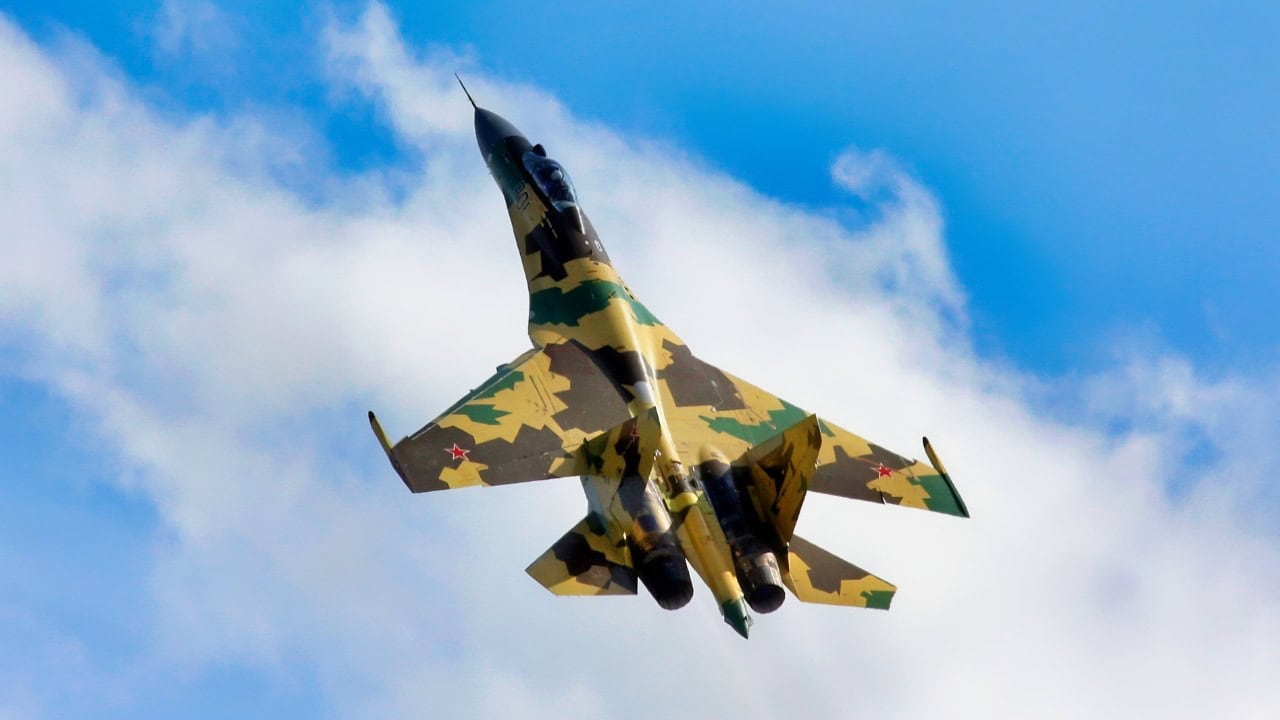
Su-35 Fighter from Russia.
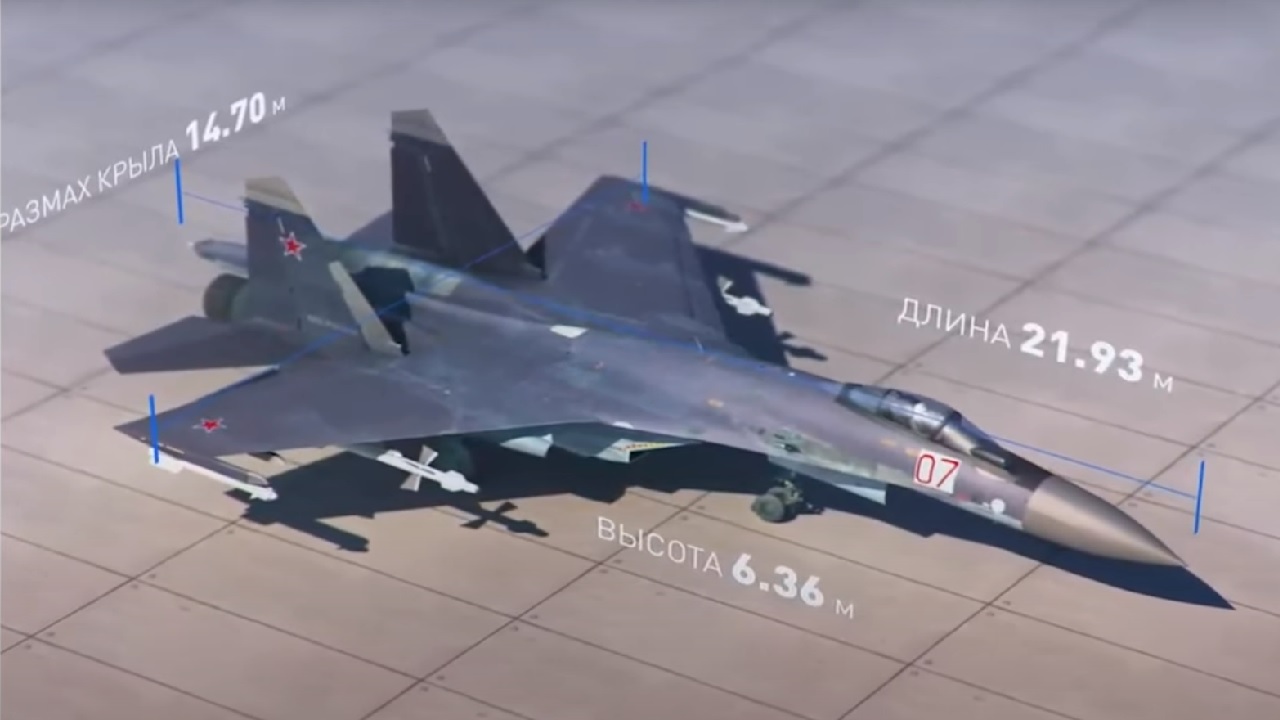
Su-35. Image Credit: Creative Commons.
The irony is that the aircraft was not designed for the lower-intensity, “brushfire” wars for which it was pressed into service.
It was intended to be the air interdiction “hammer” that would be the star performer in a war against a country armed with weapons systems designed by Moscow’s peer competitors.
With its arsenal of US and EU-nation provided layered air defense systems and western fighter aircraft, the Ukraine conflict was – at least on paper- the war this aircraft was created to fight. A high-intensity, state-on-state conventional conflict across a broad front requiring strikes in depth and not just on the front lines.
However, if it was designed specifically to engage and defeat the U.S. Patriot air and missile defense system or certain lower-tier NATO SAMs, then the aircraft could be said to have failed in its mission. The Su-34, advertised as the backbone of Russia’s theatre-level attack assets, has turned out to be an empty threat.
No Adaptation Skills
What airpower analysts are now saying is that rather than trying to learn from the failures of the Su-34 – as well as the Su-35—to date, the VKS has instead kept doubling down on the employment of the aircraft into scenarios in which it has consistently failed.
The question at this point, wrote one airpower specialist, “is not why Ukraine keeps shooting the Su-34s down. It’s why Russia keeps putting them in positions where they can be shot down at all.” In the end, the Su-34 has become the most destroyed Russian combat aircraft of the entire war.
A less severe but still disappointing record also attaches to the Su-35 Super Flanker. As of the middle of last year, the VKS has lost between 8 and over 25 Sukhoi Su-35s fighter jets during the Ukraine conflict. Ukrainian air defenses, potential friendly fire, and training accidents caused these losses.
This level of attrition keeps having progressively negative impact on the VKS – morale, readiness, logistical effectiveness – they have all suffered in the end.
The Su-34 may be the only aircraft type in the VKS fleet, but its failure to date is only the most extreme example of how the force has failed to recognize what works in a large, protracted conflict such as that in Ukraine.
It is an air force “spiraling down in more than one respect,” said a former senior US Air Force officer. “Its performance runs against all the Russians’ theoretical writings about how you are supposed to run an air war,” he said.
About the Author: Reuben F. Johnson
Reuben F. Johnson has thirty-six years of experience analyzing and reporting on foreign weapons systems, defense technologies, and international arms export policy. Johnson is the Director of Research at the Casimir Pulaski Foundation. He is also a survivor of the Russian invasion of Ukraine in February 2022. He worked for years in the American defense industry as a foreign technology analyst and later as a consultant for the US Department of Defense, the Departments of the Navy and Air Force, and the governments of the United Kingdom and Australia. In 2022-2023, he won two awards in a row for his defense reporting. He holds a bachelor’s degree from DePauw University and a master’s degree from Miami University in Ohio, specializing in Soviet and Russian studies. He lives in Warsaw.