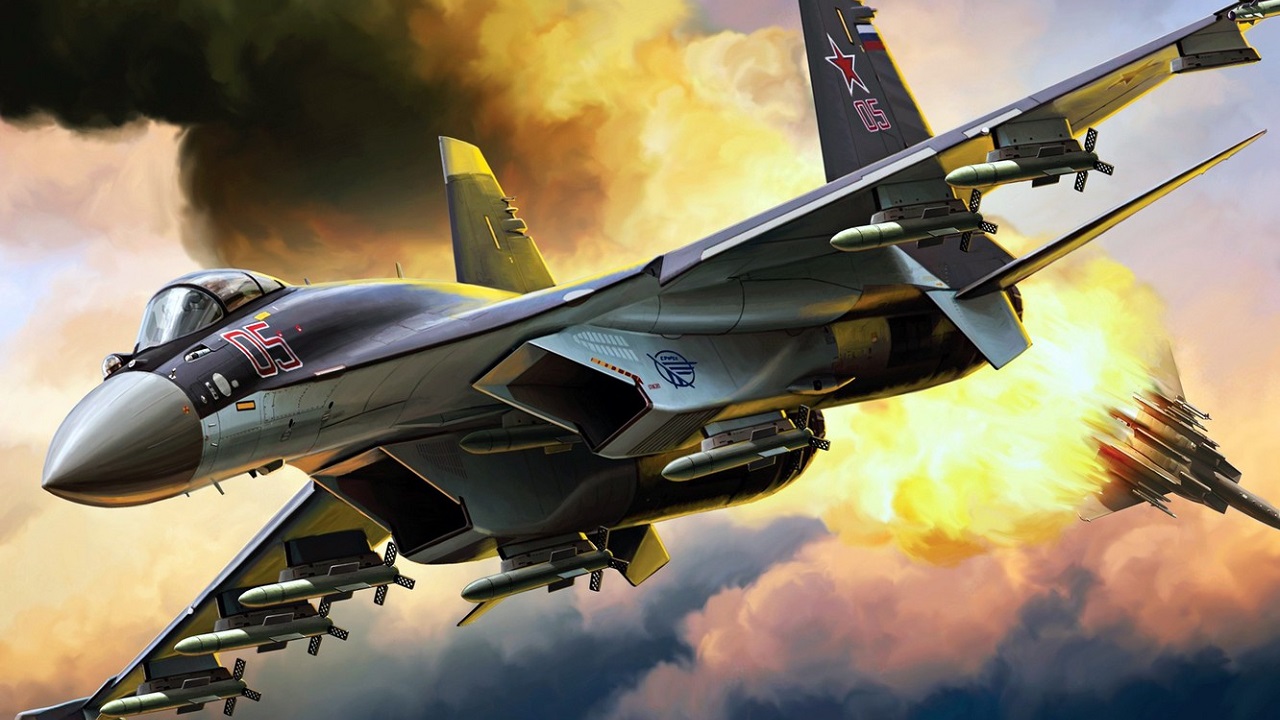
Synopsis: Russia built the Su-35 as a modernized Su-27 and a stopgap while fifth-generation ambitions lagged—then expected exports to surge once it entered Russian service and logged combat deployments.
-That never happened in a big way, despite strong performance and broad interest, because politics and sanctions consistently undercut deals.
-Now, however, the aircraft’s export story may be changing. New deliveries to the Russian military suggest production continuity, while projected large-scale sales—especially to Iran—could finally give the Su-35 the export profile it was designed to achieve.
The Enemy: The remaining question is sustainability: can Russia keep output steady under wartime pressures and restricted supply chains?
Why the Su-35 Struggled Abroad—And Why That’s Changing Now
The Russian United Aircraft-Building Corporation (OAK) describes the Sukhoi Su-35 as an air superiority fighter program that represents a deep modernization of the original Su-27. Other official publications characterize the aircraft as a “4+++ – generation fighter.”
The aircraft’s origins date back to the 1990s, when programs in Russia to develop a 5th-generation fighter that would have been an analogue to the US F-22 had stalled. Aircraft that would be in the class of what is today known as the Su-57 showed little chance of being available any time soon.
The concept was for a design that would be a step beyond the Su-27 generation. This aircraft would act as a stopgap—a bridge between the 1980s designs flown in Russian service and whatever design might emerge in the 21st century.
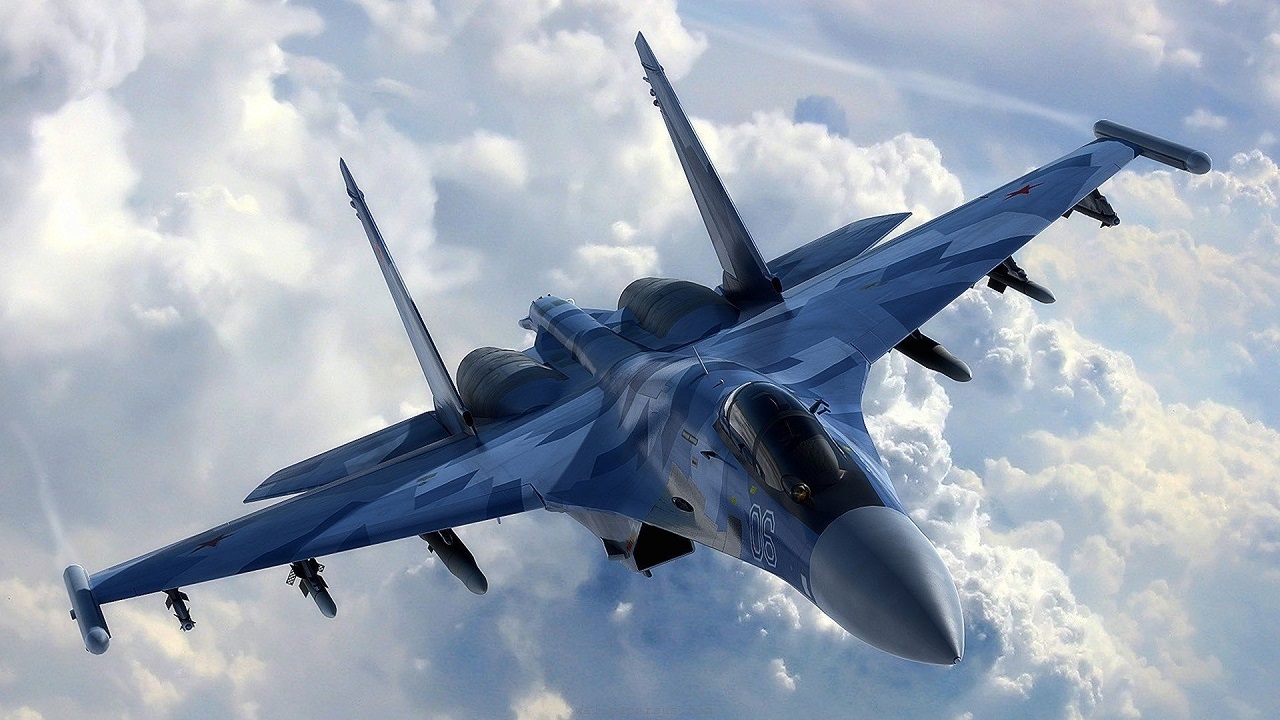
Artist rendering of a Russian Su-35 fighter. Image Credit: Creative Commons.
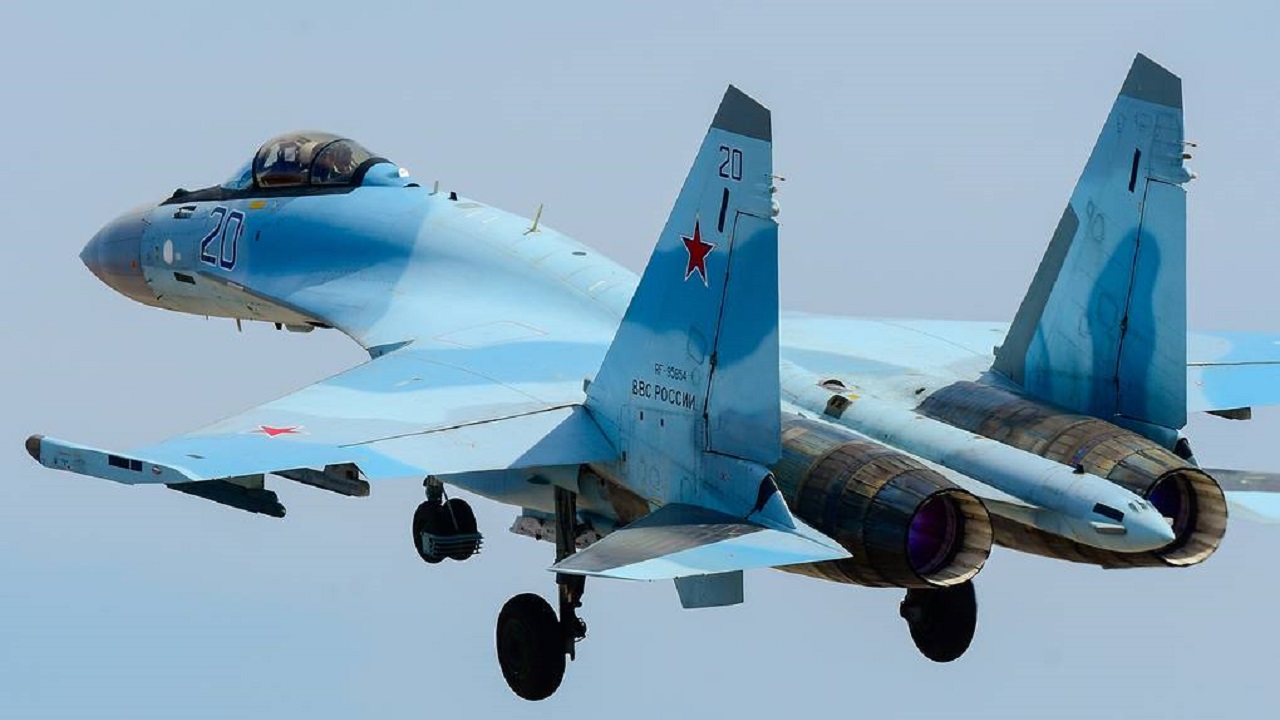
Su-35 over Ukraine. Image Credit: TASS/Russian state media.
But the other objective of the Su-35 program was to provide an option more competitive with Western models in the fighter export market. The Su-27, a 4th-generation air superiority fighter, was first exported in 1991 and later produced in very large numbers under a license-manufacturing agreement with the Chinese People’s Liberation Army Air Force (PLAAF). It had sold well, but something newer and more advanced was now in demand.
Badly Needed Export Revenue
A growing list of clients, including Vietnam, Indonesia, and Ethiopia, was also purchasing Su-27s. Variants of the Su-30 and Su-30MK series then followed their export successes. On the order of 600 aircraft were eventually exported in the 1990s and into the 2000s.
These sales occurred at a time when export revenue in the defense sector was badly needed for many of the enterprises involved to survive without having to close down entirely. To provide a sense of perspective, defense exports of this nature totaled sums several times greater than Russia’s annual military budgets during these years.
Russian defense enterprise executives and officials from state-owned export agencies like Rosoboronexport (ROE) have stated more than once just how much the sale of Sukhoi fighters contributed to that financial bottom line. Over the years, those fighter sales accounted for 50 per cent or more of Russian defense exports.
Therefore, there was an expectation within the Russian industry that after the Su-35 entered service with the Russian Aerospace Forces (VKS) in 2014, making it a “program of record,” and then began to operate in combat deployments starting in December 2015, that foreign sales of this model would “take off.”
The Su-35 performed favourably in multiple engagements with major foreign air forces. It also began attracting significant interest from prospective customers across various regions. But in the end, several political factors kept the fighter from gaining traction in export markets.
Recent Success
Russia has managed to keep the aircraft in production despite the difficulties posed by a growing body of sanctions imposed since 2014. This year, despite many challenges in acquiring foreign-made components, a new batch of Su-35s was delivered to the Russian military, completing a production run.
“The United Aircraft Corporation (UAC), part of the Rostec State Corporation, has manufactured and delivered the next batch of Su-35S multirole fighters to the Russian Ministry of Defense,” the UAC wrote in a press release, and added that this delivery marked the last of 2025.
Until this year, however, the aircraft had managed only a modicum of success in export sales. But as a result of projected sales of 100-150 Su-35s to Iran and other foreign clients, the aircraft can finally be described as having a successful export profile.
There is also a possibility now of sales to the Democratic People’s Republic of Korea (DPRK). Transferring Su-35s to the North Korean People’s Army could counterbalance the costs of the tens of billions of dollars’ worth of arms imported by Moscow from the DPRK since 2022.
While this would be a significant boost to the KPAAF, there remains uncertainty about whether Pyongyang will accept the Su-35 or request the more advanced Su-57 instead.
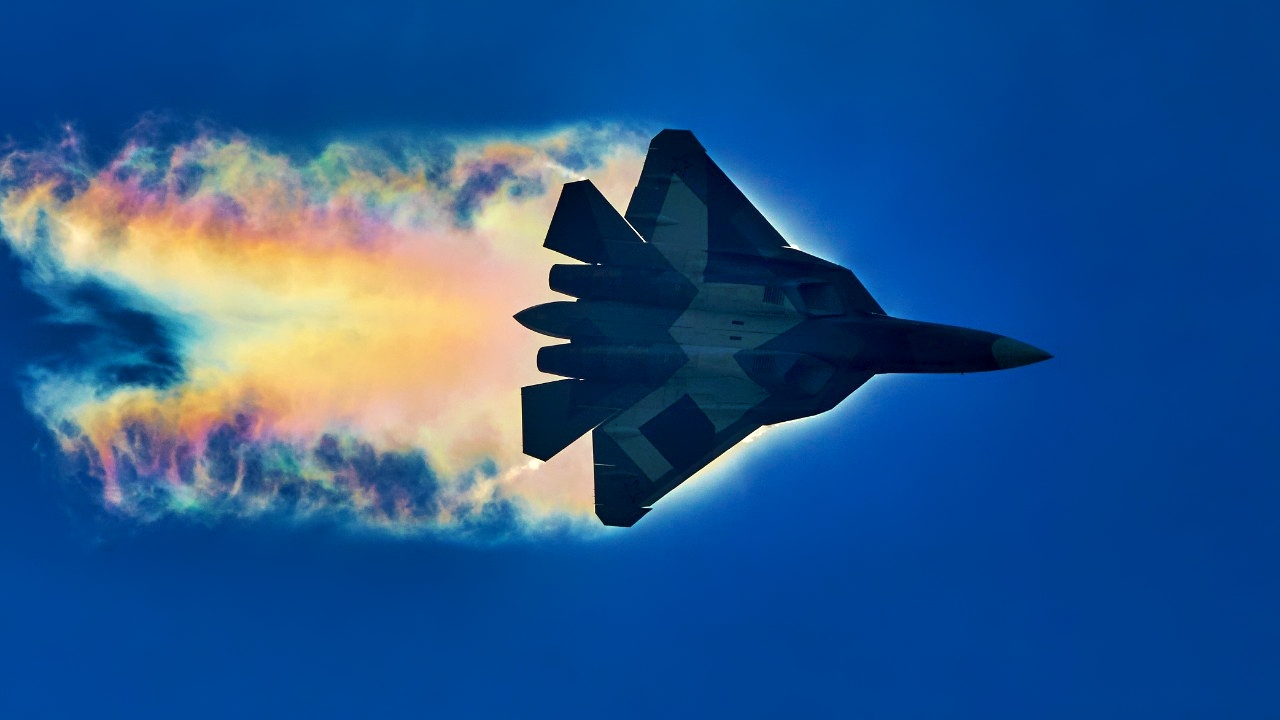
Russia’s Su-57 Felon Fighter
If trends continue, the Su-35 will finally realize its export potential. What remains to be seen is how the Russian aerospace industry can maintain production levels amid the many strains imposed by the ongoing war in Ukraine.
About the Author: Reuben F. Johnson
Reuben F. Johnson has thirty-six years of experience analyzing and reporting on foreign weapons systems, defense technologies, and international arms export policy. Johnson is the Director of Research at the Casimir Pulaski Foundation. He is also a survivor of the Russian invasion of Ukraine in February 2022. He worked for years in the American defense industry as a foreign technology analyst and later as a consultant for the U.S. Department of Defense, the Departments of the Navy and Air Force, and the governments of the United Kingdom and Australia. In 2022-2023, he won two awards in a row for his defense reporting. He holds a bachelor’s degree from DePauw University and a master’s degree from Miami University in Ohio, specializing in Soviet and Russian studies. He lives in Warsaw.