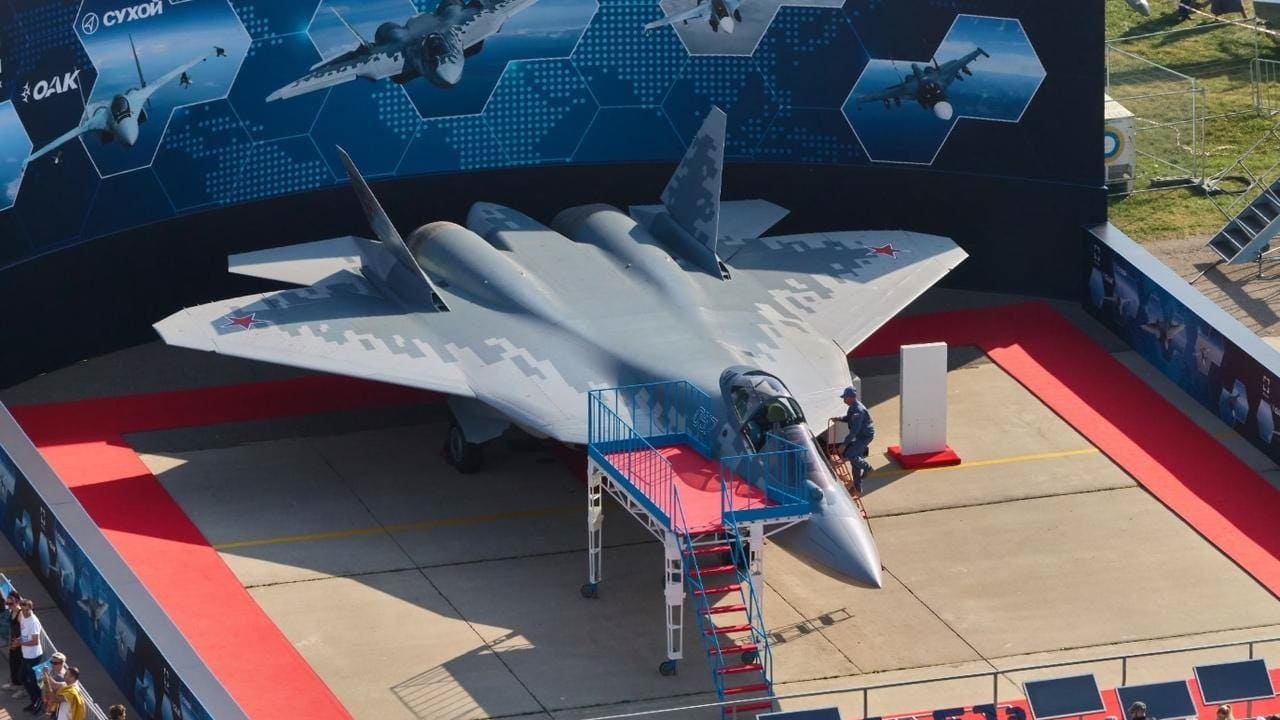
Key Points and Summary – Russia’s United Aircraft-Building Corporation is renewing its pitch to India with an export-ready Su-57E package that goes beyond jets: off-the-shelf deliveries, a Su-30MKI-style local assembly line, and unusually deep technology transfer—including access to source code.
-Moscow argues the aircraft has evolved far past the early T-50 prototype, pointing to new weapons, sensors, and a “stage two” engine now in testing.
-The offer is framed to fit “Make in India,” with a parallel track to modernize Su-30MKIs using Su-57-derived systems. It comes as Washington tightens pressure on New Delhi and Russia’s share of India’s defense imports keeps sliding.
Su-57E Has a Message: Russia Offers India Source Code and Deep Tech Transfer
In an in-depth interview with Indian media, the CEO of Russia’s United Aircraft-Building Corporation (OAK), Vadim Badekha, explains the conglomerate’s new and improved offer to sell the Sukhoi Su-57E to India’s Air Force (IAF).
The aircraft is billed by the Russian industry as a 5th-generation fighter with a low radar cross-section (RCS) and powered by a new, fully developed engine that has just completed its first test flights.
The Russian aerospace executive explained to India’s ABP network that the Su-57E offer is the only option that meets the Indian Air Force (IAF) ‘s requirements.
According to Badeka, the corporation is ready to support IAF procurement with a package that includes “in-depth technology transfer and source code” for the on-board systems.
The “Su-57E” variant – with the “E” denoting that it is configured for export customers – is offered not just as an aircraft, but as an entire program. It is proposed by the Russians that its procurement and local assembly would mirror that of the Su-30MKI, which has been in service with the IAF since the early 2000s.
Russian industry proposes an initial purchase of aircraft off-the-shelf from the Komsomol-na-Amure production line and/or local licensed assembly, again using the Su-30MKI program structure as a template.
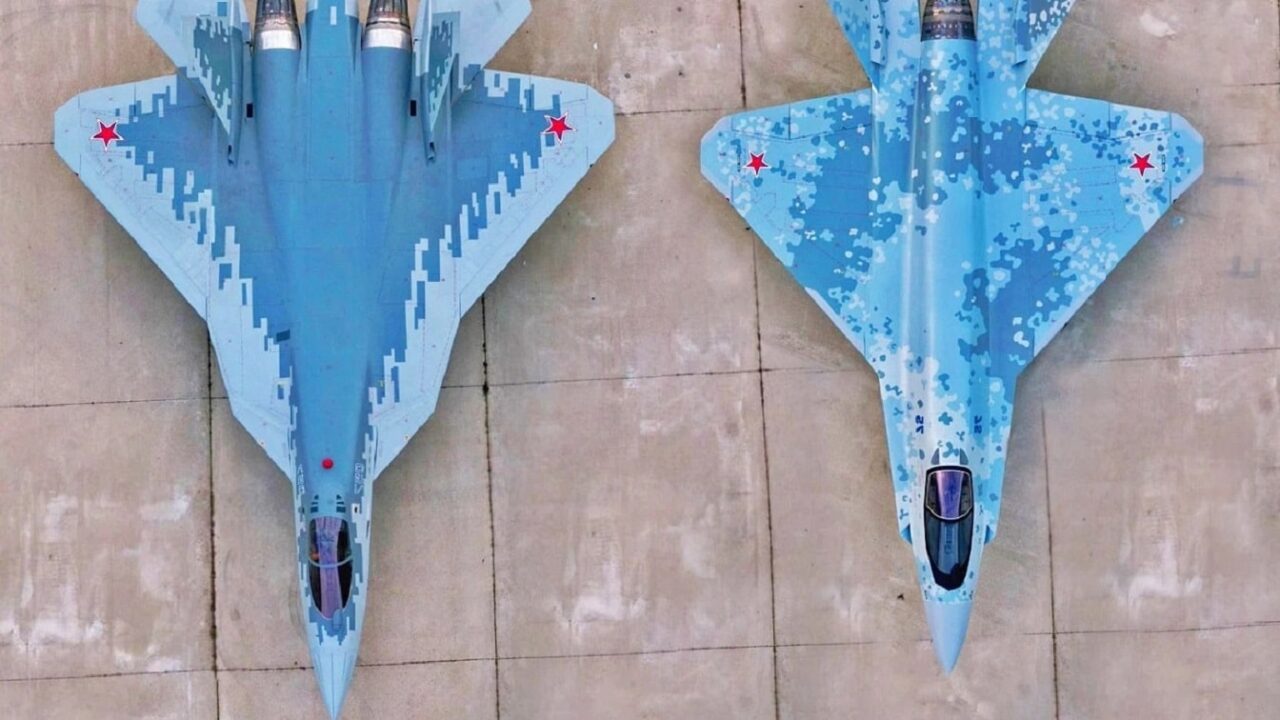
Russian Su-57 and Su-57 Stealth Fighters. Image Credit: Russian Government.
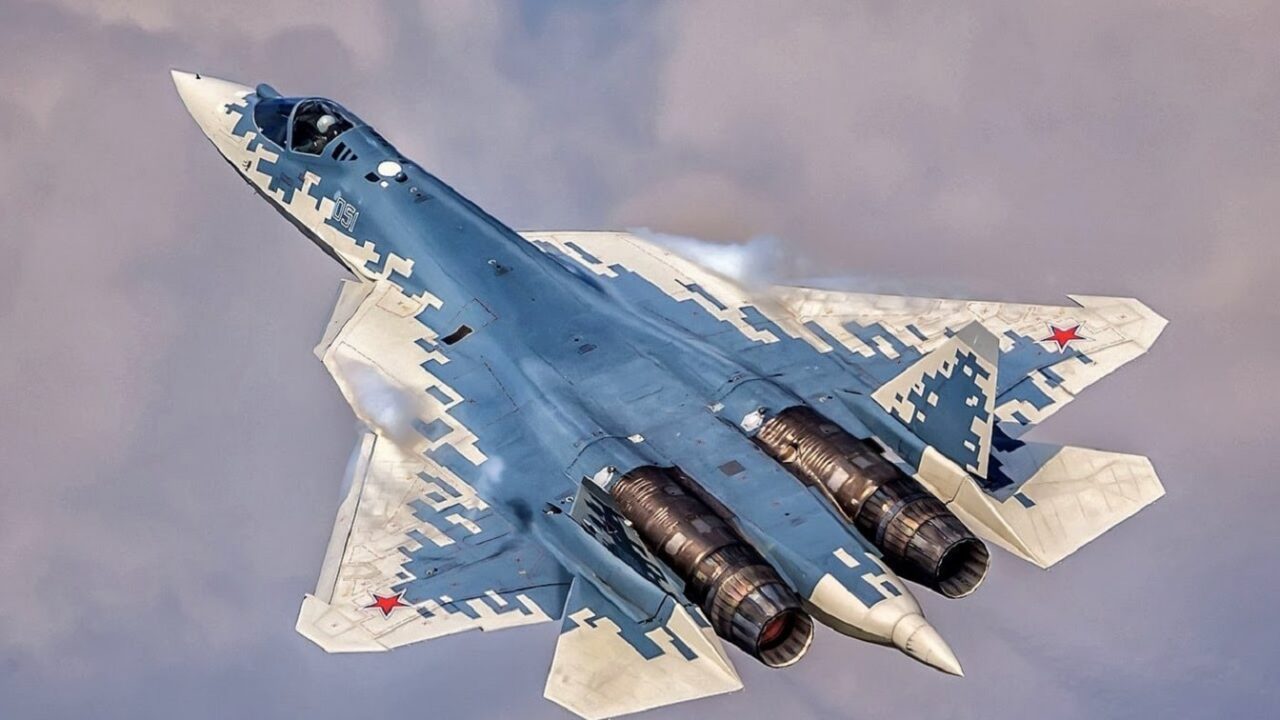
Russia’s Su-57 Felon Stealth Fighter. Image Credit: Creative Commons.
Officials from both Russian industry and Rostec, the state industrial holding company, emphasize that the Su-57E’s capabilities have been validated since the war in Ukraine began in February 2022.
The improvements, modernization, and the spiral developmental path they claim have occurred in recent years make the current proposed model a completely different aircraft.
Equally important, say the Russian marketing team, is how the proposed local assembly option fits well with the “Make in India” initiative, which is the requirement for any major weapon systems procurement.
Russian industry has also offered a “dual-track” program in parallel that would have some of the Su-57E’s on-board systems and technologies inserted or retrofitted into the Su-30MKI to modernize that older platform.
A Different Su-57 Than Previously Advertised
India had previously agreed with Russian industry to cooperate in the development of a specialized version of the Su-57.
The “Fifth-Generation Fighter Aircraft” (FGFA) project was to involve the development of “for-India” two-seat version of the aircraft, but in 2018 India withdrew from this effort.
At the time, IAF officials and senior defense policymakers cited concerns about cost, delivery schedules, and the over 40 design changes that India was insisting be made to the Su-57’s original T-50 prototype version.
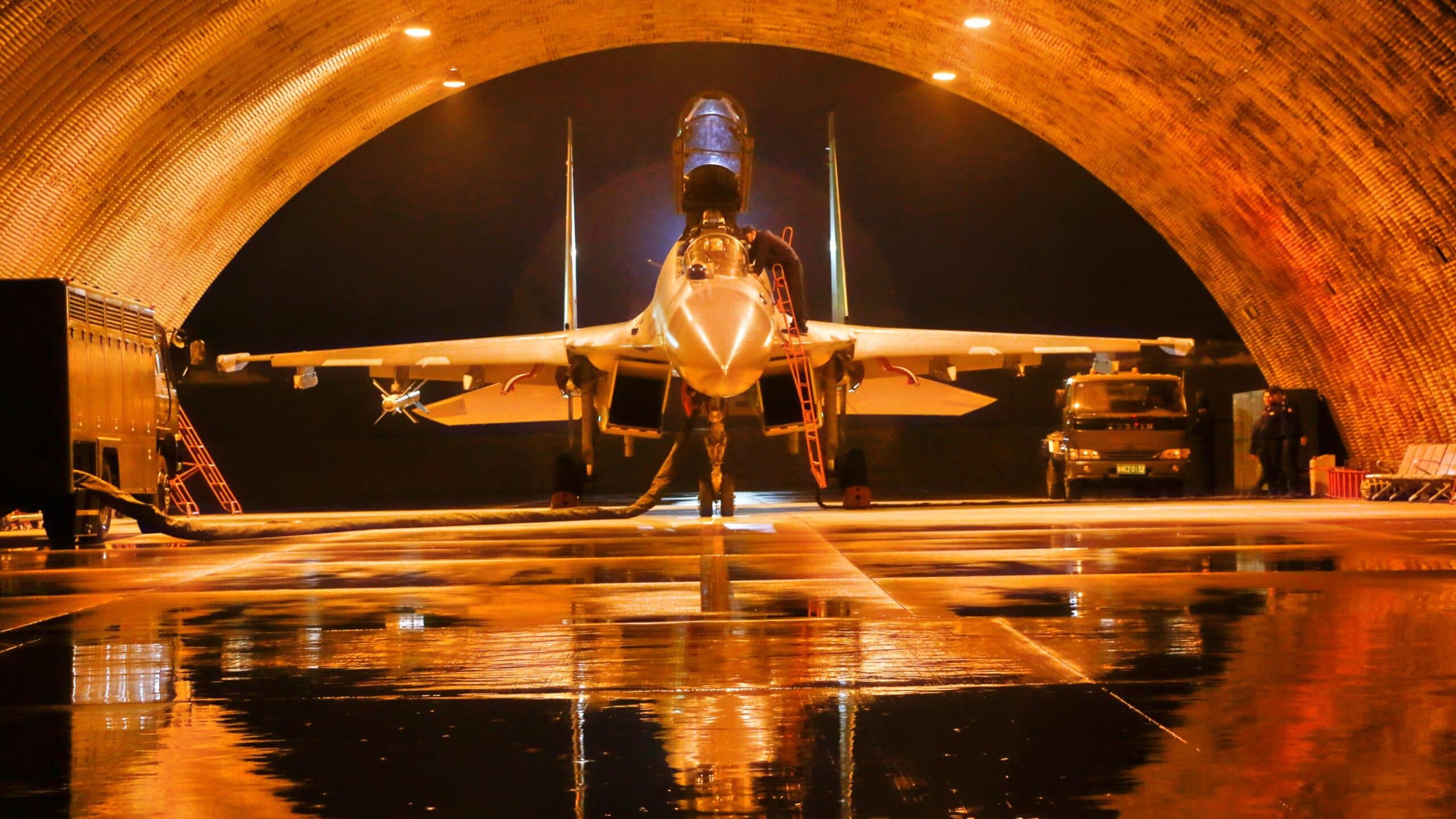
Su-30 Fighter India. Image Credit: Creative Commons.
The same team of OAK marketing officials was asked why India might sign on to a Su-57 today after declaring more than seven years ago that there were too many open issues with both design and production difficulties, plus other elements that added risk to the program.
Badekha and others have a few responses to that line of inquiry.
One is that the Su-57 today is a much different – as well as improved – design from the T-50 prototype aircraft that first flew in 2010. In this intervening period, they state, the aircraft has evolved considerably in its aerodynamic performance, the addition of new weapon systems, the development of new sensors and other systems, and also advancing to the “stage two” next-generation engine.
OAK’s Badekha made a specific note of this new Izdeliye 177 engine – the latest version of the AL-51F-series design – which is now in testing. The improvements it brings to the aircraft are other than increased thrust, a superior supercruise regime, and additional reductions in the aircraft’s RCS and infrared signature.
Putin, Modi, and the Moscow-New Delhi Arms Export Axis
Russian President Vladimir Putin made a state visit to India at the beginning of December for the 23rd India-Russia Annual Summit.
Sources who spoke to the western media outlet Bloomberg stated that at the top of the list of items the former Russian KGB Lt. Col. planned to discuss with the Indian head of government is a deal for New Delhi to acquire not only the Su-57E but also the next-generation S-500 air defense system.
India has historically been one of the most consistent, regular, and largest buyers of Russian military hardware – a relationship dating back to the Cold War.
Throughout this period, India emphasized that its ties with Moscow were non-aligned and that it was not taking sides in the East-West power struggle.
However, over the past year, Washington has increased pressure on Modi to suspend purchases of Russian oil.
In July, a 25 per cent penalty was imposed on Indian exports to the US, bringing the combined tariff rate on these products to 50 per cent.
What has prompted Putin to launch his own sales initiative with Modi is the overall decline in Russian arms exports to this traditional client state.
According to the latest report by the Stockholm International Peace Research Institute, Moscow remains India’s largest supplier of military hardware.
But those defense imports from Russia have declined to 36 per cent of India’s overall foreign military procurements over the last four years.
This compares to 72 per cent during the period 2010–14.
If the trend continues, as analysts of Russia’s defense industrial base say, the economies of scale needed for Moscow to continue producing for its own military will no longer exist.
About the Author: Reuben F. Johnson
Reuben F. Johnson has thirty-six years of experience analyzing and reporting on foreign weapons systems, defense technologies, and international arms export policy. Johnson is the Director of Research at the Casimir Pulaski Foundation. He is also a survivor of the Russian invasion of Ukraine in February 2022. He worked for years in the American defense industry as a foreign technology analyst and later as a consultant for the U.S. Department of Defense, the Departments of the Navy and Air Force, and the governments of the United Kingdom and Australia. In 2022-2023, he won two awards in a row for his defense reporting. He holds a bachelor’s degree from DePauw University and a master’s degree from Miami University in Ohio, specializing in Soviet and Russian studies. He lives in Warsaw.