
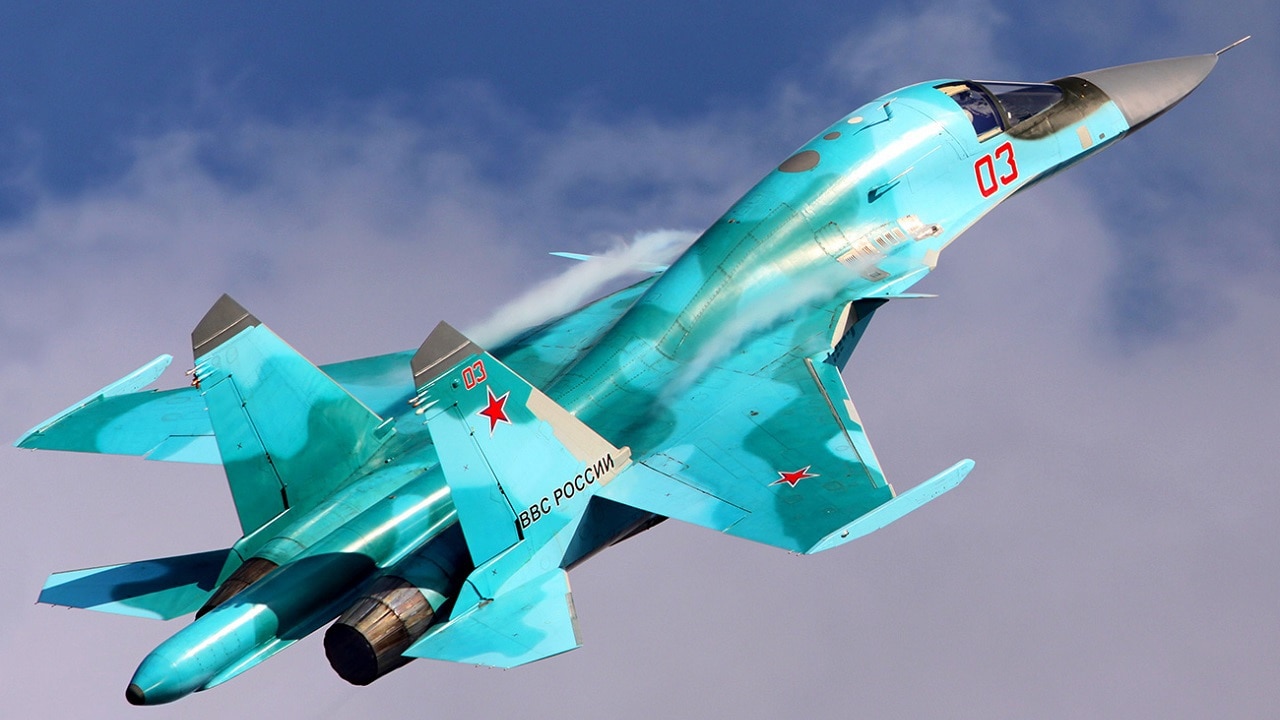
Summary and Key Points: Russia’s Sukhoi Su-34 and America’s General Dynamics F-111 tell the same engineering story six decades apart. In 1961, Defense Secretary Robert McNamara ordered the Air Force and Navy to share one swing-wing aircraft, and the F-111 succeeded only after Washington conceded it was a bomber and gave the fighter mission to the purpose-built F-14 Tomcat. Sukhoi followed the reverse path, rebuilding its Su-27 fighter into a 100,000-pound strike aircraft that still carries a fighter’s paper credentials. Russia never built the Su-34 an F-14 of its own, and with attrition claiming roughly a quarter of the fleet while sanctions hold production to a handful of aircraft per year, the unresolved compromise is now exacting its price.
Russia’s Su-34 Fullback Is Repeating the Mistake of America’s F-111: A Fighter That Only Worked Once It Became a Pure Bomber
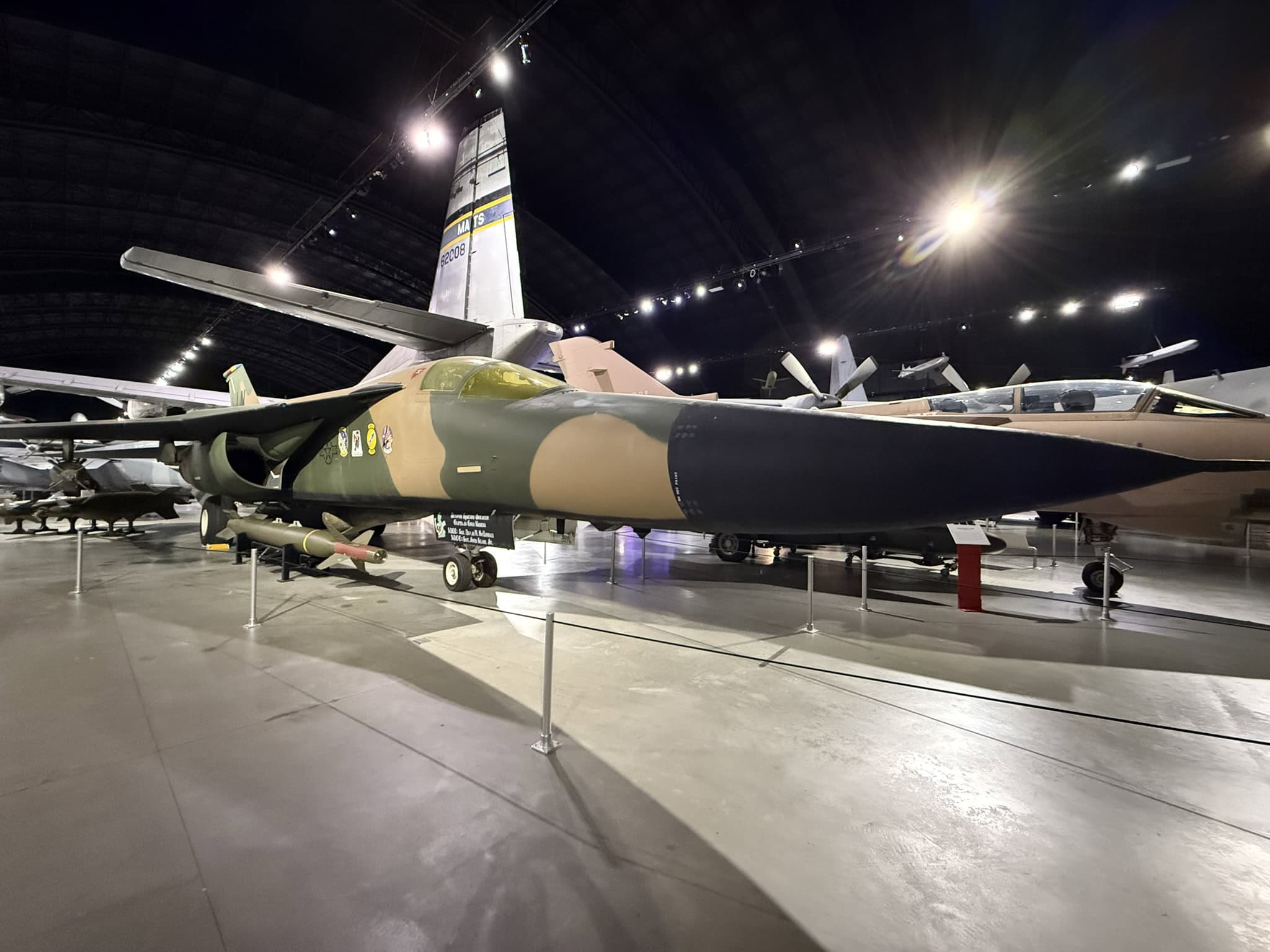
F-111 On Display at the National Museum of the U.S. Air Force. Take on July 19, 2025 by Harry J. Kazianis for 19FortyFive.com
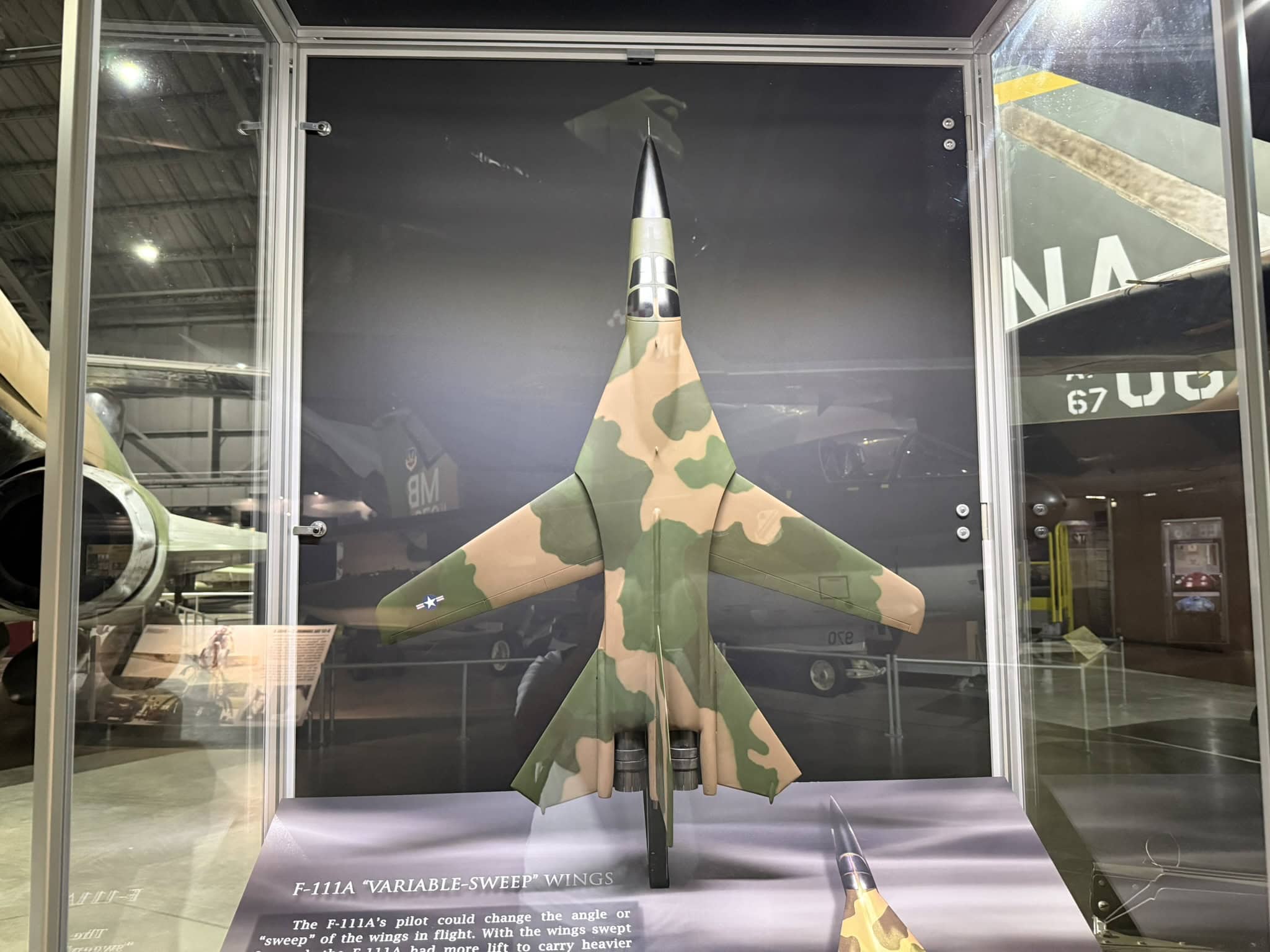
F-111 On Display at the National Museum of the U.S. Air Force. Taken on July 19, 2025, by Harry J. Kazianis for 19FortyFive.com
The Sukhoi Su-34 is Russia’s most heavily used strike aircraft in Ukraine, built on a Su-27 fighter airframe while retaining, on paper, a fighter’s ability to defend itself in the air. That combination has a direct precedent. Sixty years ago, General Dynamics built the F-111 as a joint fighter for the U.S. Air Force and Navy, and it became one of the most controversial aircraft in American history.
The F-111 succeeded only after the United States stopped pretending it was a fighter and let it be the bomber its design actually made it was designed to be. Russia never resolved the same compromise in the Su-34, and Ukraine’s air defenses are now exacting the price.
Two aircraft, separated by three decades and a continent, tell the same engineering story. The General Dynamics F-111 and the Sukhoi Su-34 were both born of the ambition to make a single airframe carry out jobs that pull in opposite directions: a fast, agile fighter mission on one hand and a heavy, long-range strike mission on the other.
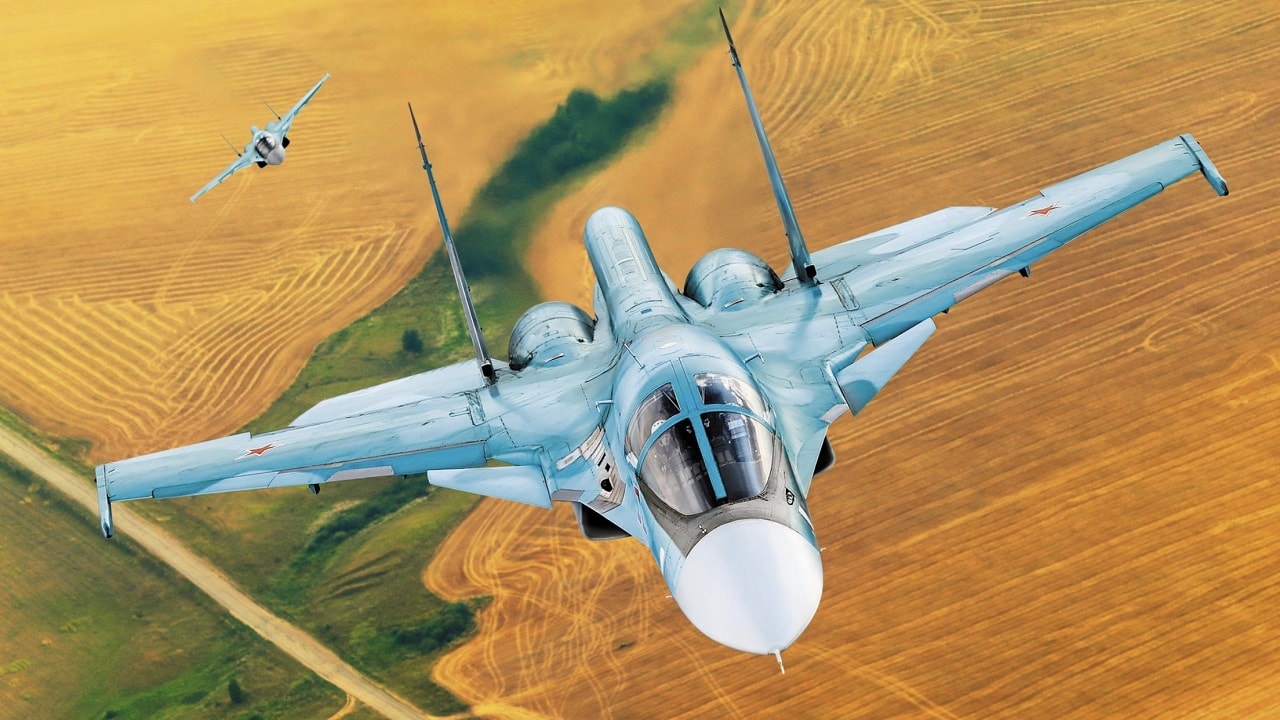
Russian Air Force Su-34 Fighter. Image Credit: Creative Commons.
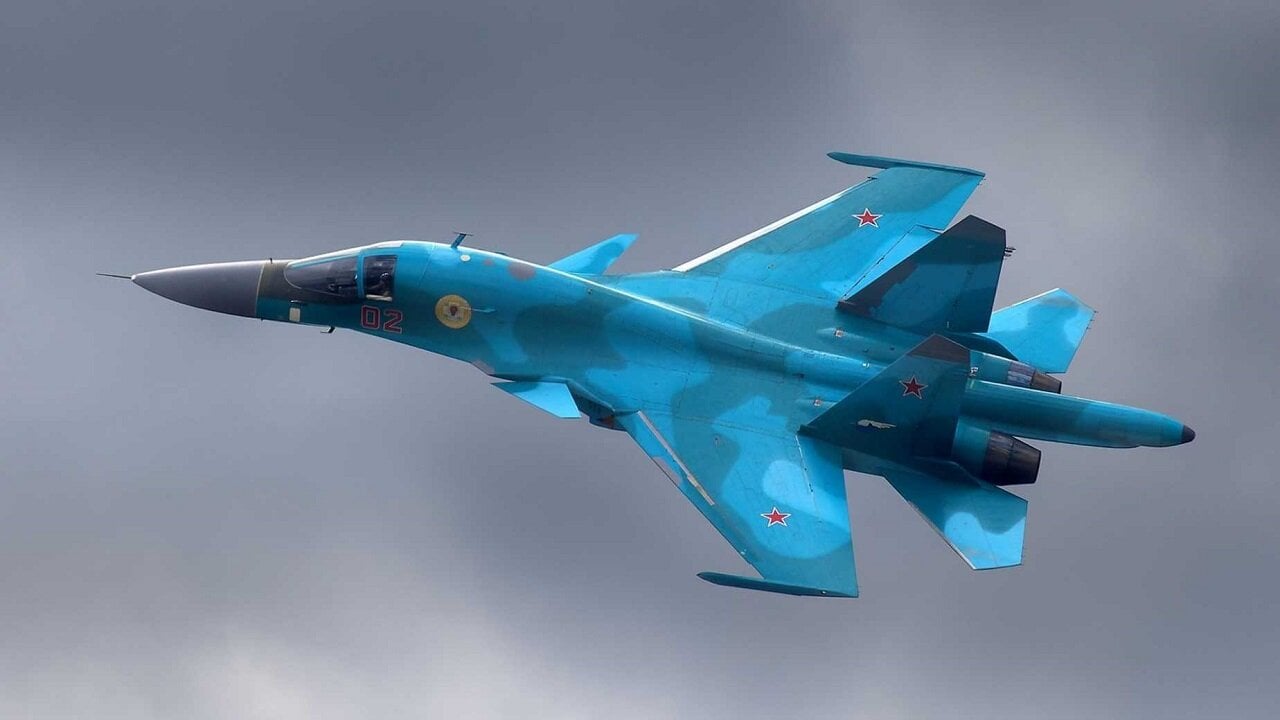
Su-34 Fullback. Image Credit: Creative Commons.
Both aircraft kept the identity and some of the equipment of fighters while, in truth, being shaped into bombers. The F-111 program produced a decade of scandal, a canceled Navy version, and eventually a genuinely excellent strike aircraft, but only after the fighter dream was formally abandoned and handed to a different airplane built for the purpose.
The Su-34 carries the same unresolved tension into combat today, and the war in Ukraine is demonstrating what happens when the compromise is never cleanly settled.
Robert McNamara’s Impossible Airplane
The F-111 began with a decision that aircraft engineers warned could not work.
In June 1960, the U.S. Air Force issued a requirement for a low-level supersonic strike aircraft to replace the F-105, and the U.S. Navy was separately developing a high-altitude fleet-defense interceptor to protect its carriers from Soviet bombers. On February 14, 1961, less than a month after taking office, Secretary of Defense Robert McNamara formally directed that the two services study developing a single aircraft to satisfy both requirements, and in June, he ordered the program ahead over the objections of both.
The project was designated the Tactical Fighter Experimental, or TFX, and McNamara wanted it to serve the Air Force and the Navy, with an early notion of adding an Army and Marine Corps close-support version on top.
The requirements were close to irreconcilable. The Air Force wanted a tandem-seat aircraft optimized for low-level penetration at high speed. The Navy wanted a shorter aircraft to fit carrier elevators, with side-by-side seating and a large radar dish for long-range interception. The two services could agree only on the broad strokes, a swing-wing, twin-engine, two-seat design, and disagreed on nearly everything that followed.
GlobalSecurity’s assessment of the program calls the F-111 the most controversial fighter-attack aircraft ever developed, and identifies the core failure plainly: the two services’ performance needs were simply not aerodynamically compatible in one aircraft. McNamara pressed on anyway, selecting General Dynamics over Boeing in November 1962 largely because the General Dynamics design promised greater commonality between the Air Force and Navy versions, a choice that would look increasingly ironic as the two versions diverged.
The deeper problem was one of identity, and a detailed case study of the program produced at the Massachusetts Institute of Technology identified it exactly. The F-111 was designated a fighter, but, as defined by its actual requirements, it was a bomber or attack aircraft, and the gap between its name and its mission created confusion about its role that dogged the program from the start.
The airplane was, at its conceptual root, a low-level strike aircraft conceived in the 1950s preoccupation with nuclear delivery, dressed in the designation of a fighter for a decade that increasingly wanted air-to-air performance the design could not provide.
Why the Navy Killed the F-111B
The Navy version, the F-111B, is where the compromise broke down completely, and the way it failed is the heart of the lesson. The Naval variant inherited a philosophy from the earlier canceled Missileer program, the idea that a fleet-defense aircraft did not need to be a nimble dogfighter because future air combat would be won at long range by missiles, with the launch platform serving mainly as a truck to carry them.
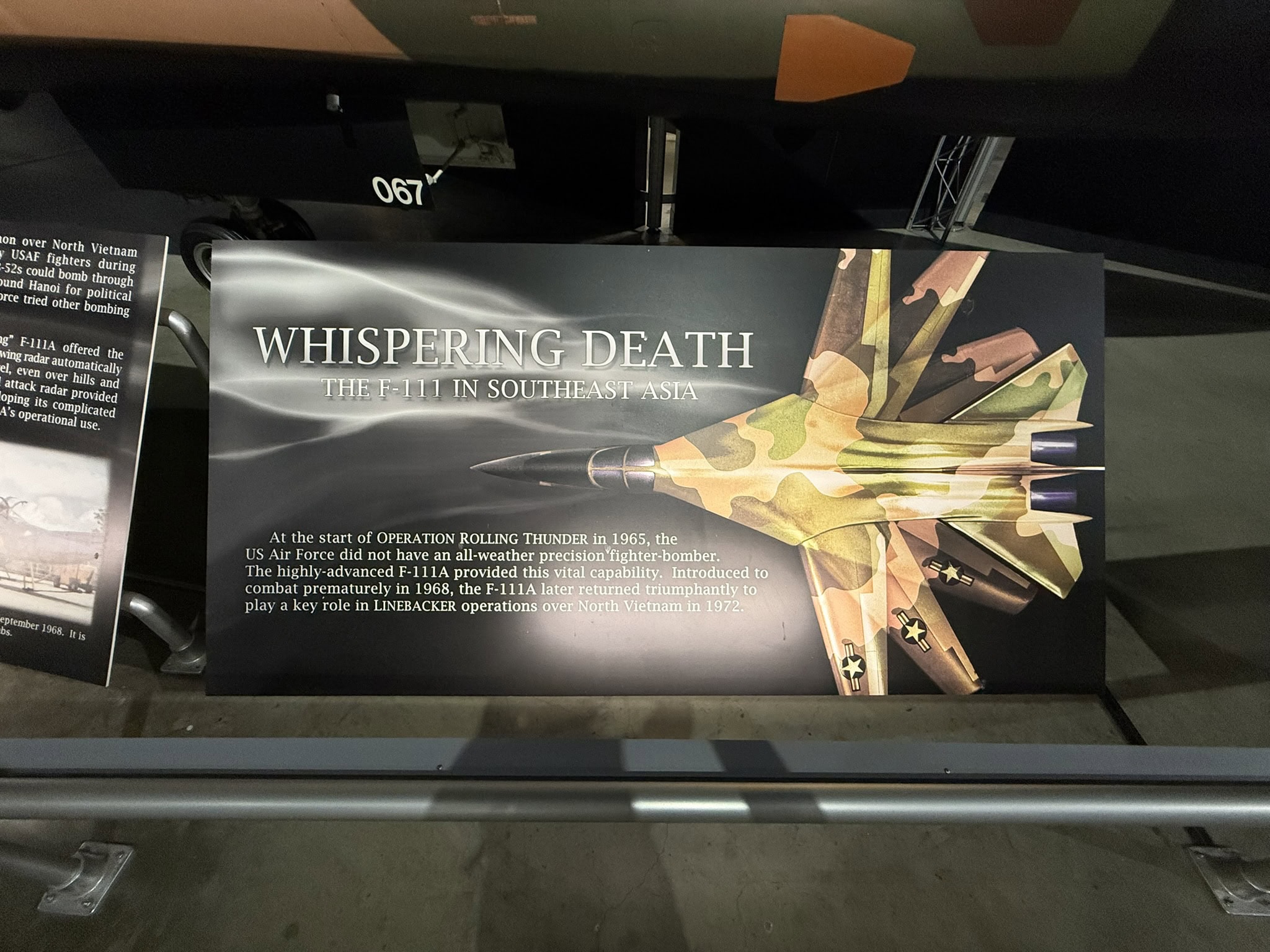
F-111 On Display at the National Museum of the U.S. Air Force. Take on July 19, 2025 by Harry J. Kazianis for 19FortyFive.com
Under that logic, the F-111B’s weight and lack of agility were acceptable. The Navy’s thinking shifted back toward the need for maneuverability, and the aircraft that had been designed as a heavy missile carrier was suddenly expected to be more like a fighter, which it could never be.
Weight was the visible symptom. The Navy had wanted a maximum takeoff weight around 50,000 pounds, and McNamara forced a compromise at 55,000 pounds that proved wildly optimistic, with prototypes coming in far heavier still and every attempt to trim the airframe offset by the weight of the required crew escape capsule. The aircraft was underpowered, overweight, and unsuited to the fast, agile carrier-defense role the Navy now demanded.
The decisive moment came during March 1968 hearings before the Senate Armed Services Committee, when Vice Admiral Thomas Connolly was asked whether more powerful engines could make the F-111B acceptable to the Navy. He replied that “there isn’t enough power in all Christendom to make that airplane what we want.” Congress declined further funding, and the Navy withdrew from the program that year. The service ultimately received a handful of F-111Bs, and not one of them ever took off from a carrier.
The Aardvark Found Its Role by Abandoning the Fighter Dream
What happened next is the part of the story the Su-34 never got. The United States did not try to salvage the F-111B by forcing it into a fighter role. It built a different, purpose-designed fighter for the Navy’s mission. Grumman, which had been the F-111B’s assembly subcontractor, took the aircraft’s best fighter-relevant components, its AWG-9 radar and Phoenix missile system, and put them into a smaller, lighter, genuinely maneuverable airframe designed from scratch as a carrier fighter. That aircraft became the F-14 Tomcat, and it served the Navy’s air-superiority and fleet-defense role for decades. The fighter mission went to an airplane built to be a fighter.
Free of the fighter requirement, the F-111 became what its design had always suited it for. The Air Force version, the Aardvark, matured into an exceptional strike aircraft, and over a roughly 30-year career, it flew combat missions over Vietnam, Libya, and Iraq, using its terrain-following radar and long range to strike at night and at low altitude with precision no other aircraft of its era could match. T
he strategic bomber version, the FB-111, entered the nuclear-strike role, and the electronic-warfare EF-111 Raven served until 1998. HistoryNet’s history of the program notes that the aircraft the Navy could not use as a fighter, the Air Force accepted more than 500 of them and flew with distinction across strike, bombing, and electronic-warfare roles.
The F-111 was a failure as a fighter and a triumph as a bomber, and the United States succeeded with it only by separating those two facts and building a dedicated fighter, the F-14, to carry the mission the F-111 could not.
Sukhoi’s Fighter That Became a Bomber
The Su-34’s origin follows the same arc from the opposite direction, starting with a fighter and evolving it into a bomber. In the late 1970s and 1980s, the Soviet Air Force sought a modern strike aircraft to replace its swing-wing Su-24 Fencer, and the Sukhoi Design Bureau chose to base the new aircraft on its outstanding Su-27 Flanker air-superiority fighter rather than design a clean-sheet bomber.
The project, internally designated T-10V, began by modifying a two-seat Su-27UB trainer into a prototype called the Su-27IB, the initials standing for the Russian term for fighter-bomber. That first prototype made its maiden flight on April 13, 1990, and then the program collapsed along with the Soviet Union, stalling for more than a decade for lack of funding. State trials concluded only in 2003, production at Novosibirsk began around 2008, and the Su-34 entered formal service in 2014, nearly a quarter-century after it first flew.

A Russian Sukhoi Su-34 fighter-bomber fires missiles during the Aviadarts competition, as part of the International Army Games 2021, at the Dubrovichi range outside Ryazan, Russia August 27, 2021. REUTERS/Maxim Shemetov
The aircraft that emerged kept the Flanker’s fighter DNA while being rebuilt into a dedicated strike platform. Sukhoi widened the forward fuselage into an armored cockpit with side-by-side seating for its two crew, encased in titanium armor, and added sufficient internal space and endurance features for the long-range interdiction missions the aircraft was designed to fly. The Su-34 grew heavy, with a maximum takeoff weight near 100,000 pounds and the ability to carry roughly eight tons of ordnance, and its speed dropped to around Mach 1.8, well short of a pure fighter’s performance. Like the F-111, it wears the identity of a fighter over the body of a bomber, and its direct origins are as a dedicated strike aircraft, a tactical bomber in Russian terminology.
The Compromise Russia Never Resolved
Here the two stories diverge, and the difference is the whole point. The United States resolved the F-111’s identity crisis by admitting the aircraft was a bomber and building the F-14 as a separate, dedicated fighter. Russia never made that separation for the Su-34. It kept the aircraft as an all-in-one platform, a strike aircraft that, in theory, can defend itself in air combat, and it never built a companion aircraft to take the air-superiority mission off the Su-34’s shoulders in the way the Tomcat did for the Aardvark. The Su-34’s retained air-to-air capability functions largely as reassurance rather than a mission the aircraft actually performs, because a 100,000-pound strike aircraft loaded with bombs is not going to win a fight against a purpose-built fighter, any more than the F-111 could have.
Analysts have long noted the aircraft sits uncomfortably between categories. Coverage of the Su-34 consistently pairs it with the F-111 and the F-15E Strike Eagle as its closest Western counterparts, the small family of large twin-seat fighter-bombers, and describes it as a capable but compromised design that has been forced into low-altitude attacks, exposing it to heavy air defenses. The comparison to the F-15E is worth drawing carefully, because the Strike Eagle represents the resolved version of the same idea. The F-15E is a genuine fighter airframe adapted for strike that retains real air-to-air capability, backed by a U.S. fleet that also fields dedicated air-superiority fighters. The Su-34 is a fighter airframe converted into a bomber inside a force that leans on it to do strike work at scale, without the layered support that lets a Strike Eagle operate as one specialized tool among many. The Su-34 carries the compromise that the F-111 program eventually escaped.
Ukraine Is Collecting on the Unresolved Compromise
The war in Ukraine has turned that unresolved compromise into measurable losses. Russia entered the full-scale invasion with roughly 140 Su-34s, and open-source tracking of visually confirmed losses places the number destroyed at somewhere around 35 or more, on the order of a quarter of the prewar fleet, with additional airframes lost to drone and sabotage attacks on airbases. The Su-34 has proven vulnerable when flying at low and medium altitudes, exactly where a strike aircraft delivering unguided or short-range weapons is forced to operate, and Ukraine’s layered air defenses have taken a heavy toll there. Russia adapted by using the Su-34 as a standoff launcher for glide bombs fitted with satellite-guidance kits, keeping the aircraft farther from the front, but longer-range Ukrainian surface-to-air systems and the recovery of Russian electronic-warfare equipment have continued to chip away at the fleet.
The replacement problem compounds the losses. Sanctions have throttled Russian production of the Su-34 to a handful of aircraft per year, and the crews, each aircraft carrying a pilot and a weapons systems officer who require extensive training, are difficult to replace. A force that concentrated its strike capability into a single expensive, hard-to-replace airframe now finds that airframe being lost faster than it can be rebuilt. The F-111 was never tested this way in a peer conflict, and the Su-34’s attrition is not solely a product of its fighter-bomber compromise, since any aircraft flown repeatedly into dense modern air defenses will suffer. What the losses illustrate is the cost of relying on one compromised multirole platform to carry the strike burden, without the specialized supporting aircraft and doctrine that let a resolved design like the F-15E operate more safely.
The Lesson Both Aircraft Prove
The comparison should not be overstated, and the differences are real. The F-111 was a joint-service procurement saga driven by a Secretary of Defense who forced two services together, while the Su-34 was a single-service decision to reuse a successful fighter airframe for a strike mission. The Cold War aircraft most often called the Soviet F-111 was actually the Su-24 Fencer, the aircraft the Su-34 replaced, not the Su-34 itself. The two airplanes are cousins in engineering philosophy rather than twins in history.
The philosophy is where they genuinely converge. Both aircraft began as attempts to make a single airframe satisfy fighter and bomber missions simultaneously, and both ended up as bombers wearing a fighter’s identity. The F-111 became a great aircraft the moment the United States accepted that truth, gave the fighter job to the purpose-built F-14, and let the Aardvark be the strike aircraft its design demanded. The Su-34 remains caught in the compromise, a fighter-derived bomber still nominally credited with a fighter’s self-defense role it cannot meaningfully fulfill, flown at scale into the most demanding air-defense environment since the Cold War. The engineering lesson both aircraft teach is the same one McNamara learned at enormous cost in the 1960s. A fighter can become an excellent bomber, but only when its builders stop insisting it is still a fighter, and the F-111 proved it at the Nevada Test Site, while the Su-34 is proving it over Ukraine.
About the Author: Harry J. Kazianis
Harry J. Kazianis (@Grecianformula) was the former Senior Director of National Security Affairs at the Center for the National Interest (CFTNI), a foreign policy think tank founded by Richard Nixon based in Washington, DC. Harry has over a decade of experience in think tanks and national security publishing. His ideas have been published in the NY Times, The Washington Post, The Wall Street Journal, CNN, and many other outlets worldwide. He has held positions at CSIS, the Heritage Foundation, the University of Nottingham, and several other institutions related to national security research and studies. He is the former Executive Editor of the National Interest and the Diplomat. He holds a Master’s degree focusing on international affairs from Harvard University.