
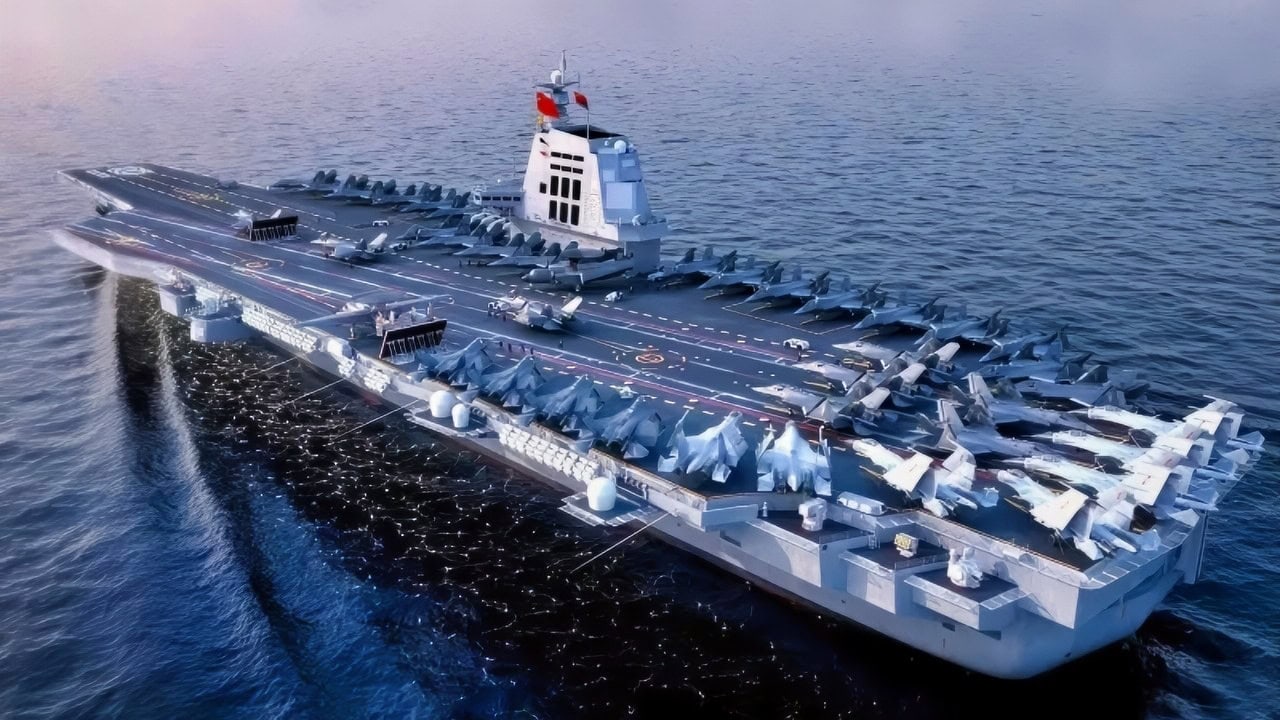
Summary and Key Points: China’s navy is expanding at a pace few countries have ever matched, with projections that the PLAN could field as many as nine aircraft carriers by the mid-2030s. Shipbuilding, though, is no longer the hardest part. China has the industrial capacity to construct large warships, but turning carriers into a real blue-water power demands trained pilots, mature air wings, escorts, replenishment ships, maintenance networks, and years of institutional experience. Liaoning, Shandong, and Fujian show Beijing’s ambition. The challenge now is turning steel into sustained carrier operations able to rival the U.S. Navy.
China’s Aircraft Carrier Dilemma
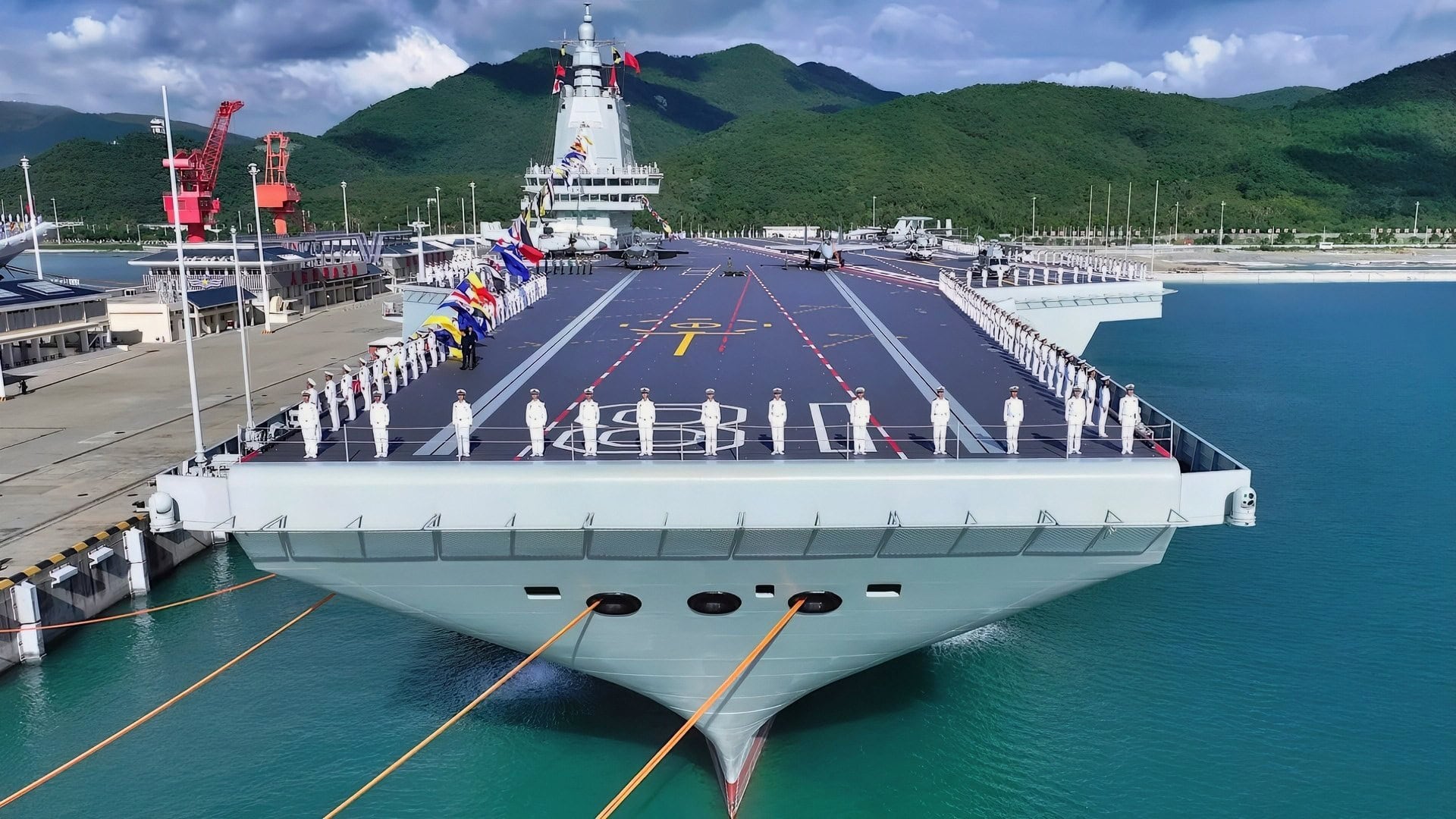
China Aircraft Carrier PLAN Image
China could field as many as nine aircraft carriers by the mid-2030s, reflecting one of the fastest naval expansions in modern history. Building the actual vessels, however, is just one piece of fielding a credible carrier force; carrier operations require trained aviators, escorts, logistics, maintenance infrastructure, and overseas access.
The question is no longer whether China can construct carriers—it can—the question is whether it can generate the operational capacity to deploy those carriers.
The Shipbuilding Advantage
China has unmatched shipbuilding capacity. The massive state-backed shipbuilding industry has a commercial capacity that dwarfs most competitors—including the United States.
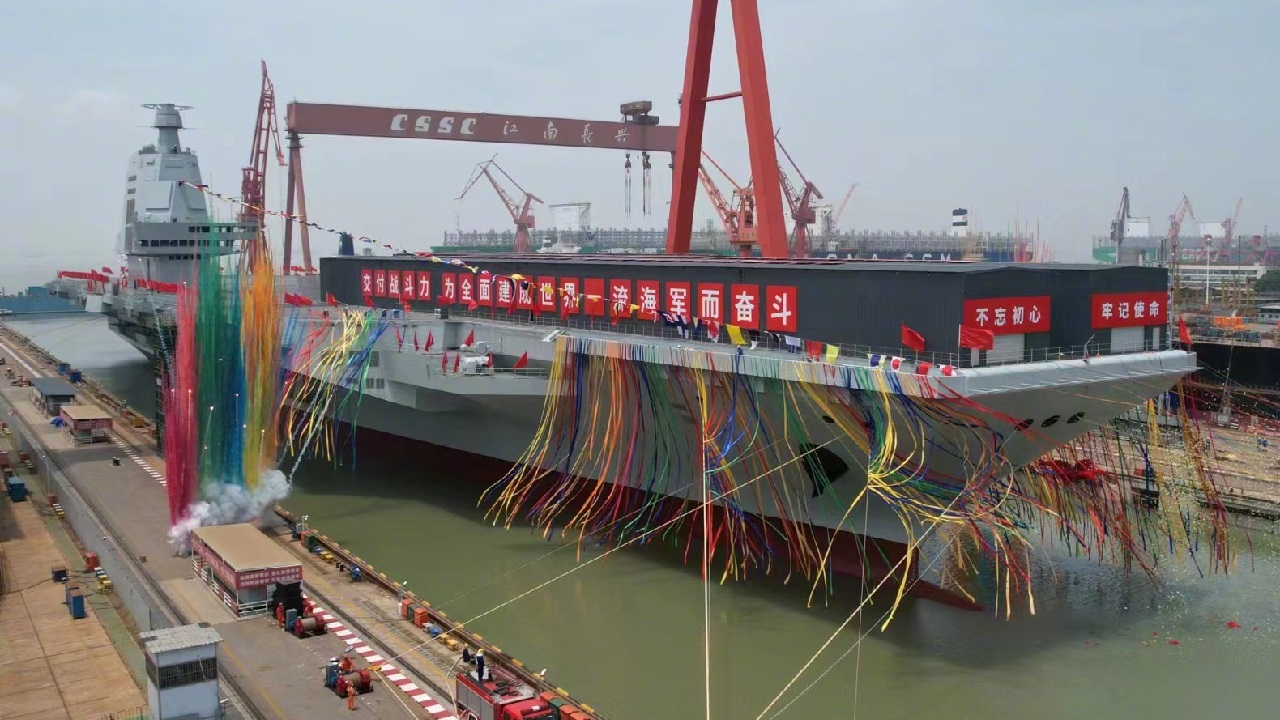
Fujian, China’s New Aircraft Carrier. Image Credit: Chinese Internet.
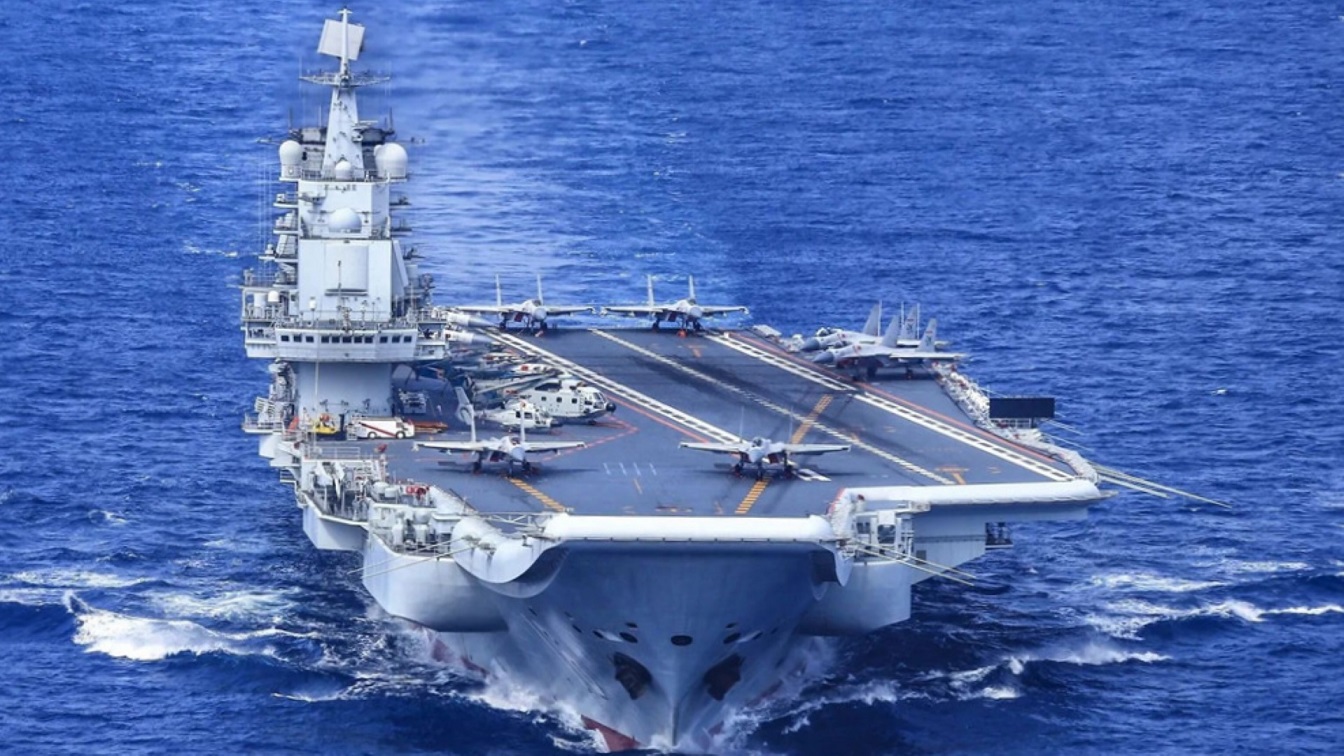
Image Credit: Creative Commons.
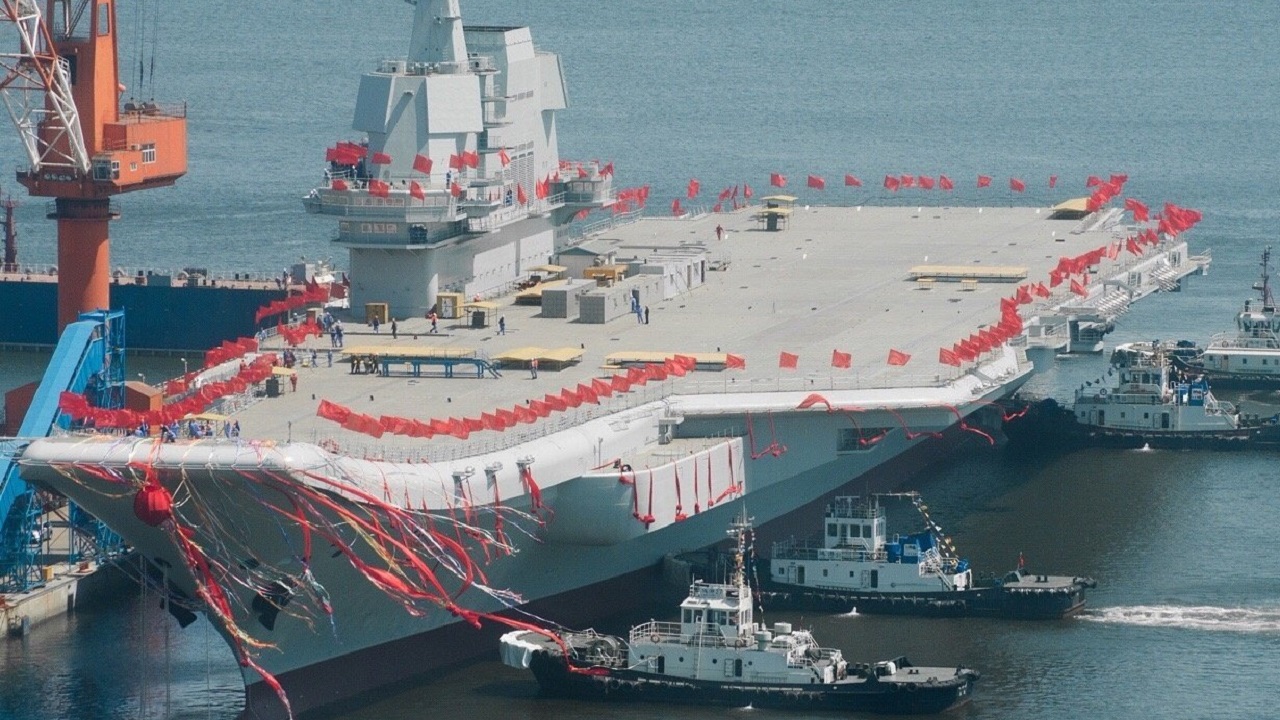
Fujian, China’s new aircraft carrier. Image Credit: Chinese Internet.
With modern automated shipyards and the ability to construct multiple major warships simultaneously, carrier production is no longer China’s primary bottleneck. Indeed, China has figured out how to build carriers; the hard part is carrier aviation.
Carrier pilots must be trained up before an aircraft carrier is operational. Carrier aviation is notoriously difficult, forcing pilots to master arrested landings, catapult launches, night operations, bad-weather recoveries, deck coordination, and formation flying over water. Mistakes are unforgiving. Training requires thousands of landings, experienced instructors, and decades of institutional knowledge—areas where the PLAN lags behind the US.
Transitioning to the Future
China’s first carriers, the Liaoning and Shandong, use ski-jump launch ramps, whereas China’s newest carrier, the Fujian, uses electromagnetic catapults (EMALS), not unlike the US Ford-class.
This is a technological improvement—but it also requires pilots to learn new launch procedures and deck cycles. Air wings must adjust and train pilots accordingly.
Similarly, air wings must develop diverse and mature capabilities. Fighters are just part of the equation.
The current mix includes the J-15 fighter, future J-35 stealth fighter, and KJ-600 AEW aircraft. So, fielding a carrier successfully will also require airborne radar, battle management, long-range detection, and airspace coordination. Building these support aircraft and support roles is vital.
Not Just a Carrier
Carriers rarely sail alone. Typical strike groups also require destroyers, cruisers, frigates, submarines, and replenishment ships. Escorts provide anti-air defense, anti-submarine warfare, missile defense, and command-and-control.
Each additional carrier also demands additional escorts. And as carrier numbers rise, the demand for supporting ships rises alongside them. Relatedly, carriers consume enormous resources; they need fuel, aviation fuel, munitions, spare engines, maintenance crews, and replenishment vessels. Global operations require logistics networks that extend well beyond home ports.
Gradual Experience
The experience required to operate a carrier cannot be built overnight. The US Navy has operated carriers continuously since World War II, accumulating vast institutional experience.
Deck crews, maintenance teams, logistics planners, strike warfare commanders, carrier air wing leadership—all have been refined over decades. China will need to make rapid progress.
But in truth, true parity won’t be achievable in the short term; institutional knowledge takes decades to accumulate and can’t be matched or faked in mere years.
Does China Need Nine Carriers?
Carrier fleets exist to serve multiple purposes, including military (long-range power projection, expeditionary operations) and political (prestige, diplomacy, presence).
China’s primary regional strategy still relies heavily on land-based aircraft, anti-ship ballistic missiles, submarines, and integrated air defenses. Aircraft carriers complement these capabilities but don’t replace them. China could likely execute a stifling A2/AD strategy without nine carriers. But more carriers would add strategic depth and, of course, political prestige to the PLAN’s rapidly expanding navy.
Looking Ahead
China’s shipyards are demonstrating an impressive ability to build increasingly sophisticated aircraft carriers. The greater challenge now lies in turning those ships into fully integrated carrier strike groups capable of sustaining blue-water operations.
By the mid-2030s, Beijing may possess one of the world’s largest carrier fleets. But matching the US Navy’s 11-vessel fleet of supercarriers will require that the PLAN’s new carriers be properly crewed, protected, and supplied.
Such expansive operations require decades of institutional knowledge that China cannot will into being overnight.
About the Author: Harrison Kass
Harrison Kass is a writer and attorney focused on national security, technology, and political culture. His work has appeared in Tablet, City Journal, The Hill, The Spectator, and The Cipher Brief. He holds a JD from the University of Oregon and a master’s in Global & Joint Program Studies from NYU. More at harrisonkass.com.