
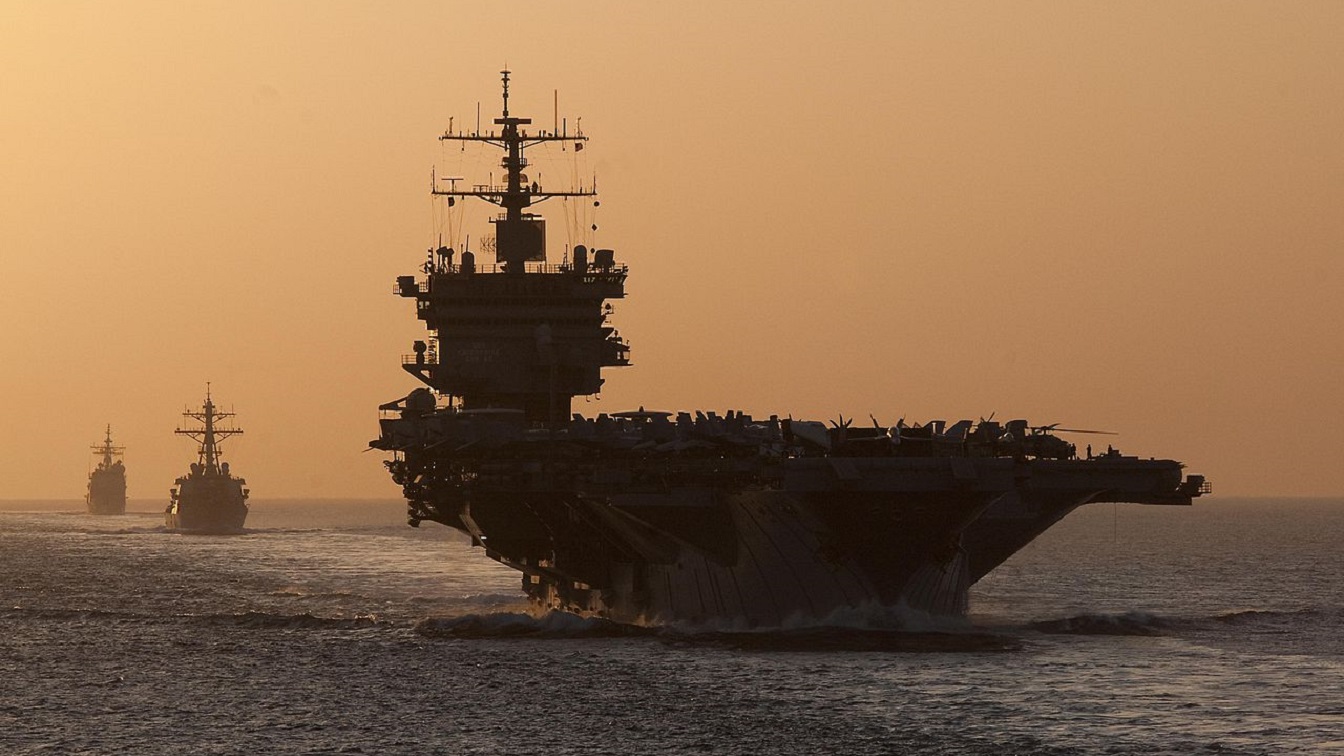
Summary and Key Points: The United States Navy retired the carrier USS Enterprise, the first nuclear-powered aircraft carrier, in 2012, and on current plans, the ship will not be fully dismantled until 2029. Federal law requires a nuclear vessel to be defueled before decommissioning, its spent fuel shipped to the Idaho National Laboratory, and its reactor compartments buried at the Hanford site in Washington State, work only a handful of facilities can perform. With the Puget Sound Naval Shipyard already backlogged, the Navy awarded a $536.7 million commercial dismantling contract in May 2025, a first for a nuclear-powered warship, and litigation over that award has pushed a rebid into 2026 while ten Nimitz-class carriers age toward the same process.
You Can’t Just Throw a Nuclear Aircraft Carrier in the Trash: Introduction
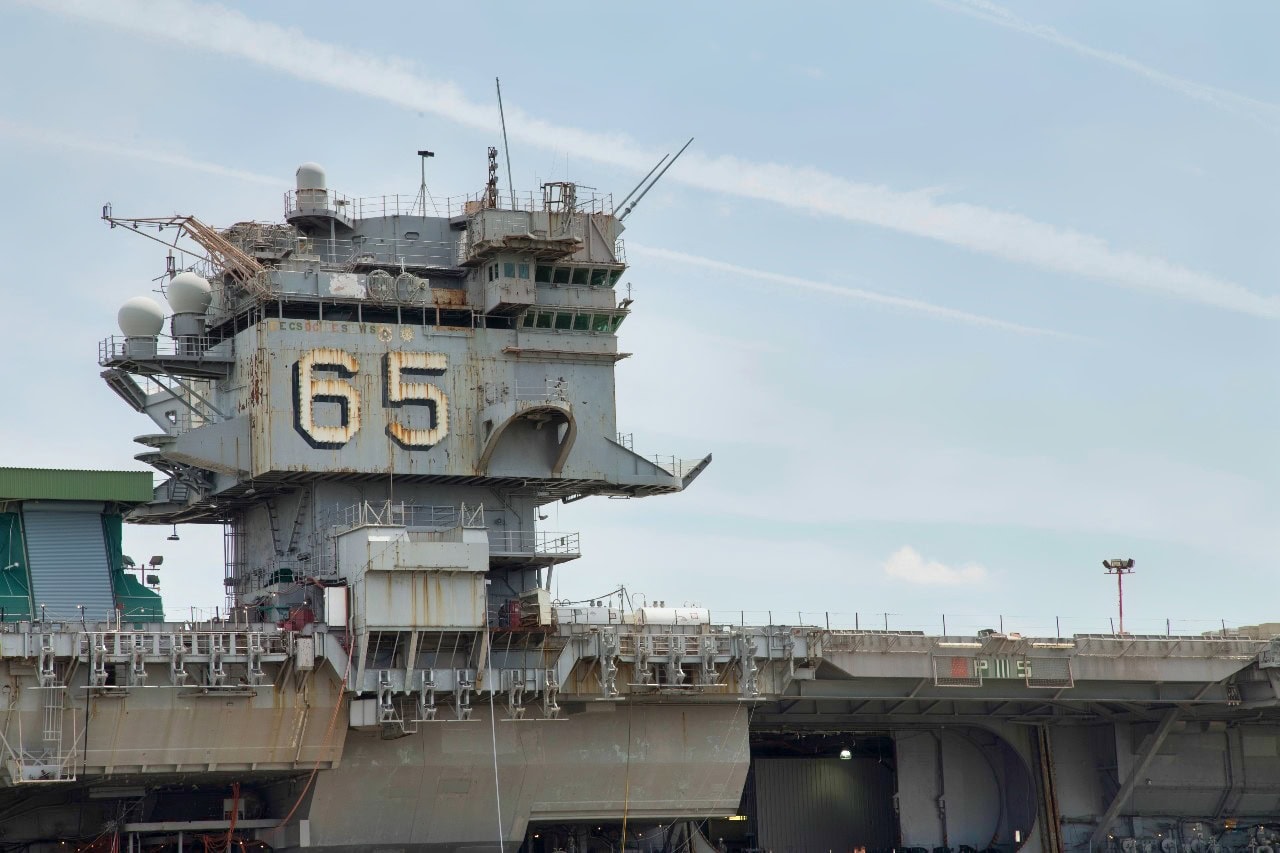
NEWPORT NEWS, Va. (July 15, 2018) — USS Enterprise (CVN 65) sits pierside at Newport News Shipbuilding following its decommissioning in February 2017. (U.S. Navy photo by Mass Communication Specialist 2nd Class Cat Campbell/RELEASED)
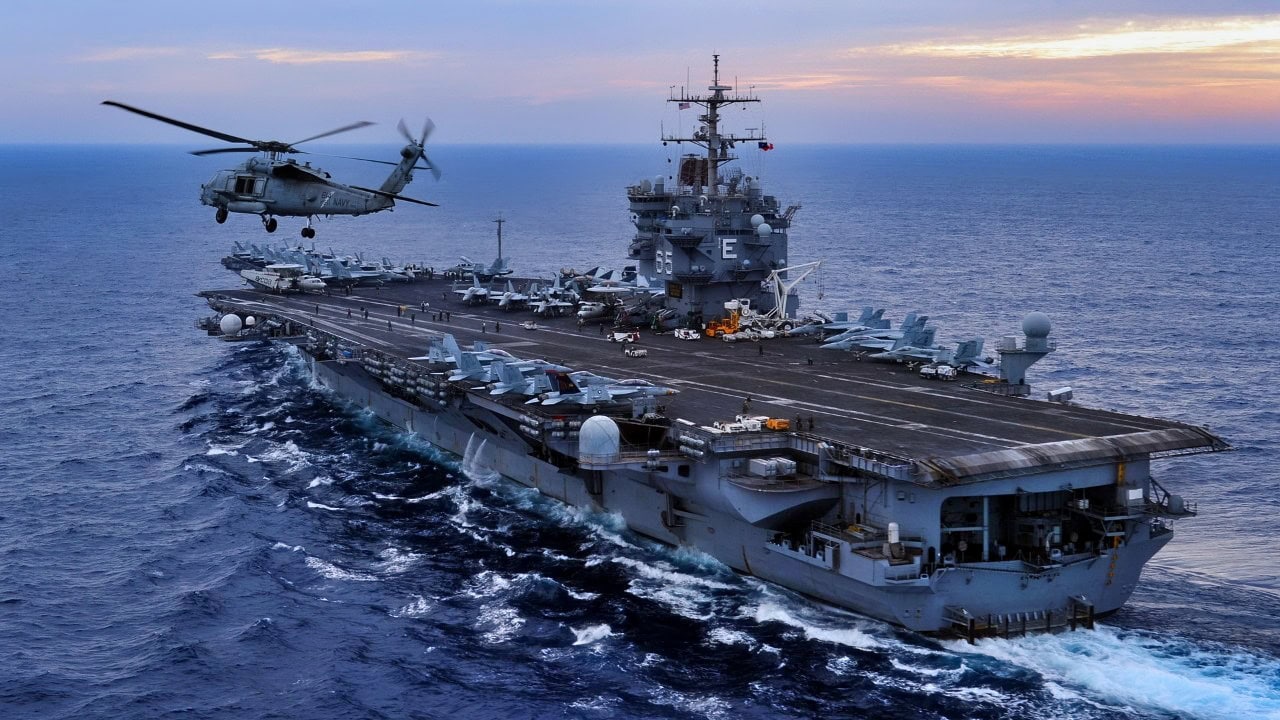
USS Enterprise from 2012. Image Credit: Creative Commons.
When the aircraft carrier USS Enterprise came home for the last time in 2012, it had served the US Navy for 51 years, among the longest-serving carriers the Navy ever operated, through the Cuban Missile Crisis, Vietnam, and the wars after 9/11. Sailors called it the “Big E,” the first nuclear-powered aircraft carrier ever built, a genuine icon.
Today, more than a decade later, that icon is a rusting hulk tied to a pier in Newport News, Virginia, slowly corroding while the Navy works out how to dispose of it. On current plans, it will not be fully dismantled until 2029 at the earliest, roughly seventeen years after it stopped sailing.
Getting even that far took a bureaucratic and industrial saga that exposes an under-appreciated fact about American sea power: a nuclear warship is one of the hardest things in the world to get rid of.
You Cannot Just Scrap a Nuclear Ship
When the Navy retires a conventional warship, the options are relatively simple.
It can be sunk as a target in a live-fire exercise, sold to an ally, or towed to a commercial scrapyard and cut up for its steel. The decommissioned conventional carrier USS John F. Kennedy, for instance, was quietly towed to a breaker’s yard in Brownsville, Texas, in early 2025 for exactly that kind of routine dismantling.
None of that is possible with a nuclear ship because of the reactor.
By law, a nuclear-powered vessel cannot even be formally decommissioned until its reactor has been defueled and its radioactive core removed. The spent nuclear fuel is shipped by rail to the Naval Reactors Facility at the Idaho National Laboratory.
Then the reactor compartment itself, the heavily shielded section of the hull that housed the plant, must be cut out, sealed at both ends, and moved by barge and heavy transporter to a government burial trench at the Hanford site in Washington State, where it will sit as low-level radioactive waste for centuries. The Navy has done this cradle-to-grave process methodically for decades, packing off well over 130 reactor compartments from more than 120 vessels.
But it is slow, specialized, tightly regulated work with no shortcuts, and it is the reason a nuclear ship cannot simply be handed to a scrapper the way the Kennedy was.
Only One Place Could Do the Work
For most of the nuclear age, all of that dismantling happened at exactly one facility: the Puget Sound Naval Shipyard in Bremerton, Washington, home of the Navy’s Ship-Submarine Recycling Program. Every retired nuclear submarine and cruiser followed the same path there, defueled, towed in, and cut apart, with the reactor sections sent on to Hanford. It is a proven system. It is also badly congested.
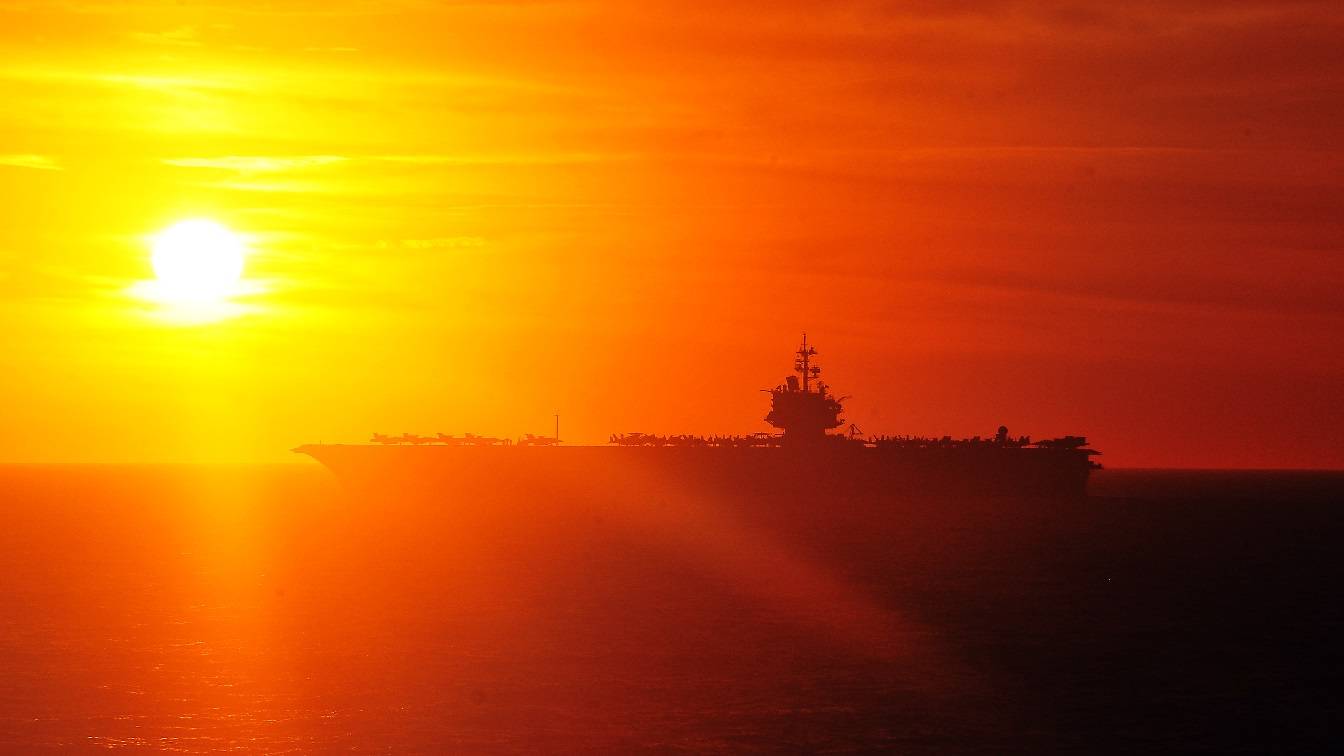
ATLANTIC OCEAN (Jan. 23, 2012) The aircraft carrier USS Enterprise (CVN 65) is underway in the Atlantic Ocean while conducting a composite training unit exercise. (U.S. Navy photo by Mass Communication Specialist 3rd Class Jesse L. Gonzalez/Released)
By the time the Navy began seriously planning the Enterprise’s disposal, Puget Sound already had a backlog of around ten nuclear submarines plus an old nuclear cruiser waiting in line to be taken apart, a queue that only grows as more boats retire. And here is the part that connects the disposal problem to the readiness problem the fleet is already fighting: Puget Sound is not just a scrapping yard. It is one of the handful of public shipyards that also perform depot maintenance on the active fleet. Every hull being dismantled competes for the same dry docks and skilled workers the Navy needs to keep its warships operational. The Government Accountability Office warned that dismantling the Enterprise at Puget Sound would add nearly a full year of work to the yard and could directly degrade its ability to maintain the ships still at sea. Disposing of the old fleet, in other words, eats into the capacity to sustain the current one.
The Enterprise Was the Nightmare Case
If any nuclear ship was going to be hard to dispose of, it was this one. The Enterprise was a product of the 1950s, built before anyone had settled on how many reactors a carrier needed, and it carried eight of them, against just two on the Nimitz-class carriers that followed. No one had ever dismantled a nuclear-powered aircraft carrier before, so there was no established process, no cost model, and no precedent to follow.
Worse, the project got tangled in a jurisdictional dispute between two branches of government. The Navy’s Naval Reactors organization oversees military nuclear propulsion, while the civilian Nuclear Regulatory Commission oversees commercial nuclear work, and the two could not agree on who had authority to supervise the dismantling if a private company did it. That dispute helped freeze the ship in place for years. Meanwhile, GAO estimates for doing the job at Puget Sound climbed toward $1.5 billion and stretched to fifteen years, in part because the overloaded yard could not even begin the work until the mid-2030s. The Big E was stuck, an icon left to rust while agencies argued over paperwork.
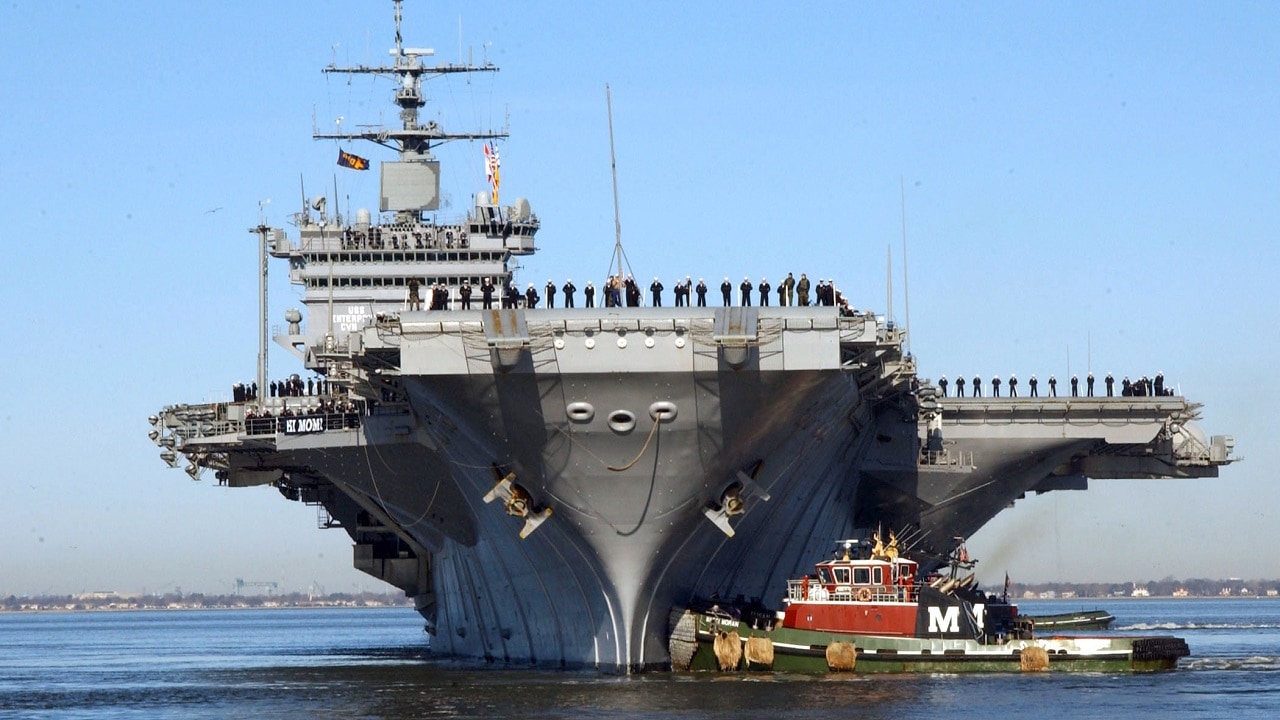
Naval Station Norfolk, Va. (Feb. 29, 2004) – Sailors aboard the nuclear powered aircraft carrier USS Enterprise (CVN 65) “man the rails” as the carrier approaches its pier at her homeport of Naval Station Norfolk, Va. The carrier and its strike group are returning after completing a six-month deployment in support of the global war of terrorism, including Operations Iraqi Freedom and Enduring Freedom. U.S. Navy photo by Photographer’s Mate 3rd Class Sondra Howett. (RELEASED)
The Commercial Escape Hatch, Now in Court
The Navy’s way out was to break with tradition. Rather than send the Enterprise to its own congested shipyard, it decided to hand the entire job to a commercial contractor, the first time a US nuclear-powered warship would be dismantled by private industry. In May 2025 it awarded a $536.7 million fixed-price contract to NorthStar Maritime Dismantlement Services, whose partner firm would do the physical work at a yard in Mobile, Alabama, with the low-level radioactive waste going to a licensed disposal site in Texas. The Navy argued the commercial route would save around $1 billion compared with using a public shipyard and, just as importantly, free up that scarce shipyard capacity for maintaining the active fleet.
Even that has not gone smoothly. Local officials in Mobile initially objected out of fear of contamination, and then the contract itself landed in litigation. A rival bidder that had missed the submission deadline due to a computer glitch protested the award; a court ordered the bidding reopened, and as of the spring of 2026, the Navy expected to award a new contract, with Huntington Ingalls and others back in contention over where the ship will ultimately go. Fourteen years after the Enterprise stopped sailing, the question of who would scrap it and where was still unsettled. Getting rid of a nuclear warship is so hard that even hiring the demolition crew turned into a legal battle.
A Whole Fleet Waiting for the Breakers
The most sobering part of the story is that the Enterprise is not the end of the problem. It is the opening act. The Navy is treating the Big E as a pilot project, a first attempt to work out a process it will have to repeat again and again, and it stood up a dedicated new office just to manage the effort. Ten Nimitz-class carriers, each with two reactors, will reach the end of their service lives over the coming decades, with the first already retired and the USS Dwight D. Eisenhower not far behind. Behind them comes the steady drumbeat of nuclear submarines heading for the recycling program, each with its own multi-year, multi-million-dollar defueling and burial project.
There is a deep irony in all of this. The nuclear reactor is what makes these ships so formidable, giving a carrier or a submarine the ability to steam for decades and cross oceans without refueling. That same reactor is what turns each of them, at the end of its life, into a billion-dollar, decades-long liability that only a few facilities in the country can safely unwind, all while those facilities are needed to keep the rest of the fleet running. The United States spent the second half of the twentieth century building the world’s most powerful nuclear navy. It will spend a good part of the twenty-first century, and many billions of dollars, carefully taking it apart. Something of the Big E, at least, will endure: about fourteen tons of steel salvaged from the old carrier are being worked into the hull of the future USS Enterprise, the third Ford-class ship, so that the name, and a piece of the metal, will go back to sea even as the original is finally laid to rest.
About the Author: Harry J. Kazianis
Harry J. Kazianis (@Grecianformula) was the former Senior Director of National Security Affairs at the Center for the National Interest (CFTNI), a foreign policy think tank founded by Richard Nixon based in Washington, DC. Harry has over a decade of experience in think tanks and national security publishing. His ideas have been published in the NY Times, The Washington Post, The Wall Street Journal, CNN, and many other outlets worldwide. He has held positions at CSIS, the Heritage Foundation, the University of Nottingham, and several other institutions related to national security research and studies. He is the former Executive Editor of the National Interest and the Diplomat. He holds a Master’s degree focusing on international affairs from Harvard University.

