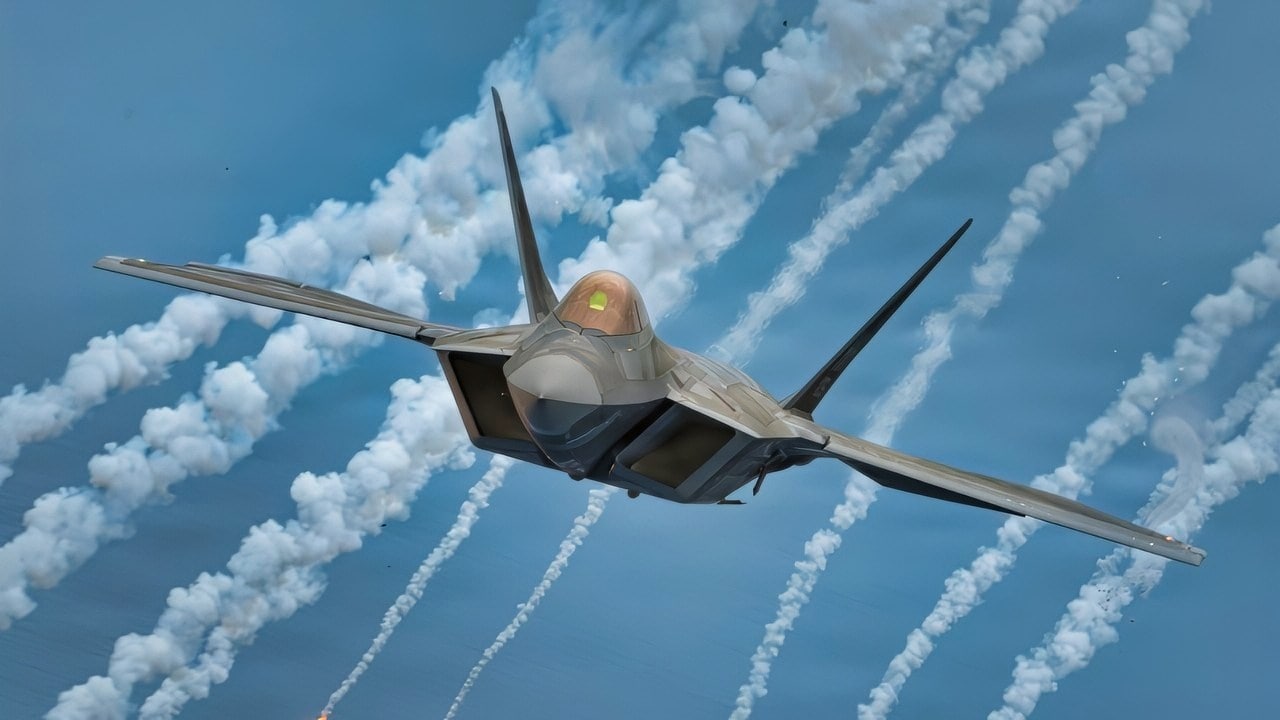
China’s fifth-generation air superiority warplane, the Chengdu J-20 “Mighty Dragon,” has reached another milestone. It has surpassed 500 units (and that number is still growing, with another 100 units coming online). Many in the West question whether the plane is as technologically advanced or as truly capable as the F-22 Raptor.
Even if it is not as capable (it most likely is), quantity has its own quality. This development is something that the United States, once the “Arsenal of Democracy,” once understood: mass production trumps exquisite technological platforms, reinforcing China’s growing strategic confidence.
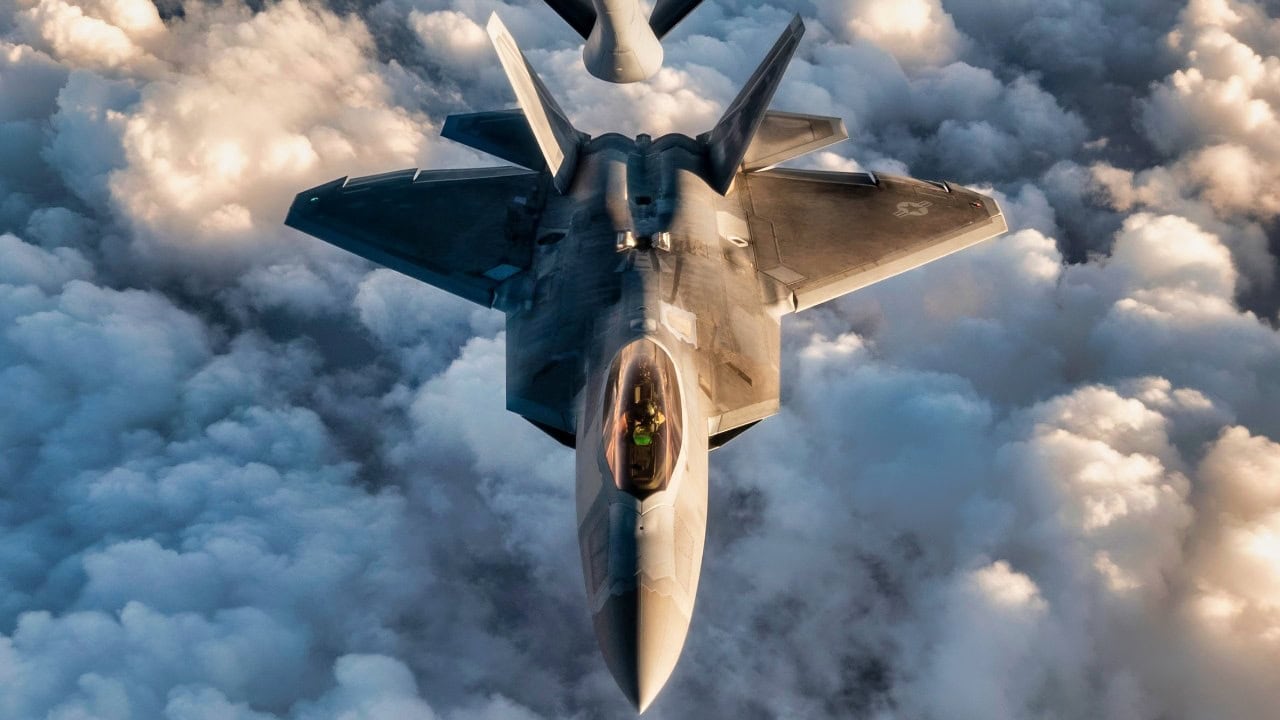
A U.S. Air Force F-22 Raptor departs after being refueled by a KC-135 Stratotanker over the U.S. Central Command area of responsibility November 5, 2024. Raptors provide air dominance and conduct missions delivering airpower within the region. (U.S. Air Force photo)
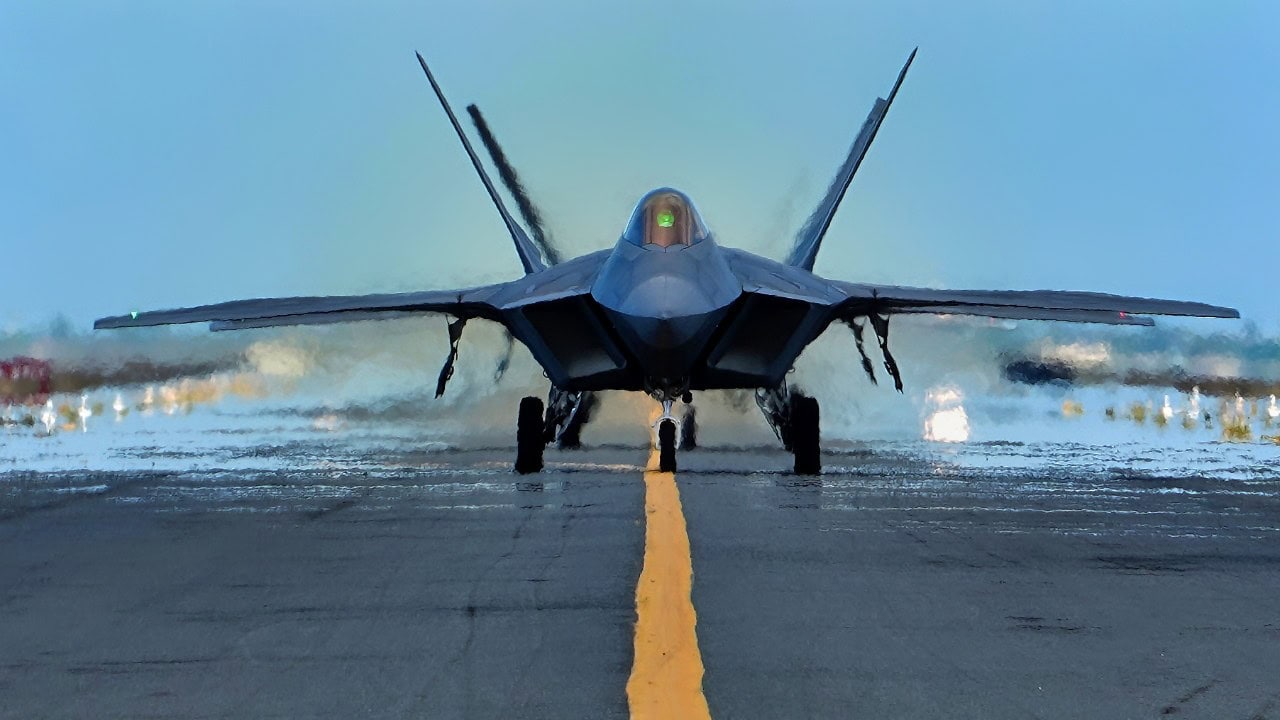
A U.S. Air Force F-22 Raptor taxis on the runway during a routine training schedule April 21, 2020, at Honolulu International Airport, Hawaii. Given the low traffic at the airport due to COVID-19 mitigation efforts, the active-duty 15th Wing and the Hawaii Air National Guard’s 154th Wing seized an opportunity to document the operation which showcases readiness and their unique Total Force Integration construct. The units of Team Hickam work together seamlessly to deliver combat airpower, tanker fuel, and humanitarian support and disaster relief across the Indo-Pacific. (U.S. Air Force photo by Airman 1st Class Erin Baxter)
The Chinese dominate mass production. The US, meanwhile, struggles to maintain peacetime levels of warplane output.
The F-22, built to counter the J-20, is no longer in production. That limits America’s future combat fleet and emphasizes strategic vulnerabilities.
Experts estimate that China possesses at least 18 J-20 air brigades, totaling 504 fighters. That number surpasses the US F-22 fleet. In fact, it even outpaces the number of F-35A Lightning II multirole fighters in America’s inventory.
This development demonstrates China’s lead in fifth-generation air combat capabilities and strategic reach.
The J-20 Is Becoming the Centerpiece of China’s Kill Web
It’s not just mass that makes the J-20 dangerous. The latest J-20 upgrades have less to do with making the airplane itself dramatically better and more to do with making it the centerpiece of an integrated kill web.
Gabriel Honrada of The Asia Times reports that Beijing has installed improved AESA radars on the newest J-20s. China’s military also has upgraded infrared search-and-track radars. J-20s have been fitted with more capable long-range missiles, enhancing the plane’s ability to wage beyond-visual-range (BVR) warfare and demonstrating a cohesive, network-centric approach that amplifies its effectiveness.
All these capabilities contributed to a much more sophisticated way of thinking about airpower by Chinese military planners. Just consider how Beijing likely assumes a campaign against Taiwan will play out.
Once hostilities with Taiwan begin, China’s rocket forces will destroy radar systems on the embattled island. Chinese electronic warfare (EW) aircraft will jam communications.
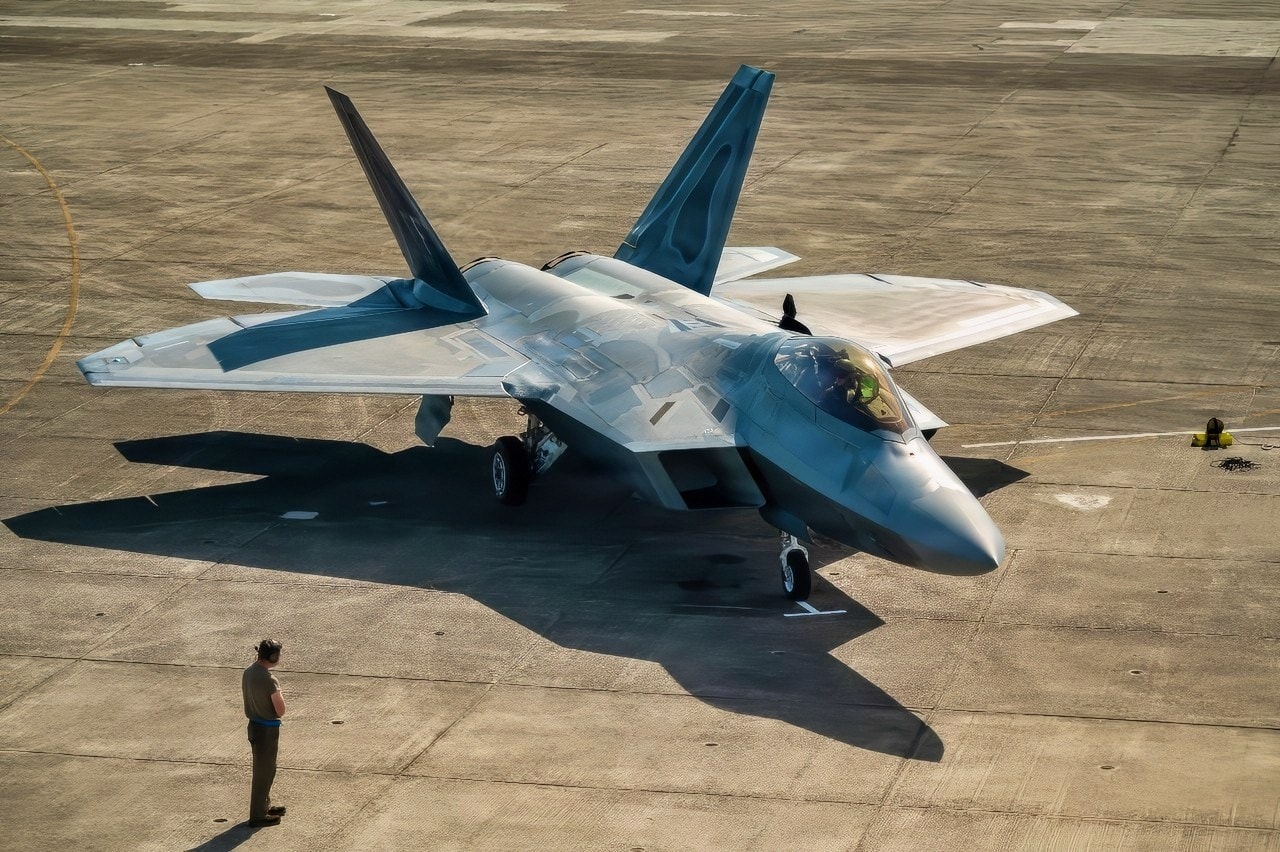
A U.S. Air Force F-22 Raptor waits to taxi on the flight line in Ceiba, Puerto Rico, Jan. 4, 2026. U.S. military forces are deployed to the Caribbean in support of the U.S. Southern Command mission, Department of War-directed operations, and the president’s priorities to disrupt illicit drug trafficking and protect the homeland. (U.S. Air Force photo)
Then the KF-500 airborne warning aircraft will coordinate the battle. All as J-20s penetrate whatever defenses remain. GJ-11 stealth drones accompany those fighters, too. J-16s and J-11s provide additional mass behind the J-20s.
So, the J-20 is the leading edge of a much larger, more capable force operating in tandem. Yes, this is similar to the American way of war. But the clincher here is that China combined this network-centric approach with far greater numbers. China can sustain heavier losses and remain combat-effective compared to the Americans.
China Has Closed More Than the Numbers Gap
Even the weaknesses first noted in the original J-20 line have been overcome. For instance, after relying on Russian-made engines for the J-20’s first iteration, China has finally perfected its own domestic WS-series engine. Chinese military planners have included artificial intelligence-assisted (AI) battle management systems. Then, Beijing enhanced the J-20’s ability to network with drones and support aircraft. Essentially, the J-20 has become a quarterback rather than merely another stealth fighter.
Chinese military sophistication transcended merely having more planes to overpower the American fifth-generation warplane fleet. China is making its expanded fleet of J-20s a key node in its combat network. So, China is pairing quantity with increasing quality. That’s a very dangerous combination for the United States to face.
The Era of Quality Alone Has Ended
Since the Cold War, America has believed technological superiority would offset numerical superiority. During an age when Washington faced no real peer competitors, this was a fair assumption. But that assumption has been replaced with the realities of multipolarity. China has overcome the quantitative gap with the United States. It appears to be overcoming the qualitative gap as well.
The J-20’s production gives the world a glimpse into China’s overall air war doctrine. The People’s Liberation Army Air Force (PLAAF) no longer must achieve one-for-one air superiority. Instead, all China must do is create a force that can saturate the defenses of its enemies while overpowering those rivals with greater numbers–all linked together in a comprehensive battle network.
The Question America Must Answer Beyond the F-22
If that trajectory continues through the remainder of this decade, the defining question in a Taiwan contingency may no longer be whether the J-20 is superior to the F-22. It will likely depend on whether there are enough F-22s and F-35s to overcome the inherent advantages China has built for itself.
Can the United States sustain itself against a Chinese air force built for prolonged, high-intensity attrition rather than a handful of decisive dogfights?
About the Author: Brandon J. Weichert
Brandon J. Weichert is the Senior National Security Editor at 19FortyFive.com. He also manages The Weichert Brief on Substack. Weichert also hosts “National Security Talk” on Rumble. He is the author of four bestselling national security books, the most recent of which is A Disaster of Our Own Making: How the West Lost Ukraine (Encounter Books). Follow him via Twitter/X @WeTheBrandon.