
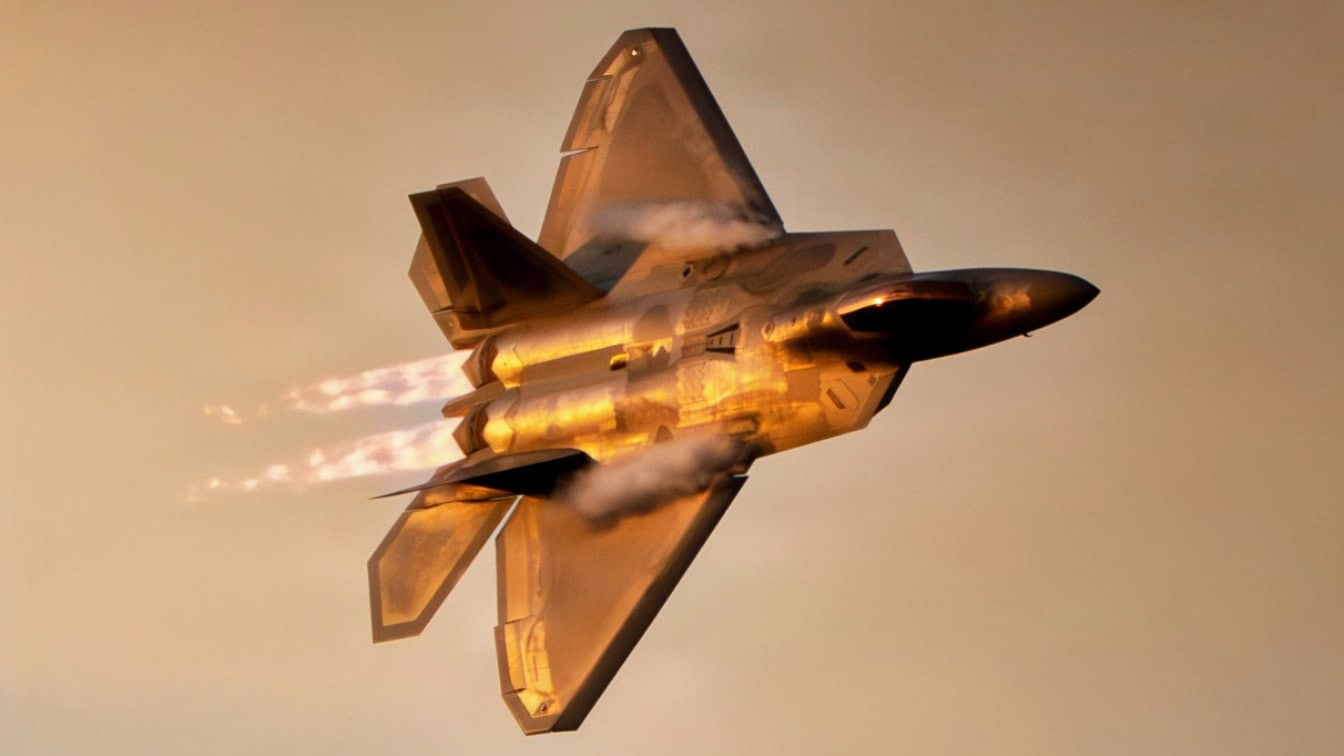
For years, the assumption has been that the Lockheed Martin F-22 Raptor, a fifth-generation air superiority stealth fighter, was superior to Lockheed’s F-35 Lightning II, a fifth-generation multirole warplane. Since 2009, though, when the Obama administration unceremoniously (and prematurely) canceled the F-22’s production line for economic reasons, the F-35 has become the primary fifth-generation warplane in America’s fleet.
Unlike the F-22, which serves the Air Force, variants of the F-35 serve the US Air Force, Navy, and Marine Corps. What’s more, the F-35 is an export plane, meaning that multiple other American allies use it.
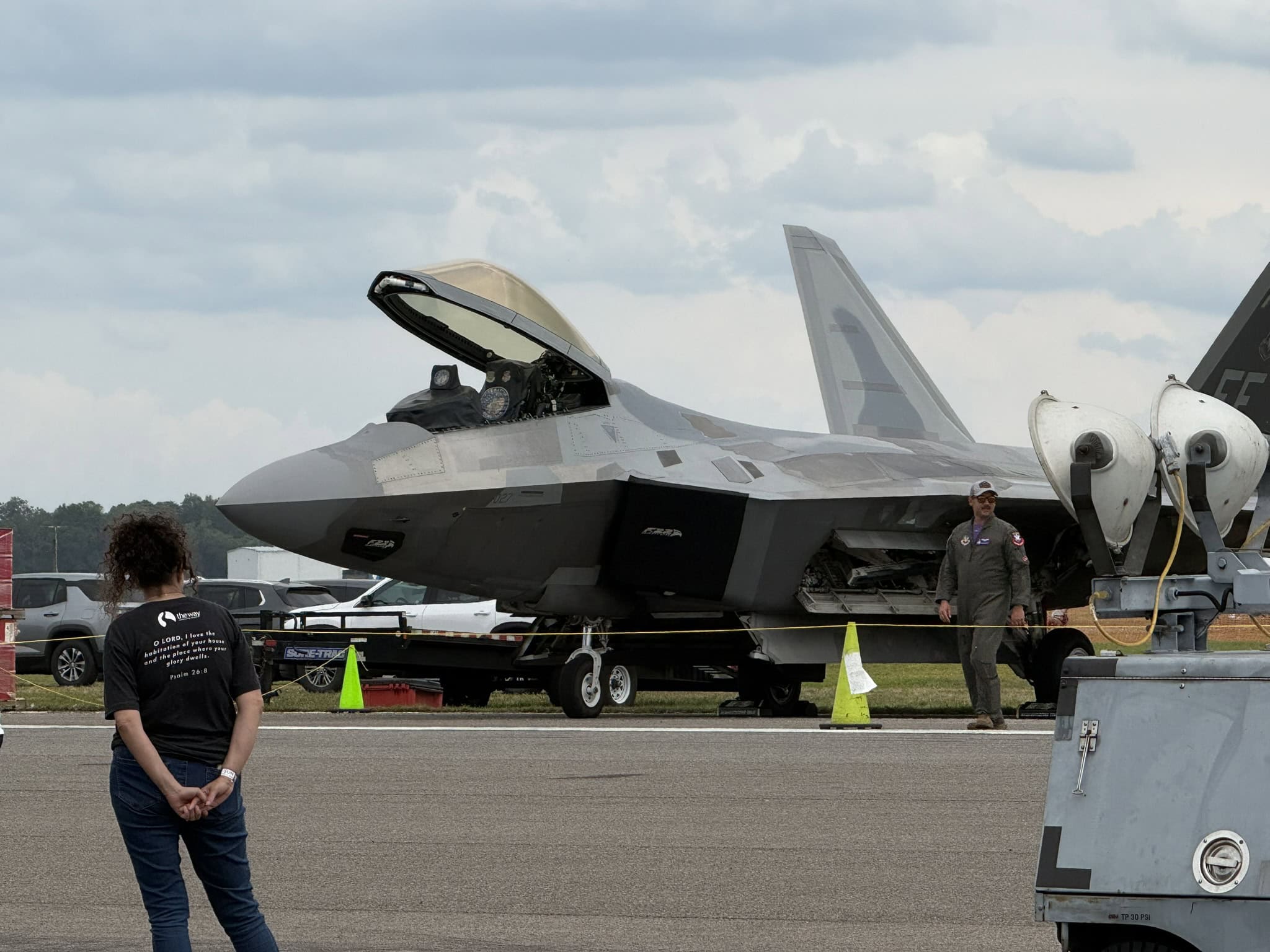
F-22 at Lakeland, Florida Air Show in April. Image Credit: Harry J. Kazianis.
Has the F-35 Surpassed the F-22?
A recent essay in Simple Flying argues that the F-35 has, after many years, surpassed the F-22. That’s because, unlike the F-22, which is a pure dogfighter, the F-35 has become an information warfare platform.
When the F-35 entered service, you see, critics focused on the fact that it was not the F-22. The F-35 is slower than the F-22. It’s also less maneuverable. The F-35 carries fewer air-to-air missiles internally. There’s only one engine on the F-35, as opposed to the two powerful engines on the F-22.
Oh, yeah, and the F-35 has been plagued by drastic cost overruns.
TheF-35 is just a flying sensor. Per the proponents of the F-35, the plane offers sensor fusion on an unparalleled scale, passive electronic surveillance, AESA radar, distributed infrared sensors, secure datalinks, an impressive electronic warfare (EW) system, and the ability to provide targeting for other aircraft, ships, and missile batteries.
If the F-22 was a high-powered dogfighter, then the F-35 was a long-distance seeker. Trying to compare the two was unfair to the F-35. Yet, here we have an example of just such a comparison. So, it begs the question: if the F-35 is so advanced compared to the F-22, why even spend precious time writing about it?
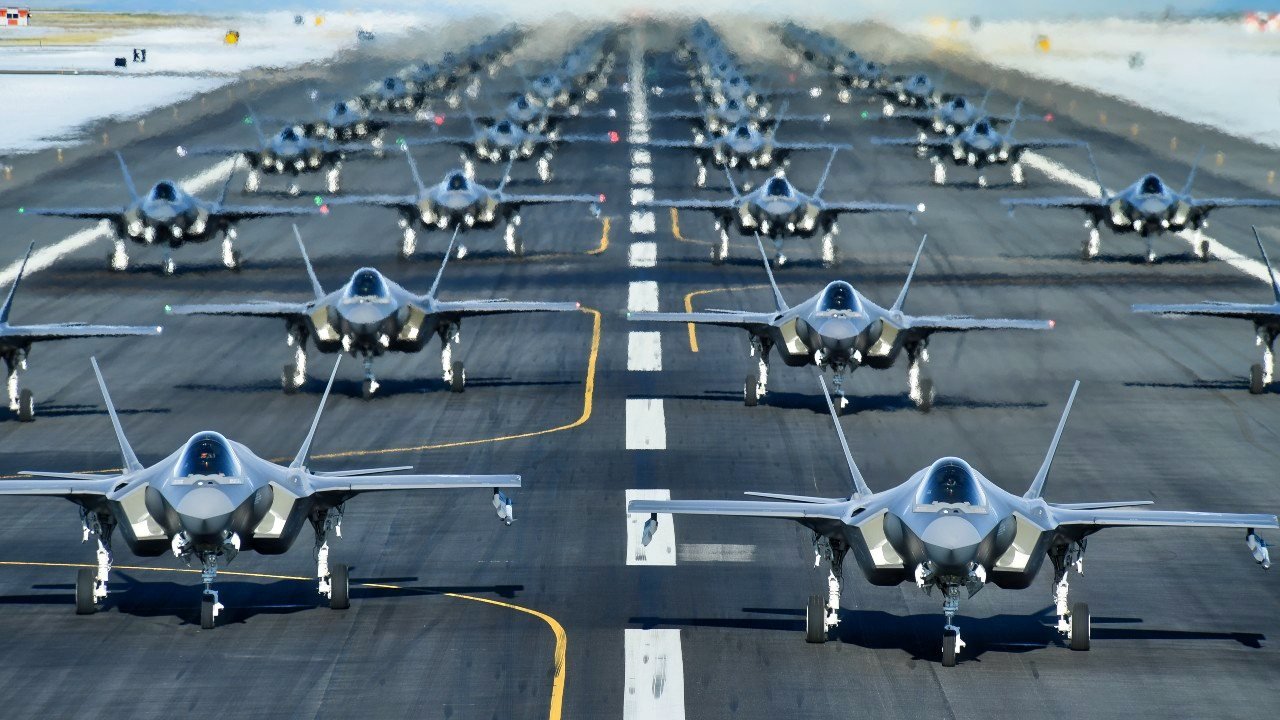
F-35 Elephant Walk. Image Credit: Creative Commons.
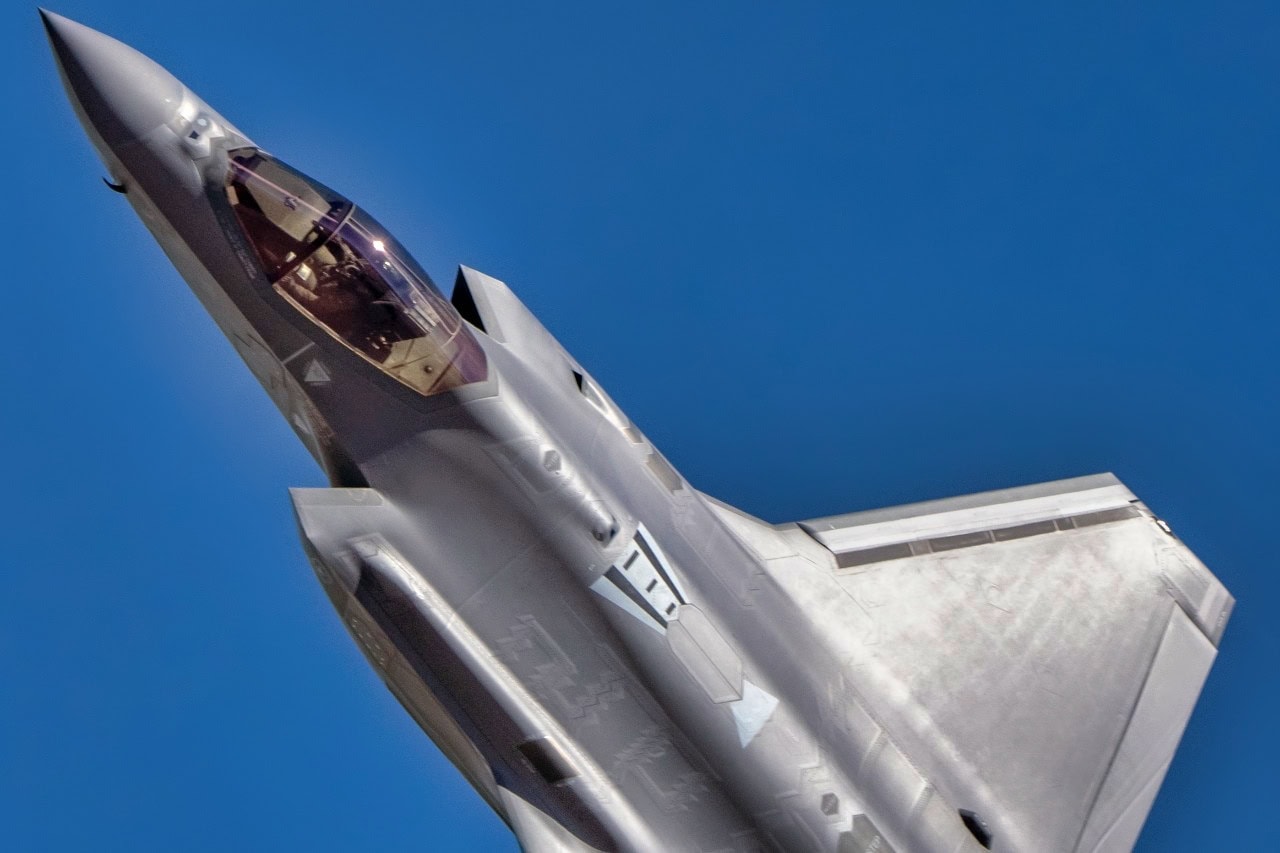
U.S. Air Force Maj. Kristin “BEO” Wolfe, F-35A Lightning II Demonstration Team pilot and commander, flies during the 2021 Reno Air Races, Reno, Nev., Sept. 18, 2021. The 2021 Reno Air Races featured performances from the U.S. Air Force F-35A Demo Team and the U.S. Air Force Thunderbirds. (U.S. Air Force photo by Capt. Kip Sumner)
The F-22, conceived at the height of the Cold War, when few in Washington dared to believe the Reds were doomed to collapse because of the internal contradictions of the Soviet system, had a clear mission: destroy enemy fighters, gain air superiority, and dominate in beyond-visual-range combat.
Designers imbued the iconic bird with supercruise and thrust-vectoring engines, which gave this plane enormous acceleration and extreme maneuverability.
A Business Insider interview with retired Marine pilot Dave Berke directly contradicts the Simple Flying essay in which the retired Marine flier argues the Raptor “still has no equal” in terms of pure flying performance.
Nevertheless, the claim that the F-35 has, after 20 years of waiting–and over a trillion dollars of complications–finally surpassed the F-22 persists. The battlefield has changed. And in this changed battlefield, especially in a potential conflict with China, aircraft must survive inside a battlespace contested by long-range radars, EW, satellite detection, drone swarms, integrated air defenses, and long-range missiles. Thus, the aircraft that detects first usually shoots first.
And the aircraft that can shoot first wins.
According to its defenders, the F-35 can network and attack more effectively than the F-22.
Continuous Upgrades Have Changed the F-35
Another reason many analysts believe the F-35 has pulled ahead of its F-22 cousin is that it is constantly upgraded. New versions often improve processing power, radar performance, and other aspects of the F-35. They are now integrating AI-assisted battle management, too.
Lockheed has proposed the “fifth-generation-plus” package incorporating technologies developed during its unsuccessful bid for the Air Force’s next-generation fighter, with potential improvements in stealth, EW, and autonomous teaming.
Overstating the Case
There’s no doubt that the F-35 continues getting upgraded. Yet the F-35 has one of the worst combat-readiness ratings imaginable. The fleet has never gone beyond 50 percent readiness. Indeed, in FY2021, the United States Government Accountability Office (GAO) reported that 67 percent of the F-35 fleet was “mission capable,” while only 38 percent was “full mission capable.”
Being “mission capable” means that the planes in question could perform at least one combat mission. “Full mission capable” means the F-35s can perform their entire mission set without any restrictions.
Last year, the GAO conducted another assessment of the F-35 fleet. At that time, they found that only 44 percent of all F-35s were “mission capable” while only 25 percent were “full mission capable.”
These numbers were well below the Pentagon’s goals for a program that has been running for more than 20 years and with a plane that is supposed to be America’s primary warplane.
Even the claim that the F-35 is “better” because it is updated is overstated by supporters. After all, the F-22 has received substantial upgrades over the course of its life. Current modernization efforts include new infrared sensors (IRDS) and improved EW capabilities designed to overcome Chinese and Russian air defenses.
Meanwhile, the F-22’s radar and avionics packages have also received upgrades, thanks to an open-mission architecture that makes future software updates easier.
What’s more, the Air Force has added stealth-capable external fuel tanks that have significantly extended the Raptor’s combat radius without sacrificing much of its low-observable performance. That will be key in any fight with China in the expansive Indo-Pacific.
Plus, the Air Force has been testing manned-unmanned teaming (MUMT) with the F-22 Raptor. These upgrades are making an already exceptional fighter even better.
The F-22 Still Owns the Mission That Matters Most
But let’s get real here for a second. One of the most interesting points for those who believe the vaunted F-35 has finally surpassed the iconic F-22 is that the F-35 can apparently survive in a contested modern battlespace better than the F-22. The trend of modern air warfare, though, is the prevalence of BVR warfare.
And that capability is one that the F-22 still dominates.
The F-22 is a simpler, BVR-designed plane that receives constant upgrades to include MUMT capabilities. Here’s another factor that everyone arguing that the F-35 is better cites: the United States Congress refuses to allow the F-22 to be shared with or sold to close allies (unlike the F-35).
The argument against this sharing is that the F-22, despite being more than 20 years old, still houses advanced technologies and secret capabilities that Washington does not wish to share with its allies.
Yet, Congress has little compunction about sharing the F-35.
Clearly, the F-22 is the better plane. And the Obama administration made a major mistake in shuttering the F-22’s production line in 2009.
About the Author: Brandon J. Weichert
Brandon J. Weichert is the Senior National Security Editor at 19FortyFive.com. He also manages The Weichert Brief on Substack. Weichert also hosts “National Security Talk” on Rumble. He is the author of four bestselling national security books, the most recent of which is A Disaster of Our Own Making: How the West Lost Ukraine (Encounter Books). Follow him via Twitter/X @WeTheBrandon.

