
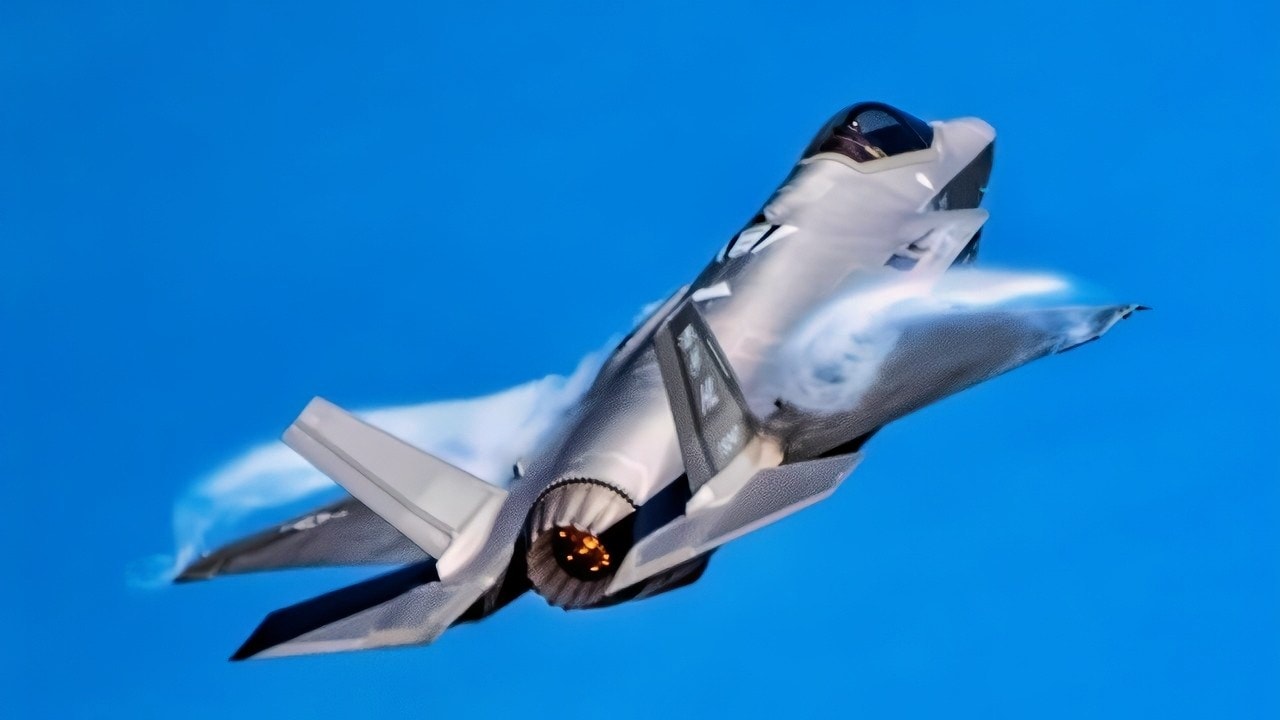
The F-35 Lightning II carries its missiles inside its fuselage for a single reason: stealth. A missile bolted to a wing is a hard, angular radar reflector that lights an aircraft up on enemy screens and throws away the invisibility the jet was designed around, so the F-35 tucks its weapons into an internal bay and keeps its shape clean. The catch is that the bay is small, and the price of staying unseen is firepower. In full-stealth configuration, an F-35A carries just four air-to-air missiles, fewer than a non-stealth fighter slings under its wings. That is a deliberate trade, and understanding it explains most of what makes the jet both powerful and frequently misunderstood.
Why The F-35 Carries Its Weapons Inside
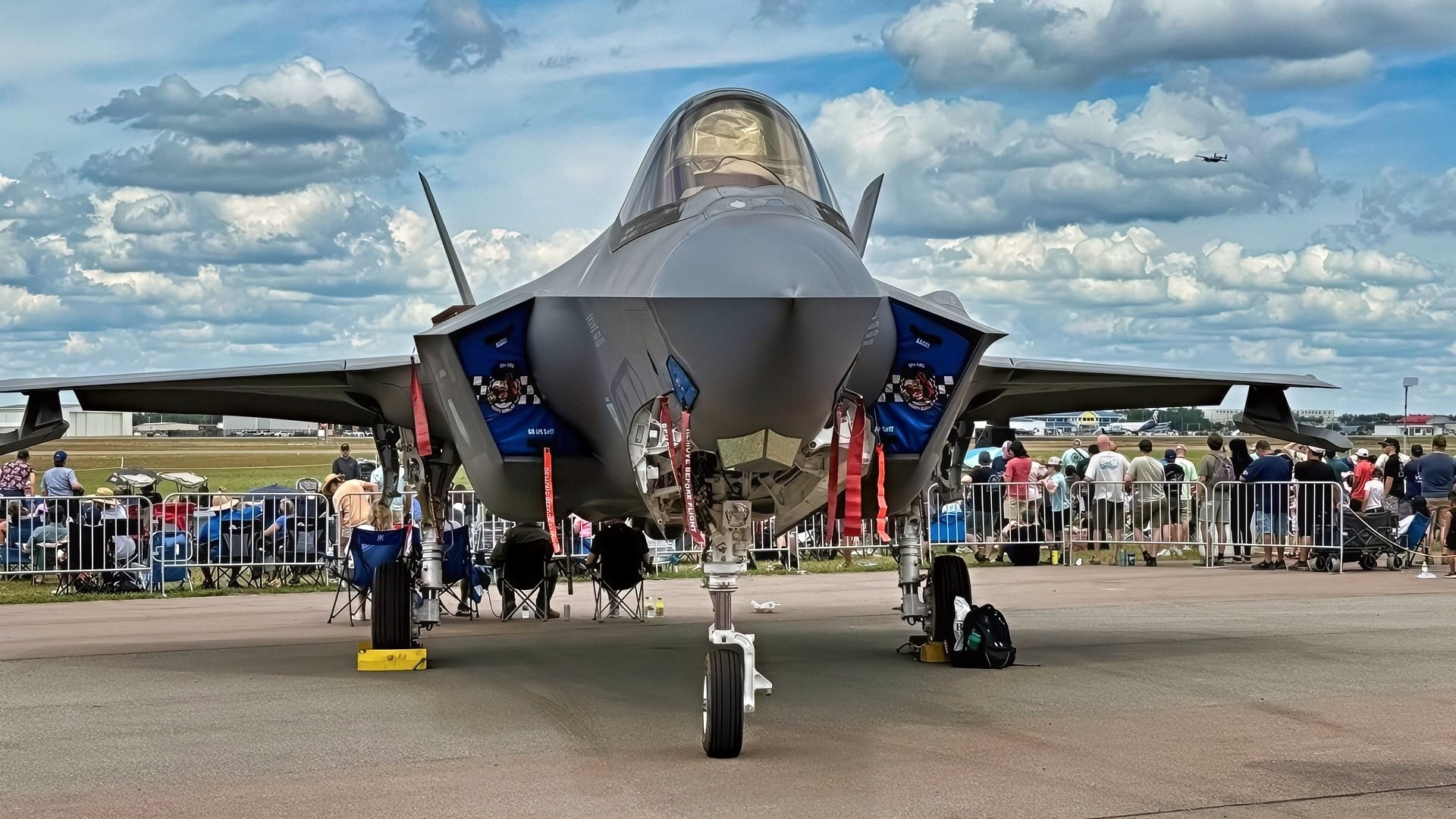
F-35 Fun and Sun Lakeland 19FortyFive.com Photo Taken on 4/19/2026
Stealth is not only a matter of the airframe’s shape and its radar-absorbing coatings. It also depends on what the aircraft is carrying. Anything hung in the open air beneath the wings, a bomb, a fuel tank, a missile, adds sharp edges and flat surfaces that bounce radar energy straight back to the people hunting the jet, and a single externally carried weapon can undo much of the work the design put into being hard to detect.
To stay genuinely low-observable, the F-35 has to keep its ordnance sealed inside, behind doors that snap open only long enough to release a weapon and then close again.
That internal volume is finite, and it sets the jet’s stealth-mode loadout. Carrying weapons internally, the F-35A and F-35C haul about 5,700 pounds of ordnance, which works out to either four AIM-120 AMRAAM missiles for air-to-air combat or a mixed strike load of two AMRAAMs paired with two 2,000-pound JDAM bombs.
That is the “first day of the war” configuration, the load the jet flies when the enemy’s radars, surface-to-air missiles, and fighters are all still active and staying invisible is the whole point.
The Price Of Invisibility Is Firepower
Four missiles are not a lot, and the limited internal load has been a longstanding criticism of the F-35, especially as air combat has come to put a higher premium on magazine depth, the simple question of how many shots a fighter can take before it has to turn for home.
A non-stealth jet like the F-15EX can bristle with far more missiles on its external racks, and senior officials have praised exactly that capacity, pairing the heavily armed F-15 with the F-35’s superior sensors so the stealth jet finds the targets and the bomb truck supplies the volume.
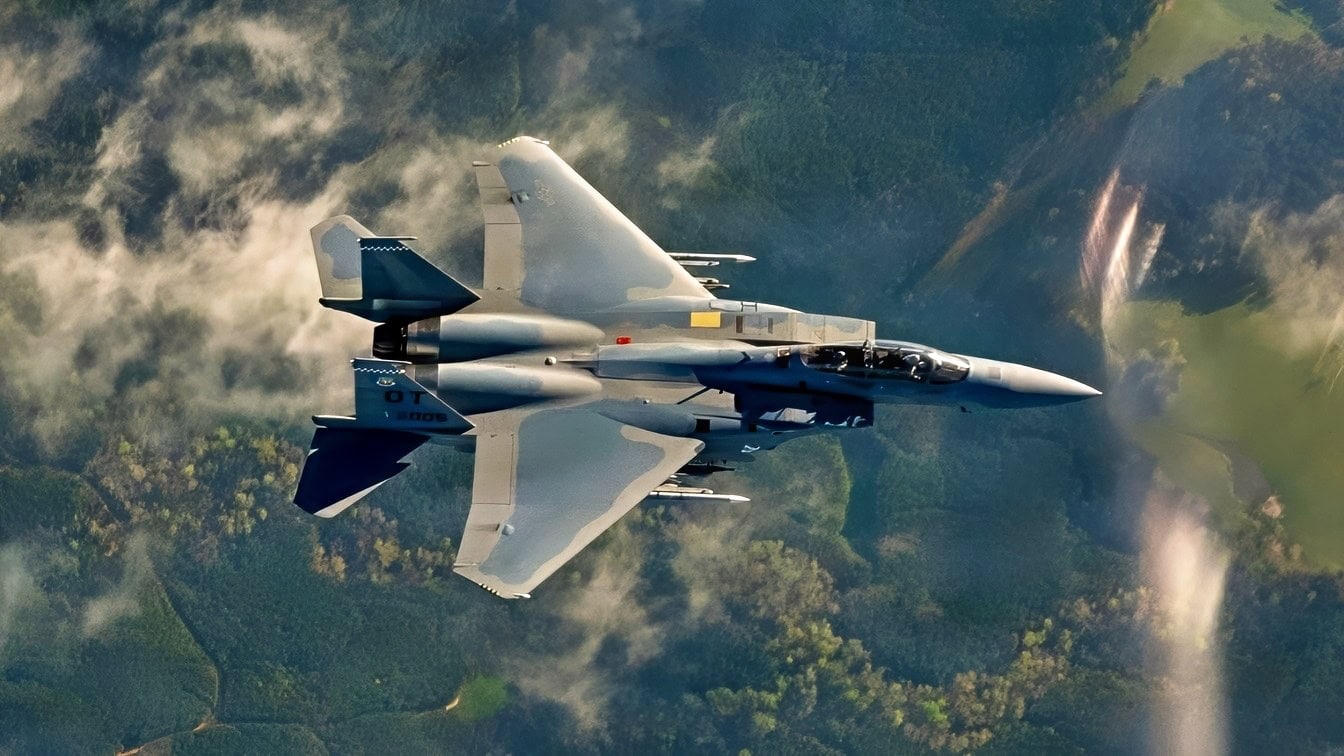
A U.S. Air Force F-15EX Eagle II assigned to Eglin Air Force Base, Florida, flies a training mission over southeast United States, March 23, 2026. The 96th Test Wing and 53rd Wing perform developmental and operational test series on the platform including next-generation survivability, radars, sensors and networking capabilities. (U.S. Air Force photo by Staff Sgt. Blake Wiles)
Lockheed Martin’s standard answer to the payload complaint is that a stealthy aircraft gets inside the enemy’s kill chain and needs fewer weapons because it is not detected in the first place, striking before it can be engaged rather than trading volleys. There is real logic to that. A jet that sees first and shoots first can do more with four missiles than a detectable one does with a dozen. As one prominent defense analyst put it, though, “every bit helps,” and the criticism has carried enough weight that the program has spent years working to increase the count.
Beast Mode: When The F-35 Stops Hiding
The other half of the trade is what happens once the hiding is no longer necessary. After an enemy’s air defenses have been suppressed, its radars blinded, and its surface-to-air missiles destroyed, stealth stops mattering as much, and the F-35 can shed its restraint and load up.
In what is widely known as “beast mode,” the jet mounts weapons on external pylons in addition to its internal bay and carries up to 22,000 pounds of ordnance, roughly four times its stealth load. An air-to-air beast loadout can carry up to 14 AMRAAMs and two AIM-9X Sidewinders; a strike loadout can carry six 2,000-pound JDAMs alongside air-to-air missiles.
The cost of all that firepower is the very thing the internal bay exists to protect. External stores spike the radar signature and make the jet far easier to detect, and they cut its reach, with the combat radius in beast mode dropping to roughly 870 miles.
This is the “first day versus third day of the war” logic that governs how the jet is flown. The F-35 goes in stealthy and lightly armed to break open a defended airspace, and only once it owns the sky does it come back loaded to the limit for sustained strikes. Israel’s F-35I Adir has flown exactly that pattern in Gaza, hauling heavy external loads of JDAMs against hardened targets after establishing control of the air.
The F-35 Fix: Six Missiles Without Breaking Stealth
The four-missile limit is being addressed directly.
Lockheed has developed a weapons-bay adapter called Sidekick that increases the internal AIM-120 carriage from four to six, fitting three missiles in each of the two main bays instead of two, all without compromising the jet’s stealth profile.
Six internal AMRAAMs would match the air-to-air magazine of the F-22 Raptor and meaningfully expand the F-35’s options on the dangerous first day of a fight. Lockheed has said the adapter is on contract and proceeding, tied to the jet’s Block 4 modernization and the bulkhead changes that arrived with the Lot 15 production aircraft.
Block 4 also brings new and better weapons into the bay, including the longer-range AIM-260 air-to-air missile meant to succeed the AMRAAM, so the magazine is set to grow in both quantity and quality.
Why The F-35B Carries Even Less
Not every F-35 carries the same load, and the Marine Corps variant carries the least. The F-35B, the short-takeoff-and-vertical-landing model, gives up internal volume to make room for the lift fan that lets it land like a helicopter, so its weapons bays run about 14 inches shorter than those on the A and C.
That smaller bay defaults to two internal AIM-120s, cannot accept the Sidekick adapter, and cannot fit some of the larger stores the A and C variants swallow without trouble.
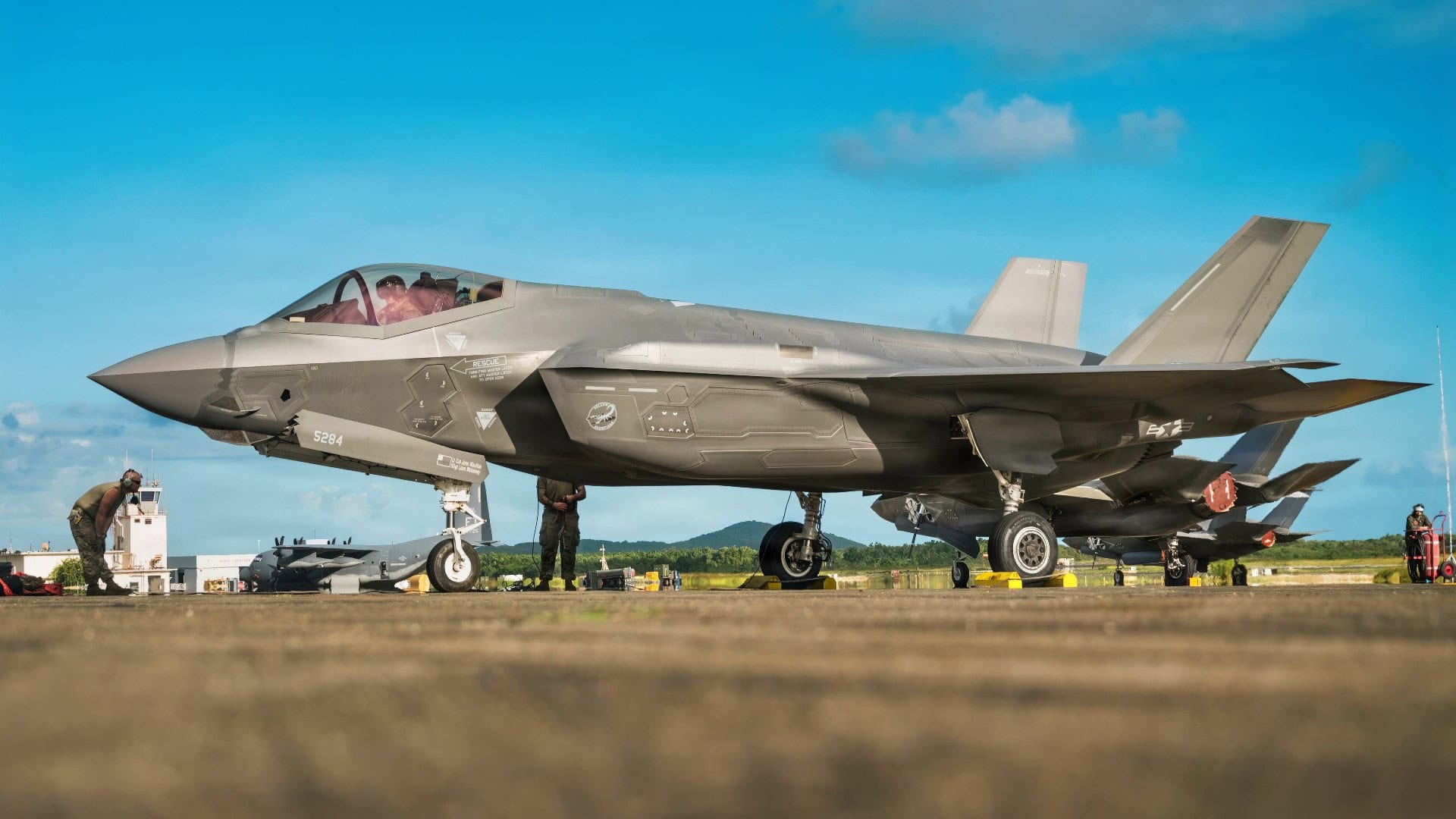
U.S. Air Force crew chiefs perform post flight maintenance on an F-35A Lightning II after its first arrival in Ceiba, Puerto Rico, Dec. 20, 2025. U.S. military forces are deployed to the Caribbean in support of the U.S. Southern Command mission, Department of War-directed operations, and the president’s priorities to disrupt illicit drug trafficking and protect the homeland. (U.S. Air Force photo)
The trade that defines the whole aircraft is simply sharper on the B: every bit of space spent on vertical landing is space not available for weapons.
The Bottom Line
The internal weapons bay is the clearest expression of what the F-35 was built to be.
It is not a fighter designed to carry the most missiles, and the four it holds in stealth mode are fewer than the number a non-stealth jet carries under its wings. It is a fighter designed to arrive unseen, strike before it can be shot at, and survive the most heavily defended airspace an enemy can build, and the small bay is the price of that.
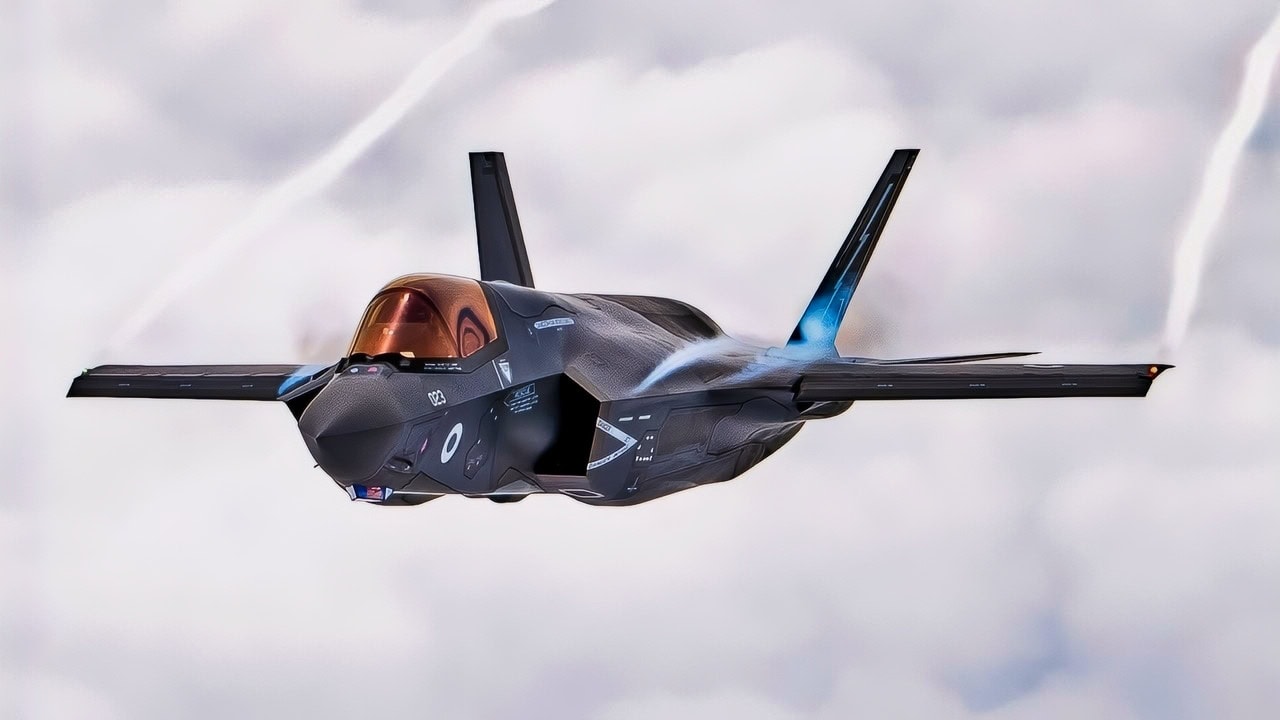
A UK F-35 flies above the Baltics on 25 May 2022. UK and Czech fighter jets have been taking part in air defence training over the Baltic region. UK Eurofighter Typhoons, F-35s and Czech Gripens were involved in an exercise as part of Neptune Shield 22 (NESH22), a multinational maritime vigilance activity. NESH22 has seen a range of multi-domain activities between air, land and maritime assets across Europe and in the Baltic and Mediterranean Seas. It runs from 17 to 31 May 2022.
The jet hides its missiles to stay invisible, accepts a lighter load as the cost, and only bolts on the full arsenal once the threats are gone and there is nothing left to hide from. Sidekick will soften the trade by adding two more missiles where it counts most, but the underlying choice will not change.
Invisibility first, firepower second, in exactly that order.
About the Author: Harry J. Kazianis
Harry J. Kazianis (@Grecianformula) was the former Senior Director of National Security Affairs at the Center for the National Interest (CFTNI), a foreign policy think tank founded by Richard Nixon based in Washington, DC. Harry has over a decade of experience in think tanks and national security publishing. His ideas have been published in the NY Times, The Washington Post, The Wall Street Journal, CNN, and many other outlets worldwide. He has held positions at CSIS, the Heritage Foundation, the University of Nottingham, and several other institutions related to national security research and studies. He is the former Executive Editor of the National Interest and the Diplomat. He holds a Master’s degree focusing on international affairs from Harvard University.

