
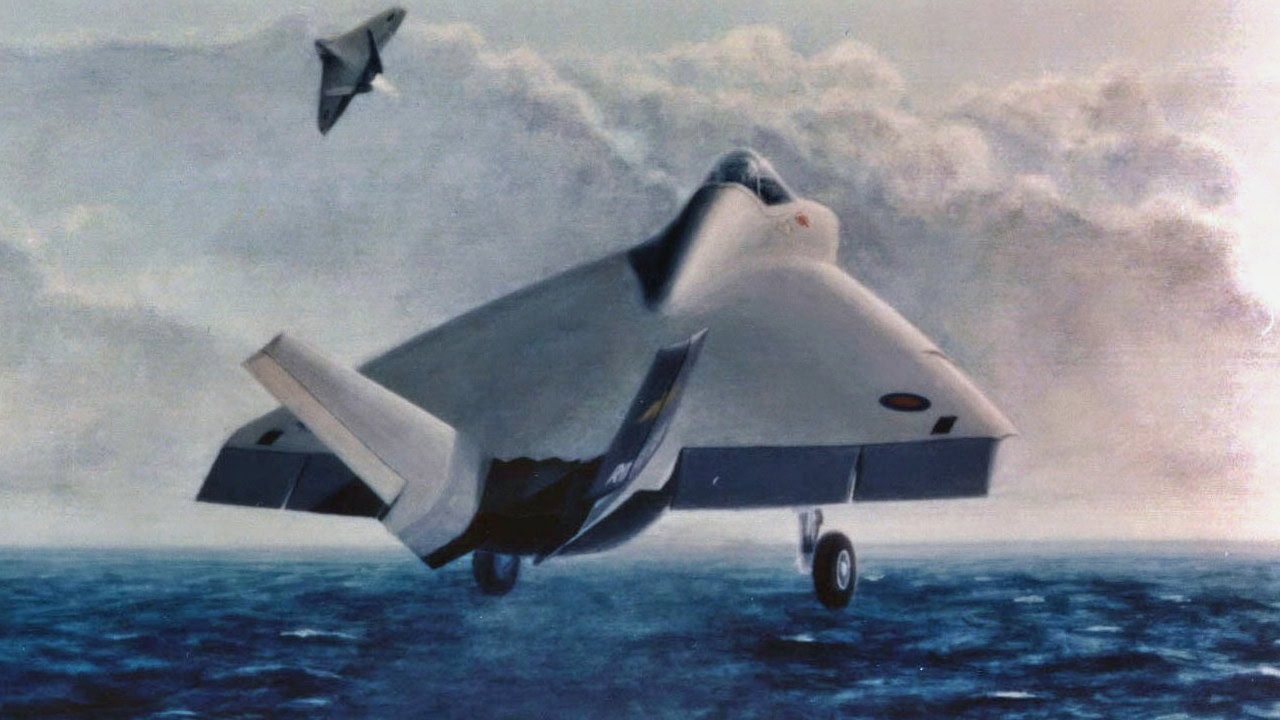
Five Reasons Boeing’s X-32 Lost to the F-35, and Ugliness Was Not the Deciding One – On October 26, 2001, the Pentagon selected Lockheed Martin’s X-35 over Boeing’s X-32 for the Joint Strike Fighter program. The winner became the F-35 Lightning II. The loser became one of aviation history’s easiest targets, remembered for a wide chin intake and a rounded nose that inspired comparisons to a grinning animal.
Appearance was not a publicly announced source-selection criterion. Air Force Secretary James Roche said the decision rested on a “best-value basis” after officials evaluated each team’s strengths, weaknesses, and risks. Both contractors met or exceeded the required performance and technology standards.
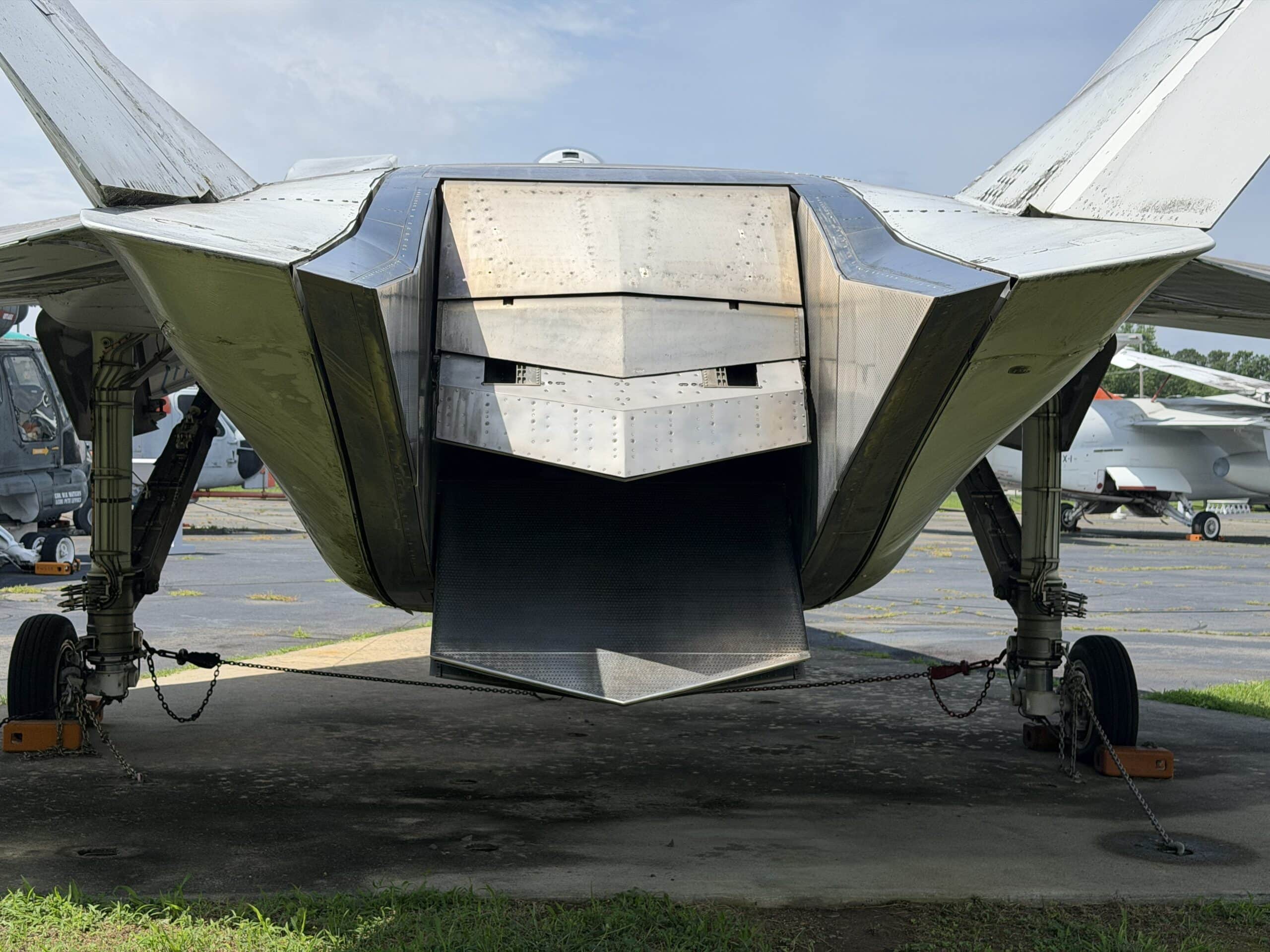
Boeing X-32B Fighter 19FortyFive Photo by Christian D. Orr
The X-32 was also a serious aircraft. Its conventional-takeoff demonstrator first flew on September 18, 2000, completed 66 flights, and demonstrated aerial refueling, weapons-bay operations, and supersonic performance, according to the National Museum of the U.S. Air Force. The short-takeoff-and-vertical-landing X-32B completed another 78 flights and made successful vertical landings.
The competition was not a traditional flyoff in which both jets performed an identical sequence of combat maneuvers. Boeing and Lockheed built concept demonstrators, collected data, and submitted broader proposals covering three variants, manufacturing, cost, supportability, and development. The five-year competition was intended to identify the most capable and affordable preliminary design, not merely the aircraft with the best single flight.
Lockheed’s Lift Fan Offered More Vertical-Lift Margin
The largest technical difference involved the Marine Corps’ and British requirements for short takeoff and vertical landing. Boeing used a direct-lift arrangement related to the Harrier concept. The Pratt & Whitney engine sat forward in the fuselage, and its hot exhaust was redirected through nozzles near the aircraft’s center of gravity.
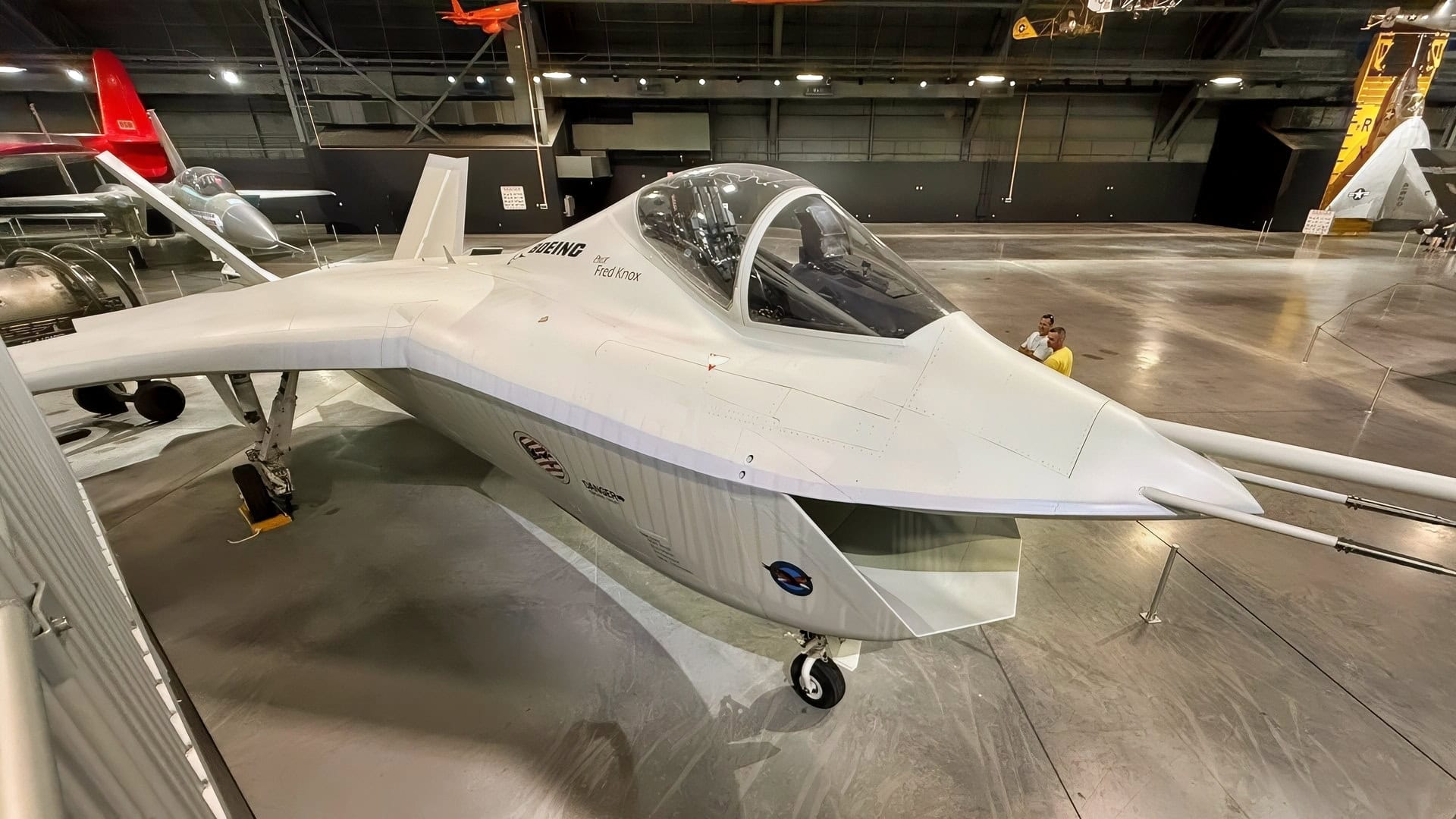
Boeing X-32 Fighter 19FortyFive Image
Lockheed chose a shaft-driven lift fan behind the cockpit, combined with a swiveling rear exhaust nozzle and smaller roll-control outlets in the wings. The fan moved a large mass of cooler air downward while the main engine supplied the remaining lift. NASA’s program history shows that Lockheed argued the arrangement provided more room for growth as the aircraft gained weight and equipment.
That margin mattered because a production fighter almost always becomes heavier during development. Weapons, sensors, structural changes, and safety requirements consume vertical-lift capacity. Boeing promoted direct lift as simpler and easier to maintain, a central part of the later case for the X-32’s affordability, but Lockheed’s system gave evaluators a stronger argument that the STOVL variant would retain useful payload and bring-back performance after years of design growth.
Direct Lift Made Heat and Hot-Gas Recirculation Harder to Manage
The X-32B’s architecture directed powerful jet exhaust toward the operating surface. Hot gases could spread beneath the aircraft, return toward the intake, and reduce engine thrust. Deck heating, acoustic loads, and the safety of nearby personnel also had to be controlled aboard amphibious ships and austere airfields.

Boeing X-32 Fighter image taken by 19FortyFive back in July 2025.
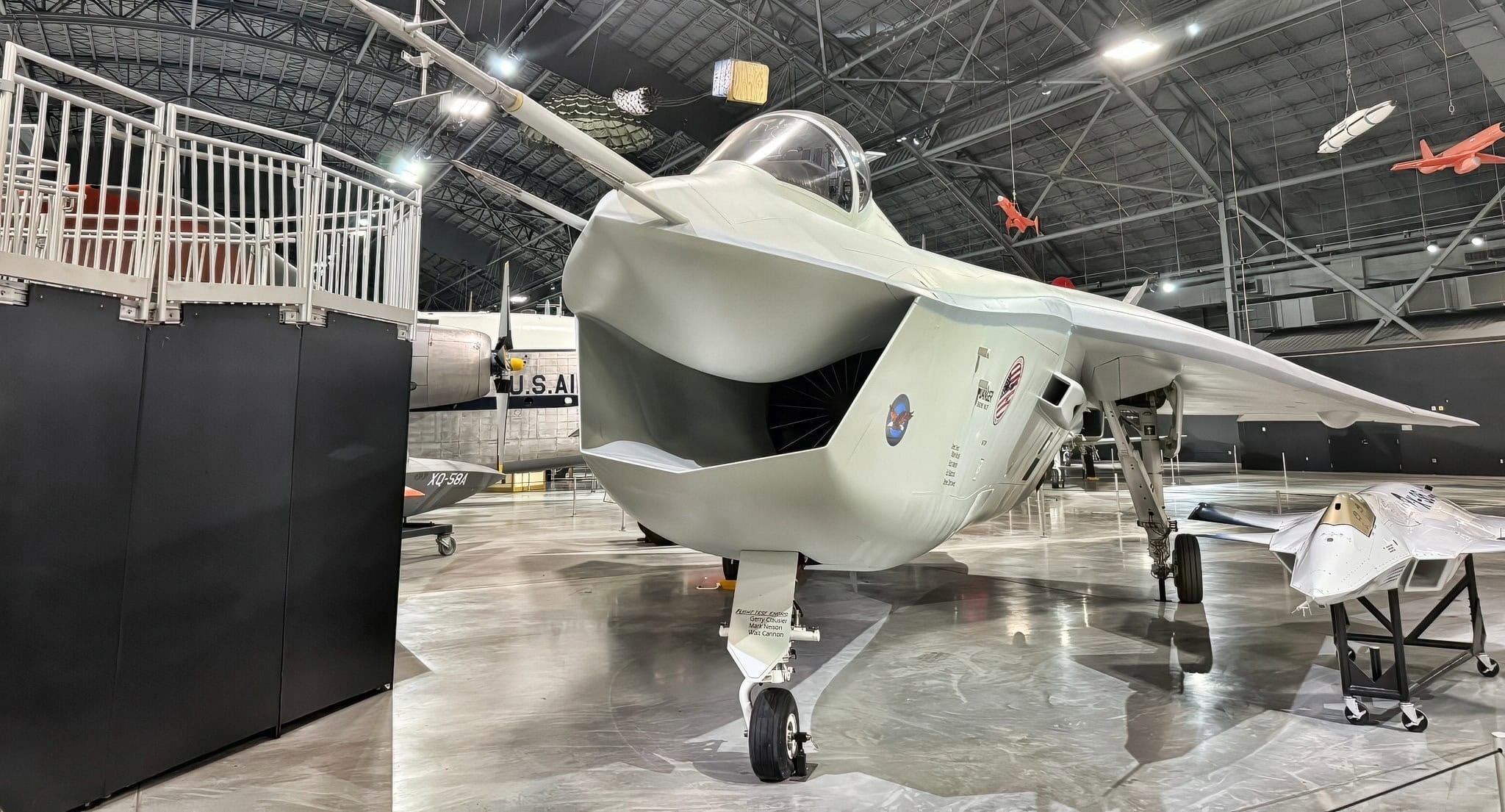
Boeing X-32 Fighter image taken by 19FortyFive back in July 2025.
Boeing did not fail its vertical-landing test. The company reported that ground-environment measurements were better than predicted and that the aircraft met its acoustic and temperature requirements. Test pilots transitioned to hover, maneuvered over the landing pad, and touched down vertically in June 2001.
The concern was the long-term operating margin. Lockheed’s forward lift fan exhausted cooler air and reduced the amount of hot exhaust concentrated beneath the center of the aircraft. The X-35 still needed a complex shaft, clutch, gearbox, and doors, but its propulsion arrangement presented a better answer to the heat problem that shaped the X-32’s direct-lift design.
The X-35 Completed the Most Persuasive STOVL Demonstration
Lockheed produced the competition’s defining flight on July 20, 2001. Marine test pilot Art Tomassetti completed a short takeoff, a level supersonic dash, and a vertical landing in one sortie. The event became known as Mission X.
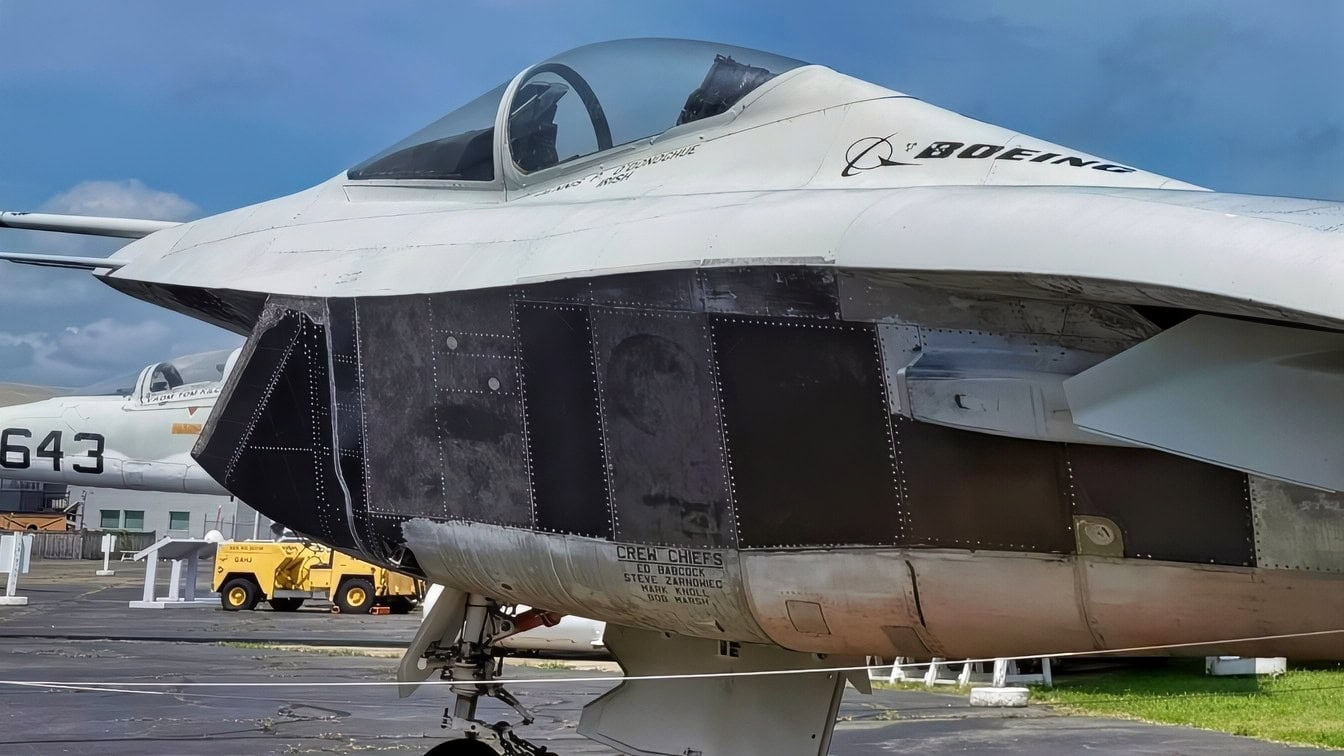
Boeing X-32B Fighter 19FortyFive Photo by Christian D. Orr
Boeing demonstrated the required capabilities, but not in the same seamless configuration and sequence. The X-32A handled conventional and carrier-approach work, while the lighter X-32B performed the vertical-flight tests. Configuration changes and operating restrictions separated parts of Boeing’s demonstration.
Mission X did not prove that an operational F-35 would be cheap, easy to maintain, or free of weight problems. It showed that Lockheed’s core STOVL concept could move through the most demanding parts of the mission without needing to be rebuilt between them. For evaluators choosing which team would receive the development contract, this reduced perceived integration risk.
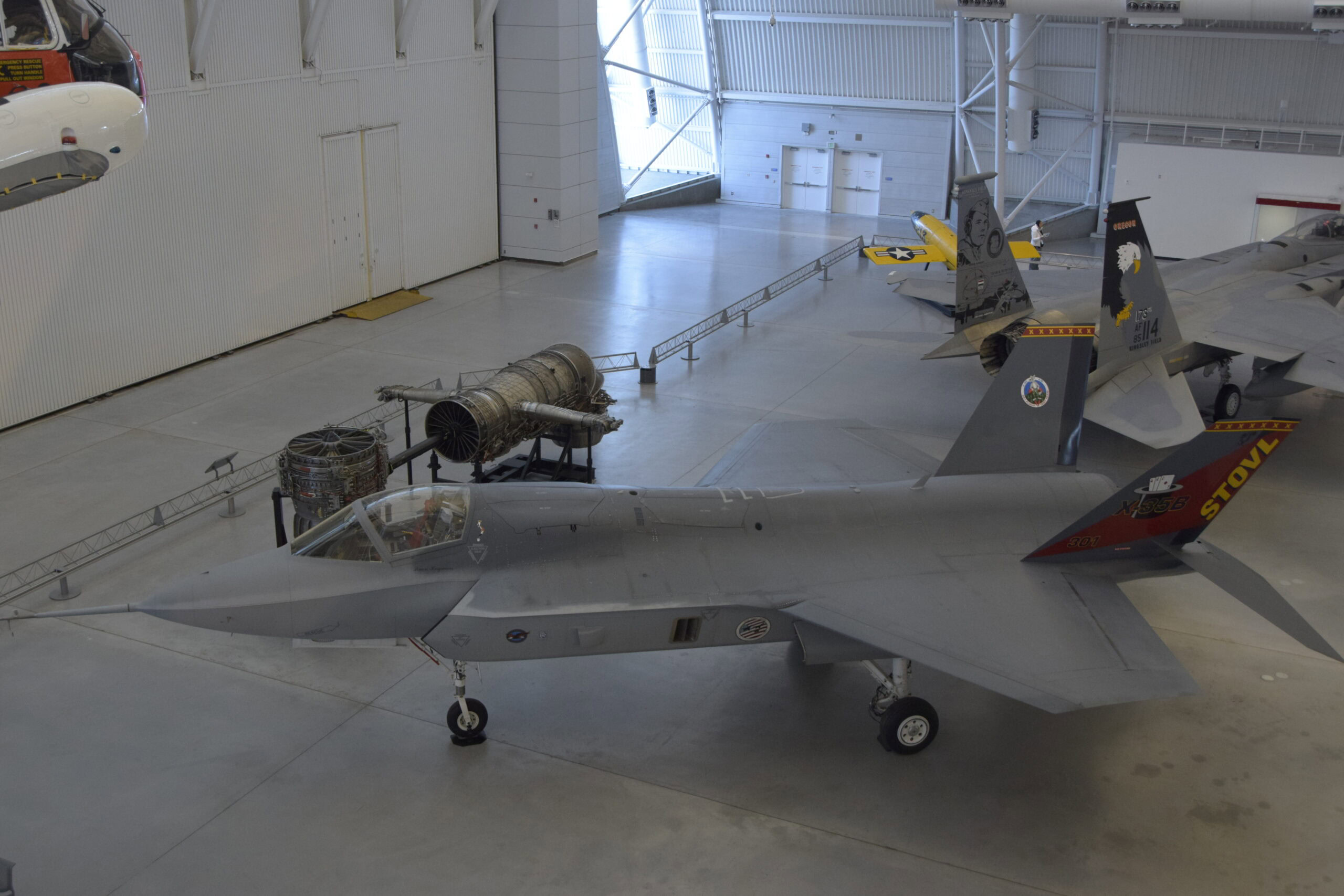
X-35. 19FortyFive Photo from Smithsonian.
Boeing’s Demonstrator No Longer Matched Its Proposed Fighter
The X-32’s broad delta wing had been frozen early enough for Boeing to build and fly the demonstrators. Requirements continued changing. By the time Boeing submitted its production proposal, the planned Model 375 had gained conventional horizontal stabilizers, a smaller swept wing, and a revised intake.
Those were substantial changes, not detailed refinements. The flight program validated the delta-wing demonstrator’s handling and performance, while the government was being asked to fund a fighter with a different wing-and-tail arrangement. NASA later identified that mismatch as a factor working against Boeing, and it remains central to the debate over what a production X-32 would have become.
Lockheed’s X-35 was also a demonstrator rather than a production F-35, and its operational descendant changed substantially. Its basic aerodynamic arrangement, inlet placement, and STOVL system remained closer to the proposal being evaluated. Boeing had created uncertainty about how much of its favorable flight data would transfer to the aircraft it intended to manufacture.
The Pentagon Selected a Program, Not the Prettiest Prototype
The Joint Strike Fighter had to replace several aircraft across the Air Force, Navy, Marine Corps, and British services. Evaluators examined the conventional, carrier, and STOVL variants as one family, along with projected cost, commonality, manufacturing, logistics, schedule, and contractor execution. A weakness in one variant threatened the economics and common production system promised to all three.
Boeing had real strengths. The X-32A performed both conventional and simulated carrier-approach work on one airframe, while Lockheed used an X-35C carrier demonstrator. Navy test pilot Phil Yates praised its carrier handling and later said he would have taken the aircraft to a ship. Boeing also argued that direct lift reduced mechanical complexity and life-cycle expense.
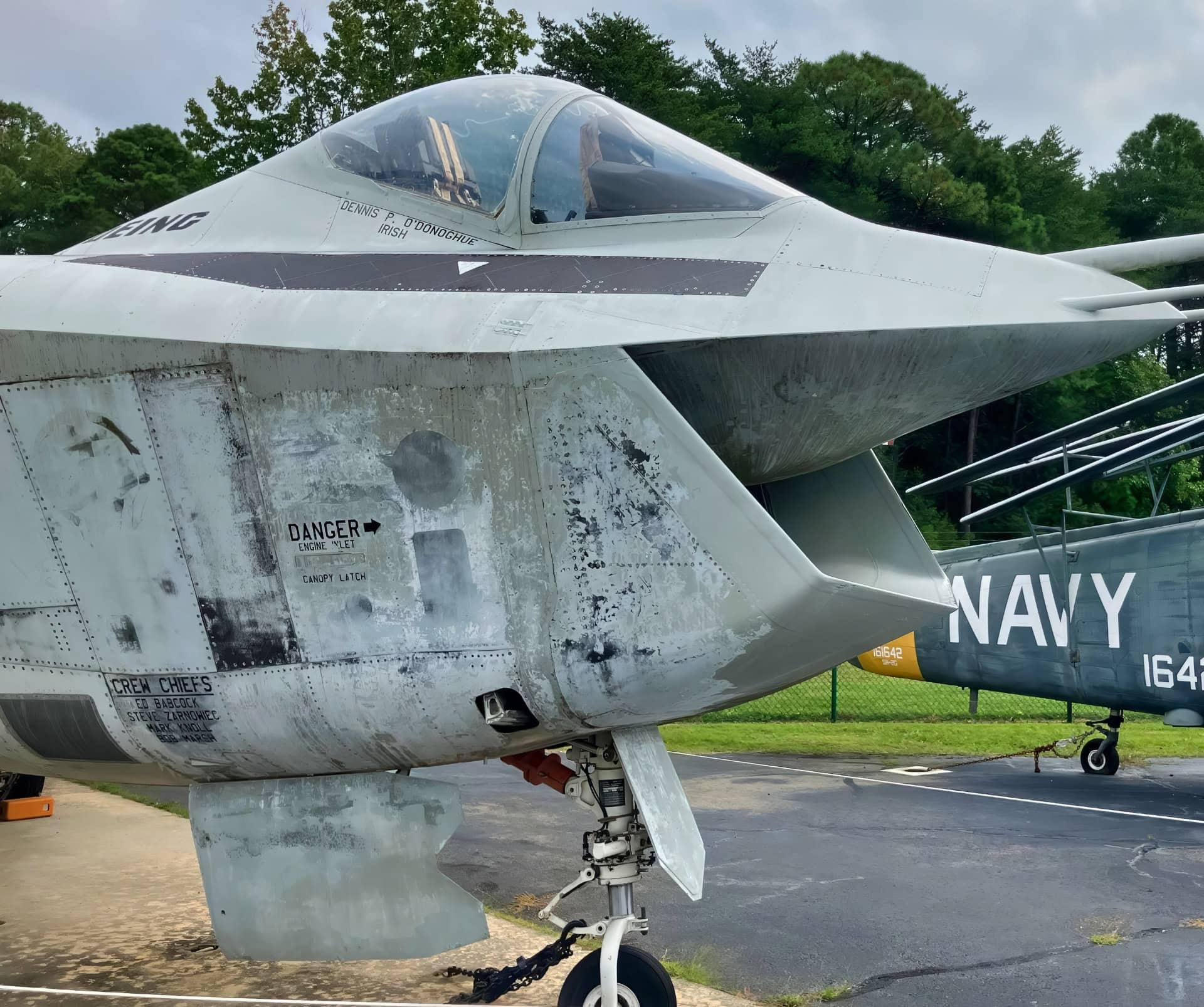
Sideview of Boeing X-32B In Maryland. Image Credit: 19FortyFive.com
Those advantages did not outweigh Lockheed’s lower perceived risk in the decisive areas. The X-35 supplied the stronger integrated STOVL demonstration; its lift system offered greater growth margin, and the test aircraft more closely resembled the production proposal. The official announcement described both entries as successful, then chose Lockheed after comparing the complete offers.
The popular claim that ugliness cost Boeing the contract survives because the visual difference is immediate. The documented engineering case is less entertaining and more important. The competition turned on how confidently each proposal could scale to thousands of deployable aircraft, withstand weight growth, and share enough systems to keep three variants affordable.
The X-32 Became More Famous After It Lost
The aircraft’s defeat produced an unusually large alternate-history library. Later accounts have examined Boeing’s decision to fly a wing it had already moved beyond, the strong carrier-handling assessment from a Navy test pilot and the heat and signature concerns surrounding the direct-lift design.
The counterfactual remains active in pieces arguing that a simpler Boeing fighter might have aged better, revisiting the two surviving museum aircraft and collecting years of X-32 coverage in one archive. Those arguments benefit from knowing every problem the F-35 later encountered, while the Boeing production design never had to pass a critical design review, complete an operational test program, or support deployed squadrons.

X-32 Outside in the Elements. 19FortyFive.com Image.
The X-32A was restored and placed in the Research and Development Gallery at the National Museum of the U.S. Air Force in Dayton, Ohio. The X-32B remains on the flight line at the Patuxent River Naval Air Museum in Lexington Park, Maryland. Sadly, as you can see from our photos from various visits over the last year, she is not in the best of shape.
About the Author: Harry J. Kazianis
Harry J. Kazianis (@Grecianformula) was the former Senior Director of National Security Affairs at the Center for the National Interest (CFTNI), a foreign policy think tank founded by Richard Nixon based in Washington, DC. Harry has over a decade of experience in think tanks and national security publishing. His ideas have been published in the NY Times, The Washington Post, The Wall Street Journal, CNN, and many other outlets worldwide. He has held positions at CSIS, the Heritage Foundation, the University of Nottingham, and several other institutions related to national security research and studies. He is the former Executive Editor of the National Interest and the Diplomat. He holds a Master’s degree focusing on international affairs from Harvard University.

