
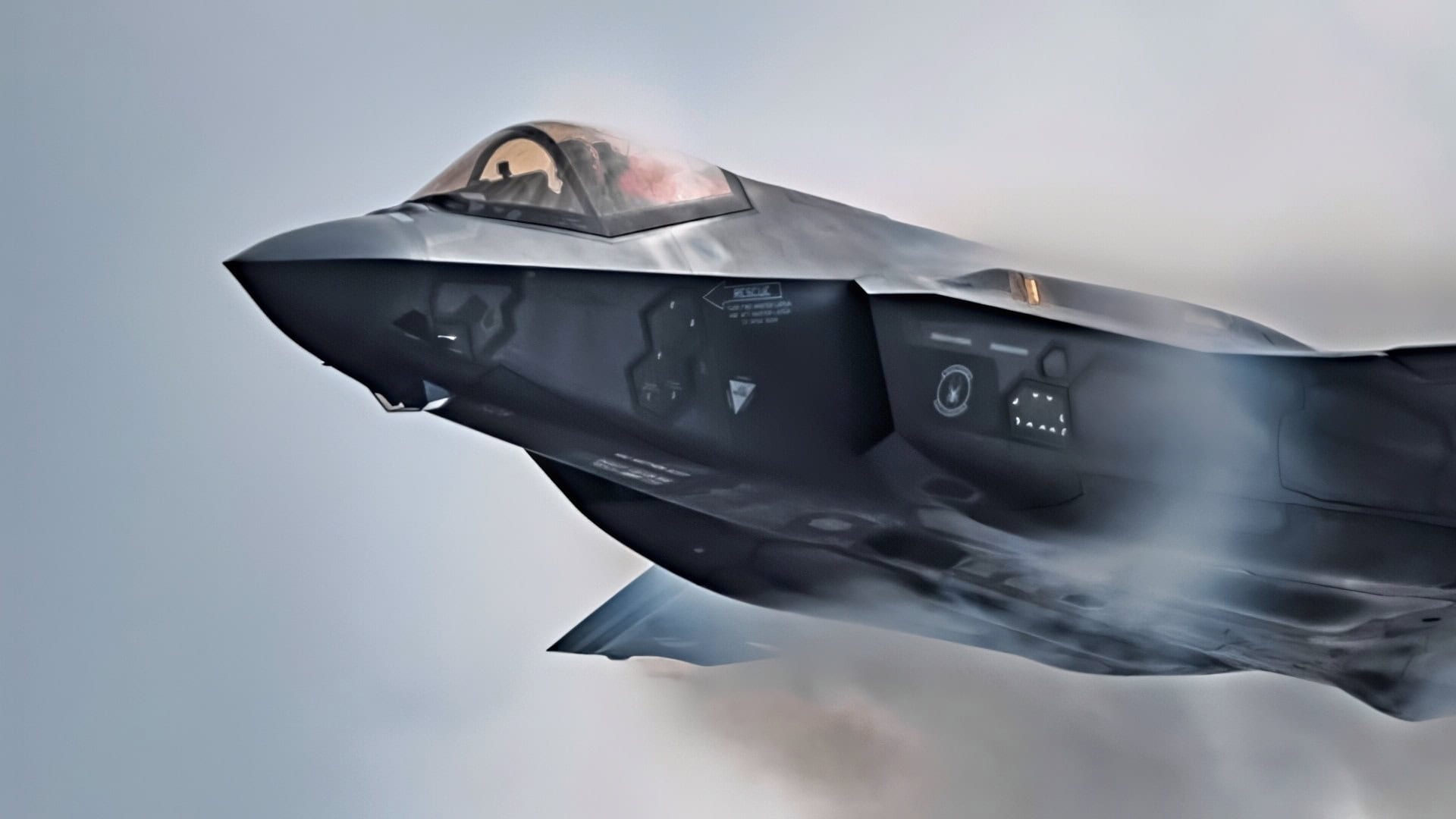
US F-35A Declares Emergency, Lands Safely at Luke Air Force Base: A U.S. Air Force F-35A Lightning II declared an in-flight emergency over the Phoenix metropolitan area on April 20 before landing safely at Luke Air Force Base in Arizona, according to aviation tracking reports and publicly available flight data. The incident ended without injury to the pilot and with no immediate reports of visible damage to the aircraft.
While emergency recoveries happen across both civilian and military aviation, incidents involving the F-35 attract outsized attention because the stealth fighter is the backbone of U.S. tactical airpower and one of the Pentagon’s most expensive and strategically important aircraft programs. It is also the backbone of dozens of allied countries’ fighter forces.
The safe recovery of the aircraft also occurred at one of America’s most important fighter training installations, where many future F-35 pilots learn to fly the jet.
F-35A Drama: What Just Happened Over Arizona
According to data shared by tracking website Flightradar24, the aircraft was identified as tail number 13-5067. It was first observed southwest of Phoenix at approximately 6,500 feet, then descended. Shortly afterward, the pilot reportedly selected Squawk 7700, the internationally recognized transponder code indicating an emergency.
The aircraft then returned to Luke Air Force Base, where it landed safely on Runway 21L.
Emergency response vehicles met the jet after touchdown as a routine precaution. No fire, crash damage, or injuries were reported in the initial account.
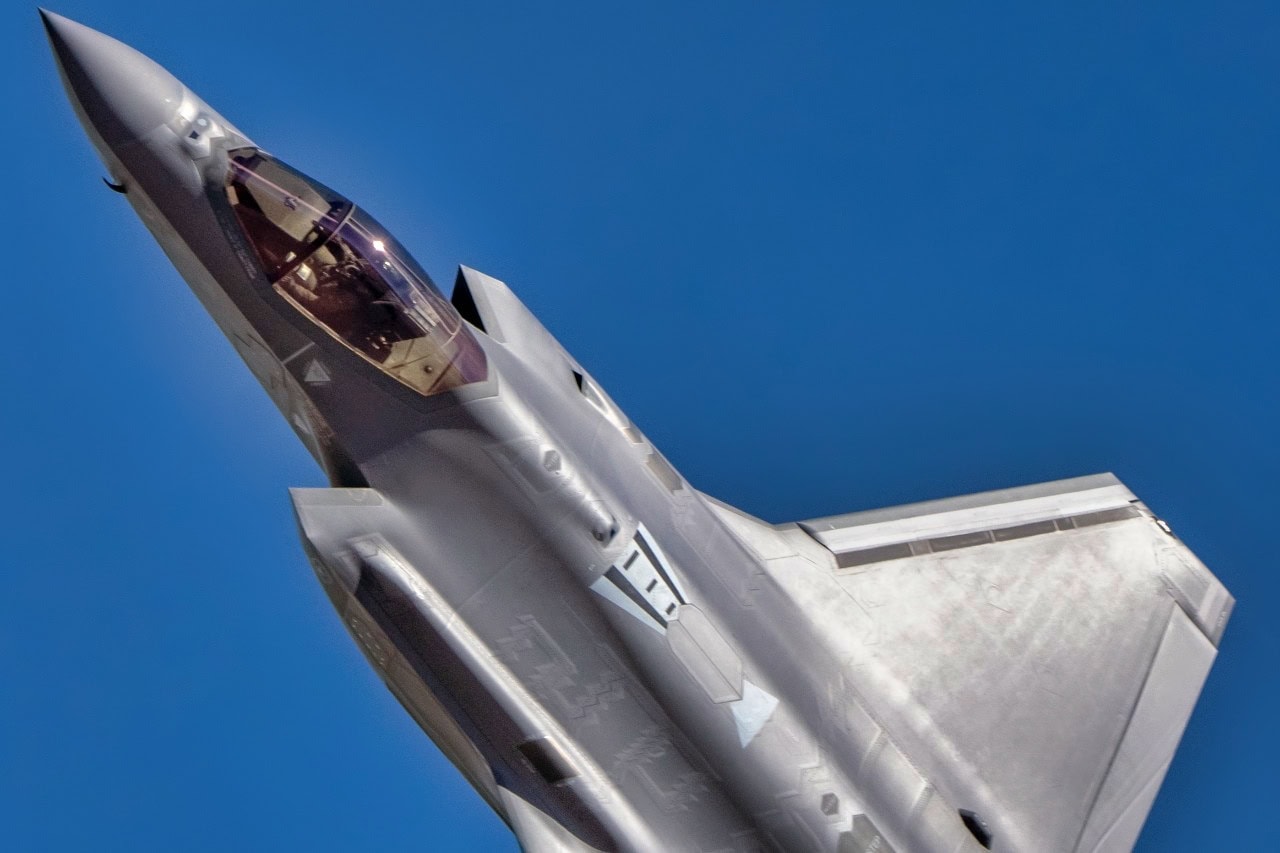
U.S. Air Force Maj. Kristin “BEO” Wolfe, F-35A Lightning II Demonstration Team pilot and commander, flies during the 2021 Reno Air Races, Reno, Nev., Sept. 18, 2021. The 2021 Reno Air Races featured performances from the U.S. Air Force F-35A Demo Team and the U.S. Air Force Thunderbirds. (U.S. Air Force photo by Capt. Kip Sumner)
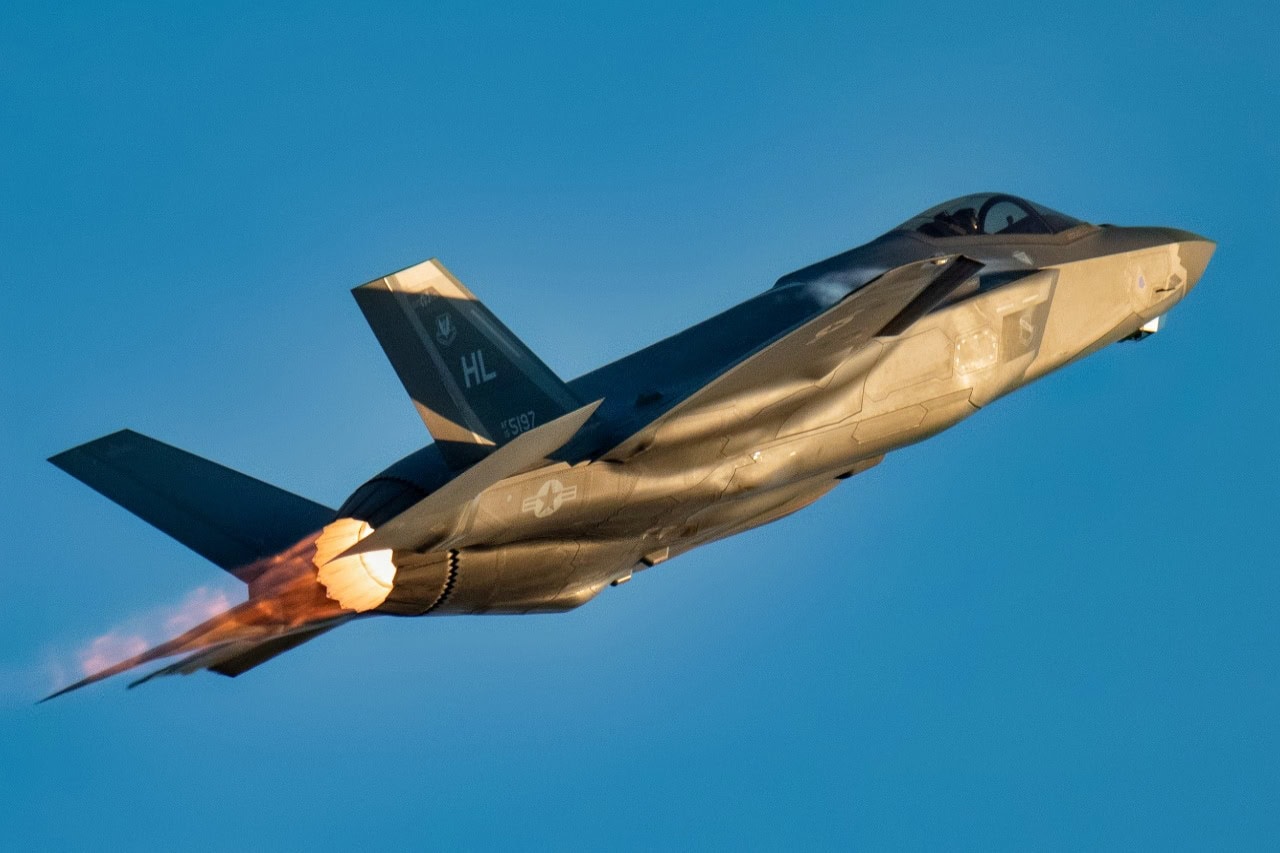
U.S. Air Force Major Kristin “BEO” Wolfe, F-35A Lightning ll Demonstration Team pilot and commander, flies during sunset over Mathers Airport, Calif., Sept. 24th, 2021, at the California Capital Airshow. The team consists of approximately 15 total Airmen to include the pilot and commander, pilot safety officers, superintendent, team chief, maintenance Airmen, aircrew flight equipment specialists, and public affairs personnel. (U.S. Air Force photo by Staff Sgt. Thomas Barley)
Military aircraft may declare emergencies for a wide range of reasons, including engine warnings, cockpit alerts, flight-control problems, landing-gear issues, and so on. Many of those emergencies are ultimately determined to be minor.
A 7700 code also does not automatically mean a catastrophic malfunction, and could simply indicate that the crew is requesting priority handling and immediate coordination support from air traffic control.
In this instance, the pilot maintained control of the aircraft and safely navigated back to base.
Why Luke Air Force Base Matters
Luke Air Force Base is one of the Air Force’s most important pilot training centers and home to the 56th Fighter Wing – the premier U.S. Air Force unit responsible for training F-35A and F-16 pilots.
It is the largest fighter wing in the Air Force, graduating hundreds of pilots every year and training three-quarters of the world’s F-35 pilots. The first F-35 also arrived at the base in 2014.
Several Luke-based squadrons presently operate the F-35A, including the 61st Fighter Squadron, 62nd Fighter Squadron, and 310th Fighter Squadron, all of which are involved in training missions. That means a routine emergency landing at the base is operationally significant, but still not an indication of a major problem. Luke helps produce the pilots and maintainers needed for the wider F-35 fleet, including international partners.
Why the F-35 Gets So Much Scrutiny
The F-35A is the conventional takeoff and landing version of the F-35 family built by Lockheed Martin, designed as a stealth multirole fighter capable of air combat, strike missions, surveillance, intelligence gathering, reconnaissance, and electronic warfare.
There are more than 1,300 F-35s across all variants built and delivered all over the world, making it one of the largest Western combat programs of the modern era.
Because so many U.S. and allied forces depend on the aircraft, any incident involving the jet quickly becomes news. That, however, does not mean that every emergency landing signals a design flaw or a fleetwide problem.
Modern fighters, after all, are highly complex machines, made up of sensors, engines, software, hydraulics, avionics, and flight-control systems. Still, every incident like this is often watched closely, especially given recent reporting on readiness rates and maintenance burdens.
In 2024, the U.S. Government Accountability Office said the F-35’s full-mission capable rate had fallen to about 51.9% in fiscal year 2023, down from earlier years, while sustainment costs remained well above targets. The report also warned of spare parts shortages and repair/maintenance backlogs that continue to affect fleet availability.
What Happens Next
Neither Luke Air Force Base nor the Air Force has publicly disclosed the cause of the emergency at the time of reporting.
That is normal in the immediate aftermath of a military aviation event like this, and initial facts are often limited until maintainers can inspect the aircraft and crews complete their debriefs.
The next steps typically involve downloading onboard diagnostic data, reviewing pilot reports, inspecting engines and systems, and determining whether the problem is mechanical/electrical or software-related.
If the issue proves to be isolated or insignificant, the aircraft could return to service quickly – but if inspectors identify a larger concern, additional checks on the aircraft and others may follow.
About the Author:
Jack Buckby is a British researcher and analyst specializing in defense and national security, based in New York. His work focuses on military capability, procurement, and strategic competition, producing and editing analysis for policy and defense audiences. He brings extensive editorial experience, with a career output spanning over 1,000 articles at 19FortyFive and National Security Journal, and has previously authored books and papers on extremism and deradicalization.