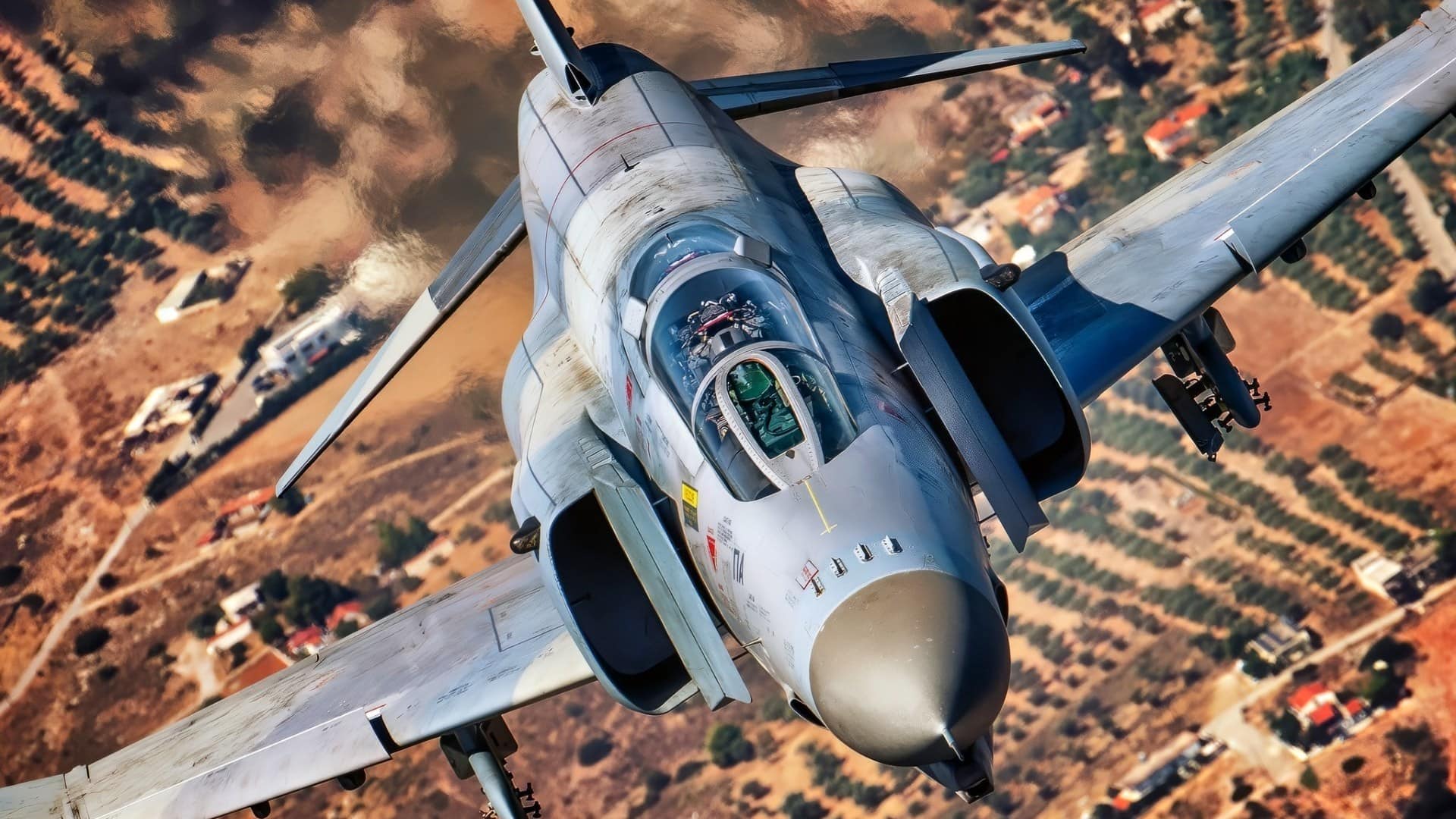
Summary and Key Points: The United States built approximately 5,195 F-4 Phantom II multirole fighters between 1958 and 1981, making the Phantom the most-produced American supersonic military aircraft in history and a defining platform of Cold War airpower.
-Manufactured by McDonnell Douglas and powered by twin General Electric J79 turbojet engines, the F-4 Phantom II served the United States Navy, United States Air Force, United States Marine Corps, and the armed forces of 15 additional allied nations, including the United Kingdom, Israel, Iran, Japan, South Korea, and the Federal Republic of Germany.
The F-4 Phantom II Fighter Is a True Legend
When it comes to modern warplanes, many fail to live up to the hype. Then, there are some, like the F-4 Phantom II, that don’t get enough credit for the kind of performance they consistently provided to the United States Armed Forces (and the armed forces of many American allies).
The F-4 was not just another fighter jet. It was probably the defining multirole jet of the Cold War.
This “lead sled,” as the F-4 Phantom II was known among her pilots, combined brute power, flexibility, and sheer production scale in a way that few modern American warplanes ever have combined.
F-4 Phantom: A “Jack-of-all-trades” That Actually Worked
Designed as a fleet-defense interceptor for the United States Navy, the F-4 proved so adaptable and lethal that the Pentagon expanded its mission set.
Soon, the Phantom was serving as an air-superiority fighter, a fighter-bomber, a close air support (CAS) platform, a reconnaissance plane, and an Electronic Warfare (EW) system through its legendary “Wild Weasel” missions.
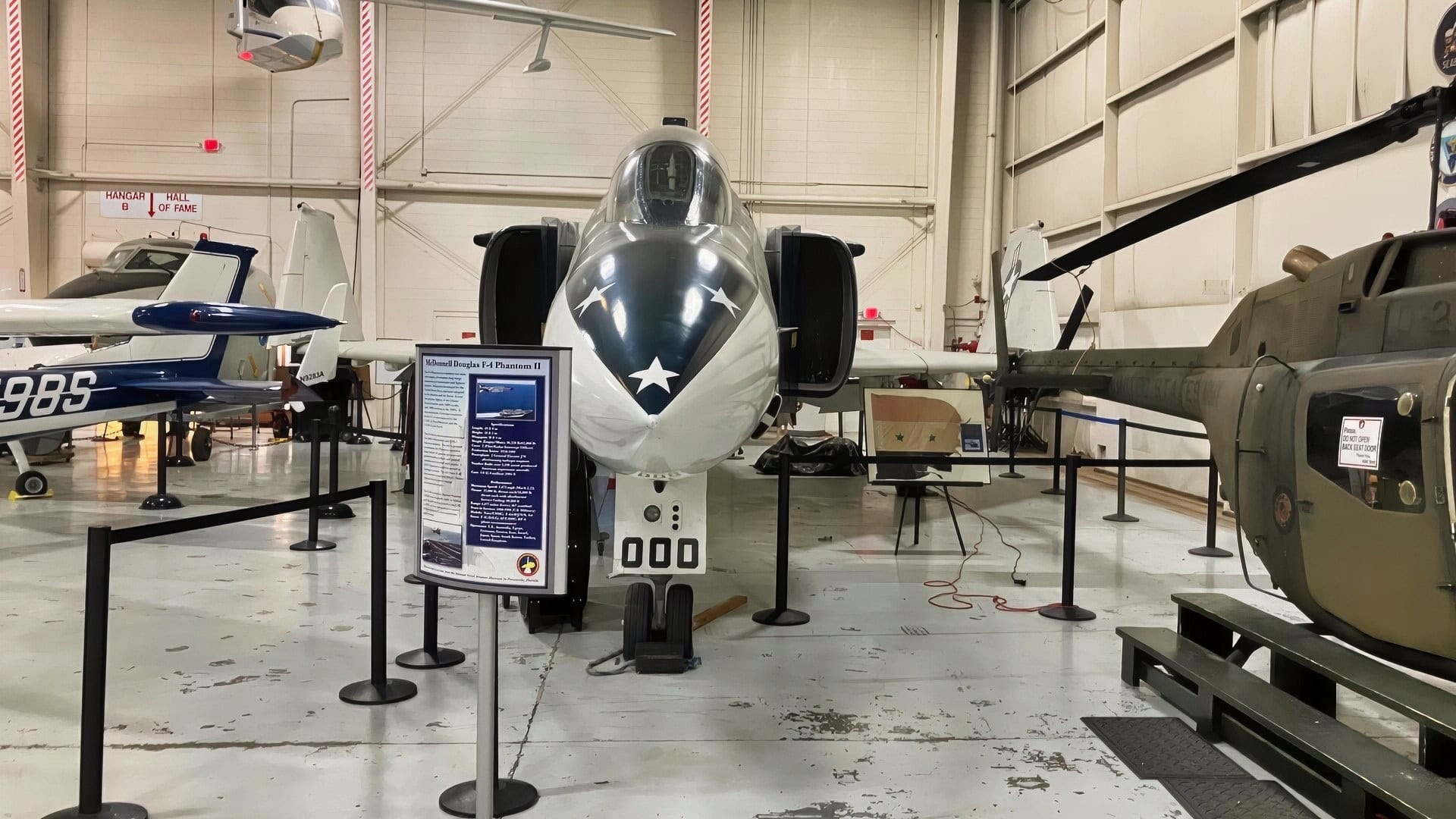
F-4 Phantom Fighter Aviation Museum of Kentucky. Taken by 19FortyFive on March 1, 2026.
Because of this incredible versatility, the United States Air Force and Marine Corps, along with 15 additional allied nations, adopted this plane. This bird became a universal combat aircraft among the Western allies during the Cold War. It happened well before the Pentagon ever embraced a universal combat model for its warplanes.
Arguably, the F-4 Phantom II was a far more successful universal combat aircraft than its successors, such as the F-35 Lightning II fifth-generation multirole warplane, ever were.
The Most Prolific American Supersonic Fighter Ever
The US built a total of 5,195 F-4 Phantom IIs between 1958 and 1981. The Phantom has the additional honor of being the most-produced American supersonic military aircraft in history. That scale alone indicates that this jet, contrary to its original designers’ intentions, became the backbone of Western airpower for decades.
Given its impressive service record, notably in the unfriendly skies over Vietnam during the terrible war there (more on that below), the F-4 might be the most successful multirole warplane in the history of the United States, and the most mass-produced supersonic aircraft in American history.
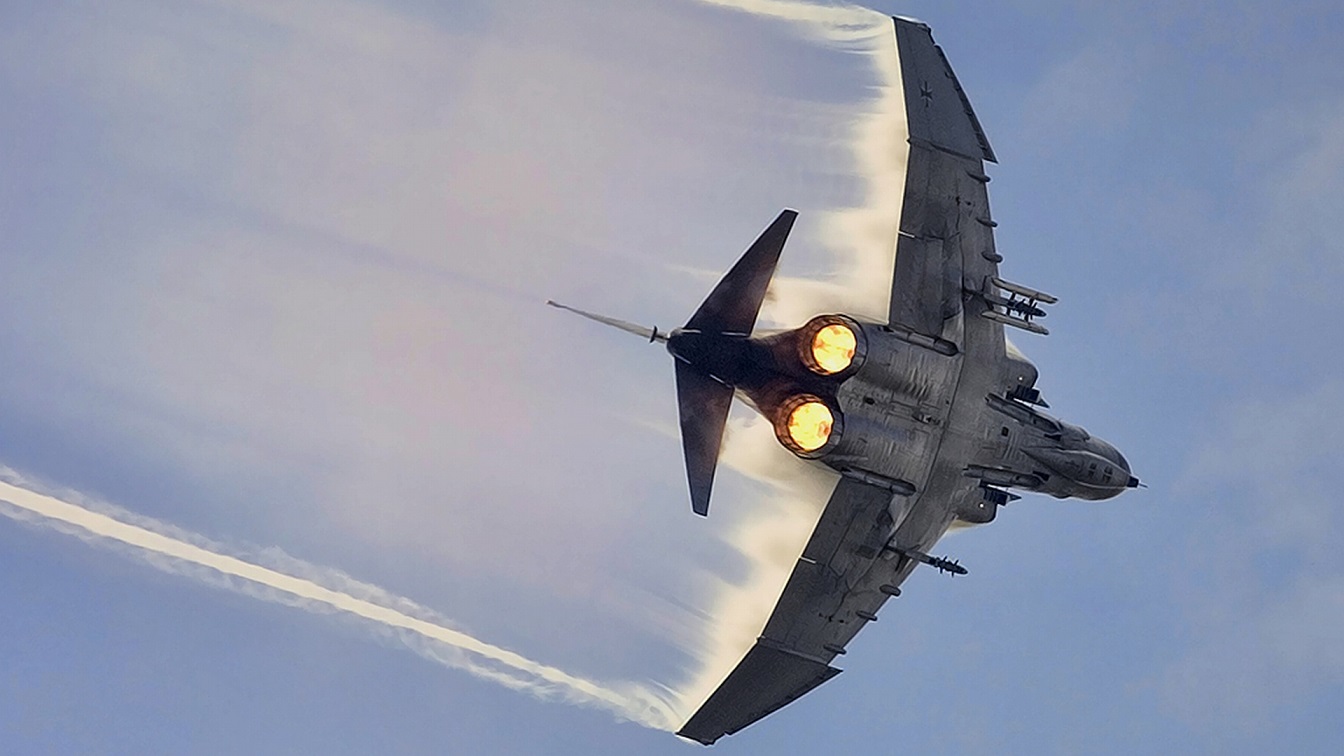
F-4 Phantom II. Image Credit: Creative Commons.
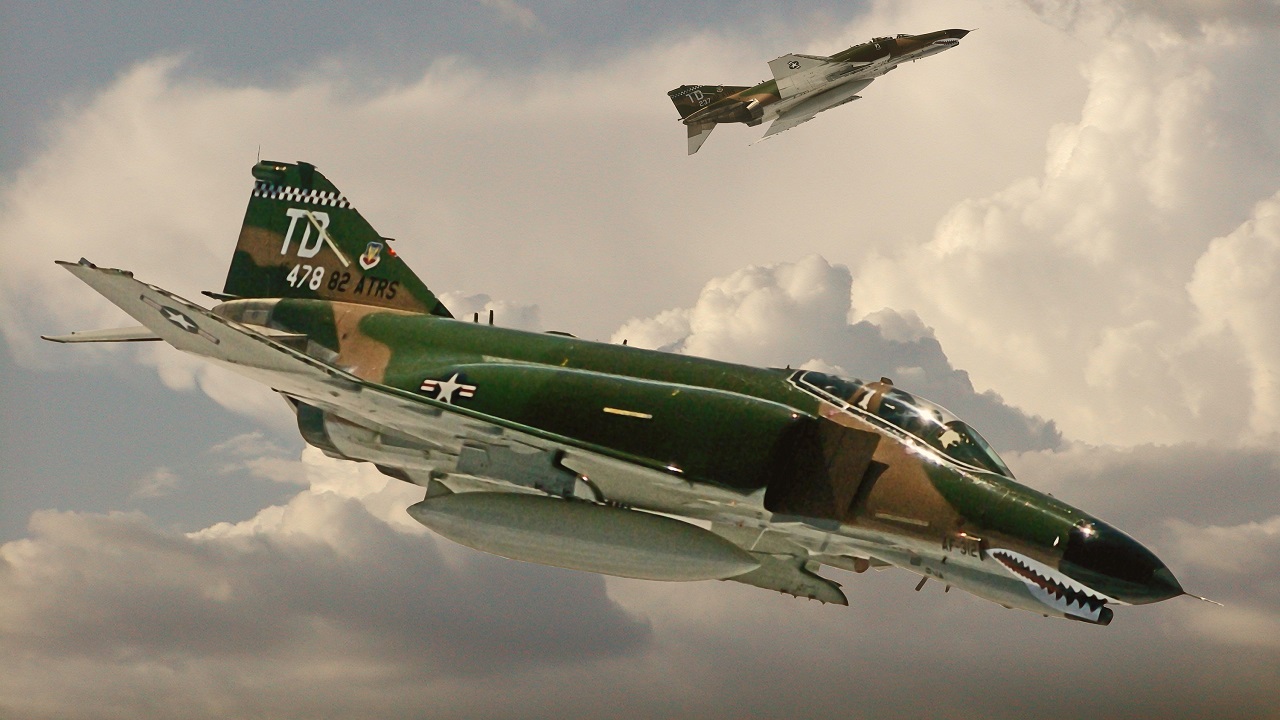
Designed for Speed, Power, and Payload–not Elegance
The F-4 Phantom II embodied the slogan that those who flew these magisterial birds created to describe this plane: Speed is life. An F-4 Phantom II could exceed Mach 2.2 and carry an impressive payload of around 18,000 pounds. In fact, in certain configurations, the F-4 could carry more bombs than a massive, World War II-era B-17!
Despite its impressive capabilities and its widespread popularity among American (and allied) pilots, these planes weren’t the prettiest of the bunch. But that was just fine with the men who were honored to fly these planes into the din of aerial battle.
What she lacked in aesthetics (though some found her quite visually stimulating), she more than made up for in lethality and maneuverability. Indeed, the F-4 Phantom II was essentially a flying missile truck, built around fast-jet engines and (for its time) one of the most advanced radar systems in the world.
Combat Record: Vietnam Defined the F-4 Phantom
Speaking of the Vietnam War and the Phantom’s role in it, the F-4 truly dominated early engagements, thanks to its radar-guided missiles and beyond-visual-range (BVR) capabilities.
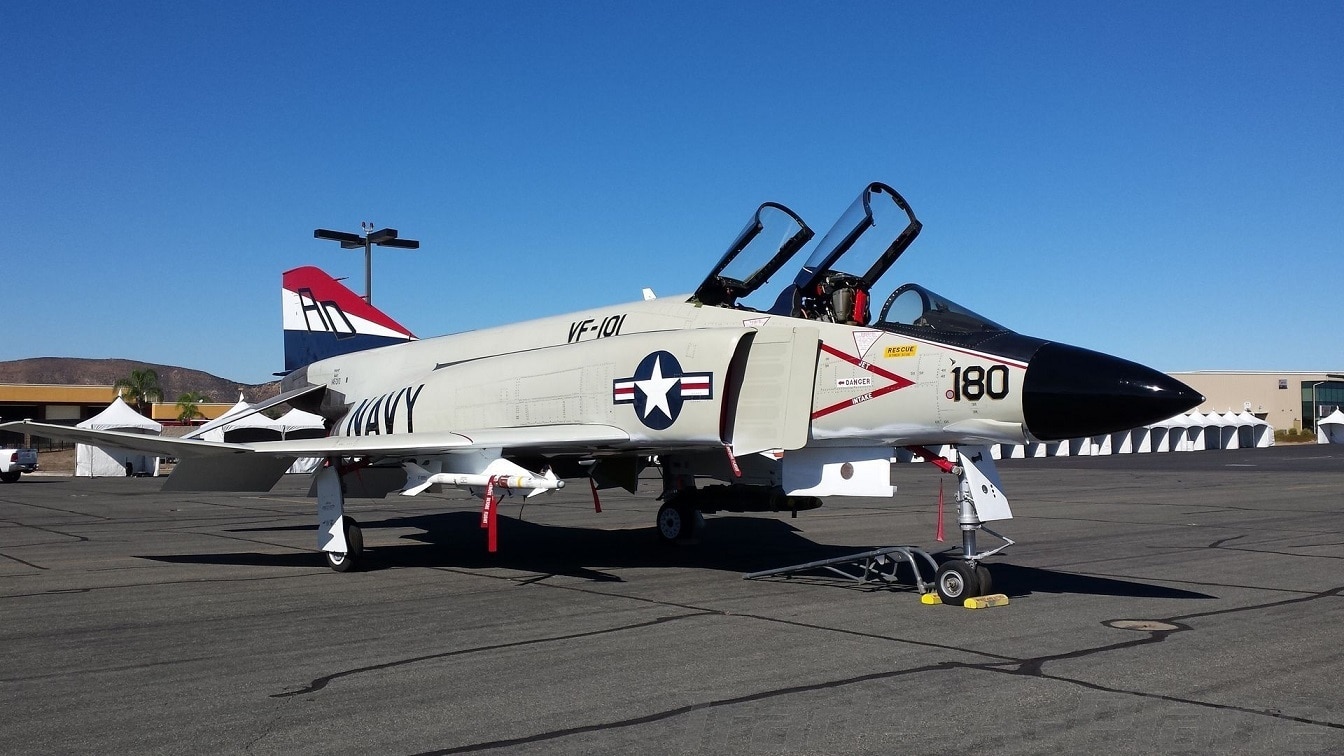
F-4 Phantom. Image Credit: Creative Commons.
Nevertheless, there were problems with these iconic planes at the outset of the war. For instance, early F-4 models lacked an internal gun. What’s more, the F-4s demonstrated poor dogfighting skills when facing North Vietnam’s Soviet-made MiG fighters.
Early models of the F-4 centered on the 1950s-era US military air-war doctrine. They were all about radar-guided interception and focused heavily on missile combat. In fact, early models even lacked a main gun completely. Which, as you are about to read, created a massive deficit that the North Vietnamese exploited in the early phase of the Vietnam War.
They say wars are the ultimate stress test for advanced systems, like the F-4.
On some level, it was good for the plane that it demonstrated some key deficiencies. Without a war to highlight those weaknesses for military designers, it is unlikely that the fundamental changes needed to make these planes the warhorses they became would have happened as quickly or effectively as they did.
Because of these early weaknesses demonstrated in combat against North Vietnam’s MiGs, air war planners made key changes in the overall tactics their pilots employed against the North Vietnamese. More importantly, though, was the inclusion of the mighty 20mm M61 Vulcan Cannon in the F-4E Phantom II models. This addition proved decisive in later dogfights with the North Vietnamese.
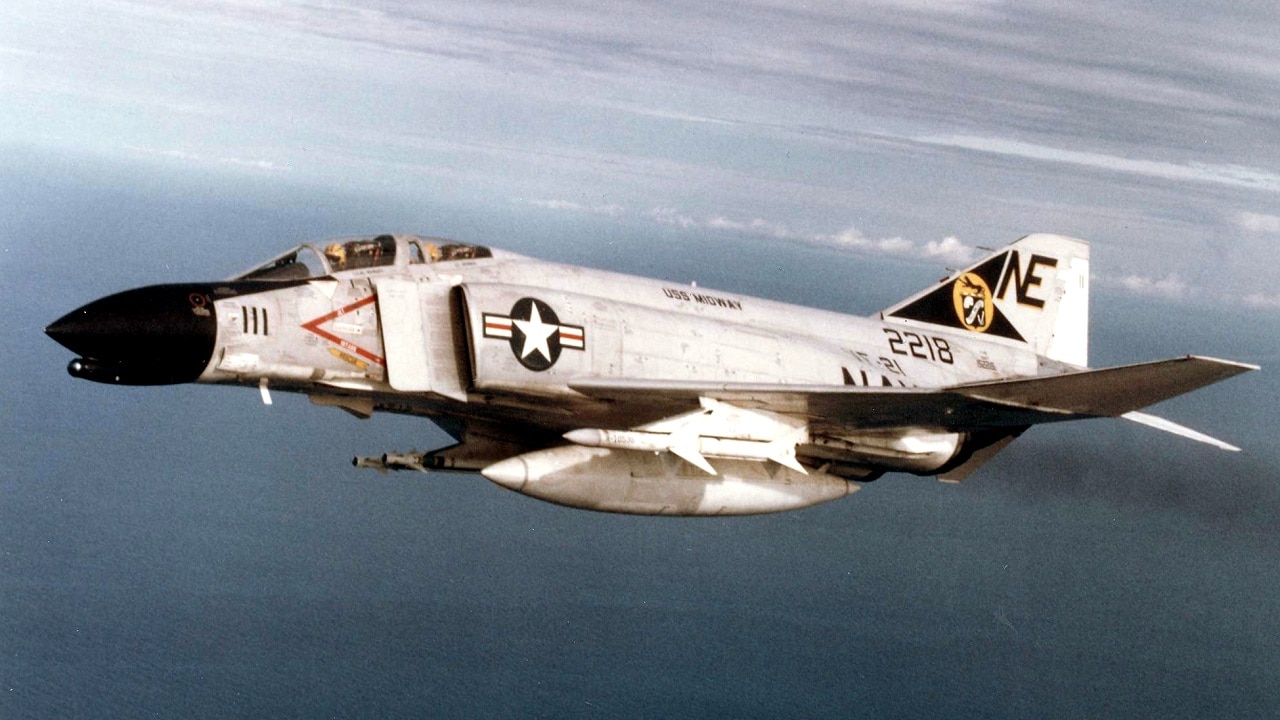
Vietnam War F-4 Phantom. Image Credit: Creative Commons.
Still a Workhorse Under Fire
Irrespective of those early flaws, the F-4s flew thousands of sorties during the Vietnam War. They also became the primary US Air Force bomber late in the Vietnam War. What’s more, they excelled in both air-to-air and strike missions. It wasn’t perfect, although it was indispensable.
One of the features that made this plane so exceptional for its era was its forward-thinking two-person crew. In front of the cockpit sat the pilot, and behind him was the Radar Intercept Officer (RIO) or the Weapons System Officer (WSO). By having this tag-team in the cockpit, the F-4s were able to employ advanced radar; they could perform complex weapons management (which single-seat fighters could not), and these capabilities were precursors to the network-centric warfare that defined fourth- and fifth-generation warplanes.
More than that, the F-4s set upwards of 15 aviation records, including those for speed and altitude. In every way imaginable, the F-4 was an essential bridge between the early Cold War-era fighter designs and the inevitable advanced designs of the fourth-generation warplanes (F-15s, F-16s, and F/A-18 Super Hornets, for instance).
Key Specs for F-4 Fighter
The F-4 Phantom II was powered by two General Electric J79 turbojet engines, giving it a maximum speed of over 1,400 miles per hour (Mach 2+). It had a range of 1,700 miles and an operational ceiling of around 59,000 feet. Possessing a 38-foot wingspan, it had a loaded weight of anywhere between 50,000 and 58,000 pounds.
As noted above, it could carry between 16,000 and 18,000 pounds of ordnance. That weapons package included AIM-7 and/or AIM-9 air-to-air missiles, multiple bombs, electronic countermeasure (ECM) pods, and strike payloads.
The F-4C was the US Air Force variant that saw heavy use during the Vietnam War. The F-4S Phantom II was the carrier-capable navalized variant of the F-4. This bird had improved avionics and structure.
Then, of course, there was the F-4E model. This variant was the most-produced of all F-4 models, with around 1,387 units built.
Each of these variants reflects how quickly the US military integrated those hard-learned combat lessons into the wider F-4 fleet.
Strategic Impact
America’s third-generation F-4 Phantom II warplane unified the Navy, Air Force, and Marine aviation procurement strategies in unexpected–and lasting–ways. This program proved multirole warplanes could dominate the world’s unfriendly skies, too.
These birds bridged WWII-era bombing with modern precision warfare.
Plus, the F-4s clearly set the stage for the inevitable development of America’s wildly successful fourth-generation warplane fleet.
The F-4 wasn’t elegant. It certainly wasn’t subtle. But everything it did was done fast, hard, and at scale.
So, if you’re looking for the aircraft that defined US airpower in the Cold War, this is it.
About the Author: Brandon J. Weichert
Brandon J. Weichert is the Senior National Security Editor at 19FortyFive.com. Recently, Weichert became the editor of the “NatSec Guy” section at Emerald. TV. He was previously the senior national security editor at The National Interest. Weichert hosts The National Security Hour on iHeartRadio, where he discusses national security policy every Wednesday at 8 pm Eastern. He hosts a companion show on Rumble entitled “National Security Talk.” Weichert consults regularly with various government institutions and private organizations on geopolitical issues. His writings have appeared in numerous publications, among them Popular Mechanics, National Review, MSN, and The American Spectator. And his books include Winning Space: How America Remains a Superpower, Biohacked: China’s Race to Control Life, and The Shadow War: Iran’s Quest for Supremacy. Weichert’s newest book, A Disaster of Our Own Making: How the West Lost Ukraine, is available for purchase at any bookstore. Follow him via Twitter/X @WeTheBrandon.