
The Pentagon is seeking a major expansion of the Lockheed Martin F-35 Lightning II program in its fiscal year 2027 budget request, asking Congress to fund 85 new aircraft while also pouring billions more into spare parts, readiness, and long-delayed modernization upgrades. The proposal is substantially more ambitious than those of recent years, during which procurement was cut back amid ongoing cost pressures and frustration over sustainment problems.
The request includes 38 F-35A variants for the U.S. Air Force, 37 carrier-capable F-35Cs for the Navy and Marine Corps, and 10 short-takeoff/vertical-landing F-35Bs for the Marine Corps. Total procurement cost is listed at $21.4 billion.
The proposal is significant because the F-35 remains the backbone of U.S. tactical airpower and one of the world’s most important export defense programs.
At the same time, it is a program that has spent years battling a plethora of problems, including spare parts shortages, delays, software setbacks, and ongoing questions about whether upgrades are arriving fast enough to avoid a possible conflict with China.
Why Washington Is Buying More F-35s Again
For all the criticism aimed at the aircraft, the Pentagon still needs fighters in volume.
The Air Force’s tactical fleet continues to age, legacy F-16 Fighting Falcon and F-15E Strike Eagle inventories are under strain, and the service is balancing retirements with the slower-than-desired arrival of replacements.
At the same time, next-generation systems such as the Air Force’s coming Boeing F-47 are still years from operational fielding in meaningful numbers, leaving the F-35 as the only stealth fighter in full-rate production in the West.
The new F-35 procurement plans are part of the White House’s historic $1.5 trillion request, which covers other major aircraft procurement and industrial base spending. It is the largest request of its kind, as a percentage of GDP, since the Cold War.
Even critics of the F-35 must concede that whatever comes next, the U.S. military still needs combat-capable aircraft now, and the F-35 is the best the United States and its allies have.

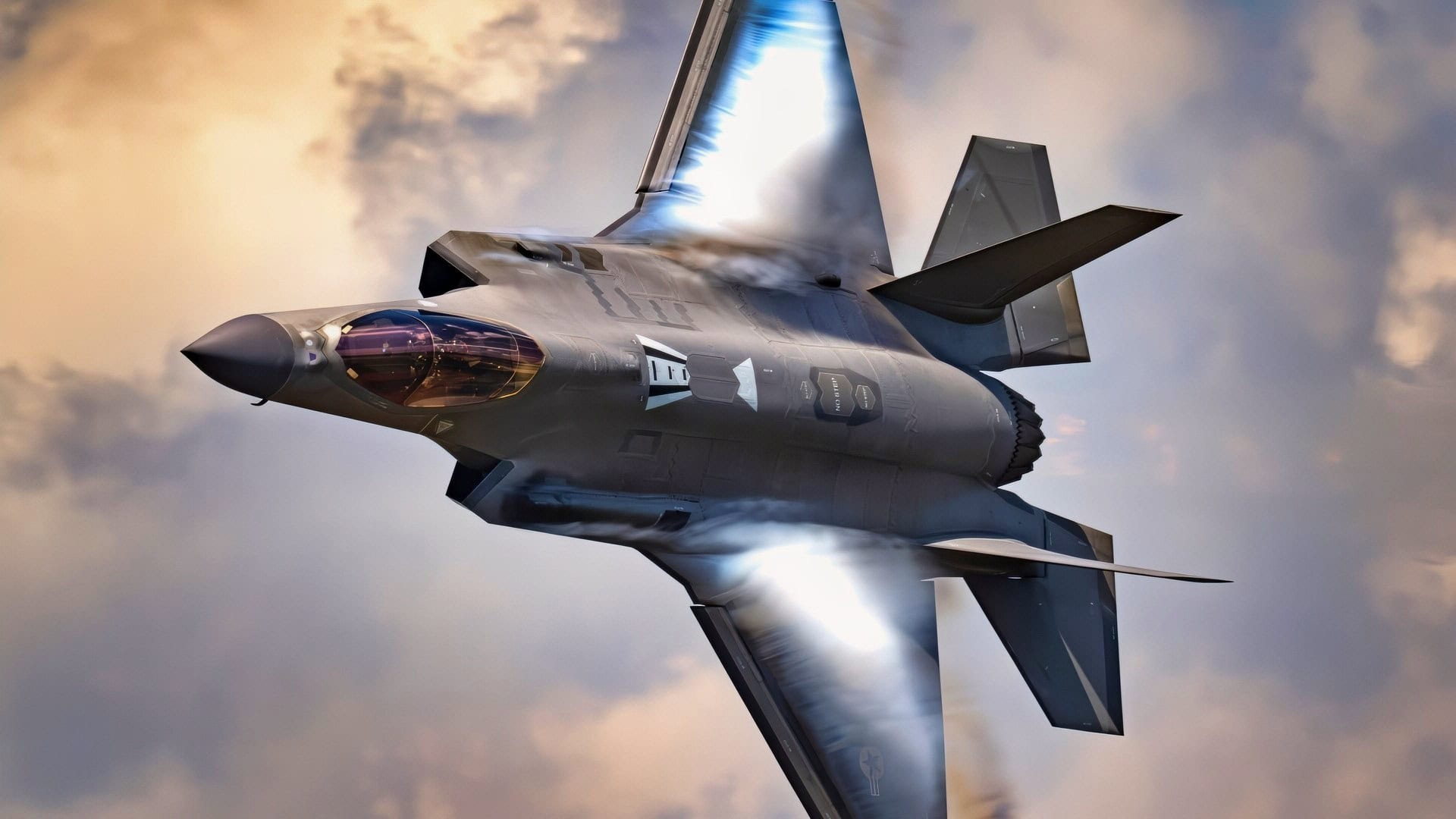
U.S Air Force Captain Kristin “BEO” Wolfe, F-35A Lightning II Demonstration Team Commander, flies during a demonstration at the Oregon International Airshow in McMinnville, Ore., Aug. 20, 2022. The F-35 Demo team travels around the United States and around the world, showcasing the world’s most technologically advanced fifth-generation fighter jet. (U.S. Air National Guard photo by Master Sgt. John Winn)
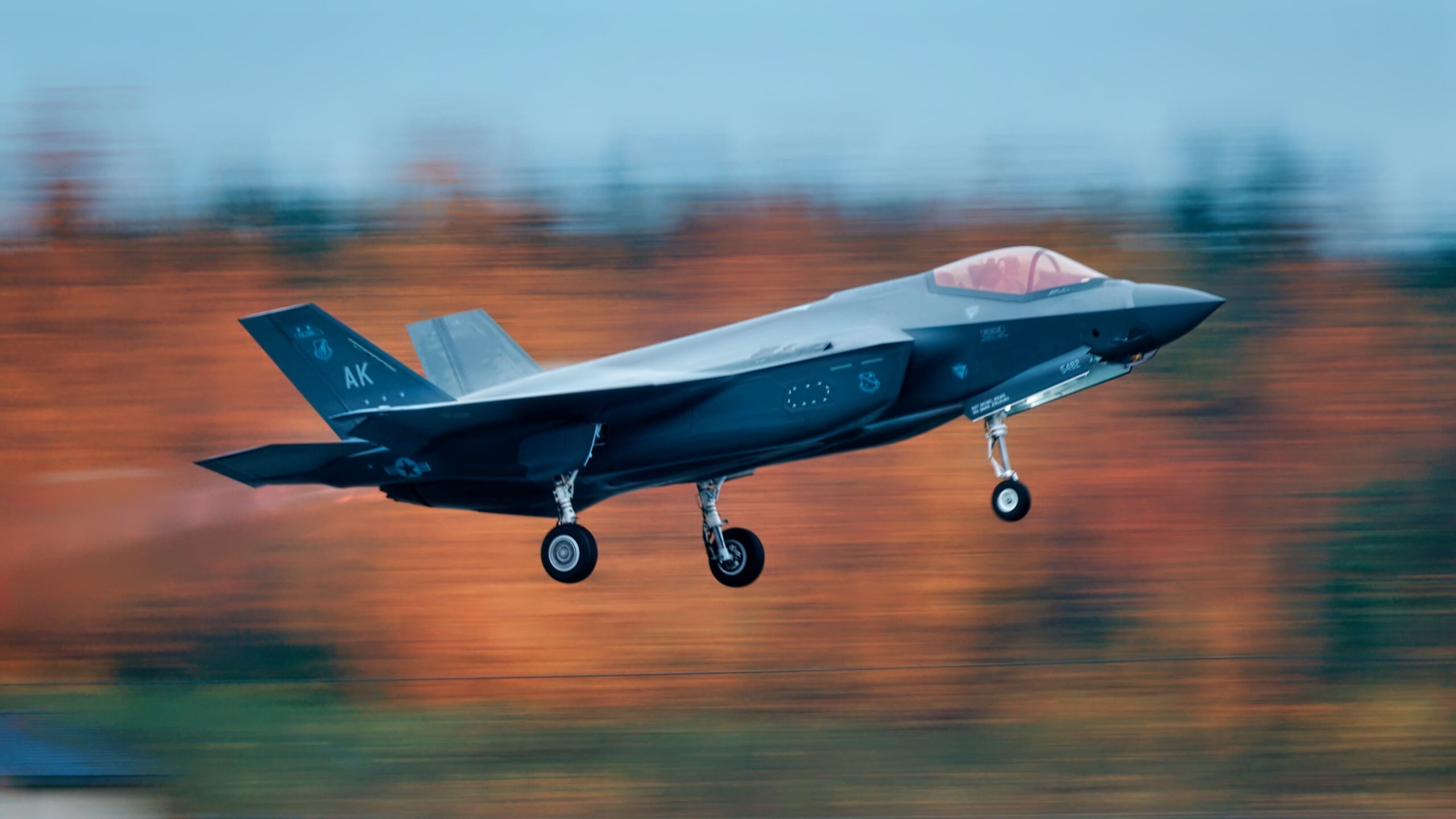
A F-35 Lightning lll assigned to the 354th Fighter Wing takes off from Eielson Air Force Base, Alaska September 19, 2024. The F-35 was participating in a multiple aircraft exercise for the 354th FW. (U.S. Air Force Photo by Senior Sean Lamb)
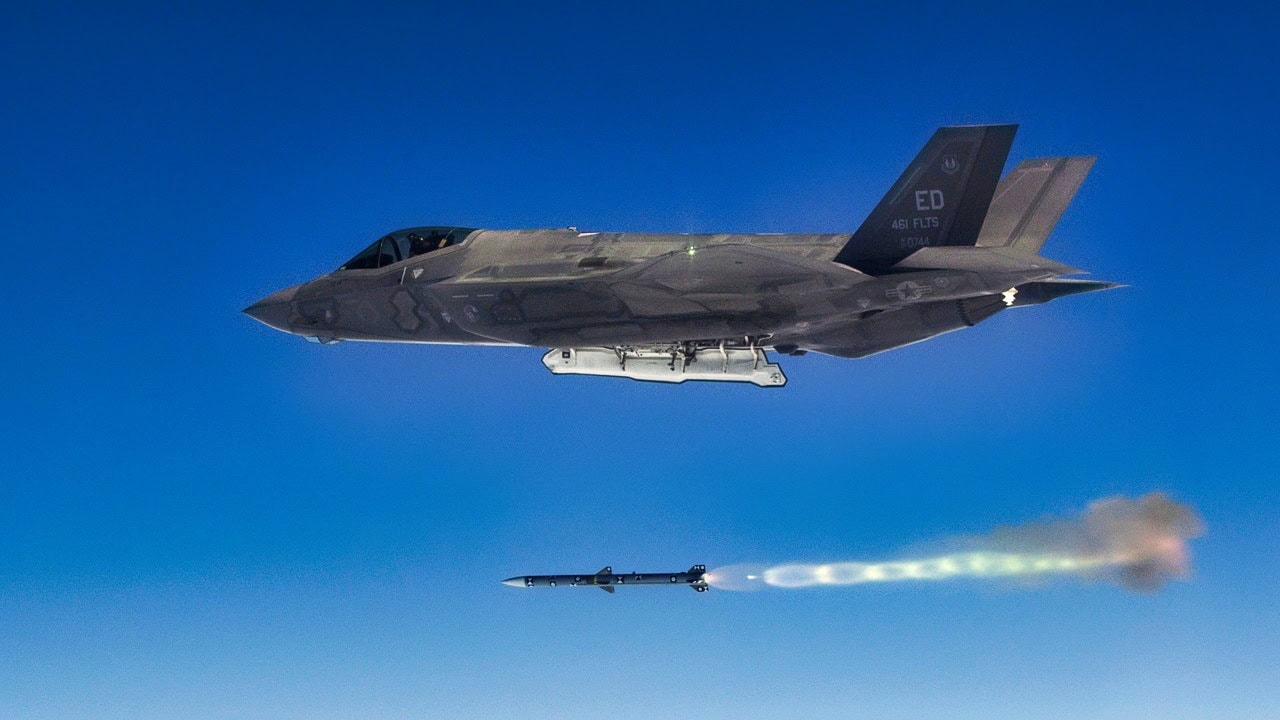
An Edwards AFB F-35A Lightning II fires an AIM-120 Advanced Medium-Range Air-to-Air Missile as part of Weapons Delivery Accuracy testing. The 461st Flight Test Squadron and F-35 Integrated Test Force completed WDA testing in early December, which concludes a large and important part of F-35 developmental test and evaluation. (Courtesy photo by Chad Bellay/Lockheed Martin)
F-35 Block 4 Is Coming
Arguably, the most important part of the request is not the jets themselves, but the attempt to accelerate Block 4 modernization. Block 4 is the next major capability package for the F-35 fleet, designed to improve radar processing, weapons integration, sensor fusion, targeting, computing power, and electronic warfare performance.
The upgrade will not just keep the jet competitive against newer air defenses and peer adversaries, but also make it more capable.
Pentagon officials said in the FY2027 budget submission that adding $324 million for 200 Block 4 kits would accelerate installation across the fleet. According to the department’s budget justification, that funding could move the first operational fleet deliveries of the upgraded aircraft forward by one year, from 2031 to 2030.
If those plans come to fruition, it will ensure that the F-35 is fully equipped to counter Chinese forces that are more advanced than when the F-35 was first introduced. Between new Chinese integrated air defenses and long-range air combat threats, F-35s require constant upgrades to maintain their edge over adversaries’ systems.
Block 4 depends heavily on Technology Refresh 3 (TR-3), the new hardware backbone that includes upgraded processors, more memory, and improved cockpit displays. Without TR-3, many Block 4 functions cannot be delivered – and this has become a point of contention in recent months.
The Problem With TR-3 and Other Delays
The TR-3 modernization effort has been in trouble for years. In 2025, the Government Accountability Office noted that Block 4 capabilities had slipped to 2031, roughly five years later than earlier expected.
Costs have also risen significantly over time.
And those TR-3 delays create another problem: aircraft were already built, but deliveries slowed while software and certification issues were resolved. That meant new jets existed physically but could not always be handed over to the U.S. Air Force on the original timeline.
The F-35 program more broadly has also faced recurring readiness concerns. Pentagon budget chief Jules “Jay” Hurst III said on April 21 that prior budgets had not adequately supported F-35 readiness needs. During the FY2027 defense budget rollout, Hurst stated:
“F-35s have been underfunded in the past as part of the budget…We’re increasing F-35 spare parts funding. We’re going to move the [mission capable] rate up.”
Government Accountability Office reviews have also repeatedly found the F-35 fleet falling short of readiness goals.
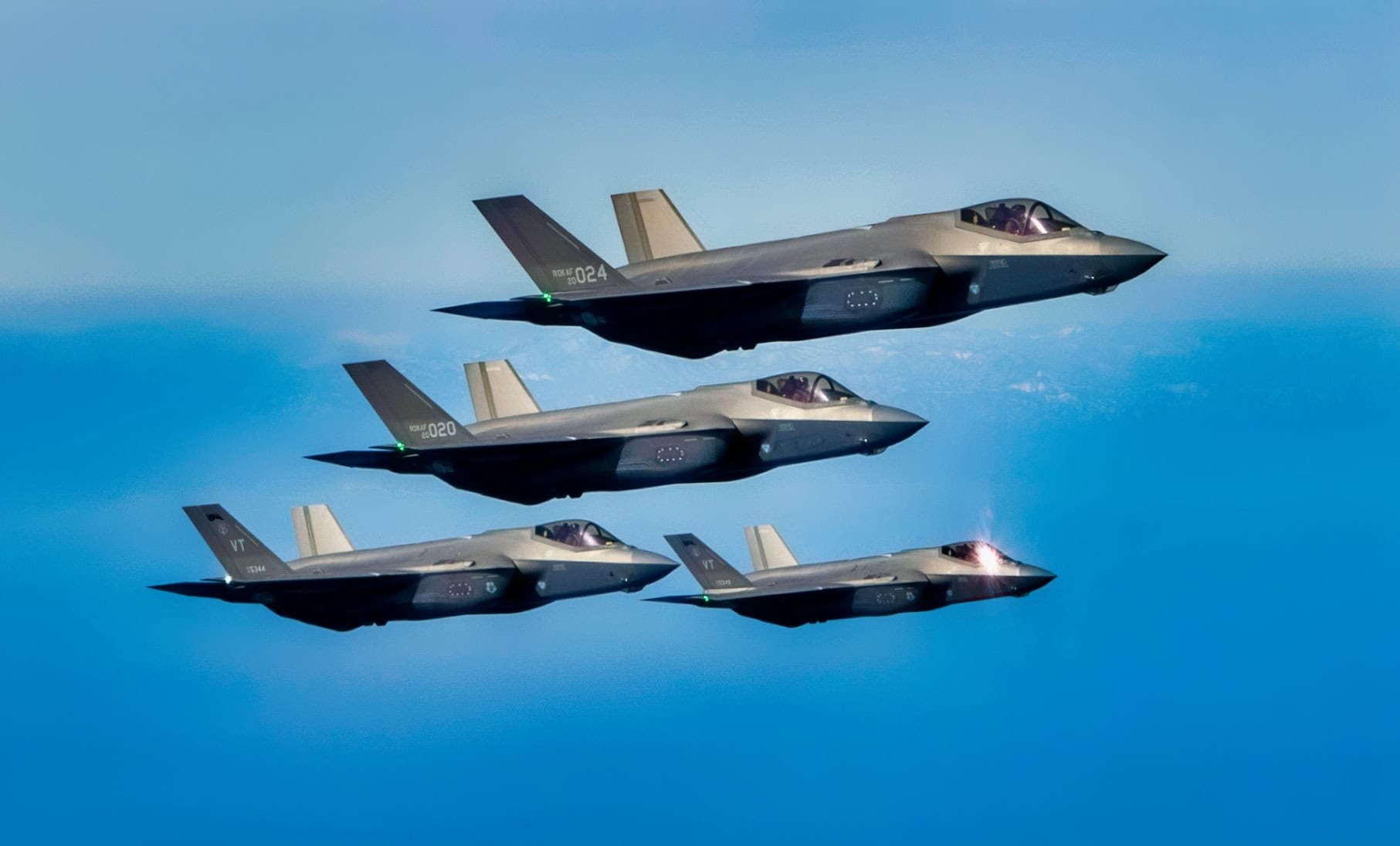
Two U.S. Air Force F-35A Lighting IIs fly in formation with two ROKAF F-35As during Freedom Shield 25, a defense-oriented exercise featuring live, virtual, and field-based training, March 13, 2025. The aircraft participated in dynamic targeting and aerial refueling training, validating the capability of ROK and U.S. Air Forces, to find, fix, and defeat a range of threats. (Photo courtesy of Republic of Korea Air Force)
In 2023, GAO said the overall F-35 fleet mission-capable rate was about 55% in March 2023, meaning aircraft could perform at least one assigned mission only about half the time.
In terms of hardware, the F-35 is also facing issues with heat and power demand.
As the aircraft receives more sensors and computing load, strain is growing on its onboard cooling and electrical systems.
The FY2027 request includes $1.3 billion more for Block 4 and power/thermal management upgrades, as well as $260 million for the Engine Core Upgrade. It all points to sustaining the aircraft becoming as important as buying new ones.
About the Author: Jack Buckby
Jack Buckby is a British researcher and analyst specializing in defense and national security, based in New York. His work focuses on military capability, procurement, and strategic competition, producing and editing analysis for policy and defense audiences. He brings extensive editorial experience, with a career output spanning over 1,000 articles at 19FortyFive and National Security Journal, and has previously authored books and papers on extremism and deradicalization.