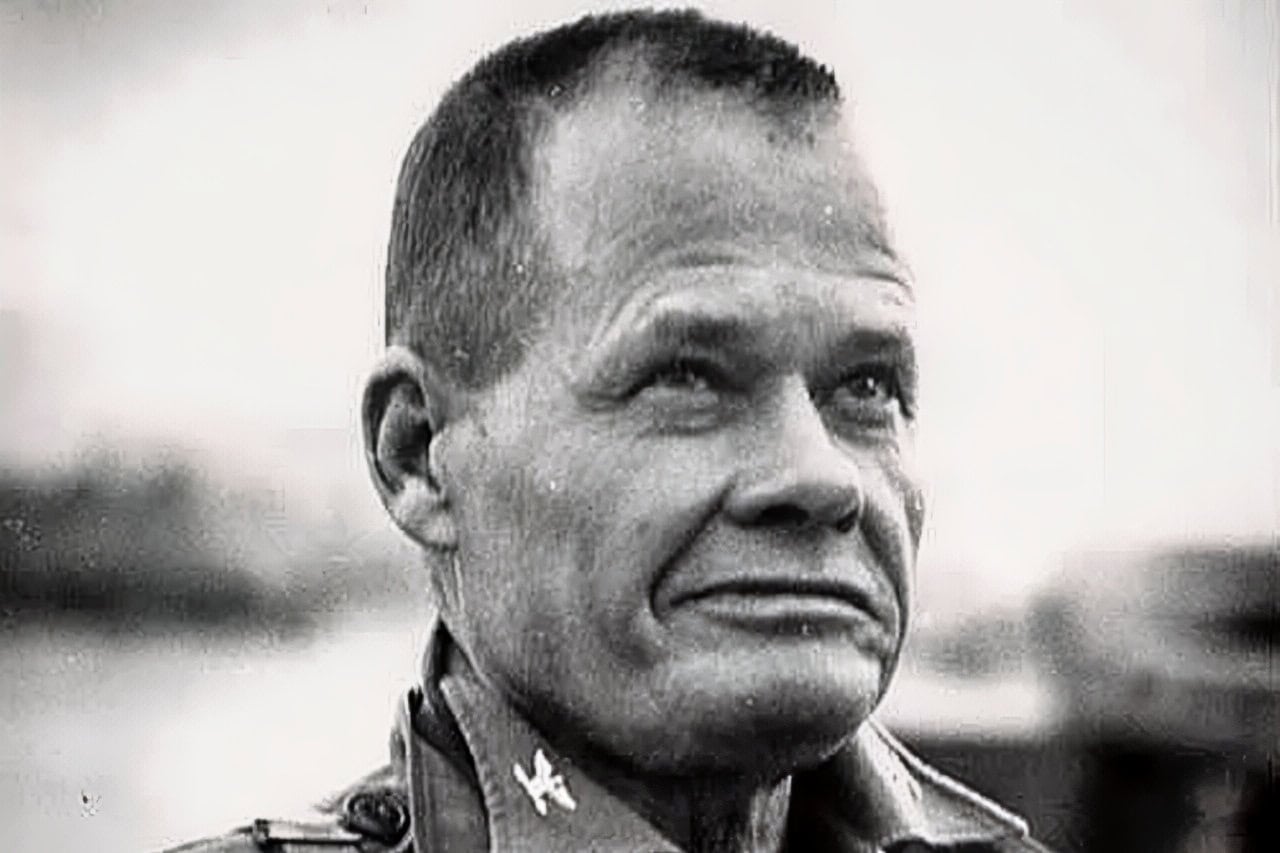
“Pain is weakness leaving the body.” – Lewis “Chesty” Puller
Lewis “Chesty” Puller was one of the most decorated Marines in all of American history.
Having enlisted right at the end of the First World War, Puller saw combat around the world in some of the harshest conditions known to man.
However, despite the carnage and brutality, he demonstrated exceptional courage and tirelessly sought to preserve the lives of those who fought under him. He was renowned for his quick thinking and leadership skills, which helped to avoid many potential disasters during the War in the Pacific and the Korean War.
Early Life and Military Career
Lewis Burwell Puller Jr. was born on June 26, 1898, in the town of West Point, Virginia, a modest town situated along the York River. Puller grew up listening to stories from Veterans of the American Civil War.
He idolized figures like Stonewall Jackson and developed a keen interest in joining the Army from a young age. His father died when Lewis was only ten years old, an event that profoundly shaped the rest of his life. As a result, Puller was raised primarily by his mother, Martha Puller. In 1916, Puller tried to join the U.S. Army to fight in the Mexican-American Border War, but he was too young to enlist, and his mother would not give her consent.
In 1917, Puller attended the Virginia Military Institute but left when the U.S. joined the First World War, hoping to get a piece of the action. He decided to join the Marine Corps instead of the Army, and then attended Officer Candidate School at Quantico, Virginia. Upon graduation, he was commissioned as a second lieutenant in the reserves.
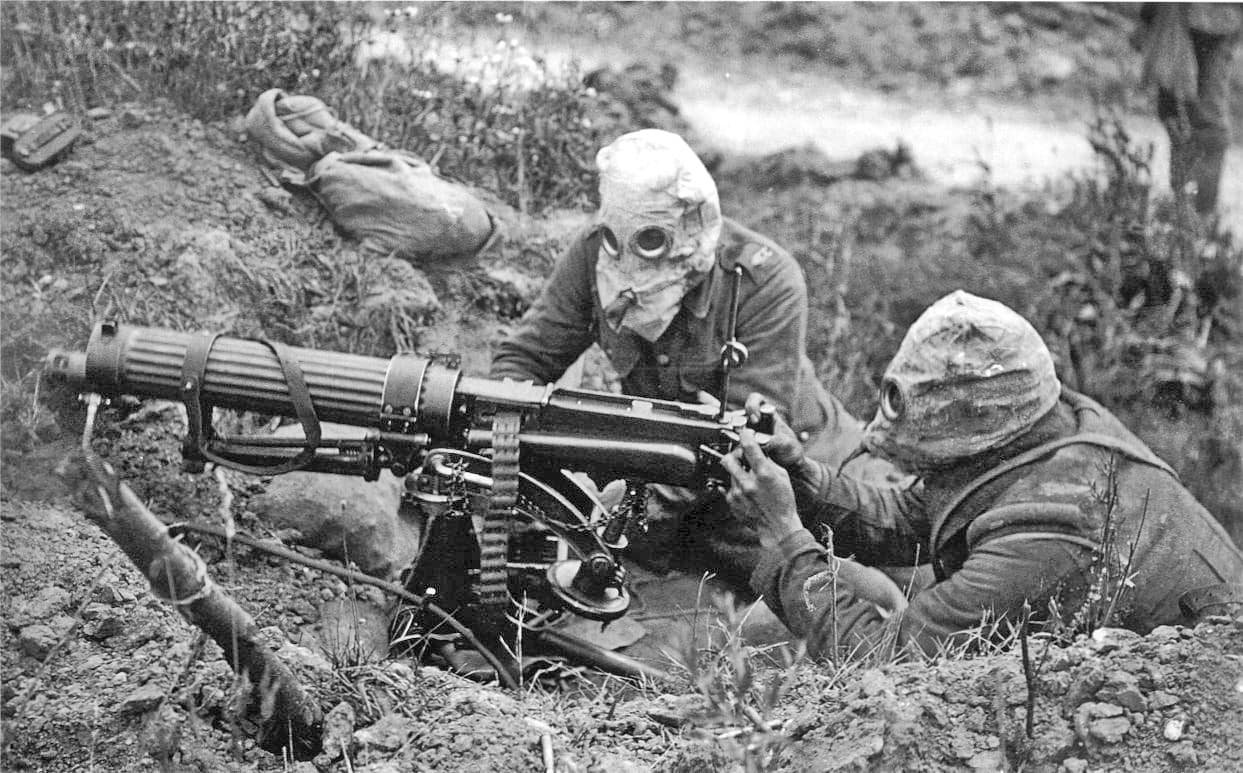
British Vickers gun team in action at the Battle of the Somme. Both are wearing gas masks.
His hopes of seeing combat during WWI were dashed in 1918, when the war in Europe ended. The postwar demobilization cut short many military careers, Puller’s included. His commission was terminated during a force reduction, leaving him at a crossroads early in his adult life. Rather than pursuing a civilian career, Puller remained committed to a military career. He reenlisted in the Marine Corps to remain on active duty.
The Banana Wars and Combat Apprenticeship
While he may have missed combat in Europe, Puller was sent to the Caribbean, where he would take part in an obscure set of conflicts later called the “Banana Wars.” In these conflicts, the United States, bound by treaty obligations, sent small Marine detachments to assist several Caribbean nations facing guerrilla revolts.
From 1919 to 1921, Puller was sent to Haiti to assist the Gendarmerie d’Haiti in their fight against the Caco rebels.
It was in Haiti that Puller would receive his first combat experience. Throughout his time there, he experienced guerrilla hit-and-run tactics firsthand and worked with the local Haitians to devise countermeasures against Caco asymmetrical tactics.
He was then assigned to begin offensive operations against the Cacos with a force of around 200 Haitians. Throughout the low-scale conflict, Puller proved himself to be adept at aggressive tactics and an exceptionally effective leader. He was well respected by his men, both Marines and native Haitians. The conflict ended in 1921 when the leader of the rebels was killed, and all other influential leaders were captured. Puller returned to the U.S. in 1924, where he continued to serve and train at Marine camps around the country.
Command in Nicaragua
Between the years 1927 and 1933, Puller was dispatched to Nicaragua multiple times and engaged in sustained combat against guerrilla forces loyal to Augusto César Sandino.
This time, he assisted the Nicaraguan National Guard and personally led patrols and other offensive operations against Sandinista rebels. Much as in Haiti, Puller faced an irregular enemy with only a small number of troops to control a vast, rugged, uneven terrain. Here again, Puller distinguished himself for his courage and bravery. He often fought numerically superior enemy forces, yet remained determined to push forward, taking very few casualties.
In 1932, Puller led an expedition consisting of eight Marines and 64 Nicaraguans to thwart a planned raid by Saninista rebels on a ceremony commemorating the completion of the León–El Sauce railway.
He and his men were ambushed from both sides while on their way to their destination. In the resulting firefight, Puller lost three men killed and three men wounded. The rebels, meanwhile, lost 36 men killed, and their raid had been thwarted. Throughout his time in the Caribbean, Puller had been involved in more than 45 engagements and received multiple awards for his distinguished service.
Interwar Experience
Following his service in Central America, Puller was assigned to a more comfortable position back in the U.S. He commanded the Marine detachment at the Legation in Beijing before being reassigned to the USS Augusta (CL/CA-31), under the command of then-Captain Chester W. Nimitz.
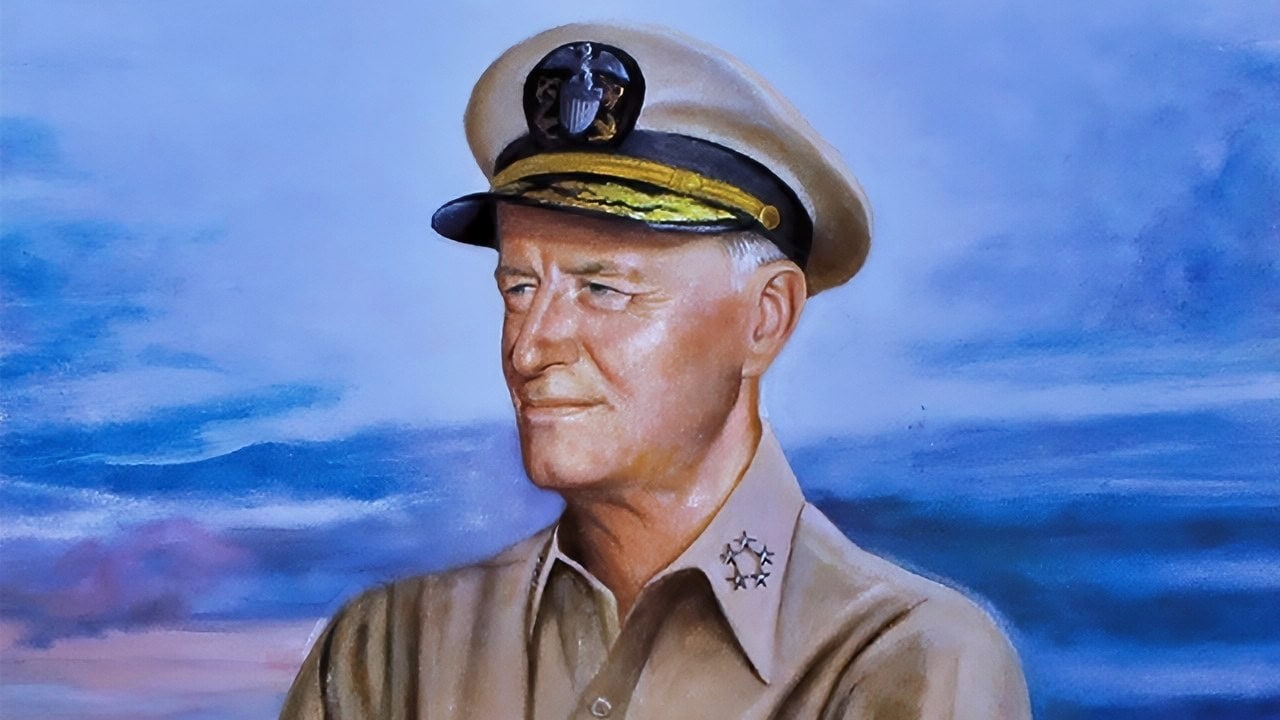
Chester Nimitz Navy Admiral. Image Credit: Creative Commons.
Between 1936 and 1941, Puller was sent back and forth between positions abroad in China and less glamorous positions back in the U.S.
He served as an instructor at the Basic School in Philadelphia before transferring to command positions with the 2nd Battalion, 4th Marines, and later the 1st Battalion, 7th Marines (1/7).
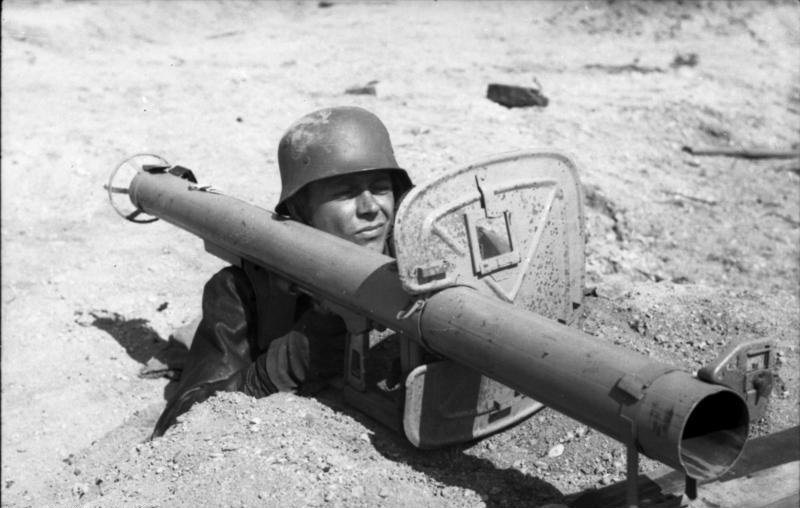
World War II. Image Credit: Creative Commons.
World War II and the Crucible of the Pacific
When the Second World War began, Puller had more combat experience than the vast majority of Marines twice his age. Already hardened by his experience in Central America, Puller was well acquainted with combat conditions in rough terrain and with little supplies.
The Pacific War, however, would prove to be way more intense than the small-scale conflicts he had seen in the Caribbean. The Japanese were better equipped, better trained, fought harder, and sometimes had support from naval and air assets. Puller commanded 1/7 and was sent to defend American Samoa in 1942.
His first combat experience in the Pacific came at Guadalcanal in September 1952. Puller faced fierce resistance from the Japanese defenders. During the action, three of his companies were surrounded and cut off by larger Japanese forces.
Puller quickly signaled destroyer USS Monssen (DD-436) to provide fire support for the companies while landing craft rushed in and evacuated the Marines. Thanks to his quick thinking, all three companies were saved from annihilation, and he was awarded the Bronze Star Medal for his actions.
Later on, Puller would be awarded his third Navy Cross for his actions at the Battle for Henderson Field, during which his 1/7 and an Army infantry regiment held out against a numerically superior Japanese force. The resulting battle resulted in only 70 casualties between the U.S. infantry and Marines, while the Japanese suffered 1,400 killed in action.
The Bloody Battle of Peleliu
In 1944, Puller led the 1st Marine Regiment during the Battle of Peleliu, the bloodiest battle in all of Marine Corps history. While his quick thinking and aggressive tactics often helped him to win the day, at Peleliu, he was completely out of his depth.
Facing a deeply entrenched enemy, his aggressive tactics resulted in nothing but pointless casualties. Furthermore, he refused to request assistance from Army units in reserve as his regiment shrank with each unsuccessful offensive. Even peers who admired Puller would criticize him for what they saw as a seemingly narrow mind during the Battle of Peleliu. While surveying his command post, General Roy Geiger recommended that the now combat-ineffective 1st Regiment be pulled from the front and replaced by the 81st Infantry Division.
Peleliu was the last time Puller saw combat in WWII. He returned to the U.S. in 1944, where he would serve in some training roles, effectively sidelined from the rest of the War. He was appointed as the commanding officer of the Infantry Training Regiment at Camp Lejeune.
When the War finally ended, he was placed in command of the 8th Reserve District at New Orleans and later of the Marine Barracks at Pearl Harbor. At the time, it seemed as if he would never see combat again, but these concerns were quickly dashed.
Korea and the Chosin Reservoir
With the outbreak of the Korean War in 1950, Puller was once again called upon to lead the 1st Marine Regiment. His troops participated in the Inchon landing and effectively saved what remained of the battered South Korean Army. Initially, the U.S., under the banner of the United Nations, repelled the North Korean invaders far into the territory of what is now North Korea and successfully captured the capital of Pyongyang, nearing the Sino-Korean border.
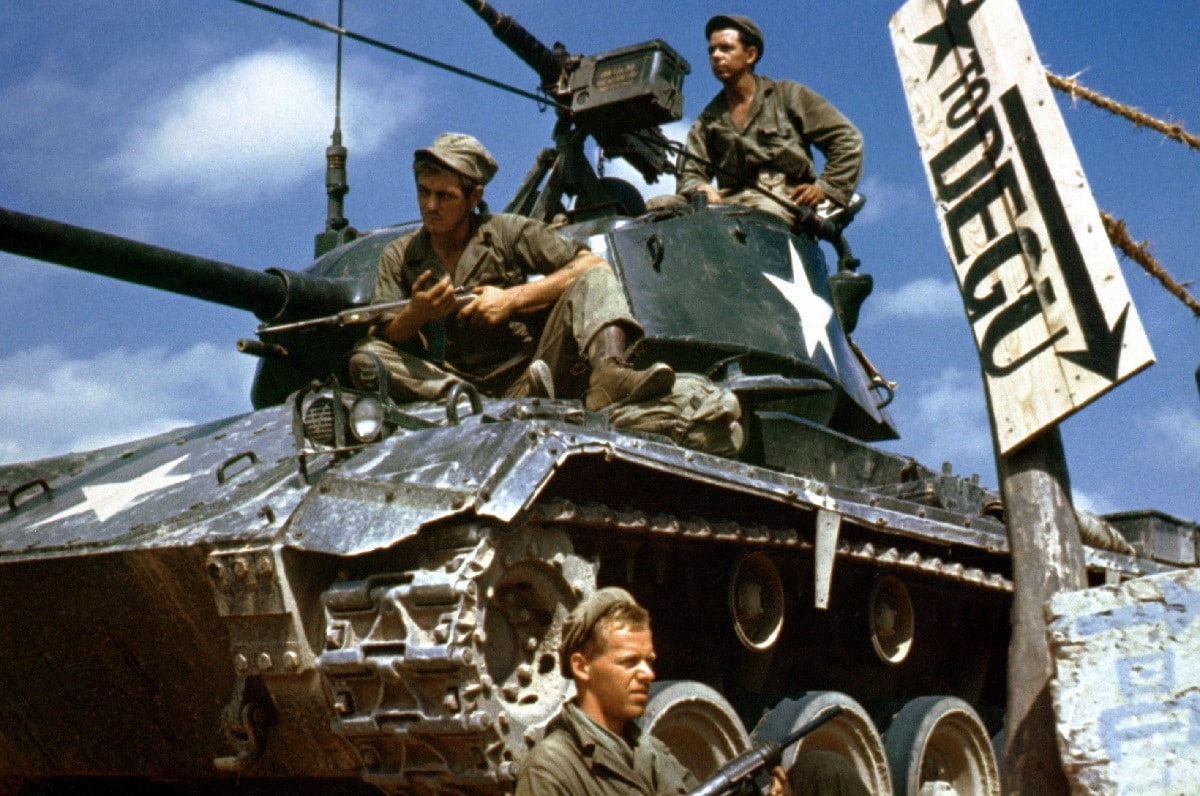
Crew of an M-24 tank along the Naktong River front. On the ground is Pfc. Rudolph Dotts, Egg Harbor City, N.J. gunner (center); Pvt. Maynard Linaweaver, Lundsburg, Kansas, cannoner; and on top is Pfc. Hugh Goodwin, Decature, Miss., tank commander. All are members of the 24th Reconnaissance, 24th Division.
NARA FILE#: 111-C-6061
The tide of the war changed again, however, when Communist China intervened on North Korea’s behalf. In December of 1950, around 1.5 million Chinese soldiers (with assistance and aircraft from the Soviet Union) stormed across the Korean border and forced the U.S. forces to retreat.
Puller, now promoted to Colonel, and his 1st Regiment, along with several other Marine Corps regiments under the command of Maj Gen Oliver P. Smith, found themselves encircled by Chinese forces at the Battle of Chosin Reservoir.
With the irrational optimism characteristic of the Marine Corps, Puller, upon reviewing his situation, said, “We’ve been looking for the enemy for some time now. We’ve finally found him. We’re surrounded. That simplifies things.” The encircled troops, nicknamed “the Chosin Few,” were rescued by U.N. Forces under the command of General Douglass MacArthur in one of the greatest military evacuations of modern history. For his heroic feats in the Korean War, Puller was awarded a Silver Star Medal and promoted to Major General.
Retirement and Final Years
Years of continuous combat had exacted a physical toll on Puller, particularly on his legs. In 1955, he finally retired from the Marine Corps as a lieutenant general after suffering from a stroke.
He returned to Virginia, where he lived quietly with his wife, Virginia Montague Evans Puller. He died on October 11, 1971, at the age of seventy-three, and was buried in Christ Church Parish Cemetery in Middlesex County, Virginia.
Today, Chesty Puller is something of a mythological figure in the U.S. Marine Corps. His deeds of bravery and heroism are still recounted to recruits today, although some of the stories have been somewhat embellished.
Even now, Puller is one of the most decorated Marine Corps servicemen in the Corps’ history thanks to his many decades of service and combat experience. Puller reflected the best and worst aspects of the Marines as a whole.
He was widely admired by his peers and subordinates for his courage and dedication, and his quick wits saved many lives in the heat of battle. At the same time, however, he was reckless and aggressive and sometimes ordered his men on near suicidal missions, which achieved almost nothing. Puller was not a perfect commander, but he was competent, brave, and exceedingly loyal to his compatriots.
About the Author: Isaac Seitz
Isaac Seitz, a Defense Columnist, graduated from Patrick Henry College’s Strategic Intelligence and National Security program. He has also studied Russian at Middlebury Language Schools and has worked as an intelligence Analyst in the private sector.