
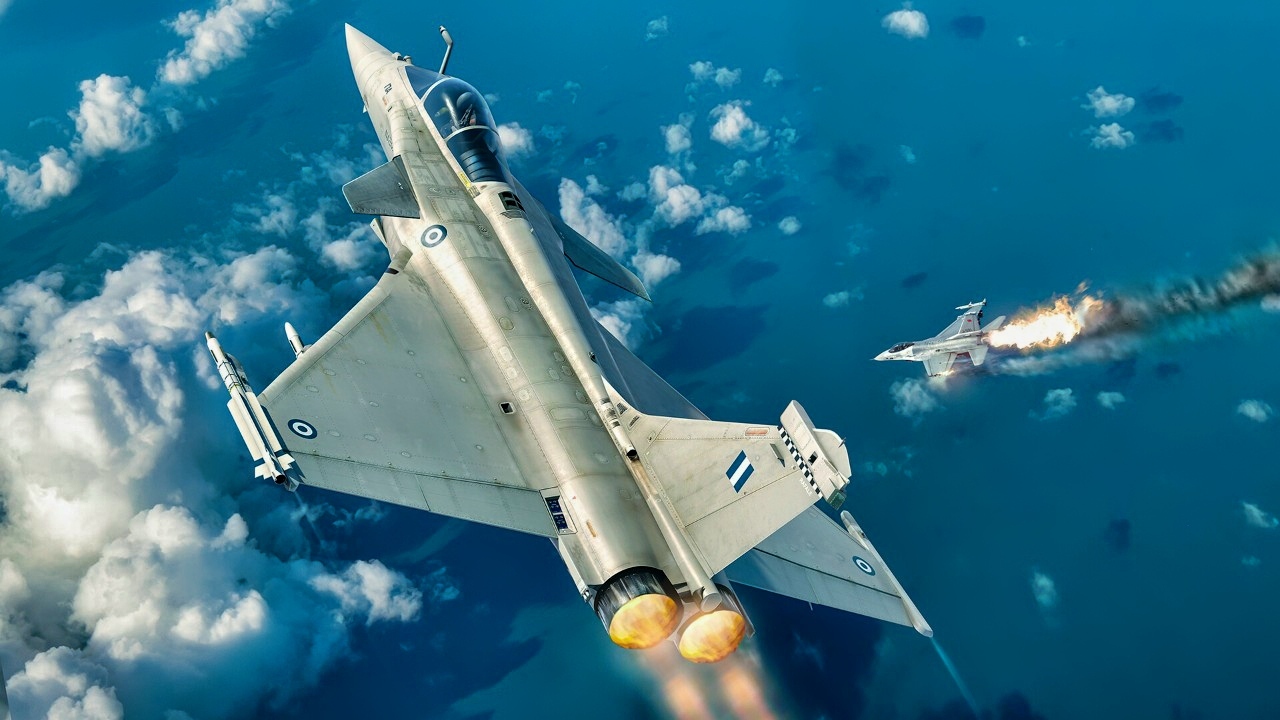
Key Points and Summary: The Dassault Rafale F5 program and the Eurofighter Typhoon Long Term Evolution program represent the two most significant European fourth-generation fighter modernization efforts currently in development, with France backing the Rafale F5 and the United Kingdom, Germany, and Italy backing the Typhoon through the BAE Systems and Leonardo-led consortium.
-Both aircraft are intended to bridge the gap between current European fighter capabilities and next-generation systems including the Franco-German-Spanish Future Combat Air System and the UK-Italy-Japan Global Combat Air Programme expected to enter service in the 2035-2040 timeframe.
Eurofighter Typhoon vs. Dassault Rafale Fighter
The Dassault Rafale and the Eurofighter Typhoon have a unique rivalry. With France backing the Rafale and the UK, Germany, and Italy backing the Typhoon, the two aircraft represent the most sophisticated fourth-generation aircraft in Europe. Both aircraft are also slated to receive major modernization packages in the coming years to bridge the older and newer generations. The Rafale F5 program and the Typhoon Long Term Evolution (LTE) program both aim to improve avionics, engines, networking systems, and the overall longevity of their respective aircraft. But which program is better overall?
Program Prospects and Ambitions
Both programs seek to improve the networking capabilities of their respective fighters. Rafale F5 is explicitly designed to operate as a node within a distributed combat system.
It will be capable of controlling stealthy remote carriers derived from the nEUROn UCAV program, tasking them with reconnaissance, electronic attack, decoy operations, or strike missions.
Readers will notice that this section is written almost exclusively in the future tense.
That is because these features are not yet ready. The long-term intention is to use the Rafale as a bridge between older fighters and the newer sixth-generation aircraft under development. The aircraft is intended to remain active until the 2060s, when it is expected to be replaced by future aircraft.
The Typhoon’s LTE and Technology Maturation Phase (TMP) is also envisioned as a bridge between older and newer generations. The program intends to improve the aircraft’s mission computing system, flight control computing system, communication equipment, and armament control systems.
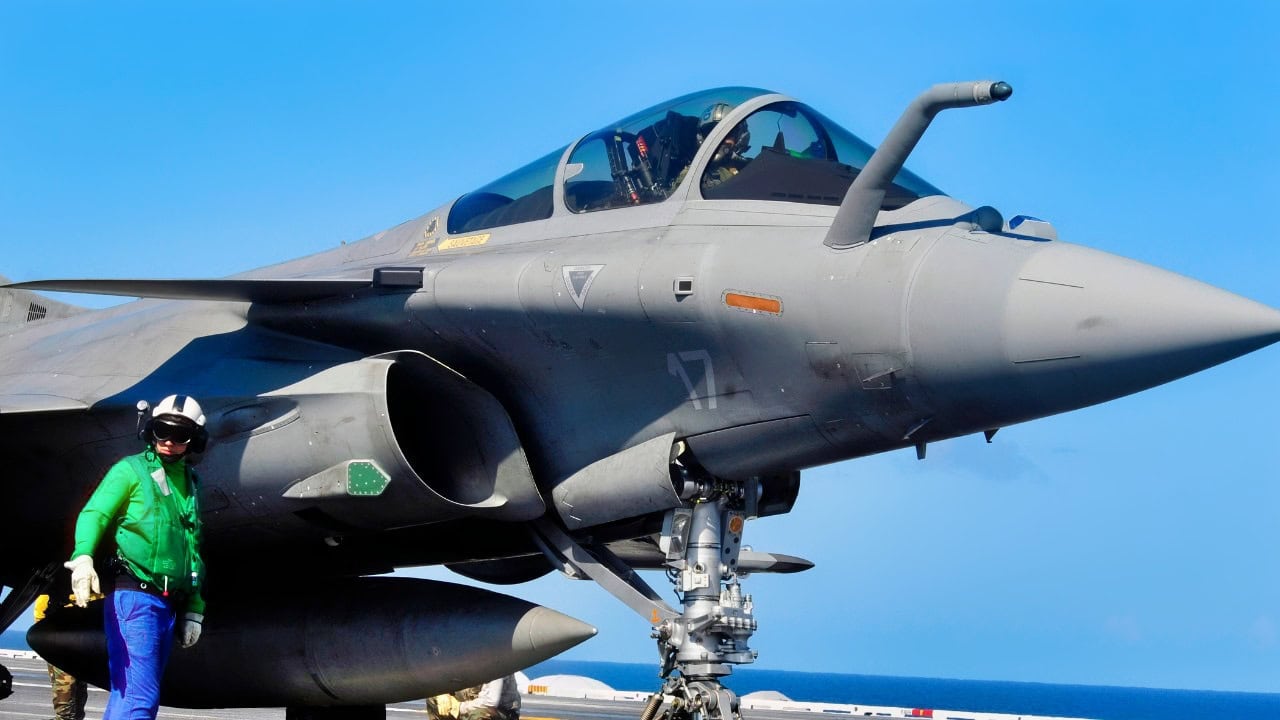
080719-N-3218H-011
ATLANTIC OCEAN (July 19, 2008) A French F-2 Rafale fighter prepares to launch during combined French and American carrier qualifications aboard the aircraft carrier USS Theodore Roosevelt (CVN 71). This event marks the first integrated U.S. and French carrier qualifications aboard a U.S. aircraft carrier. The Theodore Roosevelt Carrier Strike Group is participating in Joint Task Force Exercise “Operation Brimstone” off the Atlantic coast until the end of July. (U.S. Navy photo by Mass Communication Specialist 3rd Class Christopher Hall/Released)
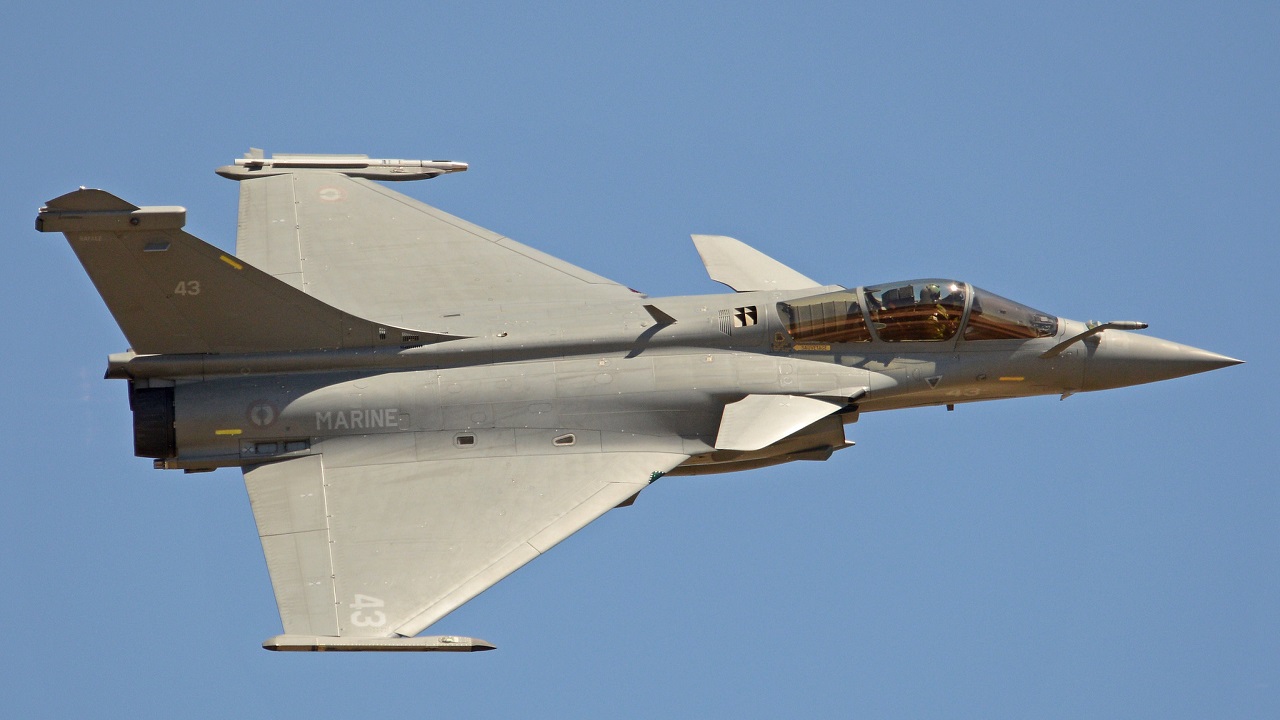
Operated by Flottille 12F, Aeronavale, based at Landivisiau.
Seen during a practice display routine at Zaragoza Air Base, Spain, during the 2016 NATO Tiger Meet (NTM).
The upgrade package also seeks to improve human-machine interface to reduce the pilot’s workload and enable onboard computers to process greater volumes of data at higher speeds. The LTE and TMP program is much less ambitious than Dassault’s F5 program.
This is largely due to consortium politics (getting multiple nations to agree on anything is difficult), and as a result, the LTE can be more accurately described as a life-extension program for the Typhon than as a revolutionary modernization package.
Flight Performance
The Eurofighter Typhoon retains a decisive advantage in raw flight performance. When it comes to aerodynamics, the Typhoon is the most capable of all Western fourth-generation fighters thanks to its delta‑canard configuration and powerful EJ200 engines.
Even decades after its first flight, the Typhoon continues to demonstrate superior energy retention and acceleration compared to most peers in the 4.5‑generation class.
Its most recent variants preserve these characteristics while benefiting from digital avionics upgrades and structural refinements. As a result, the aircraft is formidable in both close-range and high‑energy BVR engagements. For missions that prioritize interception, counter‑air, and classic air dominance, the Typhoon’s kinematic edge is undeniable and unmatched among European fighters.
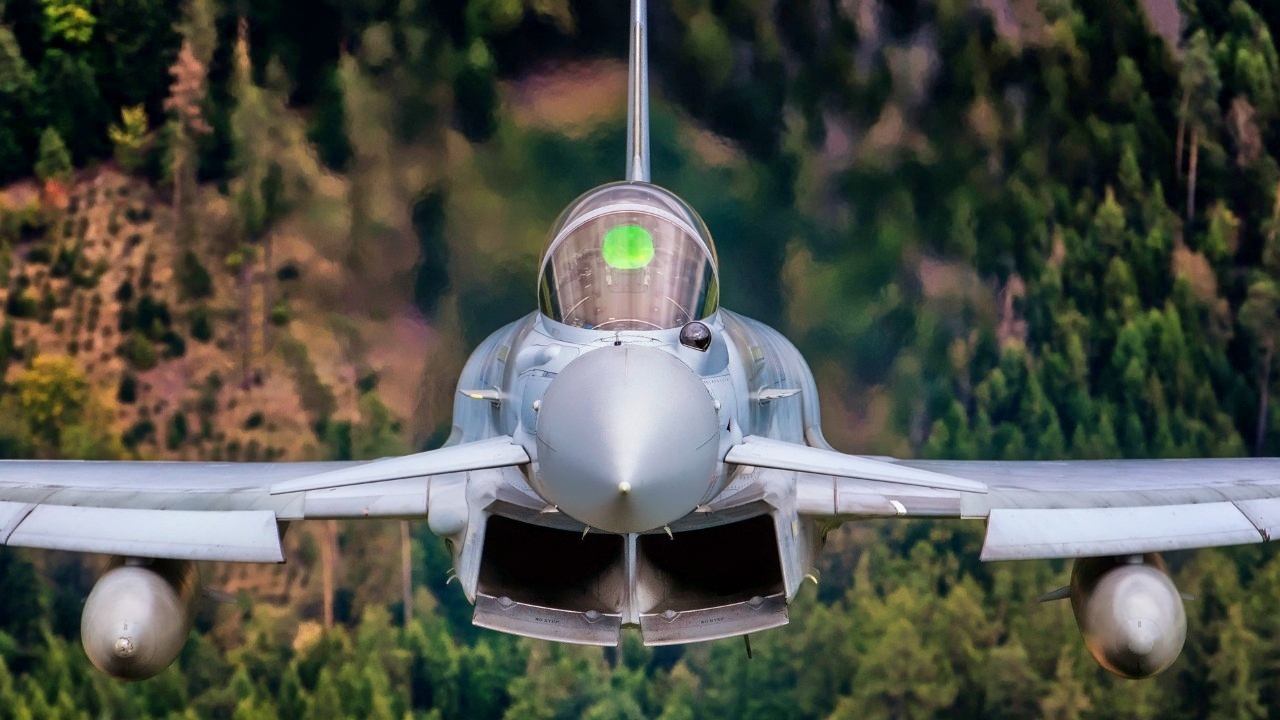
Eurofighter Typhoon. Image Credit: Creative Commons.
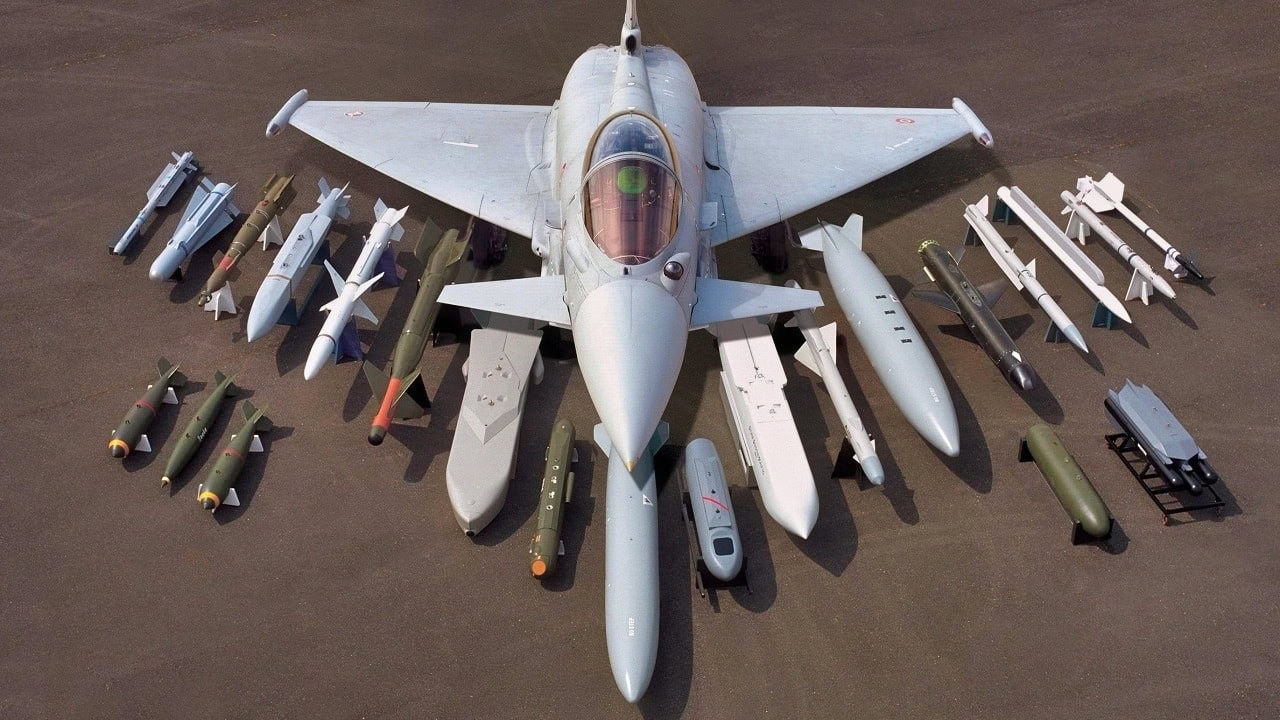
Eurofighter Typhoon. Image Credit: Creative Commons.
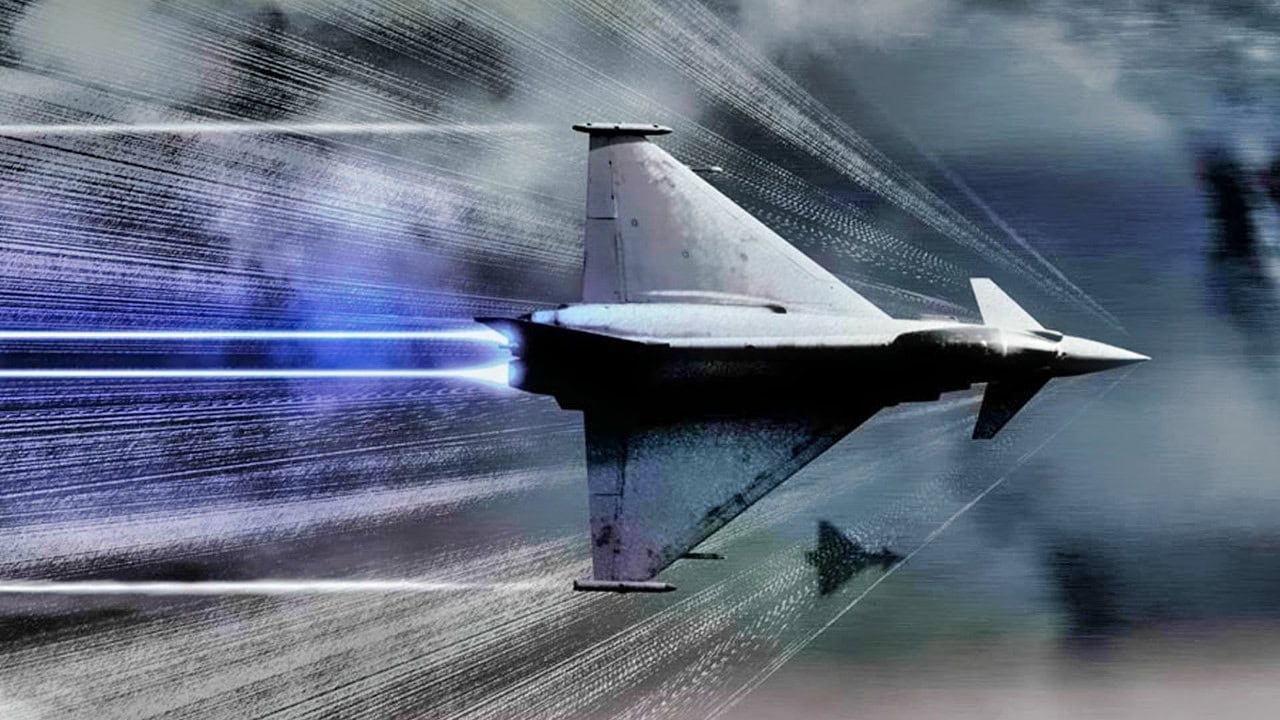
Eurofighter Typhoon Fighter. Image Credit: Creative Commons.
The Rafale’s performance is not bad, but it is not exceptional either. Rafale can supercruise under certain conditions, but its sustained supersonic capability is lower than the Typhoon’s, and its climb and turn performance are more modest.
That said, the Rafale is more versatile as a platform overall. It offers better low-speed handling, a more diverse weapons loadout, and compatibility with CATOBAR systems on certain aircraft carriers.
All of these combined make it better suited for a wider range of missions. The F5, in particular, plans to introduce the new and improved M88 T‑REX engines, which are expected to deliver roughly twenty percent more thrust than the current M88‑2. This will partially narrow the performance gap, but it will not overturn the Typhoon’s long‑standing aerodynamic superiority.
Avionics
When it comes to electronics and avionics, both aircraft are well equipped. The Typhoon’s ECRS Mk2 radar is currently one of the most ambitious AESA developments ever fielded on a European combat aircraft. Unlike traditional fixed‑plate AESA radars, ECRS Mk2 is mounted on a rotating swashplate, giving it an exceptionally wide 200-degree field of view.
This allows the Typhoon to search, track, and engage targets without constantly maneuvering the airframe, giving it a significant tactical advantage in both offensive and defensive situations. ECRS Mk2 is designed from the outset as a multi‑functional array, capable of performing radar, electronic attack, and high‑bandwidth communications simultaneously.
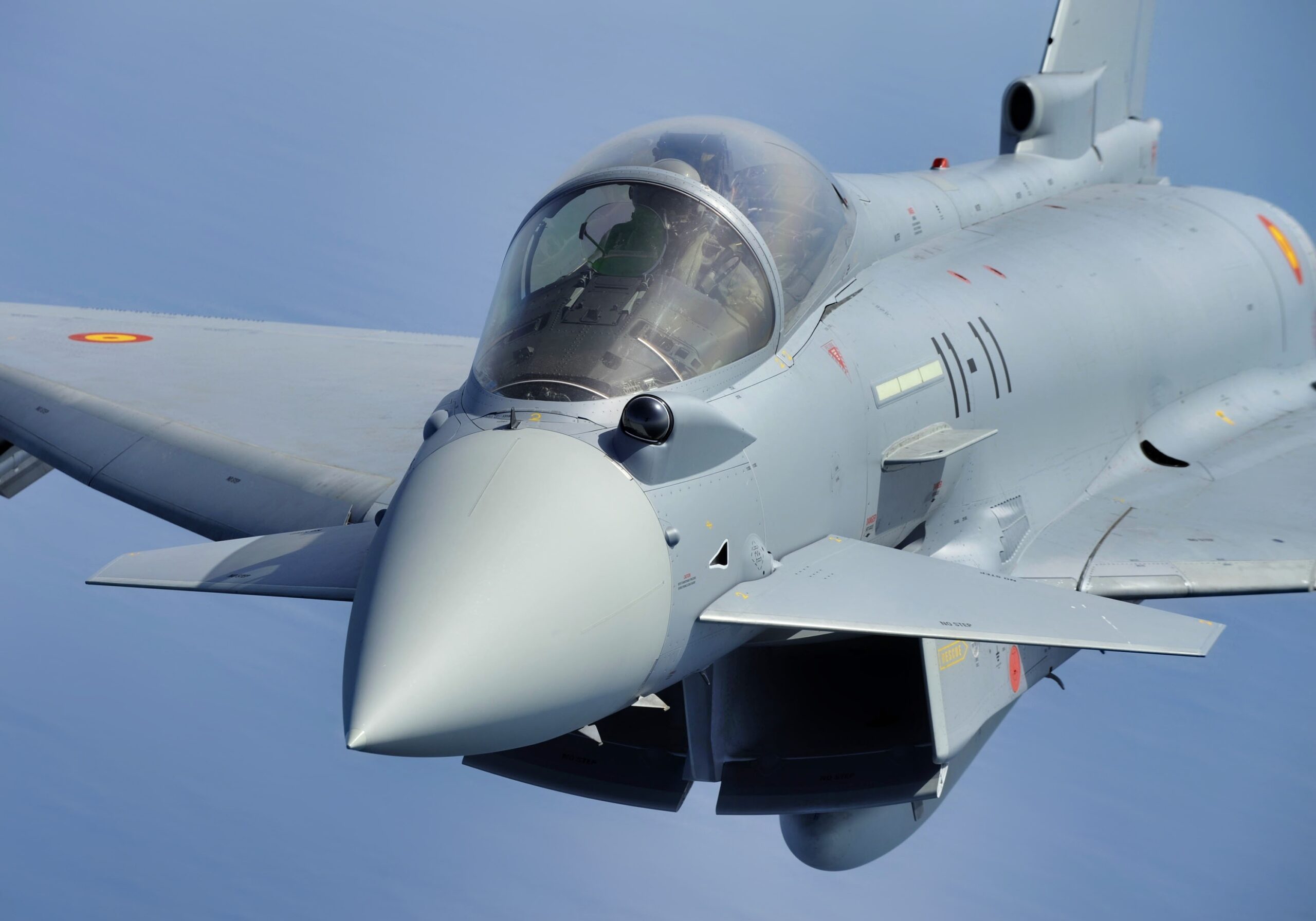
Eurofighter Typhoon Fighter. Image Credit: Creative Commons.
This effectively enables the Typhoon to conduct radar‑based jamming and suppression of enemy air defenses without relying on external pods. These capabilities used to be constrained to specialized aircraft, but now the standard Typhoon can undertake EW missions without needing external modifications. In terms of raw power, flexibility, and electromagnetic output, ECRS Mk2 is arguably the most capable fighter radar developed in Europe to date.
The Rafale F5’s sensor suite, on the other hand, was built with a completely different set of priorities in mind. The aircraft uses a gallium‑nitride evolution of the earlier RBE2‑AA, which offers better range, resistance to jamming, low‑probability‑of‑intercept modes, and more. The radar has a reported range of around 200 kilometers, though its true range is likely higher.
The fighter’s onboard computers can fuse data from the aircraft’s many sensors and from offboard sources, combining them into a coherent tactical picture designed to minimize pilot workload.
Augmenting the radar is the upgraded Front Sector Optronics system, which provides multispectral infrared and optical sensing for passive target detection and identification. There is an argument to be made that the Typhoons, but the Rafale’s avionics are not to be underestimated.
Survivability
Neither aircraft is a stealth fighter, but both include features to decrease their visibility and increase survivability.
The Rafale F5 includes the SPECTRA integrated electronic warfare and self‑protection suite that has long been one of Rafale’s defining features. SPECTRA combines electronic support measures, electronic countermeasures, missile warning, and active deception into a tightly integrated system that operates continuously and largely autonomously. Rather than reacting to threats once detected, SPECTRA is designed to shape the electromagnetic environment around the aircraft, degrading enemy sensors, generating false targets, and reducing engagement opportunities before missiles are launched.
This approach is often described as “digital stealth,” a deliberate attempt to compensate for Rafale’s lack of low‑observable shaping through electronic means. The Rafale has flown combat missions in Libya, Syria, Mali, and other countries, which seems to validate SPECTRA as an effective protection system. However, it should be noted that none of the missions it flew were against sophisticated or well-integrated air defense systems.
The Typhoon uses the Praetorian Defensive Aids Sub‑System for its defensive measures. This system is unquestionably capable and has protected aircraft successfully in combat. It offers comprehensive missile warning, towed decoys, electronic countermeasures, and electronic support capabilities. Furthermore, its modular architecture allows foreign customers to tailor it to national requirements.
Praetorian is a capable system, but it lacks the active protection capabilities that SPECTRA offers on the Rafale. While the introduction of ECRS Mk2 significantly enhances the Typhoon’s offensive electronic warfare capabilities, the Rafale appears to offer better survivability overall.
Arms and Armaments
When it comes to armaments, both fighters are capable of carrying a wide range of air-to-air and air-to-ground missiles. Both aircraft employ the MBDA Meteor BVR air‑to‑air missile, widely regarded as the most capable weapon of its class.
For short/medium-range engagements, the Typhoon relies on the AIM-120 AMRAAM and ASRAAM. The Rafale, on the other hand, utilizes the MICA series missile for short and medium-range engagements, along with the Magic II for short-range encounters. Both aircraft possess state-of-the-art radar systems, ensuring stable data links and reliable detection.
In the air-to-ground role, the Rafale is much better suited than its British counterpart. Rafale is fully integrated with weapons such as SCALP/Storm Shadow, AASM HAMMER, and Exocet. For nuclear deterrence, the F5 is expected to be fitted with the ASN4G hypersonic nuclear missile, replacing the ASMPA missile. Rafale squadrons can transition from air defense to deep strike to reconnaissance within the same sortie.
The Typhoon, on the other hand, can be equipped with Taurus and Storm Shadow missiles along with the Paveway series of guided bombs and JDAM guided munitions. Air-to-ground missions have always been a secondary consideration on the Typhoon.
While continuous efforts have improved its multi-role capabilities, the aircraft was designed first and foremost as an air-superiority fighter. It excels at this mission, but at the cost of its other mission profiles.
Which Aircraft is Better?
With all of these factors considered, it is time to pass judgment on these two aircraft.
The Eurofighter Typhoon is the superior aircraft if the sole metric is air‑to‑air performance, particularly in classical fighter engagements that reward speed, agility, and raw radar power. However, modern air combat is characterized by survivability, networked integration, and electronic warfare. In these areas, the Typhoon isn’t lacking, but the Dassault Rafale F5 is demonstrably stronger.
The Rafale F5 is not the fastest or most aerodynamically impressive fighter in Europe, but it is the most adaptable, the most survivable in high‑threat environments, and the most future-proof of the two aircraft.
For that reason, while the Typhoon remains a superb air‑superiority machine, the Rafale F5 stands as the more capable overall combat aircraft for the realities of warfare beyond 2030.
About the Author: Isaac Seitz
Isaac Seitz, a Defense Columnist, graduated from Patrick Henry College’s Strategic Intelligence and National Security program. He has also studied Russian at Middlebury Language Schools and has worked as an intelligence Analyst in the private sector.