
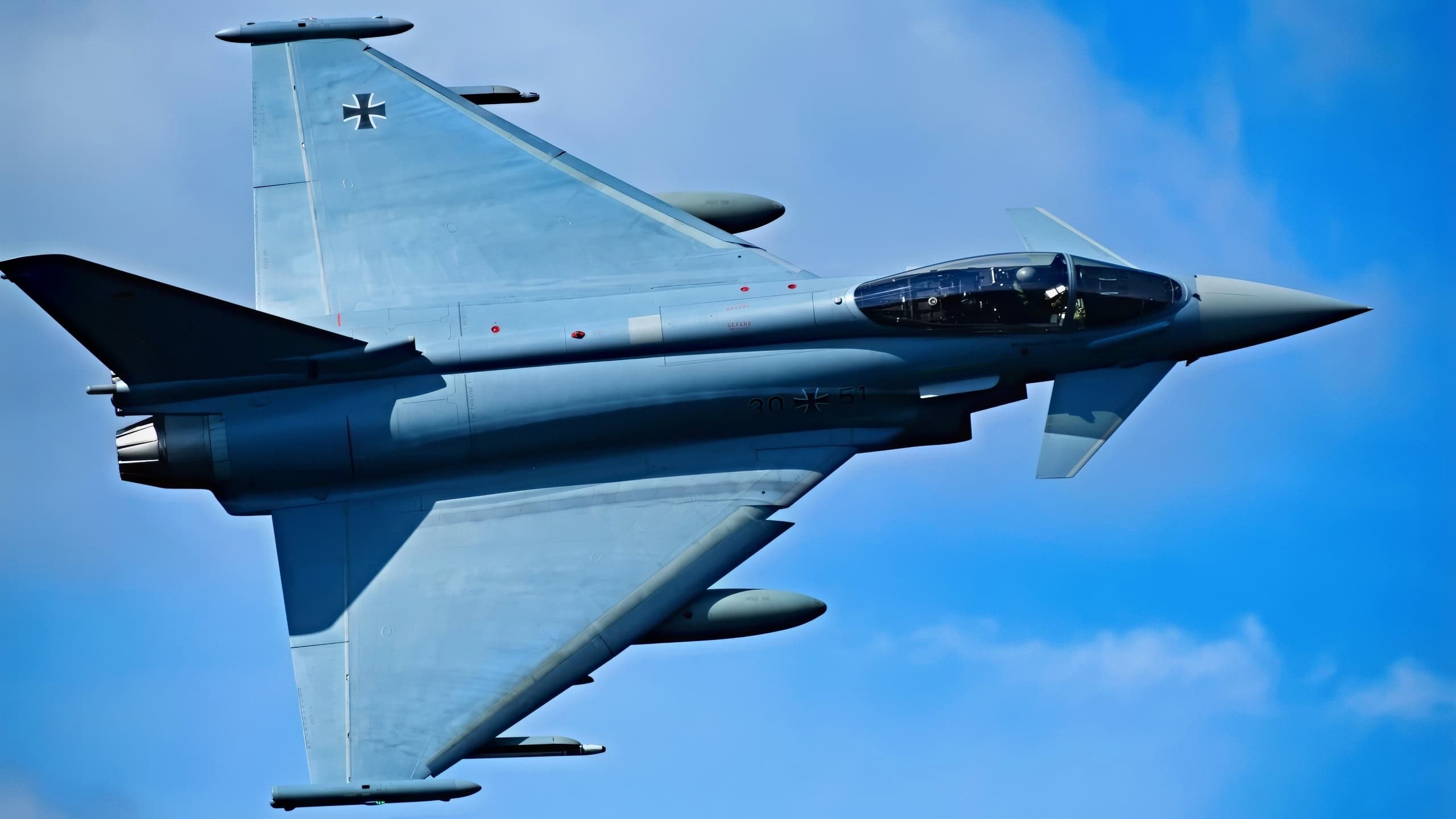
The Eurofighter Typhoon‘s very name symbolizes multinational unity within the continent of Europe, as the European Union does politically and the euro currency does monetarily. Indeed, in a manner of speaking, the Eurofighter does so even more emphatically than the EU or the Euro, since the United Kingdom remains one of the participating countries in the warbird’s manufacture.
So, what is the Eurofighter Typhoon’s origin story? And why is this 4.5-generation fighter jet still relevant?
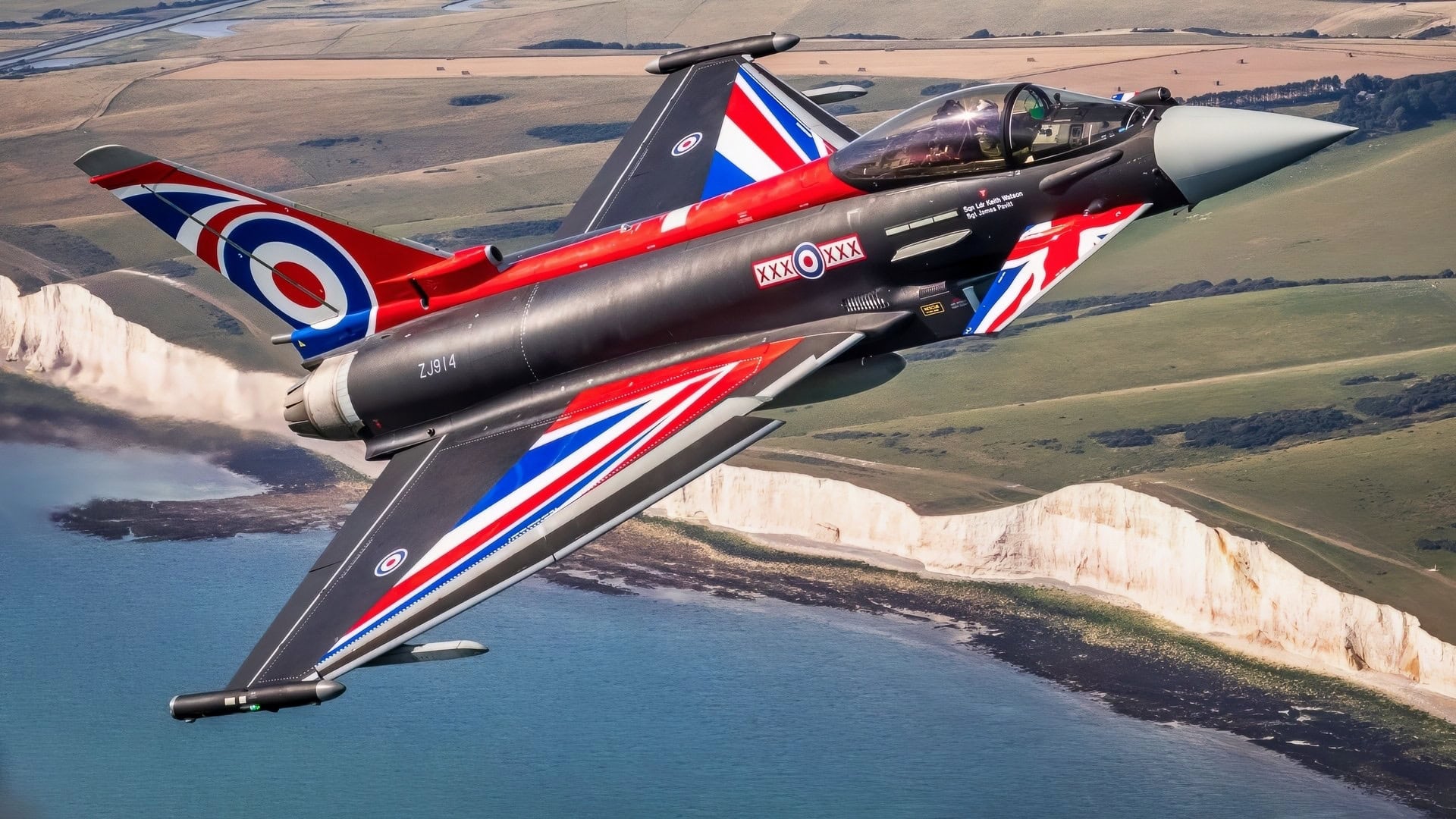
Eurofighter Typhoon Fighter NATO. Image Credit: British Government.
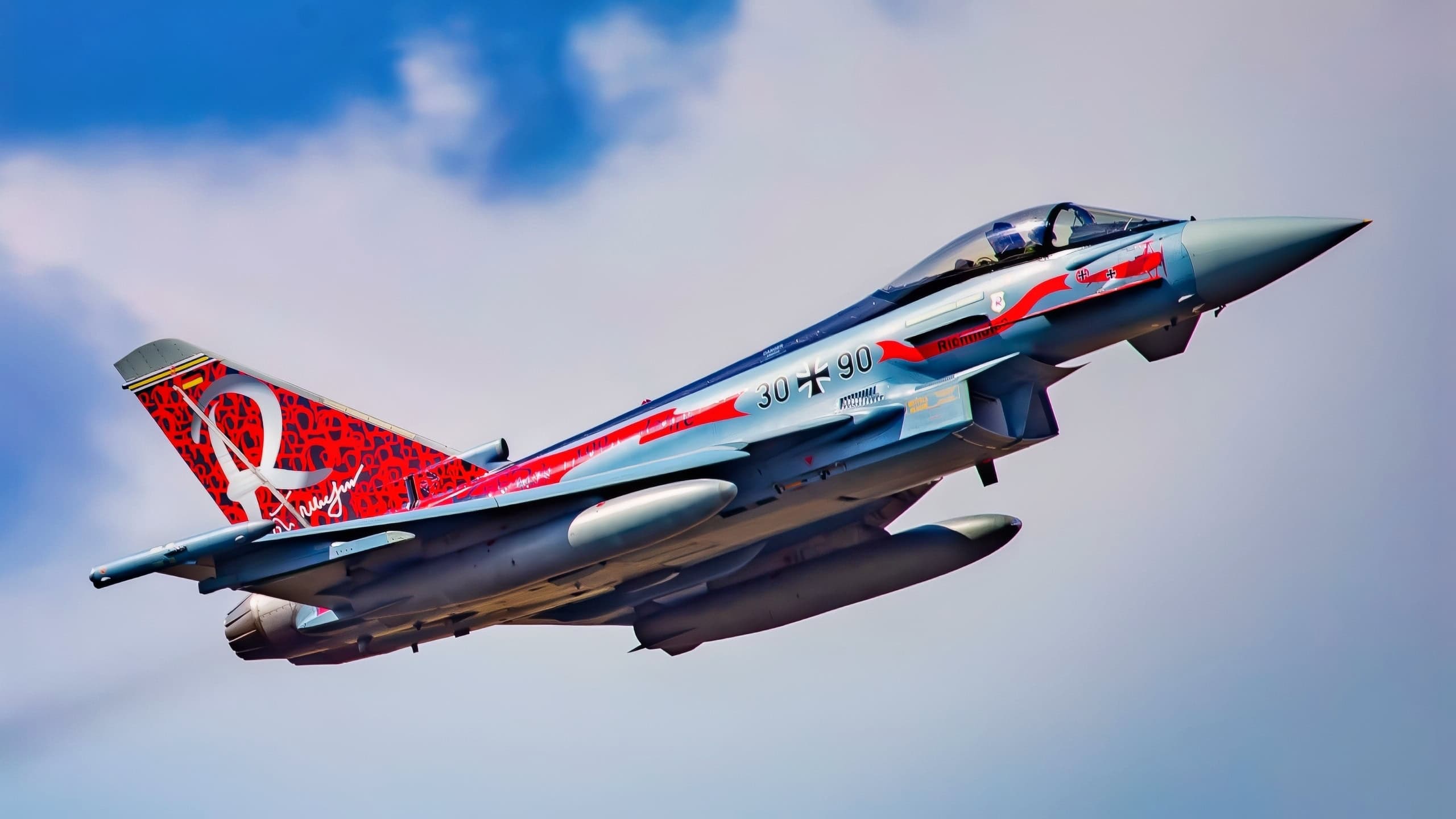
Eurofighter Typhoon In The Sky NATO. Image Credit: Creative Commons.
What’s In a Name? The Typhoon Naming Tradition
Speaking of the UK, the Eurofighter isn’t the first military warplane to have borne the Eurofighter Typhoon moniker.
During World War II, there was Great Britain’s Hawker Typhoon, a piston-engine, prop-driven Royal Air Force fighter-bomber that performed devastating rocket attacks against German radar stations along the coast and strafing attacks against Wehrmacht infantry and armor columns during the D-Day campaign.
Conceiving and Spawning the Eurofighter
The Eurofighter traces its roots all the way back to 1971, when the Vietnam War was still raging and third-generation fighters, including the F-4 Phantom II and MiG-21 “Fishbed” ruled the skies.
That year, the United Kingdom was looking for a more maneuverable and agile tactical aircraft to replace the SEPECAT Jaguar ground-attack plane, itself a pan-European collaborative product, which was about to enter service with the RAF.
This notion soon expanded to include an air superiority capability—ergo, it would be a multirole combat aircraft that could also replace the Harrier jump jet.
Meanwhile, over in West Germany, the Luftwaffe needed a new fighter jet—it had been using the U.S.-made Lockheed F-104 Starfighter since 1961. It was soliciting bids for its Taktisches Kampfflugzeug 90 (“Tactical Combat Aircraft 90”; TKF-90). Messerschmitt-Bölkow-Blohm (MBB) beat out Dornier and VFW-Fokker for the bid.
In 1979, MBB and British Aerospace presented a formal proposal to their respective governments for a collaboration to be known as the European Collaborative Fighter, or European Combat Fighter (ECF). In October of that same year, France decided to get in on the fun, as Dassault joined the ECF project. It was at this time that the Eurofighter moniker was first conjured up.
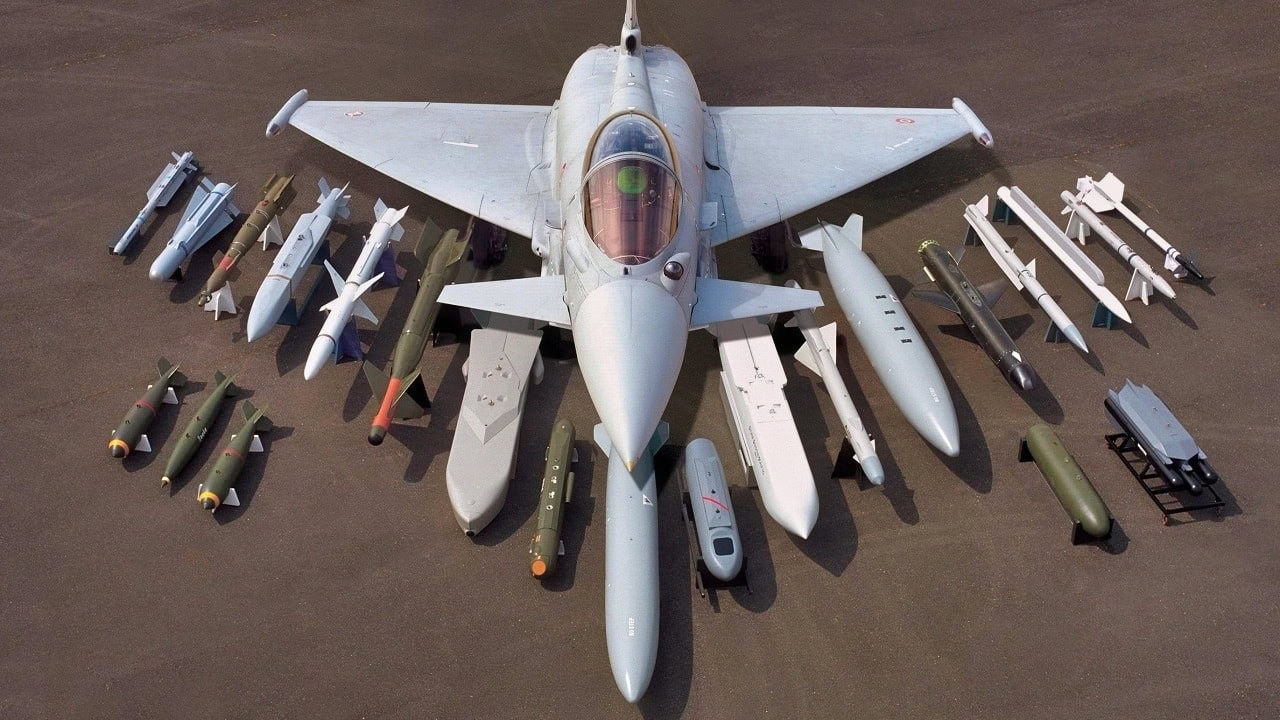
Eurofighter Typhoon. Image Credit: Creative Commons.
In 1981, the ECF program would collapse. However, the cooperative dream wasn’t dead yet—next came the notion of the Future European Fighter Aircraft (FEFA), which also brought Italy and Spain into the picture.
FEFA collapsed in 1985, partially because Dassault decided to pursue the Rafale instead.
However, this wouldn’t preclude French participation in the eventual Eurofighter.
France’s Airbus, British Aerospace, and Italy’s Leonardo worked through a joint holding company, Eurofighter Jagdflugzeug GmbH, to form the Eurofighter consortium. A sneak preview of the product came through the British Aerospace Experimental Aircraft Programme technology demonstrator on August 6, 1986.
Birthing the Eurofighter
The end result was a twin-engine, supersonic, canard-delta-wing, multirole fighter with a maximum airspeed of Mach 2.35. The DA1 prototype made its debut on March 27, 1994, which, according to the BBC, was “two years later than expected.” At the controls was test pilot Peter Weger. In Peter’s own words, “It was a good day — every first flight is exciting. I wanted to get the landing right because I knew there were cameras everywhere. My major aim was a smooth touchdown. I told myself, ‘Don’t make a fool of yourself,’ but the aircraft made it really easy.”
Incidentally, that prototype used Rolls-Royce Spey engines rather than the twin Rolls-Royce Eurojet EJ200 turbofans used by the current production-model Eurofighters. It remained in service for 11 years and is now on display at the Deutsches Museum Flugwerft Schleißheim in Munich.
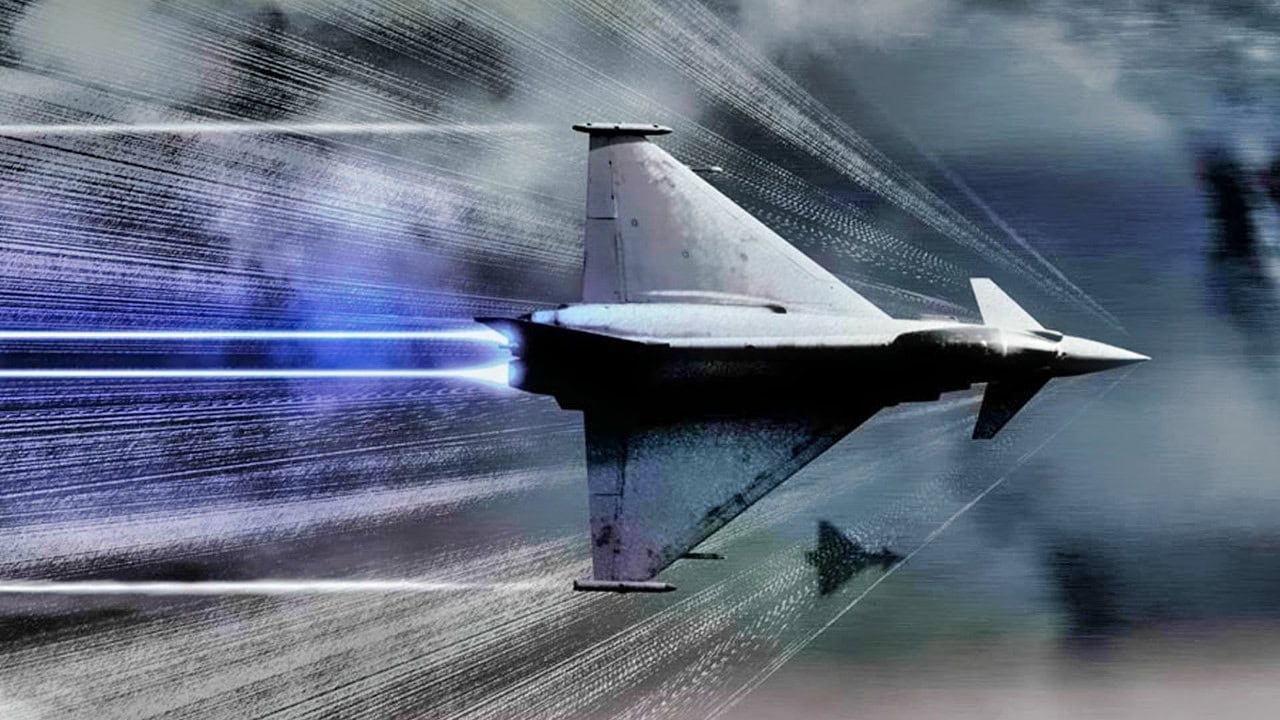
Eurofighter Typhoon Fighter. Image Credit: Creative Commons.
What’s In a Name, Part Deux
As for the Typhoon half of the name, that didn’t appear until September 1998, when the first production contracts were signed.
An estimated 592 airframes had been built as of 2023. Besides being used by the RAF, the Luftwaffe, the Italian Air Force, and the Spanish Air and Space Force, the warbird has also been adopted by Austria and the air forces of Kuwait, Oman, Qatar, and Saudi Arabia.
Staying Relevant: Operational History and Performance, Plus Pending Upgrades
The Typhoon first saw combat with the RAF during Operation Ellamy over Libya in 2011. In December 2015, the RAF’s Typhoon Force began an enduring commitment to Operation Shader in Iraq and Syria.
Meanwhile, the Royal Saudi Air Force has used the warbird extensively in its campaign against the Houthis in Yemen.
As for the plane’s continued relevance, it earned some bragging rights during the 2012 iteration of the RED-FLAG Alaska exercises, when German Typhoon drivers managed to “shoot down” several F-22 Raptors.
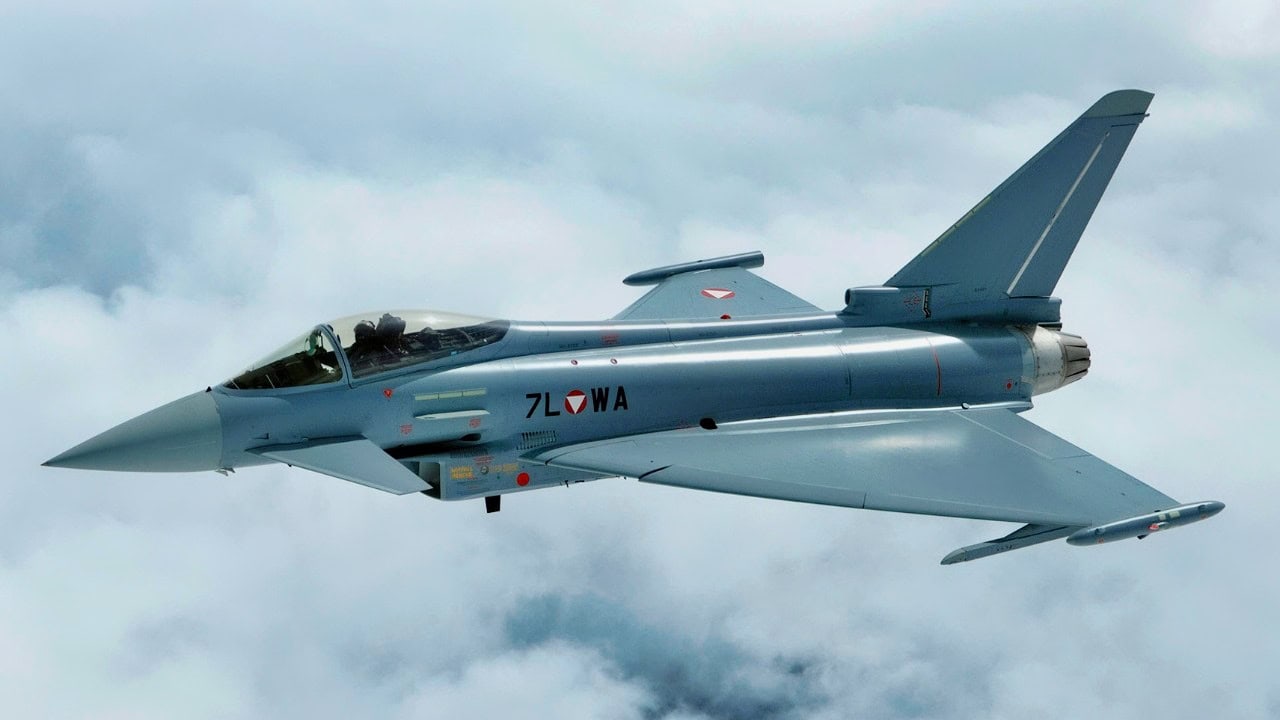
Eurofighter Typhoon. Image Credit: Creative Commons.
Granted, that was when the F-22 was still relatively new, and its pilots hadn’t fully mastered it yet.
What’s more, the exercise was somewhat skewed in the Eurofighters’ favor from the get-go.
Nonetheless, it was a huge source of prestige for the multinational planes’ crews and manufacturers alike.
The platform is also staying relevant via a so-called “Super Typhoon” concept—a series of major upgrades focusing on the Captor-E/ECRS advanced electronically scanned array radar; the integration of the deadly “no-escape” MBDA Meteor long-range air-to-air missile; and a complete modernization of the avionics, electronic warfare systems, and the engines.
The objective is to keep the aircraft combat-ready until the 2040s, to serve as an operational bridge between fourth-generation fighter fleets and future sixth-generation systems.
About the Author: Christian D. Orr
Christian D. Orr is a Senior Defense Editor. He is a former Air Force Security Forces officer, Federal law enforcement officer, and private military contractor (with assignments worked in Iraq, the United Arab Emirates, Kosovo, Japan, Germany, and the Pentagon). Chris holds a B.A. in International Relations from the University of Southern California (USC) and an M.A. in Intelligence Studies (with a concentration in Terrorism Studies) from American Military University (AMU). He is also the author of the book “Five Decades of a Fabulous Firearm: Celebrating the 50th Anniversary of the Beretta 92 Pistol Series,” the second edition of which was recently published.