
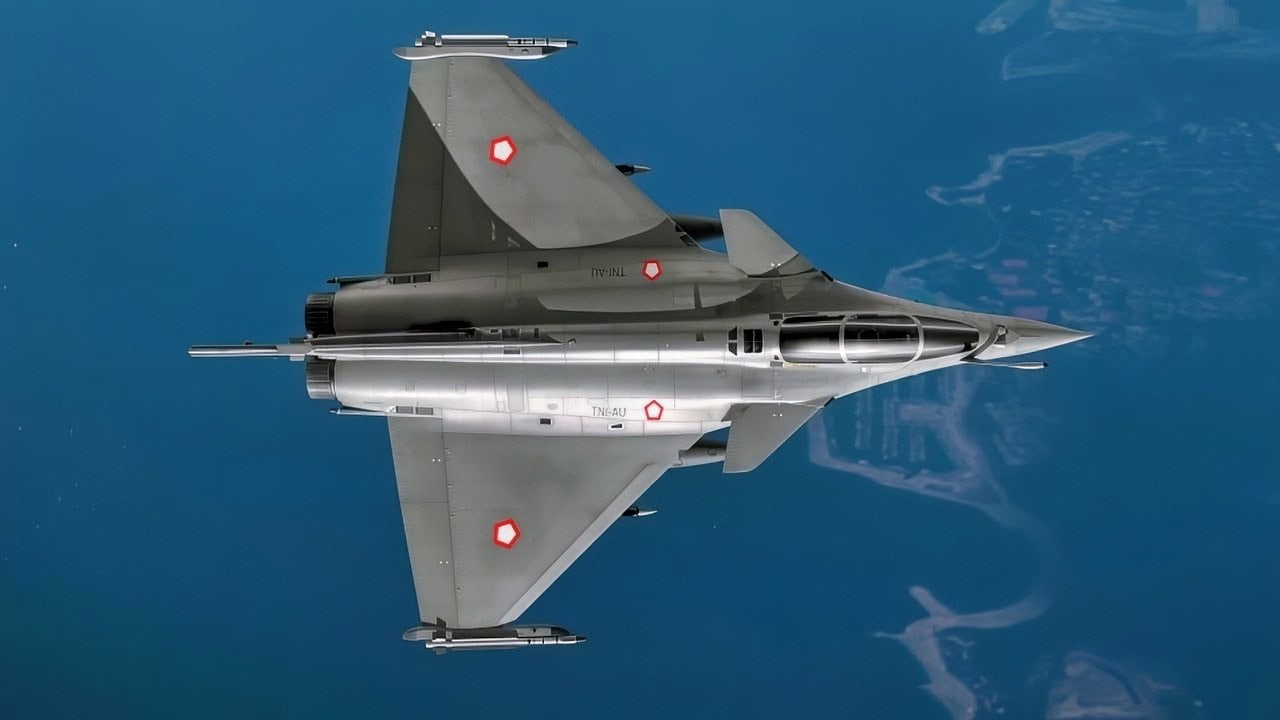
Dassault Rafale vs. Eurofighter Typhoon: Why Europe Built Two Fighters
European air forces are expanding and modernizing at speed, driven by a combination of the war in Ukraine and rising tensions with Russia, and by an increasing sense that dependence on the United States and its platforms (such as the F-35) may be risky.
But that rearmament has exposed something that, until now, was only really visible to defense analysts and those who are extremely well-read on the topic: Europe is divided over what kind of combat aircraft it should build and operate.
Europe’s most advanced fighter jets today are the Dassault Rafale and Eurofighter Typhoon – two perfectly capable platforms that will, inevitably, still need to be replaced.
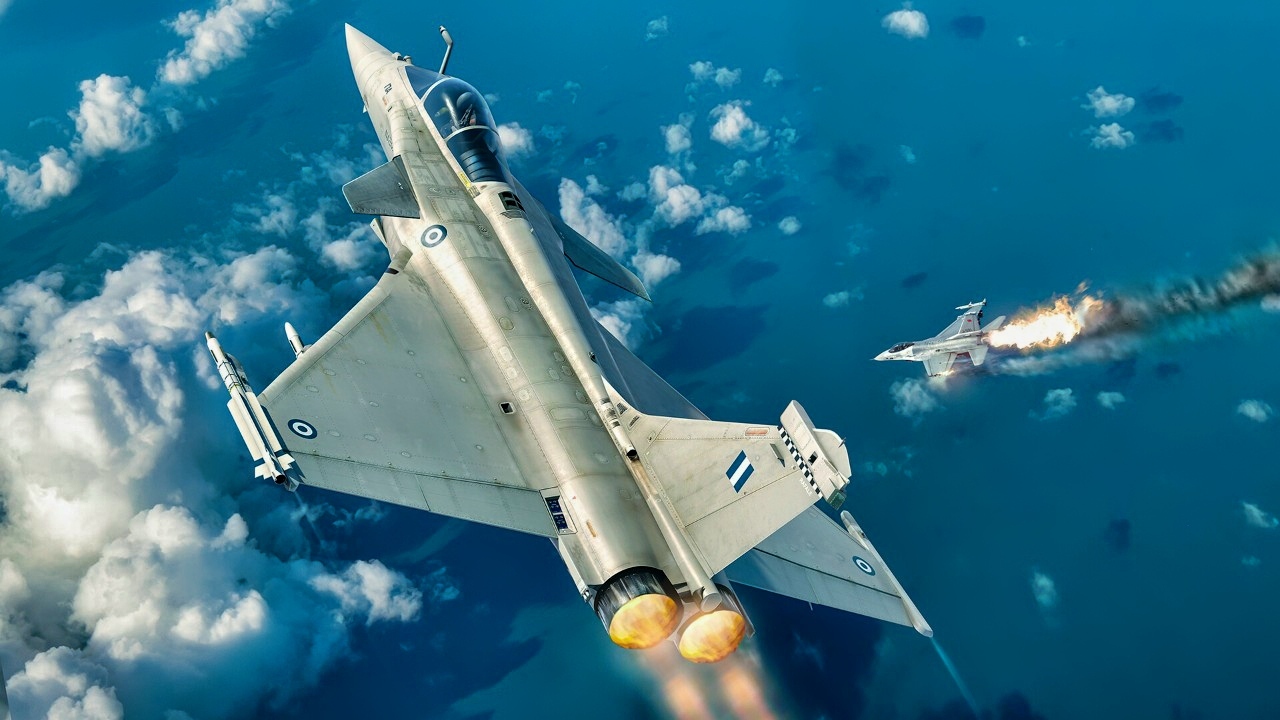
Dassault Rafale Fighter. Artist Created Image/Creative Commons.
Both are considered 4.5-generation fighters, meaning they incorporate advanced avionics and weapons systems but lack the full stealth capabilities of newer fifth-generation aircraft like the widely adopted F-35 from Lockheed Martin.
The aircraft appear similar on paper, with their twin engines and great maneuverability.
They are also both suited for air-to-air combat and ground attack. But the aircraft were also built for different missions and with different long-term goals.
Understanding how and why they differ requires going back to a single European program that ultimately split in two – a story that feels eerily similar to the ongoing controversy over today’s embattled FCAS program.
One Program That Became Two
The Rafale and Typhoon both originate from a joint European effort in the late 1970s and early 1980s to develop a next-generation fighter to replace ageing Cold War aircraft. The program, known as the European Fighter Aircraft (EFA), initially included the United Kingdom, Germany, Italy, Spain, and France.
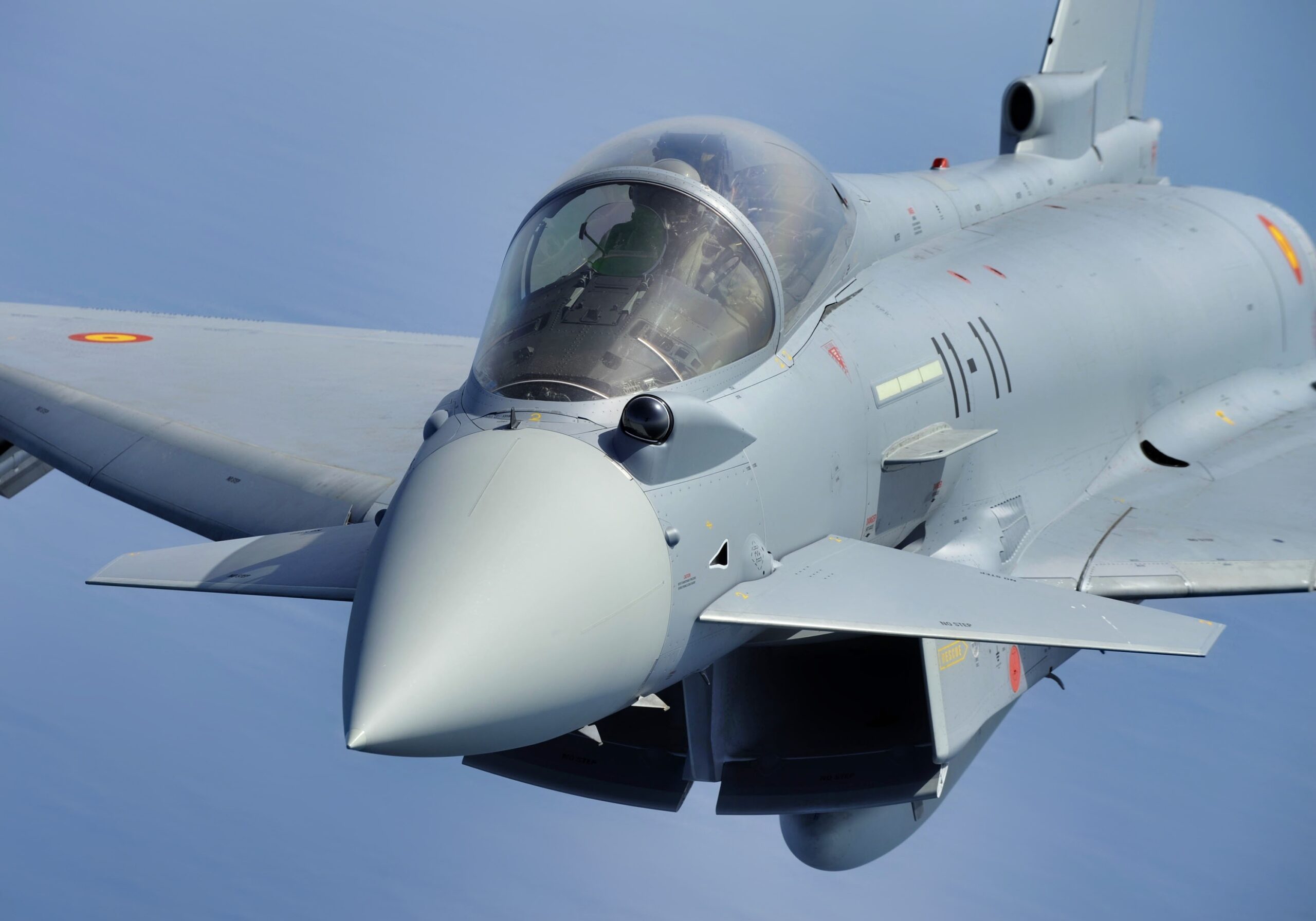
Eurofighter Typhoon Fighter. Image Credit: Creative Commons.
However, France withdrew from the programme in 1985, citing disagreements over design requirements and industrial control. Paris wanted a lighter, carrier-capable aircraft that could operate from its aircraft carriers and perform multiple mission types. The remaining partners prioritised a larger aircraft optimised for air superiority—specifically, intercepting Soviet aircraft at high speed and altitude.
As a result, the programme split. France developed the Rafale independently through Dassault Aviation, while the UK, Germany, Italy, and Spain continued with what became the Eurofighter Typhoon consortium. This divergence had long-term consequences. The Rafale became a fully sovereign French platform, with design, production, and export decisions controlled by Paris.
The Typhoon, by contrast, is managed through a multinational consortium that requires agreement among partner nations on upgrades, exports, and funding.
Designed for Different Purposes
The most important technical difference between the Rafale and Typhoon is its overall design philosophy. The Rafale was built from the outside as an “omnirole” aircraft, meaning it was designed to carry out multiple mission types on a single sortie. That includes air-to-air combat, precision strike, reconnaissance, and even nuclear delivery for France’s airborne deterrent.
It is also carrier-capable, meaning it can operate from French Navy aircraft carriers, which required structural reinforcement and specific landing systems. The Typhoon, by contrast, was originally designed as an air superiority fighter. Its primary role was to defeat enemy aircraft in high-intensity combat, particularly in Cold War Europe. As a result, it emphasises speed, climb rate, and manoeuvrability – key attributes for air-to-air engagements.
Over time, the Typhoon has been upgraded to conduct ground-attack missions, including precision-guided strikes. However, this capability was added later, rather than built into the aircraft from the beginning.
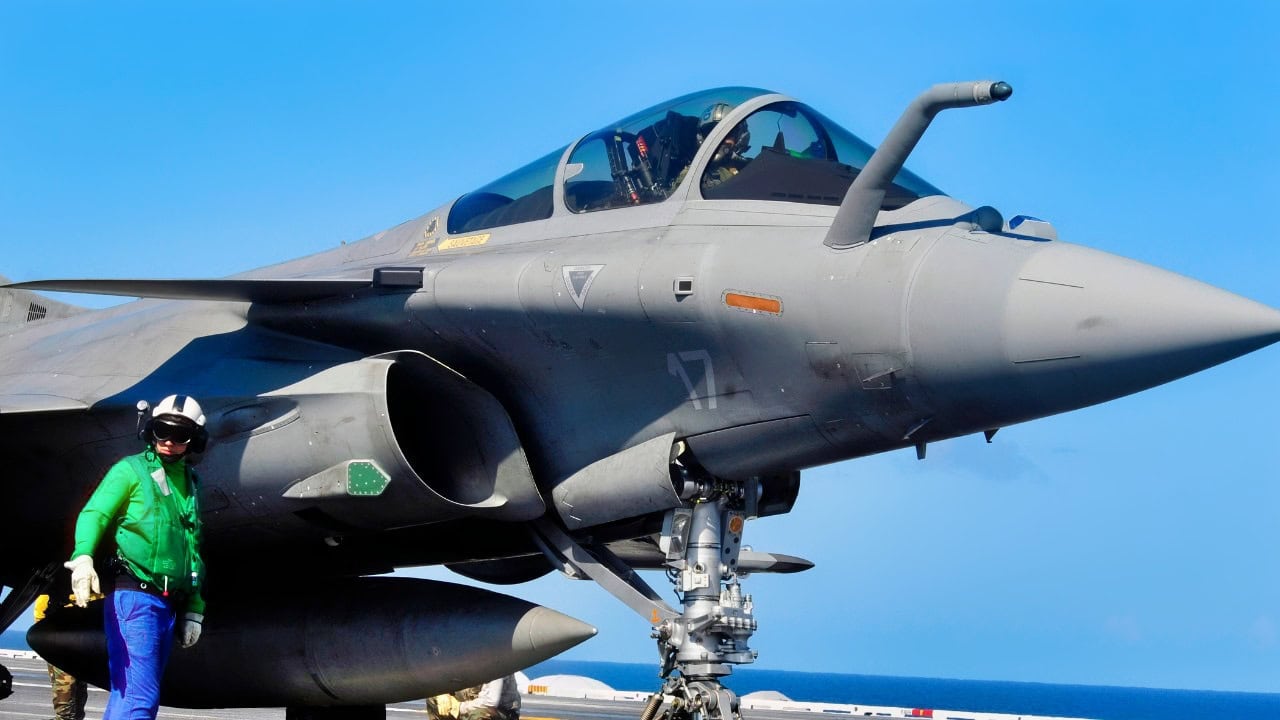
ATLANTIC OCEAN (July 19, 2008) A French F-2 Rafale fighter prepares to launch during combined French and American carrier qualifications aboard the aircraft carrier USS Theodore Roosevelt (CVN 71). This event marks the first integrated U.S. and French carrier qualifications aboard a U.S. aircraft carrier. The Theodore Roosevelt Carrier Strike Group is participating in Joint Task Force Exercise “Operation Brimstone” off the Atlantic coast until the end of July. (U.S. Navy photo by Mass Communication Specialist 3rd Class Christopher Hall/Released)
Combat Use and Real-World Global Performance
The difference in design philosophy is reflected in how these two aircraft have been used in real-world operations.
The Rafale has seen extensive combat use across multiple theatres. France has deployed it in Afghanistan, Libya, Iraq, and Syria, where it has conducted both air-to-air patrols and precision strike missions. The platform’s operational flexibility has contributed to its export success, too. The Rafale has been purchased by countries including India, Egypt, Qatar, and the United Arab Emirates, with deals often centering on the aircraft’s ability to perform a wide range of missions without requiring multiple aircraft types.
The Typhoon has also seen combat, including during NATO’s 2011 intervention in Libya, where it initially focused on air patrols before later conducting strike missions. However, the aircraft’s primary role has remained air policing and missions requiring quick reaction across Europe, where it intercepts and monitors Russian aircraft approaching NATO airspace. Export success for the Typhoon, however, has been a little more mixed. The Rafale has been widely used as a flexible, frontline combat aircraft, while the Typhoon has remained a more specialized option, even as its capabilities have expanded.
The Future for Eurofighter Typhoon and Dassault Rafale
Both the Rafale and Typhoon are expected to remain in service into the 2040s, but they are increasingly being overshadowed by two major developments. First is the growing dominance of the U.S.-built F-35, which has been purchased by multiple European countries, including the UK, Italy, and the Netherlands, due to its stealth capabilities and integration with NATO systems.
Second is the emergence of two competing European sixth-generation fighter programs.
The Future Combat Air System (FCAS), led by France, Germany, and Spain, is intended to eventually replace the Rafale and some Typhoon fleets. At the same time, Britain, Italy, and Japan are developing the Global Combat Air Program (GCAP), often referred to as Tempest, as a successor to the Typhoon.
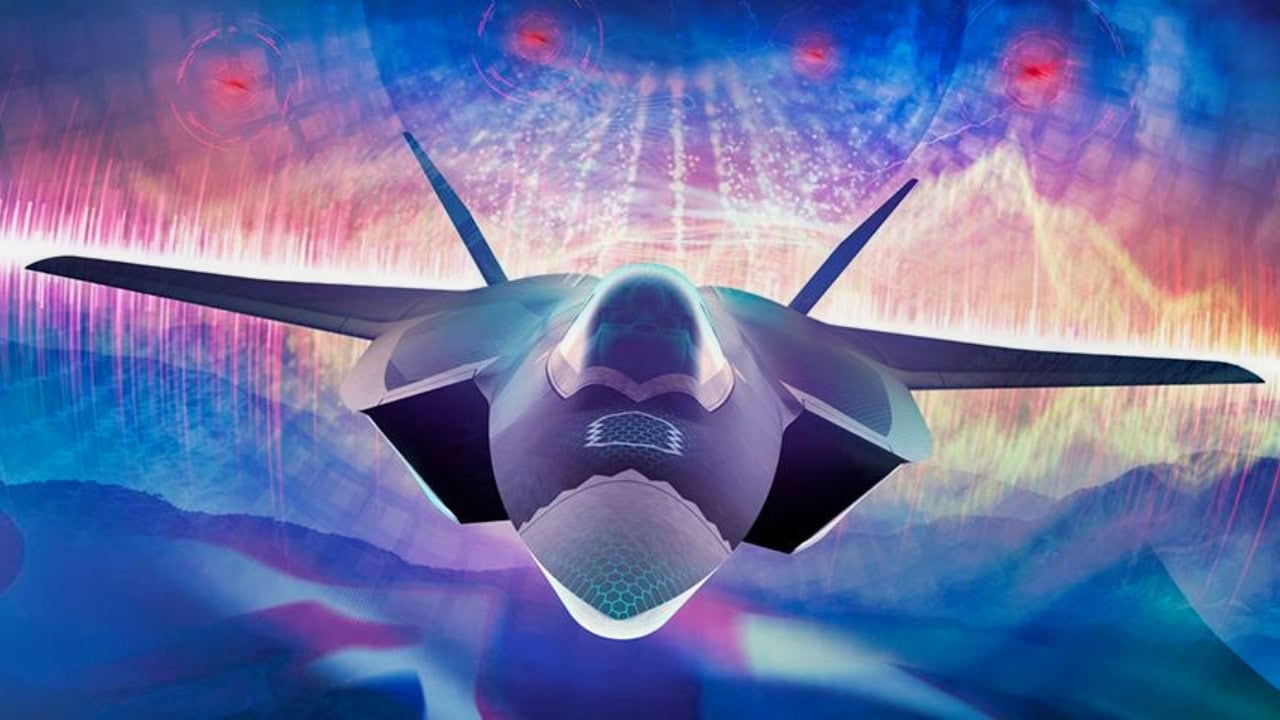
GCAP Fighter. Industry Handout Image.
About the Author: Jack Buckby
Jack Buckby is a British researcher and analyst specialising in defence and national security, based in New York. His work focuses on military capability, procurement, and strategic competition, producing and editing analysis for policy and defence audiences. He brings extensive editorial experience, with a career output spanning over 1,000 articles at 19FortyFive and National Security Journal, and has previously authored books and papers on extremism and deradicalisation.