
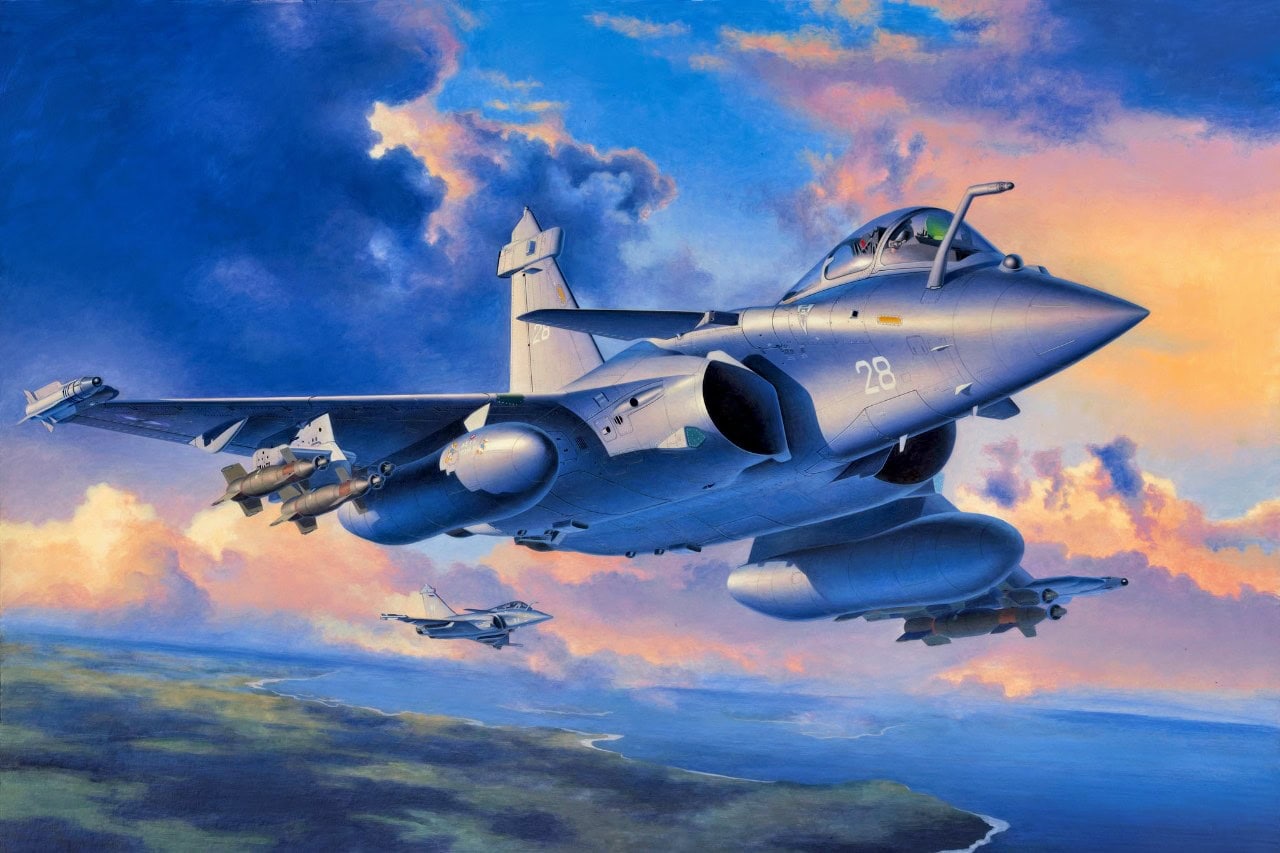
Key Points and Summary – The Dassault Rafale F5 “Super Rafale” is cementing its status as a top-tier “omnirole” fighter, notably securing a major deal with India for 26 carrier-based jets after New Delhi rejected U.S. F-35 and Russian Su-57 offers.
-Featuring the new M88 T-REX engine with 20% more thrust and advanced avionics, the F5 offers lethal 4.5-generation capability without the maintenance costs of stealth aircraft.
-However, despite export orders now surpassing domestic ones, the program faces a “supply chain” crisis with 228 jets on backlog and long-term concerns about its survivability in a sixth-generation world.
The Dassault Rafale Now Comes in Super Fighter F5
The Dassault Rafale is a twin-jet fighter aircraft capable of operating as a maritime fighter from aircraft carriers and as a land-based fighter.
It has performed exceptionally well on the open market, as Dassault has more export orders for the Rafale than domestic orders. This is due to its “omnirole” capability to perform multiple missions (air-to-air, ground attack, reconnaissance, etc.) in a single sortie, cost-effectiveness compared to stealthier fifth-generation fighters, proven performance in diverse environments, and the flexibility of its carrier-capable version.
Additionally, geopolitical factors, such as avoiding reliance on a single supplier (particularly the U.S. or Russia) and France’s willingness to include technology transfer in deals, contribute to its appeal.
The versatile Rafale can perform all combat aviation missions: air superiority and air defense, close air support, in-depth strikes, reconnaissance, anti-ship strikes, and nuclear deterrence.
The Rafale entered service with the French Navy in 2004 and with the French Air Force in 2006. Rafale is one of the most experienced fighter aircraft in the world. It has been combat-proven since 2007. Daussault’s export success with the fighter is well documented, as the company now has more export orders than domestic orders.
The Dassault Rafale Carries A Variety Of Powerful Munitions
The fourth-generation Rafale is a multirole (Dassault calls it an omnirole) aircraft. Dassault launched the Rafale program in the 1980s, as the French Navy and Air Force combined their requirements to develop a multirole aircraft that would replace seven different aircraft.
The Rafale can carry robust weapon systems across its 14 external hard points. These include the Meteor beyond visual range air-to-air missile, the Mica heat-seeking and radar-seeking air-to-air missile, the AIM-9 Sidewinder heat-seeking air-to-air missile, and the AIM-120 AMRAAM radar-guided missile for air-to-air missions.
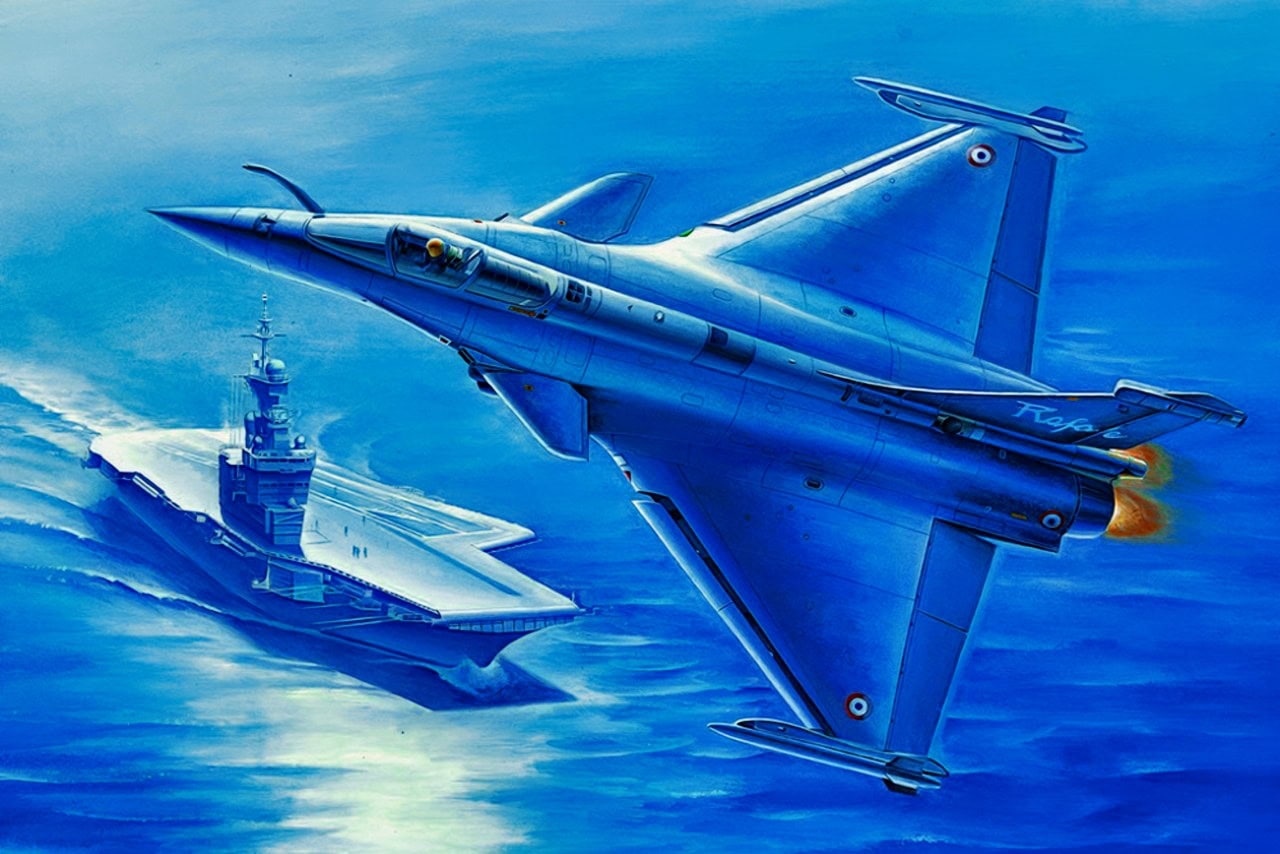
Dassault Rafale Fighter. Image Credit: Creative Commons.
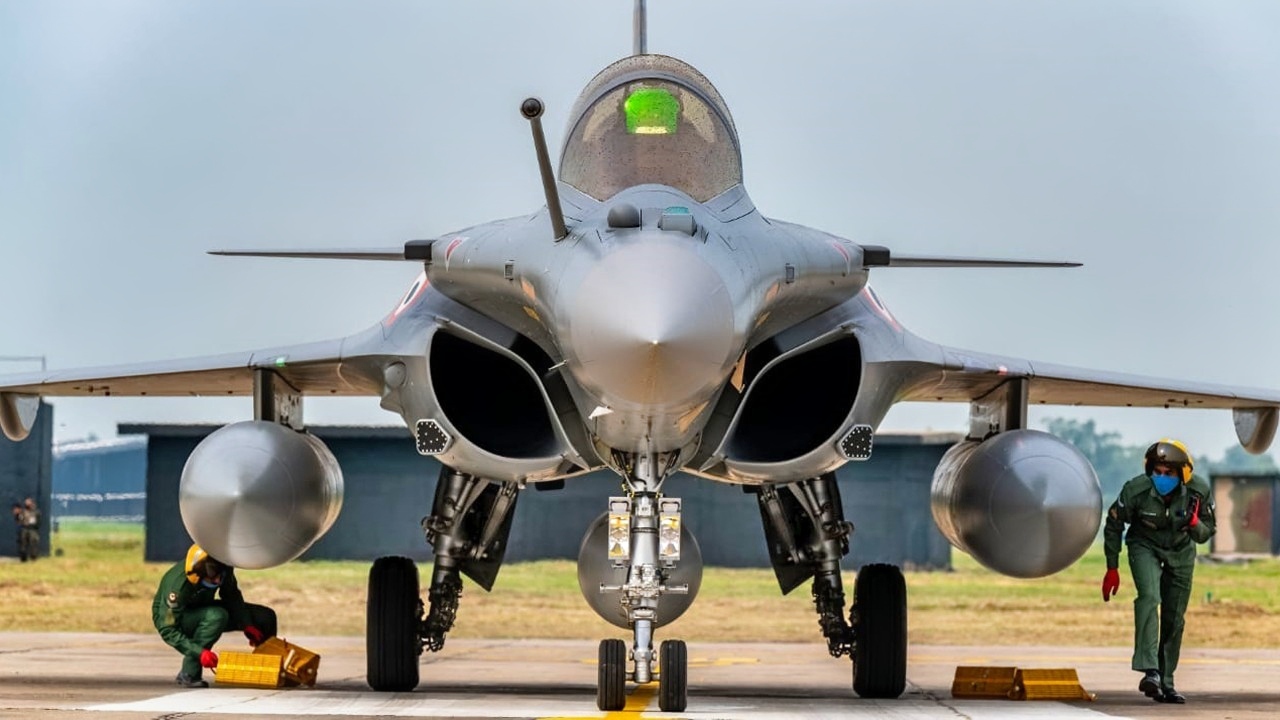
Dassault Rafale Fighter. Image Credit: Creative Commons.
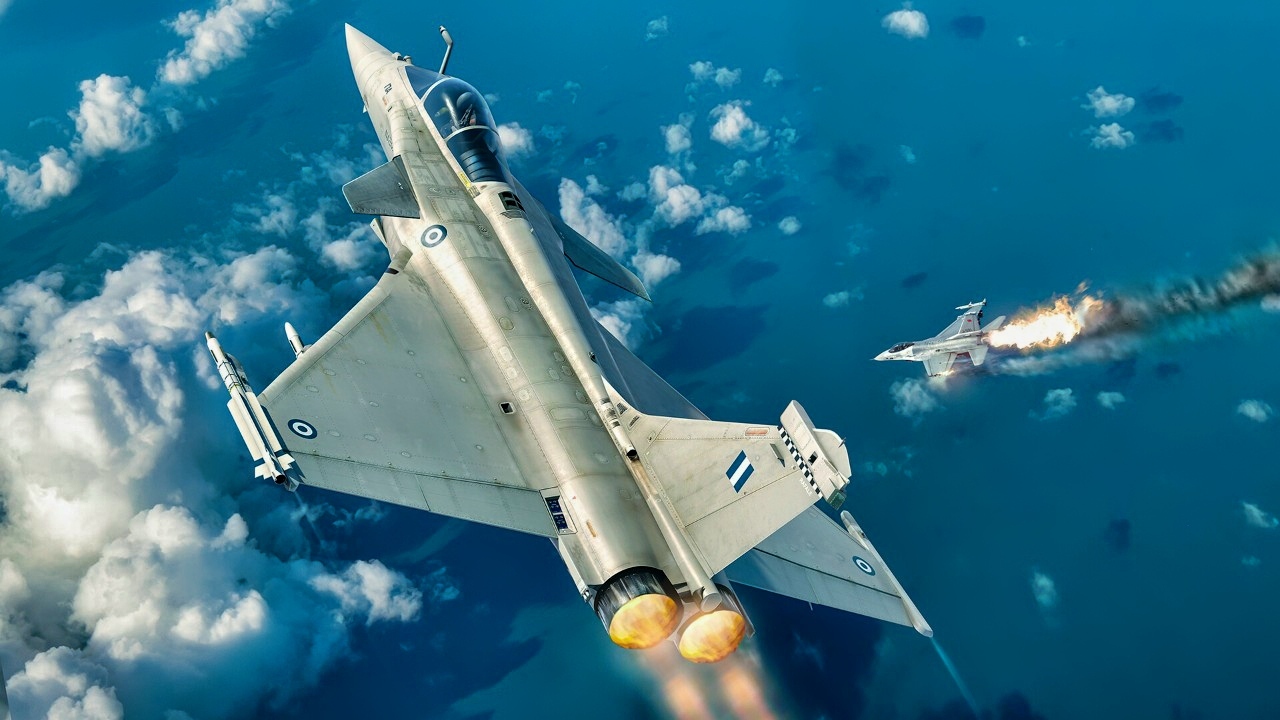
Dassault Rafale Fighter. Artist Created Image/Creative Commons.
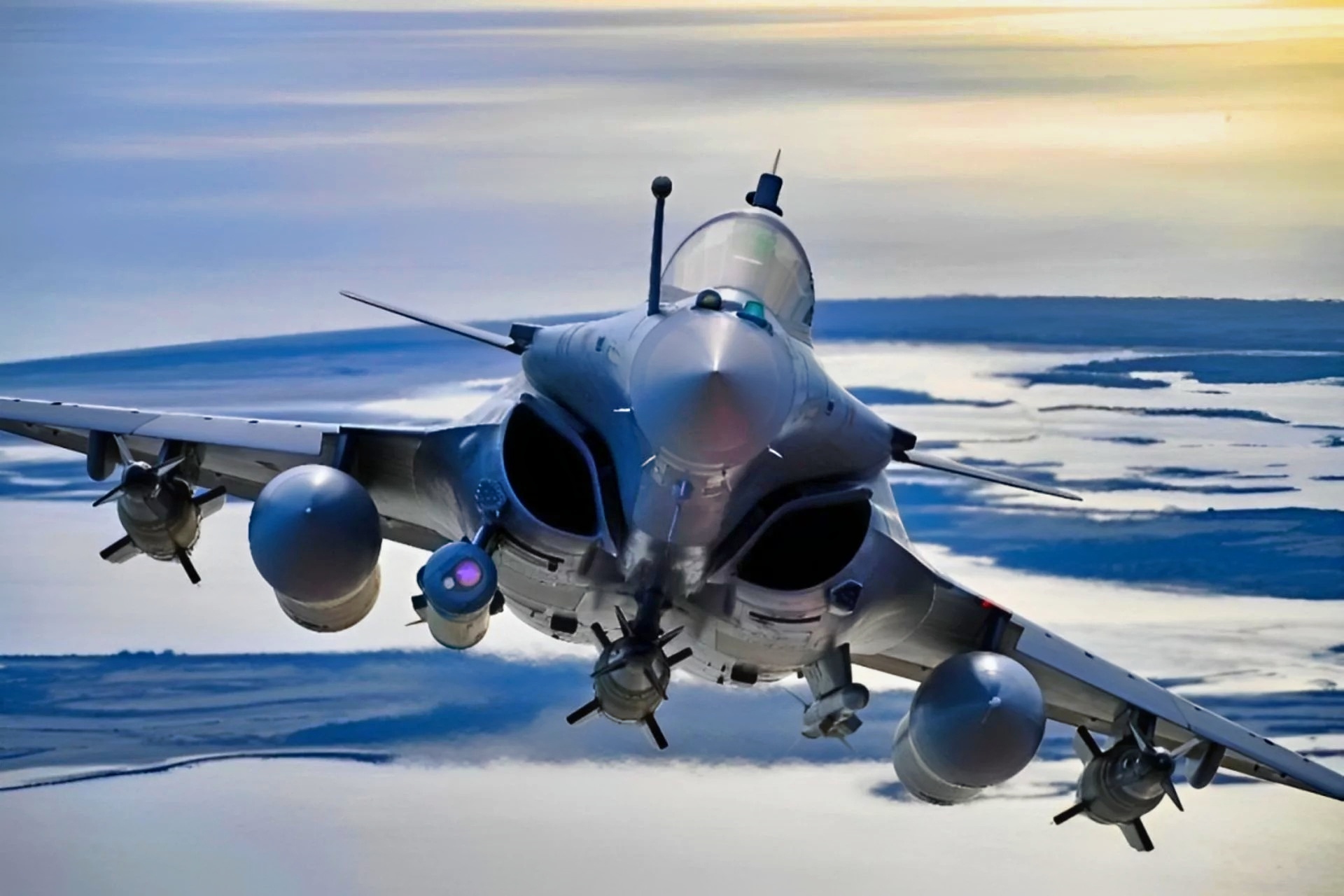
Dassault Rafale Fighter. Image Credit: Creative Commons.

Dassault Rafale Fighter from France. Image Credit: Creative Commons.
It carries the AGM-84 Harpoon anti-ship missiles, the SCALP-EG stand-off cruise missile, the Hammer air-to-ground munition, the AM-39 Exocet anti-ship missile, as well as conventional and smart bombs for air-to-surface missions.
The aircraft has an external load capacity of over 20,000 pounds. The Rafale also packs a powerful Nexter 30M791 30mm cannon with 2,500 rounds.
The F-5 Super Rafale Is A Very Capable Dogfighter
The Dassault F5 Super Rafale is an excellent fighter jet. It’s a highly versatile, multirole aircraft with advanced avionics, a strong electronic warfare suite, and impressive maneuverability.
Safran is developing an upgraded version of the M88 engine for the Dassault Rafale F5, named the M88 T-REX. This enhanced engine will deliver a 20 percent increase in thrust over the current M88, reaching nine metric tons (88.2 kilonewtons/19,841 pounds) with afterburners.
The M88 T-REX will enhance the Rafale’s performance and capabilities without necessitating changes to the aircraft’s airframe and is slated for integration with the Rafale F5.
The F-5’s upgraded RBE2 radar and electronic warfare suite provide unprecedented situational awareness, enabling earlier detection and tracking of multiple targets and simultaneous operation of numerous radar modes.
The fighter jet is equipped with an Active Electronically Scanned Array (AESA) RBE2 radar that can track up to 40 targets simultaneously and engage four targets simultaneously.
The Rafale’s delta wing and canard configuration, combined with fly-by-wire controls, give it exceptional agility. It can fly deep-strike missions over 1,000 km without refueling and cruise at Mach 1.8 (1,381 mph) with afterburners.
Dassault Strikes Big Deal With India, After US/Russia Strike Out
The US was trying to court India with a deal to supply it with F-35 Lightning II stealth, fifth-generation, multirole fighters. The US was rejected.
Then Russia stepped up and offered the Su-57 bundled with its Su-35.
And despite bold predictions by the Kremlin about increasing production, in 2024, Russia produced just 6 Su-57s, while producing only 8-10 Su-35s. Could the Russian manufacturing plants fulfill large orders for their own Aerospace Forces and for India’s needs? Doubtful, considering how bad the economy is.
Earlier this spring, France and India struck a deal to acquire 26 Rafale M carrier-borne fighters, approved in April, which will share training, maintenance, weapons, and spare parts with the Air Force, boosting joint operations and reducing logistics complexity.
India already operates a fleet of 36 Rafales that it purchased in 2018.
During the July 2025 escalation with Pakistan, Rafales played a central role in deep-strike missions, air superiority patrols, and suppression of enemy air defenses.
However, The Super Rafale Is Not A Stealth Fighter
The issue is that the aircraft is not a stealth fighter like the F-22 or F-35, and while the Rafale incorporates design features to reduce its radar cross-section, making it more difficult to detect than most 4th-generation fighters, it still lacks stealth.
It’s considered a 4.5-generation fighter, with a focus on multirole capabilities and advanced electronic warfare systems rather than pure stealth. The aircraft may appeal to governments averse to cost, complexity, or dependence on US platforms like the F-35.
Some countries are choosing the Rafale to reduce their reliance on the United States as a sole defense supplier, especially given political shifts and concerns about potential future restrictions on technology or parts. One overblown myth is the so-called “Kill Switch” of the F-35, which has led countries to opt to buy aircraft elsewhere.
However, France has struggled with post-pandemic supply chain issues, as have many other countries. There are as many as 228 Rafales on backorder due to these issues. Dassault has enjoyed a stellar reputation for producing aircraft on time. It isn’t known if they can fix these issues. And it is just as expensive as an F-35.
The Rafale is a highly capable and versatile fighter jet that has proven itself in combat and gained significant international appeal in the export market. It’s a strong contender in the modern fighter jet market, particularly for nations seeking a flexible, powerful aircraft with a wide range of capabilities that may not require stealth.
However, as many countries develop sixth-generation fighters, relying on a fourth-generation, even a 4.5-generation, fighter is not a long-term solution.
The F-35 is much more than a fighter; it’s an intelligence-gathering, stealth-enabled, data-fusing node designed to operate as part of a larger, digitally integrated force. The Next Generation Air Dominance Program, which will include the F-47 and the F/A-XX fighters, will be able to dominate airspace while utilizing Collaborative Combat Aircraft, boosting fleet capacity, enhancing missions (air-to-air, electronic warfare, ISR, targeting) through AI, human-machine teaming, and providing “affordable mass” to protect pilots and project power in contested airspace.
A 4.5-generation aircraft, even one as good as the Rafale, has a limited window during which it can operate safely. France is developing its own sixth-generation fighter, and if it succeeds, the Rafale could operate alongside stealth fighters, as the F-15EX does.
But surviving on its own is not an option.
About the Author: Steve Balestrieri
Steve Balestrieri is a National Security Columnist. He served as a US Army Special Forces NCO and Warrant Officer. In addition to writing on defense, he covers the NFL for PatsFans.com and is a member of the Pro Football Writers of America (PFWA). His work was regularly featured in many military publications.