
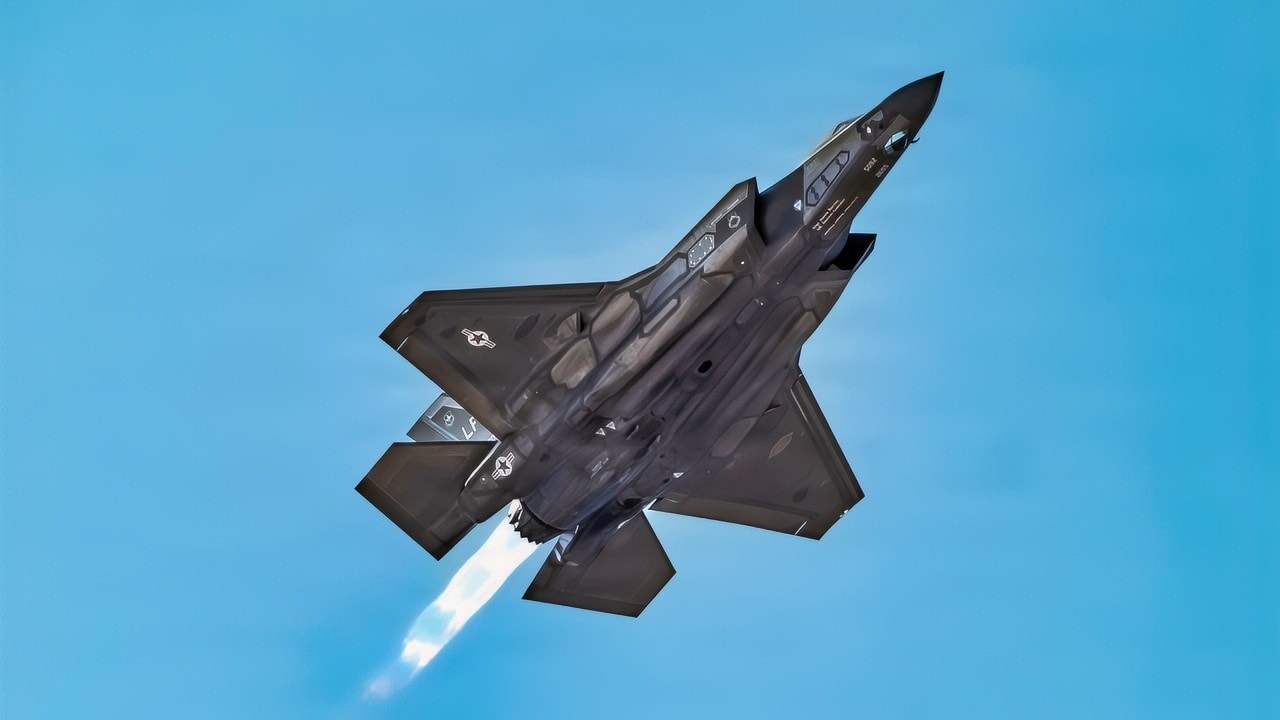
Synopsis: The F-35 remains the backbone of U.S. tactical airpower, but 2025 exposed how politics and budgets can rattle even the world’s dominant stealth fighter program.
-As President Trump’s second term reshaped alliances, some governments reassessed F-35 commitments, citing cost, sustainment burdens, and strategic independence.
-Yet the aircraft’s core advantages—stealth, sensor fusion, and real-time networking—still make it a centerpiece of modern, multi-domain operations.
-For Washington, the F-35 is not just a jet but a system that binds allies together through shared tactics and interoperability.
-Its massive industrial footprint and global user base reinforce a simple reality: the F-35 is not going away.
The F-35 Fighter Isn’t Going Anywhere
The F-35 is a core staple of the United States’ air wing across all of its branches.
With over 1,000 airframes delivered worldwide, it is the most widely produced and distributed stealth aircraft today, making it a beloved component of many air forces.
In the year 2025, however, the aircraft had some rough moments.
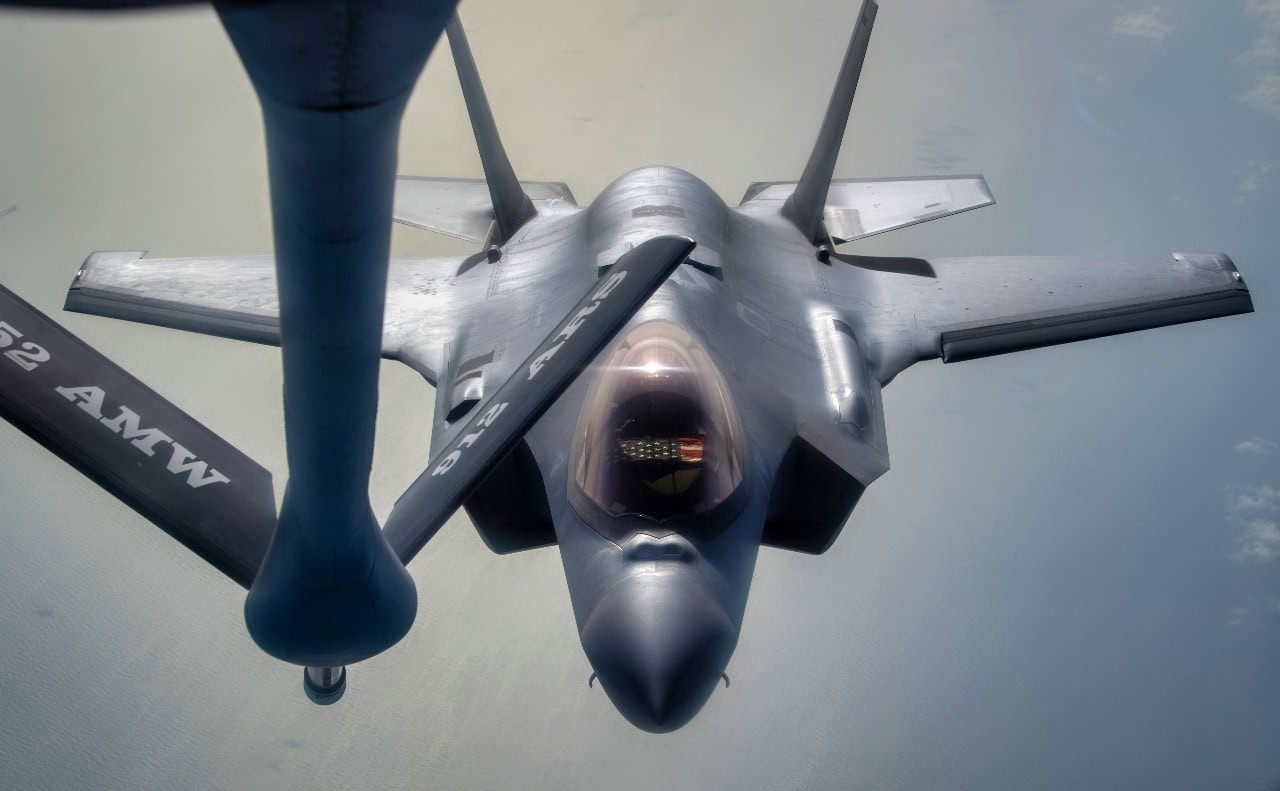
A U.S. Air Force F-35 Lightning II approaches a U.S. Air Force KC-135 Stratotanker over the U.S. Central Command area of responsibility, July 22, 2020. The F-35 Lightning II is an agile, versatile, high-performance, multirole fighter that combines stealth, sensor fusion and unprecedented situational awareness. (U.S. Air Force photo by Airman 1st Class Duncan C. Bevan)
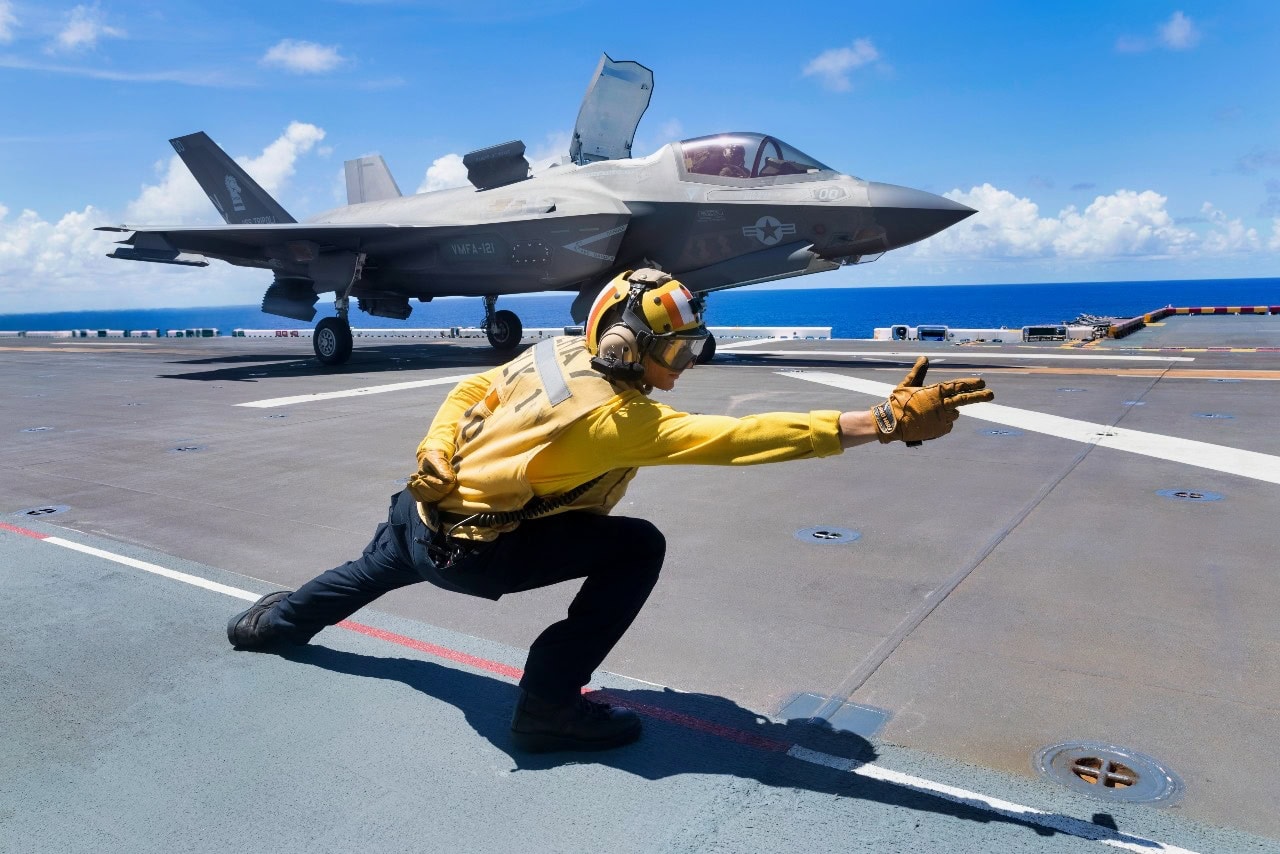
U.S. Navy Aviation Boatswain’s Mate (Handling) 3rd Class Nicolas Fareri launches a U.S. Marine Corps F-35B Lightning II aircraft with Marine Fighter Attack Squadron 121 off the amphibious assault carrier USS Tripoli (LHA 7) during Valiant Shield 2022 (VS22), June 13, 2022. Exercises such as Valiant Shield allows the Indo-Pacific Command Joint Task Force the opportunity to integrate forces from all branches of service to conduct long-range, precise, lethal, and overwhelming multi-axis, multi-domain effects that demonstrate the strength and versatility of the Joint Task Force and our commitment to a free and open Indo-Pacific. (U.S. Marine Corps photo by Sgt. Jackson Ricker)
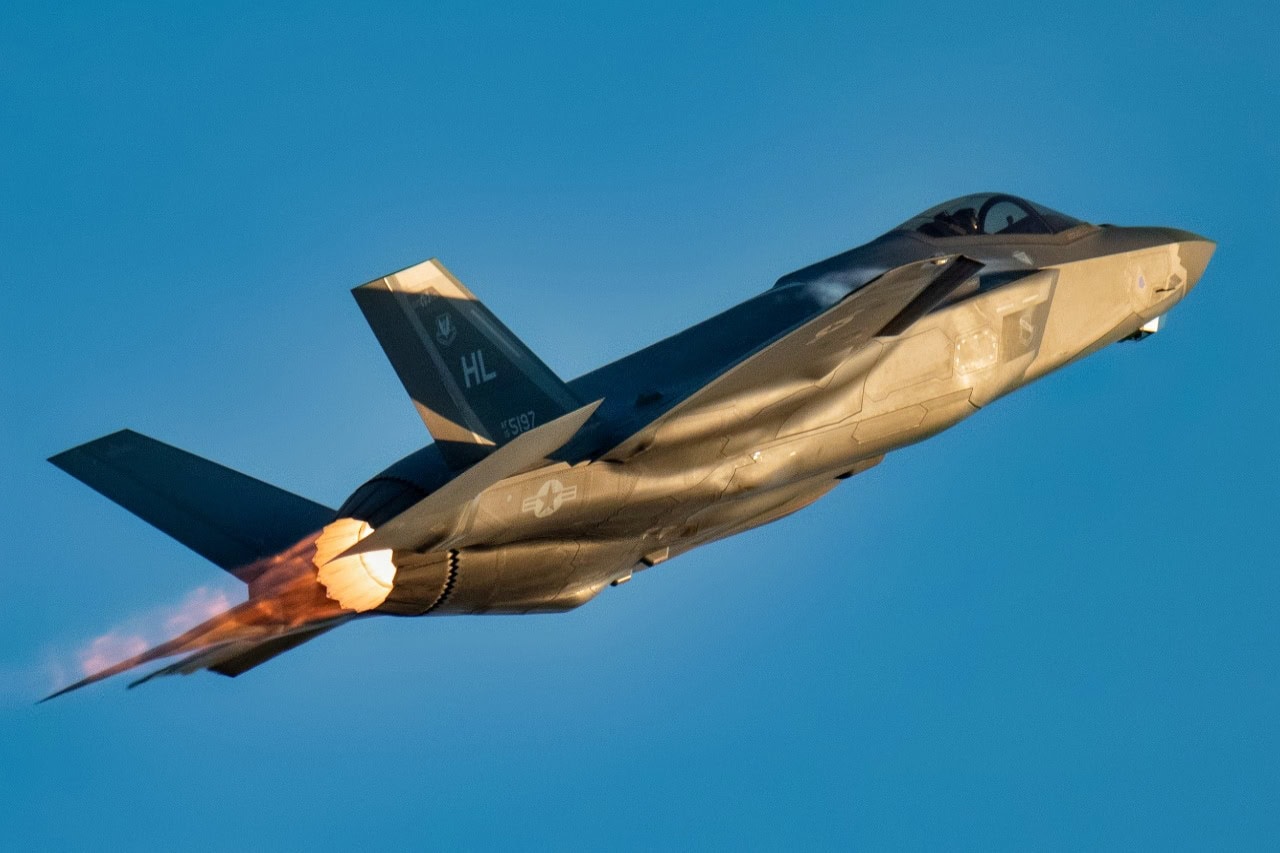
U.S. Air Force Major Kristin “BEO” Wolfe, F-35A Lightning ll Demonstration Team pilot and commander, flies during sunset over Mathers Airport, Calif., Sept. 24th, 2021, at the California Capital Airshow. The team consists of approximately 15 total Airmen to include the pilot and commander, pilot safety officers, superintendent, team chief, maintenance Airmen, aircrew flight equipment specialists, and public affairs personnel. (U.S. Air Force photo by Staff Sgt. Thomas Barley)
With the start of President Trump’s second term, political disagreements have shifted the international perspective on the F-35, leading to several orders being reconsidered or outright canceled.
Despite these setbacks, the stealth fighter remains the fighter of choice for both the U.S. and its allies worldwide.
A Rough 2025 for the F-35
2025 has been somewhat of a rough year for the F-35.
After President Trump assumed his second term in office, relations between the U.S. and some of its western allies began to falter, leaving the F-35 as the unfortunate casualty of the political squabbles.
Canada, which had always been skeptical of the aircraft, launched a review of its procurement agreement for the fifth-generation stealth fighter, threatening to cancel its deal altogether.
Despite the RCAF’s recommendations in favor of the F-35, the government still expressed concerns over the aircraft, looking instead at Sweden’s JAS 39 Gripen as a potential alternative.
Spain went one step further, outright cancelling its F-35 procurement deal in August 2025. Officially, Spain argued that the aircraft was simply too expensive to be viable in its Air Force.
With a per-unit cost of 120 million Euros and 40 thousand Euros per flight hour, Spanish news outlets slammed the stealth fighter for its high sustainment costs and troubled development history, arguing that it simply did not provide enough bang for its buck.
Spain officially ruled out the F-35 as its next fighter, stating that it would choose between the Eurofighter Typhoon and the Future Combat Air System (FCAS) instead.
Why the U.S. Still Loves Its Premier Stealth Fighter
While the F-35 has encountered several setbacks in 2025, the U.S. remains satisfied with it. At the heart of the aircraft’s success is its technological superiority.
Aptly described as a flying supercomputer, the aircraft integrates multiple advanced capabilities into a single platform. Its stealth design incorporates radar-absorbing materials and a low-observable airframe, making it difficult for enemy radar systems to detect.
This allows the F-35 to penetrate contested airspace and conduct missions with reduced risk of interception. Equally important is its sensor fusion capability, which combines data from radar, infrared, and electronic warfare systems into a single, coherent picture for the pilot.
This gives the F-35 unmatched situational awareness, enabling faster and more informed decision-making. Furthermore, the aircraft is designed to operate as part of a networked force, sharing real-time data with other aircraft, ground forces, and naval assets.
This makes it a force multiplier in joint operations. Its versatility is another defining feature, with three variants, the F-35A for conventional takeoff and landing, the F-35B for short takeoff and vertical landing, and the F-35C for carrier-based operations, allowing it to serve the U.S. Air Force, Marine Corps, and Navy, as well as allied forces with different operational needs.
F-35 Is Too Big to Fall
The F-35’s prominence also reflects its strategic role in U.S. military doctrine. Modern warfare increasingly involves integrated operations across land, sea, air, space, and cyberspace.
The F-35’s ability to gather and share information makes it a key enabler of these multi-domain operations.
Possessing a fleet of stealth fighters signals technological and military dominance, enhancing deterrence and power projection.
The F-35 strengthens the U.S.’s ability to deter adversaries and reassure allies, reinforcing its global leadership role. Additionally, the program was conceived to replace aging platforms such as the F-16, AV-8B Harrier, and F/A-18 Hornet. Consolidating multiple roles into one aircraft reduces logistical complexity and long-term costs, making the F-35 a cornerstone of future air power.
The F-35 program is one of the largest defense projects in history, with an estimated lifetime cost exceeding $1 trillion. Its economic footprint contributes significantly to its prominence.
The program supports hundreds of thousands of jobs across the U.S. defense industrial base, creating strong political and economic incentives to sustain and expand it. Internationally, the F-35 is not just an American aircraft; it is a multinational effort involving partner nations such as the United Kingdom, Italy, Australia, and Japan.
These countries invested in the program early, ensuring interoperability and shared technological benefits. Beyond the original partner nations, the F-35 has attracted buyers worldwide, including Israel, South Korea, and Finland. This widespread adoption reinforces its status as the dominant fifth-generation fighter globally.
The F-35’s adoption in allied air forces further solidifies its position. NATO and other U.S. allies increasingly rely on the F-35, creating a common platform that simplifies joint operations and logistics. By selling the F-35 to allies, the U.S. strengthens defense ties and ensures that partner nations remain integrated into its security architecture.
For countries operating the F-35, access to advanced capabilities that would be difficult to develop independently enhances their deterrence posture and operational effectiveness.
About the Author: Isaac Seitz
Isaac Seitz, a Defense Columnist, graduated from Patrick Henry College’s Strategic Intelligence and National Security program. He has also studied Russian at Middlebury Language Schools and has worked as an intelligence Analyst in the private sector.