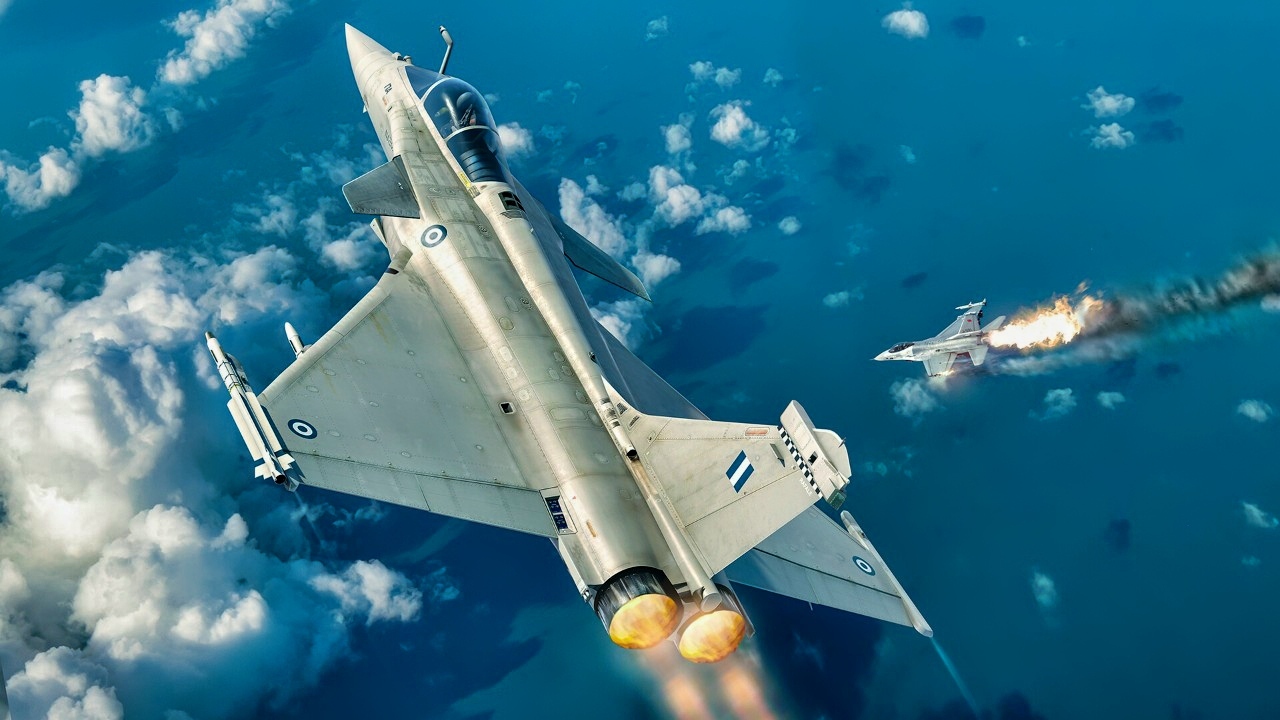
Synopsis – A Chinese state TV report offered a rare look inside PLA wargaming—showing Shenyang J-16 “red” aircraft facing Rafales as the “blue” aggressor force.
-The simulation, staged in Xuchang with multiple PLA units, highlighted newly developed platforms that combine AI, big data, and real-time engines, though it disclosed no assumptions or results.
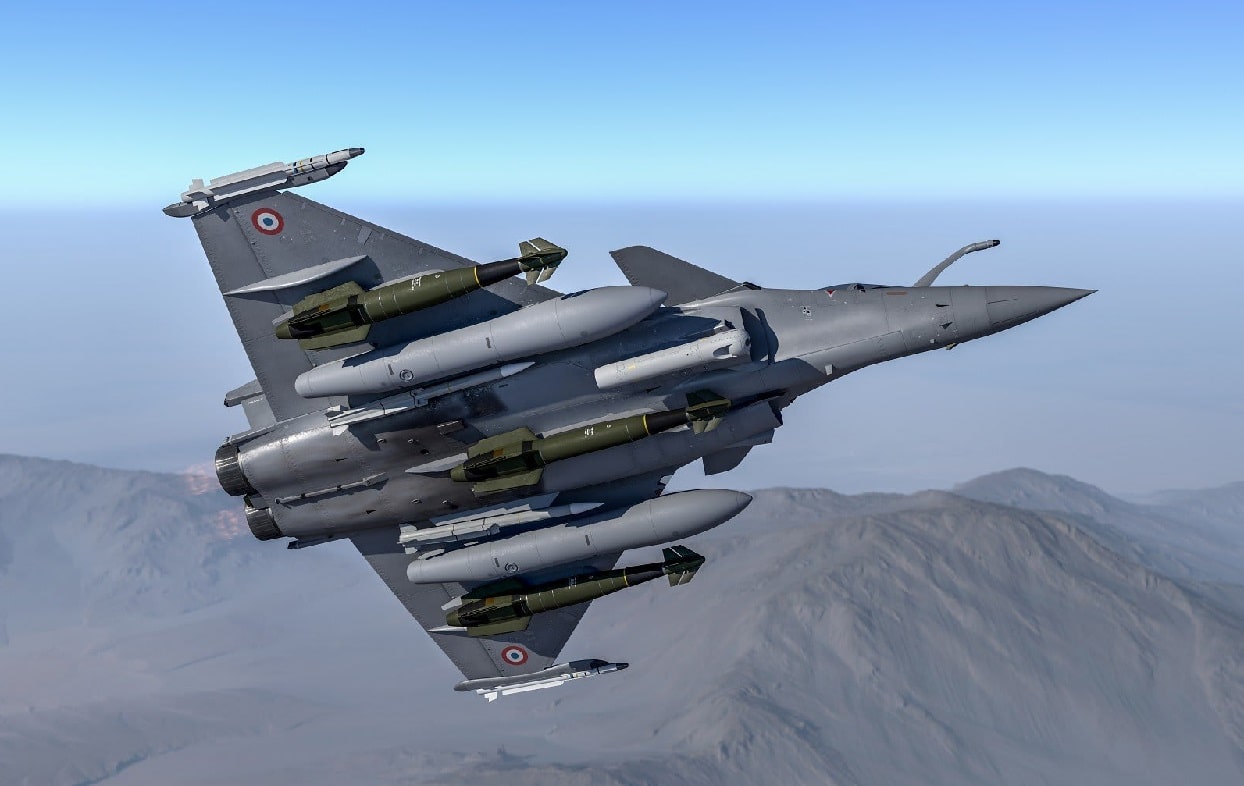
Dassault Rafale F4 fighter being sold to the UAE. Image Credit: Rafale.

A U.S. Air Force F-35A Lightning II, two Dassault Rafales and a Royal Air Force Eurofighter Typhoon break formation May 19, 2021, over France. The flight was apart of the Atlantic Trident 21 exercise which is a joint, multinational exercise involving service members from the U.S., France and the U.K., and is aimed at enhancing fourth and fifth generation integration, combat readiness and fighting capabilities, through conducting complex air operations in a contested multinational joint force environment. (U.S. Air Force photo by Staff Sgt. Alexander Cook)
-The article argues Rafale is the chosen benchmark because it represents a mature Western design with a long upgrade runway—pairing modern sensors, electronic warfare, and weapons integration into a highly adaptable multirole fighter.
-In that sense, training against Rafale becomes practice against a “best-of-all-worlds” 4th-generation platform pushed toward next-gen performance.
China’s PLA Trained Against the Rafale—Not the F-35 or F-22
Fort Lauderdale, Florida, USA – On December 19, the state-controlled broadcaster in the People’s Republic of China (PRC) went inside for an unprecedented opportunity to see just how the nation’s People’s Liberation Army (PLA) conducts war-gaming exercises against potential adversaries. On the PLA side in the simulation was the Shenyang J-16, a reverse-engineered and improved variant of the Sukhoi Su-30MK.
J-16 is the aircraft many consider the most capable fighter in Beijing’s arsenal, aside from the Chengdu J-20. It is sometimes referred to as the “bomb truck” because of all the ordnance it can carry. It is also capable of 100 different combat configurations and weapon loadings.
But what CCTV revealed was that the one NATO-nation aircraft the force sees as the benchmark for its fighter pilots to learn how to beat is not the US F-22, F-35, or F-15EX Eagle II. It is not the Sukhoi Su-57. It is not even the Japanese F-2—the first fighter aircraft ever to be equipped with an active electronically scanning array (AESA) radar.
No, the aircraft used as the “blue” aggressor in these simulated engagements was none other than the Dassault Rafale.
This is not a huge surprise in some respects. I have had many interactions with Chinese designers who openly express admiration for Dassault’s capabilities and distinguished heritage.
Some of them say that if there were one Western aerospace company they would like to work with, it would be this legendary French planemaker, not Lockheed Martin, Boeing, or BAE Systems.
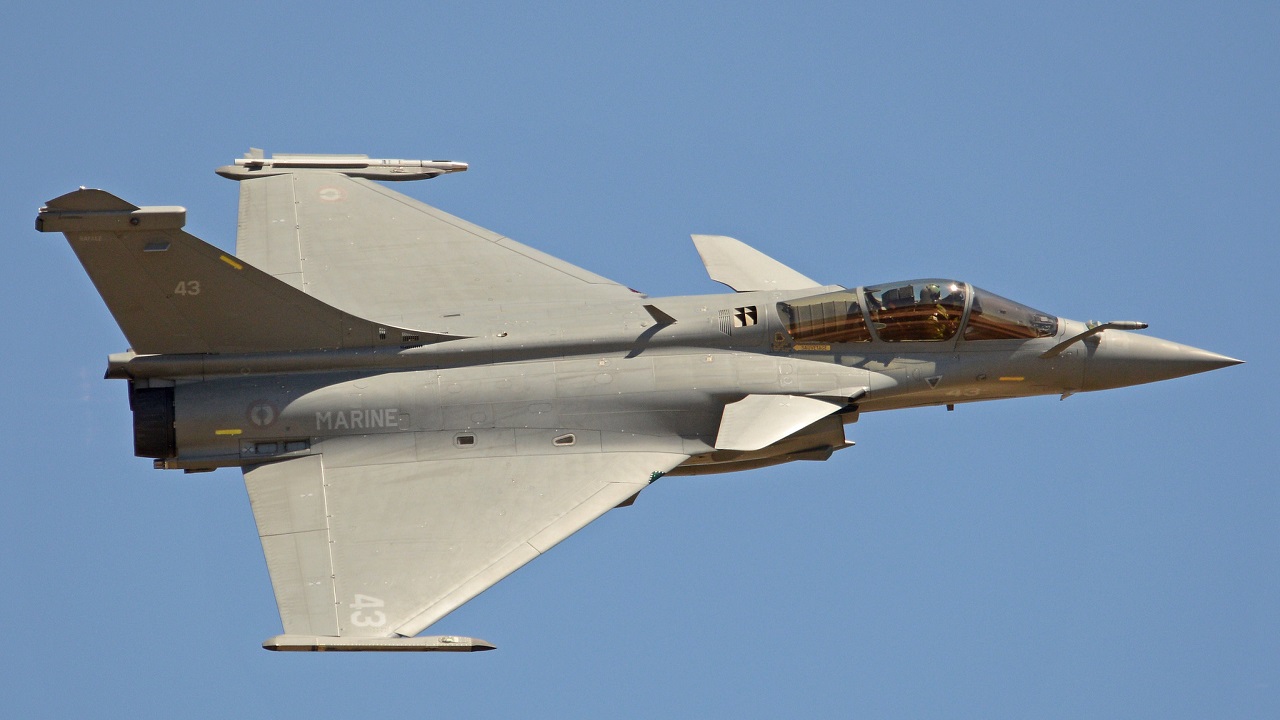
Operated by Flottille 12F, Aeronavale, based at Landivisiau.
Seen during a practice display routine at Zaragoza Air Base, Spain, during the 2016 NATO Tiger Meet (NTM).
The PLA Gaming Exercise
When the report was broadcast by China Central Television (CCTV), it showed a tabletop-style simulation in which eight Shenyang J-16 multirole fighter aircraft engaged six Rafale aircraft. The program also said this year was the first time that pilot v. pilot war-gaming had been conducted across the force.
The details of PLA exercises are classified, but what we know from the broadcast is:
-The war game took place in the central PRC city of Xuchang, in Henan province, and involved some 20 PLA units from across the service and its academies. Additional simulations involved army and submarine forces.
-The city is close to PLA Strategic Support Base 37, which may have hosted the event. Two PLA officers were the referees and control group for the exercise. Wu Keyu, an officer from the National University of Defense Technology (NUDT) in Changsha, Hunan Province, who spoke on CCTV, said the PLA began developing war-gaming systems in the 1990s and that they are now “widely used.”
-He added that the next step being developed is to tailor these gaming exercises to match the PLA’s operational needs more accurately.
-The CCTV report also revealed several new, independently developed war-gaming platforms that integrate artificial intelligence, big data, and real-time simulation engines.
However, there were no details in the CCTV report regarding the gaming model’s baseline assumptions, the methods and engagement scenarios, or the exercise’s results. There was also no detailed description of the platform for the exercises.
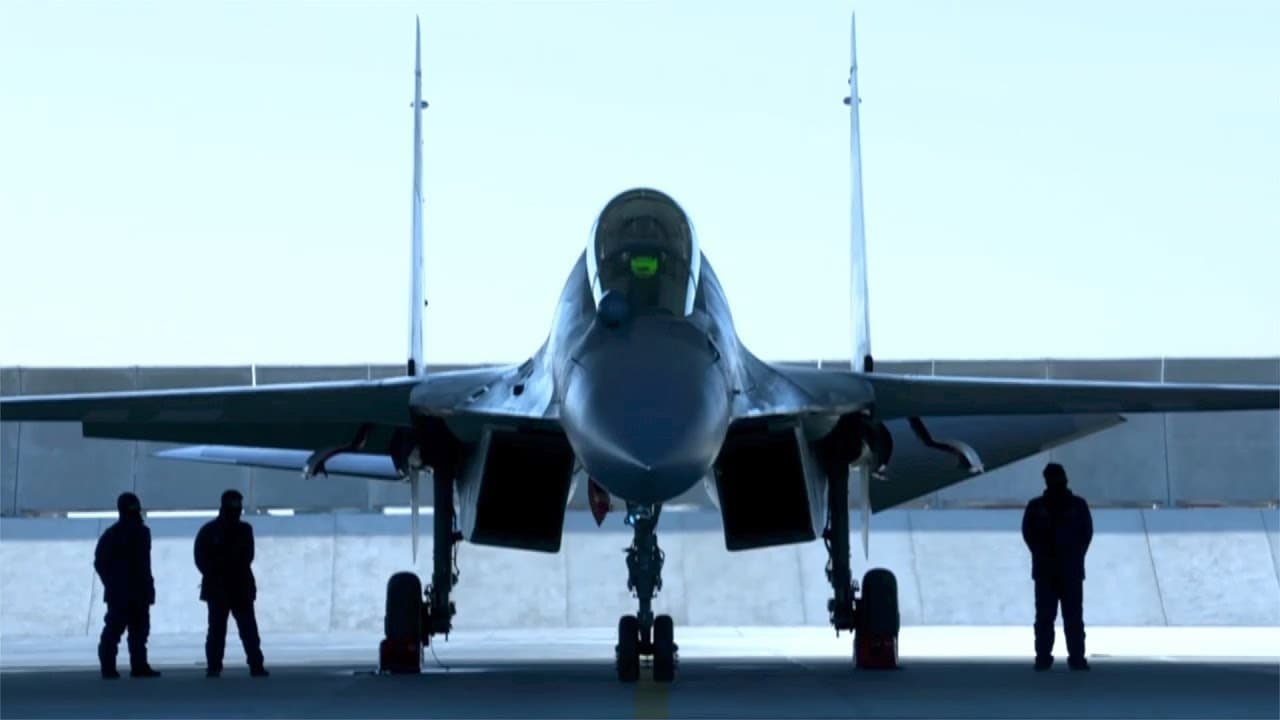
J-16D. Image Credit: Chinese Military.
However, what I have seen personally at NUDT and spoken to their specialists about when I visited in the past suggests that it is one of the entities that would have had a hand in both developing the simulation algorithms and structuring the exercise.
Why The Dassault Rafale Fighter for China?
In answering the question of “why Rafale” as the basis for these exercises, the answer comes from speaking with air combat intelligence analysts from the US, Ukraine, and NATO nations.
Dassault’s Rafale was in development and testing at about the same time as Eurofighter, long before the F-35, Sukhoi Su-35 or Su-57, the F/A-18E/F Super Hornet, the F-15EX, or just about any other fighter aircraft currently active in the export market. It has a long-lasting pedigree and is poised to be around for a long time.
The design team has also proven that it can effectively integrate new aerospace technologies as they are developed, thereby continuing to expand the aircraft’s mission profile and performance.
The upcoming F5 configuration of the aircraft will come as close as possible to achieving the capabilities of 5th- and even some 6th-generation fighters. But it will do so with an airframe designed in the 4th-generation era; as such, it represents a culmination of all the possible subsystems and aircraft combinations that Western forces could bring to bear against the PLAAF.
The aircraft demonstrates better than most how much lethality can be enhanced with an uprated thrust engine, a new GAN-based AESA radar, and a new generation of electronic warfare systems.

Dassault Rafale Fighter. Image Credit: Creative Commons.
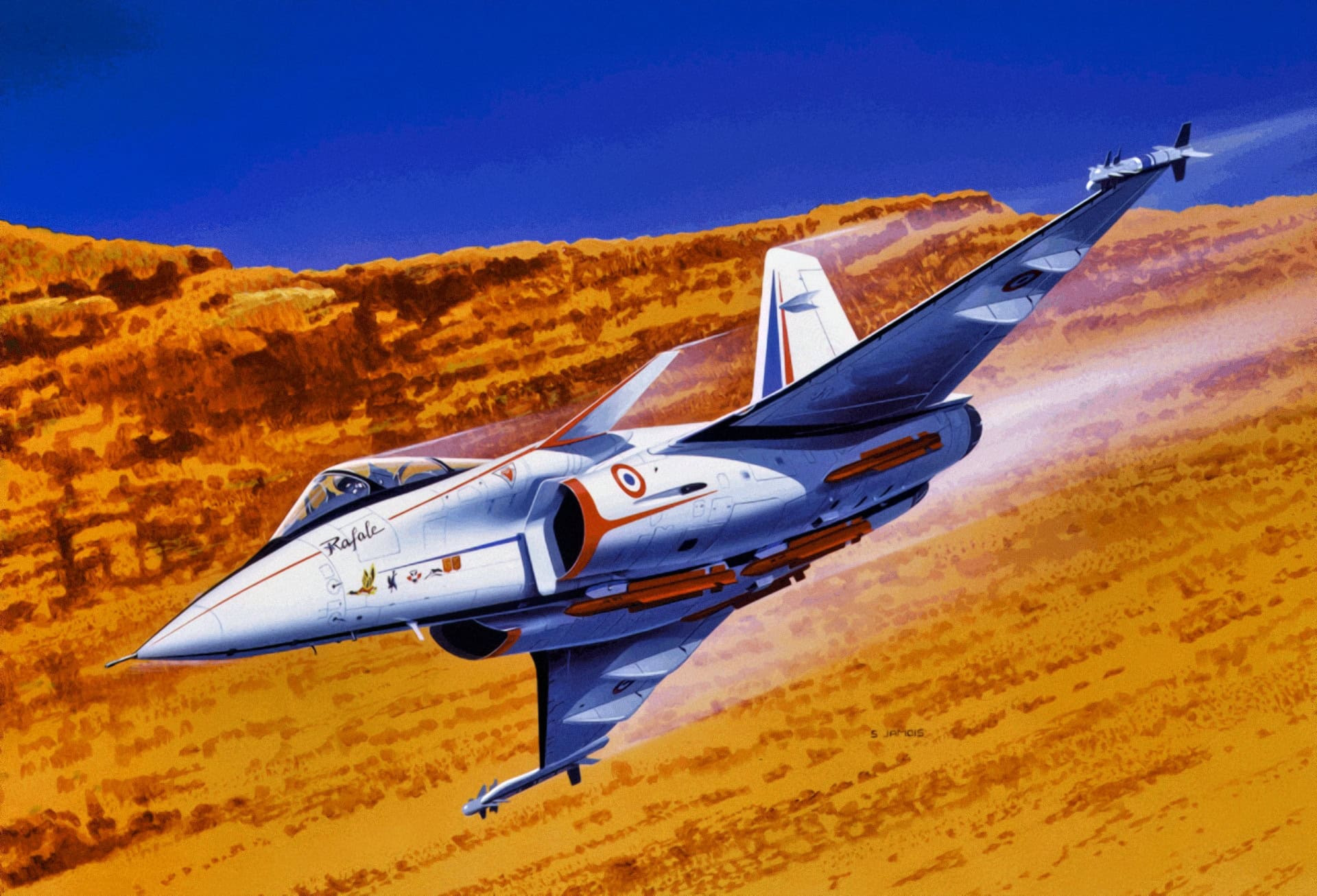
Dassault Rafale Artist Image. Image Credit: Creative Commons.
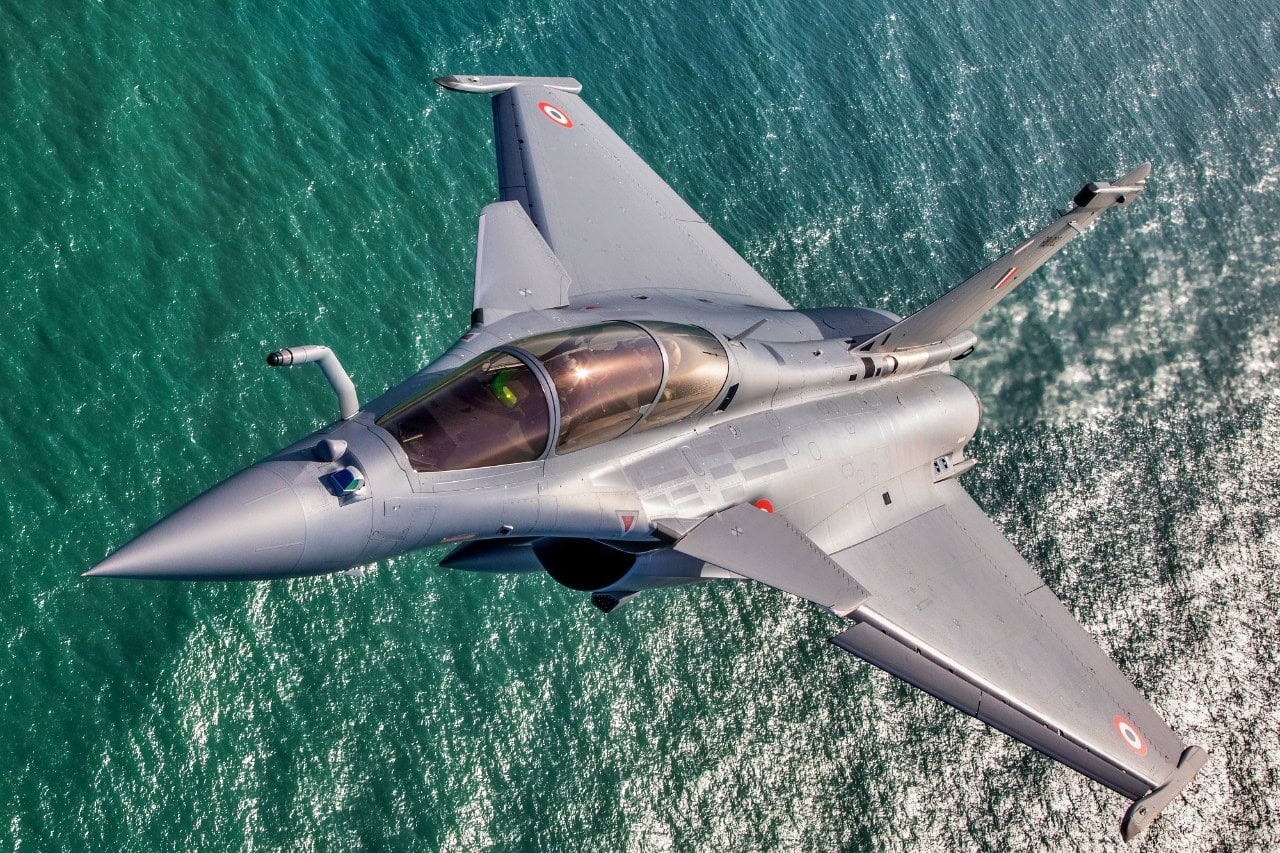
Dassault Rafale. Image Credit: Creative Commons.
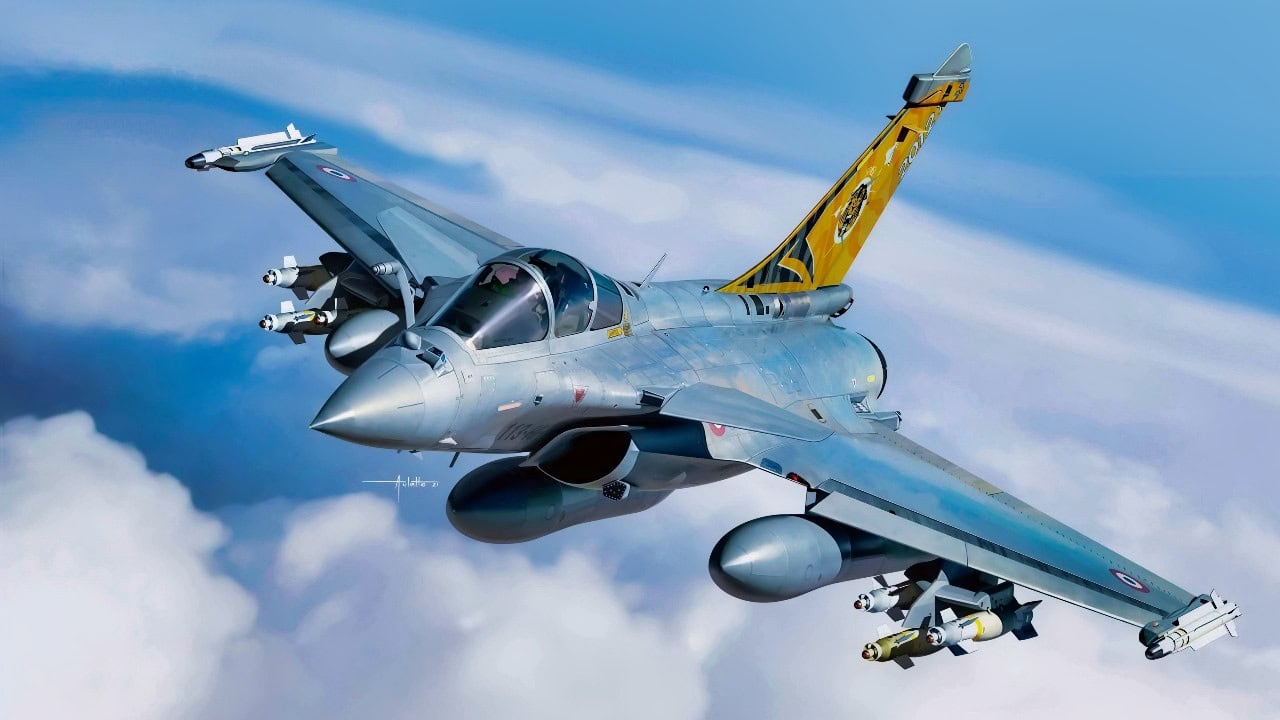
Dassault Rafale. Image Credit: Creative Commons.
Last but not least, the Rafale is famous for scoring a kill against an F-35 during a series of live engagements in June 2025 during the Atlantic Trident 25 multinational military exercises in Finland.
In a French Air Force video, a Rafale is famously seen achieving radar lock against an F-35A before an audio transmission of “take the shot” is heard, indicating that the pilot has declared a simulated missile shot.
Clearly, the PLAAF sees the Rafales as embodying the “best of all worlds” in fighter aircraft design. Which is why they have decided that it is the gold-standard model they should train against. It is also probably why, in August, Ukraine signed a contract to procure up to 100 Rafales – rather than 100 F-35s.
About the Author: Reuben F. Johnson
Reuben F. Johnson has thirty-six years of experience analyzing and reporting on foreign weapons systems, defense technologies, and international arms export policy. Johnson is the Director of Research at the Casimir Pulaski Foundation. He is also a survivor of the Russian invasion of Ukraine in February 2022. He worked for years in the American defense industry as a foreign technology analyst and later as a consultant for the U.S. Department of Defense, the Departments of the Navy and Air Force, and the governments of the United Kingdom and Australia. In 2022-2023, he won two awards in a row for his defense reporting. He holds a bachelor’s degree from DePauw University and a master’s degree from Miami University in Ohio, specializing in Soviet and Russian studies. He lives in Warsaw.