
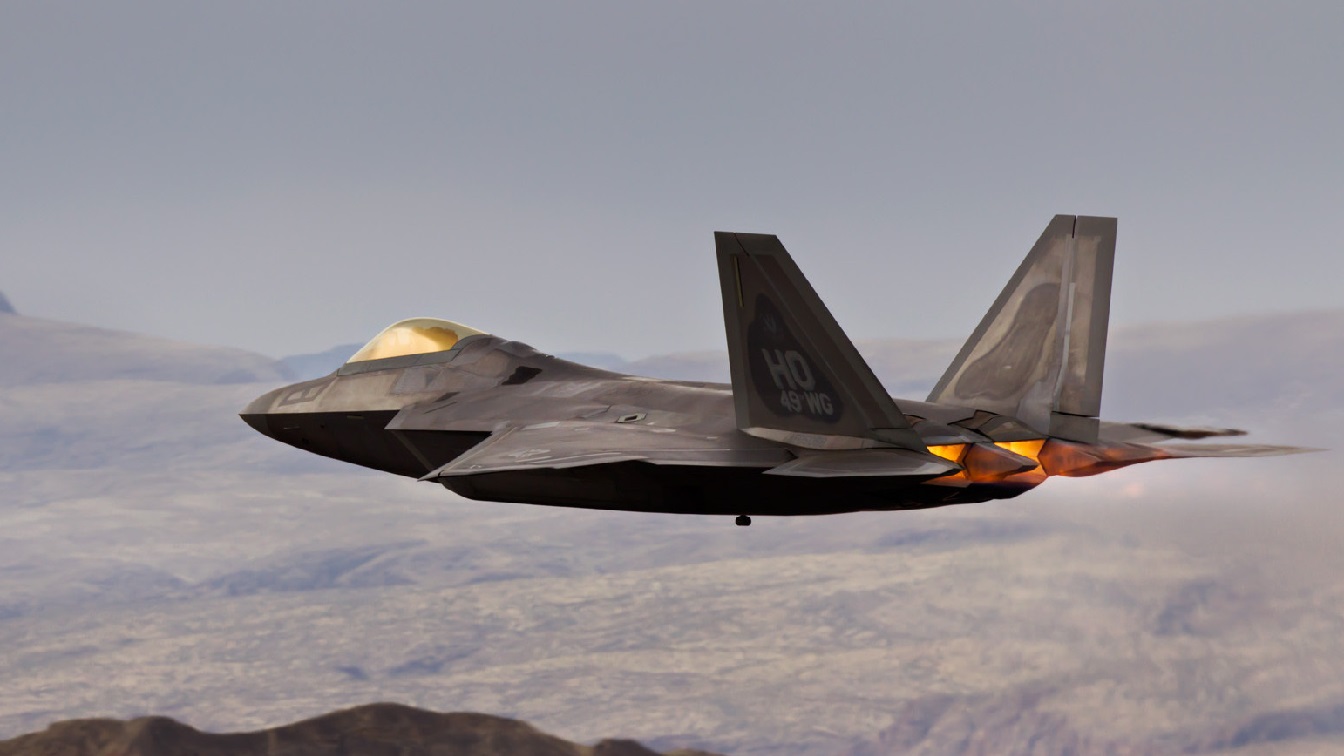
Key Points and Summary – The F-22 debuted in 2005 yet has far less combat use than the younger F-35.
-The Raptor’s lone “kill” was the February 4, 2023 shootdown of a Chinese balloon with an AIM-9X at high altitude.
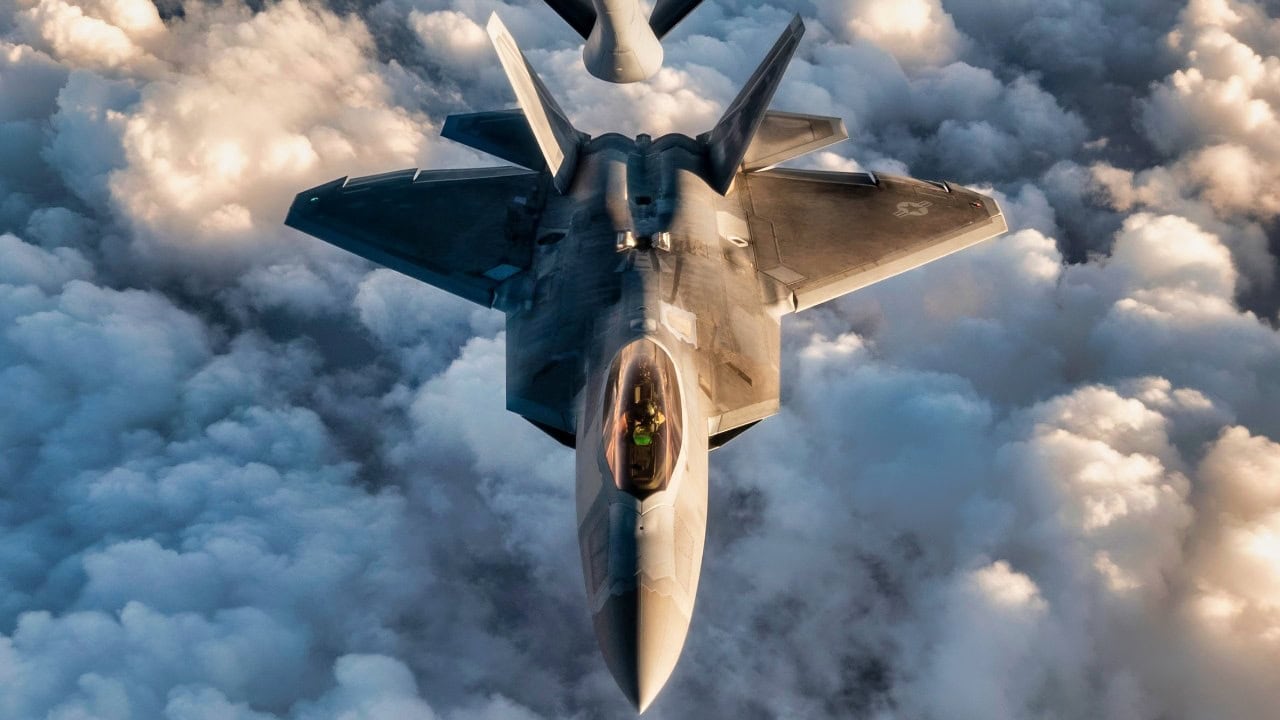
A U.S. Air Force F-22 Raptor departs after being refueled by a KC-135 Stratotanker over the U.S. Central Command area of responsibility November 5, 2024. Raptors provide air dominance and conduct missions delivering airpower within the region. (U.S. Air Force photo)
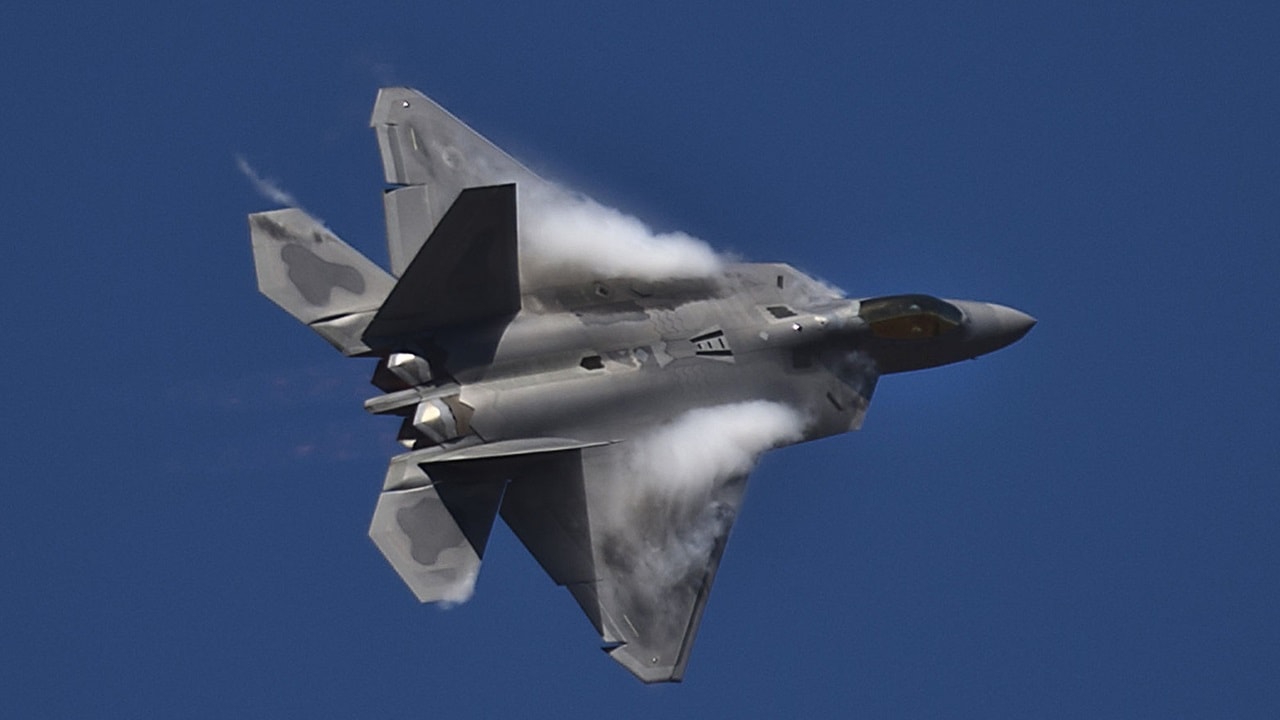
A U.S. Air Force F-22 Raptor from 94th Fighter Squadron Langley Air Force Base, Va., takes off to perform an aerial demonstration for an estimated 180,000 spectators at the Australian International Airshow, March 2, 2013 at Avalon Airport in Geelong, Australia. The F-22 demo team are currently deployed to the 18th Fighter Wing, Kadena Air Base, Japan to support pacific theater operations. This is the first official demonstration of the F-22 Raptors capabilities at an airshow outside the United States. The Australian International Airshow 2013 (AIA13), is held biennially, and is one of the largest international trade shows in the Pacific. The Airshow is expected to draw 350,000 visitors and has featured 500 defense exhibitors from 35 countries and is designed to bolster business opportunities in the international aviation sector. U.S. Pacific Command (USPACOM) participation in AIA13 directly supports theater engagement goals and objectives and further enhances relationships with other Pacific nations. (Department of Defense photo by U.S. Air Force Tech. Sgt. Michael R. Holzworth/Released)
-Advocates argue the Air Force is overly cautious because only 187 Raptors were built, the jet is expensive to operate, and readiness is weak.
-Critics ask why fund upgrades if it rarely flies real missions.
-Supporters counter that F-22s are being preserved for a peer-air war against China or Russia. Meanwhile, the F-35 is more numerous and has seen repeated strike and escort work today.
Why the Air Force Rarely Uses the F-22 in Combat Despite Its Price Tag
The world’s first two operational 5th-generation stealth fighters, the F-22 Raptor and the F-35 Lightning II, are/were both proudly “Made In The USA,” thus granting a double dose of bragging rights not just to the United States Government but also to the manufacturer of both warbirds, that being the legendary Lockheed Martin’s “Skunk Works” division.
The Raptor and the Lightning II made their official service debuts on December 15, 2005 (yes, the 20th anniversary is just around the corner) and July 31, 2015 (yes, the 10th anniversary took place earlier this year), respectively.
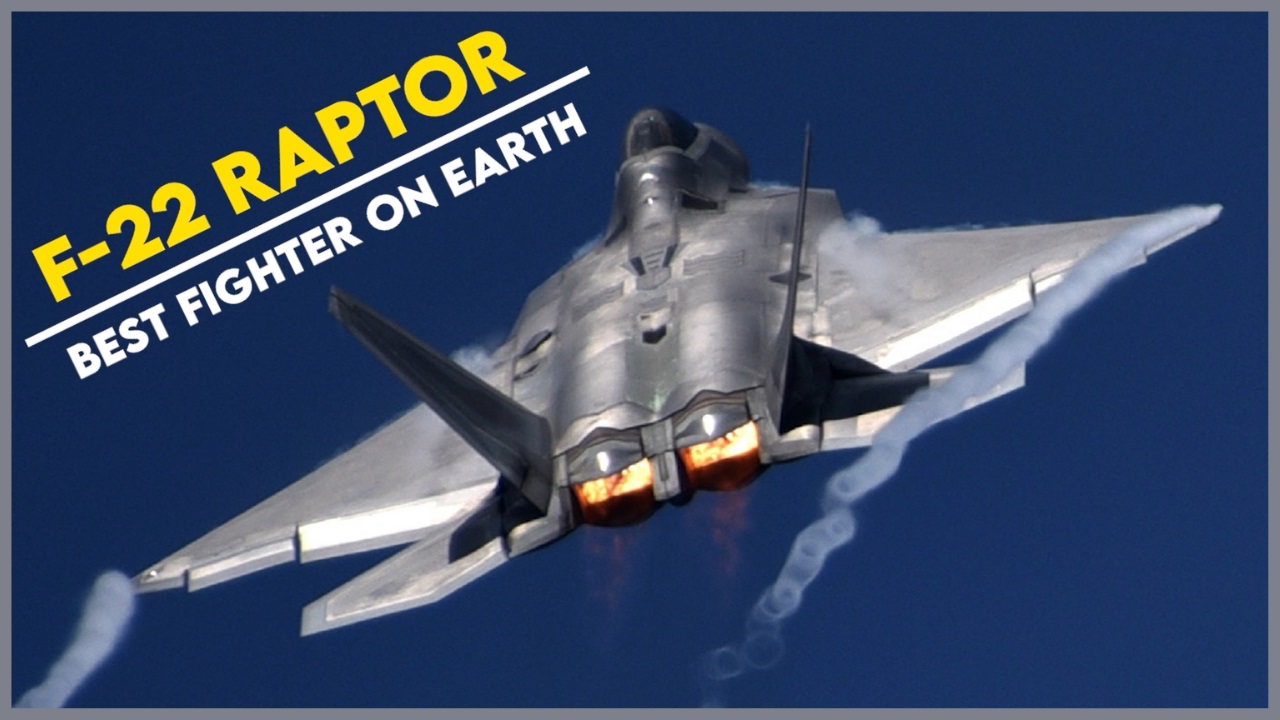
F-22 Raptor. Image Credit: Creative Commons and 19FortyFive edits.
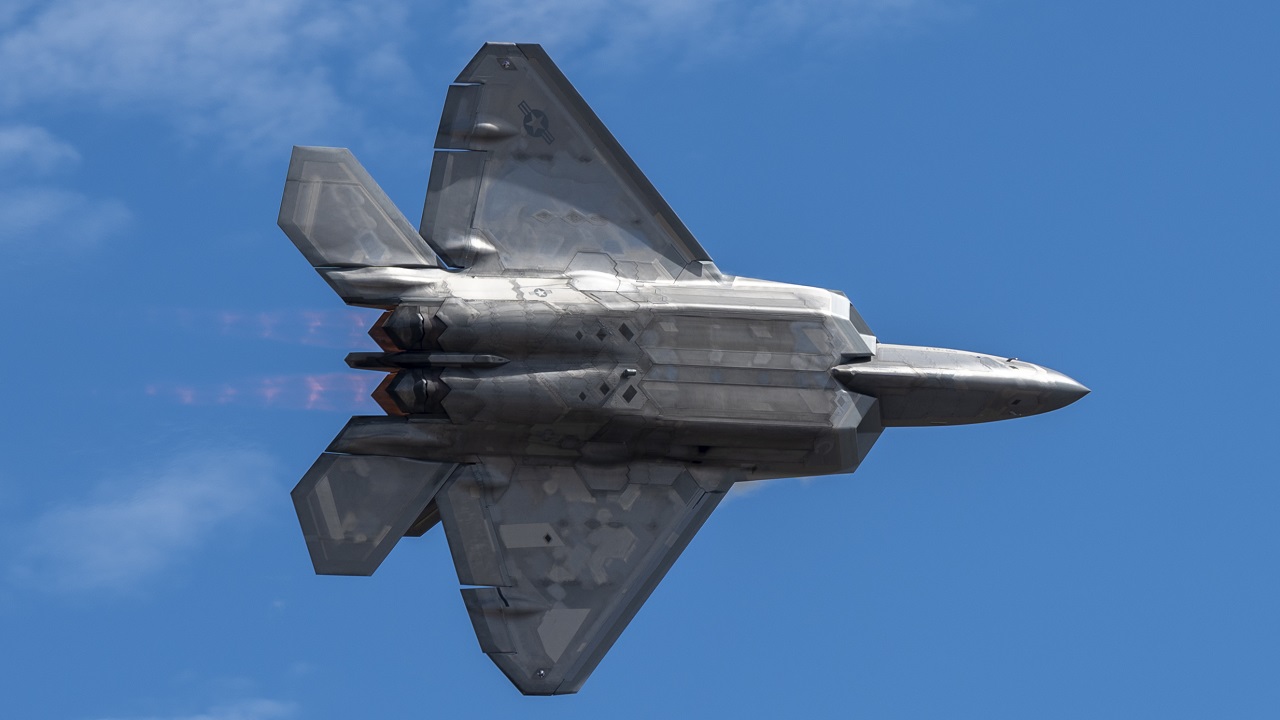
A U.S. Air Force F-22 Raptor conducts a heritage flight during the 2022 Marine Corps Air Station Miramar Air Show at MCAS Miramar, San Diego, California, Sept. 24, 2022. The F-22 Raptor is the Air Force’s fifth-generation fighter aircraft. Its combination of stealth, super-cruise, maneuverability, and integrated avionics, coupled with improved supportability, represents an exponential leap in war-fighting capabilities. The theme for the 2022 MCAS Miramar Air Show, “Marines Fight, Evolve and Win,” reflects the Marine Corps’ ongoing modernization efforts to prepare for future conflicts. (U.S. Air Force photo by Adam Bowles)
However, even though the F-22 has been around a full decade longer, it hasn’t garnered nearly as much real-world combat experience as its “younger” (so to speak) comrade-in-arms.
The U.S Air Force, Navy, and Marine Corps alike have used their F-35s for multiple air-to-ground missions (including Operation Midnight Hammer), and the Israeli Air Force has used its F-35I “Adir (Mighty One)” not just for ground strike missions but indeed to shoot down enemy drones.
Meanwhile, the Raptor has a whopping one aerial kill to its credit. Which begs the question: Are we being overly “combat cautious” with the F-22?
The Raptor’s Lone Kill
That lone air-to-air victory on the F-22’s official scoreboard tally was not attained against a manned enemy aircraft, or even an adversary’s drone, but rather a Chinese spy balloon (or, as the Beijing government mouthpieces still insist, a harmless weather balloon).
Granted, it was still a legitimate target, and shooting down balloons is no easy task, as balloon-busting fighter pilots of the First World War, like the late great Lt. Frank Luke Jr.
The F-22’s solitary moment of glory occurred on February 4, 2023, a whopping seven days after the Chinese balloon began its spy mission, during which it surveilled America’s nuclear ICBM bases.
(As a quick aside, the Biden Administration’s rationale for dawdling on the decision to shoot the balloon down was that shooting the balloon down over the continental United States [CONUS] could endanger human lives. Speaking as someone who used to serve as a U.S. Air Force Security Forces troop at one of the nuke bases that the balloon overflew, I consider that a weak excuse, one of the main reasons our ICBM bases are located where they are is their relative isolation.)
The lucky Raptor driver in question was assigned to the 1st Fighter Wing at Joint Base Langley-Eustis, Virginia.
The F-22 fighter pilot launched a single AIM-9X Sidewinder infrared (IR, i.e., heat-seeking) missile at an altitude of 58,000 feet — which is 7,000 feet below the warbird’s officially acknowledged maximum service ceiling — while the balloon hovered at an altitude between 60,000 and 65,000 feet.
After the Sidewinder’s impact and detonation, the balloon’s missile-shattered corpse fell approximately six miles off the coast of South Carolina in about 47 feet of water, leaving a debris field approximately seven miles wide.
So, Why the Overabundance of Caution?
In fairness, a lot of that trepidation about using the F-22 can be attributed to the relatively small number produced before then-U.S. Secretary of Defense Bob Gates made the incredibly myopic decision to kill the program.
As a result of that premature decision, only 187 airframes were built out of the original 381 planned.
On December 13, 2011, the last of these Raptors rolled off the Lockheed Martin assembly line in Marietta, Georgia. (For a damningly detailed account of the Gates F-22 decision, read the book “Air Power Abandoned: Robert Gates, the F-22 Raptor and the Betrayal of America’s Air Force” by the late Robert F. Dorr, himself a USAF veteran.)
By contrast, Lockheed Martin has delivered 1,255+ F-35 airframes to date.
According to the World Directory of Modern Military Aircraft (WDMMA), the USAF has 302 F-35As, the USN has 45 F-35Cs, and the USMC has 81 F-35Bs (and that’s not even counting the additional airframes each service has on order).
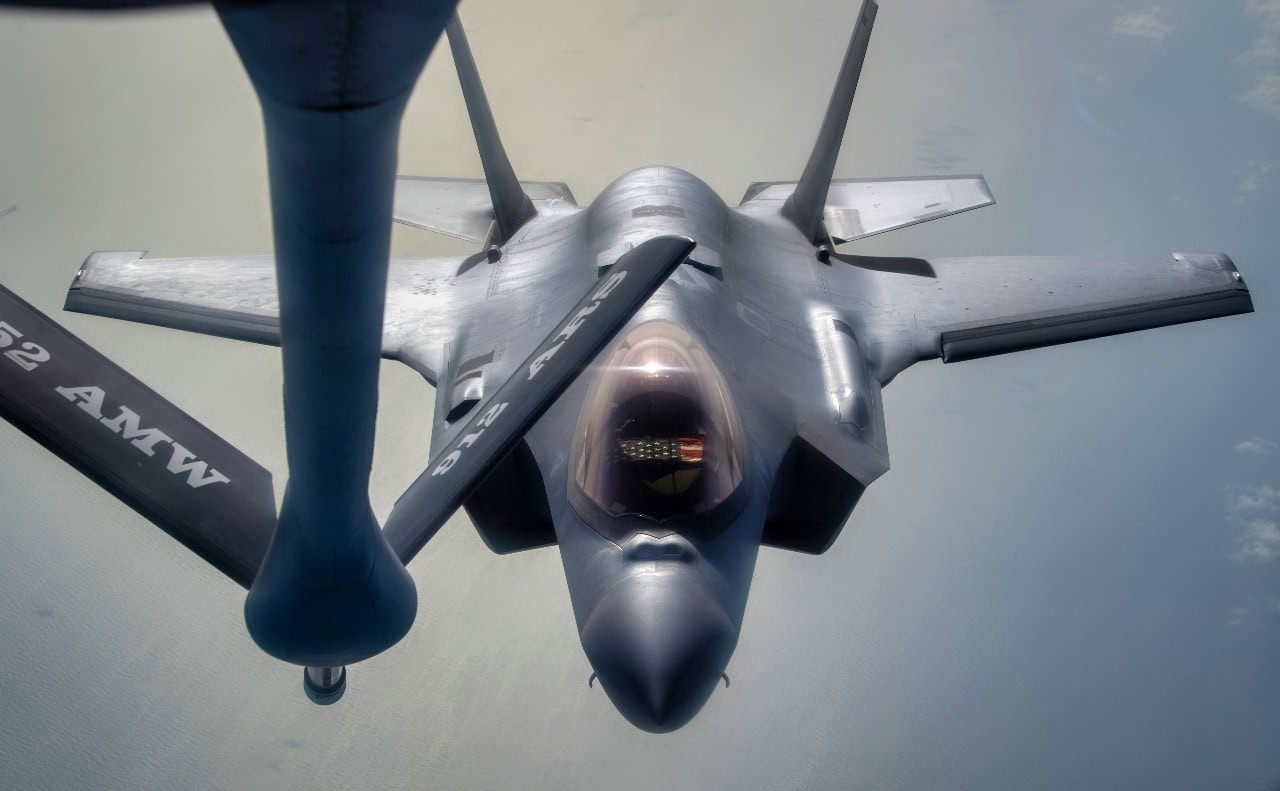
A U.S. Air Force F-35 Lightning II approaches a U.S. Air Force KC-135 Stratotanker over the U.S. Central Command area of responsibility, July 22, 2020. The F-35 Lightning II is an agile, versatile, high-performance, multirole fighter that combines stealth, sensor fusion and unprecedented situational awareness. (U.S. Air Force photo by Airman 1st Class Duncan C. Bevan)
What’s more, the Lightning II is an extremely popular foreign military sales (FMS) product, with a total of 19 nations’ air forces buying in.
Dollars & Sense…or Penny Wise, Pound Foolish?
Going hand in hand with the F-22’s numerical shortage is the hefty price tag of keeping the existing birds flying. According to Rosita Mickeviciute of AeroTime article, the Raptor is **THE** most expensive fighter jet in the world. Moreover, Government Accountability Office (GAO) data indicates that it costs the USAF $85,325 to fly the F-22 for just one hour.
That said, what’s the point of spending the money to keep the F-22 if the U.S. Armed Forces aren’t going to bother using them on real-world missions?
Whatever happened to the concept of “Use them or lose them?”
Just like with human body parts, if you let a machine sit idly, it’ll eventually atrophy, as seen in the plane’s 40.19% readiness, which has further compounded expenditures by necessitating an $8B “lifeline” for upgrades to keep it viable.
Lord knows the F-35 is controversially expensive, yet that hasn’t prevented its usage in multiple kinetic military missions, including Operation Midnight Hammer, wherein Lightning II pilots provided fighter escort duty and SEAD (suppression of enemy air defenses) for the B-2 Spirit stealth bombers that dropped the bunker buster bombs on the Iranian nuclear facilities.
And speaking of the B-2, it is *THE* most expensive aircraft ever built, commanding a per-unit price of $2.1 billion in 2025 dollars. That hasn’t stopped the USAF from using the Spirit in combat over and over again.
Perhaps America’s airpower planners are saving the F-22 (presumably), the world’s premier air superiority fighter strictly for worst case scenarios, i.e., if and when World War III breaks out against a stealth fighter-armed adversary, whether Russia (with the Sukhoi Su-57 “Felon”) and or China (with the Chengdu J-20 “Fagin” and the Shenyang J-35).
If this turns out to be the case, one can only hope that the aforementioned 40.19% readiness rate will be significantly improved by then.
About the Author: Christian D. Orr, Defense Expert
Christian D. Orr is a Senior Defense Editor. He is a former Air Force Security Forces officer, Federal law enforcement officer, and private military contractor (with assignments worked in Iraq, the United Arab Emirates, Kosovo, Japan, Germany, and the Pentagon). Chris holds a B.A. in International Relations from the University of Southern California (USC) and an M.A. in Intelligence Studies (with a concentration in Terrorism Studies) from American Military University (AMU). He is also the author of the newly published book “Five Decades of a Fabulous Firearm: Celebrating the 50th Anniversary of the Beretta 92 Pistol Series.”