
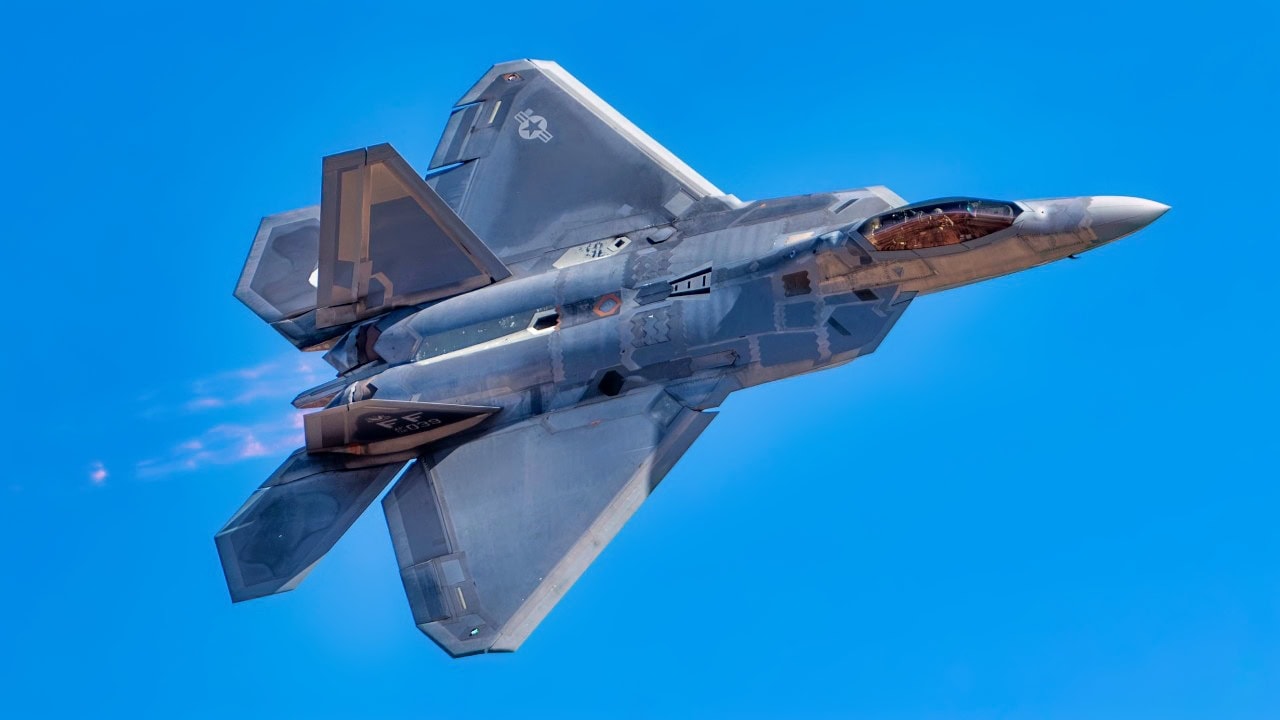
Key Points and Summary – The F-22 Raptor is still the world’s premier air-dominance fighter, but its record is far from flawless.
That 1 Problem – Killed early by Robert Gates after just 187 airframes, the Raptor became the ultimate boutique jet: breathtaking in combat, ruinous on cost.
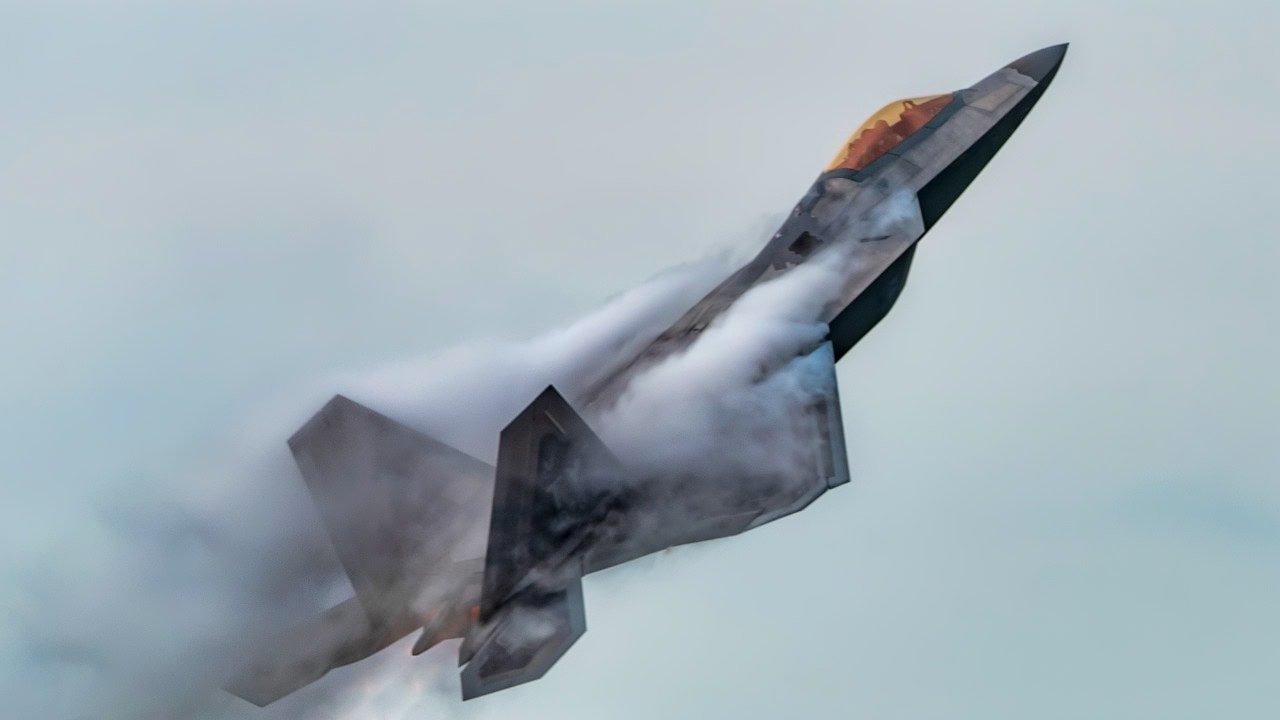
U.S. Air Force Maj. Paul Lopez, F-22 Demo Team commander, pulls into the vertical during the Battle Creek Field of Flight air show July 7, 2019. Maj. Lopez has over 1,500 hours flying both the F-15 Eagle and the F-22 Raptor and is in his second year as the commander of the F-22 Raptor Demonstration Team. (U.S. Air Force photo by 2nd Lt. Samuel Eckholm).
-With per-aircraft expenses above $300 million and eye-watering hourly operating costs, the F-22 is aging into a niche asset with outdated architecture, limited range for Pacific fights, and painfully low mission-capable rates.
-Yet Washington isn’t giving up.
-A new $8 billion upgrade package aims to extend the Raptor’s edge well into the 2050s—if it can stay in the air.
The F-22 Raptor Is Not Unbeatable
Many American airpower advocates bemoan the fact that then-US Secretary of Defense (SECDEF) Bob Gates made the incredibly short-sighted decision back in 2009 to kill the F-22 Raptor program after only 187 airframes were built out of the original 381 planned.
Luckily, the F-22 remains in service with the United States Air Force 20 years after making its official operational debut and serves alongside its fellow Lockheed Martin Skunk Works product, the F-35 Lightning II, giving both the manufacturer and the United States of America alike a double set of bragging rights for fielding the world’s first two operational 5th-generation stealth fighters.
Unlike the Raptor, the Lightning II remains in production and, along the way, has become a lightning rod (if you will) for criticism, primarily due to its high price tag.
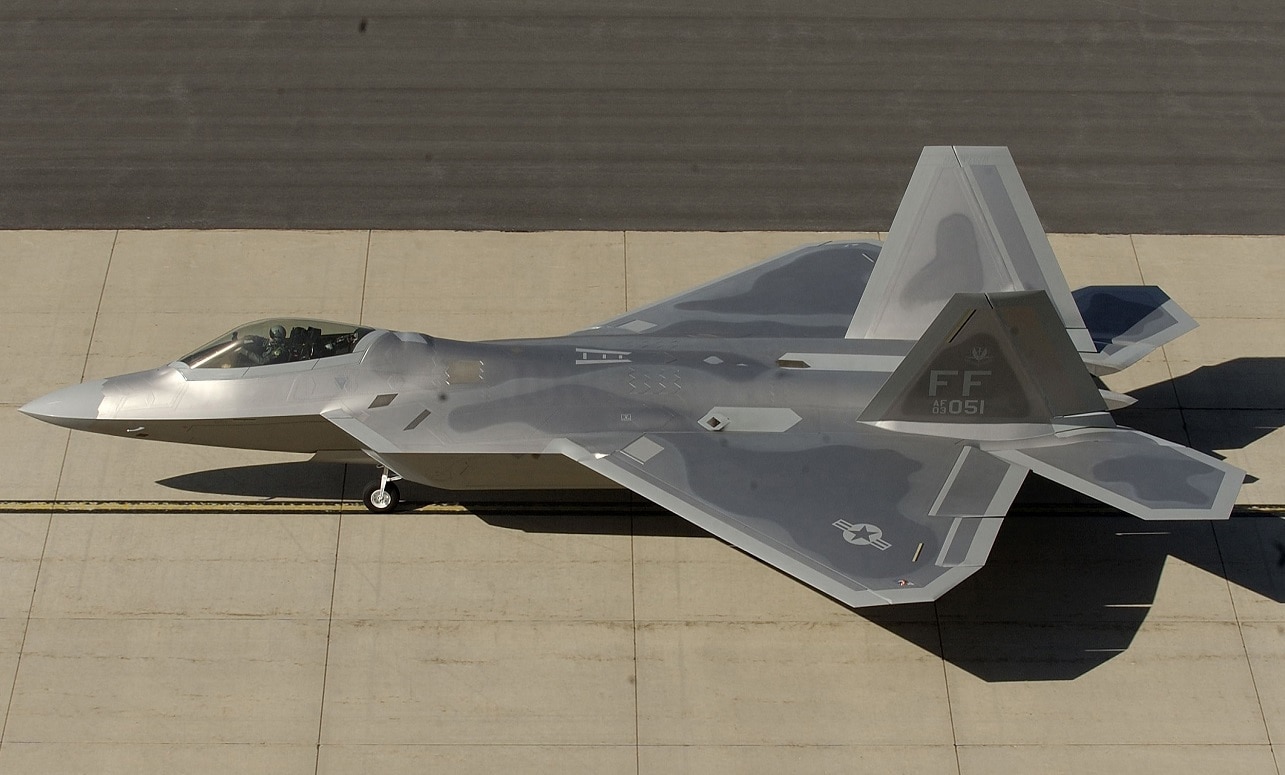
HILL AIR FORCE BASE, Utah — An F-22 Raptor taxis after landing here. The jet, from the 27th Fighter Squadron at Langley Air Force Base, Va., deployed here Oct. 15 for the next-generation fighter’s first deployment for live weapons bomb training exercise. (U.S. Air Force photo by Staff Sgt. Samuel Rogers)
However, perhaps because the former plane has been out of production for 14 years, it’s easy to forget that the F-22 has had its own fair share of problems, among them expense.
A King’s Ransom
Or, more accurately, a Raptor’s ransom.
Believe it or not, the F-22, not the F-35, is actually the most expensive fighter jet in the world, at least by some accounts.
One such account is the February 21, 2025, AeroTime article “Top 10 most expensive fighter jets in 2025,” written by Rosita Mickeviciute (who, as a side note, also publishes her own commercial aviation website, The Friendly Skies).
As Ms. Mickerviciute notes, “The flyaway cost for the F-22 is listed by the US Air Force as $143 million, but that’s barely half the cost of actually producing the jets. The entire program cost the US over $67.3 billion for 195 aircraft, putting the per-Raptor cost at around $334 million…Despite its unmatched air superiority capabilities, the F-22 was deemed too expensive for mass production.”
According to Government Accountability Office (GAO) data, it costs the USAF $85,325 to fly the F-22 for just one hour.
To make monetary matters worse, James Kiefner of Simple Flying notes in an April 13, 2024, article that “There is no economy of scale to the aircraft. Production lines that shut down in the 2000s cannot be reinstated without massive investment, and spare parts cannot be sourced outside of those lines.”
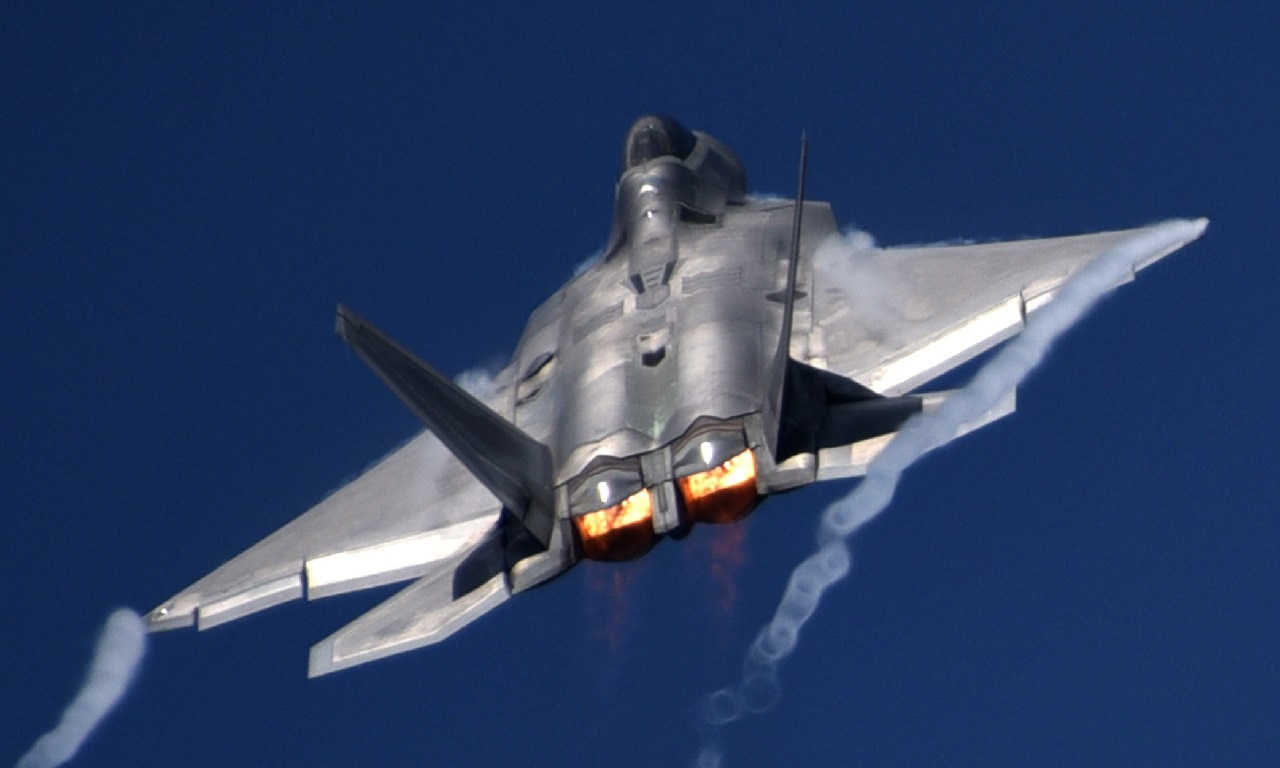
A U.S. Air Force F-22 Raptor assigned to Tyndall Air Force Base, Fla., takes off from the Tyndall flightline as part of an asset evacuation due to Hurricane Irma Sep. 8, 2017. Tyndall evacuated its F-22s, QF-16 Aerial Targets, T-38 Talons, E-9A Widgets and other aerial assets in preparation for Hurricane Irma. (U.S. Air Force photo by Senior Airman Sergio A. Gamboa/Released)
Getting Long in the Tooth
Or, if you prefer, getting long in the tooth and claw.
Although the Raptor is still considered the world’s predominant stealth fighter, being the first 5th Generation fighter also makes it the oldest of the bunch. Which, in turn, means that its avionics and targeting systems are also the oldest of the bunch.
Having languished in a state of production for so long, the F-22 has not kept up with the modularity and resilience upgrades of the past few decades.
Therefore, it lacks the interoperability advantages of the F-35, for example, as there is no single system that both Raptor and Lightning II pilots can directly share targeting and situational awareness (SA) data with the rest of their own forces or those of allied nations.
Lack of Range
Although it didn’t enter production until five years after the Cold War ended, the F-22 was designed to fight Soviet aircraft over Eastern Europe, within easy range of NATO support facilities. Bear in mind that Europe is the second-smallest continent in the world (only Australia is smaller).
Contrast this with a potential war in the skies over the largest continent, Asia (whether against China, North Korea, or both).
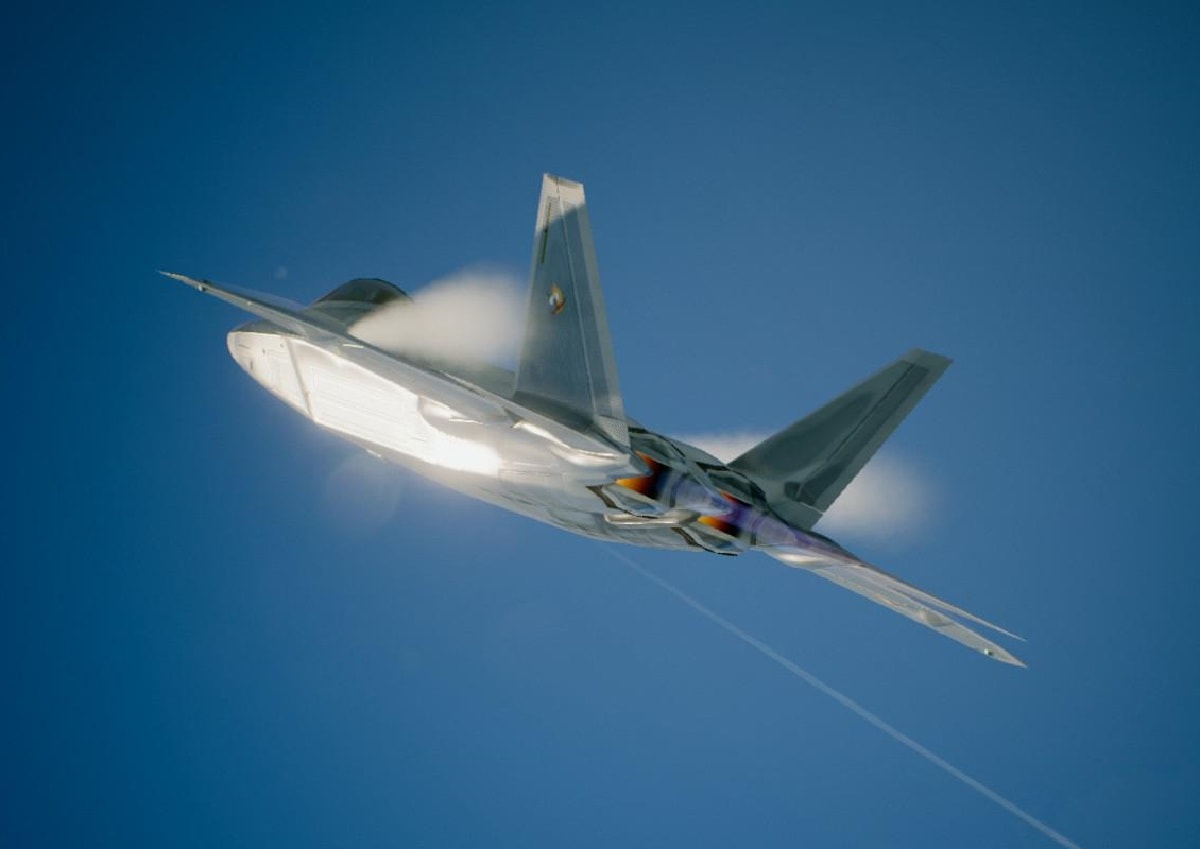
Image: Creative Commons.
Here, the unrefueled combat range of the Raptor—460 nautical miles (530 statute miles; 850 kilometers), which can be extended to 750 nautical miles (863 statute miles; 1,389 kilometers) with two 600-gallon tanks—could become a distinct disadvantage.
Yes, midair refueling is an option, but that’s an extremely dangerous option in a contested battlespace, especially when it’s an adversary’s own 5th Generation stealth fighter jet (namely the Chengdu J-20 “Fagin”) that’s doing the contesting.
Moreover, the external 600-gallon tanks would significantly increase the radar signature, thereby defeating the purpose of having stealth technology in the first place.
Raptor Readiness (or Lack Thereof)
Last but not least, there’s the issue of receding readiness rates that’s not just plaguing the F-22 but indeed the USAF as a whole.
Regarding the Raptor specifically, its mission-capable rate in fiscal year 2024 was only 40.19 percent, a precipitous drop from 57.4 percent just two years prior, according to John A. Tirpak of Air & Space Forces Magazine.
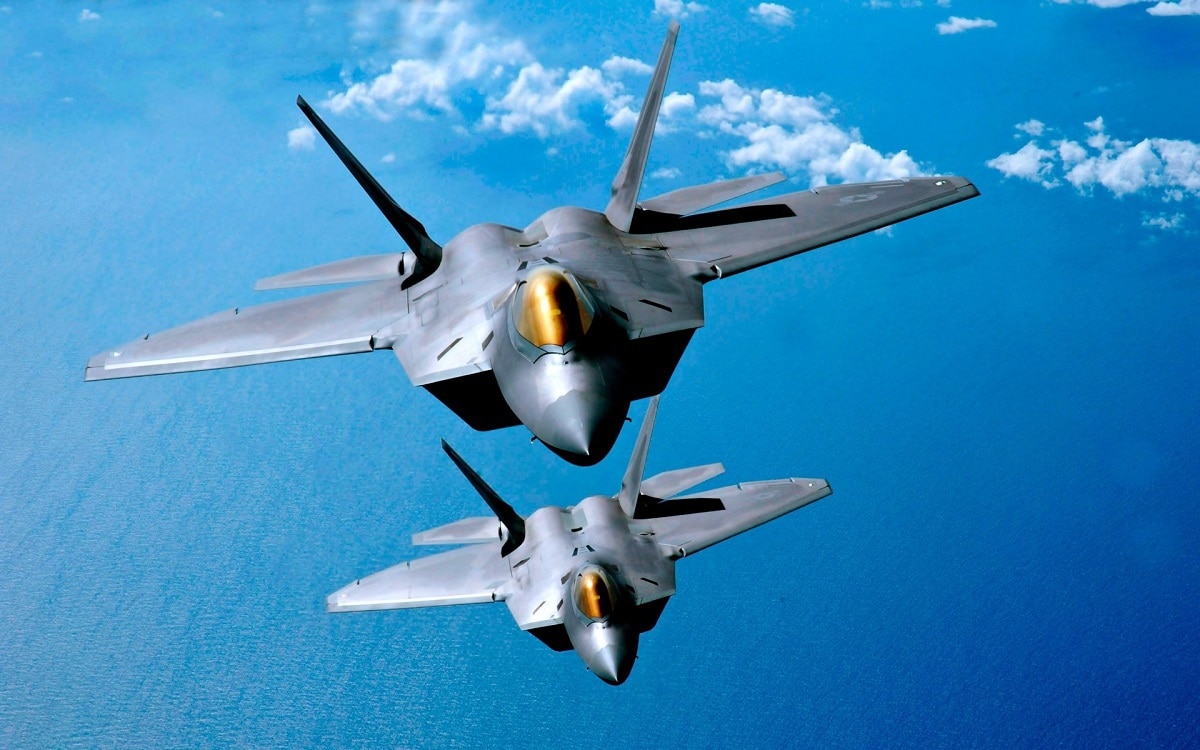
F-22 Raptor. Image: Creative Commons.
Light at the End of the Tunnel?
Fortunately, despite all these shortcomings, the F-22 is being given a new lease on life, or as Popular Mechanics puts it in a metaphorically melodramatic manner, “a stay of execution with an $8 billion lifeline.”
The massive upgrade program will equip the remaining 142 operational Raptors with a new Infrared Defensive System (IRDS) for enhanced survivability, as well as new stealthy, low-drag external fuel tanks that address both combat range and radar signature concerns.
About the Author: Christian D. Orr, Defense Expert
Christian D. Orr is a Senior Defense Editor. He is a former Air Force Security Forces officer, Federal law enforcement officer, and private military contractor (with assignments worked in Iraq, the United Arab Emirates, Kosovo, Japan, Germany, and the Pentagon). Chris holds a B.A. in International Relations from the University of Southern California (USC) and an M.A. in Intelligence Studies (concentration in Terrorism Studies) from American Military University (AMU). He is also the author of the newly published book “Five Decades of a Fabulous Firearm: Celebrating the 50th Anniversary of the Beretta 92 Pistol Series.”