
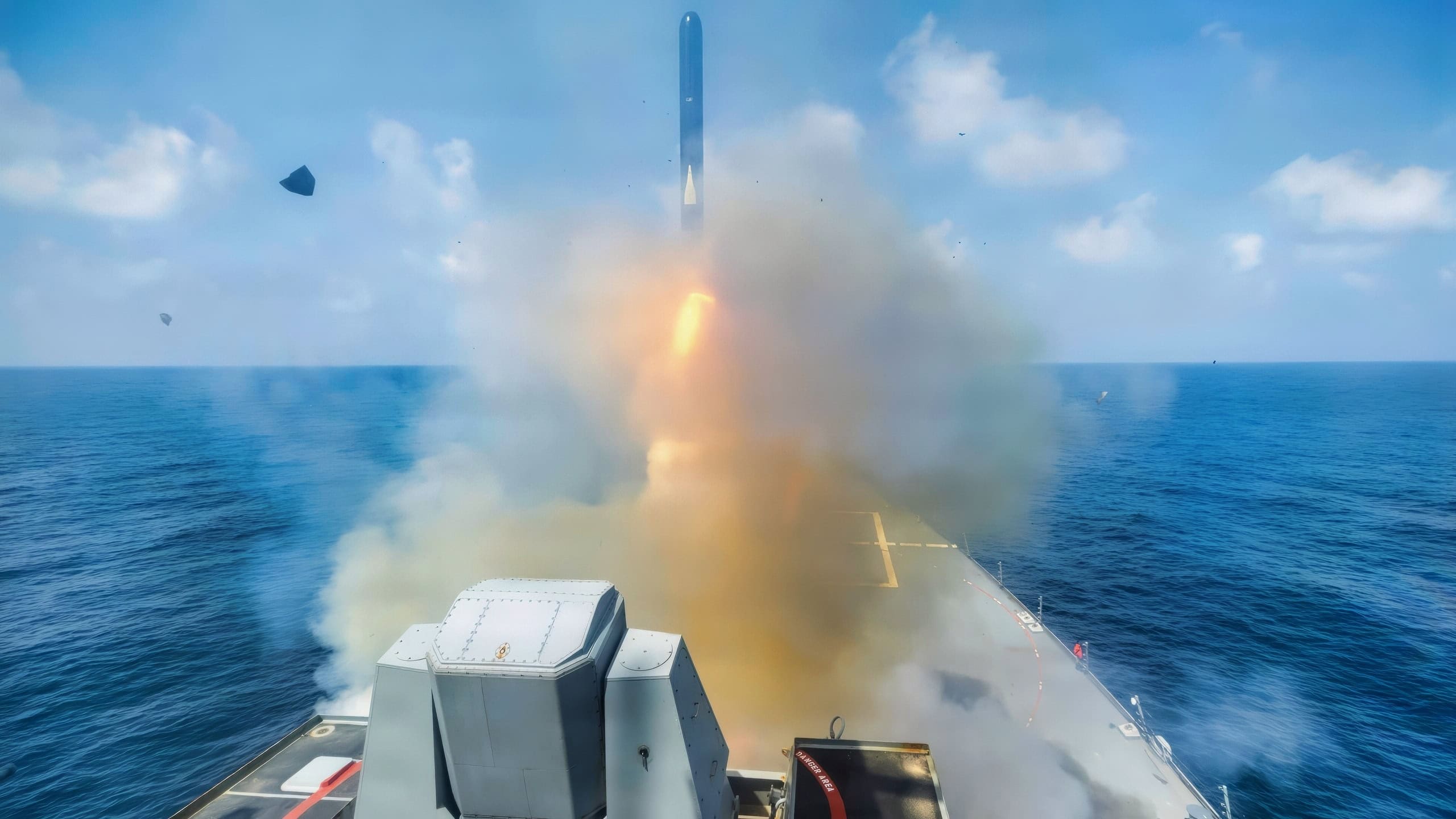
The U.S. Navy is asking Congress for a massive $377.5 billion share of the Pentagon’s fiscal year 2027 budget request, a 24.3% increase over the prior year, in what would be one of the largest naval spending surges in decades. The proposal appears to cover everything from submarines and aircraft carriers to barracks, family housing, missiles, and two entirely new warship classes.
Among the most notable requests are funding for the first BBG(X) “Trump-class” guided-missile battleship and the first FFX frigate, a smaller escort ship based on the U.S. Coast Guard’s National Security Cutter design. The expansion is part of President Donald Trump’s “Golden Fleet” plan to rebuild American maritime power amid growing competition with China and rising instability in the Middle East.
The budget would fund 34 ships in total, 123 aircraft, and 4,296 missiles, torpedoes, and bombs.
Meet the Trump-Class Battleship
Arguably, the most visible item in the budget is the new 30,000-ton Trump-class battleship – the lead vessel of President Trump’s “Golden Fleet” concept.
The Navy is looking for $1 billion in advance procurement funding in FY2027 to begin work, along with $837 million in research and development funding.
Rear Adm. Ben Reynolds, deputy assistant secretary of the Navy, said the service needs a larger surface combatant as cruisers retire and destroyers face growth limits, meaning it is difficult to install new hardware on older vessels without making them too heavy.
Reynolds said the new ship would be able to do “many, many things that our DDGs cannot.”
The first ship is projected to receive $17 billion in procurement funding in FY2028, with follow-on ships estimated at $13 billion in FY2030 and $11.5 billion in FY2031.
That would make the class one of the most expensive surface combatants ever built by the United States – but potentially also the most important.
Why the Navy Wants a Bigger Surface Ship
Despite what his detractors may say, Trump’s battleship proposal is far more than a vanity project.
The Navy’s aging Ticonderoga-class cruisers are leaving service, and Arleigh Burke destroyers are increasingly burdened with air defense and ballistic missile defense role.
The new ship will provide greater flexibility, with a larger hull offering more room for additional vertical launch missile cells, large radars, better power generation, and capacity for future directed-energy weapons.
The ships will also feature expanded command facilities and offer greater survivability in a high-end war – the kind of conflict that the Air Force, Army, and Navy are all preparing for right now.
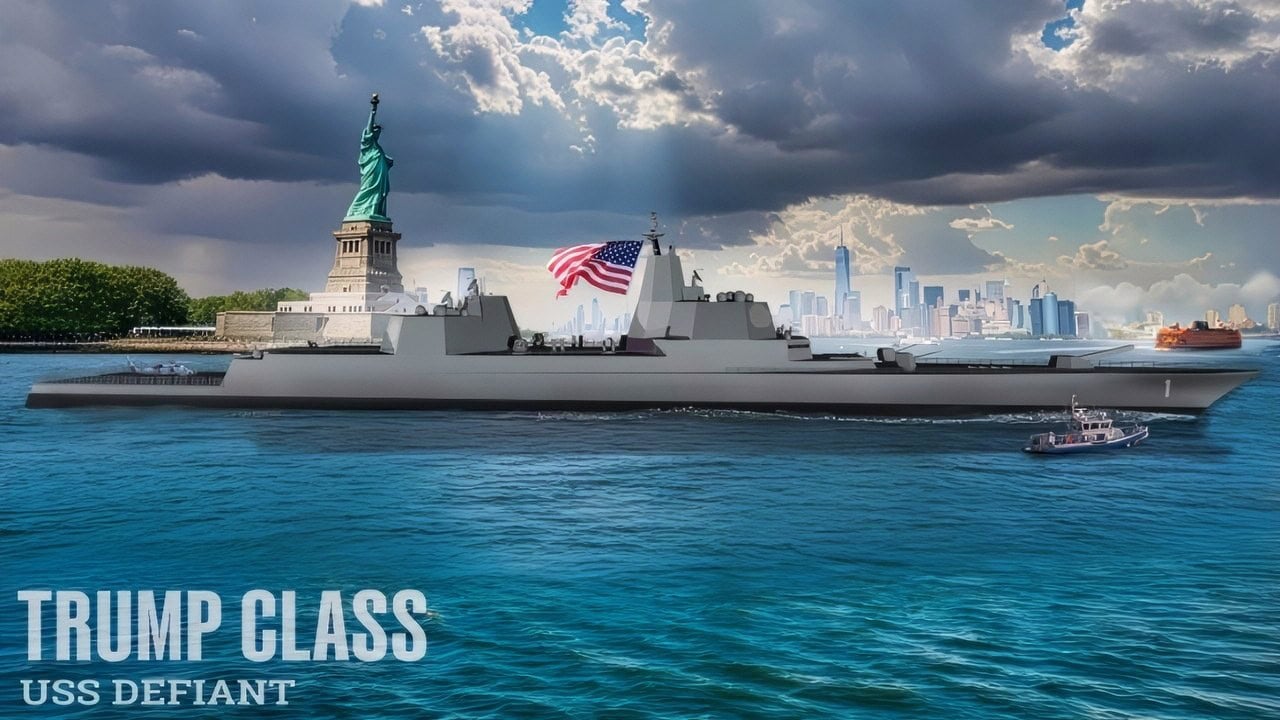
Trump-Class Battleship. Image Credit: Creative Commons/White House.
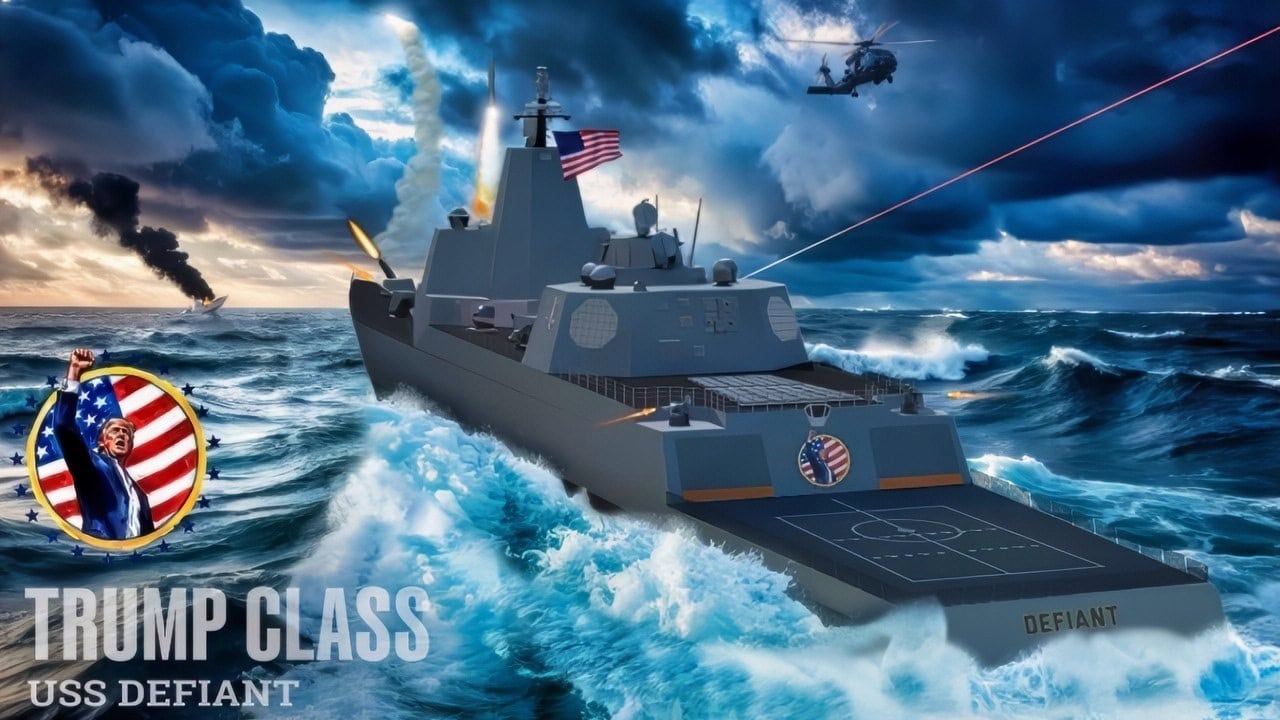
Trump-Class Battleship. Image Credit: Creative Commons/White House Photo.
The earlier DDG(X) destroyer program already sought many of the traits mentioned above, but the Trump-class proposal appears to be an even larger successor to that effort. Whether Congress fully embraces the concept is another matter.
Large warships are expensive, take years to build, and require resources that compete with those for the construction of submarines, carriers, and unmanned systems. It will be an enormous undertaking – not to mention an expensive one – and many Trump critics in Congress may well take issue with the plans for largely political reasons.
FFX Frigate Replaces the Troubled Constellation Program
The second new class in the request is the FFX frigate, which would replace the Constellation-class frigate plan. Reports indicate that only USS Constellation and USS Congress will now be completed from that earlier program, with the replacement FFX using a modified National Security Cutter hull already proven in Coast Guard service.
The change of plan comes after the Constellation faced overwhelming criticism over design growth and rising costs. By moving to an existing hull, the Navy hopes to accelerate the program and make it more affordable.
However, the Constellation-class is an example of how this kind of approach doesn’t always work, as it was originally based on the Italian FREMM frigate platform. The foreign hull was intended to save on costs, but eventually required so many changes that it might as well have been a new ship design.
Ships, Submarines, Carriers, and Amphibious Forces
The Navy’s $65.8 billion shipbuilding account would also fund all or part of 18 battle-force ships and 16 support ships.
Among the items being funded are one Columbia-class ballistic missile submarine plus another boat incrementally funded, two Virginia-class attack submarines, advanced procurement for four more Virginia-class submarines, continued funding for the third and fourth Gerald R. Ford-class carriers, and one Arleigh Burke destroyer.
The funding will also cover two AS(X) submarine tenders, two John Lewis-class oilers, one America-class amphibious assault ship, one Landing Platform Dock, and six Medium Landing Ships.
It also covers funding for F-35C carrier fighters and F-35B Marine fighters, Hawkeyes, Poseidon aircraft, helicopters, MQ-9A Reapers, Tomahawk missiles, and other interceptors.
The funding reflects growing concerns over China’s naval expansion, which the Pentagon has repeatedly warned poses a growing threat to the United States. China’s naval fleet, while consisting of smaller vessels than those of the U.S. Navy, is now the largest in the world by hull count.
About the Author: Jack Buckby
Jack Buckby is a British researcher and analyst specializing in defense and national security, based in New York. His work focuses on military capability, procurement, and strategic competition, producing and editing analysis for policy and defense audiences. He brings extensive editorial experience, with a career output spanning over 1,000 articles at 19FortyFive and National Security Journal, and has previously authored books and papers on extremism and deradicalization.