
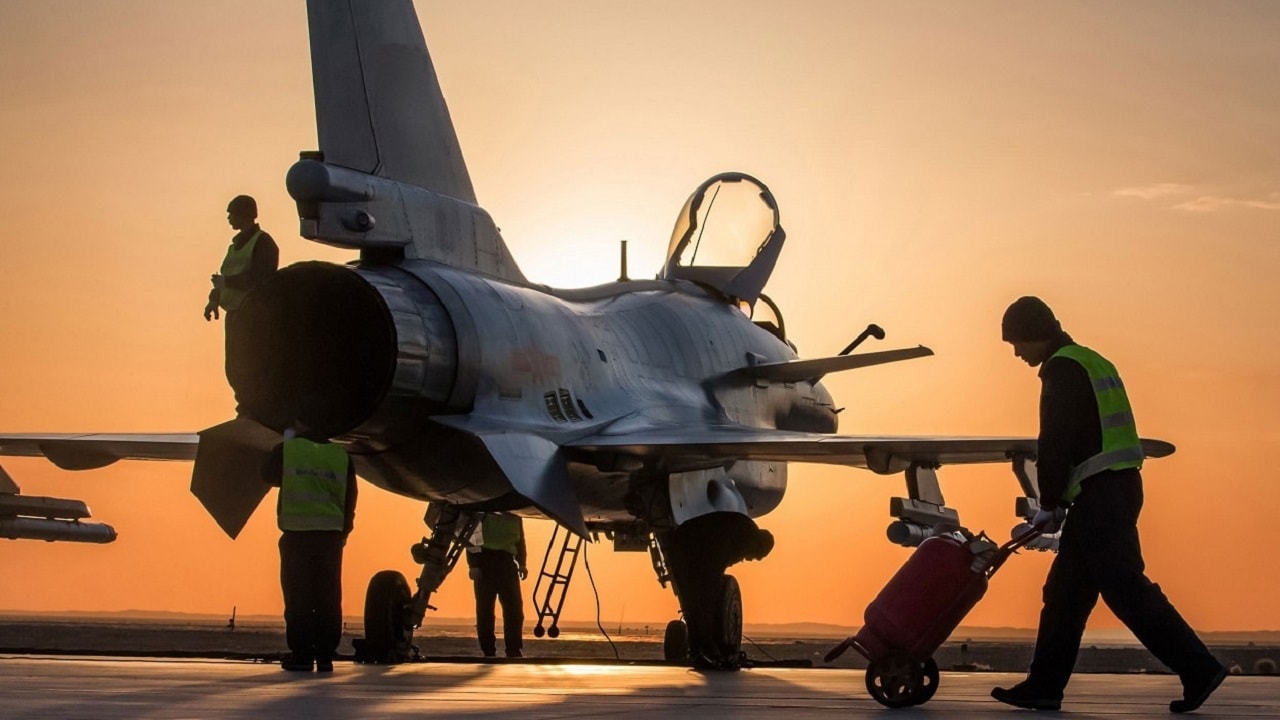
Key Points and Summary – China’s J-10 marked a break from copy-and-build habits, pairing Chengdu’s design institute with CAC manufacturing to field a homegrown canard-delta fighter.
-Early J-10A models entered service in the mid-2000s but relied on imported AL-31FN engines while China struggled to mature the WS-10.
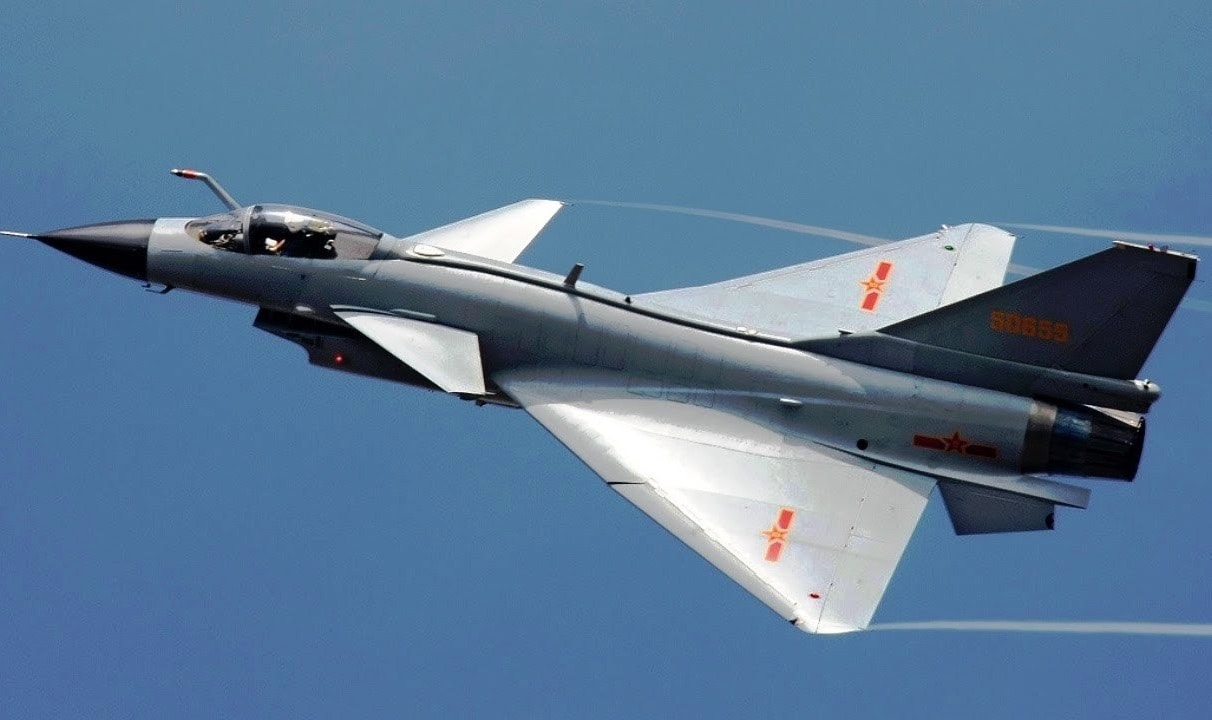
J-10 Fighter. Image Credit: Creative Commons.
-The J-10B introduced a diverterless supersonic inlet, improved cockpit displays, IRST, and better electronic protection.
-The J-10C pushed the jet into 4.5-generation territory with an AESA radar, stronger datalinks, upgraded EW, and long-range PL-15 missiles—turning the Vigorous Dragon into a key non-stealth pillar of PLAAF combat power.
-It signals rapid iteration and a march toward full engine sovereignty.
The J-10’s Real Breakthrough Wasn’t Stealth. It Was Networking
The Chengdu J-10 “Vigorous Dragon” was China’s most advanced domestically produced fighter jet until the J-20 debuted. While the initial version left a lot to be desired, China has continued to upgrade the aircraft, and it is now one of the country’s most capable non-stealth fighters.
The J-10 marked a departure from Beijing’s pattern of reverse-engineering Soviet-made fighters and showcased the rapid development of China’s aerospace engineering industry.
Development of the J-10
From the start, the J-10 was a procedural departure from the design and development of Chinese aircraft. The design competition was structured to select the best concept, rather than assigning the project to a single institute by fiat. During this competitive process, the Chengdu Aircraft Design Institute (CADI) proposed a compact, agile canard-delta configuration that drew on aerodynamic work from earlier studies and converged with the broader “Eurocanard” trend.
The industrial pairing of CADI as designer and the Chengdu Aircraft Corporation (CAC) as manufacturer produced a coherent team able to carry the project from digital design through flight testing and serial production.
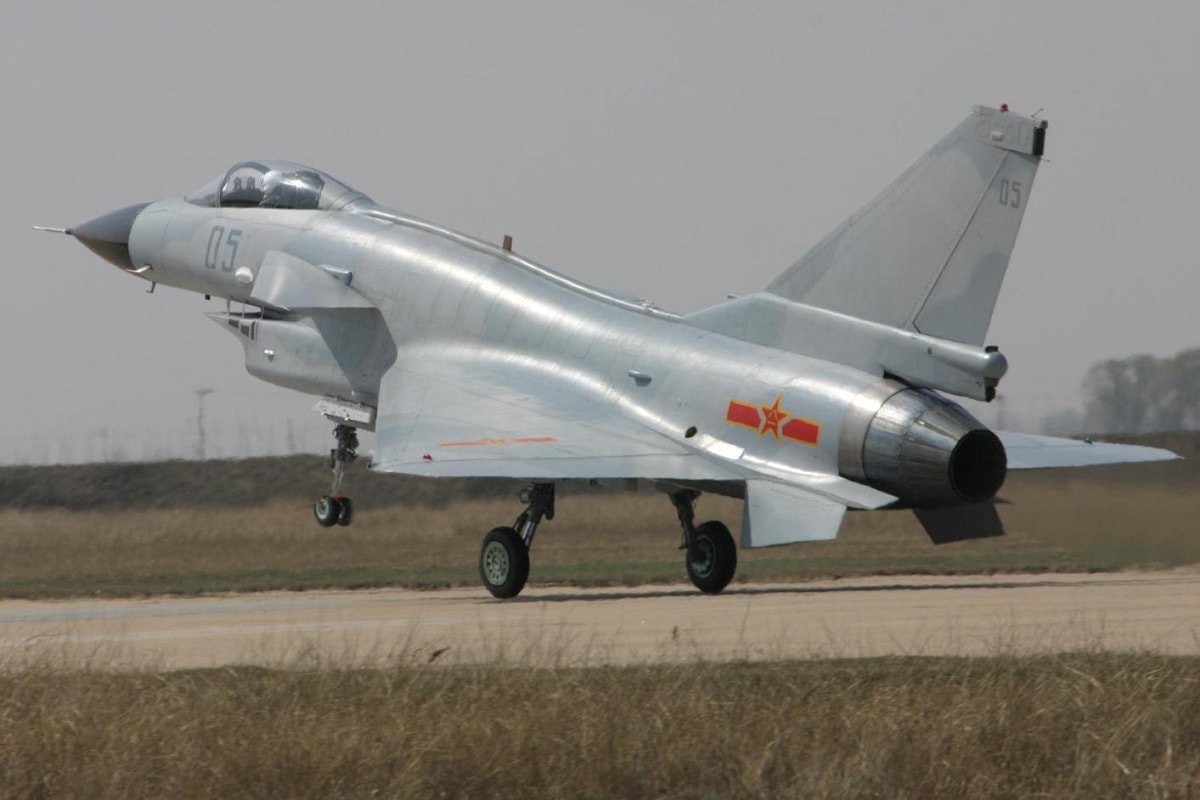
A Chengdu J-10 fighter of the People’s Liberation Army Air Force.
The most stubborn technical challenge was propulsion. China’s ambition to field an indigenous engine ran headlong into the reality that building a reliable and durable high-thrust engine is among aerospace’s most difficult tasks. Early versions of the WS-10 struggled to meet performance and reliability targets. To keep the program moving, the developers selected the Russian AL-31FN for prototypes and initial production aircraft.
That decision forced the designers to adjust the airframe a bit, but it anchored flight test schedules and gave Chengdu’s engineers the breathing room they needed to keep airframe, avionics, and systems development on track. The choice also aligned with China’s broader procurement posture in the 1990s, when imported Su-27s and Su-30s filled an immediate capability gap while domestic programs matured.
The Vigorous Dragon Takes to the Skies
Operational fielding began in the early 2000s as serial production ramped up. The initial single-seat J-10A variant moved into frontline People’s Liberation Army Air Force service around 2004–2005, joined by the tandem-seat J-10S to support training and complex mission sets.
The J-10A was not the most advanced fighter in the world, but it marked a vital leap for China: a domestically designed, digitally controlled, highly agile multirole aircraft whose cockpit, sensors, and weapons offered a credible foundation for iterative upgrades.
It quickly became clear that the J-10’s long-term value would not rest on the A-model alone, but on a planned pathway of variants with improvements that mirrored the evolution commonly seen in Western programs.
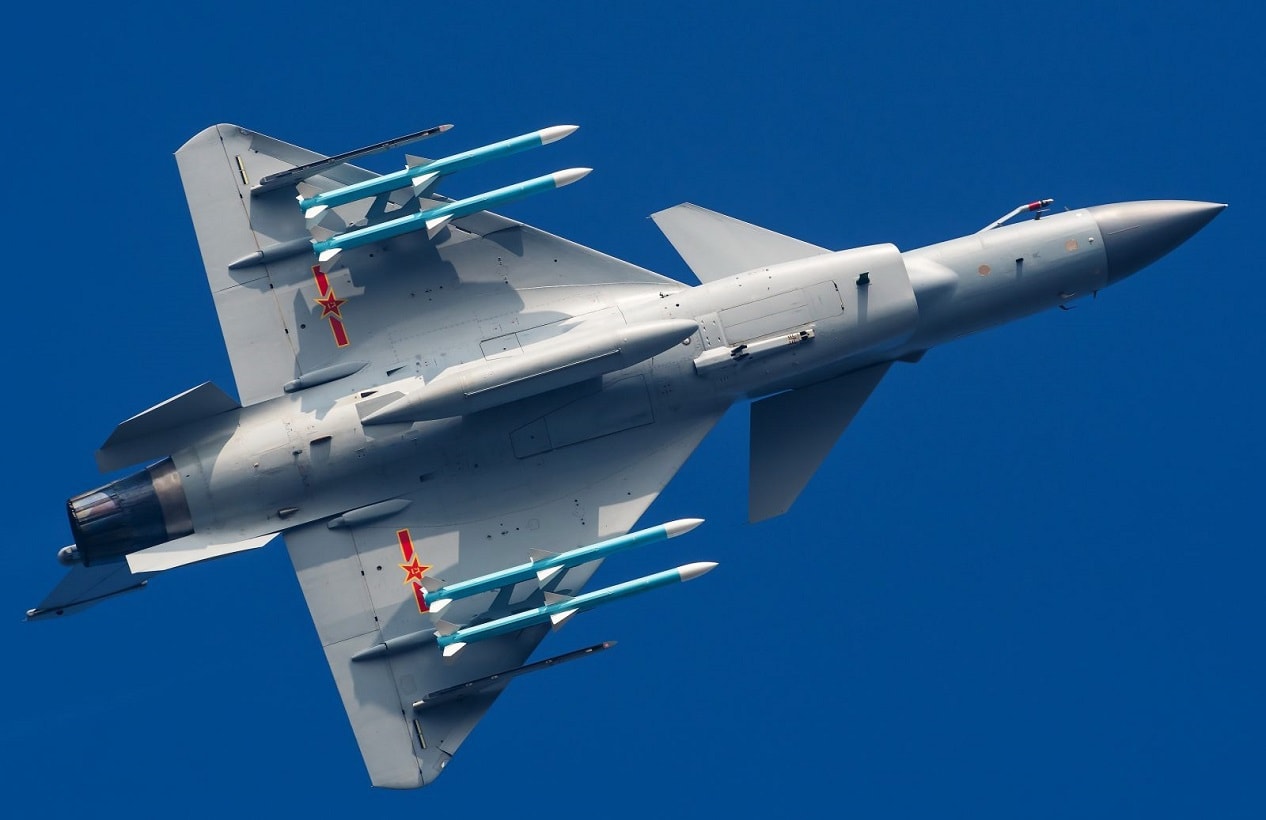
J-10 fighter from Chinese Air Force (PLAAF).
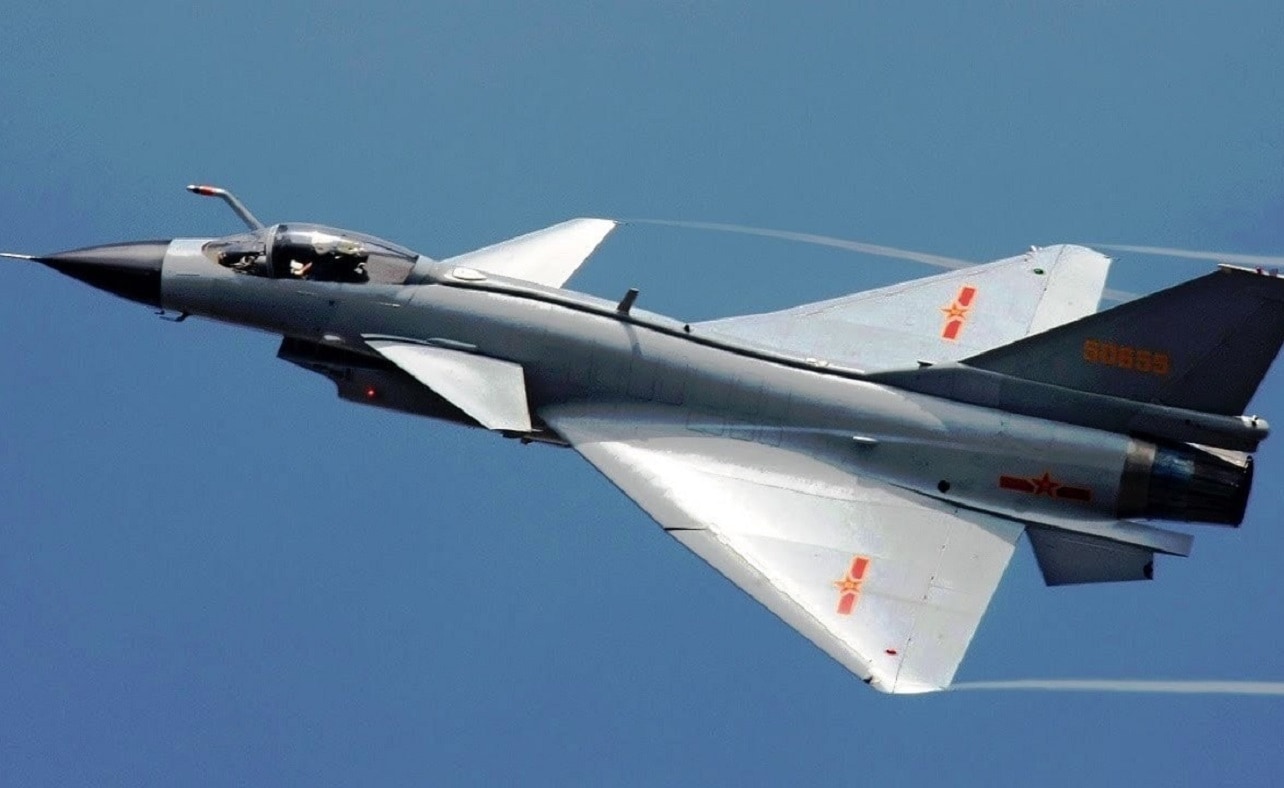
J-10 Fighter.
The J-10B was the first major modernization project. It introduced a diverterless supersonic inlet (DSI), recognizable by a “bump” shaping on the intake. The DSI reduced weight and complexity by eliminating moving-boundary layer diverters; improved signature characteristics by smoothing the intake geometry; and maintained quality airflow to the engine at supersonic speeds.
On the sensor side, the B-model added an infrared search-and-track system in front of the cockpit, upgraded its radar to a more capable electronically scanned type, and integrated missile-approach warning sensors.
The cockpit gained broader multifunction displays and improved human-machine interfaces, enhancing the pilot’s ability to manage large volumes of sensor data and orchestrate weapons employment under high workload.
The J-10C: One of China’s Most Advanced Fighters
The J-10C took its next comprehensive step and brought the jet to 4.5-generation capability. It integrated an active electronically scanned array (AESA) radar with significantly improved detection range, track-while-scan capacity, jamming resistance, and low probability of intercept modes.
Data links and satellite communications deepened the aircraft’s ability to network with other fighters, airborne early warning platforms, and ground systems, turning the J-10C from a self-contained shooter into a node in a larger combat cloud.
Electronic warfare capabilities were upgraded again with digital radar warning receivers, internal countermeasures, and options for external electronic countermeasures pods. The cockpit refined the wide-angle head-up display and multiple large multifunction screens, paired with a modern helmet-mounted sight to enable high-off-boresight employment of agile short-range missiles.
A key advantage of the C model is its pairing with long-range beyond-visual-range missiles such as the PL-15, whose active radar seeker and datalink guidance exploit the AESA’s track quality and allow engagements at standoff ranges.
Specs and Capabilities
Designers also pressed forward on propulsion. While many J-10A/B/C airframes flew with AL-31FN engines, later J-10C batches began to incorporate domestic WS-10B variants as their reliability and performance improved.
In tests and limited service, WS-10B configurations have demonstrated thrust levels and life cycles compatible with the J-10C’s operational demands, and China continues to iterate on materials, blade cooling, and control software to raise durability and efficiency. The outcome is a fighter line moving steadily toward full domestic propulsion sovereignty.
In terms of armament, the J-10C can carry up to 11 external stores on its hardpoints, supporting a payload of roughly 8 tons. It integrates advanced air-to-air missiles such as the PL-10 for short-range engagements and the aforementioned PL-15, giving it a formidable reach in networked operations.
For strike missions, it can employ precision-guided bombs, anti-ship missiles, and anti-radiation weapons. Its engine gives the J-10 a top speed of about Mach 2, a high thrust-to-weight ratio, and excellent agility thanks to its delta-canard design and digital fly-by-wire controls.
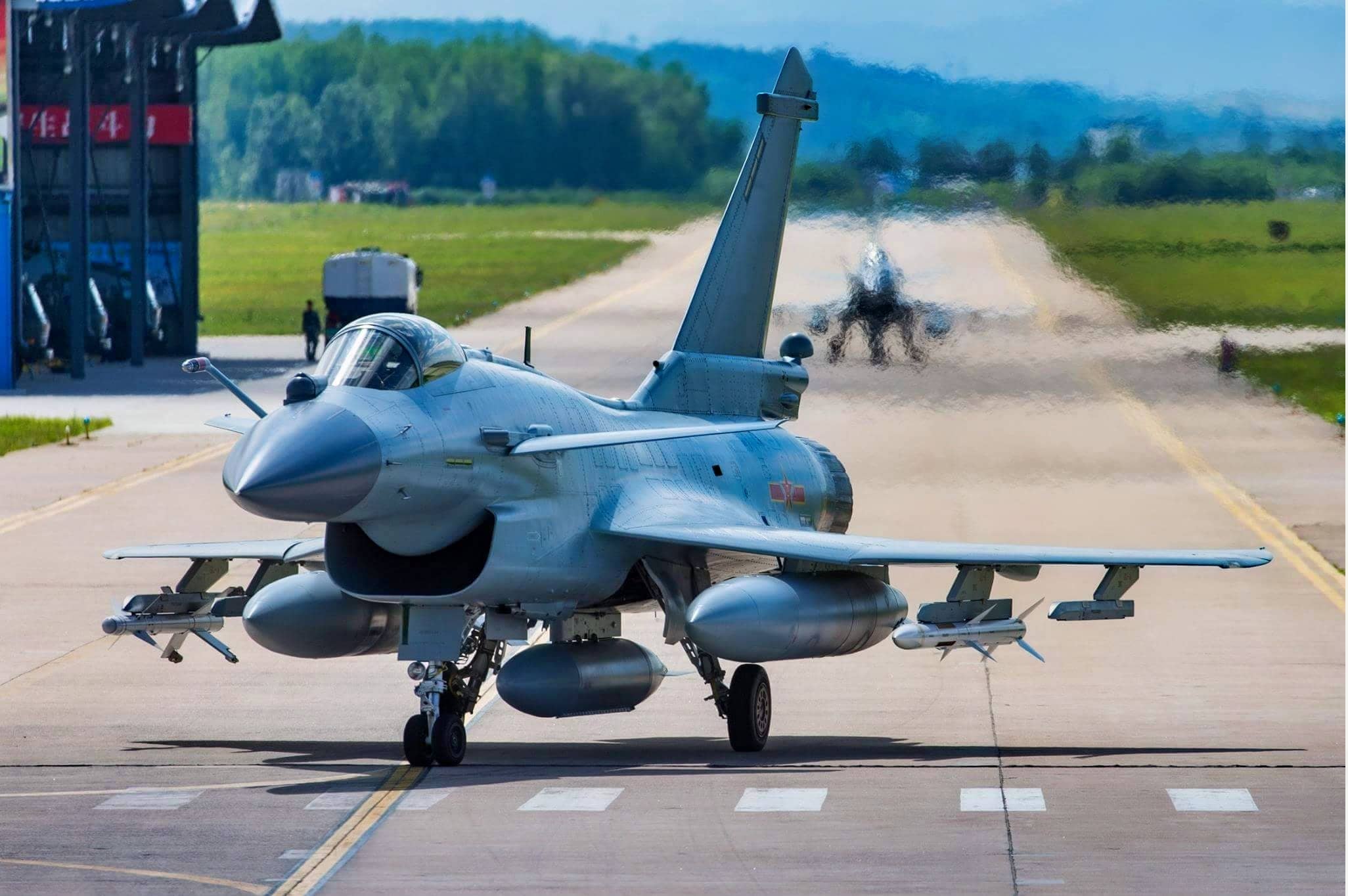
J-10C Fighter from China. Image Credit: Creative Commons.
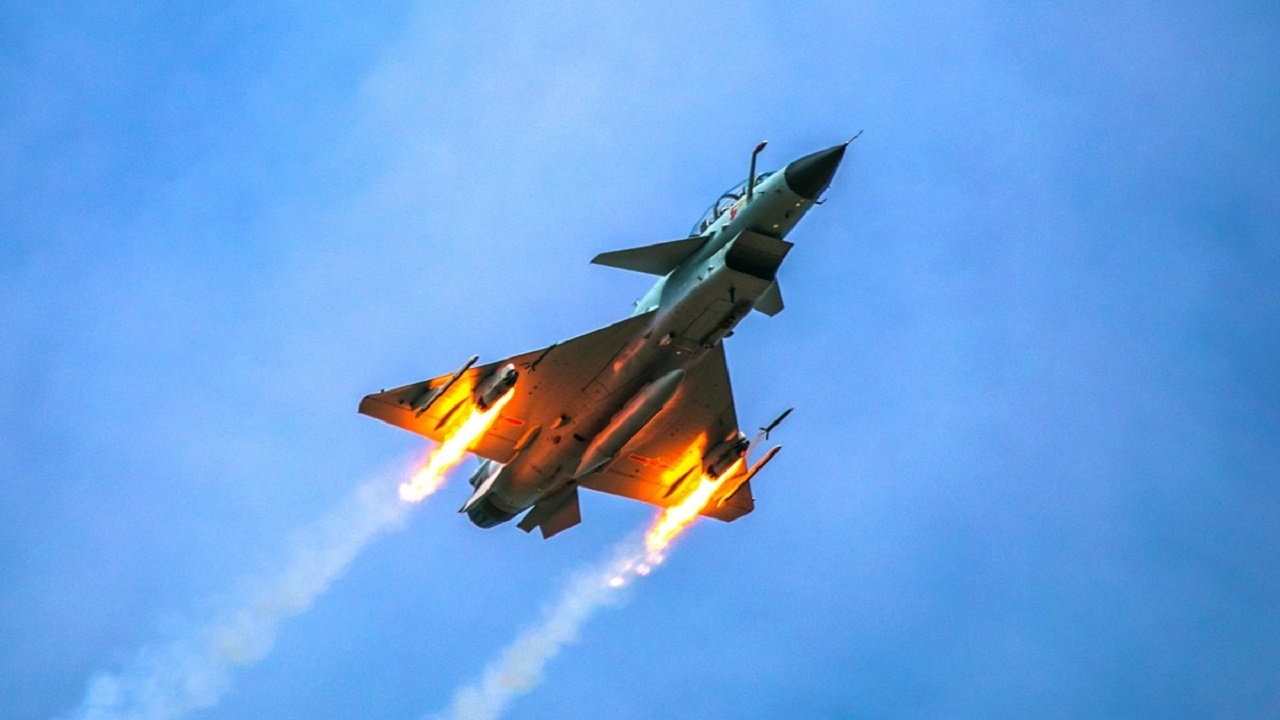
J-10 Fighter. Image Credit: Creative Commons.
Combined with datalink connectivity and satellite communications, the J-10C operates as a fully networked platform, capable of integrating into China’s broader air combat system and delivering multi-role flexibility across air superiority, strike, and maritime missions.
About the Author: Isaac Seitz
Isaac Seitz, a Defense Columnist, graduated from Patrick Henry College’s Strategic Intelligence and National Security program. He has also studied Russian at Middlebury Language Schools and has worked as an intelligence Analyst in the private sector.