
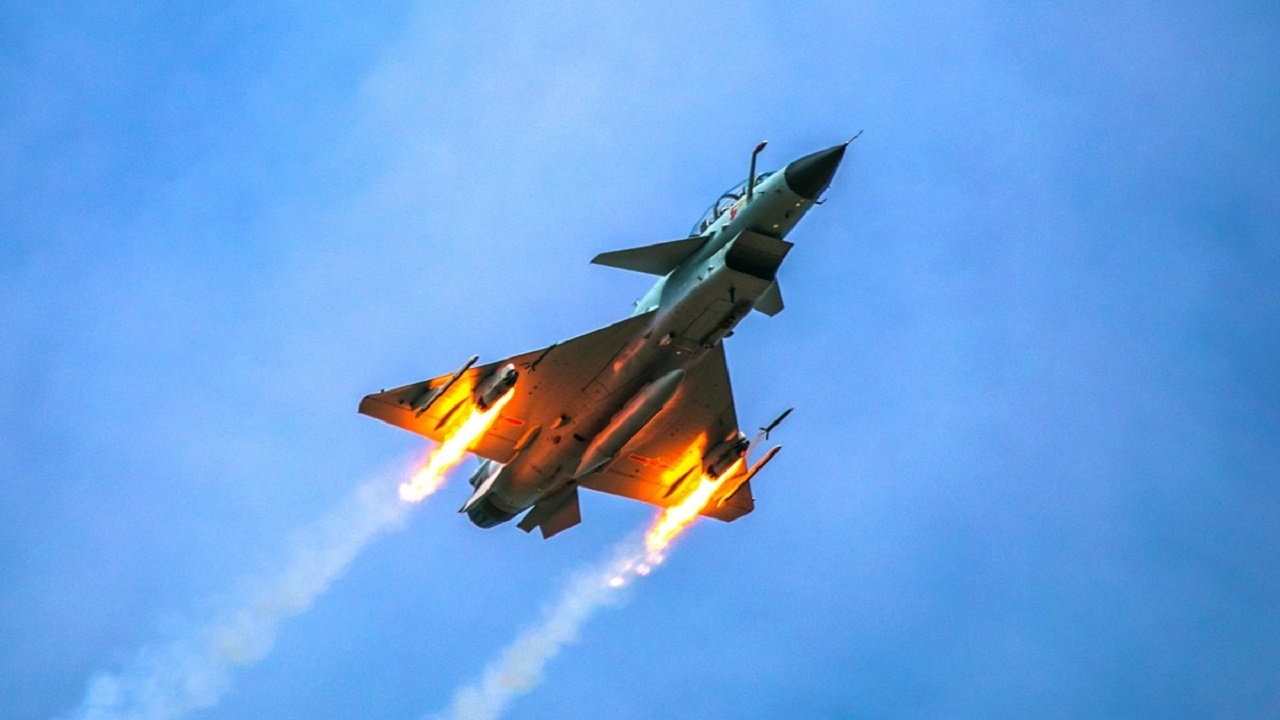
Key Points and Summary – China’s J-10 “Vigorous Dragon” was billed as Beijing’s homegrown answer to the F-16, but its real origins are far more complicated.
-In the 1990s, as Israel sought export markets for its canceled Lavi fighter, key technologies in avionics, flight controls, composites, missiles, and sensors quietly flowed to China’s Chengdu Aircraft Corporation.
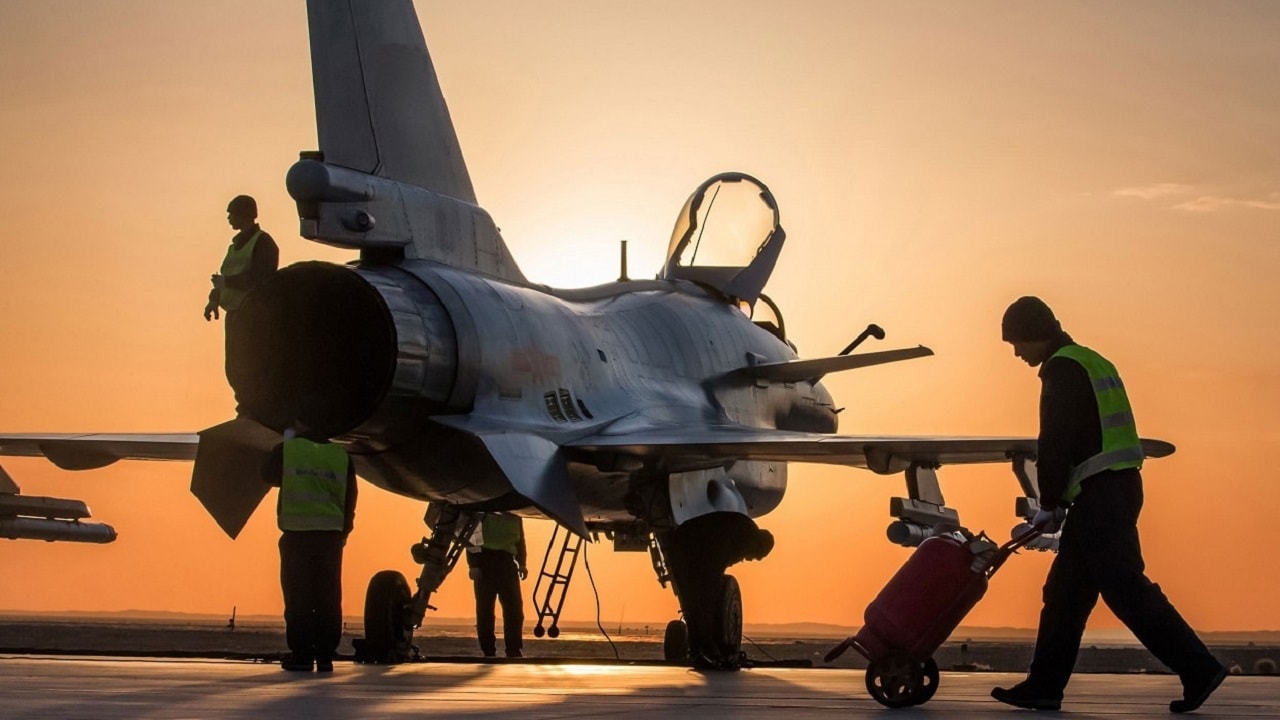
Chinese J-10 fighter. Image Credit: Creative Commons.
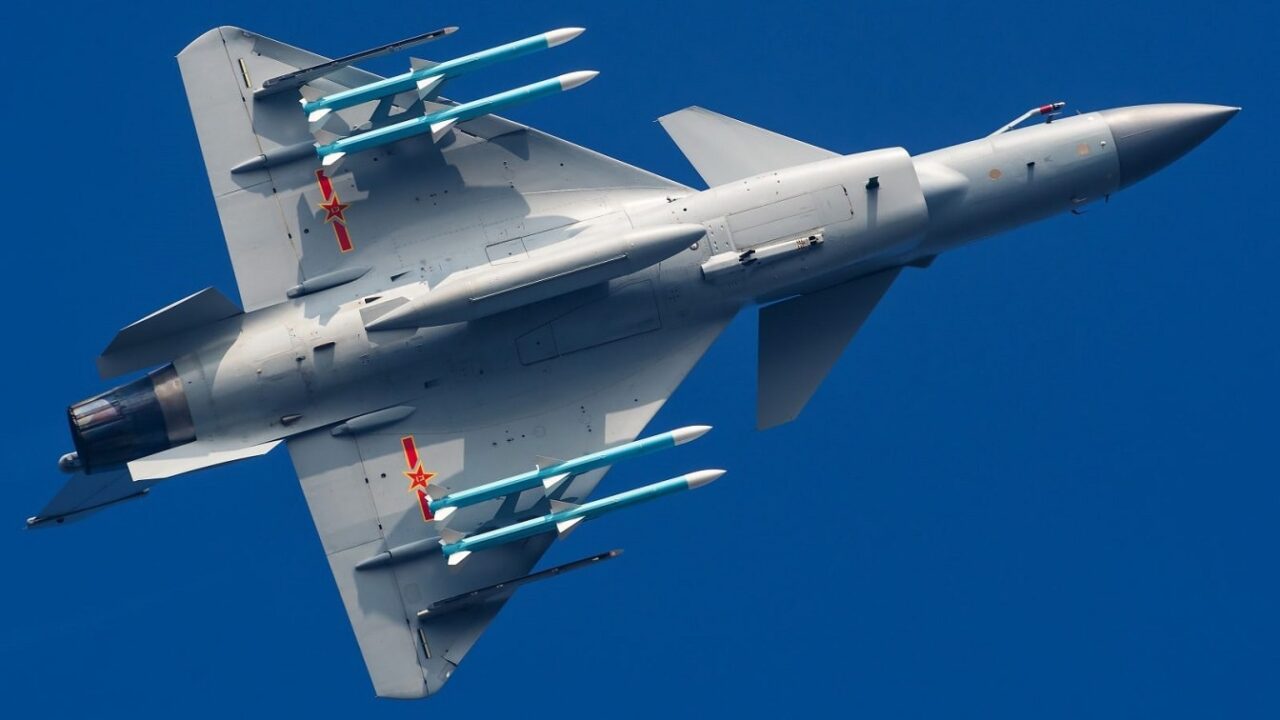
Chengdu J-10 Fighter Jet. Image Credit: Creative Commons.
-That partnership gave the PLAAF a true fourth-generation platform and a massive boost in confidence and engineering know-how—help that likely fed into later designs like the J-20.
-What looked like harmless “fighter diplomacy” at the time now appears a strategic mistake as China’s military power surges.
China’s J-10 Fighter Jet Had Israeli Fingerprints All Over It
The Chinese were excited when introducing the J-10 Vigorous Dragon fighter jet to the world in 1998. This was the People’s Liberation Army Air Force’s (PLAAF) attempt to fly a fourth-generation warbird regularly and an answer to the F-16 Fighting Falcon.
The PLAAF had to bring its fighter fleet into the modern era as it sought to become more than a fledgling service branch flying older Soviet-era airplanes that could barely police China’s own airspace.
The People’s Republic was then kicking and screaming to become an indigenous producer of airplanes capable of regional dominance.
Pilots were ready to become more patriotic, buoyed by a morale boost that could enable the PLAAF to blanket East Asia with new fighter jets.
Israeli DNA on the Chinese Aerospace Industry
But there may have been a strange bedfellow that assisted the adoption of the Vigorous Dragon. Could the Israelis have provided the technology behind the J-10?
This could have spurred the development of the jet and enabled the Chinese aerospace industry to keep pace with global trends in advanced manufacturing.
Chengdu J-10 Fighter Jet. Image Credit: Creative Commons.
The alleged Israeli fingerprints on the J-10 had the United States wondering just how loyal the Israelis were to the Americans.
To be sure, the Israelis have a right to profit from exporting aerospace technologies.
The United States has sold weapons systems in the past to alleged allies that abused human rights and were less than democratic.
The Relationship Made Sense for Both Sides
Most would be surprised to learn that the Israelis in the 1990s considered China an ally.
Diplomatic relations between Tel Aviv and Beijing were cemented in the early part of the decade.
Both wanted export markets, and this ultimately led to the formalization of military ties
At first, the relationship seemed harmless.
China’s PLAAF had no combat experience.
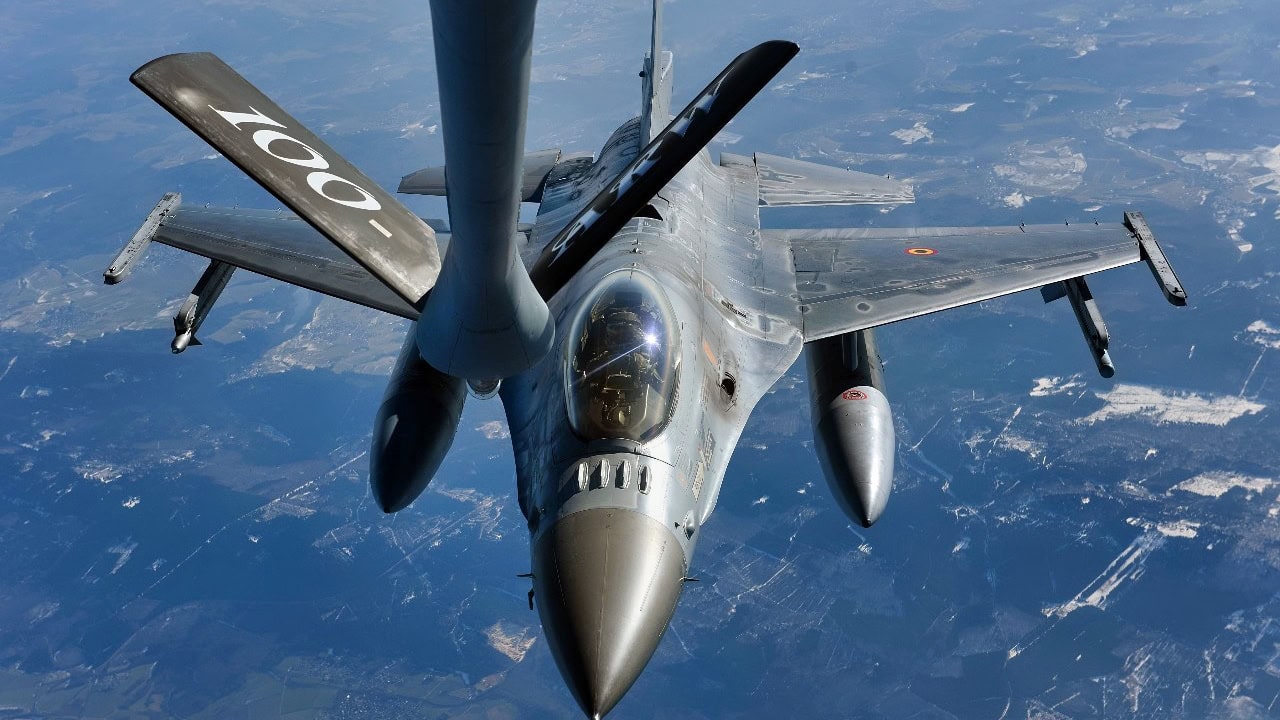
A Belgian Air Component F-16 flies behind a U.S. Air Force KC-135 Stratotanker from the 100th Air Refueling Wing, RAF Mildenhall, England, before receiving fuel over Germany, Feb. 23, 2018. The air refueling was part of a large force exercise with NATO allies including the Belgian, Dutch, French and German air forces. (U.S. Air Force photo by Airman 1st Class Luke Milano)
Its pilots were not trained well and refused to fly in bad weather or at night.
And the country was not yet a military power capable of dominating the region.
Soon, there was a budding partnership between China’s Chengdu Aircraft Corporation (CAC) and Israeli defense giant Israel Aerospace Industries (IAI).
This made sense economically. China was a burgeoning commercial power that looked for more beneficial and high-paying jobs that could spur economic development. Israel wanted the same type of improvement to its homegrown defense industry.
One Old Israeli Fighter Formed the ‘Guts’ of the J-10
Israel had the research and development from IAI’s cancelled Lavi fighter program.
The Lavi was also a fourth-generation fighter jet built during the 1980s. However, the Israelis were then spending almost a fifth of their GDP on defense, and there was a movement to diversify the economy away from military investment and to look toward civilian technology firms that would create more economic advantages.
The Lavi was seen as a program that could be cut.
The Americans also got involved and reduced allocated funding for the Lavi. Undeterred, the Israelis still had plans for the airplane.
“Israel is believed to have transferred critical aspects of the Lavi program to China, including avionics, composite materials, and sophisticated flight control systems—many of which paralleled those used in contemporary American fighter jets,” according to DefenceSecurityAsia.com.
The Overall Airplane Design Was the First Step in Development
The Lavi had a design that Chengdu also used for the J-10 – namely, a canard-delta configuration that was seen as an excellent means of making the J-10 faster and more maneuverable.
China then leaned on the Israelis for inspiration for avionics and homegrown engine design for the Vigorous Dragon.
Israel did not stop there. The Jewish state also supplied engineering and technological expertise to China’s PL-8 air-to-air missile, which was suspiciously close to the Israeli Python-3 missile, DefenceSecurityAsia.com noted.
That wasn’t all. There was also Israeli inspiration for radar and sensor suite innovations that would help the J-10 identify, track, and destroy enemy aircraft and missiles. The IAI also improved internal navigation systems.
The Partnership Gave Chinese Brainpower a Boost
Israel, unfortunately, delivered one intangible level of military assistance.
The Chinese became more confident as a result of the technology transfer.
The engineers and scientists who had been toiling on their own with little inspiration became transformed. The research and development phase had now enabled Chengdu to adopt Israeli technology and, likely, later use it to develop fifth-generation fighters like the J-20 Mighty Dragon.
Moreover, the Chinese have enjoyed success selling the J-10C to partner nations like Pakistan, an air force that has been successful against India lately.
Israel was simply trying to make more money and maximize profits. Had they known that the Chinese would emerge decades later as a regional hegemon with a vast military that threatened the West, they may have reconsidered. At the time, the innovation exports were seen as harmless.
Hopefully, the Israelis are not sneaking around to provide any other dual-use technology to China. China is still Israel’s second-largest trading partner internationally and its largest commercial partner in the Indo-Pacific.
Israel is now frustrated with the Chinese, though. Beijing often sides with Gaza and supports a Palestinian state. There is not much Israel can do about this diplomatic policy except grin and bear it, since the Israeli economy depends so much on the Chinese.
Was it a strategic mistake for Israel to help China develop fighter jets? Israel is probably looking at the relationship as one that was necessary at that point in its history, but would be questionable today.
China certainly made out well in its dealings with the Israelis in the 1990s. The J-10 Vigorous Dragon would not have been possible without Israeli assistance.
We can only look back at this period of “fighter plane diplomacy,” which was a regrettable action from Tel Aviv. Let’s hope the Israelis do not help China again with technology transfers that would move the needle on the Middle Kingdom’s heightened military power.
About the Author: Brent M. Eastwood
Author of now over 3,000 articles on defense issues, Brent M. Eastwood, PhD is the author of Don’t Turn Your Back On the World: a Conservative Foreign Policy and Humans, Machines, and Data: Future Trends in Warfare plus two other books. Brent was the founder and CEO of a tech firm that predicted world events using artificial intelligence. He served as a legislative fellow for US Senator Tim Scott and advised the senator on defense and foreign policy issues. He has taught at American University, George Washington University, and George Mason University. Brent is a former US Army Infantry officer. He can be followed on X @BMEastwood.