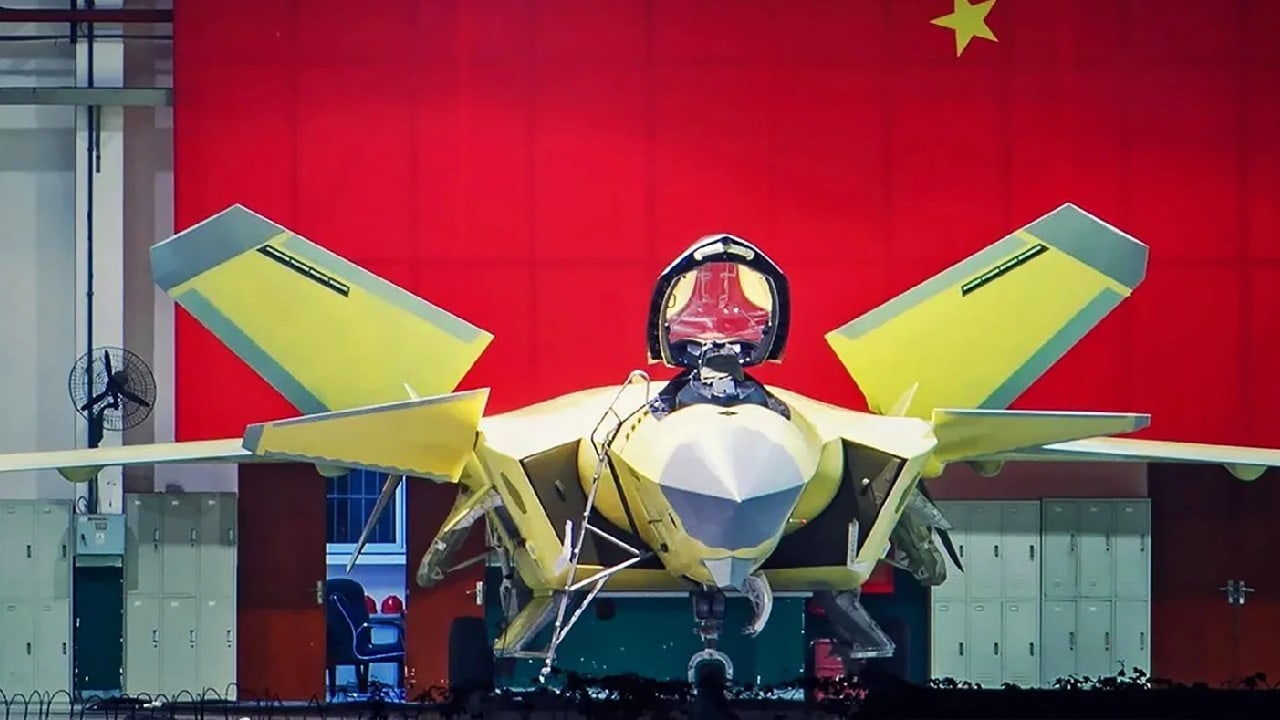
Key Point and Summary – China’s J-20 Mighty Dragon looks formidable on paper: Mach 2 speed, a big AESA radar, 24,000 pounds of payload, and an indigenous WS-15 engine giving F-35–like range.
-Its canard-delta layout and large nose suggest serious stealth and sensor reach for defending China’s maritime perimeter. Yet the jet remains oddly absent from real-world operations.
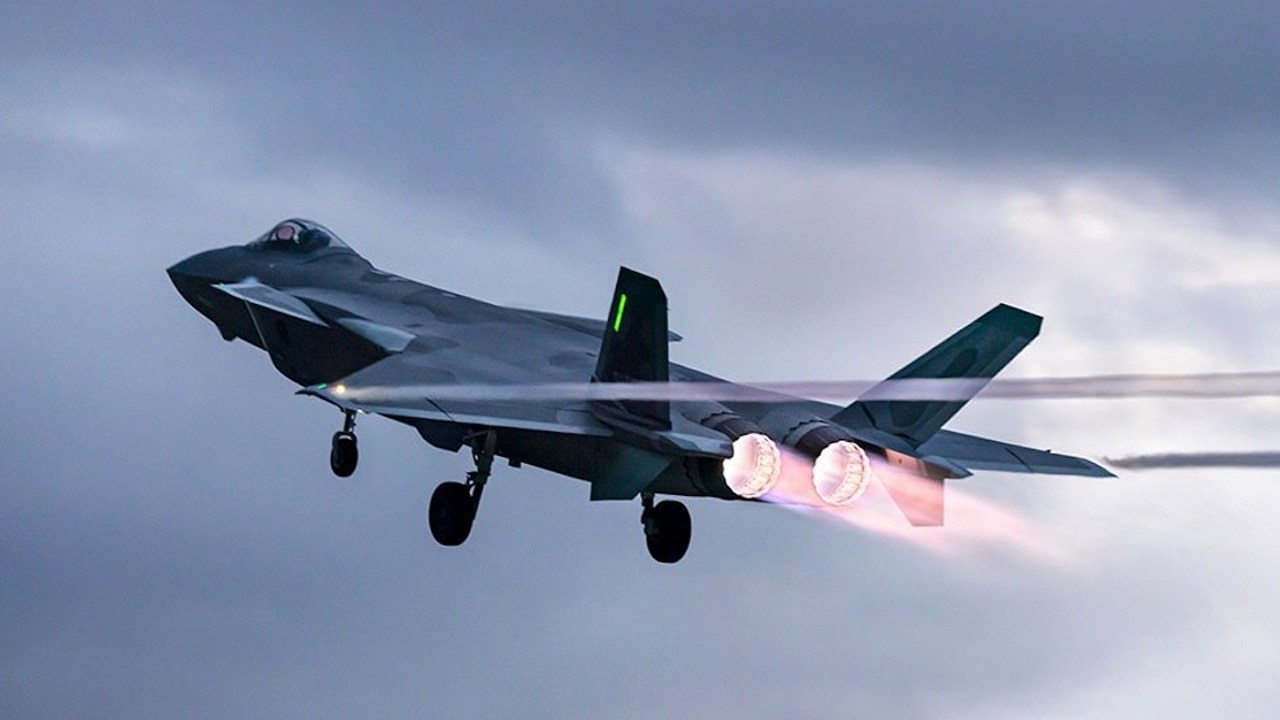
J-20 Fighter. Image Credit: Chinese internet.
-Despite hundreds in PLAAF service and thousands of ADIZ incursions around Taiwan, the J-20 is rarely seen over water and has logged few observable encounters with U.S. fighters.
-That gap points to a lingering weakness: limited pilot training and minimal experience in complex large-scale maritime combat missions.
China’s Stealth J-20 Looks Scary – So Why Is It Rarely Seen?
The specs of the J-20 Mighty Dragon stealth fighter flown by China seem formidable: it can hit speeds faster than an F-35 at Mach 2.0, operate with a long-range AESA radar for targeting, and carry a heavy max payload of 24,000 pounds of ordnance to operate as a bomb-truck as needed.
The aircraft is also stealthy in appearance and equipped with two forward-mounted small wings, or “canards,” for vectoring and flight stability.
An indigenously built Chinese WS-15 engine powers it and has a range comparable to the F-35’s, roughly 1,200 miles.
The Chinese J-20 certainly appears slightly larger than an F-22 or F-35 stealth jet fighter, given its dual-wing configuration, an engineering method used to optimize airflow and achieve improved aerodynamic performance.
While the wing configurations of a J-20 and F-22 are decidedly different, the J-20 fuselage itself appears to resemble that of an F-22 with two engine exhausts and a blended, curved, or rounded main body exterior.
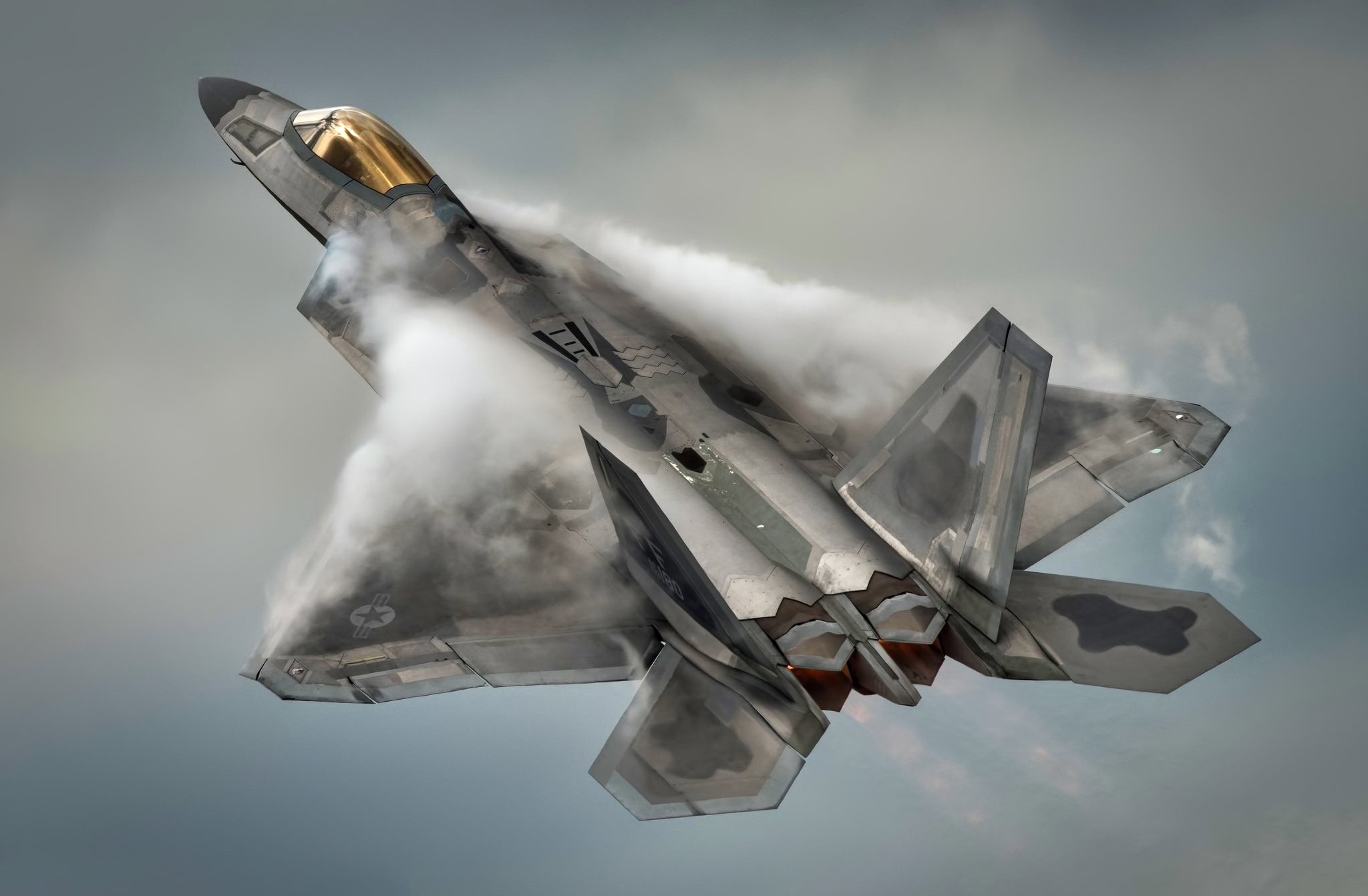
F-22 Raptor Fighter Jet US Air Force
National Defense University’s China Aerospace Studies Institute published research in July of 2025 called “A Look at the J-20 AESA Radar”, which cites evidence that perhaps the large nose radome on the J-20 contained a larger, longer-range, more sensitive AESA radar compared to the F-22 and F-35.
With a larger number of transmit/receive nodules and advanced “packaging,” the J-20 could operate with a dangerous long-range AESA radar designed to defend a semi-circular Pacific perimeter around China’s coast.
The research suggested that China envisioned a defensive, counterinterventionist approach to the J-20.
Never Flown at Sea?
The mystery of the J-20 seems to reside in the curious reality that the aircraft has almost never been “seen” or flown much over water.
The PLAAF now operates as many as 300 J-20 aircraft, yet there is little to no record of sightings or observable training exercises.
A Senior US Air Force General previously described a 2022 encounter wherein F-35s flew in close proximity to a J-20.
The Chinese government-backed Global Times newspaper describes an incident in which a J-20 and an F-35 flew in close proximity during routine People’s Liberation Army exercises in the region.
The paper quotes Air Force Gen. Kenneth Wilsbach, former Commander of the US Pacific Air Forces, as saying the US pilots were “impressed” by the J-20. The US general’s quote reportedly came from an online event broadcast on YouTube, the paper says.
“We got relatively close to the J-20s along with our F-35s in the East China Sea, and we’re relatively impressed with the command and control that was associated with the J-20,” Wilsbach reportedly said, according to the Chinese paper. Wilsbach also reportedly said the Chinese pilots were “flying the J-20s pretty well,” according to the paper.
While whatever was observed during this encounter is highly relevant, the pressing question is, quite simply, how rarely the aircraft is seen.
Academic research by National Defense University cataloging China’s increasing violations of Taiwan’s Air Defense Identification Zone cited that the number of ADIZ violations by Chinese aircraft jumped from 972 in 2021 up to 3119 in 2022.
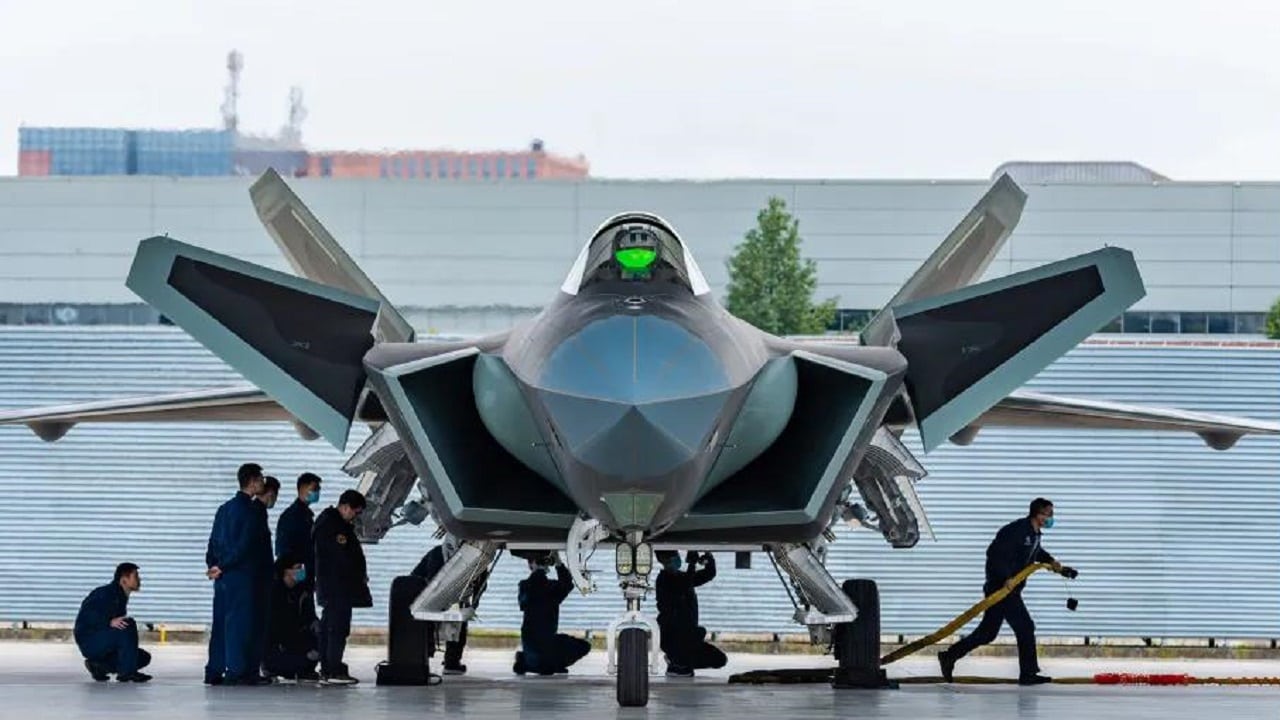
J-20. Image Credit: Chinese Internet.
This pattern has continued, yet despite the apparent uptick in PLA AF activity in the skies near Taiwan, the researchers found few to no instances in which the J-20 was among the aircraft used.
Lack of Training
Much of the technology woven into the J-20 may still be unknown or mysterious, yet the aircraft suffers from what could be described as a training deficit.
Apart from a recent report that the J-20 flew undetected above waters between Japan and South Korea, there is little to no evidence that the J-20 has flown over water in any substantive capacity.
This suggests that PLA AF pilots may not have sufficient training or preparation with the aircraft to handle any large-scale engagement.
About the Author: Kris Osborn
Kris Osborn is the President of Warrior Maven – Center for Military Modernization. Osborn previously served at the Pentagon as a highly qualified expert in the Office of the Assistant Secretary of the Army—Acquisition, Logistics & Technology. Osborn has also worked as an anchor and on-air military specialist at national TV networks. He has appeared as a guest military expert on Fox News, MSNBC, The Military Channel, and The History Channel. He also has a Master’s Degree in Comparative Literature from Columbia University.