
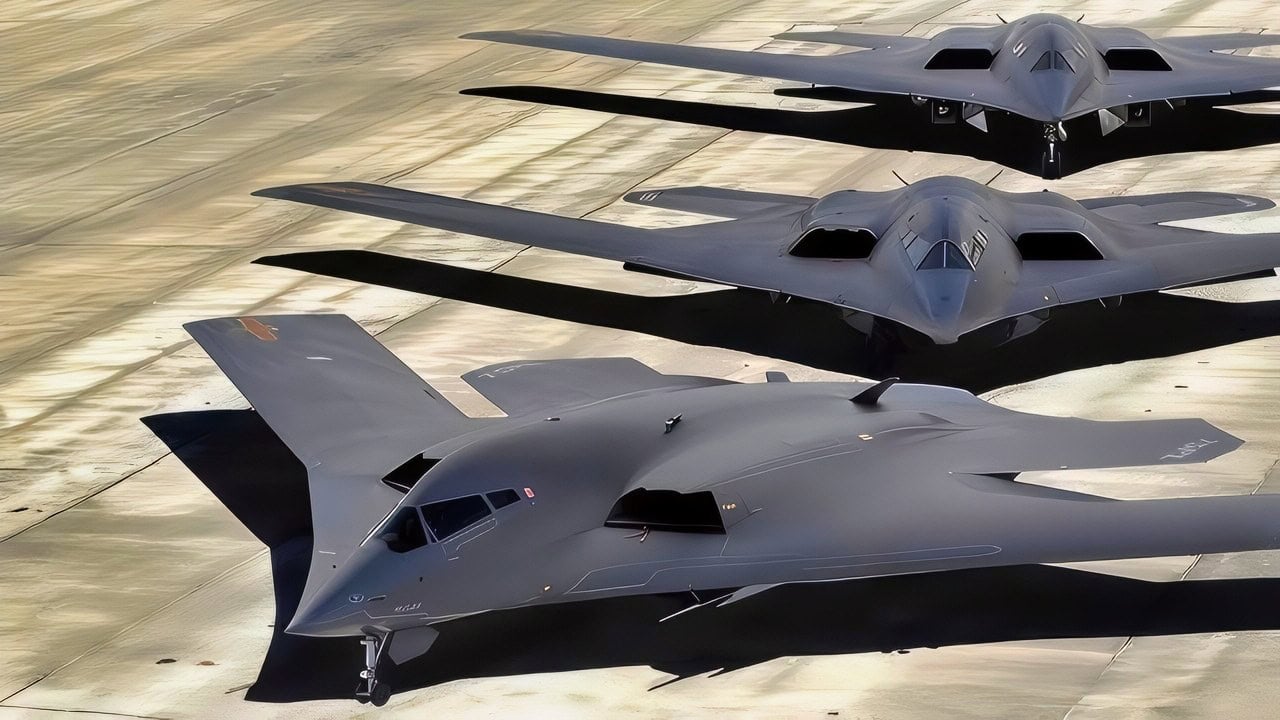
For thirty-seven years, exactly one country on earth has been able to put a stealth bomber over an enemy. Since the B-2 Spirit first flew in 1989, the United States has held a genuine monopoly on penetrating strategic airpower, and every American war plan, every allied defense posture, and every adversary’s nightmare has been built around that capability running in only one direction. Iran learned what a monopoly means last June, when B-2s it had never detected dropped bunker busters on Fordow, and again this year, over a hundred days of war. No American base, city, or fleet has ever had to plan for the reverse. China’s H-20 is the program that would end that era, and the right way to think about it is to ask, seriously and specifically, what breaks on the day it flies.
A Stealth Bomber Monopoly Since The B-2’s First Flight
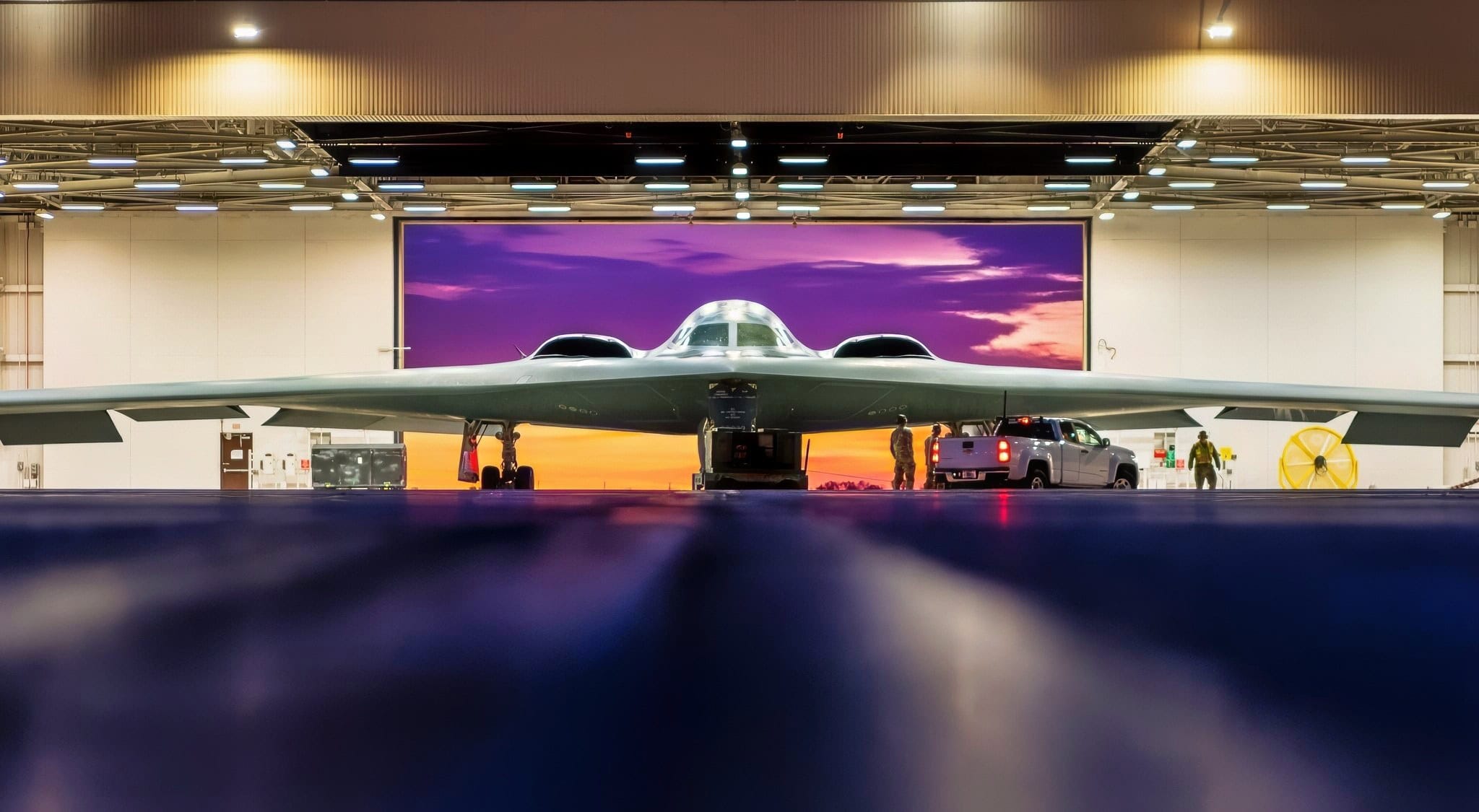
U.S. Airmen assigned to the 393rd Bomber Generation Squadron prepare a B-2 Spirit aircraft for flight during Exercise Global Thunder 26 at Whiteman Air Force Base, Missouri, Oct. 24, 2025. Global Thunder is an annual command and control exercise designed to train U.S. Strategic Command forces and assess joint operational readiness. (U.S. Air Force photo by Staff Sgt. Joshua Hastings)
The monopoly deserves a moment of appreciation, because its effects are so deeply embedded that Americans stopped noticing them.
The Air Force planned to buy 132 B-2s and ended up with just 21, yet even that tiny silver-bullet fleet reshaped the behavior of every adversary on the planet. Russia and China spent three decades and uncounted billions building low-frequency radars, infrared search-and-track networks, and layered surface-to-air missile systems for one overriding reason: American stealth bombers existed, and they had to be found. The United States, facing no equivalent threat, built nothing comparable. American air defense atrophied to a thin homeland network designed for hijacked airliners and stray cruise missiles, because nothing stealthy was ever coming the other way.
That asymmetry is the inheritance at stake. The entire architecture of American power in the Pacific assumes the rear areas are safe from air attack, that the hard counter-stealth problem belongs to the other side, and that the bomber that arrives without warning always carries American markings. The H-20 is aimed at every one of those assumptions.
The H-20 Record: Ten Years Of Promises From Xi’an
What China has actually produced so far is a decade of teases. The program surfaced in 2016, when then-air force commander Ma Xiaotian announced that China was developing a new long-range bomber. Chinese media predicted a starring role at the air force’s 70th-anniversary parade in 2019; the parade came and went without it. Renderings circulated in 2021, alongside a brief teaser at the end of an official recruitment video.
Reports claimed a maiden flight was imminent in 2022; none came. In 2024, Air Force deputy commander Wang Wei dismissed talk of technical troubles and promised the bomber was coming soon. It did not come.
The American intelligence picture has grown more skeptical in parallel. The Pentagon’s 2024 assessment projected the H-20 may debut sometime in the next decade, pushing expectations into the 2030s, and US intelligence reporting that year suggested the program had run into development problems. Air Force Global Strike Command’s commander, General Stephen Davis, put it plainly this year: China is aggressively pursuing the capability but is “just not there yet,” and remains, for now, a regional bomber force flying H-6 derivatives of a 1950s Soviet design.
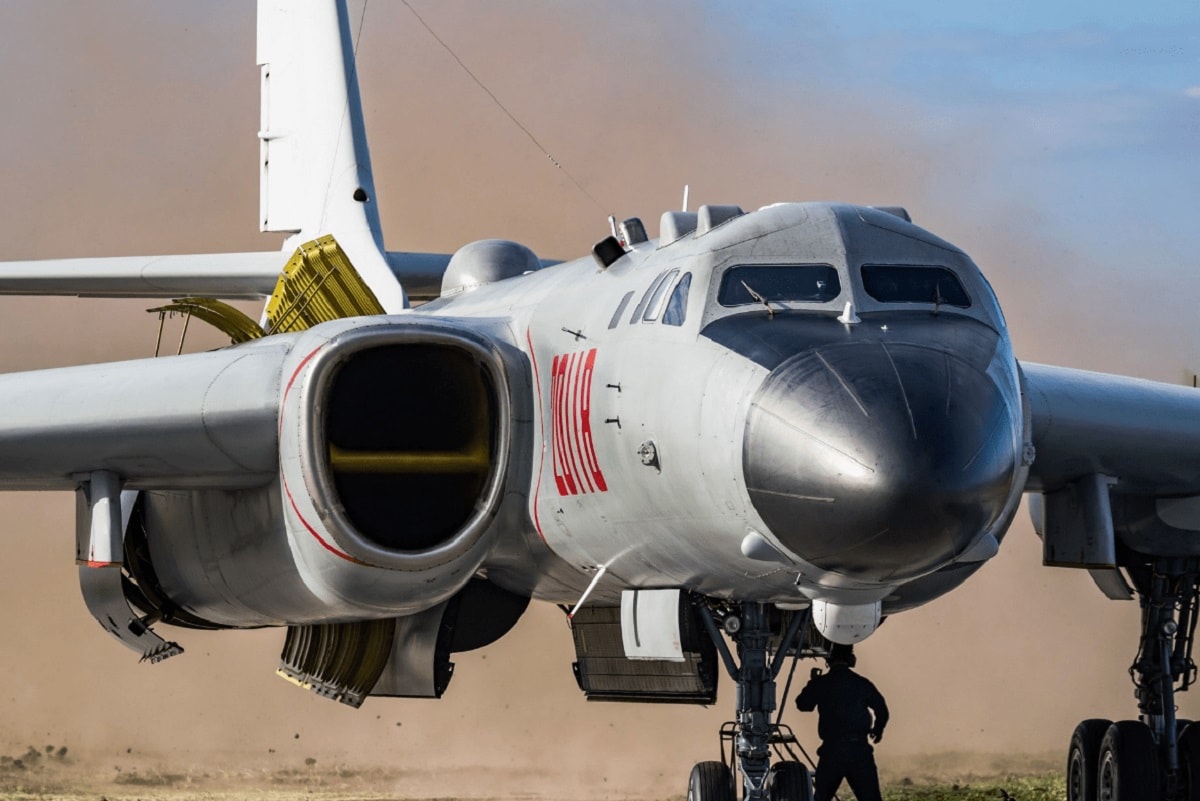
Image: Creative Commons.
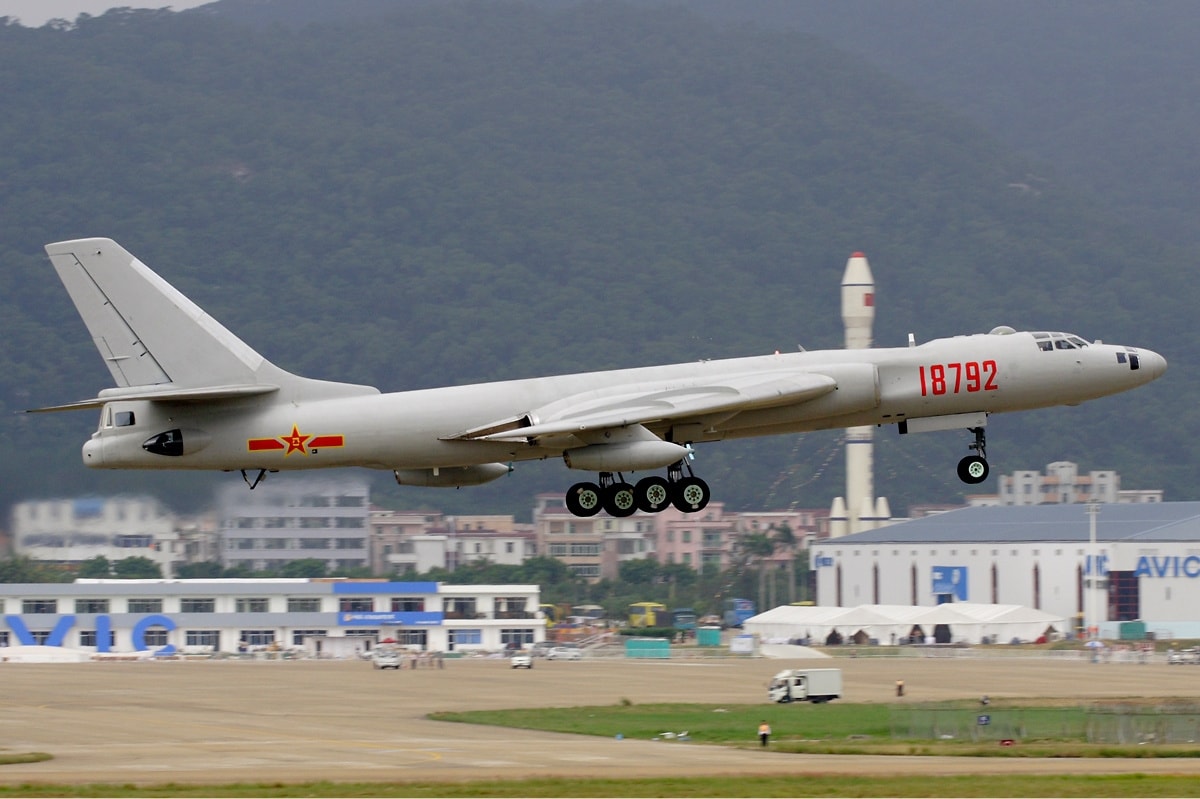
PLANAF HY-6U with aerial refuelling pods (2008) “The most distinct difference between HY-6U and HY-6D is that HY-6U has a metal nose cone, while HY-6D still has the transparent glass nose”.
The most telling detail sits in the newest official document: the Pentagon’s December 2025 China report dropped all mention of the H-20 entirely, after years of tracking it. Even the one moment of apparent revelation deflated on inspection — a large stealthy flying wing that appeared in satellite imagery and was widely misreported as the H-20 was assessed by sober analysts to be a different aircraft, likely an unmanned reconnaissance platform. The bomber itself has never been photographed, never confirmed in flight, never displayed.
So the honest baseline is this: the H-20 may be years away, may be struggling, and may arrive in the 2030s as something less than advertised. The reason it still deserves serious attention is what happens if the baseline is wrong.
What Changes The Day It Flies: Guam, Hawaii, And The End Of Sanctuary
Start with geography. The estimates that have circulated for years put the H-20’s range at 8,500 to 10,000 kilometers, with the Pentagon’s own past reporting describing an aircraft built to strike targets in the Second Island Chain and beyond.
Take those numbers with appropriate caution, but follow their logic: a flying-wing bomber with that reach, carrying long-range cruise missiles, holds at risk not just Guam, which already lives under China’s missile shadow, but Hawaii, Alaska, the northern airfields of Australia, and the logistics web running back toward the American West Coast.
American Pacific posture treats those places as a sanctuary. The missile threat to Guam is real and has driven hardening and a layered defense buildout, but the planning assumption behind everything west of the International Date Line is that the deep rear is reachable only by ballistic missiles, which are detectable from launch and finite in number. A stealth bomber breaks that assumption in a different way than any missile can.
It arrives on an unpredictable vector, on a recallable and repeatable sortie, with a human crew that can hunt mobile targets, and, crucially, without the launch signature that gives defenders warning. Every tanker ramp, ammunition pier, and command center that today sits outside the threat ring would need defending, and the resources for that defense would come out of the same budgets that fund offensive power. Imposing cost is the whole point, and a working H-20 imposes it across an ocean.
The Counter-Stealth Burden Shifts To America And Its Allies
The bigger change is the reversal of a thirty-year homework assignment. Finding stealth aircraft is among the hardest problems in air defense, demanding low-band early-warning radars, infrared sensors, fused networks, and constant investment. It is a problem China and Russia have worked obsessively on for decades because they had to. The United States never did the assignment, because no one fielded anything for it to find.
A flying H-20 hands Washington and its allies that problem cold. North American air defense modernization, the over-the-horizon radar programs, space-based air-moving-target sensing, the E-7 airborne early-warning buys in the US, Australia, and beyond — all of it acquires a new and urgent justification, and all of it starts from behind, against an adversary that has watched the counter-stealth game from the other side since the 1990s. Japan and Australia face the sharper version. Their publics signed up for the current defense buildups to counter a missile threat.
A Chinese bomber that can appear off Honshu or approach Australia’s north from deep in the Pacific changes what air defense means for both countries and what they will demand of Washington in exchange for staying in the fight.
A Nuclear Triad With Wings: The Escalation Problem
Then there is the warhead question. Chinese state media has said openly that the new bomber will carry a nuclear mission alongside conventional roles, which would give Beijing a genuine triad with a credible air leg for the first time. Bombers occupy a peculiar place in nuclear strategy: they are recallable, visible when a government wants them visible, and ambiguous when it does not. The United States has used those properties for signaling throughout the nuclear age, flying B-2s and B-52s near crises as messages. China has never had the option.
A dual-capable stealth bomber also imports the escalation problem American planners have spent years imposing on others. When an H-20 launches, no one watching can know whether its weapons are conventional or nuclear, and in a Pacific war, every raid warning would carry that question.
The United States has lived comfortably on the transmitting end of that ambiguity since the first nuclear-armed B-2 went on alert. Living on the receiving end is a different experience, and American and allied command systems have never had to practice it.
The B-21 Answer: 100 Raiders, Maybe 145, And A Running Production Line
The counterweight to all of this is that the United States is not standing still, and the gap in this competition remains enormous. The B-21 Raider, which flew in 2023, is in production now and is set to enter service in 2027, with the Air Force and Northrop Grumman finalizing a deal to boost annual production capacity while the program of record holds at a minimum of 100 aircraft.
The pressure runs entirely toward more: US Strategic Command’s commander told Congress the country needs 145 Raiders and confirmed a second production line is under consideration, while the House Armed Services Committee’s draft defense bill orders the Pentagon to justify whether 100 is even sufficient. A $4.5 billion expansion is already lifting production capacity, with the aircraft replacing both the B-1 and B-2 fleets through the 2030s.
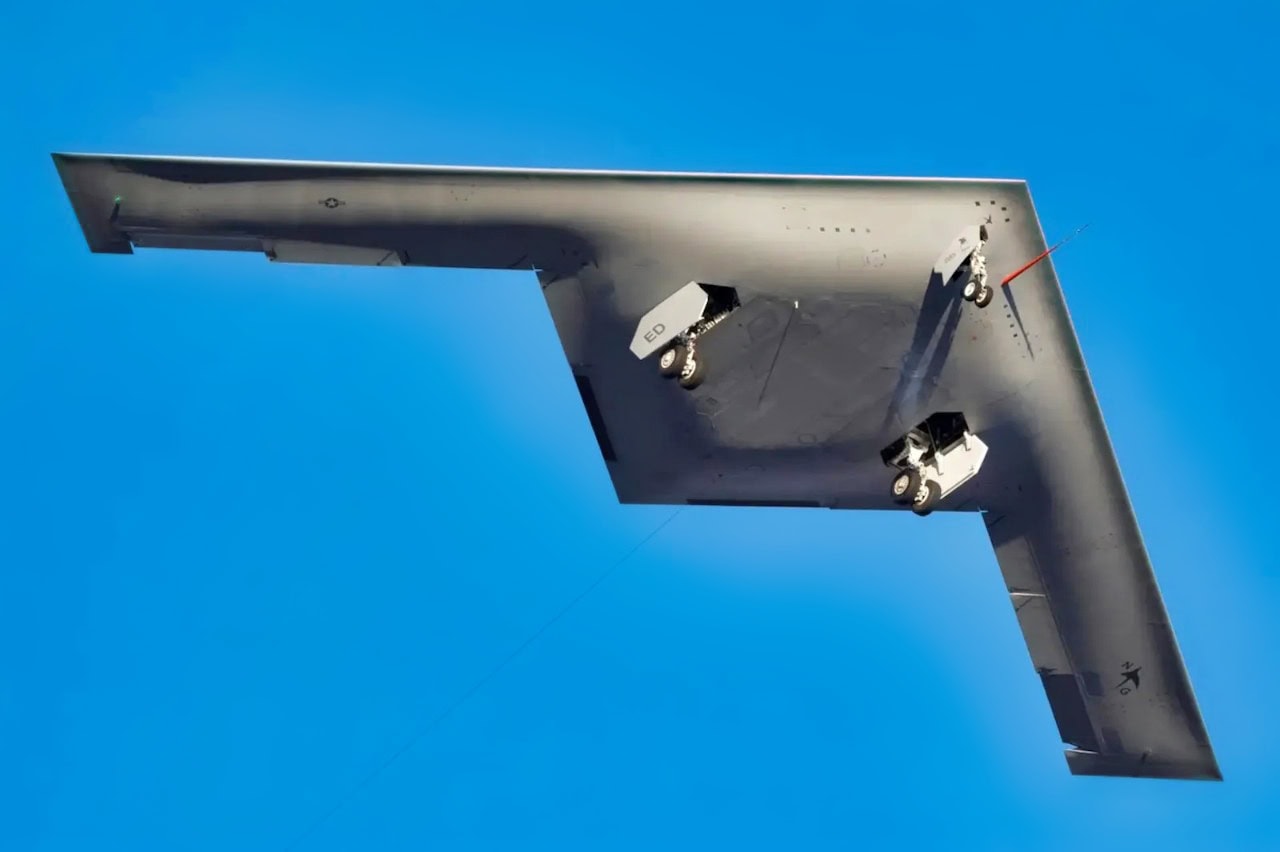
B-21 Raider. Image Credit: Creative Commons.
Set the two programs side by side and the asymmetry is stark. One country is accelerating production of its second-generation stealth bomber, backed by four decades of operational experience, a global tanker fleet, hardened bases, and combat employment as recent as the Iran campaign. The other has yet to show its first such aircraft in public. Even a flying H-20 would face the long climb from prototype to credible force: testing, production at scale, crew training, doctrine, tankers, and the family of supporting systems a penetrating bomber needs to be more than an air-show exhibit. China would be starting that climb roughly where the United States stood in 1989.
Borrowed Time, Not Vindication
The temptation in Washington will be to read the H-20’s endless delays as proof the threat was overhyped, and the record so far supports a healthy skepticism: ten years of promises, no confirmed flight, an intelligence community that has stopped writing the aircraft into its reports, and a B-21 fleet growing on an open line. But the delays buy time; they do not repeal the problem.
China builds slowly and then builds at scale, as its navy, its missile force, and its fifth-generation fighters have all demonstrated, and a country assembling a triad, a blue-water fleet, and the world’s largest missile arsenal has not abandoned the bomber leg because one program ran late.
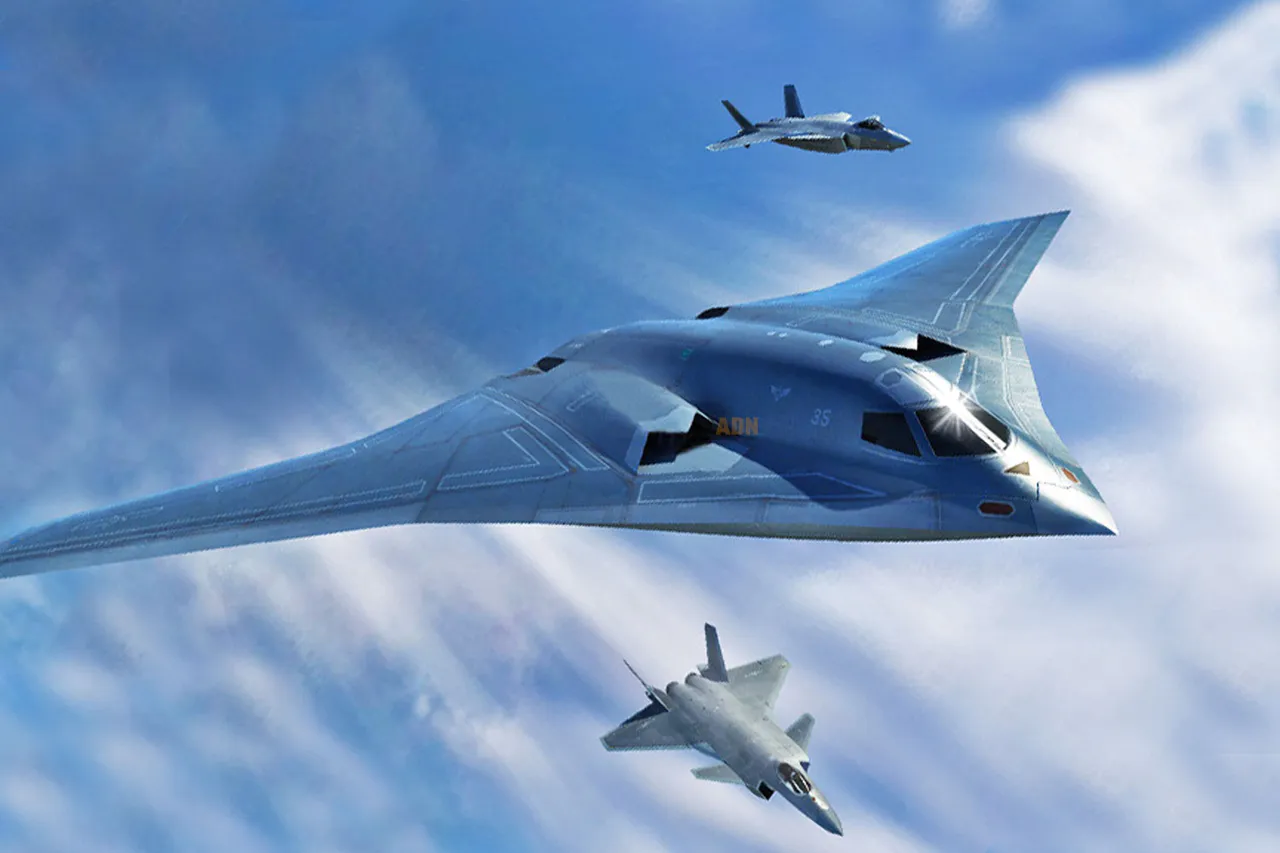
H-20 Bomber. Image Credit: Creative Commons.
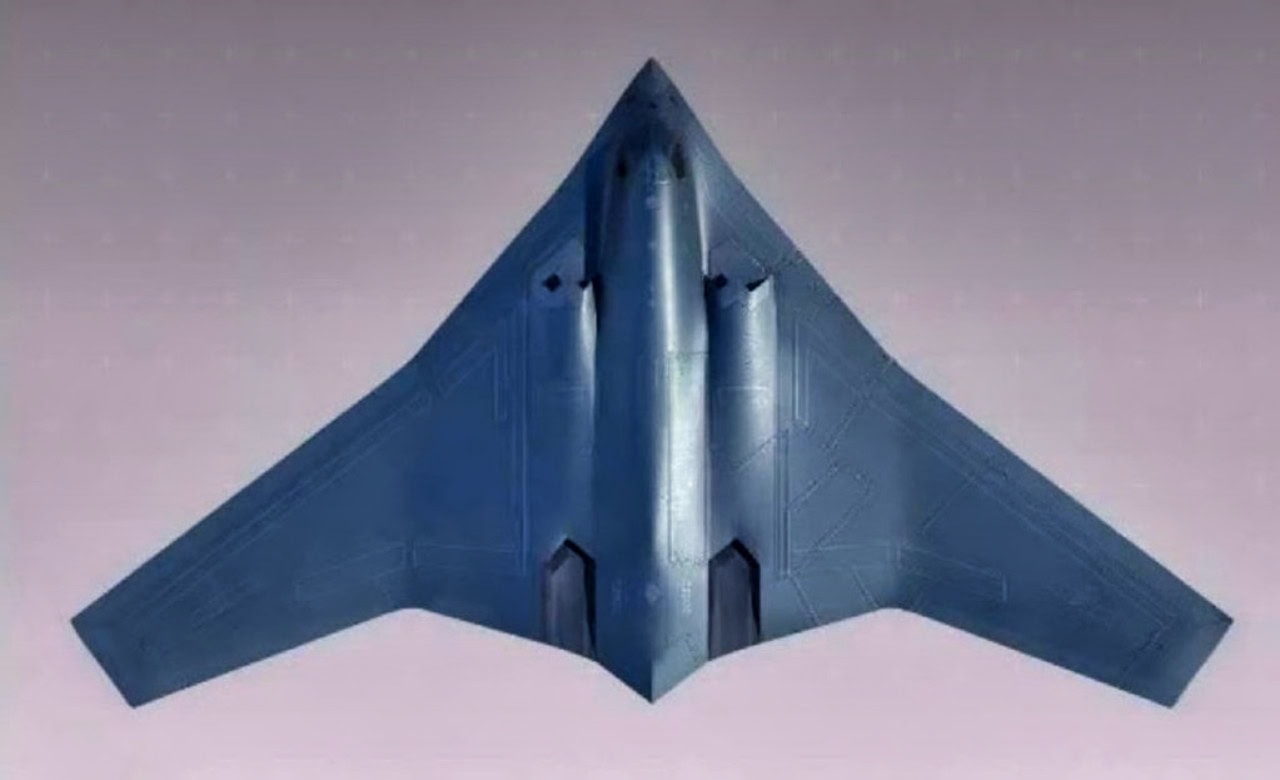
H-20 Bomber from China Artist Rendition.
The day the H-20 flies, whenever it comes, the United States and its allies inherit a category of threat they have never faced, a counter-stealth burden they have never carried, and an escalation ambiguity they have only ever inflicted. The advantage held since 1989 has been so complete, for so long, that American defense planning treats it as a law of nature rather than a lead in a race.
The H-20’s troubled history says the lead is large. It says nothing about the lead being permanent, and the time to build the sensors, the defenses, and the habits of mind for a two-stealth-bomber world is while the other aircraft is still missing its own debut.
About the Author: Harry J. Kazianis
Harry J. Kazianis (@Grecianformula) was the former Senior Director of National Security Affairs at the Center for the National Interest (CFTNI), a foreign policy think tank founded by Richard Nixon based in Washington, DC. Harry has over a decade of experience in think tanks and national security publishing. His ideas have been published in the NY Times, The Washington Post, The Wall Street Journal, CNN, and many other outlets worldwide. He has held positions at CSIS, the Heritage Foundation, the University of Nottingham, and several other institutions related to national security research and studies. He is the former Executive Editor of the National Interest and the Diplomat. He holds a Master’s degree focusing on international affairs from Harvard University.