
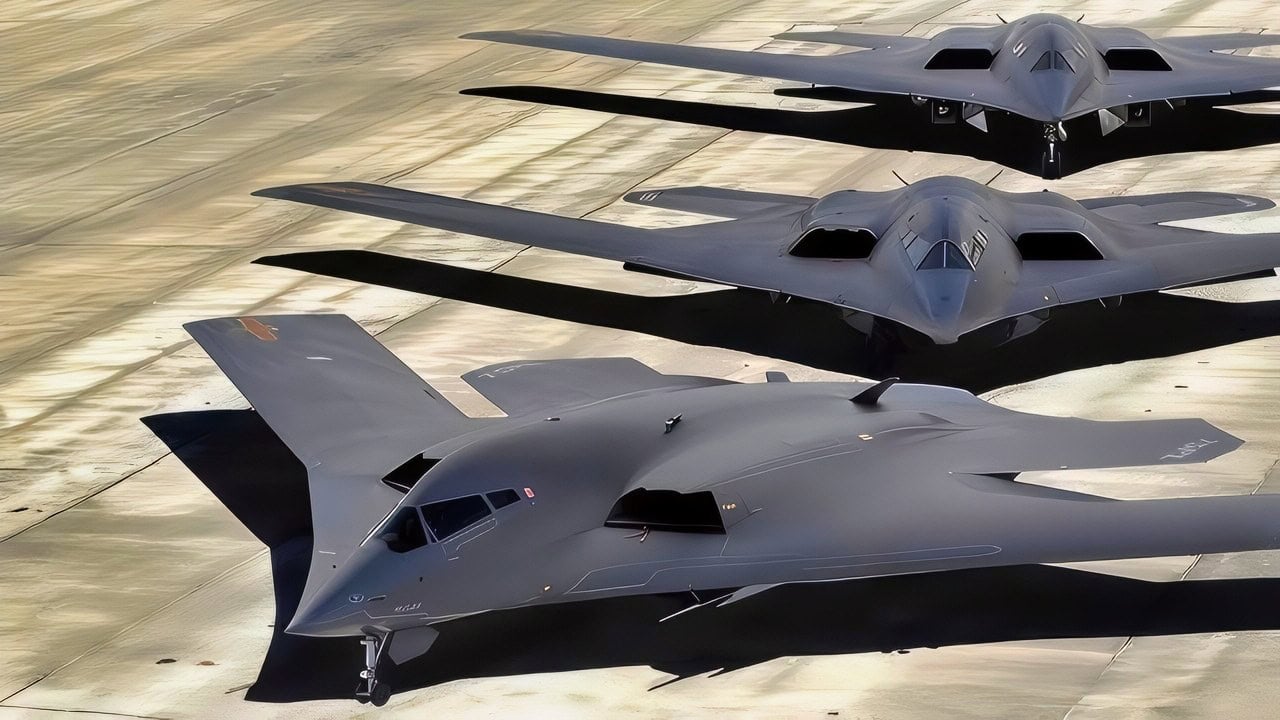
The notional Xi’an H-20 stealth bomber is, at least on paper, kind of a big deal, as it represents the People’s Republic of China’s (PRC) answer to America’s Generation Northrop B-2 Spirit and 6th Generation Northrop Grumman B-21 Raider stealth bombers alike, thus enabling the PRC’s People’s Liberation Army Air Force (PLAAF) to keep pace with the U.S. Air Force in the arena of Great Power/near-peer competition.
The problem is that as of late, the H-20 seems to have become a case of “all talk, no action” (or, if you prefer, “all hat, no cattle”).
Which makes one wonder: could all of the PLAAF’s H-20 hype just be a nefarious head fake, i.e., a smokescreen for further expanding an already gigantic missile arsenal?
Where’s the Beef? H-20 Keeps Getting Delayed
When it comes to stealth *fighters*, the PLAAF has certainly been on the ball, as their Chengdu J-20 Wēilóng (“Mighty Dragon” NATO reporting name “Fagin”) has had operational status since 2017, and at least 210 are currently in service according to the World Directory of Modern Military Aircraft (WDMMA).
On top of that, the Shenyang J-35 fighter is also now in production, which means that the PLAAF has two stealth fighters to match America’s F-22 Raptor and F-35 Lightning (both built by Lockheed Martin’s legendary “Skunk Works” division).
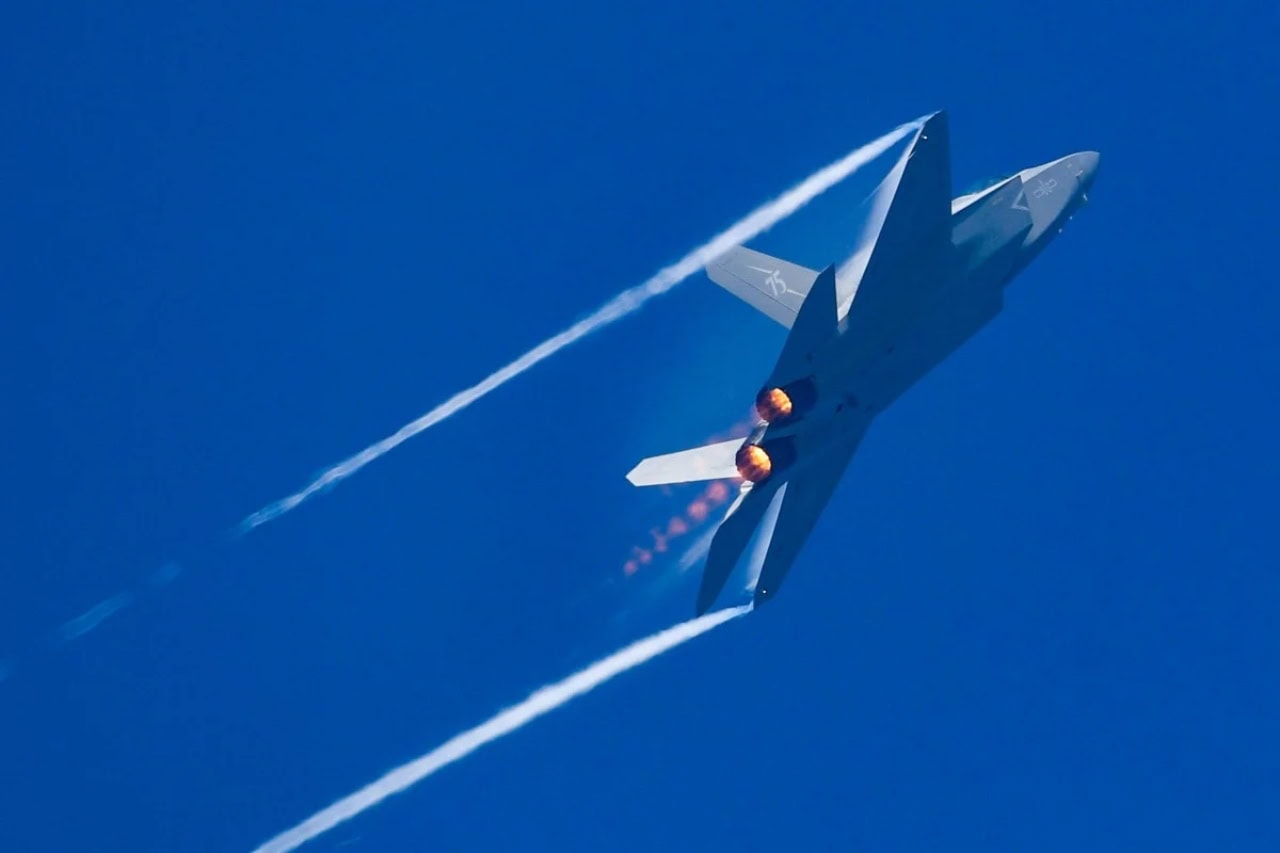
J-35. Image Credit: Chinese State Media.
The H-20, however, is a different story. Back in March 2024, during the 14th National People’s Congress in Beijing, Deputy Commander of the People’s Liberation Army Air Force, Lieutenant General Wang Wei, confidently boasted that “It’s coming soon, you wait!” and “This is very fast, and it will follow directly!”
Fast-forward to December 2025, however, and as Aaron Spray noted in an article for Aerospace Global News, little or no confirmed new information about the much-hyped has emerged: “China has unveiled a massive new stealthy ‘GJ-X’ flying-wing bomber design, and some outlets even reported it was the H-20. However, reputable outlets, like The War Zone, dismissed the notion. Instead, the new flying wing is likely a drone, perhaps for ISR [intelligence, surveillance, reconnaissance]. The GJ-X is likely to be somewhat similar to the secretive USAF RQ-180.”
Indeed, as Gen. Stephen L. Davis, head of Air Force Global Strike Command (AFGSC; the USAF component to United States Strategic Command (USSTRATCOM), it is directly descended from the legendary Strategic Air Command (SAC)), stated in an interview earlier this year, “What I can tell you is they’re just not there yet. I think our adversaries look at our long-range strike capabilities, and … want to mimic them, but they can’t.”
In line with Gen. Davis’s statement, U.S. intelligence community (IC) prognosticators don’t expect the H-20 to operational until sometime in the 2030s, by which time the USAF will have already gotten a head start in getting its B-21s operational to complement its current strategic bomber trio of the B-2, the B-52 “BUFF,” and the B-1B “Bone.”
Meanwhile, the PLAAF will continue to have to make do with the H-6K Zhanshen (“War God”); WDMMA estimates that 209 remain in service.
A Very Real and Existent PRC Threat: Ballistic Missiles
However, that doesn’t mean America’s war planners and IC personnel can afford to get complacent or cocky.
Far from it.
Going back to the aforementioned possibility of a head fake, what if all of the PRC media outlets’ hype of the H-20 is a mere bait-and-switch to distract from an even further buildup of its already gigantic missile arsenal?
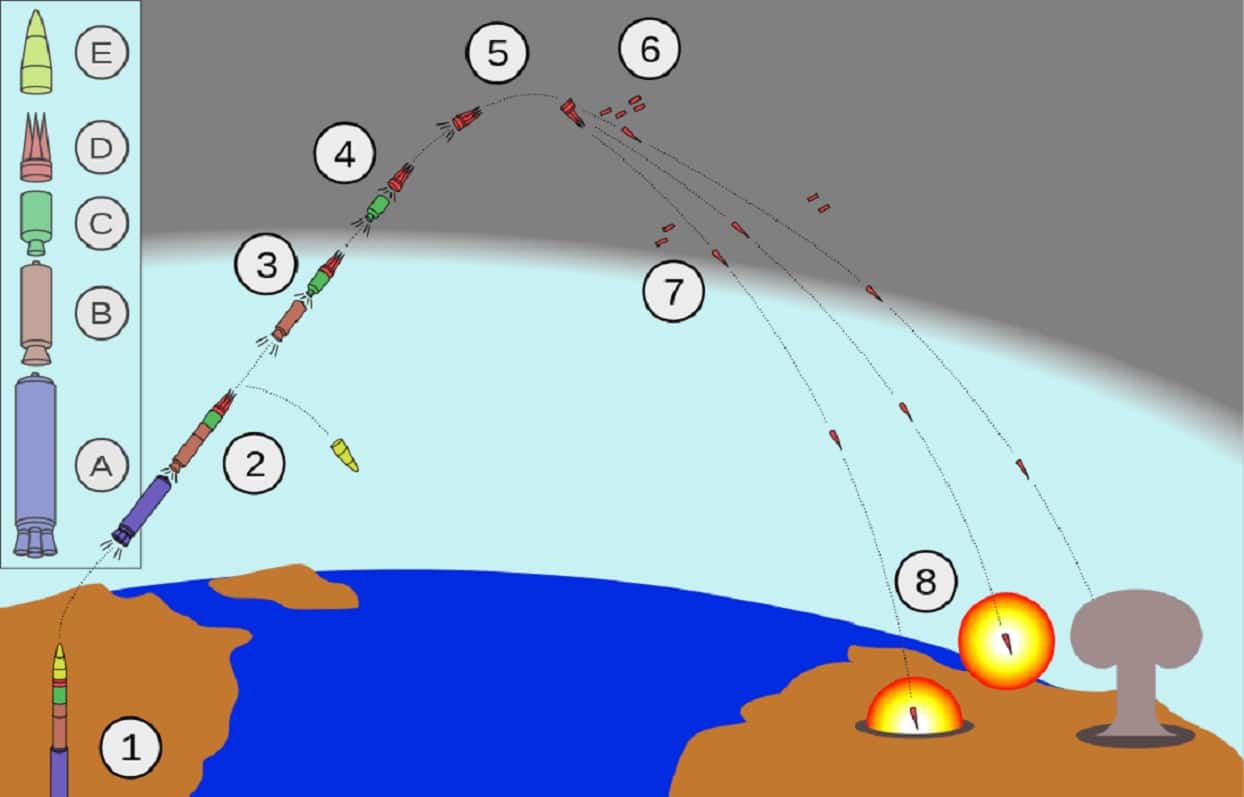
ICBM attack diagram. Image: Creative Commons.
As relayed by Army Recognition, a December 18, 2024, U.S. Department of Defense report stated that China’s People’s Liberation Army Rocket Force (PLARF; the equivalent of Russia’s Strategic Rocket Forces) possessed 3,100 ballistic missiles, including 400 intercontinental ballistic missiles (ICBMs).
(For basis of comparison, the USAF also has roughly 400 ICBMs, specifically LGM-30 Minuteman IIIs, as the next-generation Sentinel missiles keep running afoul of the dreadful duo of cost overruns and production delays.)
Those 400 ICBMs can provide Beijing a lot more bang for the buck (or, if you prefer, “roar and ruckus for the renminbi”) than the H-20, which would be presumably limited to a maximum carrying capacity of 10 tons of conventional or nuclear bombs.
That contrast in cost efficiency becomes even starker when you factor in the multiple independently targetable reentry vehicle (MIRV) capabilities of several ChiCom ICBMs.
Deeper Dive Part I: The PRC’s Land-Based Ballistic Missiles
For example, there is the DF-41 (Dong Feng [East Wind]-41, CSS-20): This is the scariest of the bunch, with an operational range of up to 15,000 kilometers (9,320.5 miles), making it Beijing’s longest-range missile, putting every U.S. military installation the Indo-Pacific (INDOPACOM) region within reach, including Joint Base Pearl Harbor-Hickam, Hawaii, which is 5,200 miles (8,100 kilometers) from China, and Andersen Air Force Base, Guam: which is 2,952 miles (4,751 kilometers) away
The CSS-20 is a road-mobile/rail-mobile/silo-based intercontinental ballistic missile (ICBM) reportedly capable of carrying up to 10 MIRVs.
Fueled by a three-stage, solid propellant, the “East Wind” nuke has a launch weight of 80,000 kilograms (88.18 tons) and a payload of 2,500 kilograms (2.75 tons).
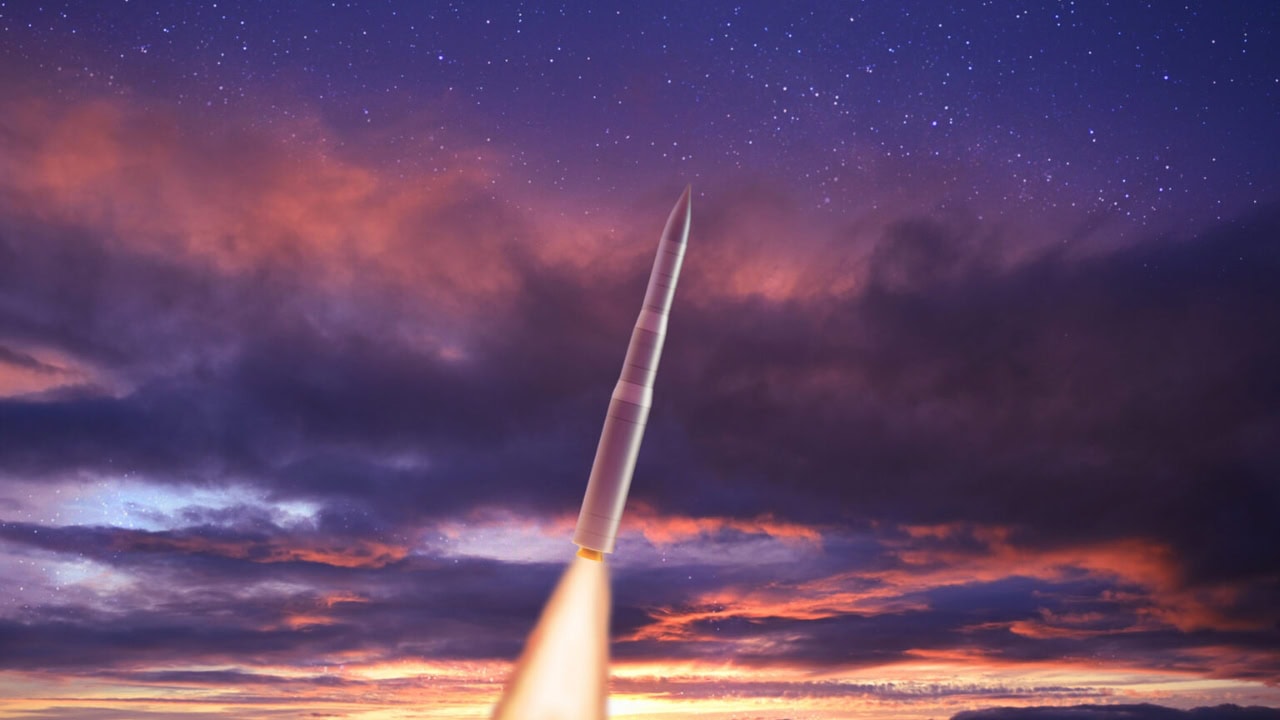
Sentinel ICBM U.S. Air Force
Mind you, the DF-41 hasn’t officially been confirmed as being fully operational yet—the Washington, DC Center for Strategic & International Studies (CSIS) think tank’s Missile Defense Project still lists it as being “In development”—but we do know that it has been flight tested multiple times.
Moreover, it was publicly unveiled back on October 1, 2019, during Red China’s 70th Anniversary National Day military parade (which is more than can be said of the H-20).
Meanwhile, there’s another PRC MIRV-capable ICBM that *is* very much operational: the DF-5B variant DF-5 (Dong Feng-5 / CSS-4): This is the first ICBM that China developed—in service since 1981—and is a silo-based, two-stage liquid propellant missile with a range of 13,000 kilometers (8,077.8 miles), a launch weight of 183,000 kilograms (201.7 tons, and a payload of 3,000 – 4,000 kilograms (3,30 – 4.40 tons).
Deeper Dive Part Deux: The PRC’s Submarine-Launched Ballistic Missiles (SLBMs)
As if those aforementioned land-based ICBMs aren’t scary enough already, there’s also China’s SLBM arsenal, and in some ways, this is even scarier, even though it doesn’t have the range of the DF-41 or the DF-5B.
This is due to their combination of stealth and silence inherent to underwater warships.
By comparison, land-based missile silos are comparatively easy to monitor via spy planes (like the U-2 “Dragon Lady”) and reconnaissance satellites.
China’s intercontinental-range SLBM is the JL-2 (Ju Lang-2, CSS-NX-14), in service since 2015. It employs a three-stage solid propellant, has a range of 8,000–9,000 km (4,970.9–5,592.3 miles), a launch weight of 42,000 kg (46.2 tons), and a payload of 1,050–2,800 kg (1.15–3.0 tons).
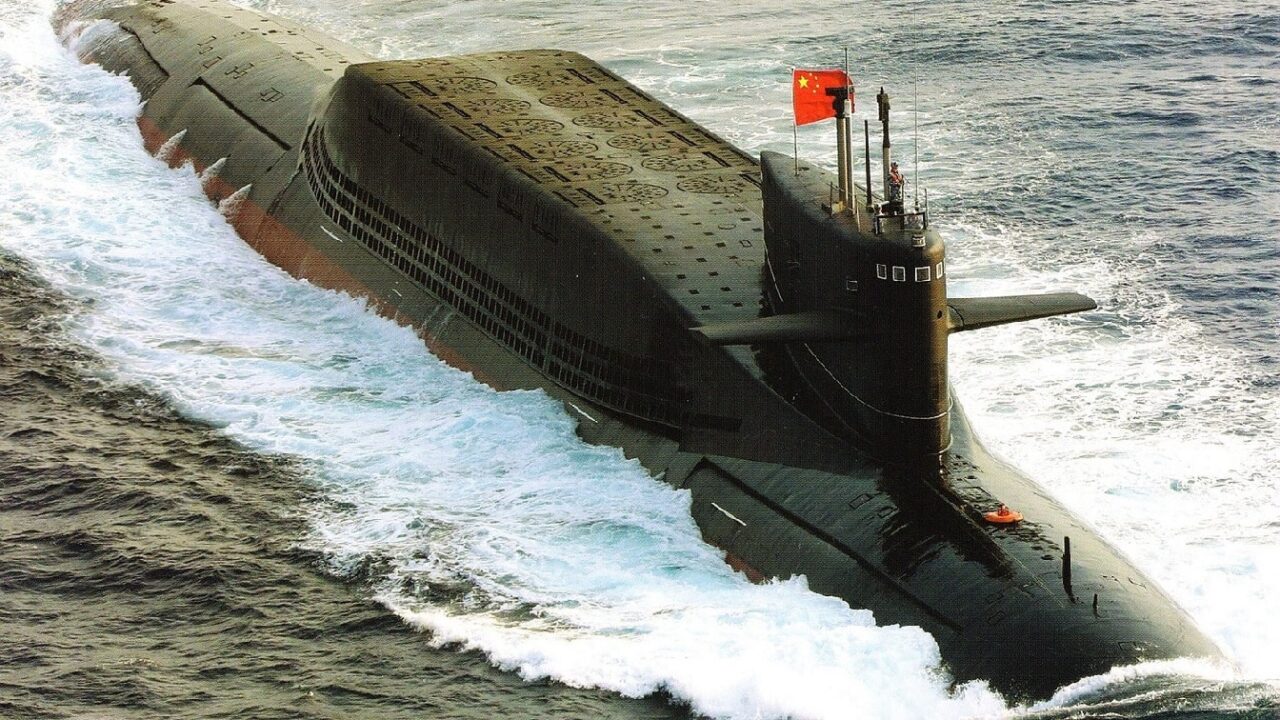
SSBN China Submarine. Image Credit: Creative Commons.
Warhead loadout is either a single warhead with a nuclear blast yield of one megaton, or three to eight MIRVs with 20/90/150 kilotons warheads.
The launching platform for the JL-2 is the People’s Liberation Army Navy’s (PLAN; zhōngguórénmínjiěfàngjūn hǎijūn) Type 94 (NATO reporting name “Jin-class”) nuclear-powered ballistic missile submarine (SSBN).
According to the World Directory of Modern Military Warships (WDMMW), the PLAN has had six of these subs in operational service since 2007. (Two more hulls are currently under construction, according to the International Institute for Strategic Studies [IISS], a global think tank with offices in London, Washington, DC, Singapore, Bahrain, and Berlin.)
The Type 94 boats have a carrying capacity of 12 JL-2s. The ships have a submerged displacement of 11,000 tons, a hull length of 137 meters (449 feet 6 inches), a test depth of 400 meters (1,312.3 feet), a maximum submerged speed of 30 knots (56 km/h; 35 mph), and a crew complement of 140 commissioned officers and enlisted seamen.
Having said all that, if and when the PLAAF does finally complete the H-20, it would add one more tool for an already super-deadly Chinese nuclear triad toolbox.
About the Author: Christian D. Orr
Christian D. Orr is a Senior Defense Editor. He is a former Air Force Security Forces officer, Federal law enforcement officer, and private military contractor (with assignments worked in Iraq, the United Arab Emirates, Kosovo, Japan, Germany, and the Pentagon). Chris holds a B.A. in International Relations from the University of Southern California (USC) and an M.A. in Intelligence Studies (with a concentration in Terrorism Studies) from American Military University (AMU). He is also the author of the book “Five Decades of a Fabulous Firearm: Celebrating the 50th Anniversary of the Beretta 92 Pistol Series,” the second edition of which was recently published.