
At the press site for an Apollo launch, the reporters and their cameras stood more than three miles from the pad, and even that distance was a compromise between a clear view and plain safety. The Saturn V waited on the horizon, thirty-six stories tall and sheathed in frost from the supercold propellant inside, venting streamers of vapor into the Florida morning. It had reached the pad at walking pace, carried on a tracked crawler the size of a baseball infield that crept along at about a mile an hour, the last quiet thing about the launch.
Then the engines lit. The first thing to reach the press site was light, a sudden false sunrise, because light outruns sound. A few seconds later the sound itself arrived, and it came less as noise than as force. Reporters described the ground seeming to come loose underfoot, a pressure that crackled in the chest, tripods and trouser legs shaking three miles from the flame.
The rocket rose slowly at first, held down for an instant and then climbing, and only its sheer size disguised how fast it was already moving. What people remembered long afterward was not how it looked but how it felt, the sensation of being struck by a sound.
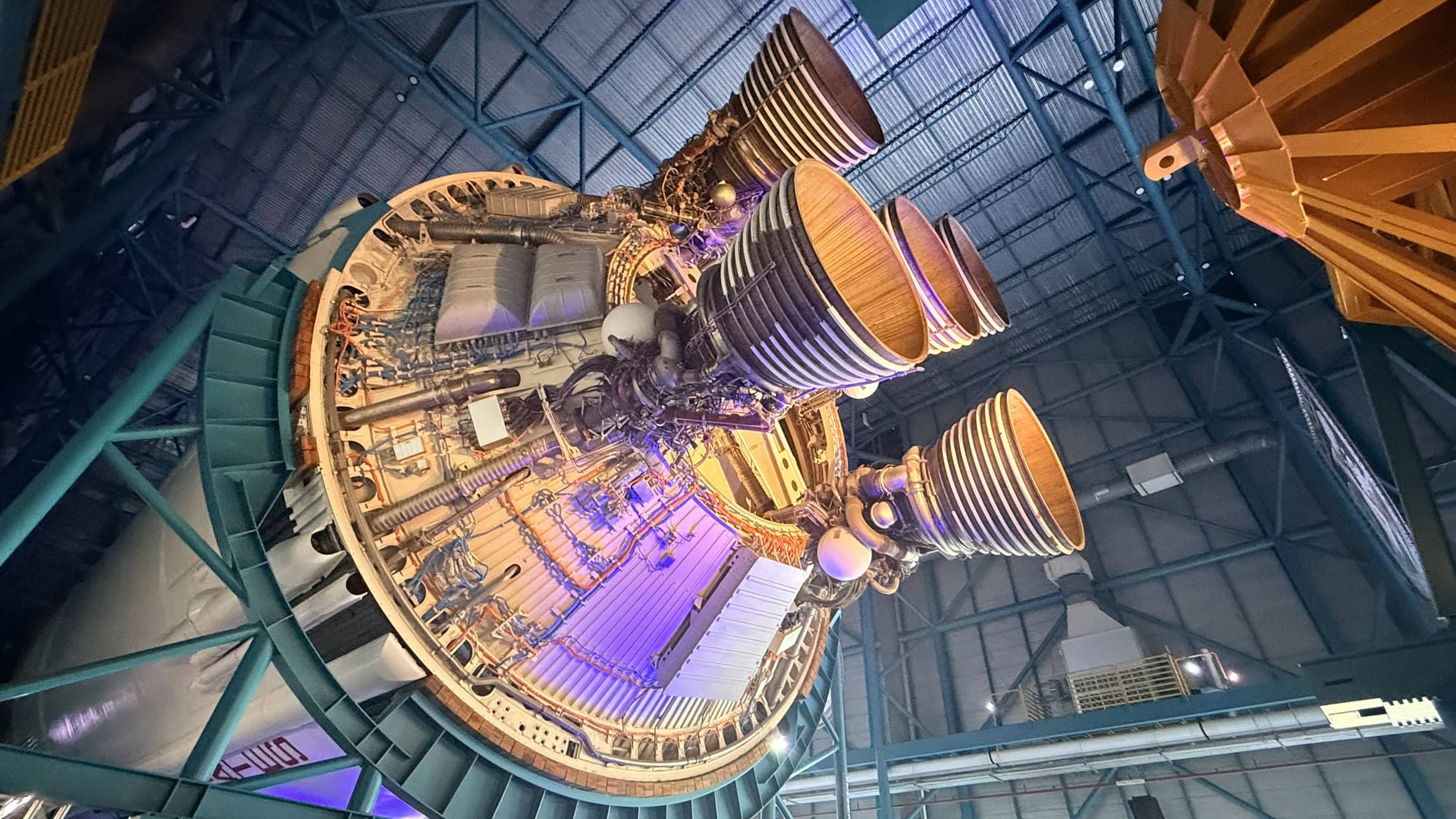
Saturn 5 Rocket. Image from NASA Kennedy Space Center Taken on 6/28/2026. Taken by Harry J. Kazianis for 19FortyFive.com
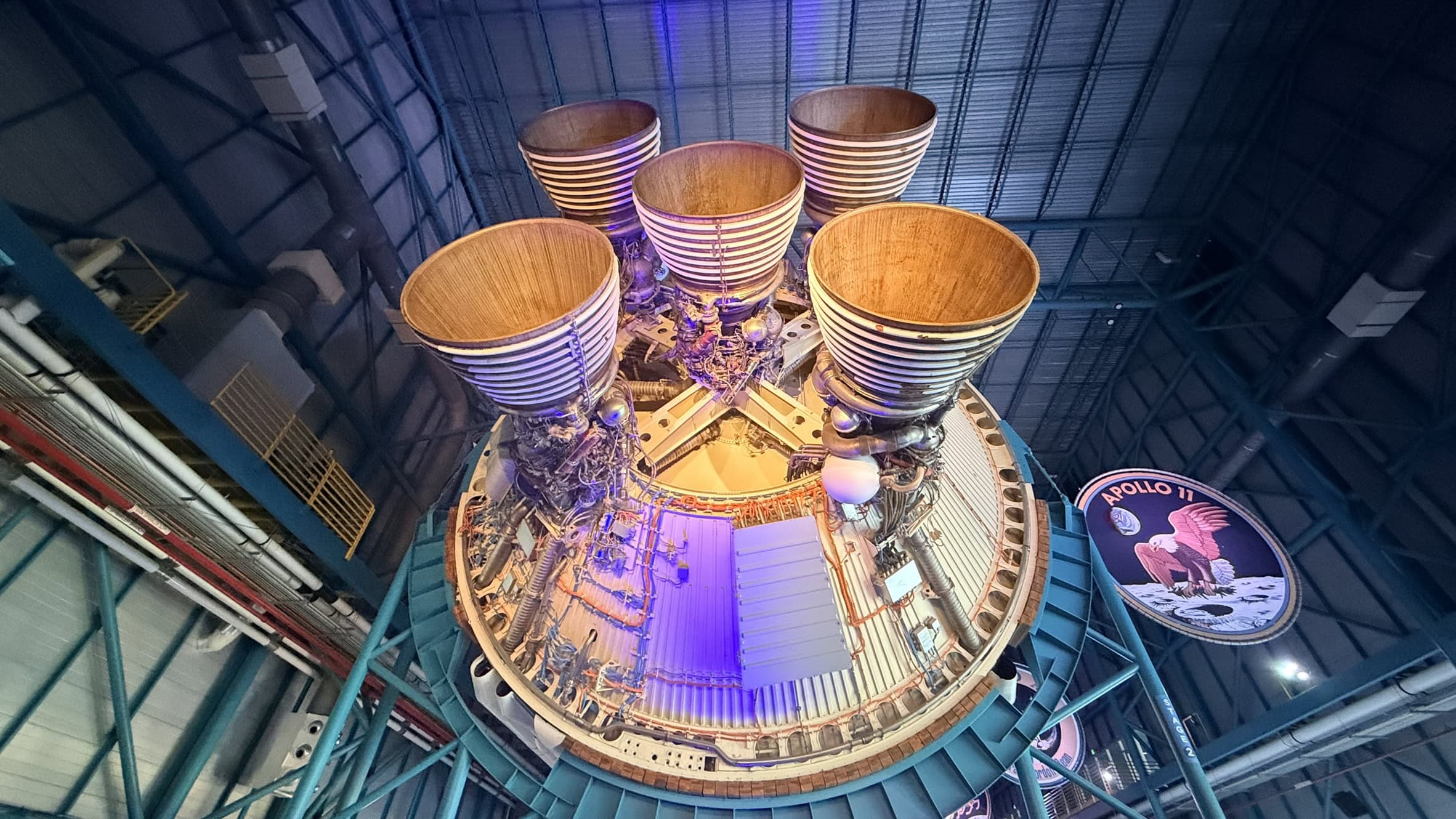
I get that, to a certain extent. A few weeks back, my wife and I went to the Kennedy Space Center here in Florida and spent a few hours staring at the Saturn V rocket on display. All photos in this article are from that visit. One thing you have to get about this rocket: she is massive.
The Machine on the Pad
The thing making that sound was the largest and most powerful flying machine of its era.
The Saturn V stood 363 feet tall, about sixty feet taller than the Statue of Liberty, and fully fueled it weighed roughly 6.2 million pounds. Almost all of that weight was not machine but fuel: the rocket was essentially a thin shell around enormous tanks, drained at a staggering rate of some thirteen tonnes of propellant every second from the first stage alone.
It flew in three stages, each burning in turn and then falling away to lighten the load. The first stage carried five engines called the F-1, burning kerosene and liquid oxygen, and together they produced 7.6 million pounds of thrust at liftoff. The F-1 remains the most powerful single-chamber liquid-fueled rocket engine ever flown, and five of them clustered together gave the rocket its power.
The upper stages switched to liquid hydrogen, five smaller engines on the second stage and a single restartable engine on the third to push the spacecraft out of Earth orbit and toward the Moon.
Everything about it was staged, deliberate, and enormous, and it was built to do one thing that had never been done.
The Sound and the Legend of the Saturn V
Because the launch was so overwhelming to witness, the stories around it grew in the retelling.
For decades it was repeated that the Saturn V was so loud it melted the concrete of the launch pad, that it set grass on fire more than a mile away, that its sound was second only to a nuclear detonation. Those claims are largely folklore, and the real story is the more interesting one.
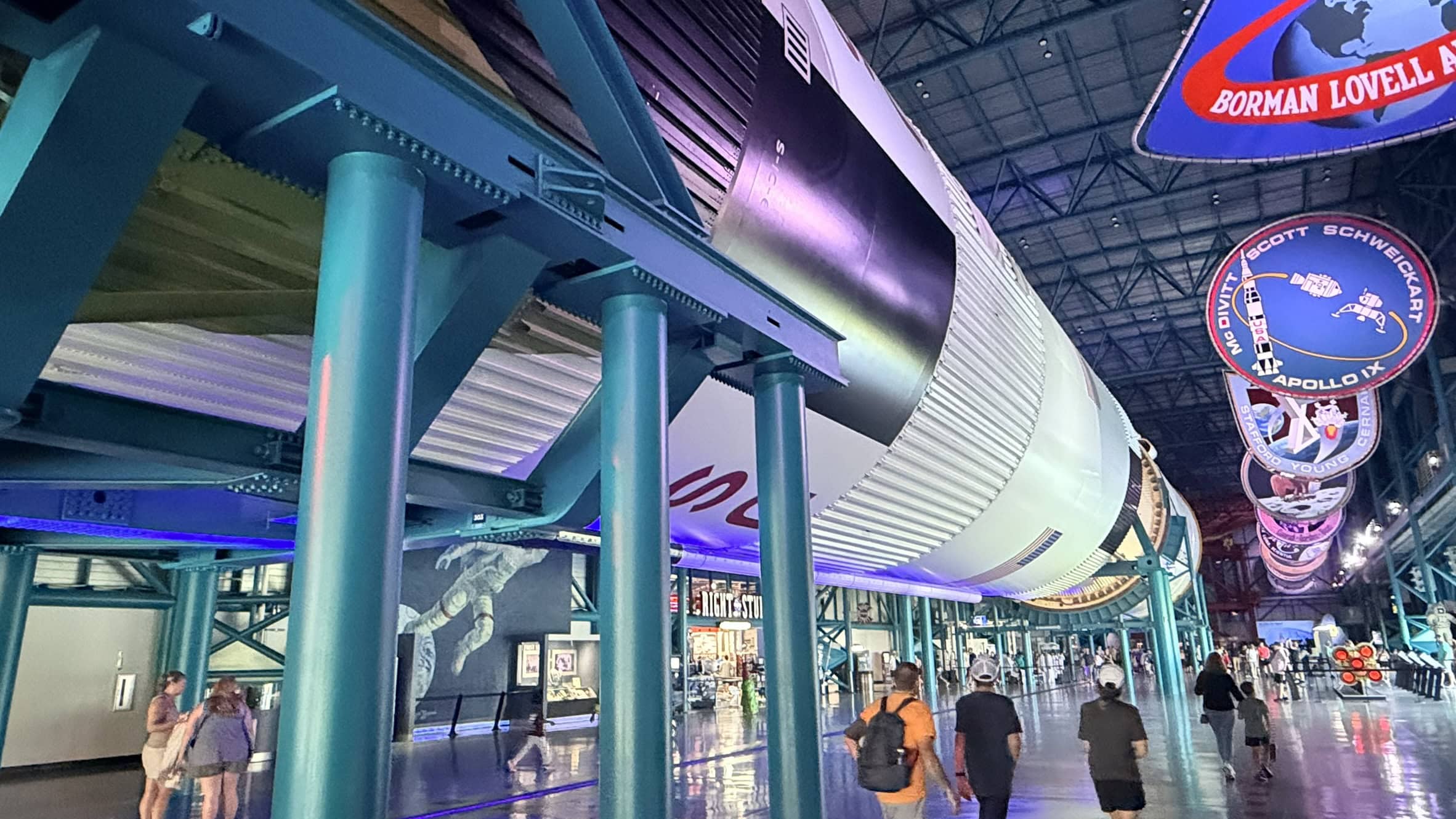
Saturn 5 Rocket. Image from NASA Kennedy Space Center, taken on 6/28/2026. Taken by Harry J. Kazianis for 19FortyFive.com
In 2022, physicists at Brigham Young University built a physics-based model of a Saturn V launch and published it in the Journal of the Acoustical Society of America. They estimated the sound at about 203 decibels, closely matching a level NASA had recorded from a first-stage test decades earlier.
Decibels are logarithmic, so the number is hard to feel: 170 decibels is roughly ten jet engines, and 200 is on the order of ten thousand. It is one of the loudest sounds a machine has ever made. It was not, however, loud enough to melt concrete or start fires.
As the study’s lead author, Kent Gee, put it, “Mankind has not produced a sound source” capable of that. Where grass burned near the pad, it burned from radiant heat or falling debris, not from noise. Historical accounts had put the level anywhere from 180 to 235 decibels, a spread that shows how much was eyewitness impression rather than measurement. The true figure needs no embellishment. Two hundred decibels is astonishing on its own.
Built for a Deadline
The Saturn V existed because of a sentence. In 1961, President Kennedy committed the United States to landing a man on the Moon and returning him safely before the decade was out, and at the time no one had the machine to do it.
American astronauts were still flying brief missions in low Earth orbit. The gap between that and a crewed lunar landing was not a question of willingness but of physics, and the physics demanded a rocket that did not yet exist.
Building it became one of the largest peacetime industrial undertakings in American history. The design was led by Wernher von Braun’s team at NASA’s Marshall Space Flight Center, and the work spread across the country to hundreds of thousands of workers at thousands of companies and universities, with the three stages built by Boeing, North American Aviation, and Douglas, and the engines by Rocketdyne.
In roughly seven years the effort went from the cramped orbital flights of the Gemini program to a vehicle that could lift about 130 tons into orbit and send astronauts to another world. The rocket was the piece that turned a political promise into something that could leave the ground, on schedule.
The Fifty-Year Gap
It worked, and it kept working. The Saturn V launched thirteen times between 1967 and 1973 and never once failed to deliver its payload, never lost a crew, and carried twenty-four astronauts to the Moon, beginning with Apollo 11 in 1969. It was not flawless in the way the legend suggests. An early uncrewed test, Apollo 6, was shaken by violent pogo vibration and lost engines mid-ascent, and on Apollo 13 the second stage’s center engine shut down about two minutes early, with the rocket’s own guidance computer firing the remaining engines longer to compensate.
The program’s one crew tragedy, the Apollo 1 fire that killed three astronauts in 1967, happened on the ground during a test, atop a smaller rocket, not aboard a Saturn V. Its flight record held to the end.
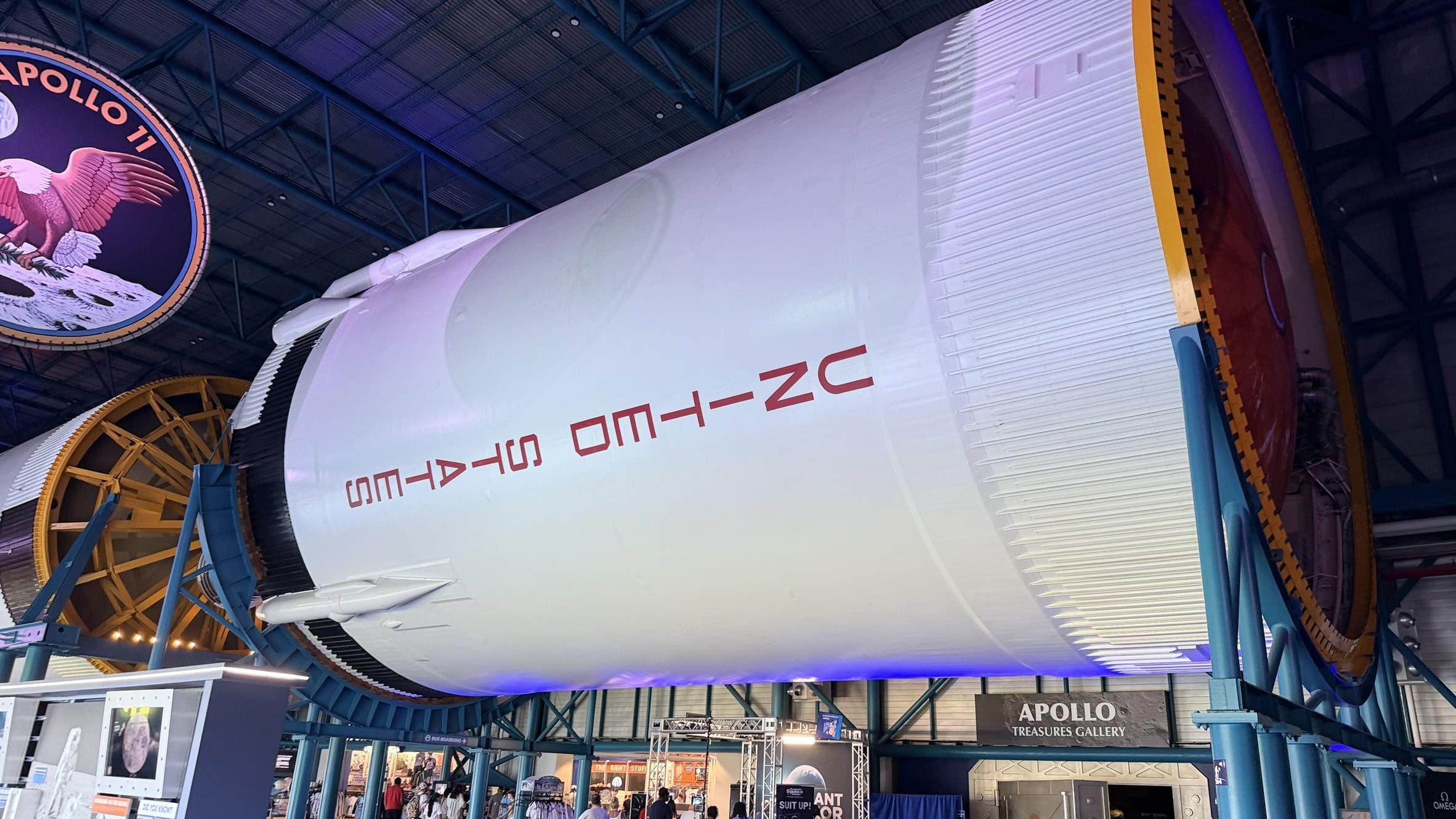
Saturn 5 Rocket. Image from NASA Kennedy Space Center Taken on 6/28/2026. Taken by Harry J. Kazianis for 19FortyFive.com
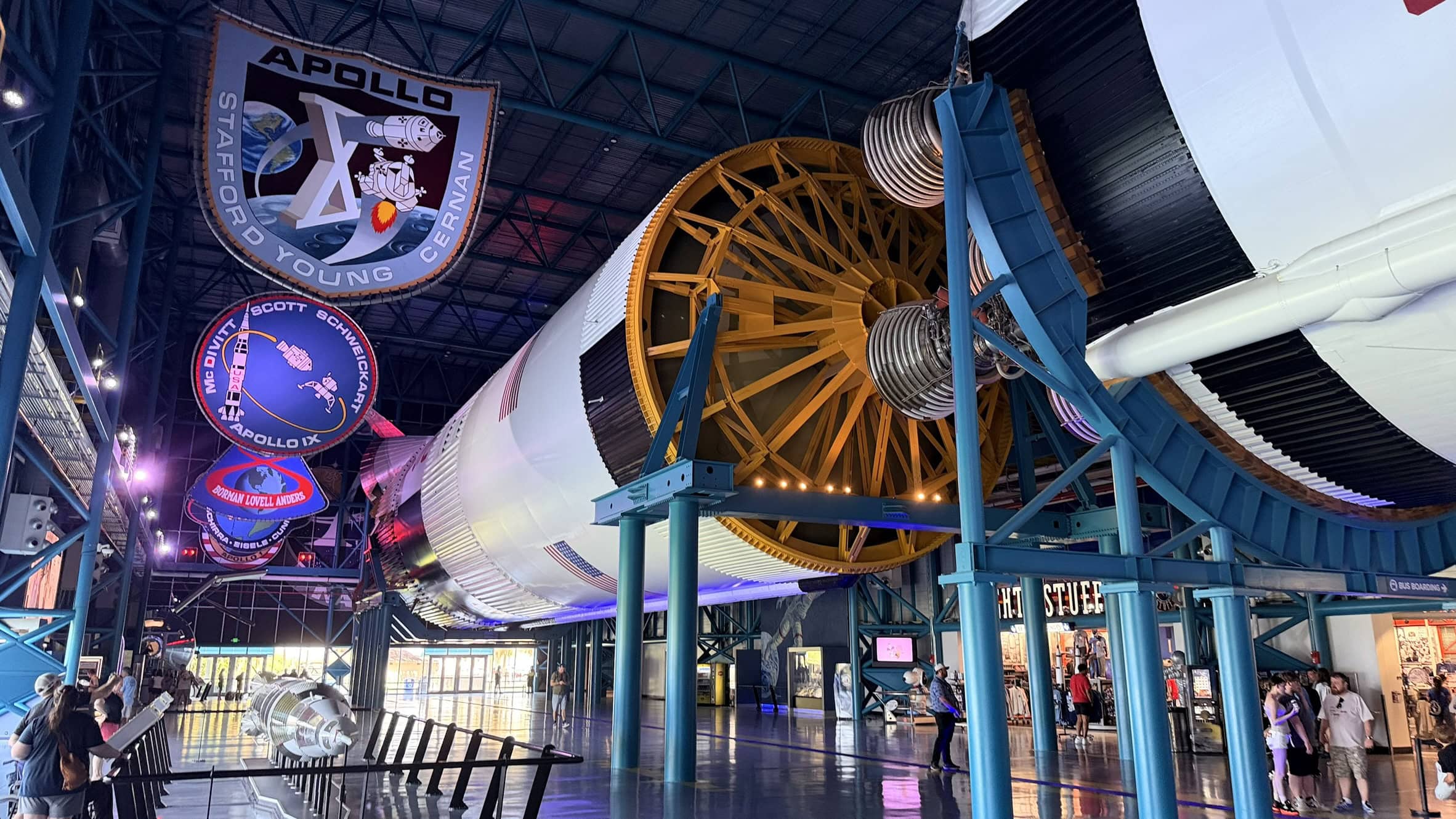
Saturn 5 Rocket. Image from NASA Kennedy Space Center Taken on 6/28/2026. Taken by Harry J. Kazianis for 19FortyFive.com
Then, in 1973, after lofting the Skylab space station, the Saturn V flew for the last time. NASA retired it, the specialized tooling was scrapped, and much of the hard-won knowledge scattered into retirements and archives.
For nearly fifty years, nothing as powerful left the Earth.
Not until 2022 did a rocket of comparable power fly again, and only in April 2026 did a crew fly around the Moon once more, aboard a rocket that at last exceeds the Saturn V’s thrust.
The machine that made the Moon reachable had become, for half a century, a capability the country had to build back almost from scratch.
Reaching the Moon was the historic achievement. Holding onto the ability to do it, the next fifty years showed, was the harder one.
About the Author: Harry J. Kazianis
Harry J. Kazianis (@Grecianformula) was the former Senior Director of National Security Affairs at the Center for the National Interest (CFTNI), a foreign policy think tank founded by Richard Nixon based in Washington, DC. Harry has over a decade of experience in think tanks and national security publishing. His ideas have been published in the NY Times, The Washington Post, The Wall Street Journal, CNN, and many other outlets worldwide. He has held positions at CSIS, the Heritage Foundation, the University of Nottingham, and several other institutions related to national security research and studies. He is the former Executive Editor of the National Interest and the Diplomat. He holds a Master’s degree focusing on international affairs from Harvard University.