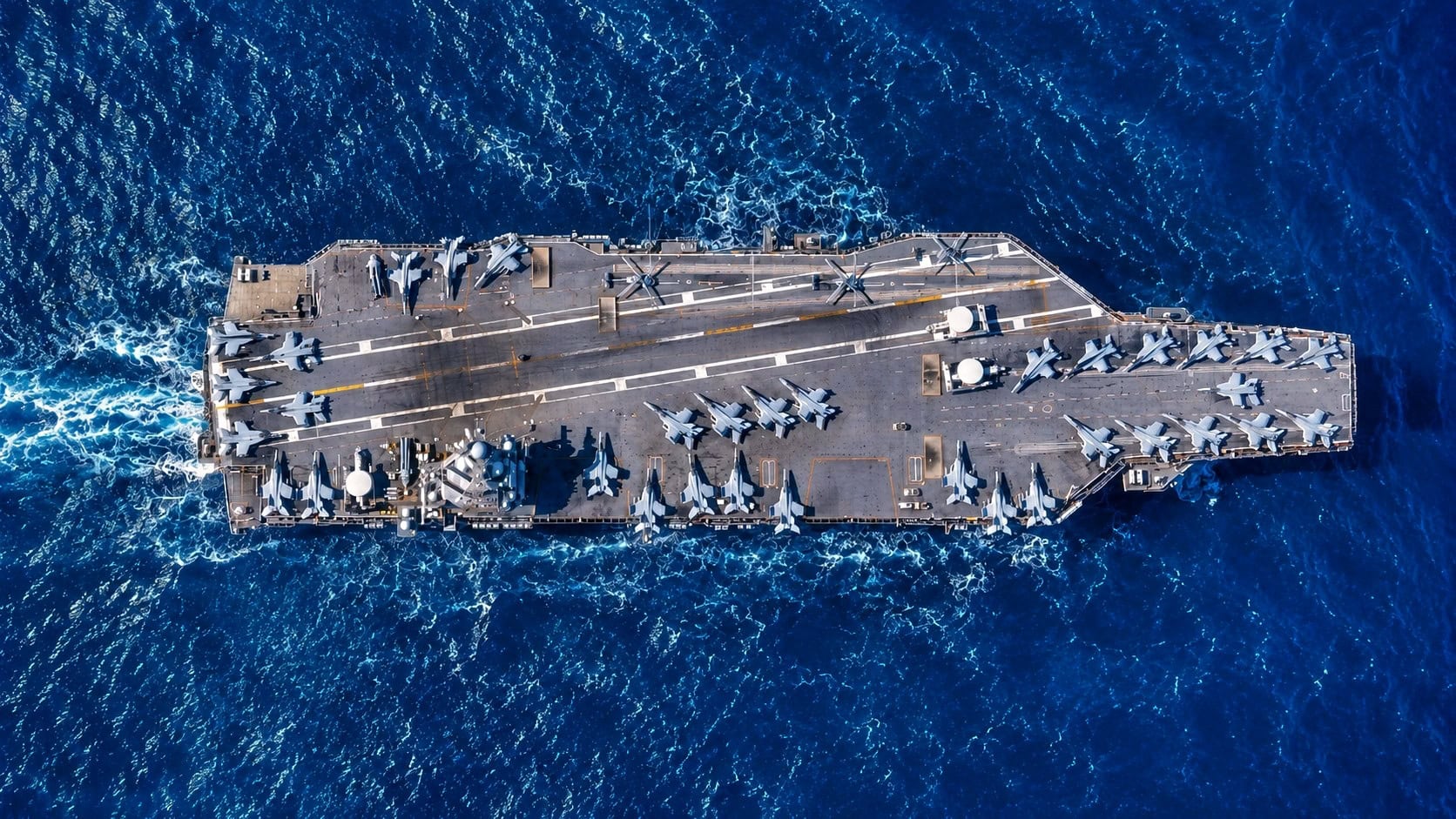
Summary and Key Points: The US Navy promises the USS Gerald R. Ford in early 2027, with a $17.6 million outside repair contract running to March. Sea trials, recertification, and a flight deck that can’t take the F-35C’s heat follow the shipyard, and one analyst puts the real date at late 2027.
The USS Gerald R. Ford Aircraft Carrier Comeback Might Be Delayed
The USS Gerald R. Ford (CVN-78) cost the American taxpayer $13 billion to build.
It costs an additional $1 billion per year to operate.
This figure is the baseline.
It increases depending on how much the carrier is used and for how long it is deployed.
In Ford’s recent deployment, the carrier is expected to remain in the shipyard.
The Ford costs $2.5 million per day to maintain and run.
Once deployed, the carrier strike group (air wing, escort destroyers, and submarines) high-tempo operations drive costs up to $6.5 million to $8 million per day.
Straining the Aircraft Carrier
During its last deployment, the world was inundated with unfortunate images of the dangers of operating complex machines, like a nuclear-powered aircraft carrier, for long periods across vast distances.
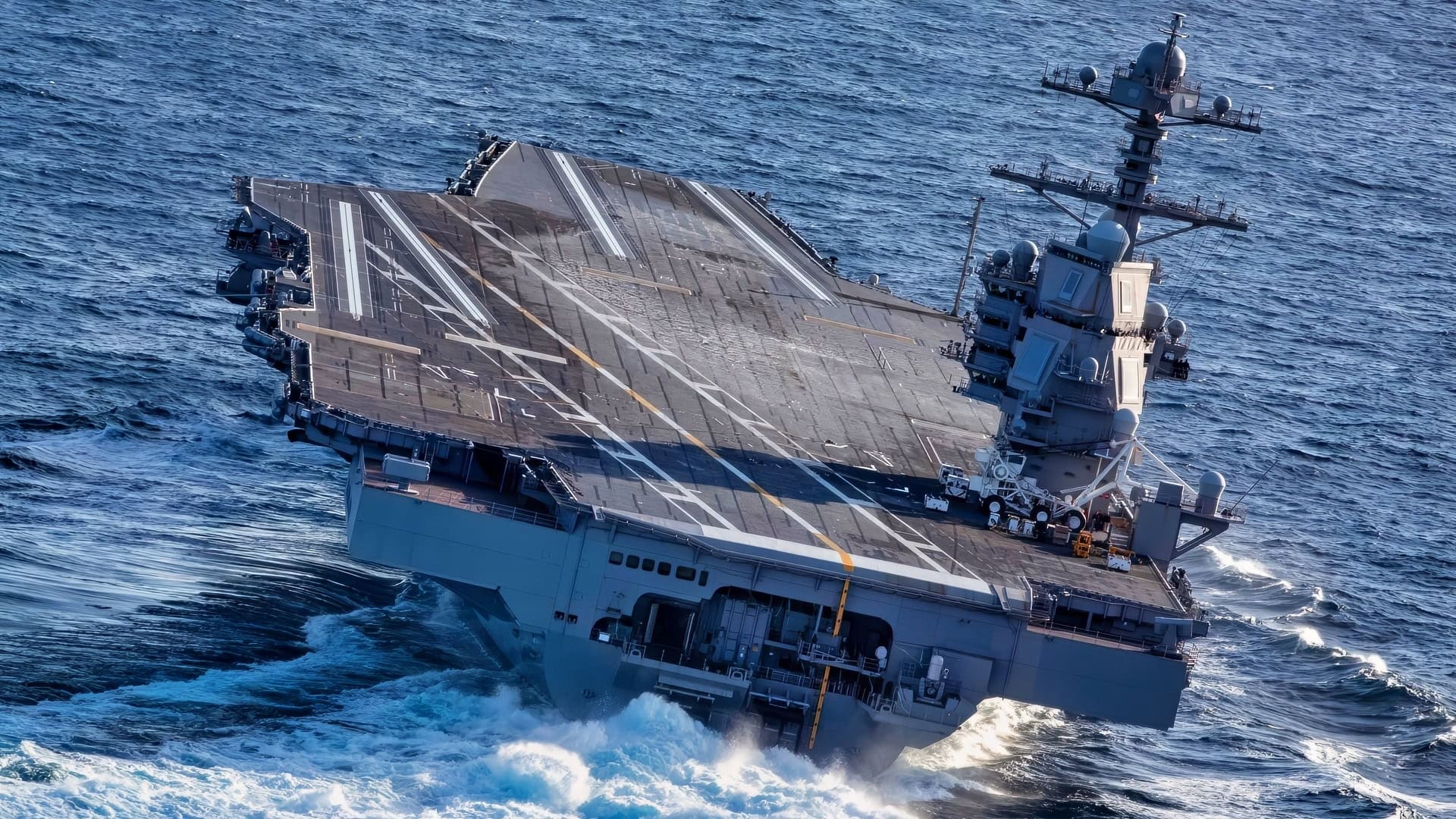
ATLANTIC OCEAN (Oct. 29, 2019) USS Gerald R. Ford (CVN 78) conducts high-speed turns in the Atlantic Ocean. Ford is at sea conducting sea trials following the in port portion of its 15 month post-shakedown availability. (U.S. Navy photo by Mass Communication Specialist 3rd Class Connor Loessin)
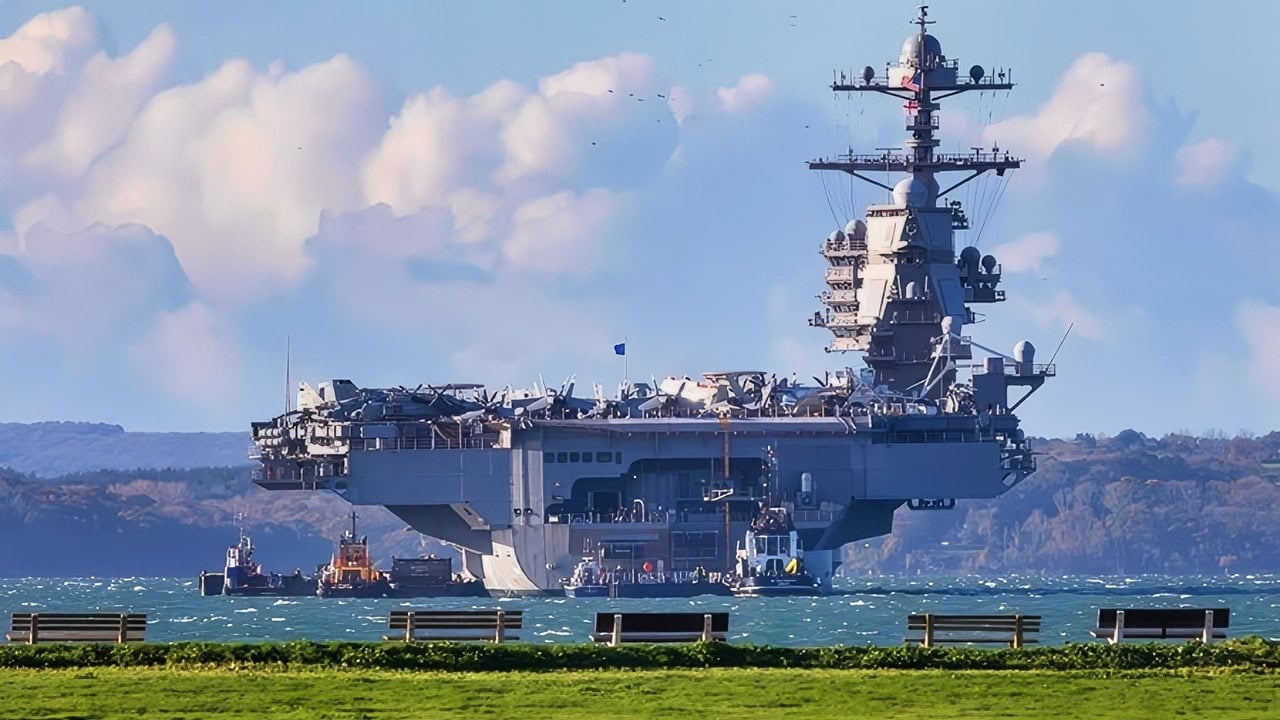
USS Gerald R. Ford US Navy Photo
These problems are exacerbated by the high operational tempo of warfare.
The USS Gerald R. Ford participated in the raid on Venezuela earlier this year that resulted in the capture of Nicolas Maduro and was then rapidly deployed to the Middle East so that it could participate in President Donald Trump’s war of choice against the Islamic Republic of Iran.
After arriving in theater, an embarrassing technological failure in the massive ship’s sewage system forced it to divert to a nearby European port for repairs.
Once it returned to action, though, the ship struggled to keep up after being deployed far beyond its original schedule, and a laundry fire erupted, damaging the ship’s living quarters.
Fun fact: the Gerald R. Ford’s sewage system requires a specialized “acid flush” to clear the advanced vacuum sewage system out.
That costs the US taxpayer $400,000 per treatment.
That doesn’t include the cost of a damaged vacuum sewage system.
And we’re told that the Ford’s sewage system was damaged when it arrived in port during the last leg of its deployment to the Middle East.
Too Long to Matter
The carrier officially entered Norfolk Naval Shipyard on July 7, 2026. Norfolk says they will have the carrier ready for action by early 2027.
Experts believe that those projections are rosy, given the current naval shipyard crisis.
Add in the recent, painful 326-day deployment of the USS Gerald R. Ford, and a six-month turnaround at Norfolk seems highly unlikely.
But it sounds good for the news networks.
One must be skeptical because, on top of the damage sustained during deployment, the Navy intends to update the ship’s electrical systems and make necessary upgrades to the launch-and-recovery systems.
While the carrier undergoes previously scheduled maintenance, strapped naval shipyard crews must repair damage the ship sustained during deployment, which will extend the timeline.
In fact, the Navy brought in external commercial vendors under a $17.6 million contract that runs through March 2027 to repair the damage.
Here’s where the Navy gets tricky with its bold pronouncements on the carrier.
Yes, the Gerald R. Ford will likely leave Norfolk by the first quarter of 2027.
But it will not be ready for deployment then.
The Ford must then go through months of post-maintenance sea trials.
The crew must then be re-certified.
Oh, and the F-35C Lightning II fifth-generation warplane still needs to be integrated into the USS Gerald R. Ford.
In case you missed it, the newest aircraft carrier in America’s fleet, the new carrier class meant to replace America’s aging Nimitz-class aircraft carriers, is incompatible with the Navy’s newest warplane, the F-35C.
One compelling reason the Navy built the new Ford class was to ensure it had a new carrier to support the new plane.
But multiple scheduling delays and redesigns of both the carrier and the F-35C knocked the two systems out of alignment, meaning the Ford’s flight deck plating doesn’t match the heat the F-35C’s engines generate.
Not Compatible with the F-35C
In other words, the deck plating melts when the F-35C takes off from the USS Gerald R. Ford.
The Navy needs to address that.
It is not an easy fix.
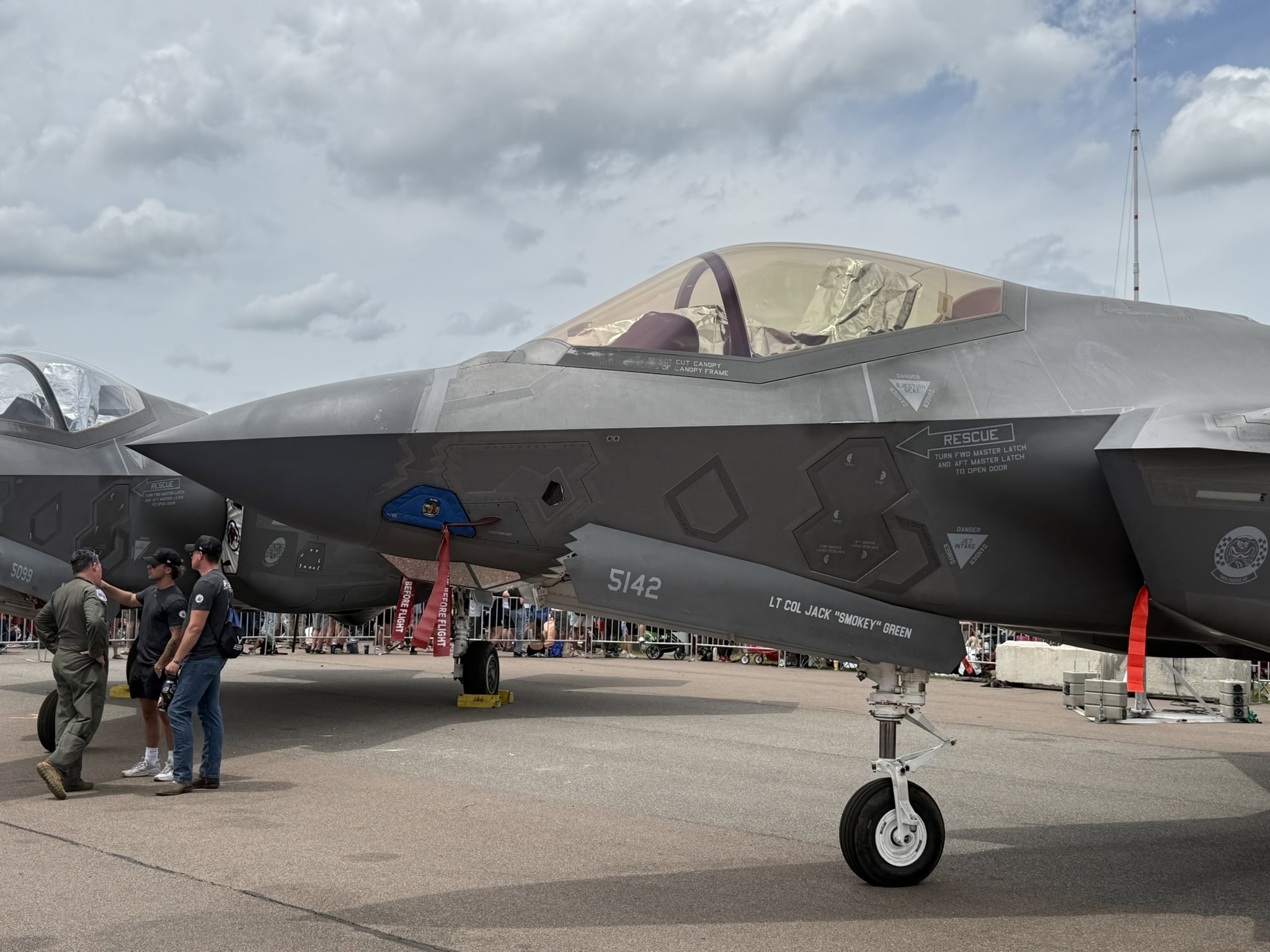
F-35C at Lakeland, Florida Airshow. Image Credit: 19FortyFive.com
Beyond the other damage, these rosy six-month projections are likely inaccurate.
Wildly so, given the damage from its most recent deployment, the overarching naval shipyard crisis (and the accompanying workforce crisis), and the readiness work required once it leaves the shipyard.
When analysts ask when the carrier will be ready for deployment, they can’t rely on the Navy’s six-month shipyard timeline.
Cumulatively, barring any delays or setbacks, the USS Gerald R. Ford will not be ready for deployment until late 2027.
Meanwhile, the fleet’s other carriers are being run ragged by overextended deployment timelines, shipyard delays, and workforce problems.
We are rapidly approaching a time in which America will struggle to deploy and maintain multiple aircraft carriers at once.
About the Author: Brandon J. Weichert
Brandon J. Weichert is the Senior National Security Editor at 19FortyFive.com. He also manages The Weichert Brief on Substack. Weichert is the co-host for The Mario Nawfal Show on Twitter/X. He is the author of four bestselling national security books, most recently A Disaster of Our Own Making: How the West Lost Ukraine (Encounter Books). His next book, Fortress Americas: A New Monroe Doctrine (Tucker Carlson Books), is due out December 8. Follow him via Twitter/X @WeTheBrandon.