
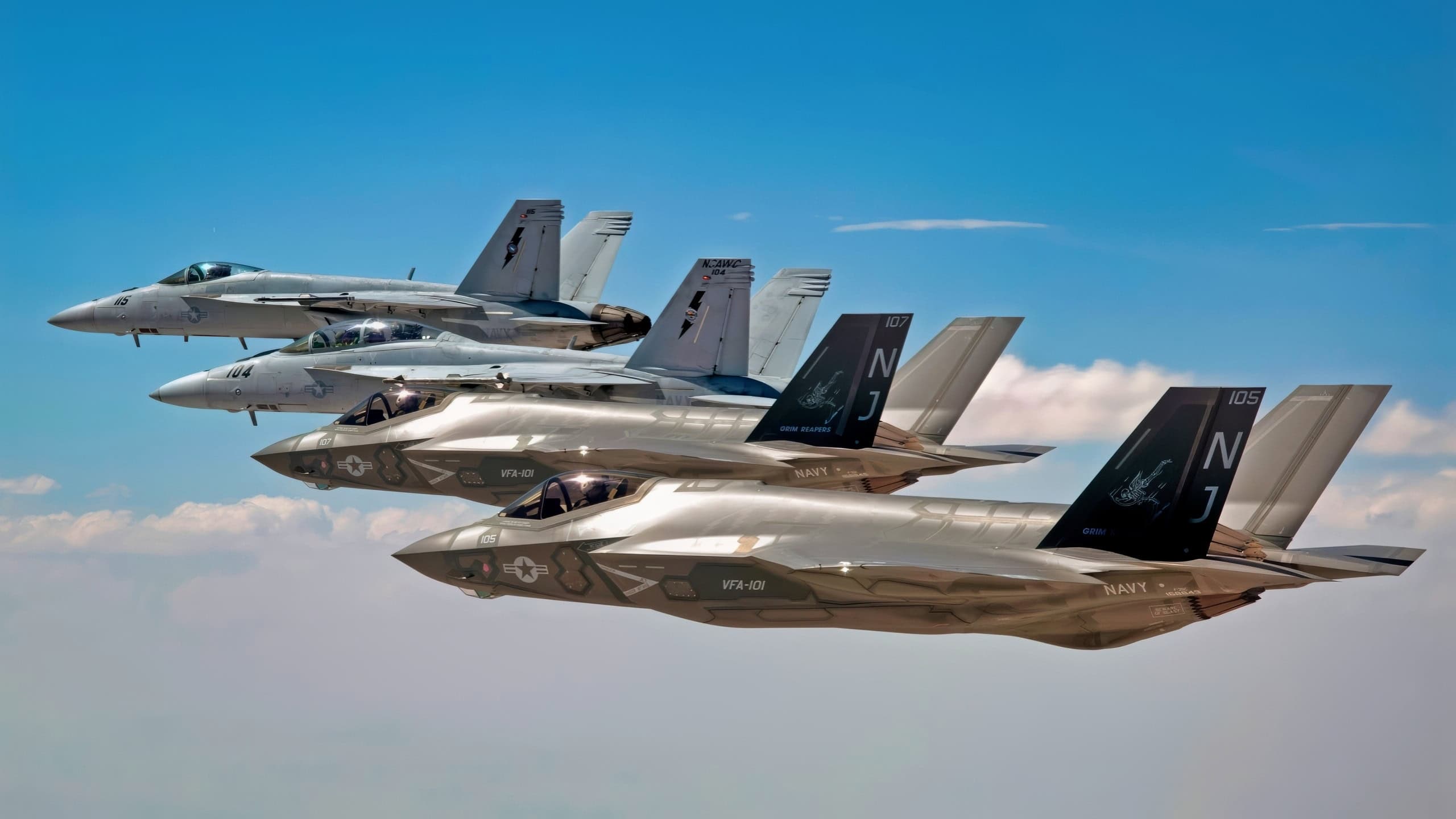
The USS Gerald R. Ford Still Can’t Fly The F-35C — And Now It Needs A Year In The Shipyard: The most expensive warship ever built returned home to Virginia in May after the longest American carrier deployment since Vietnam, and it spent all 326 of those days at sea flying the wrong fighter. The USS Gerald R. Ford, the $13 billion lead ship of the Navy’s newest carrier class, cannot launch the F-35C Lightning II — the Navy’s newest carrier-based stealth fighter, the aircraft the Ford was supposed to carry into the next era of naval aviation.
Instead, the Ford fought its first war with F/A-18 Super Hornets, the previous-generation jet, and has now entered a repair period that could keep it off the line for more than a year.
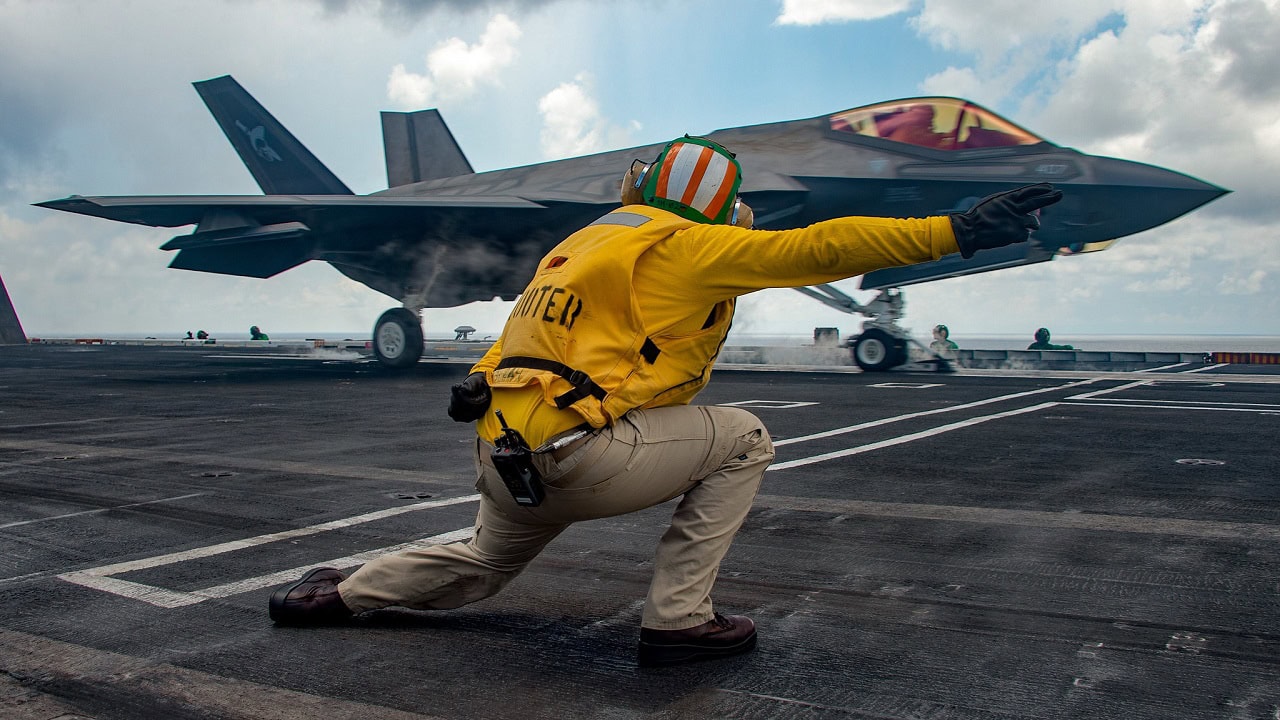
Lt. Nicholas Eppler, from Exeter, Calif., directs flight operations as an F-35C Lightning II assigned to the “Argonauts” of Strike Fighter Squadron (VFA) 147 launches from the Nimitz-class aircraft carrier USS Carl Vinson (CVN 70), Oct. 25, 2021. The Carl Vinson Carrier Strike Group is on a scheduled deployment in the U.S. 7th Fleet area of operations to enhance interoperability through alliances and partnerships while serving as a ready-response force in support of a free and open Indo-Pacific region.
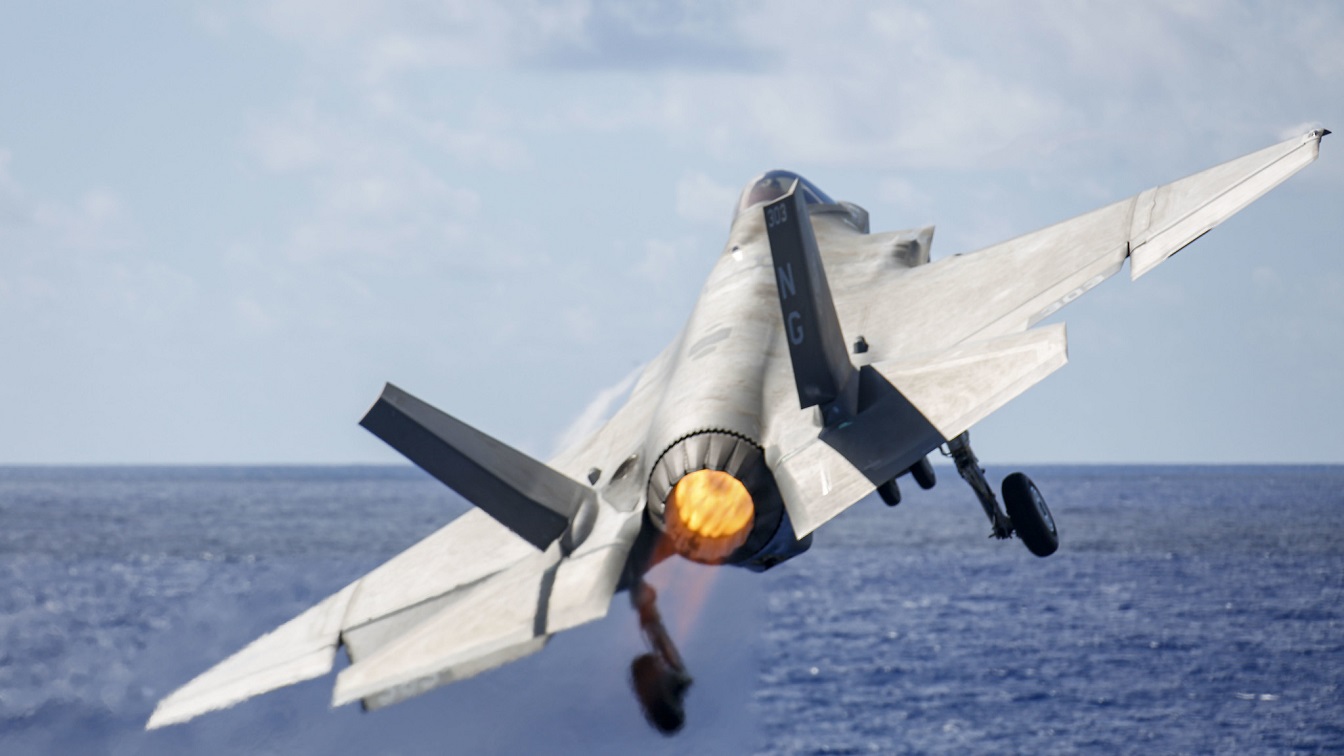
PHILIPPINE SEA (May. 13, 2022) An F-35C Lightning II assigned to the “Black Knights” of Marine Fighter Attack Squadron (VMFA) 314 launches from the Nimitz-class aircraft carrier USS Abraham Lincoln (CVN 72). The Abraham Lincoln Carrier Strike Group is on a scheduled deployment in the U.S. 7th Fleet area of operations to enhance interoperability through alliances and partnerships while serving as a ready-response force in support of a free and open Indo-Pacific region. (U.S. Navy photo by Mass Communication Specialist 3rd Class Michael Singley) 220513-N-MM912-1002
The carrier built to be the F-35C’s seagoing home still cannot operate it, and the story of why is one of the clearer procurement failures in the modern Navy.
The Deck Heat Military Problem: The F-35C Runs Too Hot For The Ford Supercarrier
The most immediate obstacle is thermal.
The F-35C’s engine exhaust has been reported to reach roughly 3,600 degrees Fahrenheit, far hotter and more concentrated than the output of the Super Hornets the Ford has been flying, and that heat imposes demands the ship’s flight deck was never built to absorb.
The Ford’s jet blast deflectors — the angled panels that rise behind a launching aircraft to redirect its exhaust — and the surrounding deck materials require reinforced, heat-resistant construction and upgraded cooling to withstand the repeated high-tempo launches an F-35C air wing would generate. Run the current deck through that punishment day after day, and the surface itself is at risk. The Navy designed a carrier to launch a fighter whose exhaust the carrier’s deck cannot yet safely take.
The deck is only the visible part of the problem. The F-35C is a maintenance-intensive stealth aircraft that needs infrastructure the Ford does not have: secure spaces for its sensitive systems, the facilities to maintain its low-observable coatings at sea, and the ODIN diagnostic network — the computerized backbone that monitors the jet’s engine and avionics and predicts failures. Without those, the Ford cannot sustain F-35C operations on a deployment, even if the deck could take the heat. The gap is not a single missing piece; it is the whole support ecosystem the fighter was built to depend on.
The “Synchronization Gap”: An Industrial Design Frozen Two Decades Too Early
The root cause sits in the calendar. The Ford’s design specifications were locked in around the 2005 steel-cutting that began her construction, and the F-35C’s final heat and systems requirements did not exist yet — the carrier-variant fighter was still years from having its specifications settled.
The ship was therefore designed and built to accommodate an aircraft whose actual demands had not yet been defined, and the two never aligned. The Pentagon has a term for this kind of mismatch, in which a platform is committed before the systems it must host are mature: a synchronization gap. The Ford is the largest and most expensive example of it afloat.
Locking in a design years before construction is unavoidable for a ship that takes more than a decade to build. The failure was in sequencing — committing the lead carrier to a configuration frozen two decades before the fighter it was meant to carry was ready, and failing to build in enough margin to absorb the changes everyone knew were coming.
The result is a next-generation carrier that entered service, and then entered combat, unable to fly the next-generation jet that was central to its reason for existing.
The USS Kennedy Was Built Right — Which Is The Real Indictment
The sharpest evidence that this was a fixable mistake is the next ship in the class. The USS John F. Kennedy, the second Ford-class carrier, was engineered to operate the F-35C from the start, with the deck, the maintenance spaces, and the systems designed in rather than retrofitted later.
The Navy, in other words, knew exactly what the F-35C required and built those requirements into the very next hull off the line. The lead ship got the gap; the second ship got the fix.
That sequence is the quiet indictment of the Ford program. The capability was not beyond the Navy’s understanding or engineering — it was simply not in the lead carrier, the one that cost $13 billion and carries the class’s name.
The Ford now has to be modified after the fact to reach a standard its younger sister was born with, and that modification is part of what the coming repair period is for.
A Year In The Yard, After 326 Days At War
The Ford did not come home for a light touch-up. It returned to Naval Station Norfolk on May 16 after 326 days at sea — the longest U.S. carrier deployment in more than half a century, having crisscrossed the Atlantic four times, led strikes on two continents, and launched hundreds of sorties with its strike group firing scores of missiles. A laundry-room fire that burned for some 30 hours during the deployment forced 600 sailors out of their compartments and required port stops in Greece and Croatia for repairs, and the ship’s chronic plumbing problems affected hundreds of its toilets.
The Navy’s chief of naval operations, Admiral Daryl Caudle, confirmed the carrier’s return after more than 320 days at sea and turned the homecoming into a celebration, while Navy officials in Norfolk deflected questions about what comes next.
What comes next is the yard. The electromagnetic launch system and advanced arresting gear need a full inspection after a sustained combat sortie deployment; the fire damage needs refurbishment; and propulsion, radar, and combat systems all require deep maintenance — a repair period the Navy’s own people expect to last more than a year.
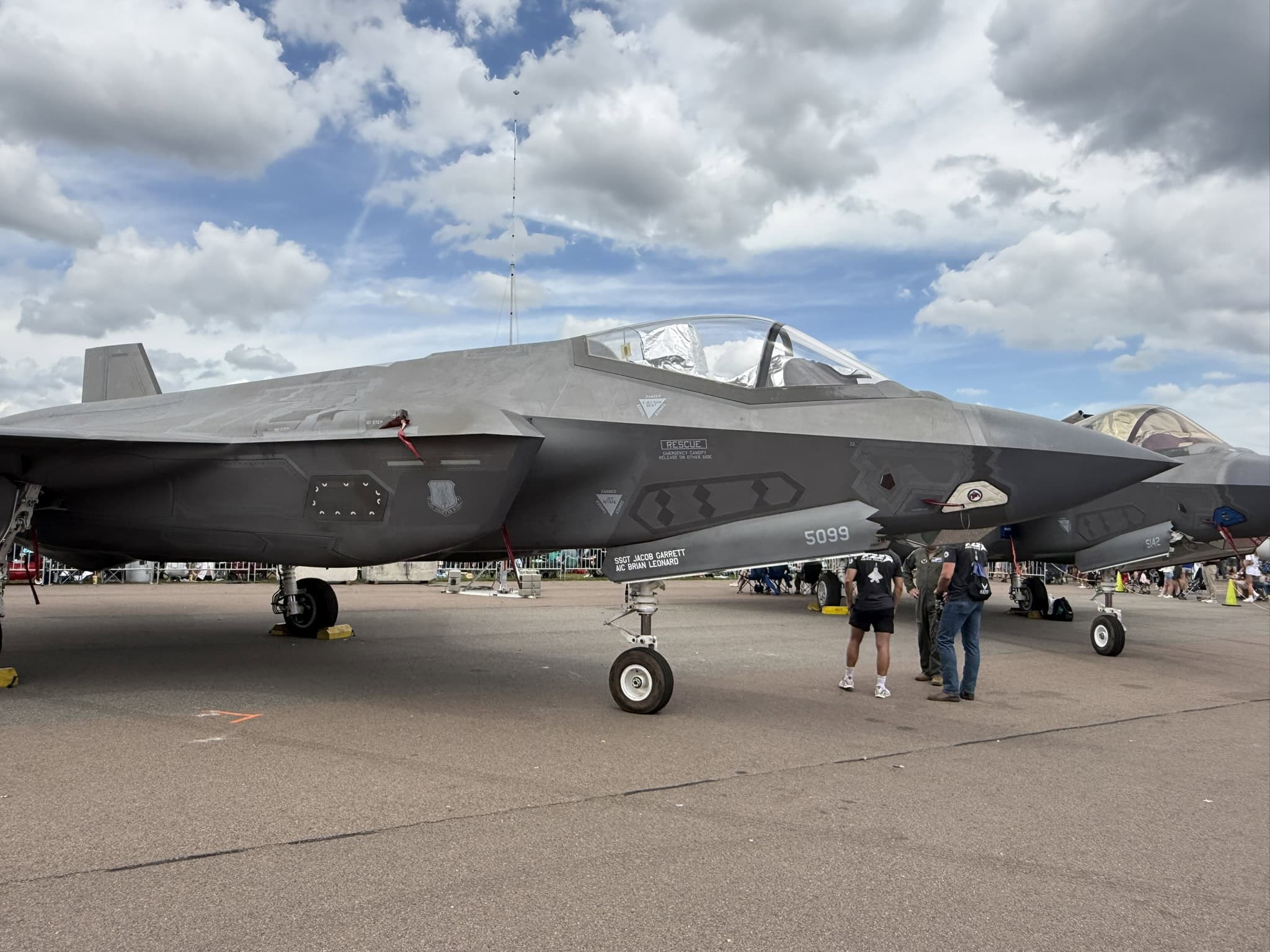
F-35C. Image taken by Harry J. Kazianis in Lakeland, Florida.
The retrofit to finally enable the Ford to operate the F-35C is folded into that work. The carrier that could not fly the jet on its first deployment will spend a year or more in Virginia before it gets the chance to fly it on its second.
The Verdict: The Ship Fought Well, The Program Failed To Sequence
The Ford is not a failure in battle, and the record says so plainly. It completed the longest carrier deployment since the Vietnam era, sustained combat operations across two continents, and proved the core technologies — the electromagnetic catapults, the arresting gear, the higher sortie rate — that the program had spent years and billions struggling to make work. The crew earned the homecoming.
And the F-35C gap is a fixable retrofit rather than a permanent defect, with every carrier in the fleet cycling through the same modifications as they pass through scheduled availabilities.
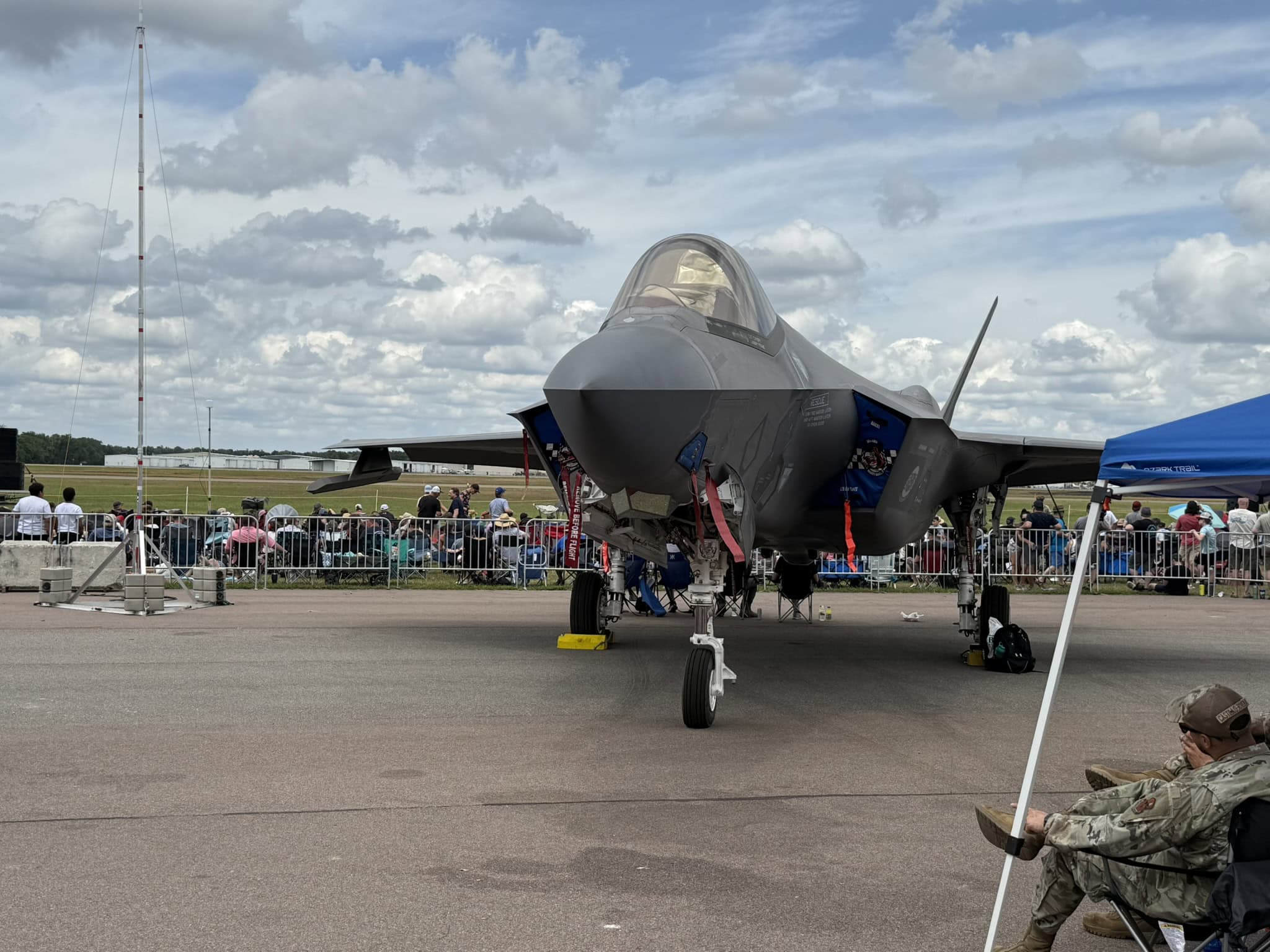
F-35C in Lakeland, Florida. 19FortyFive.com original image.
The failure is one of sequencing, and it is real. The Navy built its most advanced carrier around a fighter whose requirements were not yet defined, froze the design two decades too early, sent the ship to war, unable to fly that fighter, and built the fix into the next hull instead of the lead one.
A $13 billion supercarrier that spent its first war flying the last generation’s jet, and now needs a year in the shipyard before it can fly the current one, is the price of committing to the platform before the pieces were ready. The Ford will eventually fly the F-35C. That it could not do so on the deployment it just completed, after everything the program cost, is the part worth remembering.
MORE – The F-16XL Fighter Was the Masterpiece the Air Force Passed On
MORE – Russia’s Nuclear Battlecrusier Took 3 Decades to Get a Refit
MORE – Dark Eagle: The Army Has a Mach 17 Missile
About the Author: Harry J. Kazianis
Harry J. Kazianis (@Grecianformula) was the former Senior Director of National Security Affairs at the Center for the National Interest (CFTNI), a foreign policy think tank founded by Richard Nixon based in Washington, DC. Harry has over a decade of experience in think tanks and national security publishing. His ideas have been published in the NY Times, The Washington Post, The Wall Street Journal, CNN, and many other outlets worldwide. He has held positions at CSIS, the Heritage Foundation, the University of Nottingham, and several other institutions related to national security research and studies. He is the former Executive Editor of the National Interest and the Diplomat. He holds a Master’s degree focusing on international affairs from Harvard University.

