
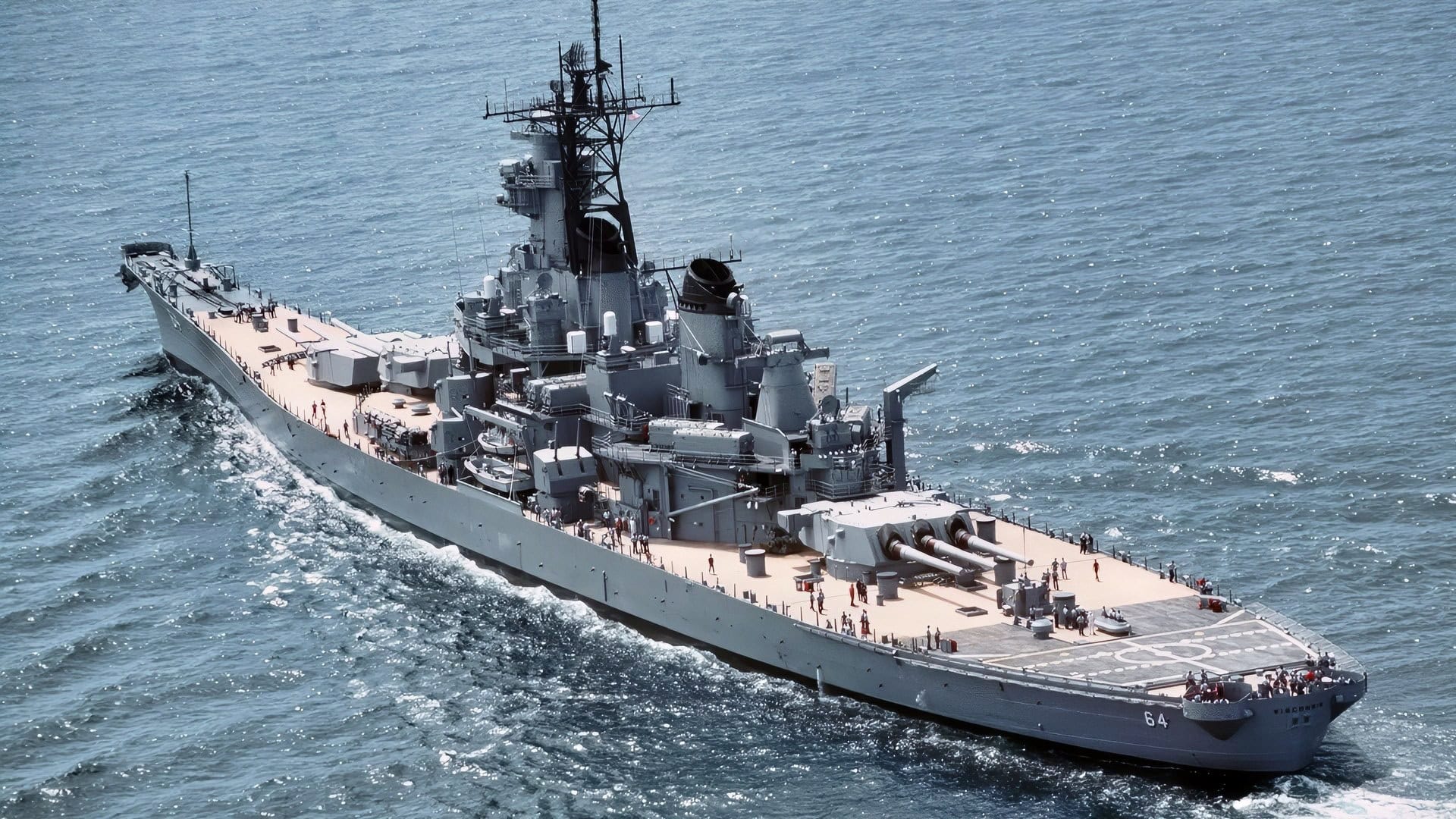
America Built the Iowa-Class Battleship for a Gun Duel That Never Came: Across four ships and 36 main guns, the Iowa class never fired a 16-inch shell at an enemy battleship. Iowa, New Jersey, Missouri, and Wisconsin were fast, heavily armed capital ships built to hunt surface forces and survive a major gunfight. World War II gave them almost every mission except the classic battleship duel their designers expected.
The absence of that duel was not evidence of a poor design. When the Navy began shaping the class in 1938, it wanted a 33-knot battleship able to catch Japan’s fast Kongo-class ships, operate with the fleet’s newest carriers, and overmatch a major surface threat. The result was a 45,000-ton design armed with 16-inch/50-caliber Mark 7 guns firing 2,700-pound armor-piercing shells.
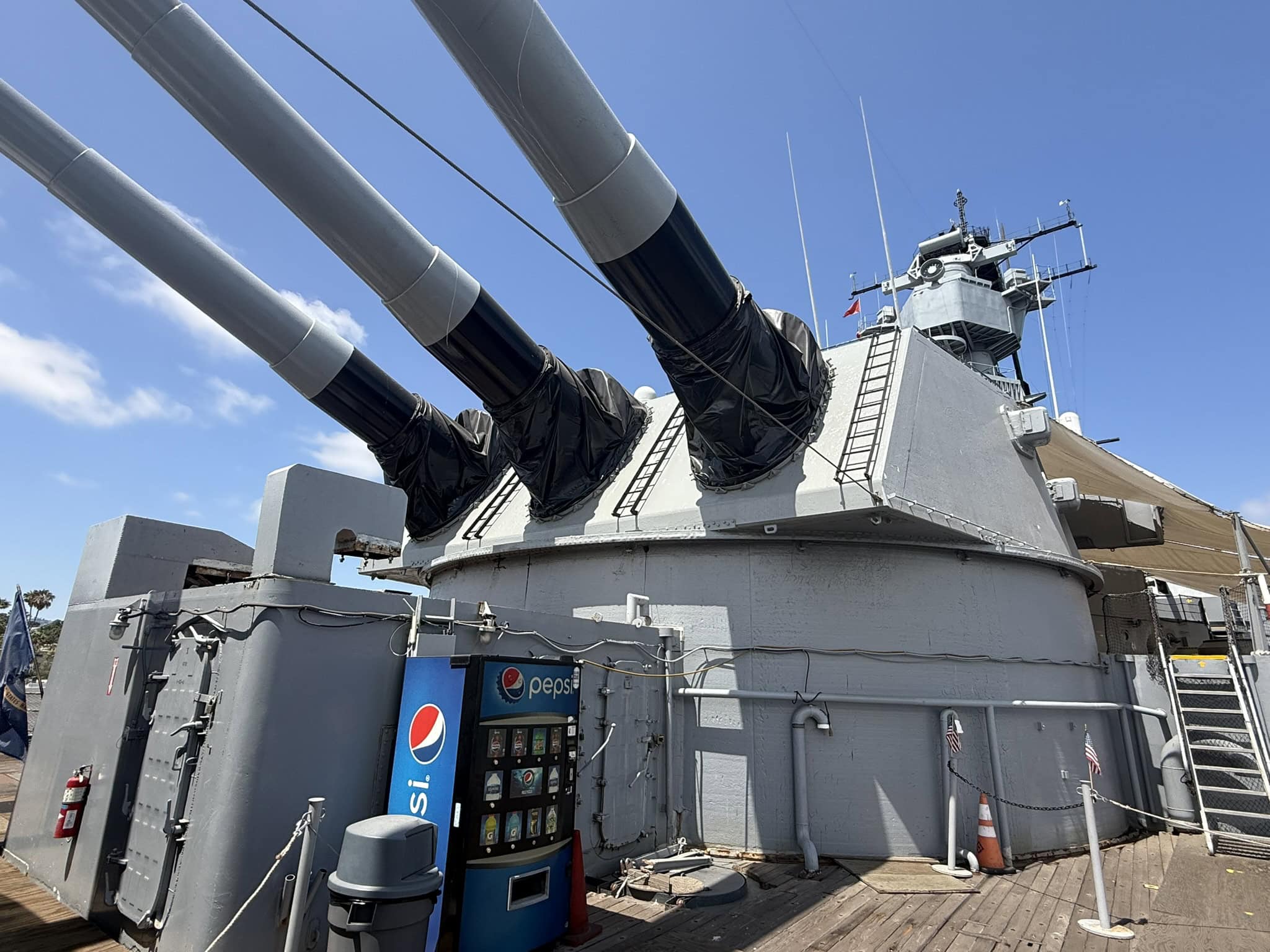
USS Iowa Visit by Harry Kazianis of 19FortyFive.com
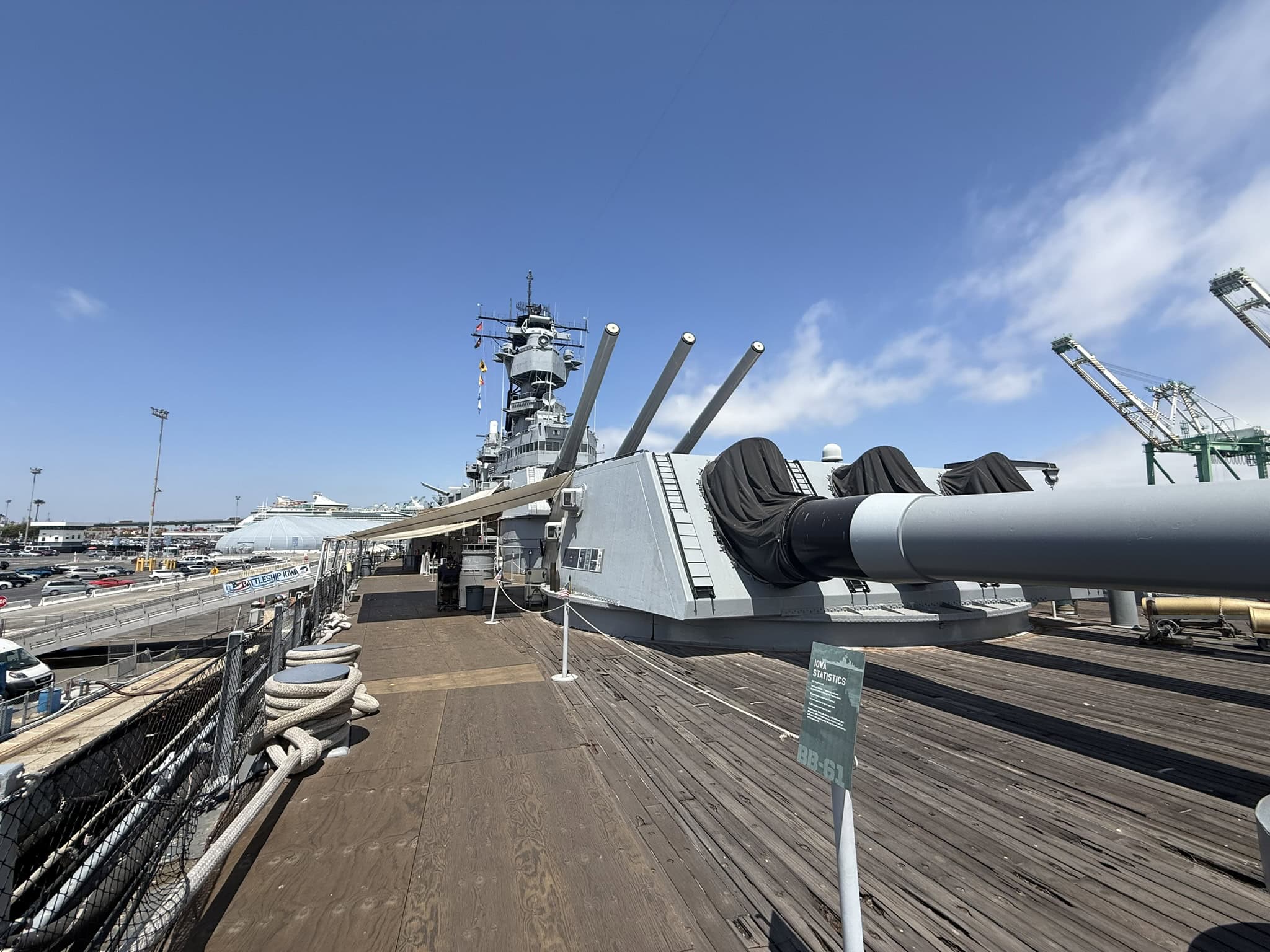
USS Iowa Visit by Harry Kazianis of 19FortyFive.com
By the time Iowa and New Jersey entered Pacific combat in 1944, the carrier had become the fleet’s primary offensive weapon. The new battleships spent much of the war protecting flattops from aircraft, serving as flagships, conducting surface sweeps, and using their large guns against islands and industrial targets.
Six Iowa-class hulls were authorized, but only four reached service. Illinois and Kentucky were left unfinished as wartime priorities shifted toward aircraft carriers, submarines, and amphibious shipping. The four completed ships all fought Japan, but the decisive battleship engagement their designers anticipated never appeared.
The Iowa Class Was Built to Catch Japan’s Fast Capital Ships
Speed drove the design. Earlier American battleships made about 27 knots, while the Iowa class reached 33. That difference allowed the ships to accompany fast carrier task forces and pursue Japanese surface groups instead of waiting for them to approach. The combination of speed, radar fire control and heavy firepower explains the class’s enduring reputation, while its 16-inch/50 Mark 7 gun gave it exceptional armor penetration and range.
The comparison with Yamato is irresistible, but it needs context. Iowa was not a direct copy built from complete knowledge of Japan’s secret super-battleship. The United States planned the larger Montana class, with twelve 16-inch guns and heavier protection, as the slower and more powerful extension of the battle line. Carriers became more urgent, all five Montanas were canceled, and the last two Iowa hulls never entered service.
Truk Produced the Closest Thing to an Iowa-Class Surface Battle
Iowa and New Jersey saw their most important surface action during Operation Hailstone in February 1944. After carrier aircraft struck the Japanese base at Truk, the two battleships joined cruisers and destroyers in pursuing ships attempting to escape. The American force helped destroy the light cruiser Katori and destroyer Maikaze, while the destroyer Nowaki escaped.
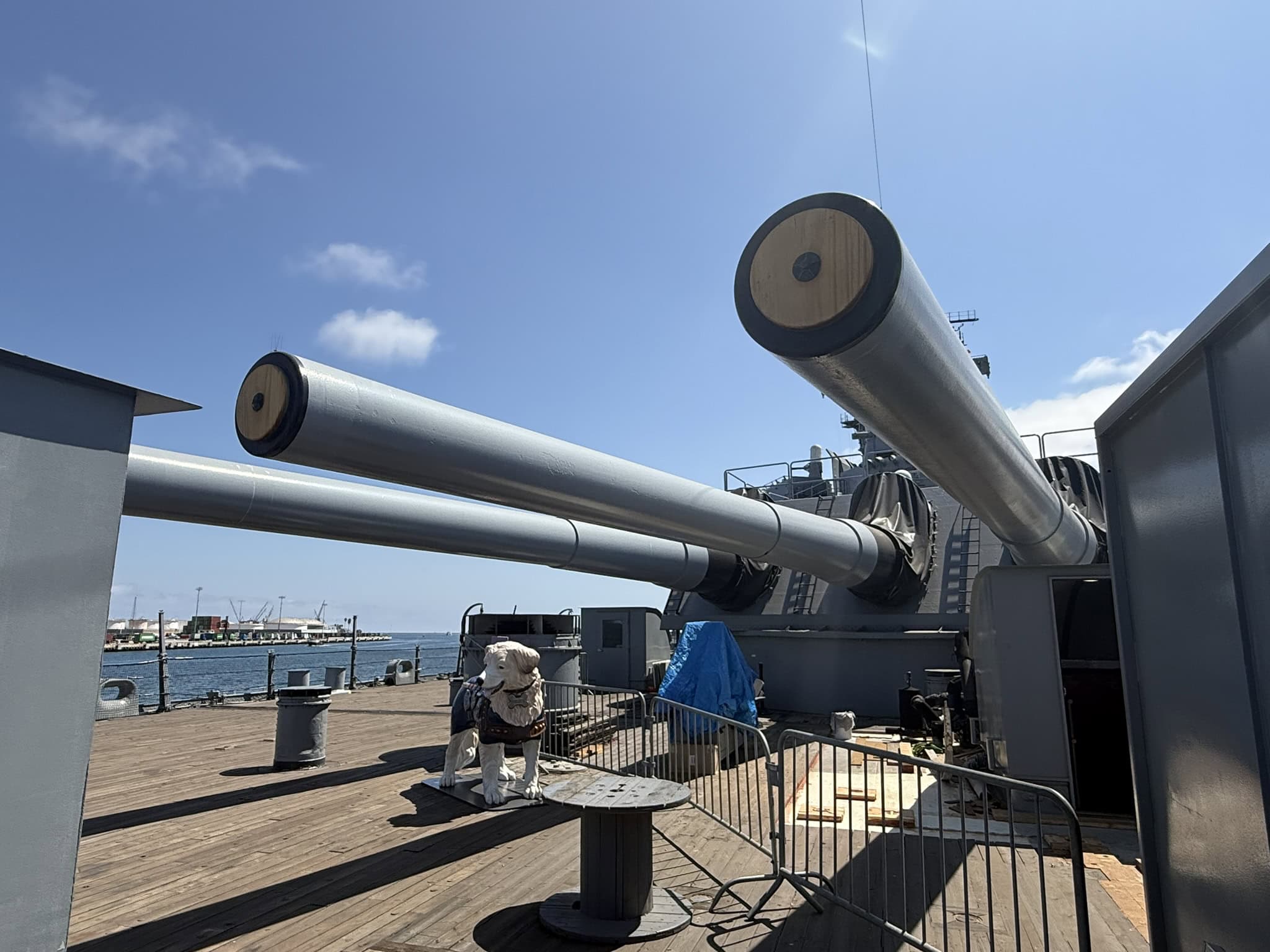
USS Iowa 16-Inch Guns. Image Credit: Harry J. Kazianis.
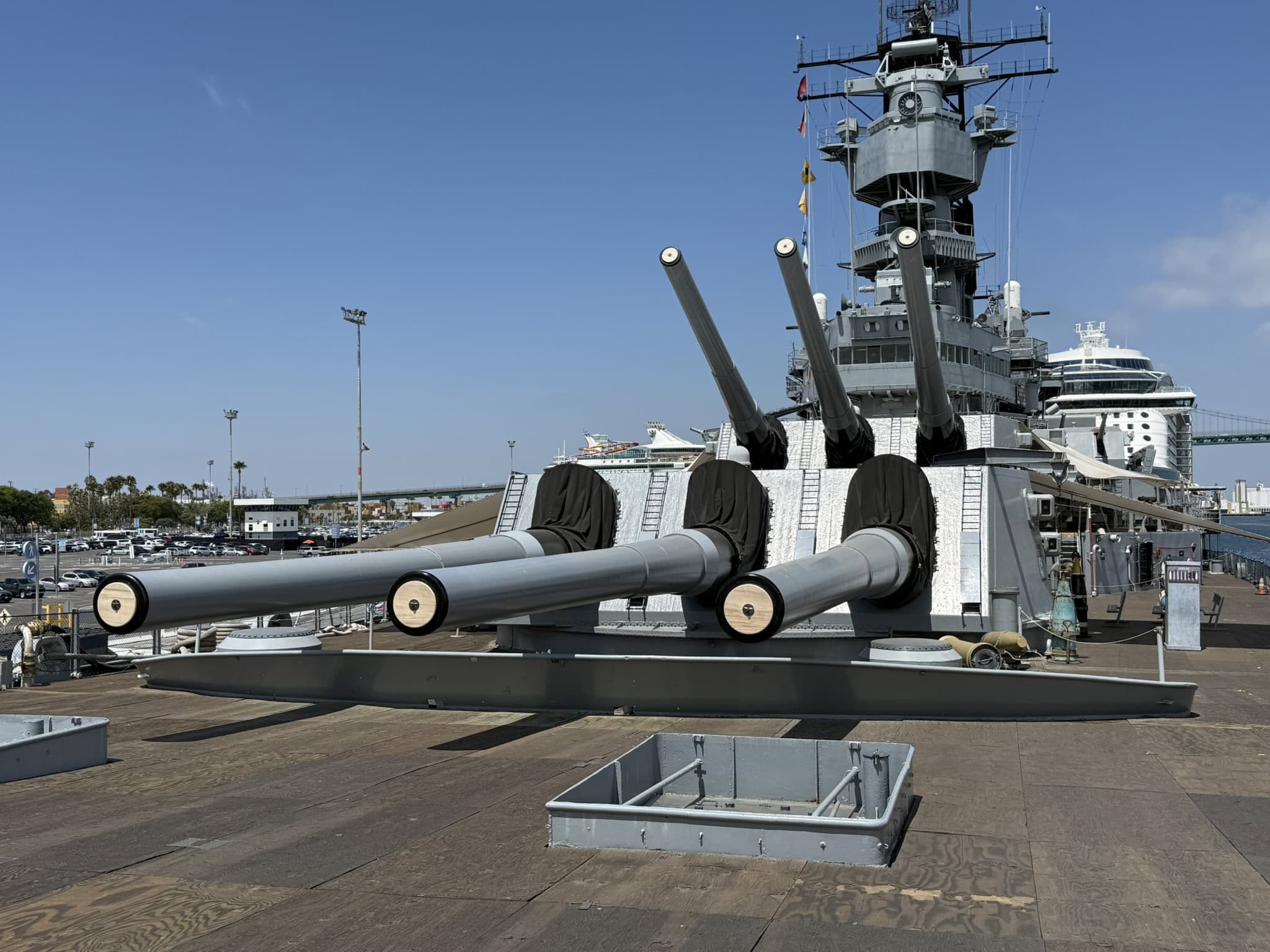
USS Iowa 16-Inch Guns. Image Credit: Harry J. Kazianis.
The engagement demonstrated Iowa-class speed and radar-directed gunfire against moving ships. It also showed how little remained of the prewar battleship ideal. Their targets were a light cruiser, a destroyer and support vessels, not an armored battle line capable of answering nine 16-inch guns.
Leyte Gulf Sent the Battleship Duel Somewhere Else
The best chance for Iowa and New Jersey to meet Japanese battleships came during the Battle of Leyte Gulf in October 1944. Both served with Admiral William Halsey’s Third Fleet when he took the fast carriers and battleships north after Japan’s decoy carrier force. Vice Admiral Takeo Kurita’s Center Force then passed through San Bernardino Strait and attacked the small escort carriers and destroyers of Taffy 3.
Halsey eventually sent Iowa, New Jersey and other fast ships south, but Kurita had already withdrawn. At Surigao Strait, older American battleships fought the war’s last battleship-against-battleship action and helped destroy the Japanese battleship Yamashiro. Carrier aircraft sank Musashi in the Sibuyan Sea before she reached Samar.
The same pattern removed the remaining opponents. The submarine Sealion sank Kongo in November 1944. Carrier aircraft destroyed Yamato during its one-way Okinawa mission in April 1945 and sank Haruna at Kure in July. The opposing capital ships disappeared before an Iowa reached gun range.
The Four Ships Fought an Aircraft Carrier War
Iowa entered the Pacific first after carrying President Franklin Roosevelt across the Atlantic in 1943. She supported the Marshall Islands campaign, screened carriers during raids on Truk and the Marianas, fought in the Battle of the Philippine Sea and operated during Leyte Gulf. New Jersey followed a similar route and served as a flagship for Admirals Raymond Spruance and Halsey.
Wisconsin joined the fast carrier force late in 1944. She weathered Typhoon Cobra, covered strikes against Luzon, supported operations around Iwo Jima and Okinawa and bombarded industrial targets in Japan. Her main battery was used for bombardment, not ship-to-ship fire.
Missouri arrived in the combat zone in early 1945. She defended carriers during strikes on Tokyo, shelled Iwo Jima and Okinawa and survived a kamikaze impact on April 11 with limited damage. In July, she joined attacks against the Japanese home islands and bombarded industrial facilities at Muroran in Hokkaido and on Honshu.
Missouri’s Final Wartime Assignment Required No Gunfire
Missouri became Admiral Halsey’s Third Fleet flagship in May 1945. On August 29, she entered Tokyo Bay. Four days later, Japanese and Allied representatives signed the formal surrender documents on her deck.
About the Author: Harry J. Kazianis
Harry J. Kazianis (@Grecianformula) was the former Senior Director of National Security Affairs at the Center for the National Interest (CFTNI), a foreign policy think tank founded by Richard Nixon based in Washington, DC. Harry has over a decade of experience in think tanks and national security publishing. His ideas have been published in the NY Times, The Washington Post, The Wall Street Journal, CNN, and many other outlets worldwide. He has held positions at CSIS, the Heritage Foundation, the University of Nottingham, and several other institutions related to national security research and studies. He is the former Executive Editor of the National Interest and the Diplomat. He holds a Master’s degree focusing on international affairs from Harvard University.

