
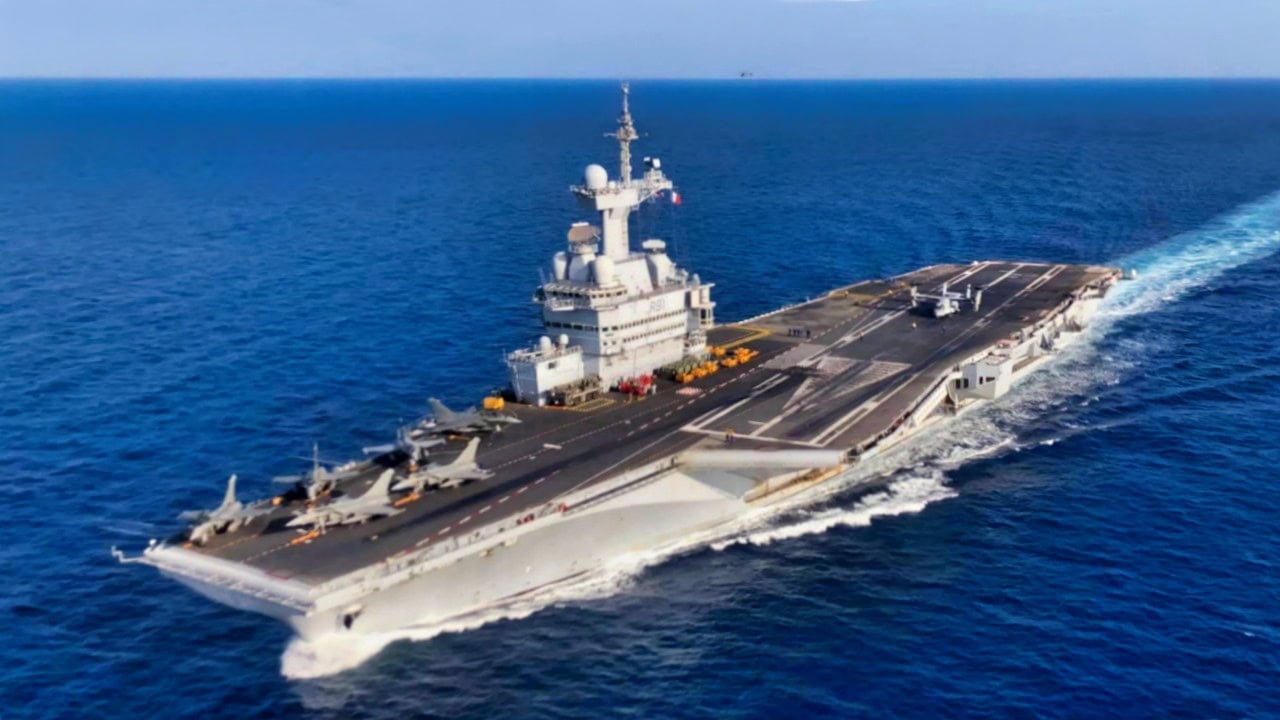
Summary and Key Points – Charles de Gaul Nuclear Aircraft Carrier: Commissioned five years late, the 42,500-ton carrier needs reactor refueling every six years, compared with 20 for a Nimitz. France runs its military on €57 billion a year; the US Navy gets $292.2 billion. Paris is now building her replacement, the France Libre.
Charles de Gaul: France’s Only Nuclear Aircraft Carrier
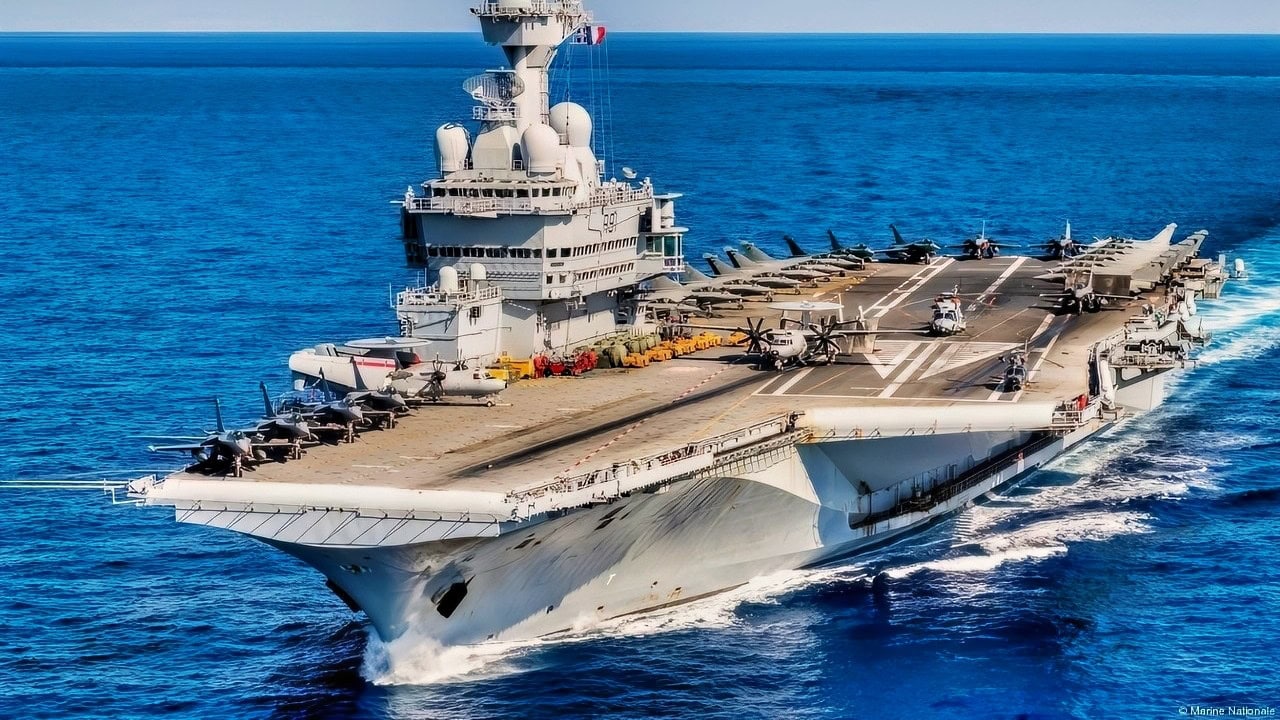
Charles de Gaulle Aircraft Carrier at Sea. Image Credit: Creative Commons.
Only two nations have ever operated nuclear-powered aircraft carriers.
The U.S. Navy leads the world in naval nuclear propulsion technology.
It operates 11 nuclear-powered carriers and possesses one of the largest nuclear submarine fleets. France is the only other navy in the world to operate a nuclear-powered aircraft carrier.
The French carrier Charles de Gaul is the flagship of the French Navy and its only carrier. Its procurement and construction cost somewhere between $3.5 billion and $4.5 billion.
Was the price worth it?
On the one hand, procuring a nuclear carrier vastly improves the French Navy’s power-projection capabilities. On the other hand, with only one carrier available, its capabilities are severely limited.
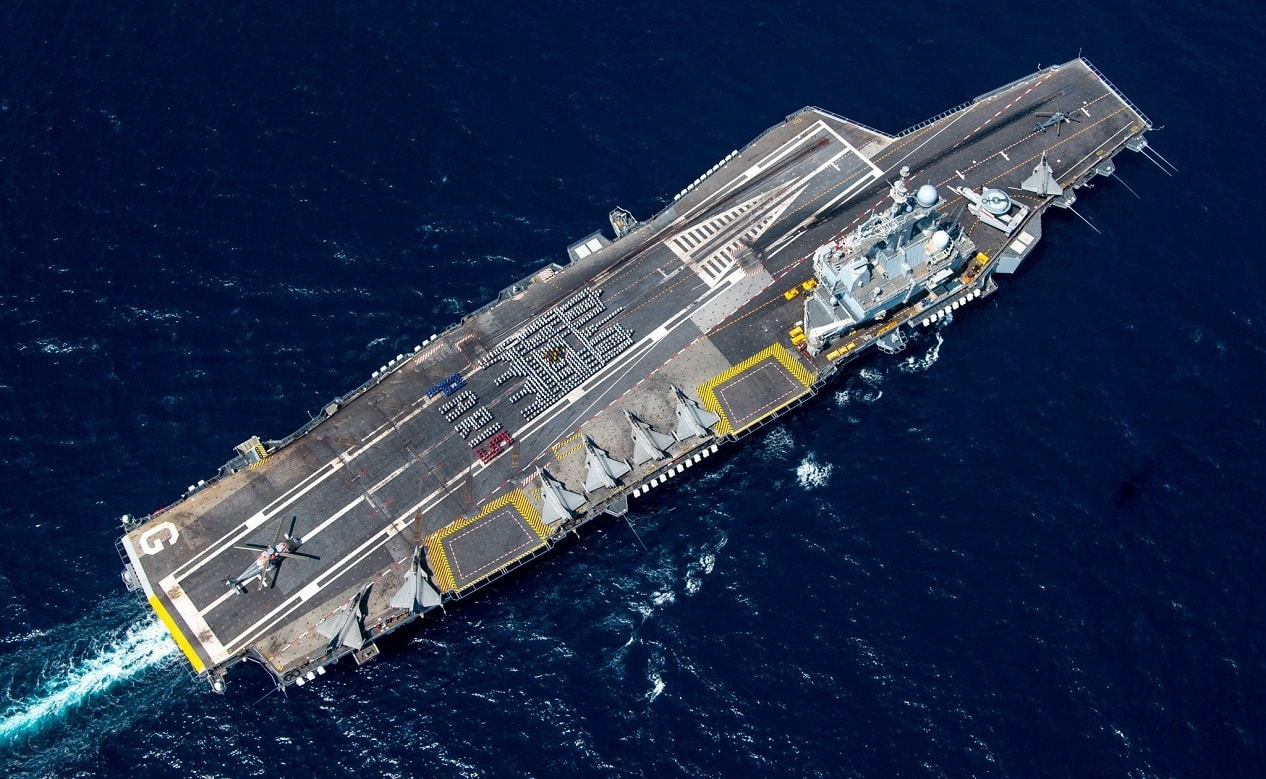
French Aircraft Carrier Charles de Gaulle.
Charles de Gaul’s Troubled Development
Charles de Gaul was conceived as a replacement for France’s two conventionally powered Clemenceau-class aircraft carriers.
French naval doctrine typically aims for a two-carrier fleet so that one carrier can always remain operational while the other undergoes maintenance.
However, for reasons that remain unclear, whether due to budget constraints or other factors, the government ordered only one carrier of the class.
Apparently, France entered into talks with the UK in the early 2000s to procure its second carrier.
This collaborative effort was based on Britain’s Queen Elizabeth-class carriers. However, France withdrew from the program in 2013 over budget concerns, opting instead to settle with Charles de Gaul.
Charles de Gaul was laid down in 1989 at the DCN Brest naval shipyard. Shortly after construction started, the program quickly ran into several hurdles, mainly due to a lack of funds.
In the 1990s, a severe economic recession hit France, leading to widespread budget cuts.
Work on the carrier was suspended multiple times in 1990, 1991, 1993, and 1995. As a result, the project fell far behind schedule.
The problems worsened when a propeller broke during sea trials near Norfolk, Virginia, forcing the carrier to return to Toulon for repairs.
Other problems, such as radiation levels above acceptable limits, required further maintenance and pushed back the carrier’s commissioning by several more months.
When Charles de Gaul was finally completed and commissioned in 2001, she was five years behind her original deadline.
Half Her Life at Port
Since entering service, Charles de Gaul has spent roughly half her service life in port.
For comparison’s sake, a Nimitz-class carrier typically spends about six to ten years of its 40-year service life in port, or roughly a fifth of its service life at most.
She underwent her first major overhaul in 2007, which lasted 15 months and required a reactor refueling. In 2017, she received her midlife upgrade, which lasted 18 months.
Unlike American nuclear carriers, Charles de Gaul requires refueling every six years, rather than the 20 years required on the Nimitz-class. Consequently, the French aircraft carrier spends more time undergoing long refueling procedures than her American counterparts.
Large unavailability gaps are not unique to Charles de Gaul.
Britain’s Queen Elizabeth-class carrier, HMS Prince of Wales, spent only a third of her service life at sea, with the rest at port or in maintenance.
Comparing Charles de Gaul to an American Nimitz-class carrier isn’t exactly fair. In terms of priorities and budget, the U.S. and French navies are in two separate worlds.
In FY 2026, France allocated €57 billion (or around $64.5 billion to $66 billion).
In contrast, the U.S. Navy received around $292.2 billion for 2026. Against this backdrop, it is understandable that France operates only one aircraft carrier and spends half its time in port.
France does not need to operate a large, globe-spanning navy.
Today, Paris, like the rest of NATO, relies primarily on the U.S. for its naval needs. France still has one of Europe’s best navies, but it doesn’t require a large navy to the same extent as the U.S. does.
Summed Up in 1 Word: Mediocre?
Although it spends half its time at port, Charles de Gaul is not a bad carrier.
With a displacement of around 42,500 tons, she is considerably smaller than her American counterparts.
Her air wing comprises mainly Dassault Rafale M naval fighters, E-2C Hawkeye early-warning aircraft, and an assortment of helicopters.
Charles de Gaul is also the only non-U.S. carrier that uses steam-powered catapults.
Thanks to her nuclear propulsion, the ship’s endurance is practically unlimited, constrained only by food supplies and crew endurance.
The carrier also has a complex sensor suite for flight control and surveillance. The French aircraft carrier Charles de Gaul is not as advanced as her American counterparts.
The French Navy also lacks the funds to build a larger carrier fleet.
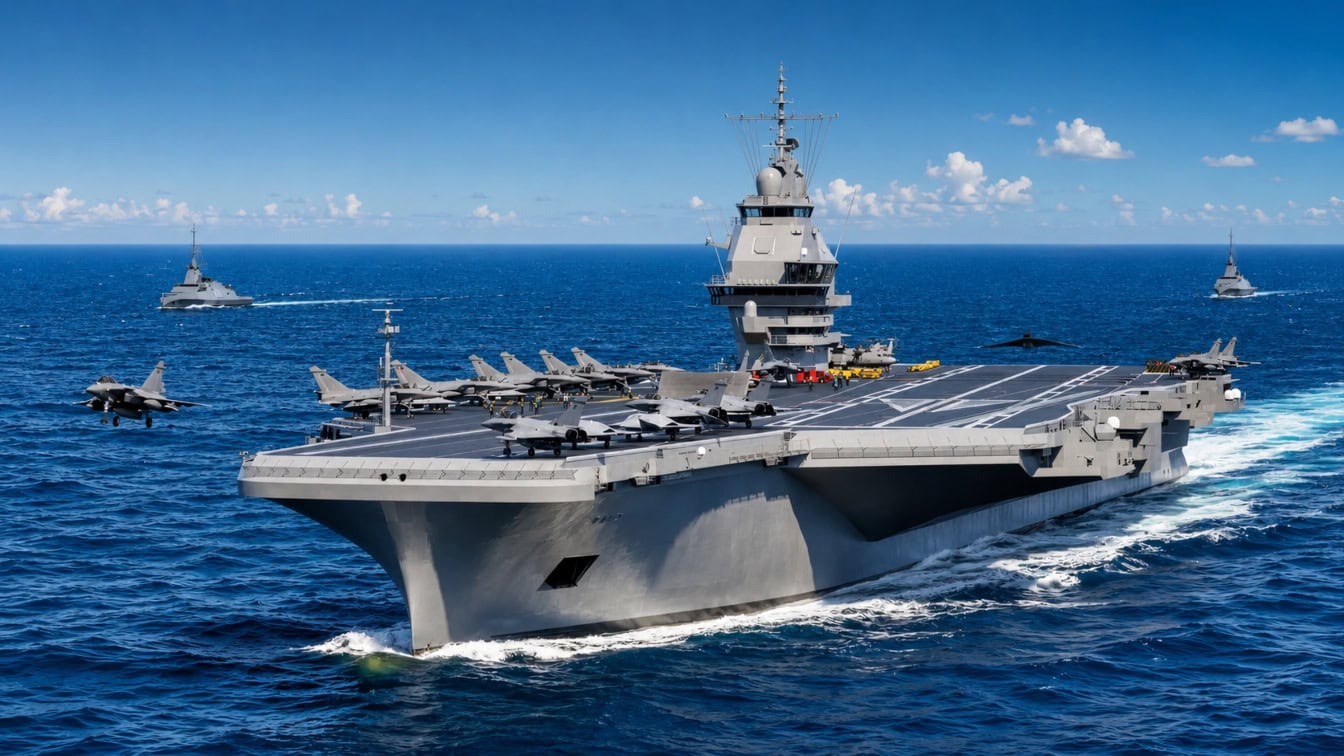
France Libre Aircraft Carrier Mock Up. Image Credit: Banana Nano.
However, the carrier fills a unique niche in the French Navy.
It boosts France’s power-projection capabilities and adds a measure of prestige.
However, the carrier is also expensive and difficult for the underfunded Navy to maintain. For now, France still sees a need for an aircraft carrier, which is why it is developing Charles de Gaul’s replacement, France Libre.
Although aircraft carriers are expensive to build and operate, France has decided their capabilities are worth the cost.
About the Author: Isaac Seitz
Isaac Seitz, a Defense Columnist, graduated from Patrick Henry College’s Strategic Intelligence and National Security program. He has also studied Russian at Middlebury Language Schools and has worked as an intelligence Analyst in the private sector.