
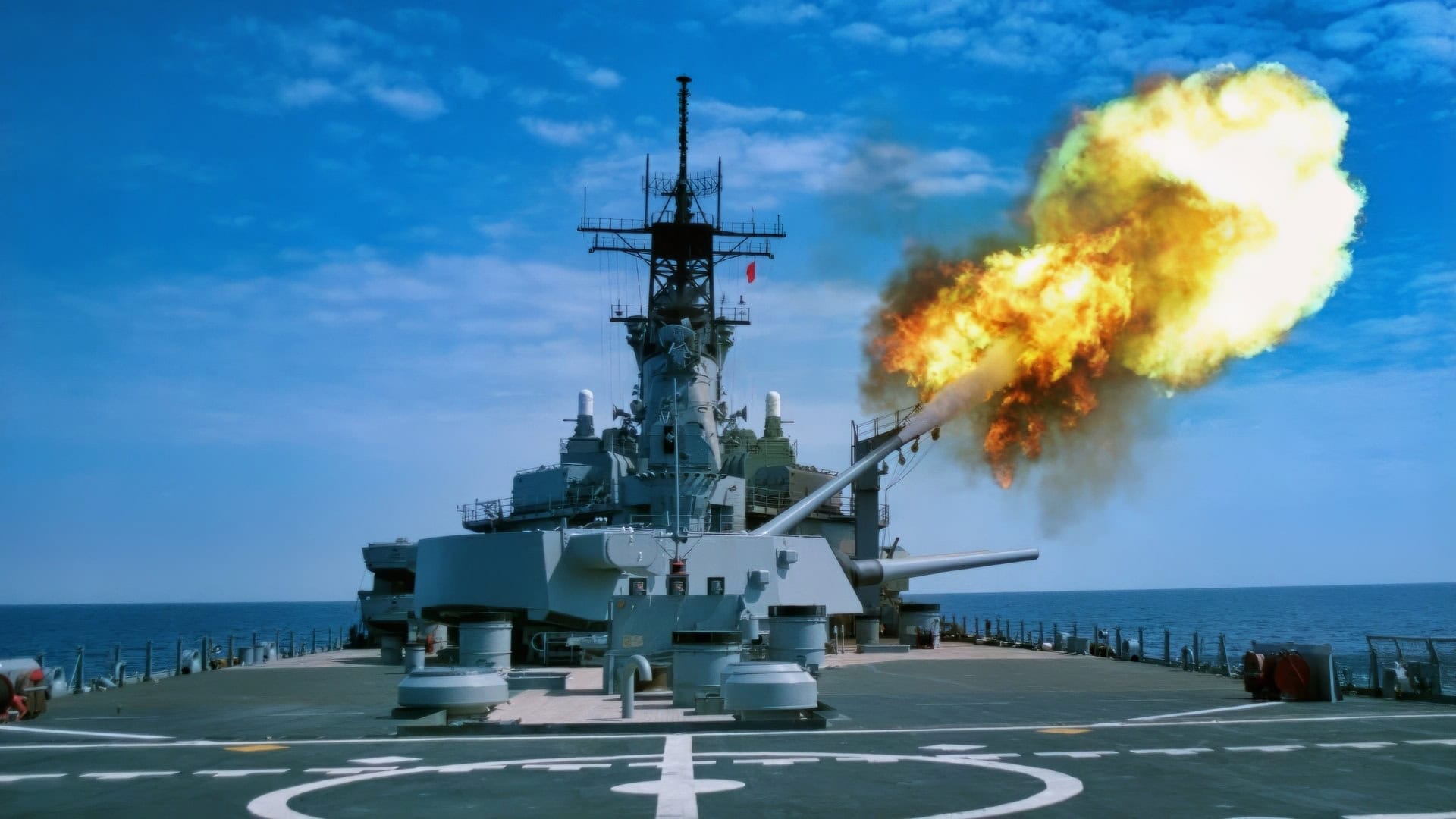
In April 1945, Japan Sent the Largest Battleship Ever Built on a One-Way Mission to Okinawa. Sinking the Yamato Took Nearly 400 American Aircraft and 11 Torpedoes: On April 6, 1945, the battleship Yamato, the largest and most powerful ever built, sailed from Japan’s Inland Sea with a full magazine, a thin screen of escorts, and only enough fuel to reach Okinawa, not to come home. Her orders were to smash into the American invasion fleet, drive herself aground on the island, and fight as a stationary fortress until she was destroyed. The Americans had read the plan before she sailed. What followed was one of the most lopsided actions of the entire war: hundreds of carrier aircraft against a ship with almost no air cover, and roughly 3,000 of her crew lost in a single afternoon.
The Largest Battleship Ever Built
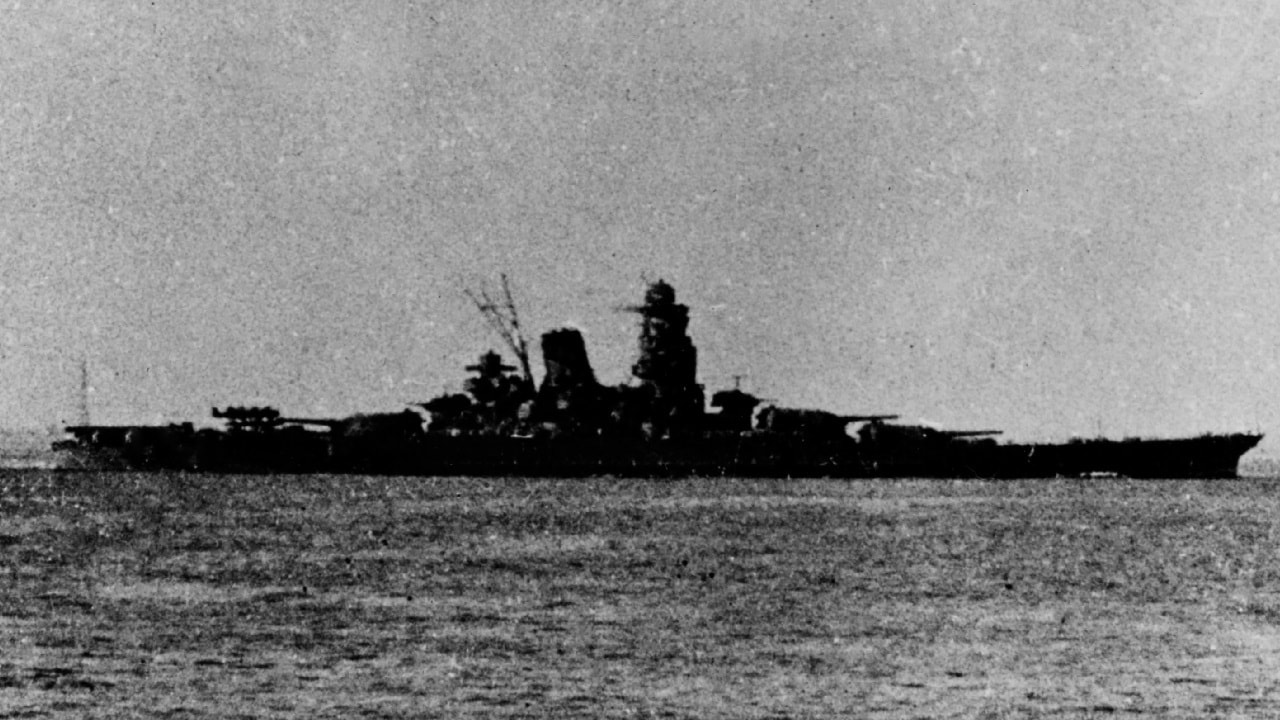
Yamato-class battleship Yamato. Image Credit: Creative Commons
Yamato was Japan’s answer to a problem it could not solve. Unable to match American industry ship for ship, the Imperial Japanese Navy instead resolved to build vessels no American battleship could equal, and in Yamato and her sister ship Musashi, it succeeded. Designed from 1934 and built in extraordinary secrecy at Kure, she displaced roughly 72,000 tons at full load and carried nine 18.1-inch guns in three triple turrets, the largest naval artillery ever mounted on a warship, each capable of hurling a 3,200-pound shell more than 22 miles, heavier rounds than the 16-inch guns of America’s own battleships could throw. Her main armor belt was sixteen inches thick. By any measure of steel and gunpowder, she was the mightiest warship ever to put to sea.
She was also, by 1945, a relic. The same month Yamato was commissioned had opened with the carrier raid on Pearl Harbor, and the war that followed belonged to the aircraft carrier, not the battleship. Musashi had been swarmed and sunk by American carrier planes at Leyte Gulf in October 1944. By the spring of 1945, with the Combined Fleet reduced to a handful of operational ships and scarcely any fuel to move them, Yamato had spent most of the war swinging at anchor, too valuable to risk and too vulnerable to use.
A Mission of No Return
Then came Okinawa. American forces landed on April 1, 1945, and when his commanders briefed Emperor Hirohito on the island’s defense, he reportedly asked why the Navy was doing nothing to help: “Have we no more ships?” The pressure was produced by Operation Ten-Go. Under the direction of Admiral Soemu Toyoda, Yamato, the light cruiser Yahagi, and eight destroyers were to form a “Surface Special Attack Force” and sortie for Okinawa, timed to coincide with a mass kamikaze air assault of more than 300 planes.
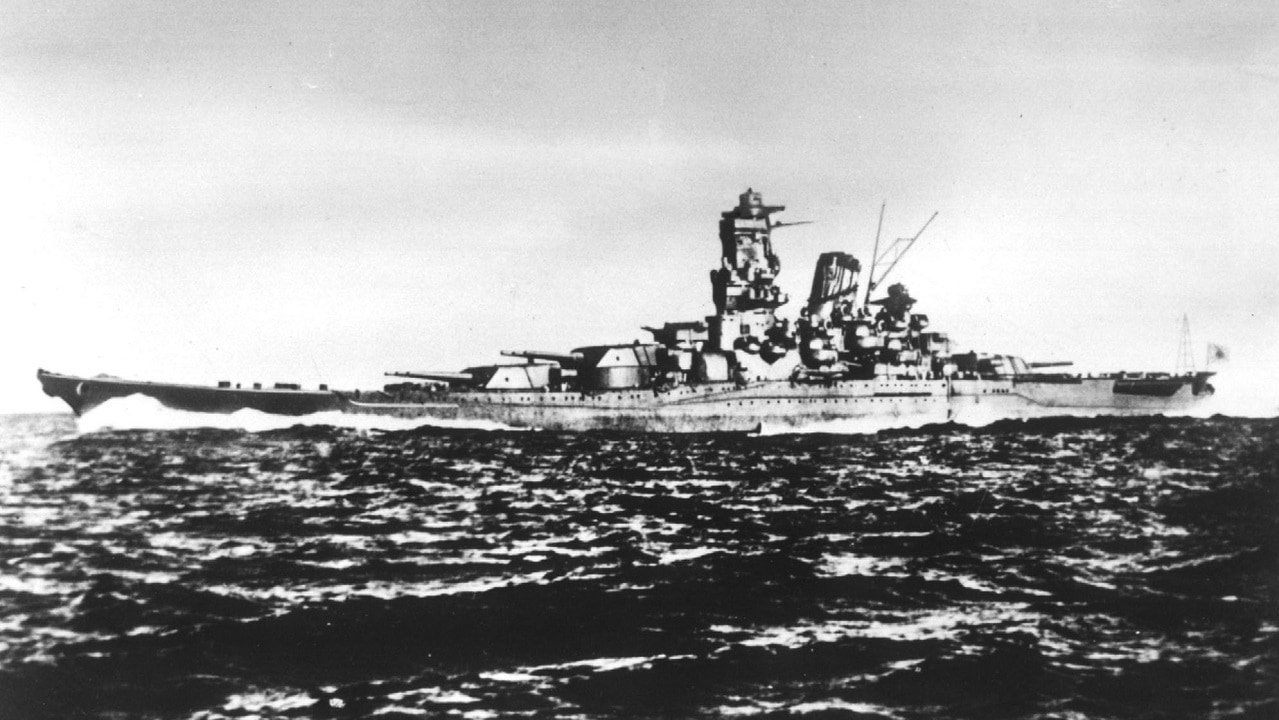
Battleship IJS Yamato from World War II.
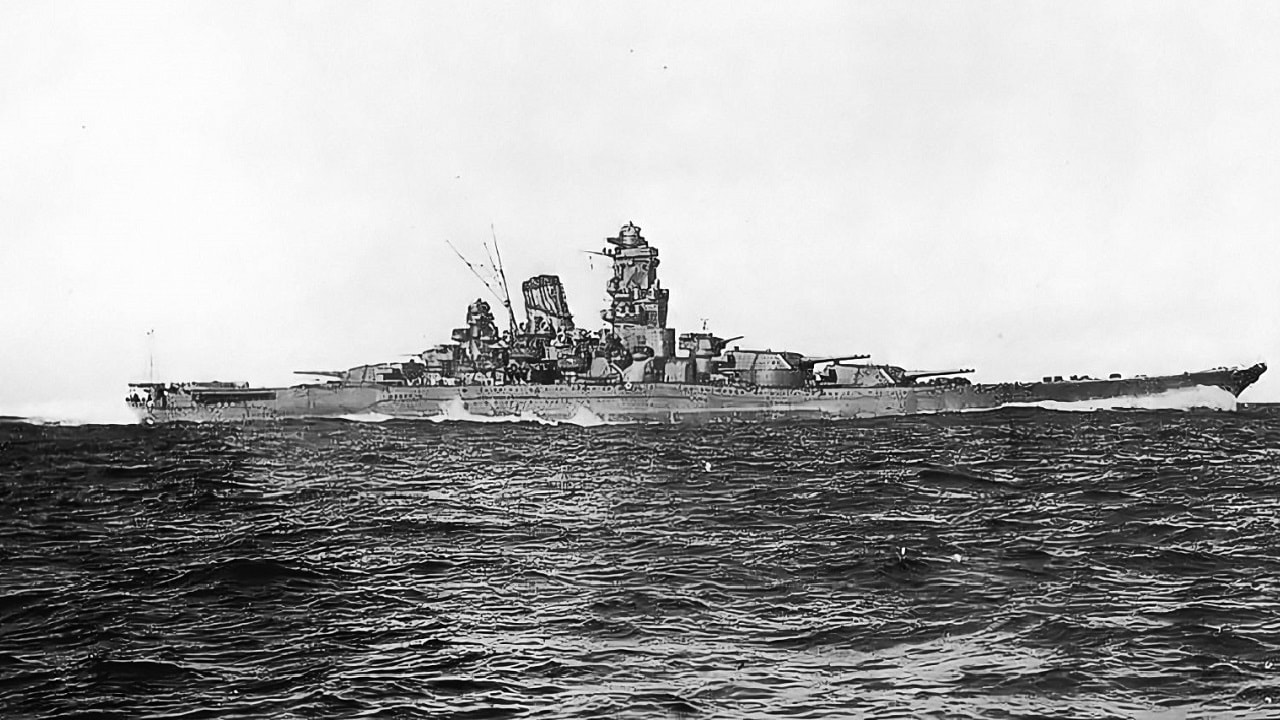
Battleship Yamato during sea trials October 30, 1941.
The mission fell to Vice Admiral Seiichi Ito, commander of the Second Fleet. According to the U.S. Navy’s own history of the battle, Ito initially objected, viewing the operation as futile and wasteful. The plan called for Yamato to plow through the American fleet, sink as many transports as she could, then run herself aground and serve as a gun battery until she was pounded to pieces; any crew who survived were to join the island’s ground defenses. On March 29, she loaded 1,170 shells for her main guns, thousands more for her secondaries, and 11.5 million rounds of machine-gun ammunition. In the Navy historian’s flat phrase, it would not be enough.
The clearest sign of what the crews were being asked to do lay in who left the ship before she sailed. Sixty-seven young midshipmen, freshly graduated from the naval academy, were put ashore, many of them begging to stay, along with the sick and the oldest hands. Morale sank once the crews learned this was a one-way voyage. The accounts differ on the fuel itself: some hold that the ships were rationed only enough to reach Okinawa, while the Navy’s history notes they were simply given all that could be found, which was not much. The effect was identical. No one aboard expected to bring Yamato home.
The Americans Were Waiting
Whatever secrecy had once shrouded the great battleship was long gone. American codebreakers had been reading Japanese naval traffic, and Ultra intercepts on March 26 and again on April 5 laid the operation bare: the force would sail from the Tokuyama oil depot, transit the Bungo Strait, and reach Okinawa on the 8th. Admiral Raymond Spruance’s message to his carrier and battleship commanders was three words: “You take them on!”
Spruance first prepared for a surface battle, assembling six battleships, among them New Jersey, Wisconsin, and Missouri, along with cruisers and destroyers, to intercept. In the end, he turned the carriers loose instead and held the battle line in reserve as a blocking force that would never be needed, a fitting detail, since the last sortie of the world’s greatest battleship would be settled without a single enemy battleship firing at her. As Yamato transited the Bungo Strait on the evening of April 6, the American submarine Threadfin sighted her and radioed a contact report. The trap closed.
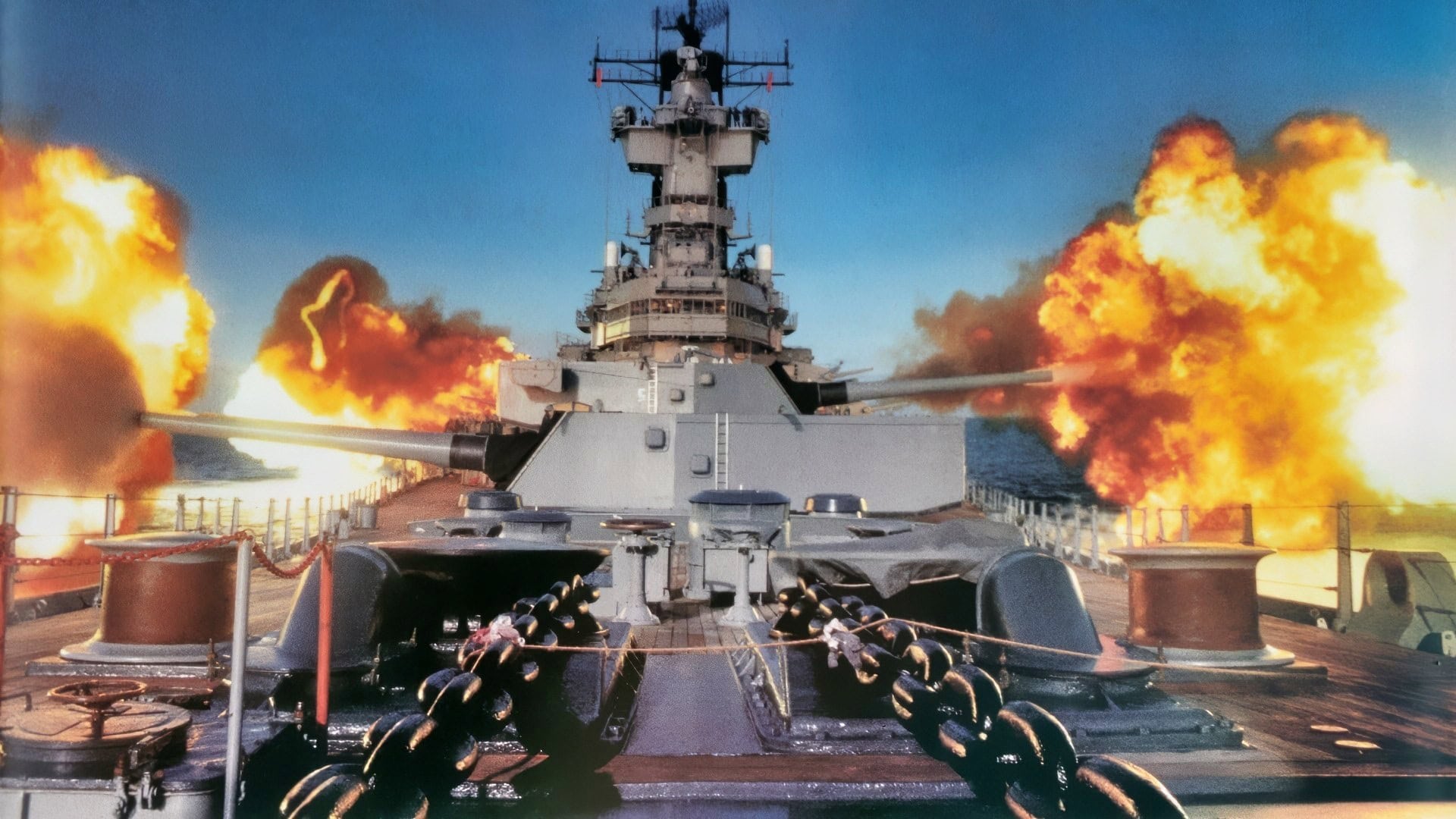
Copy negative of the US Navy (USN) Iowa Class (as built) Battleship USS NEW JERSEY (BB 62) firing a 21-gun broadside. Exact date shot unknown. Image Credit: Creative Commons.
Two Hours Against Hundreds of Planes
Shortly after dawn on April 7, scout planes found Yamato still less than halfway to her objective, and Vice Admiral Marc Mitscher’s Task Force 58 began launching. Close to 400 aircraft went up over the course of the day, fighters and dive bombers, and torpedo planes drawn from more than a dozen fast carriers. Against them, Yamato had almost nothing: the shattered Japanese air arm could put only a handful of fighters overhead. So many American planes converged on her that their own crews feared midair collision, and the intended coordinated strike dissolved into a free-for-all as pilots raced to be first at the prize.
The Americans attacked with method. Torpedo bombers concentrated their hits on one side of the hull to overwhelm her counter-flooding and force a capsize, while dive bombers dropped bombs down her length. By most accounts, Yamato absorbed on the order of eleven torpedoes and six bombs across roughly two hours, punishment no ship afloat could survive. The Navy’s own reconstruction tracks the end in grim increments: bomb strikes amidships, then a seventh torpedo to starboard, then an eighth and a ninth to port, the list passing fifteen degrees with the damage-control officers dead and no working pumps to cool the overheating magazines. His radios destroyed, Ito signaled by flag hoist to cancel the operation and release the surviving ships to run for home. He then withdrew to the flag cabin; Yamato’s captain, Kosaku Aruga, lashed himself to the binnacle. Both went down with the ship. Around half past two in the afternoon, more than 300 miles short of Okinawa, Yamato rolled over, and her forward magazines let go in an explosion so vast it was seen and heard for scores of miles and flung a column of smoke thousands of feet into the sky, a blast violent enough to knock several of the circling American planes out of the air.
The Cost of a Single Afternoon
The human toll was staggering and one-sided. Sources differ on the exact number of dead, ranging from about 2,500 to more than 3,000 depending on whether Admiral Ito’s staff is counted in the ship’s complement, but the most-cited figure is roughly 3,055 of her crew of some 3,300, Ito among them; only about 270 men survived. Four of the escorting destroyers and the cruiser Yahagi were sunk alongside her. The Americans lost around ten aircraft and their crews. The mightiest battleship ever built, and the thousands who sailed in her, were gone in an afternoon, and she had not landed a single shell on an enemy ship.
A Sacrifice Without a Battle
The hardest part of the story is that it changed nothing. Yamato never reached Okinawa, never fired her great guns in the surface action they were built for, and her loss did not slow the campaign in the slightest; the kamikaze air assault she was meant to support went in without her, and the island fell to American forces two months later.
Vice Admiral Ito had judged the mission futile before it began, and history has largely agreed with him.
The academic Robert Farley has written that popular depictions of Yamato portray her destruction as a “heroic, but also pointless and futile, sacrifice,” and the phrase captures the whole affair: a magnificent ship and thousands of men were lost for a gesture, at the moment when the aircraft carrier had already rendered the battleship obsolete.
That is the enduring lesson of the Yamato, and it echoes strangely today, as Washington debates building a new class of battleships for an era of missiles and drones. The largest, most powerful, most expensive warship of its kind ever constructed was sunk in a single afternoon by aircraft that cost a fraction of what she did, before her guns could touch the enemy.
The sea had already delivered its verdict on the battleship in April 1945. It is worth remembering who paid to prove it.
About the Author: Harry J. Kazianis
Harry J. Kazianis (@Grecianformula) was the former Senior Director of National Security Affairs at the Center for the National Interest (CFTNI), a foreign policy think tank founded by Richard Nixon based in Washington, DC. Harry has over a decade of experience in think tanks and national security publishing. His ideas have been published in the NY Times, The Washington Post, The Wall Street Journal, CNN, and many other outlets worldwide. He has held positions at CSIS, the Heritage Foundation, the University of Nottingham, and several other institutions related to national security research and studies. He is the former Executive Editor of the National Interest and the Diplomat. He holds a Master’s degree focusing on international affairs from Harvard University.