
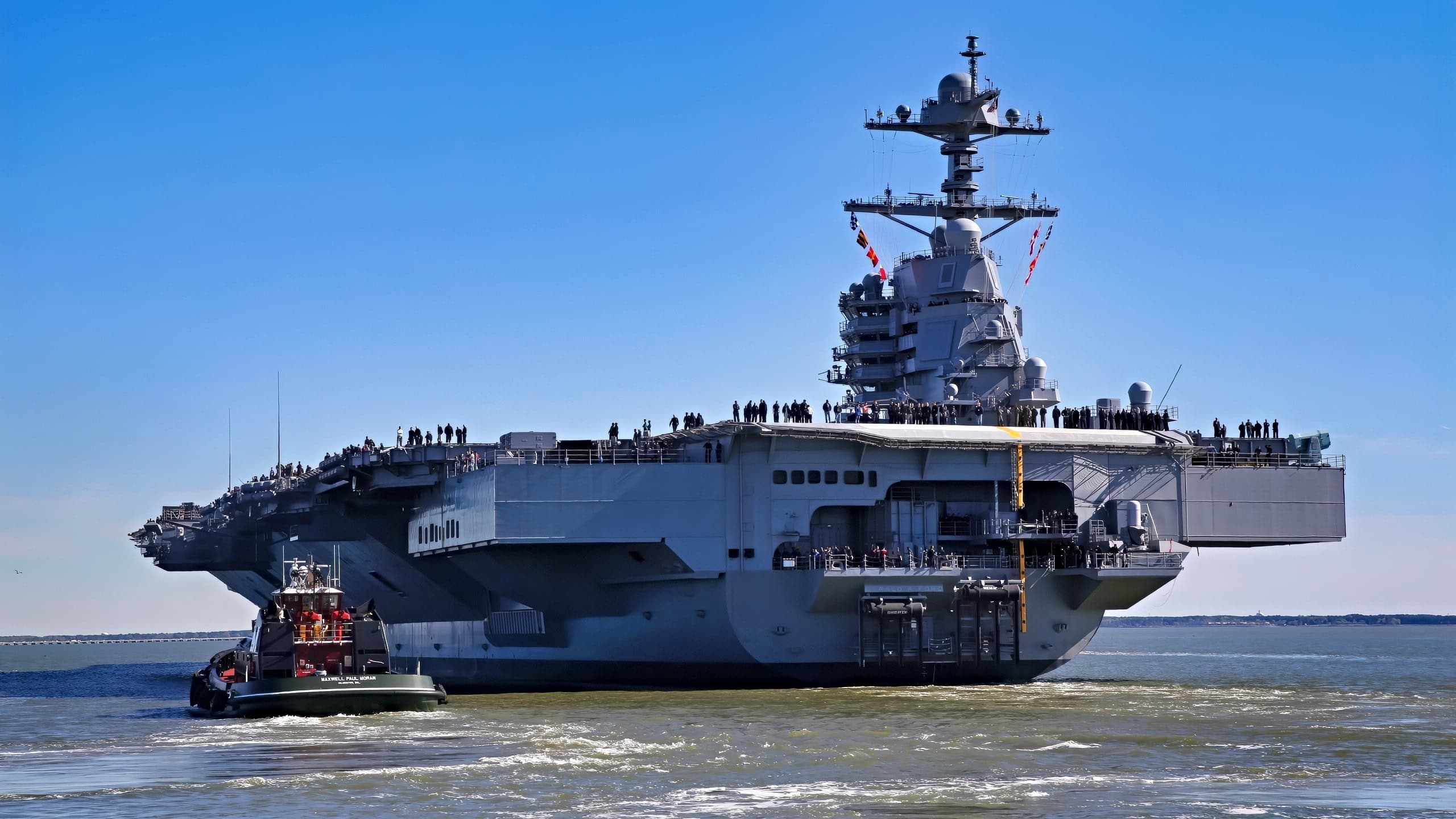
America’s Ford-Class Aircraft Carrier Is Bigger, Nuclear, And Combat-Proven. China’s Fujian Doesn’t Need To Match It — And That’s The Problem: On a spec sheet, the USS Gerald R. Ford beats China’s new carrier, Fujian, in nearly every category that matters, and that comparison asks the wrong question. The Ford is bigger, nuclear-powered, carries more aircraft, and has more catapults, and a side-by-side chart makes the contest look settled. But the two ships were not built for the same war. The Ford is built to project American power anywhere on earth for fifty years. The Fujian is built to win one fight close to home, in the Taiwan Strait and the South China Sea, where unlimited range and a seventy-five-plane air wing are not what decides the outcome. Measured against the mission each was actually designed for, the gap that looks decisive on paper narrows to something far more uncomfortable for Washington.
The Spec Sheet, Honestly: The Ford Wins On Paper
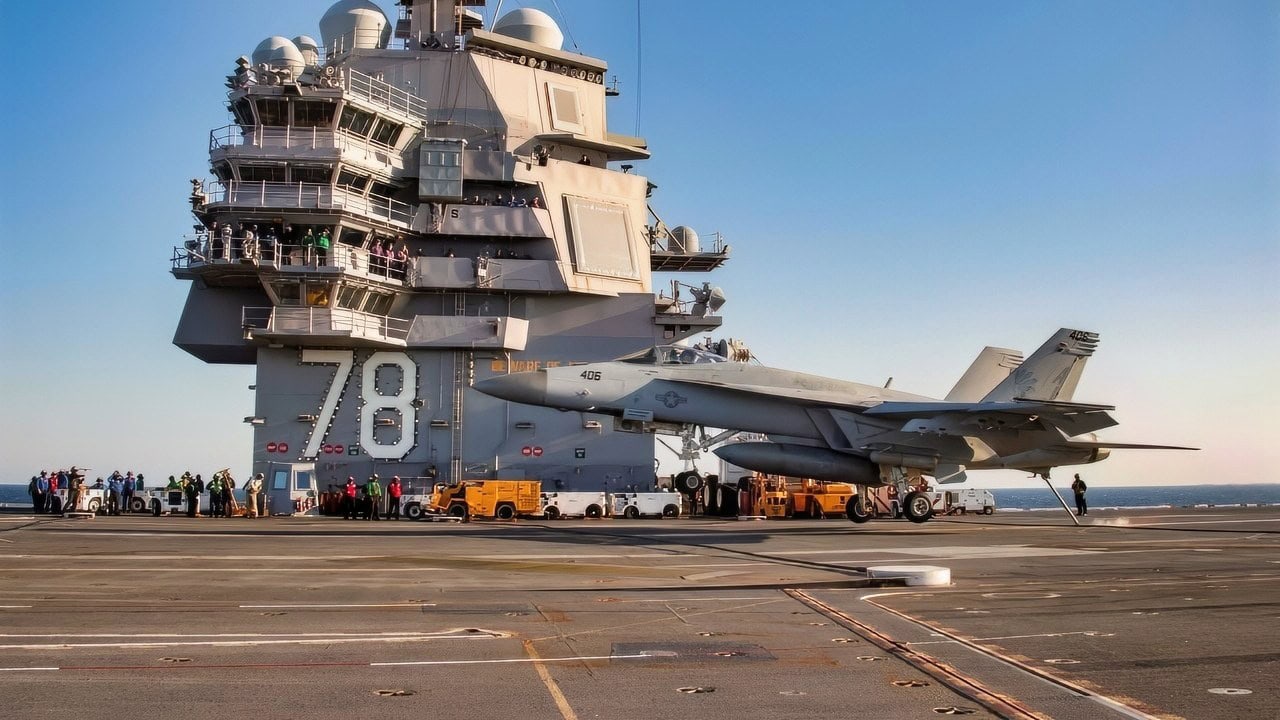
USS Gerald R. Ford Supercarrier Flight Deck. Image Credit: Creative Commons.
The American lead is real, and it should not be understated. The Ford displaces roughly 112,000 tons at full load against the Fujian’s 80,000-plus, runs about 1,106 feet long to the Fujian’s 1,036, and carries an air wing of more than 75 aircraft to the Fujian’s estimated 50 to 60.
The Ford has four electromagnetic catapults to the Fujian’s three. And the Ford is nuclear-powered, capable of steaming 20 to 25 years between refuelings, while the Fujian is conventionally powered, which ties its range and endurance to its fuel bunkers and the oilers that must follow it. One way to put the propulsion gap bluntly: the nuclear Ford’s range is effectively unlimited, and the Fujian’s is whatever its last refueling allows.
The gaps run deeper than the headline numbers. Early assessments suggest the Fujian’s electromagnetic catapults may deliver less energy per launch than the Ford’s, which would cap the weight of aircraft and fuel it can fling off the deck, and the Fujian has only two aircraft elevators to the Ford’s three, meaning a slower cycle of moving planes between hangar and flight deck and fewer sorties generated in a given window. Sortie rate is the real measure of a carrier’s striking power, and on the metrics that drive it, the Ford leads.
None of this is in dispute, and a piece that pretended otherwise would be worthless. The Ford is the more capable warship in nearly every absolute sense.
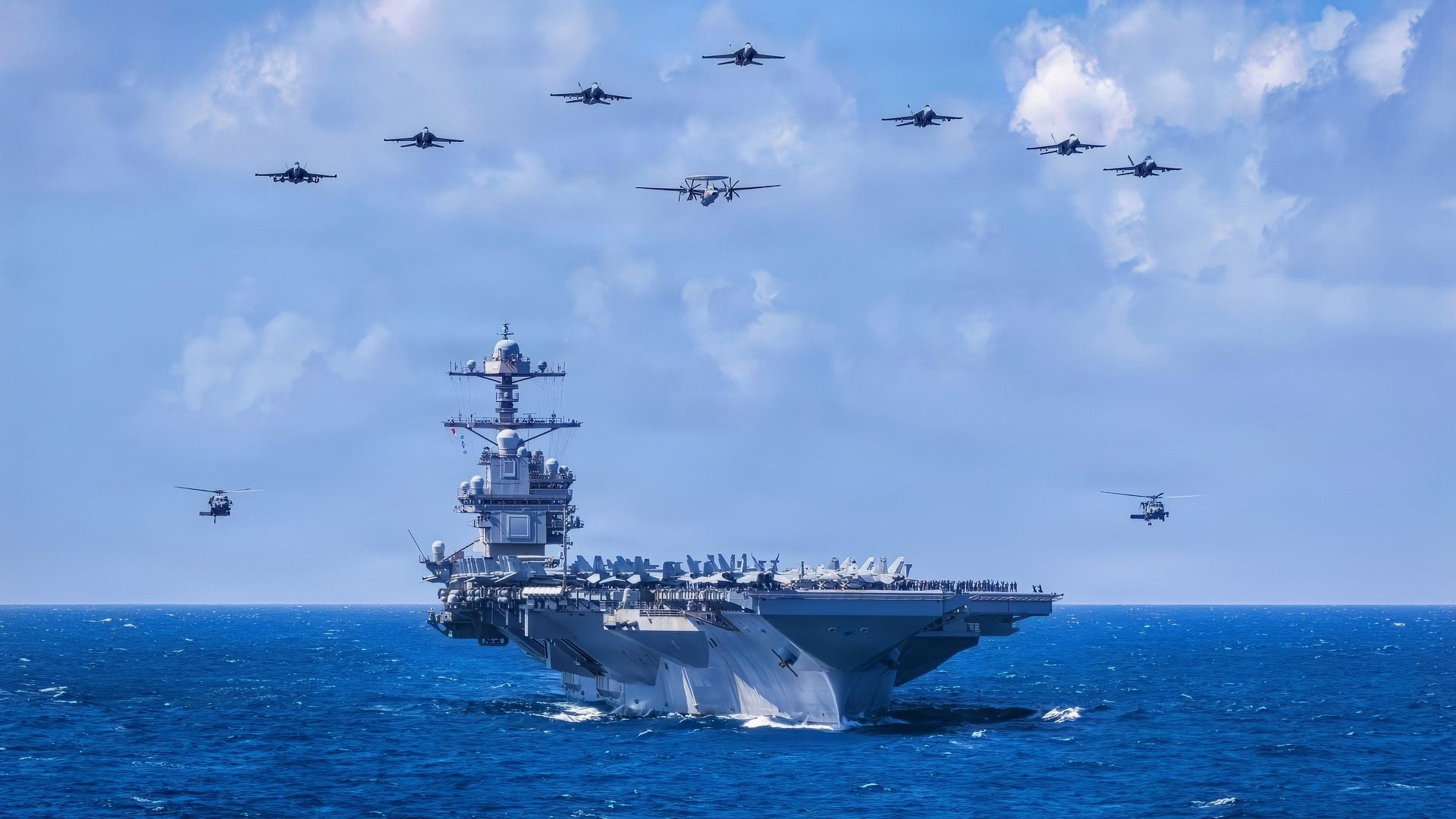
USS Ford Supercarrier U.S. Navy. Image Credit: U.S. Navy.
The Threshold China Just Crossed
What makes the comparison newly urgent is what the Fujian can now do that no carrier outside the U.S. Navy could do before. Commissioned in Sanya on November 5, 2025, the Fujian is the only carrier in the world, besides the American Ford-class, to use electromagnetic catapults, and China developed the system domestically rather than buying or copying it.
Footage released in January 2026 showed smooth, low-vibration electromagnetic launches of the J-35 stealth fighter, the J-15T multirole fighter, and the KJ-600 airborne early-warning aircraft, suggesting the catapult had matured past experimental testing into routine use under realistic conditions.
The aircraft are the point. The Fujian’s air wing is built around the J-15T, the stealthy J-35, and the KJ-600 fixed-wing early-warning plane, which means China can now catapult-launch a fifth-generation stealth fighter from a carrier deck, a capability only the United States possessed until now. The KJ-600 matters as much as the J-35: fixed-wing carrier early-warning aircraft require a catapult, and operating them is a capability leap over the helicopters China’s older ski-jump carriers relied on for the same role.
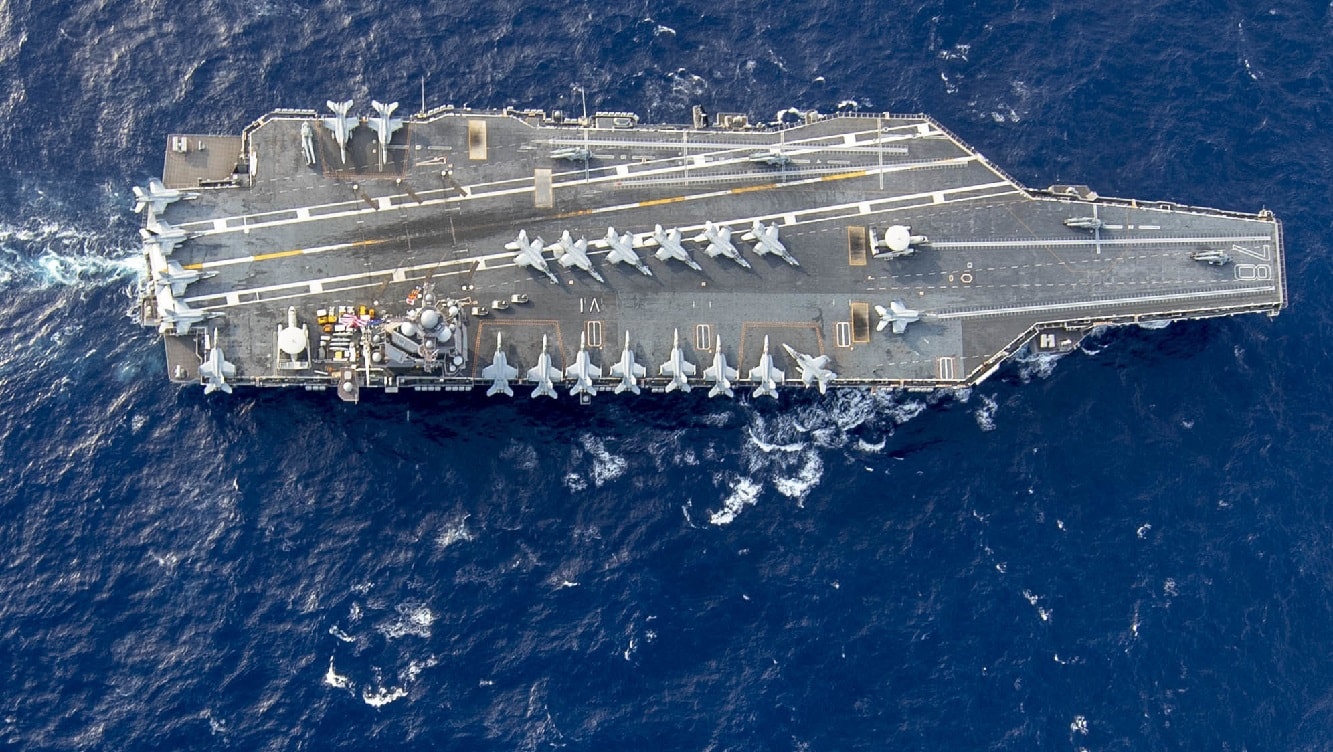
The Ford-class aircraft carrier USS Gerald R. Ford (CVN 78) and the Nimitz-class aircraft carrier USS Harry S. Truman (CVN 75) transit the Atlantic Ocean June 4, 2020, marking the first time a Ford-class and a Nimitz-class aircraft carrier operated together underway. Ford is underway conducting integrated air wing operations, and the Harry S. Truman Carrier Strike Group remains at sea in the Atlantic as a certified carrier strike group force ready for tasking in order to protect the crew from the risks posed by COVID-19, following their successful deployment to the U.S. 5th and 6th Fleet areas of operation. (U.S. Navy photo by Mass Communication Specialist Seaman Riley McDowell)
During the Fujian’s trials, observers documented the difference between a catapult J-15T launch and the ski-jump launch of the same fighter from China’s older carriers — the catapult lets the jet take off heavier, with more fuel and weapons. Chinese state media, including the Global Times and CCTV, say the Fujian will transition from initial to full operational capability during 2026, with far-seas training to follow. That timeline is Beijing’s own claim and should be read as such, but the observable pace of the trials has been fast.
The Doctrine Pivot: The Fujian’s Weaknesses Are Choices
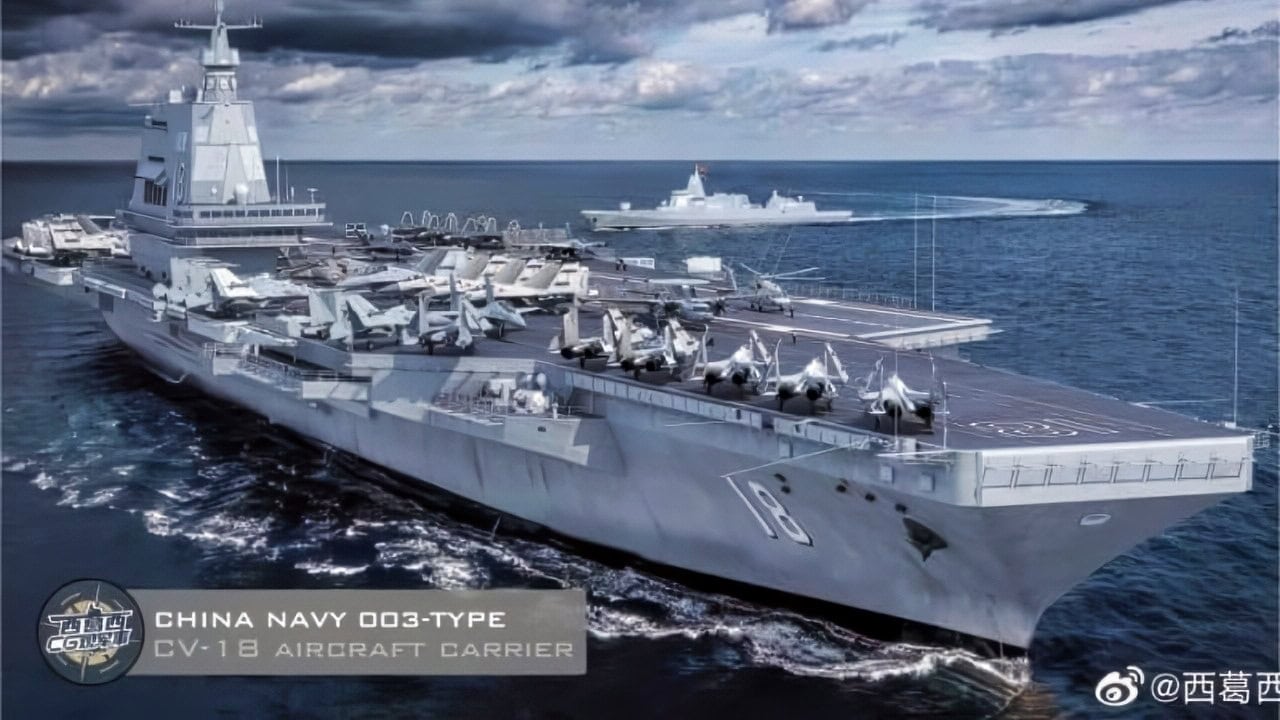
Here is where the spec-sheet comparison misleads. The Fujian’s shortfalls against the Ford are not failures to match America; they are deliberate choices matched to a different mission. China deliberately chose conventional propulsion over nuclear propulsion, accepting reduced global endurance in exchange for simpler construction and a faster construction schedule.
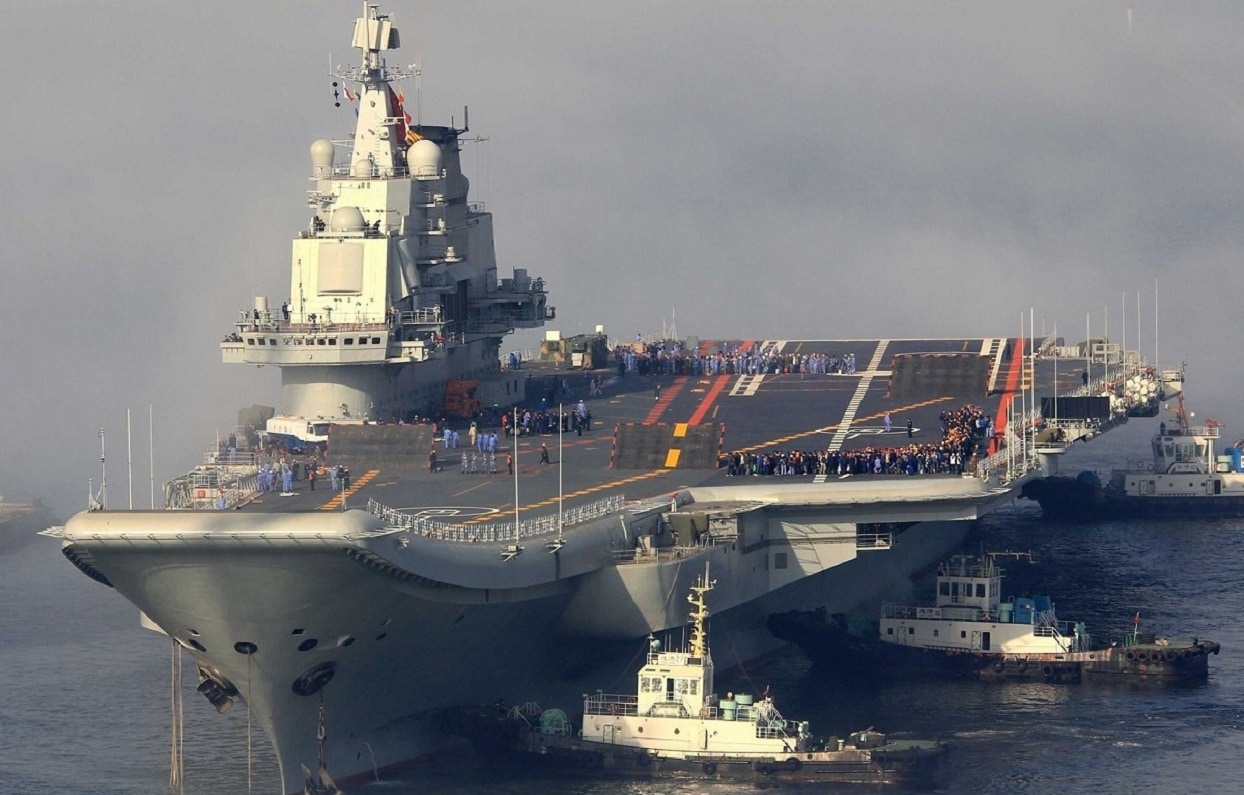
Image: Chinese Internet.
China Aircraft Carrier Type 003 Conventional Supercarrier. Image Credit: X Screenshot.
A conventionally powered carrier is cheaper and quicker to build than a nuclear one, and for a navy racing to put catapult carriers to sea, speed of production is itself a strategic asset. The smaller air wing follows the same logic: a carrier meant to fight within reach of its own coastline does not need to haul the fuel, ordnance, and aircraft required to sustain operations on the far side of the planet.
The Ford was designed to answer a global requirement — to sail from Norfolk to any ocean and operate there for months without resupply, anywhere a president needs American airpower. The Fujian was designed to answer a regional one — to dominate the Western Pacific and the South China Sea, the waters where China expects to fight. Judged against the Ford’s mission, the Fujian falls short.
Judged against its own, the conventional propulsion, the 50-to-60-plane air wing, and the three catapults are not deficiencies. They are a ship sized for the war China is actually planning to fight, built faster and cheaper because it does not have to do everything the Ford does.
The Fight That Matters: A War Close To Home
In the scenario that drives Chinese naval planning — a fight over Taiwan or in the South China Sea — the Ford’s greatest advantages matter least. China would be fighting in its own front yard, under the umbrella of land-based aircraft flying from mainland bases and the dense network of long-range missiles that form its anti-access system. In those waters, a carrier does not need unlimited nuclear range, because it is operating a few hundred miles from home.
It does not need a seventy-five-plane air wing to project power across an ocean, because the ocean is the point of the fight and the mainland’s airpower is already there. It needs enough catapult-launched stealth fighters and early-warning aircraft within reach of a single island, and that is precisely what Fujian now provides.
The honest qualification cuts both ways, and it matters. A carrier operating close to the Chinese mainland, under land-based air cover, raises a fair question about how much the carrier itself adds to that specific fight compared with the airpower already flying from shore. Fujian’s real value lies in scenarios beyond the first island chain — enforcing a blockade, operating in the Philippine Sea, projecting presence into waters where land-based cover thins out — and analysts describe the carrier as giving China its first true blue-water strike group built around stealth aircraft.
That is exactly why the Fujian is not China’s final answer. It is the near-term regional and transitional capability, while the nuclear Type 004 already taking shape at the Dalian shipyard — a roughly 120,000-ton supercarrier with the effectively unlimited range the Fujian lacks — is Beijing’s bid for the global reach the Ford represents. China is building toward both, and the Fujian is the one it can field now.
The Honest Verdict: Two Different Questions
The Ford remains the more capable carrier, and the American edge is not only a matter of numbers.
The Ford has a combat-proven air wing, mature systems integration refined over decades, and an operational tempo backed by a century of American carrier aviation that no other navy comes close to matching. The Fujian, by contrast, is still in a developmental phase: its air wing, its doctrine, and its operational rhythm are being built in real time, its crews are early in the long process of learning to surge and sustain carrier operations, and far-seas experience is something China has barely begun to accumulate.
Those are real limits, and they are measured in years that cannot be compressed by spending or ambition. A regional carrier is useless for the global presence missions the U.S. Navy performs every day, and China cannot yet conduct sustained blue-water operations at all.
But “the more capable carrier” and “the carrier that wins the war China is planning for” are different questions, and conflating them is the error the spec sheet invites. The Ford is built for a global mission; China is not yet trying to perform.
The Fujian is built for a regional one that is the most likely great-power fight on the horizon, and against that mission, the capability gap that looks decisive on a chart shrinks to something narrower and faster-closing than the numbers suggest.
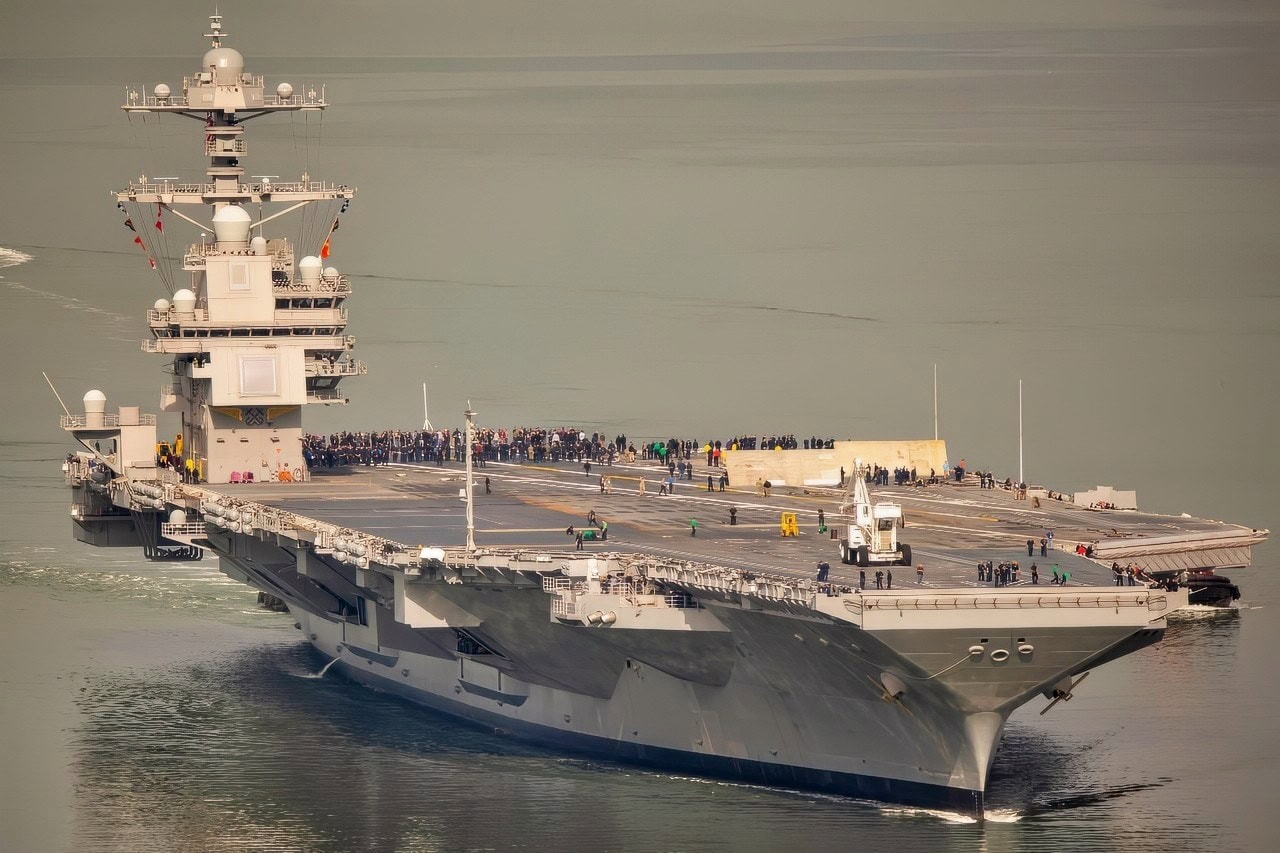
NEWPORT NEWS, Va. (Oct. 25, 2019) USS Gerald R. Ford (CVN 78) gets underway for the first time since beginning its post-shakedown availability July 2018. Ford is currently conducting sea trials, a comprehensive test of the ship’s systems and technologies. (U.S. Navy photo by Mass Communication Specialist 3rd Class Connor Loessin)
The United States still operates the best warship, and it operates eleven of them to China’s three. The uncomfortable truth is that in the one fight both navies actually plan for, the question is not whose carrier is better in the abstract — it is whether China needs to match the Ford at all to win close to home, and the Fujian is built on the bet that it does not.
About the Author: Harry J. Kazianis
Harry J. Kazianis (@Grecianformula) was the former Senior Director of National Security Affairs at the Center for the National Interest (CFTNI), a foreign policy think tank founded by Richard Nixon based in Washington, DC. Harry has over a decade of experience in think tanks and national security publishing. His ideas have been published in the NY Times, The Washington Post, The Wall Street Journal, CNN, and many other outlets worldwide. He has held positions at CSIS, the Heritage Foundation, the University of Nottingham, and several other institutions related to national security research and studies. He is the former Executive Editor of the National Interest and the Diplomat. He holds a Master’s degree focusing on international affairs from Harvard University.