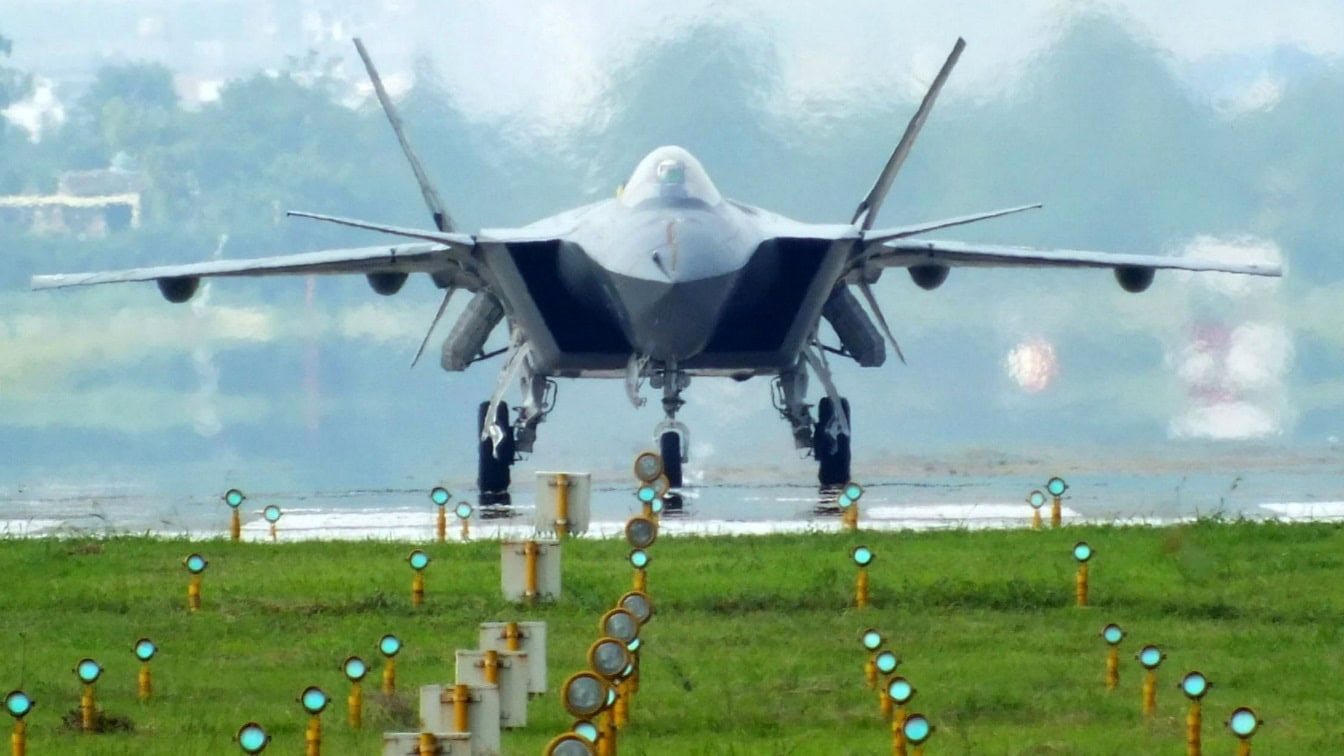
Summary and Key Points: Chinese engineers have proposed installing large radar arrays inside the wings of the J-20 Mighty Dragon, China’s answer to the F-22, so the stealth fighter can perform the surveillance role of early-warning aircraft like the KJ-500 and E-3 Sentry.
China’s J-20 Stealth Fighter Has a New Trick
China continues its rapid rise, not just economically but militarily and technologically.
Until a decade ago, the United States and its allies believed China could never build warplanes that matched the technological prowess of American and Western planes, notably fifth-generation stealth fighters such as the F-22 Raptor and the F-35 Lightning II.
But that is becoming less accurate with each passing year. The Chengu J-20 Mighty Dragon is China’s answer to the F-22.
It has become a real technological testbed for China’s military.
In fact, engineers involved in the J-20’s development have proposed installing large radar arrays inside the stealth warplane’s wings.
This would let smaller aircraft perform surveillance missions usually reserved for larger airborne early-warning platforms (China is also building a fleet of dedicated early-warning platforms).
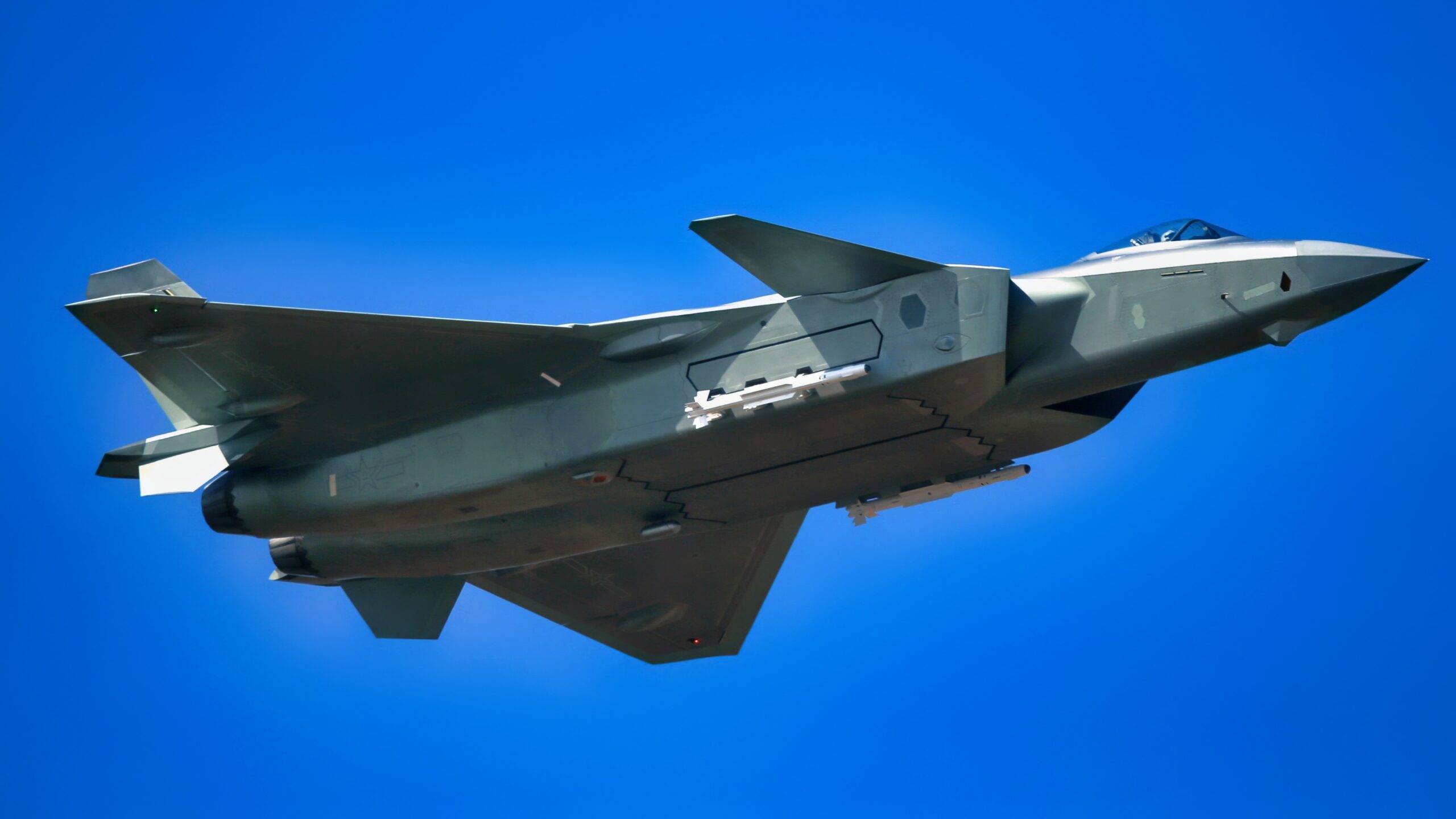
J-20 Fighter. Image Credit: Creative Commons.
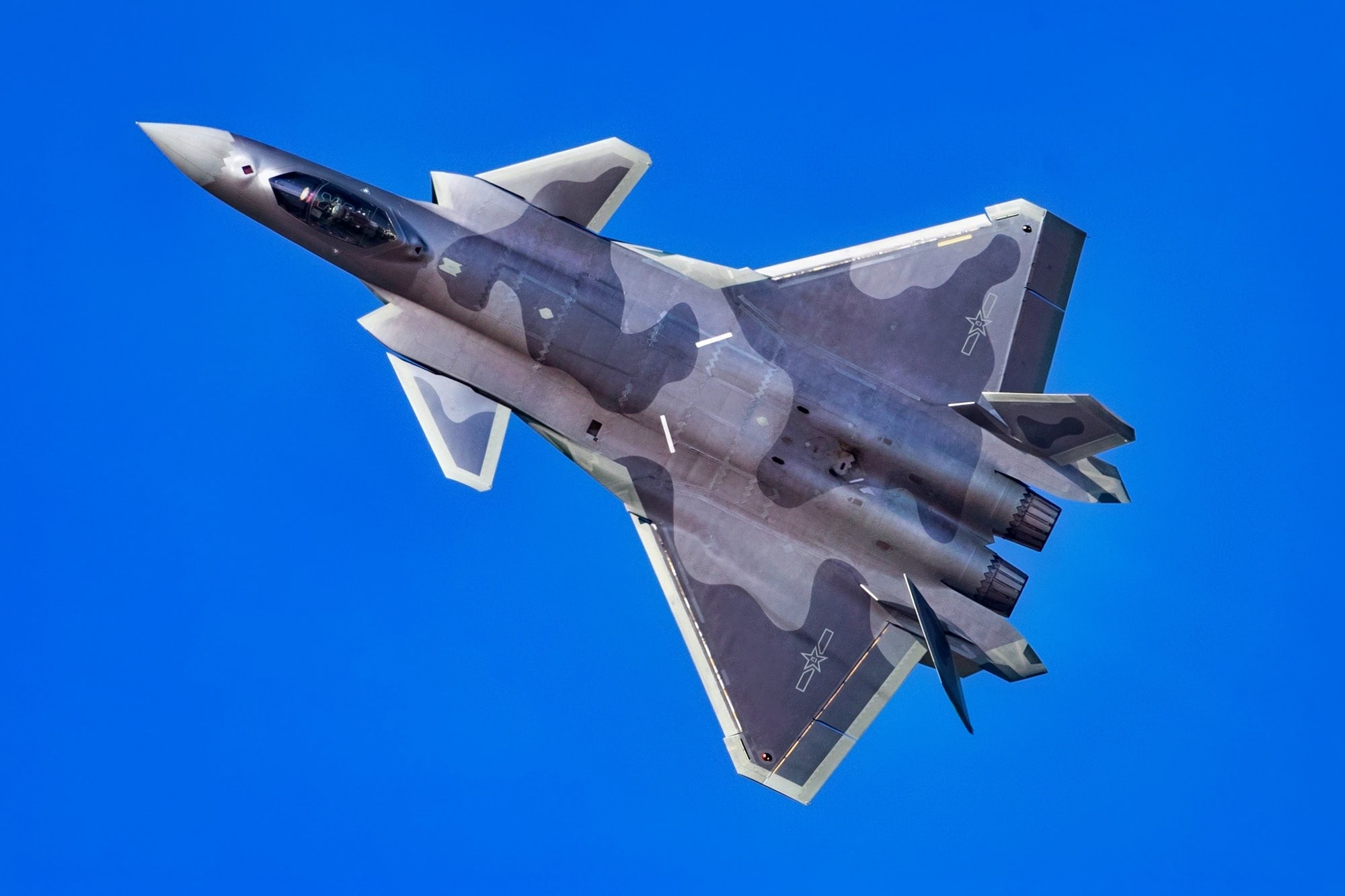
J-20 Fighter from China. Image Credit: Creative Commons.
All these developments are in keeping with the doctrine of the People’s Liberation Army Air Force (PLAAF) that wants to send the J-20 out to hunt down and destroy the United States Air Force’s midair refueling planes.
Beijing has theorized that the Americans must fight far over the horizon. As an expeditionary force, the US military is only as good as the supply chain that sustains it.
A Grand Strategy of Denial
So, while Chinese anti-access/area-denial (A2/AD) keeps American aircraft carriers at bay and can damage key runways at US bases in the region, depriving Americans of the ability to launch warplanes, that means the only link in America’s expeditionary chain is those enablers.
By downing US midair refueling aircraft, the Chinese can fully collapse US military power projection and combat power when the J-20’s new capability to employ powerful wing-mounted radars comes to bear in combat.
Most modern warplanes carry their primary radar in the nose, protected by a specially designed radome.
Aircraft search for targets ahead of their flight path, though the nose’s dimensions constrain the radar antenna’s size.
But bigger airborne early-warning aircraft, such as the US E-3 Sentry and China’s growing fleet of KJ-500 planes, use massive radar arrays to monitor much larger areas.
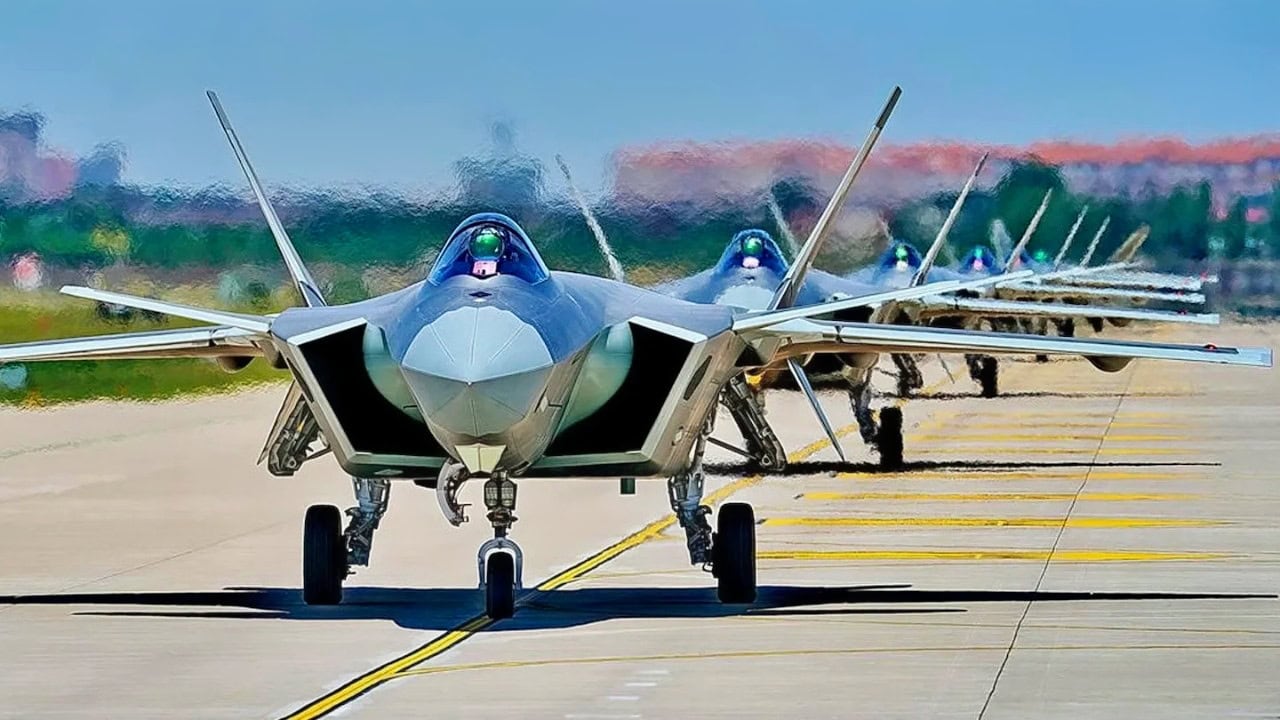
J-20 Fighter from PLAAF China. Image Credit: Creative Commons.
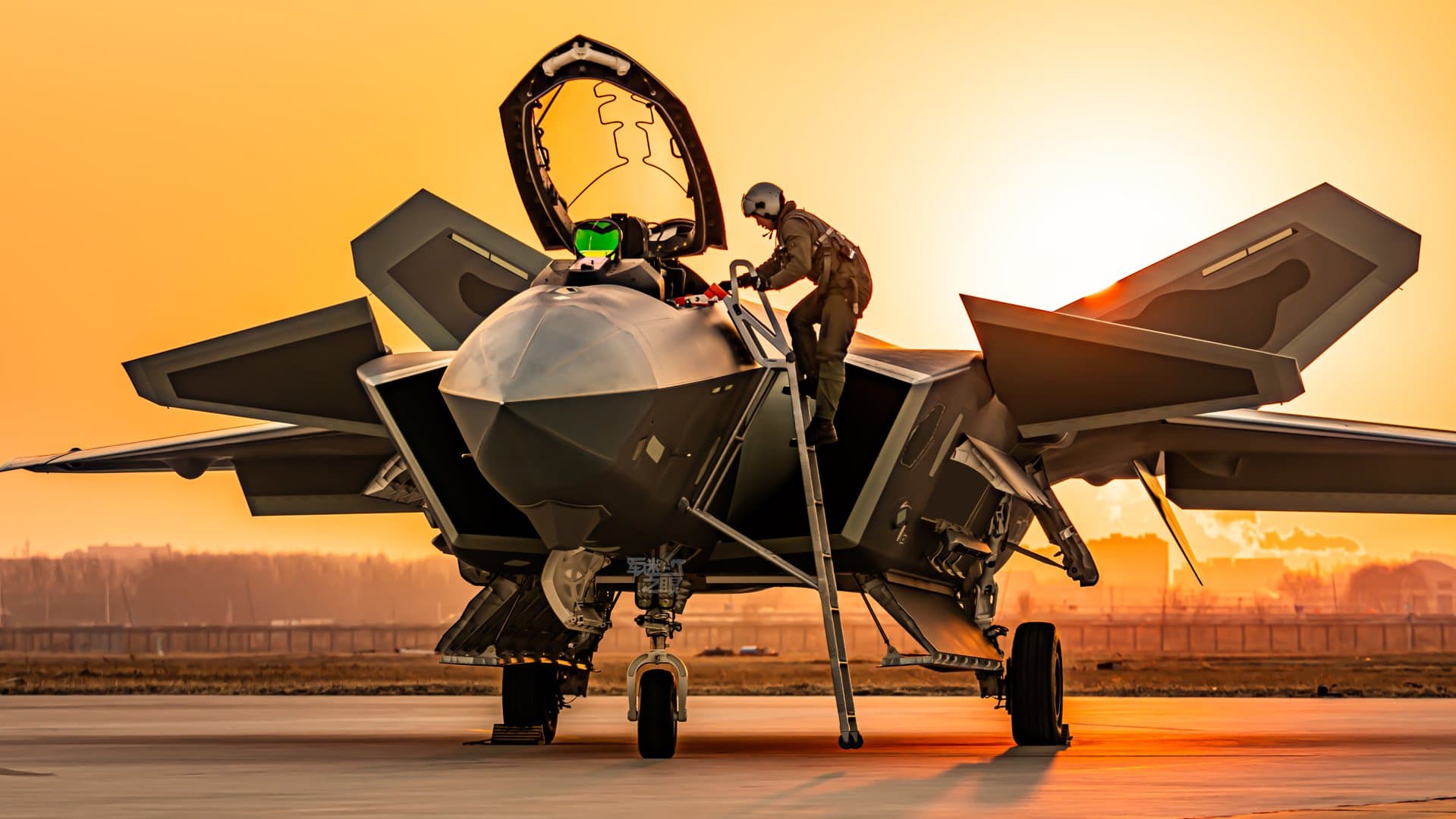
J-20 Fighter. Image Credit: Chinese Internet.
The biggest complication with placing radar under the J-20’s wings is that the wings are too thin.
They provide considerable surface area, but the wings offer little internal space for advanced electronic equipment, necessary cooling systems, and other supporting components.
The proposal from engineers at China’s Aviation Industry Corporation does not address any of these limitations.
The Chinese might also employ unmanned aircraft flying in tandem with the J-20 to expand its coverage.
This would let the radar search sectors that would otherwise be difficult to observe while flying level.
The researchers describe four operating modes that combine different levels of surveillance coverage, concentrated target searches, and coordinated detection.
China has developed a two-seat variant of the J-20, known as the J-20S, that’s meant to support missions involving unmanned aircraft.
The J-20S provides plenty of space for a second crew member to manage the electronic warfare (EW) equipment and coordinate unmanned aircraft flying alongside the J-20S in combat.
If the Chinese could make the new radar proposal under the Mighty Dragon’s wings work, it would drastically augment the Mighty Dragon’s combat power and give it unprecedented situational awareness.
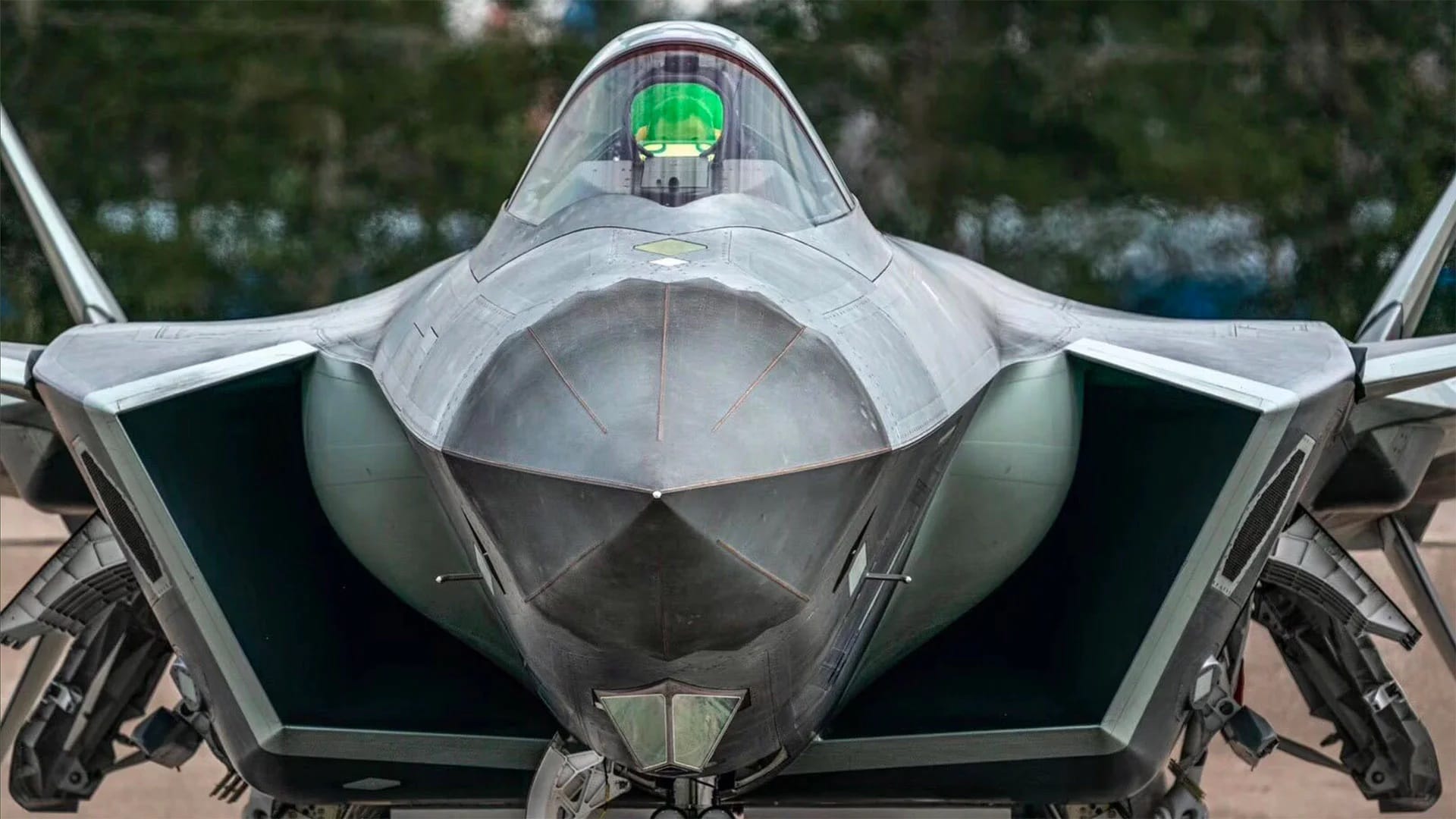
J-20 Stealth Fighter. Image Credit: Industry Handout.
This represents a rapid, drastic redevelopment of Chinese doctrine.
The war in Ukraine, along with the ongoing Middle East war, has shown the way in which the American doctrine has reached its limit in the twenty-first century.
Whereas the last 40 years have centered on destroying an enemy with exquisite precision munitions, modern combat has fundamentally changed.
A New Form of War
Capabilities have now become so diffuse that drone swarms and cheap missiles–even hypersonic weapons–are being used to overcome the exquisite technologies that the Americans employ.
It isn’t just mass production of cheap drones and missiles that has become the new advantage in what is becoming a global war of attrition at scale.
It’s the development of new technologies and tactics that underpin these new, relatively cheap swarming methods of warfare.
Like Ukraine, Russia, and Iran, China appears far ahead of the Americans and many of their allies in embracing these developments.
Rather than concentrating powerful sensors on a limited number of expensive aircraft, military planners want to distribute radar systems across multiple platforms.
This means the enemy can no longer complicate or disrupt airborne surveillance by attacking individual reconnaissance aircraft.
What’s more, this new method could give China’s air force multiple detection angles against aircraft designed to minimize their radar signatures (better preserving the safety of the attacking plane).
Strategic Coping Mechanisms Are Not Enough
While China has not yet demonstrated this capability and many engineering problems remain, the PLAAF’s exploration of it shows how committed the Chinese are to upending the traditional way of war.
Where are the Americans on these developments?
Still patting themselves on the back that China can never innovate?
That’s not a strategy.
That’s a sad coping mechanism.
About the Author: Brandon J. Weichert
Brandon J. Weichert is the Senior National Security Editor at 19FortyFive.com. He also manages The Weichert Brief on Substack. Weichert is the co-host for The Mario Nawfal Show on Twitter/X. He is the author of four bestselling national security books, most recently A Disaster of Our Own Making: How the West Lost Ukraine (Encounter Books). His next book, Fortress Americas: A New Monroe Doctrine (Tucker Carlson Books), is due out December 8. Follow him via Twitter/X @WeTheBrandon.