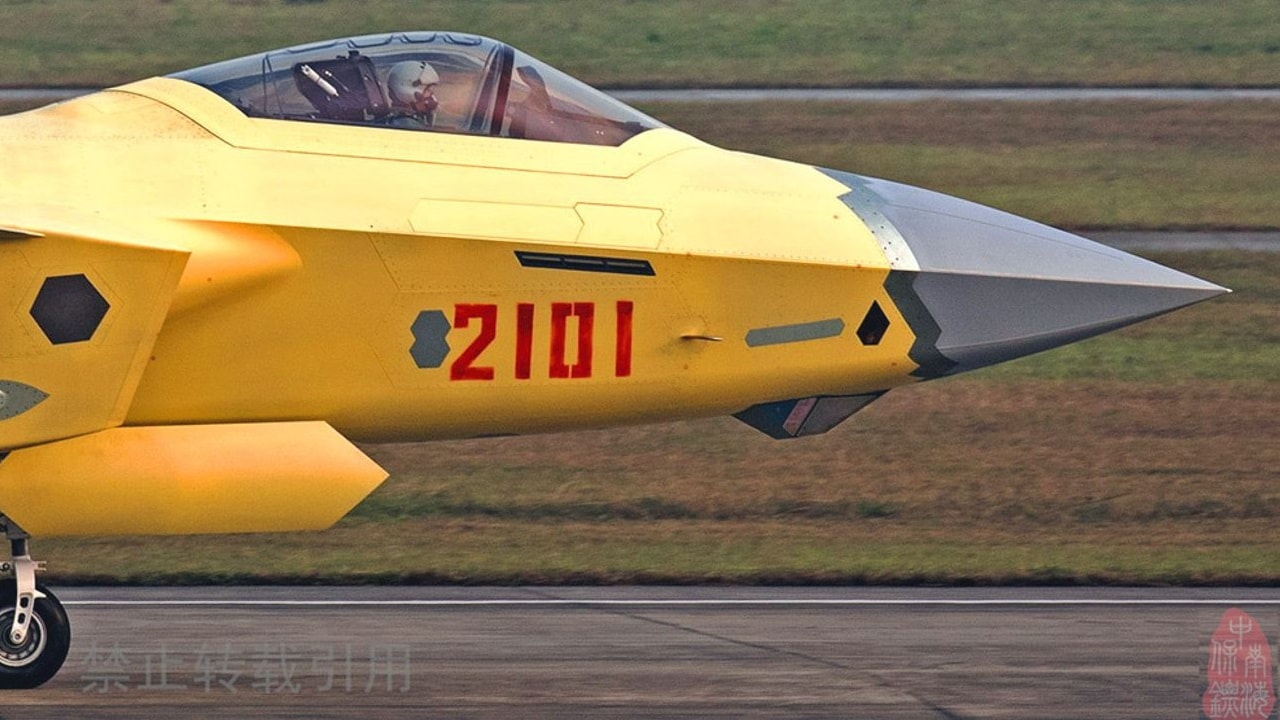
Summary and Key Points: Expert Sean Spoonts weighs Chinese state media claims that the two-seat J-20S stealth fighter can now strike ships at sea against the hardware: 500 J-20s in service, 100 added a year toward 1,000, but no anti-ship cruise missile under 4 meters to carry internally, so YJ-12s or YJ-21s would ride outside and kill its stealth.
China’s J-20S: The New Aircraft Carrier Killer?
Stories in Slashgear and USNI News both cite recent reports in Chinese government-owned media that the J-20 fighter can now conduct precision strikes on moving targets at sea, suggesting China has added a new missile and improved targeting system to its now-15-year-old, 5th-generation stealth fighter.
In a press conference covered by China’s state-run Central Television, a People’s Liberation Army Air Force spokesman claimed the J-20 “boasts exceptional medium-and long-range air superiority capabilities, precision strike capabilities against ground and maritime targets, as well as prominent situational awareness, electronic jamming and tactical command and control capabilities, and is capable of conducting manned-unmanned teaming operations.”
The aircraft mentioned here is the J-20S, which operates from land bases (It is much too large for carrier operations).
The J-20 dates back to 2011, when it made its first flight. China currently has 500 J-20s in service in several variants and continues to add them at a rate of 100 per year, with an expected total fleet size of 1,000.
The original base model featured an underpowered, Russian-made AL-31F or Chinese-built WS-10C engine before being upgraded to the domestically produced, more powerful WS-15 engine.
The J-20A offered improved aerodynamics, better cockpit visibility, and the WS-15 engine is said to allow this model to achieve and maintain Mach speeds in supercruise.
A J-20S With Maritime Strike Capability Could Be A Threat To US Carriers
In the Maritime Strike J-20S configuration, a new 2-seat version (a first for stealth fighters) adds an additional crewman to manage electronic warfare, sensor and targeting information, and to direct “loyal wingman” drones on missions.
It is unclear how many J-20S models have been or will be built, but if hundreds operate from land bases, they would pose a significantly increased threat to the US Navy in the South China Sea.
While China has not stated which missile the J-20S might use in a maritime strike mission, some informed speculation is worth noting.
Currently, China does not have a compact cruise missile the J-20S can carry internally, but an online leak of blueprints suggests China is working on one less than 4 meters long.
China’s current anti-ship cruise missiles, like the telephone-pole-sized YJ-12 or hypersonic YJ-21, would have to be carried externally by the J-20S, ruining any stealth capability it possesses.
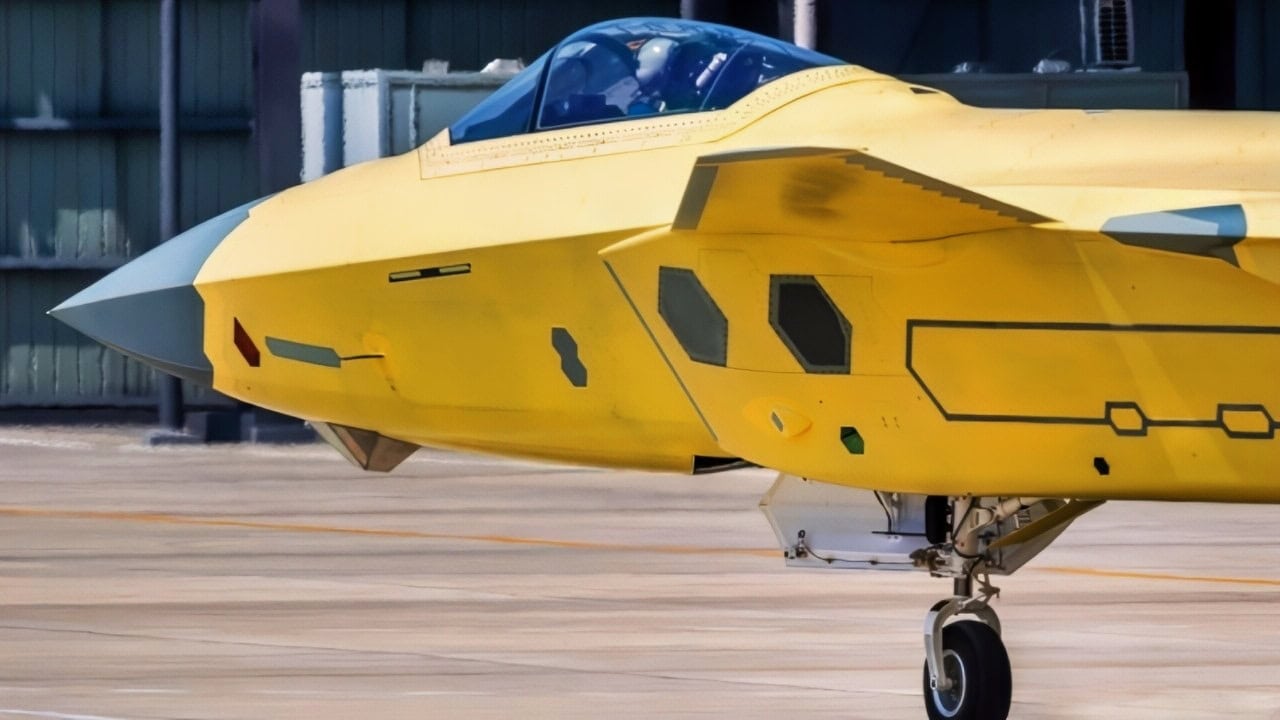
J-20 Fighter in Yellow Paint. Weibo Screenshot.
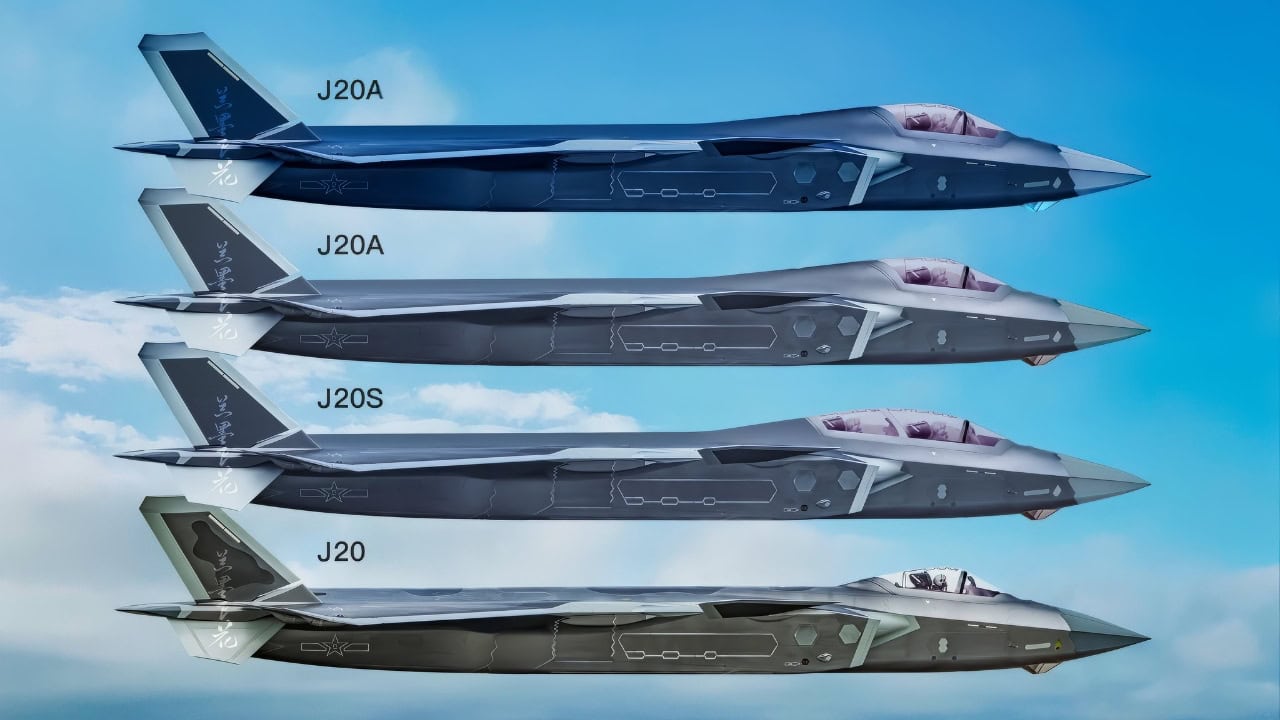
J-20 fighter diagram. Image Credit: Creative Commons.
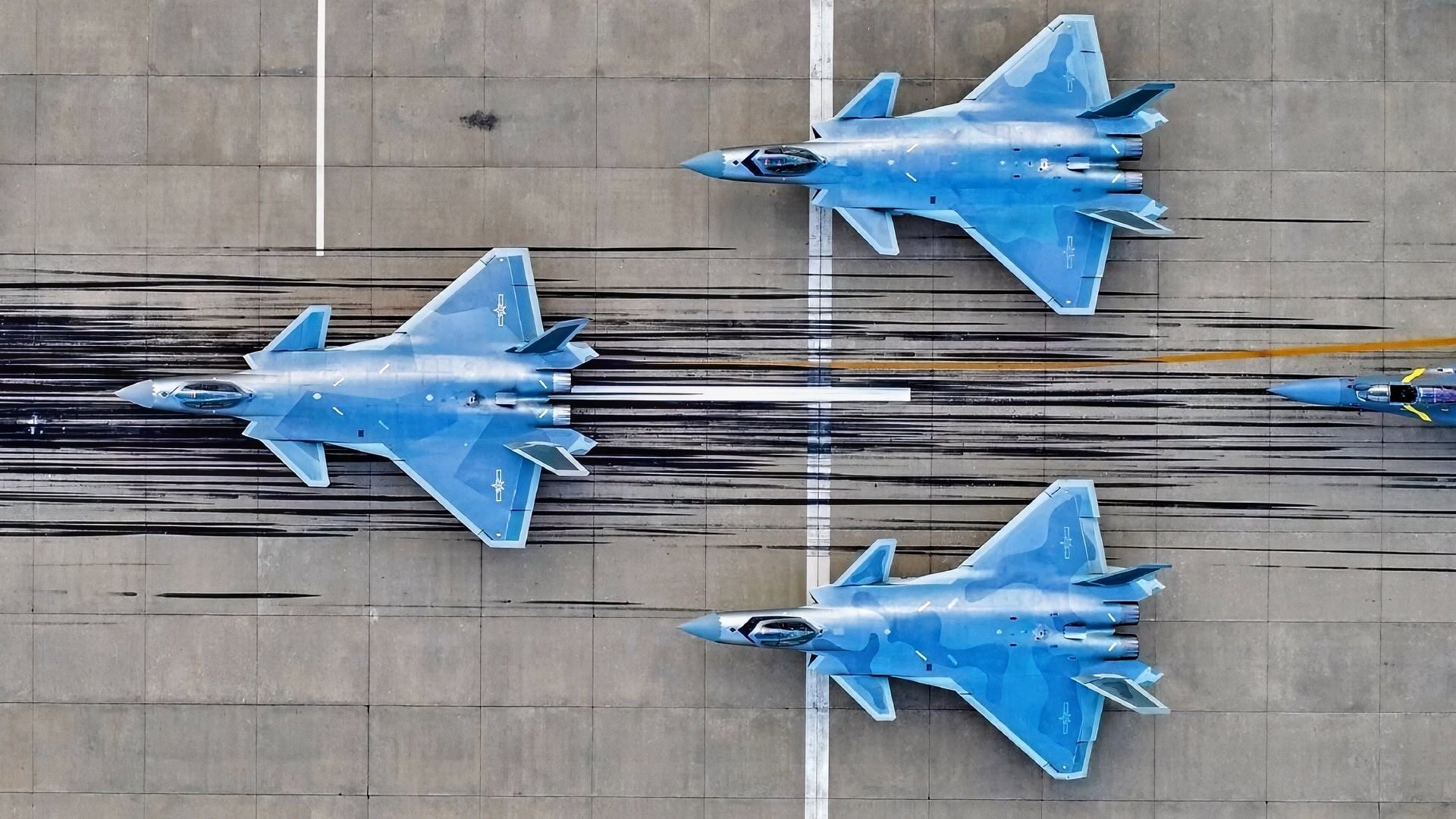
J-20S. Image Credit: Creative Commons.
This might not matter in the later stages of a conflict where China has air dominance, but in the early stages it would be impossible to approach without the J-20S being detected at long range.
The J-20S Might Not Carry A Cruise Missile At All
One possibility is that the J-20S would not carry a missile at all.
As originally designed, and despite its maneuverability for such a large aircraft, the J-20 was not intended to dogfight at close range with US fighters.
This contention is supported by the J-20’s lack of a gun.
Instead, it was meant to detect and attack aircraft at long range, in particular the E2-C Hawkeye Airborne Early Warning aircraft, with the aim of blinding US aircraft carrier to incoming threats like cruise missiles.
The J-20S may serve as a scout aircraft.
It could approach stealthily, detect a US carrier strike group, and relay the information back to land bases to fire cruise missiles, while the J-20S provides updated contact information to guide them to their targets remotely.
Chinese Weapons Generally Don’t Live Up To Their Press Releases
The Chinese keep a pretty tight lid on their military capabilities and have not yet demonstrated the J-20S’s maritime strike capability, which may be telling us something.
In the past, Western nations have been fed carefully crafted narratives about the capabilities of Russian and Chinese military hardware that fell far short of reality when actual shooting wars replaced press conferences and static public displays.
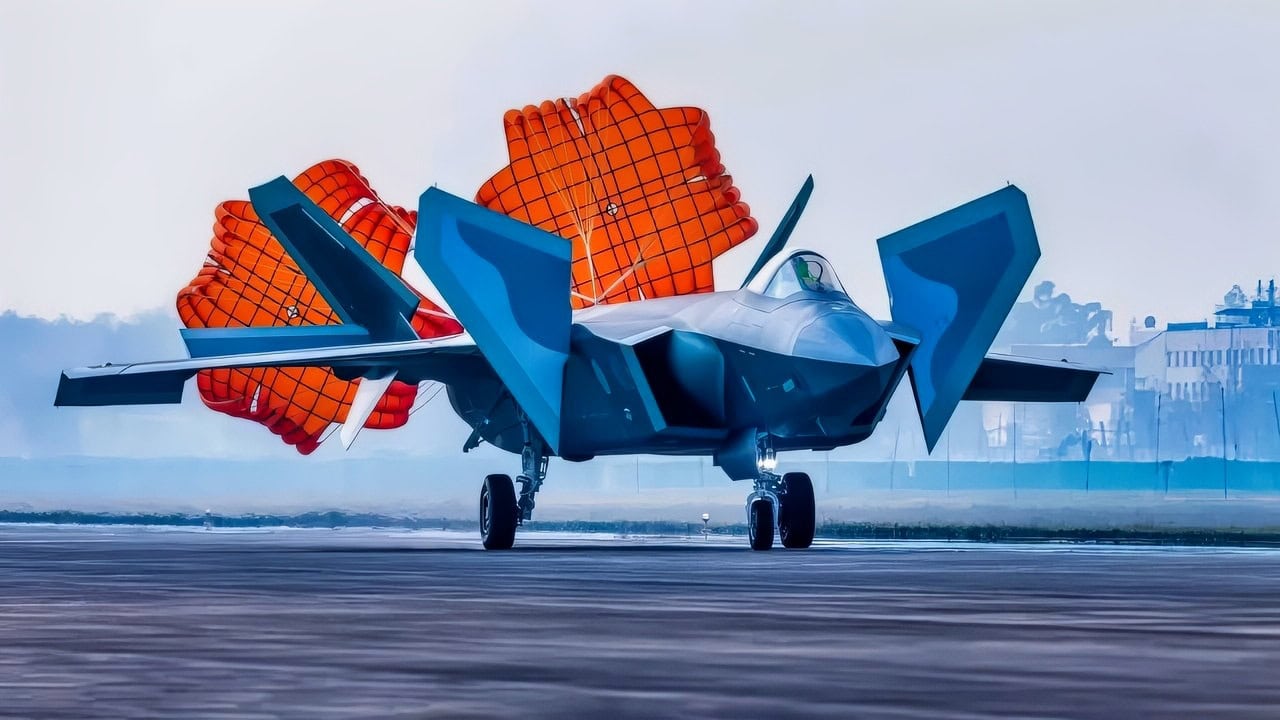
J-20S Fighter from China. Image Credit: Creative Commons.
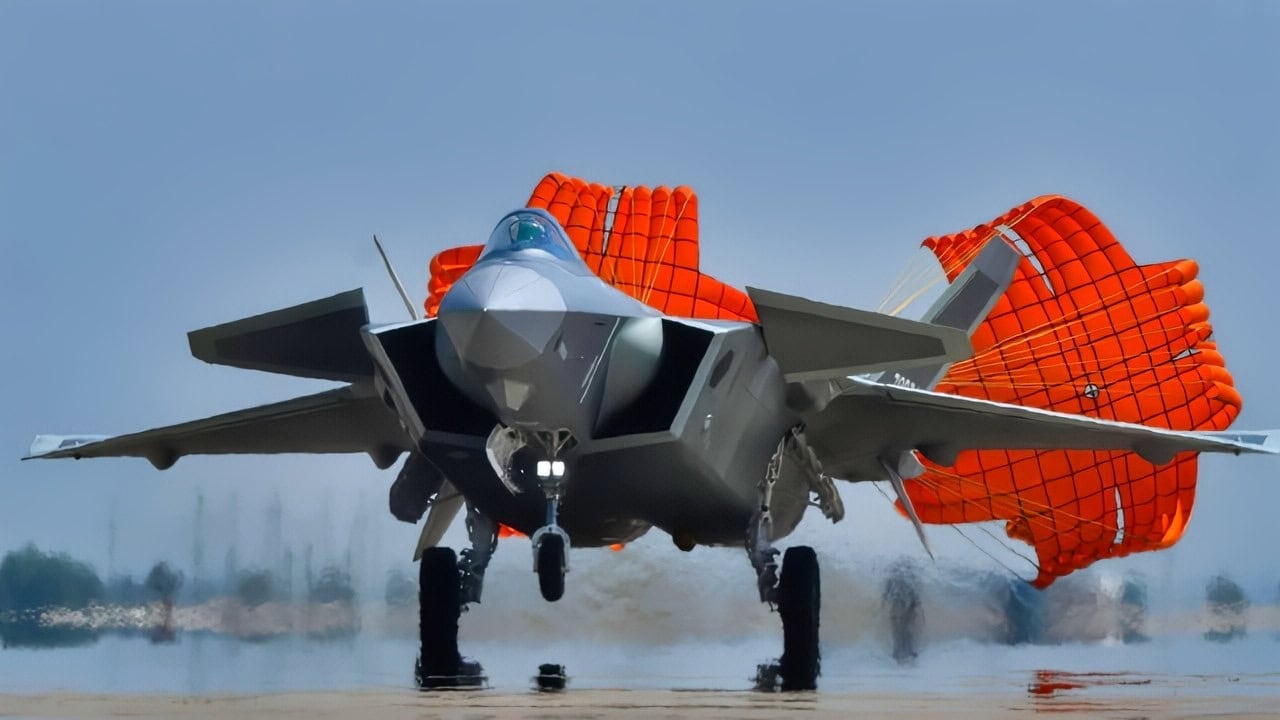
J-20 Stealth Fighter Landing. Image Credit: Creative Commons.
In Iran, China’s vaunted HQ-9B SAM system and JY-27A anti-stealth radar proved ineffective against US aircraft like the F-22 Raptor and F-35 Lightning.
These same systems had previously failed to detect approaching US aircraft during the US raid in Venezuela in January of this year.
During the Cambodian border conflict with Thailand in 2025, China’s FK-3 medium-range SAMs could not engage the non-stealth aircraft like the F-16s and Saab Gripen fighters flown by the Royal Thai Air Force.
In that same year, Pakistan and India found themselves in conflict.
Chinese-made J-17 Thunder and J-10C jets seemed to have performed well against the Indian Air Force, with aircraft losses on both sides hotly contested, but Pakistan did not sweep India from the skies either.
Numerous problems appeared in Chinese aircraft, including cracked airframes, malfunctioning KLJ-7A radars, and PL-15 air-to-air missiles with guidance system failures and bad rocket propellant.
Is The J-20S Even A True 5th Generation Stealth Fighter
Aviation experts have questioned the J-20’s status as a true 5th-generation stealth aircraft, citing features more common to 4th-generation aircraft.
Many question the stealth features of the J-20 based on the following:
The engines’ curved, bumpy Diverterless Supersonic Intakes are less than optimal for low radar observability.
The J-20’s engine nozzles are notched rather than having the reduced infrared signature of the “Turkey Feathers” on the exhaust of planes like the F-15EX Eagle II.
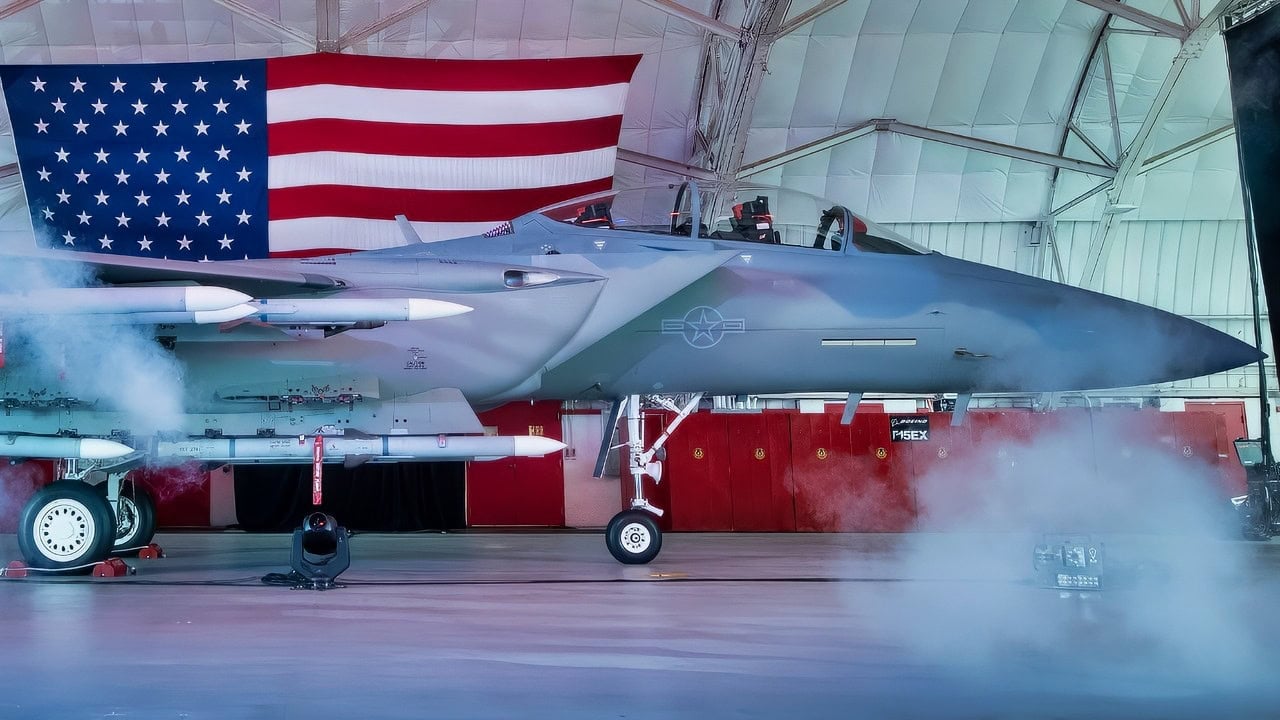
The Air Force’s newest fighter, the F-15EX Eagle II, was revealed and named during a ceremony April 7 at Eglin Air Force Base, Fla. The aircraft will be the first Air Force aircraft to be tested and fielded from beginning to end, through combined developmental and operational tests. (U.S. Air Force photo/Samuel King Jr.)
The J-20 employs canards as additional control surfaces to stabilize the enormous aircraft at lower speeds. When used, these canards are highly visible on radar.
Under the wing, the flap actuators are exposed and non-stealthy.
The J-20S’s sheer size also means it will have a much larger radar signature from the side or rear than comparable US aircraft.
In summary, Western observers should view claims that the J-20S has a carrier-killing maritime strike capability with skepticism until China can demonstrate it in some way beyond a press briefing aired on its own state-run media.
About the Author: Sean Spoonts
Sean Spoonts is the former Editor-In-Chief of SOFREP.com. He is a military analyst, writer, and commentator whose work has appeared in Newsweek, CNS News, Ukrinform, and various military/veteran media networks and professional publications, including the Military Intelligence Professional Bulletin. He is a U.S. Navy veteran, having served as an Aviation Anti-Submarine Warfare Operator and Search and Rescue Helicopter Aircrewman.