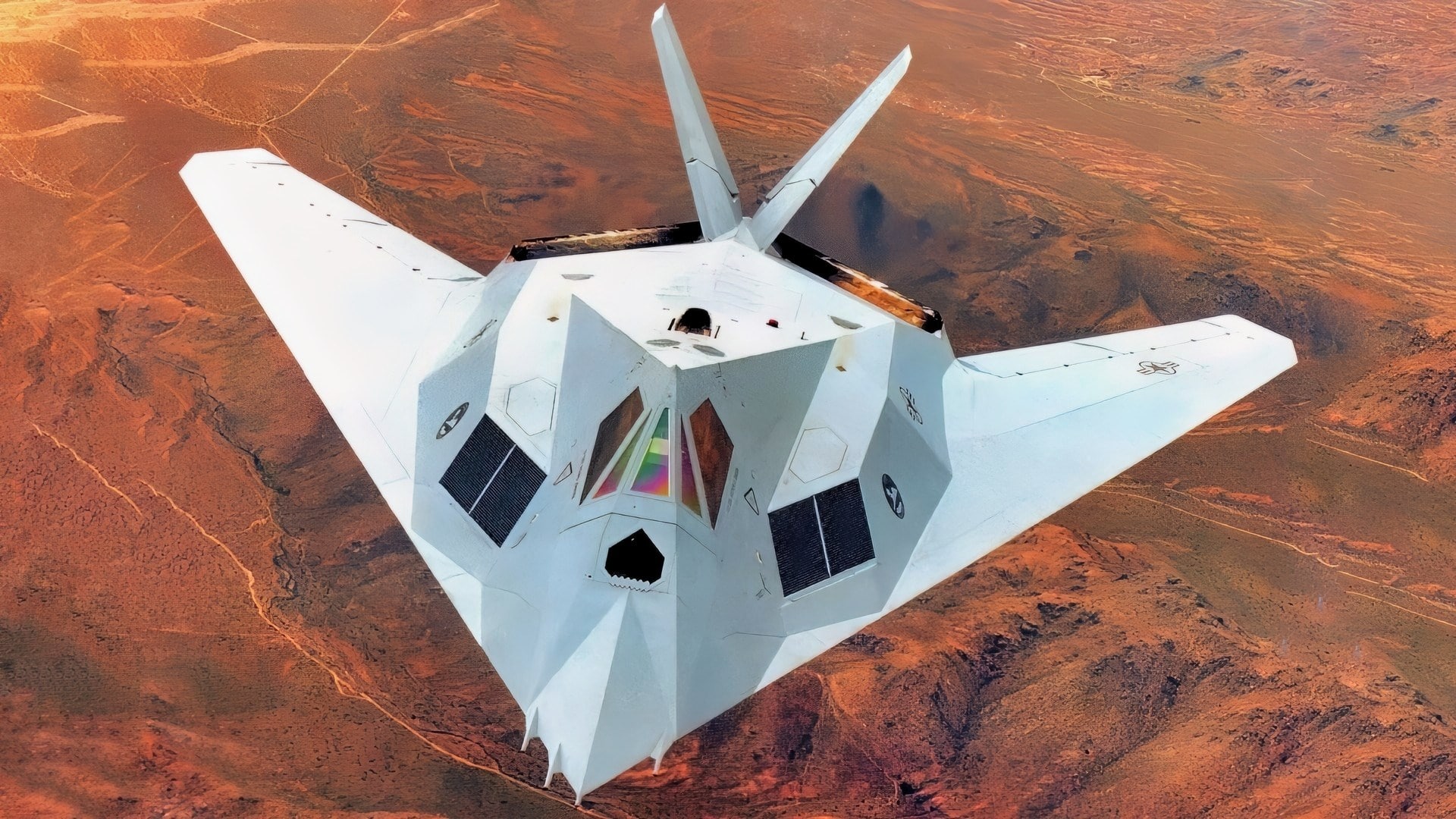
Summary and Key Points: Former Navy EA-18G Growler pilot Adam Daymude says a WWII P-51 Mustang would handily beat the F-117 Nighthawk in a dogfight. The stealth jet, first flown in 1981, carried no cannon and no air-to-air missiles and needed a flight computer to stay airborne.
P-51 vs. F-117 Nighthawk: Who Wins?
Editor’s Note: We have included our own original photos of both the F-117 Nighthawk stealth fighter and the P-51 Mustang in this essay, as we have traveled across the country countless times to get close and capture the power of both warplanes.
In a fight between an F-117 Nighthawk stealth warplane and a WWII P-51 Mustang, which plane do you think would win?
Aviation Geek Club, an online trade publication we are big fans of, asked former US Navy EA-18G Growler pilot Adam Daymude this very question.

F-117 Nighthawk at National Museum of Air Force 19FortyFive Photo
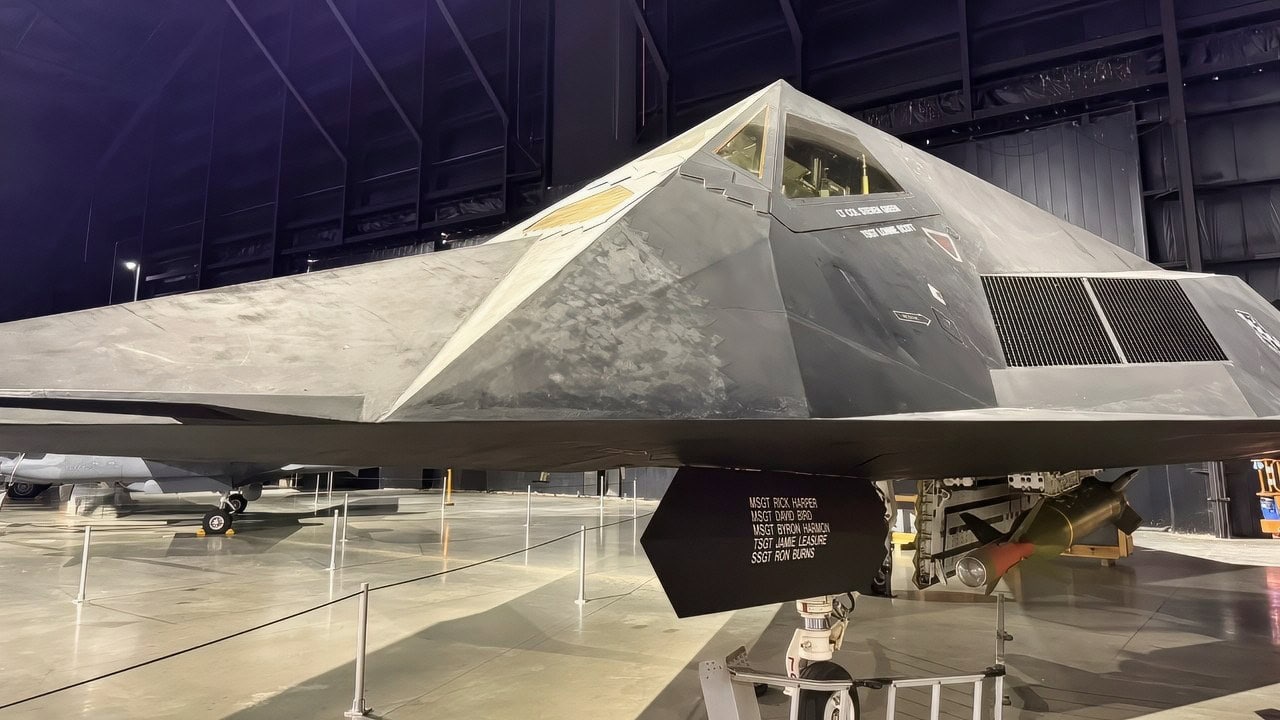
F-117A Nighthawk at USAF Museum. Image taken by 19FortyFive Owner, Harry J. Kazianis.
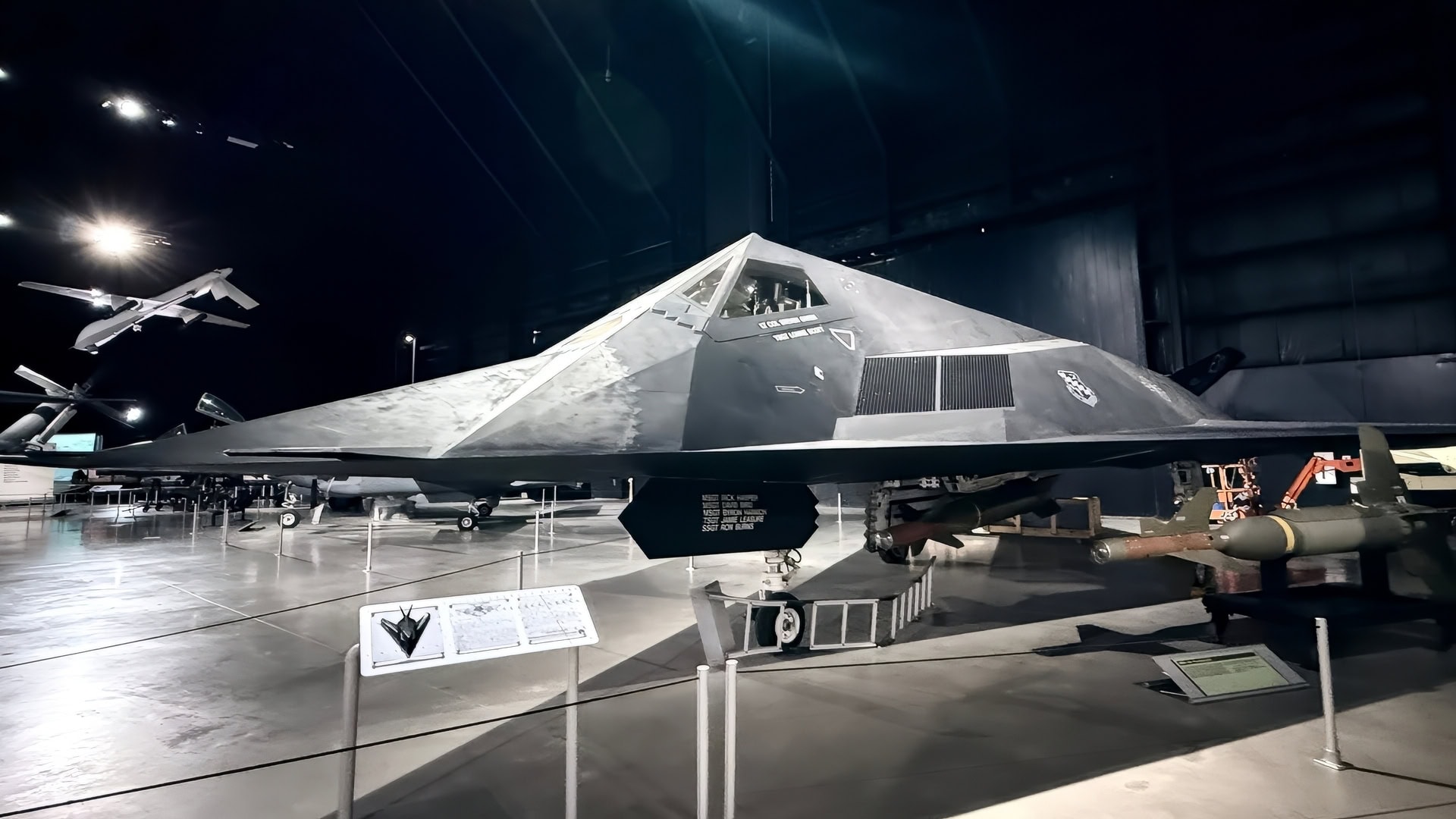
F-117A Nighthawk 19FortyFive.com Image. Taken on July 2025 at the National Museum of the U.S. Air Force by Harry J. Kazianis.
According to Daymude, the P-51 would handily defeat the F-117 in aerial combat.
On June 18, 1981, the F-117 Nighthawk first took to the air.
America’s first stealth warplane, it became an icon when the U.S. publicly unveiled it in 1988.
Its triangular shape, angular surfaces, and all-black paint made it look more like the Last Starfighter than the next generation of American warplanes.
That all-black bird could evade the most advanced Soviet radars thanks to its unique engineering, which made it feel even more like science fiction.
Understanding the Dynamics
By contrast, the P-51 Mustang was undoubtedly one of the greatest warplanes of the twentieth century.
Mass-produced to fight the Nazi and Japanese menaces in World War II, these relatively simple, piston-driven planes were the opposite of the high-flying, advanced F-117 Nighthawk.
Let’s first compare the two planes’ missions.
Although the F-117 received an “F” designation (meaning “Fighter” in Air Force parlance), it was not designed as a fighter in the traditional sense.
Lockheed Skunk Works designed the plane as a penetrator of Soviet airspace, not to outrun advancing Soviet air defenses like the SR-71 Blackbird and A-12 Oxcart did.
Instead, it was meant to penetrate by remaining off radar screens.
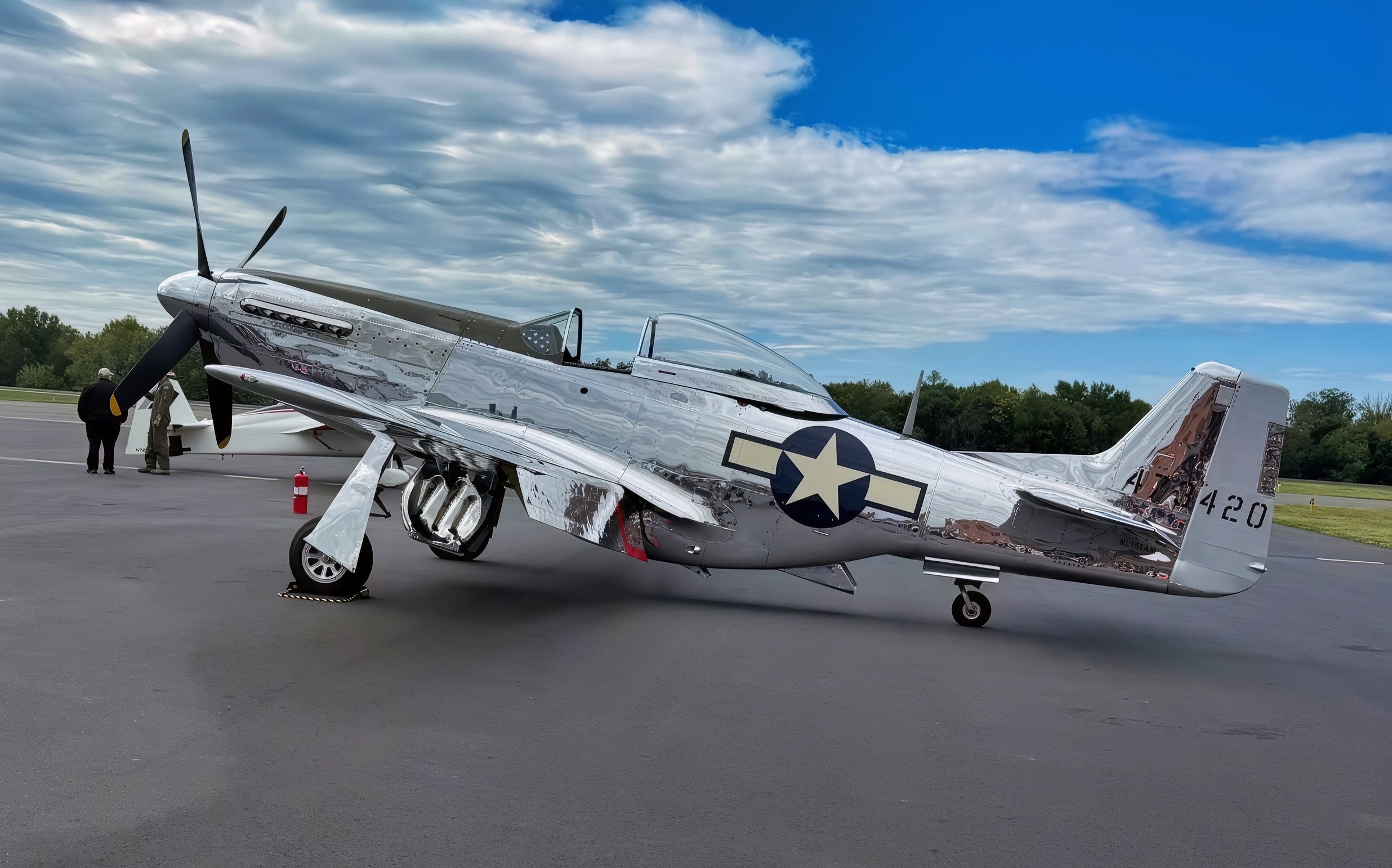
P-51 Mustang Photo from Leesburg, VA Airshow on 9/26/2026 19FortyFive Photo
The F-117 carries no internal cannon or dedicated air-to-air missiles in its standard operational configuration.
Its internal weapons bays were meant to carry precision-guided bombs.
That was quite helpful in conflicts like Desert Storm, the various campaigns waged over Yugoslavia in the 1990s, and the Global War on Terror (GWOT), when hitting ground targets was the priority.
But in a dogfight, that doesn’t bode well.
Indeed, Daymude told Aviation Geek Monthly that the F-117’s aerodynamics were its greatest weakness.
According to the former naval aviator, several characteristics made the F-117 awful at dogfighting.
For example, its control surfaces were relatively limited compared to conventional warplanes.
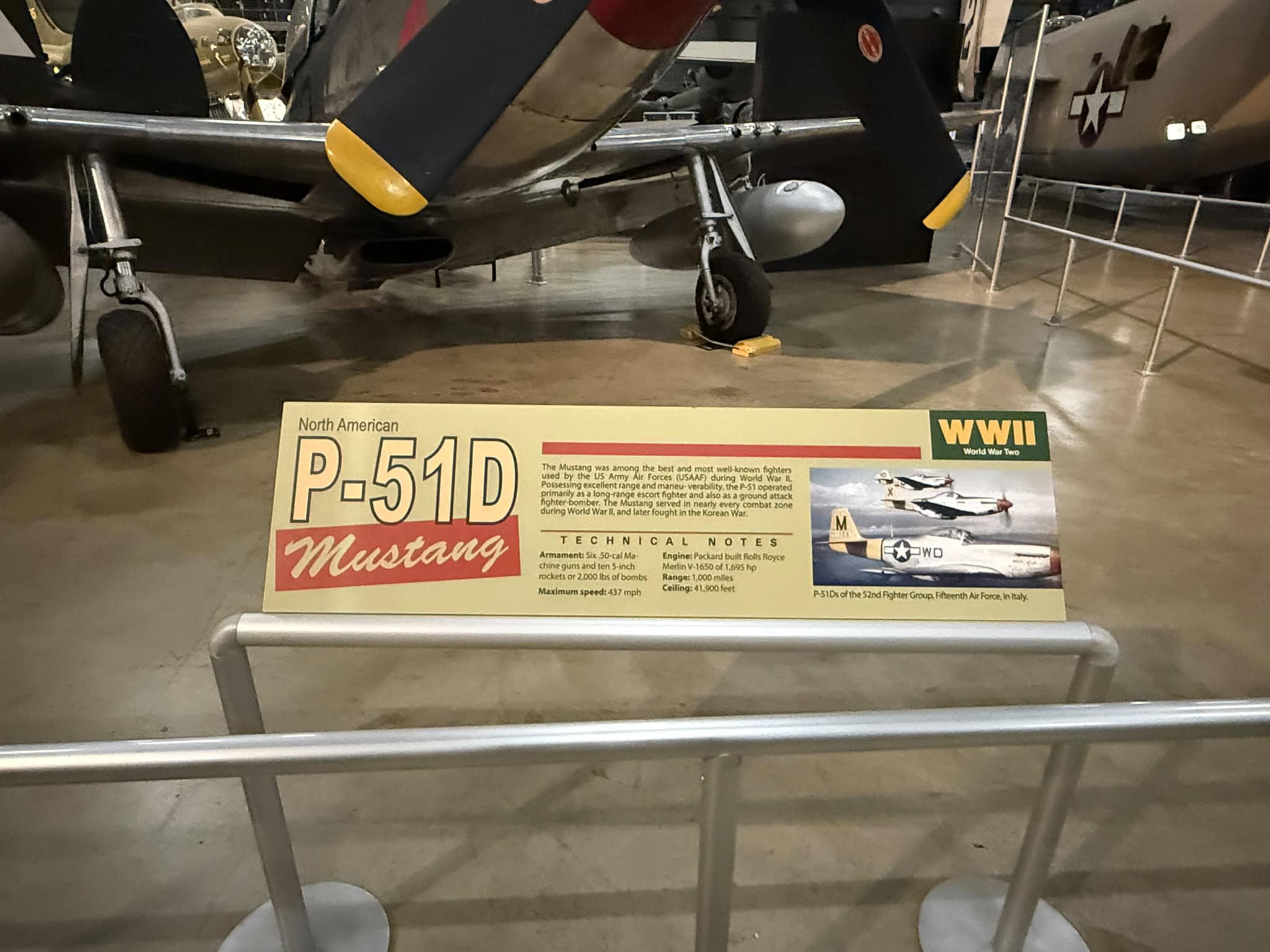
P-51D Mustang 19FortyFive.com Image
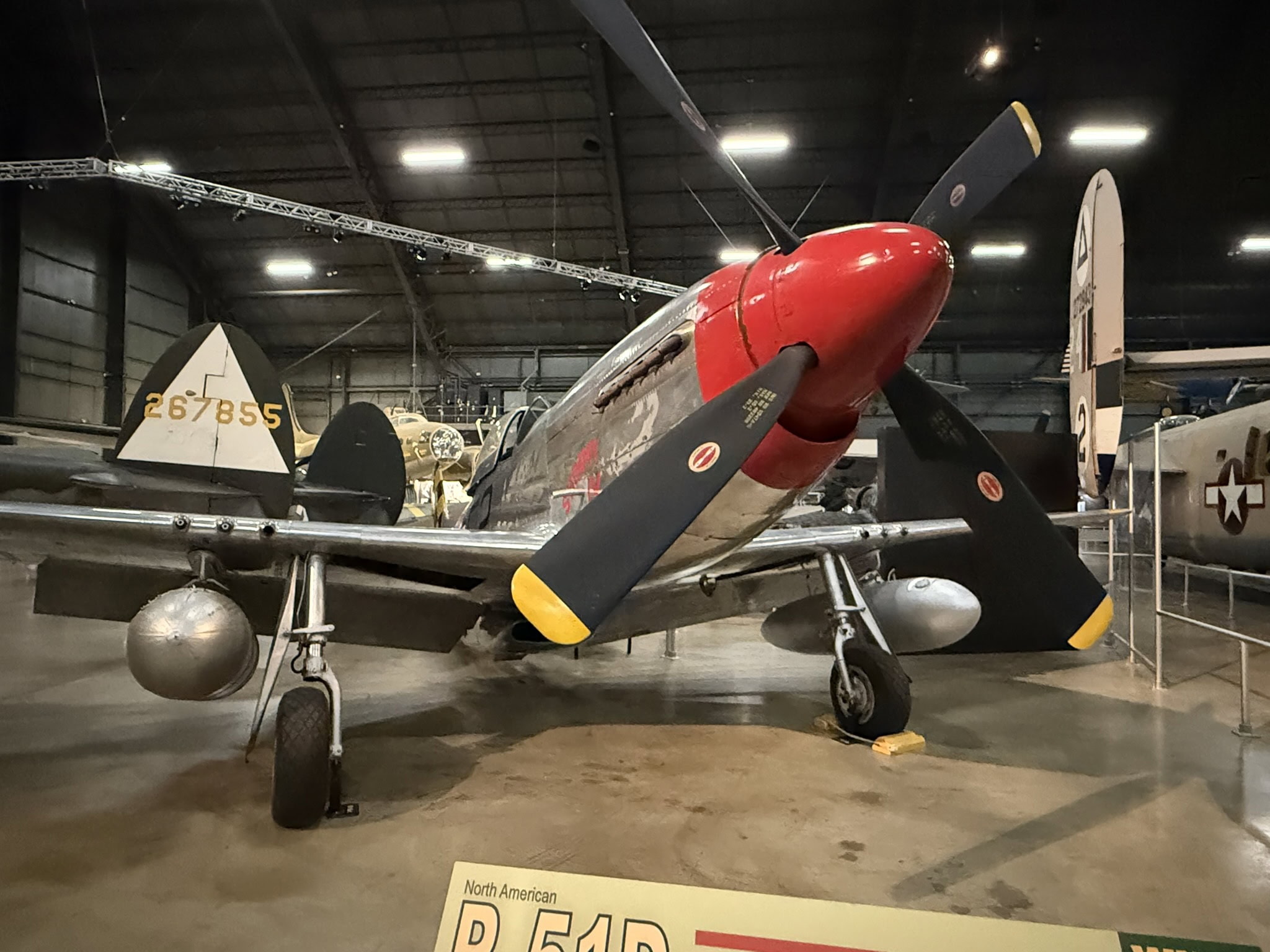
P-51D Mustang 19FortyFive.com Image
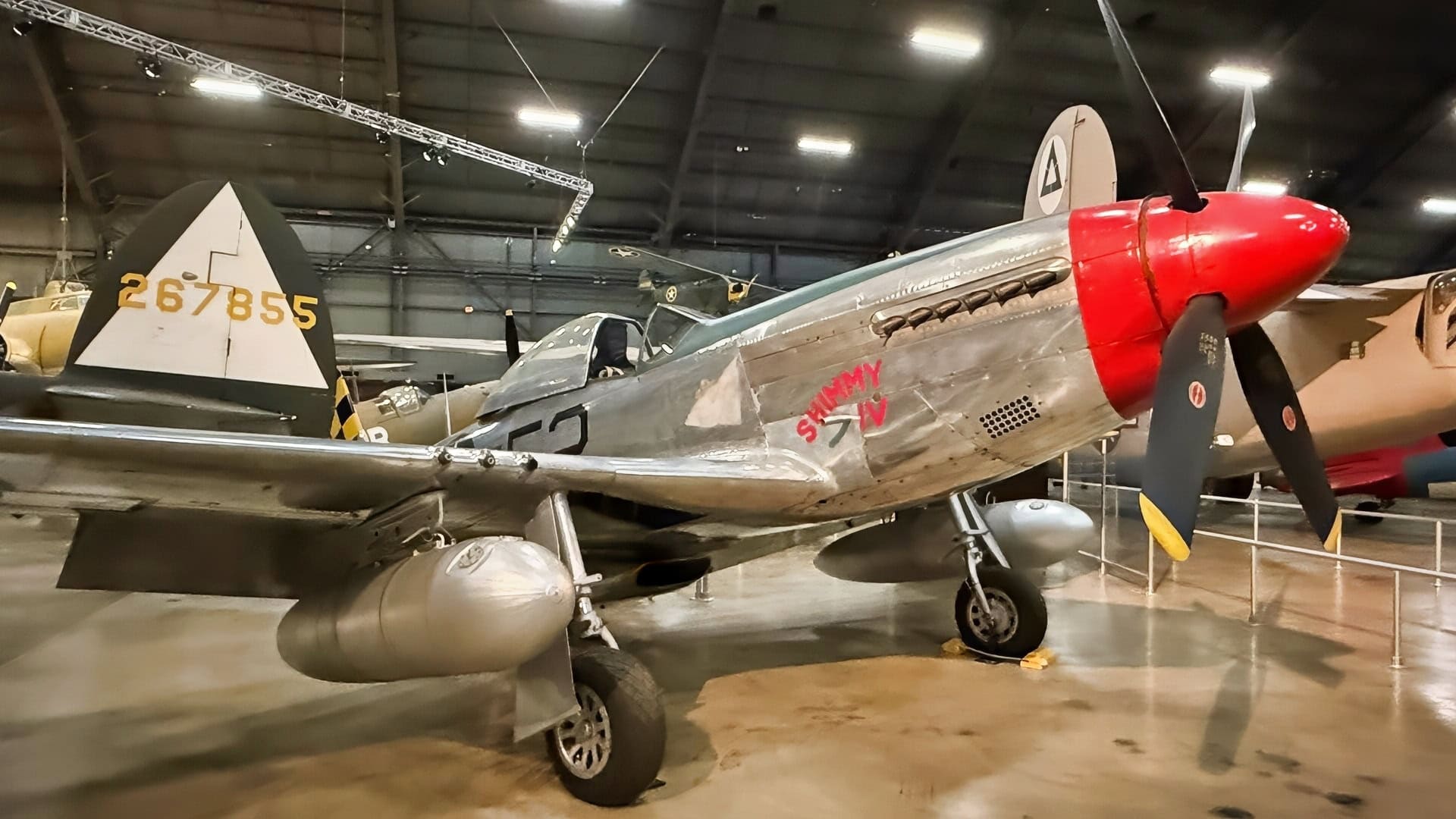
P-51D Mustang 19FortyFive.com Image
Meanwhile, the plane was inherently aerodynamically unstable.
An advanced flight-control computer was required to keep it flying.
One of its most prominent features was the lack of horizontal stabilizers (to help the F-117 reduce its radar cross-section).
To compensate, the Nighthawk used elevons and other control surfaces to manage pitch, roll, and yaw. But these systems weren’t enough for the demands of rapid maneuvering combat.
In an aerial dogfight, a plane must sustain turning performance. The bird needs rapid acceleration and efficient energy management.
It also requires weapons to shoot at the enemy plane.
The F-117 had none of these capabilities.
It relied solely on stealth to keep enemy planes from spotting it, and its mission set was expressly limited to ground-attack operations because of the F-117’s aerodynamic limitations.
The North American P-51 Mustang, however, was one of America’s most successful WWII warplanes.
Powered by a Packard-built Rolls-Royce Merlin V-12 engine, the P-51D variant could reach about 437 miles per hour when at altitude.
The Mustang had a service ceiling of 41,900 feet and could carry six wing-mounted .50-caliber Browning machine guns.
The Allies liked to use the Mustang as an escort fighter protecting the massive sorties of Allied bombers during missions over Nazi-occupied Europe.
This plane was made to kill enemy aircraft.
Two Different Missions In Mind
Unlike the F-117, the Mustang could turn, dive, and climb quickly while keeping its guns on an enemy aircraft. This is why Daymude believes the P-51 could defeat the F-117 Nighthawk in a dogfight.
Because the F-117 lacked air-to-air attack capability while the P-51 had six Browning machine guns, if the P-51 could get into an attack position against the F-117, the F-117 would have no way to survive or even counterattack.
Of course, the F-117 was shot down only once in combat. And that was over the skies of Serbia in 1999.
Some controversy remains over how the Serbian anti-aircraft battery commander accomplished this feat from the ground.
Nevertheless, it happened.
But this was not the norm for the F-117 Nighthawk.
And the Nighthawk was never shot down, or even detected, by an enemy fighter in all its years.
So the prospect of an old P-51 successfully engaging (or any warplane engaging) the F-117 was so low that it remained only a theoretical exercise.
Still, it highlights how unique the F-117 was.
The Air Force spent gobs of tax dollars on a plane that couldn’t dogfight.
That didn’t even carry air-to-air attack capabilities.
Instead, they wanted the plane to penetrate enemy airspace, loiter long enough to deliver its lethal payload, and get out of dodge before the enemy ever knew it was there.
About the Author: Brandon J. Weichert
Brandon J. Weichert is the Senior National Security Editor at 19FortyFive.com. He also manages The Weichert Brief on Substack. Weichert is the co-host for The Mario Nawfal Show on Twitter/X. He is the author of four bestselling national security books, most recently A Disaster of Our Own Making: How the West Lost Ukraine (Encounter Books). His next book, Fortress Americas: A New Monroe Doctrine (Tucker Carlson Books), is due out December 8. Follow him via Twitter/X @WeTheBrandon.