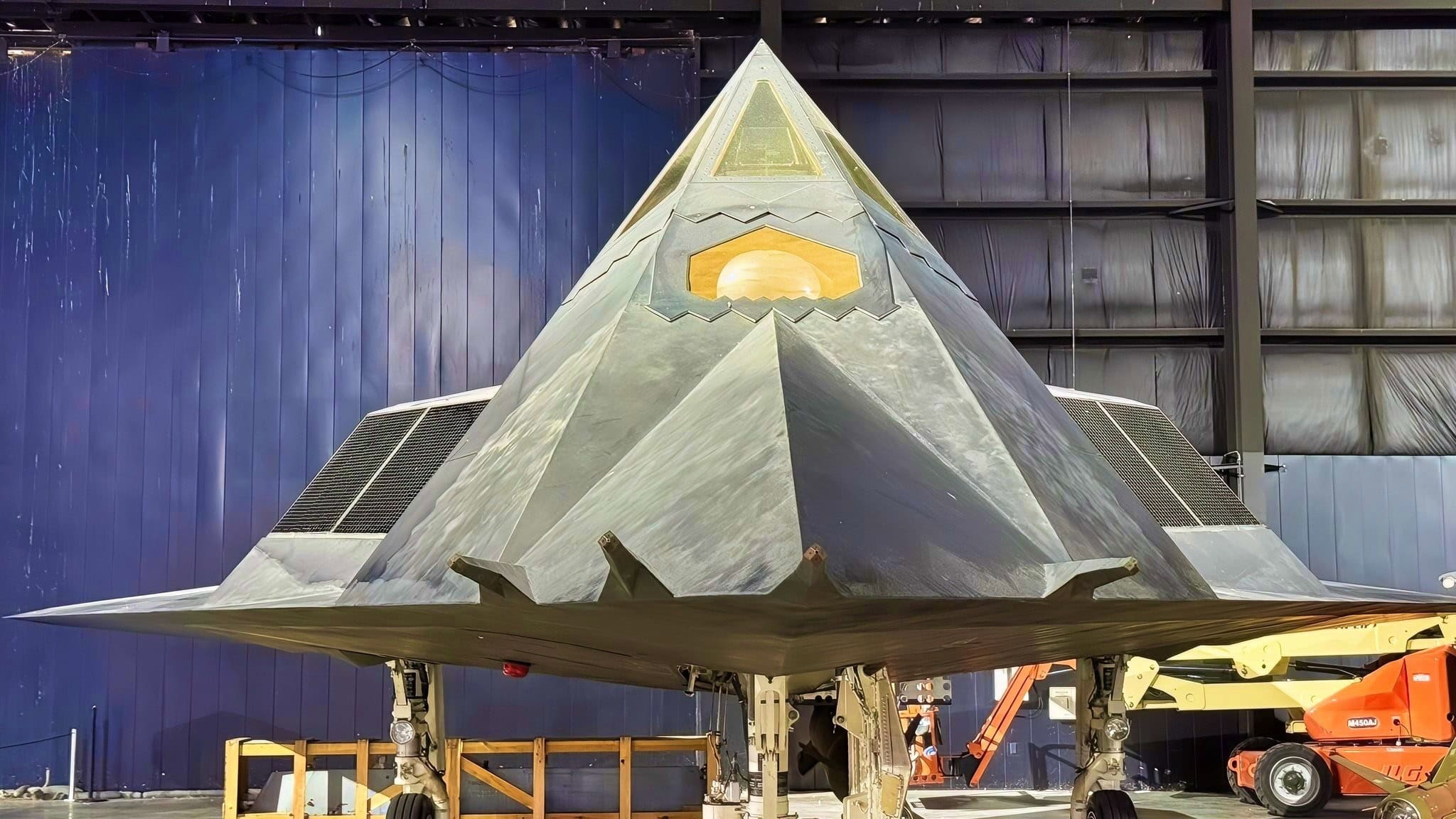
Summary and Key Points: Air Force test pilot Lt. Col. Skip Anderson named the Lockheed F-117 Nighthawk himself when no one in his chain of command responded, Aviation Geek Club reports. The F-117 first flew June 18, 1981; flew more than 1,200 Desert Storm sorties with no losses; lost one jet over Yugoslavia in 1999; was retired April 22, 2008; and still flies under a contract through at least 2034.
Editor’s Note: This piece includes new photos of the F-117 Nighthawk, which was retired to the Smithsonian in Washington, DC, last week. 19FortyFive took a special trip to capture these new photos, and we hope you enjoy them!
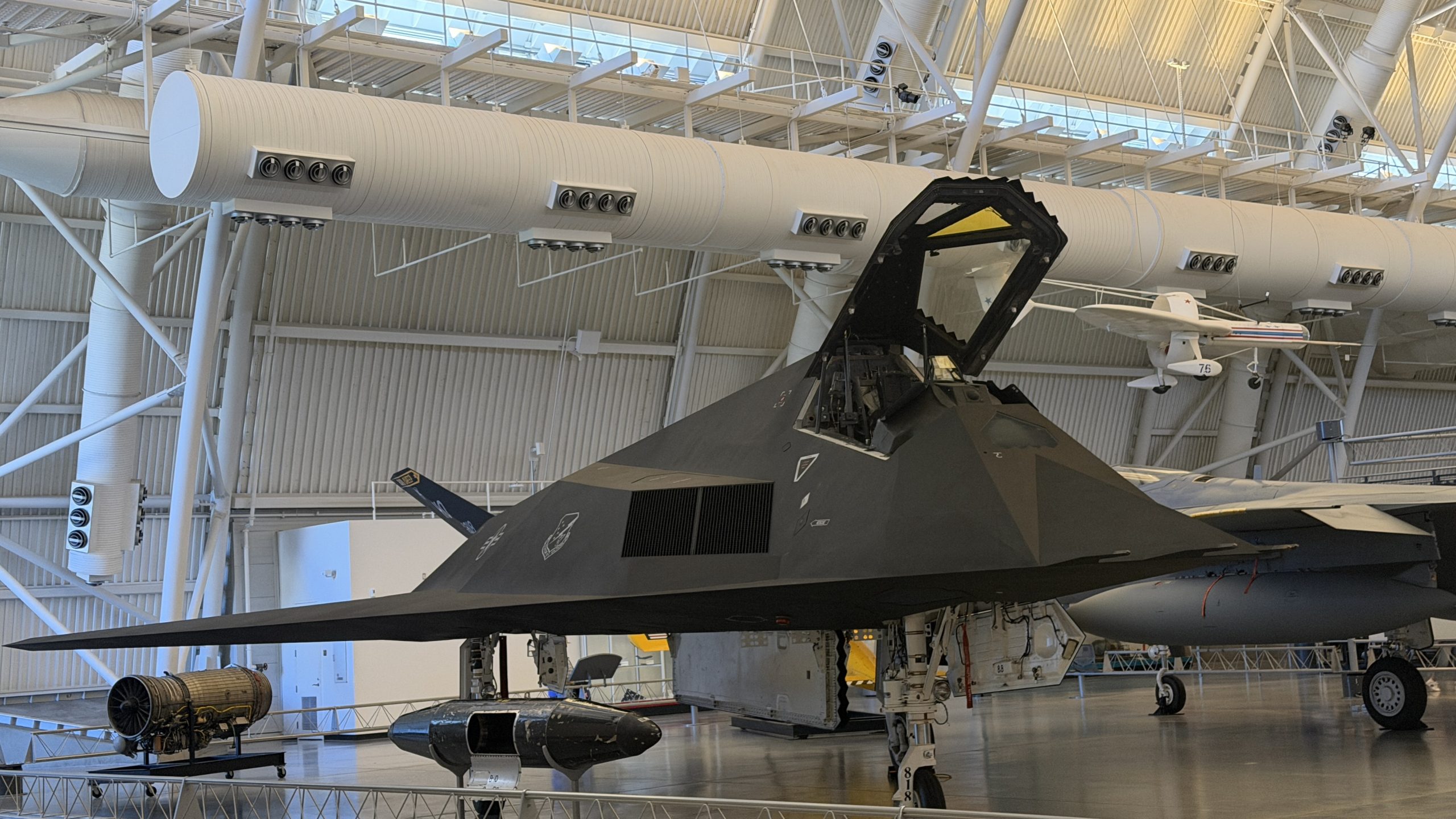
F-117 Nighthawk at the Smithsonian. 19FortyFive Original Image by Christian D. Orr.
The F-117 Nighthawk: This Plane Is Real Military History
According to an account in The Aviation Geek Club, an online trade publication, United States Air Force Lieutenant Colonel Skip Anderson played a pivotal role in naming the aircraft during its secret development.
Anderson was a test pilot assigned to the highly classified SENIOR TREND program, which produced the operational F-117 stealth attack aircraft.
The Lockheed F-117 Nighthawk became one of the most recognizable American aircraft of the Cold War. Lockheed’s Skunk Works division was preparing the aircraft for its first flight. The military had not settled on an official designation.
Anderson needed one because without it, routine administrative processes would become complicated.
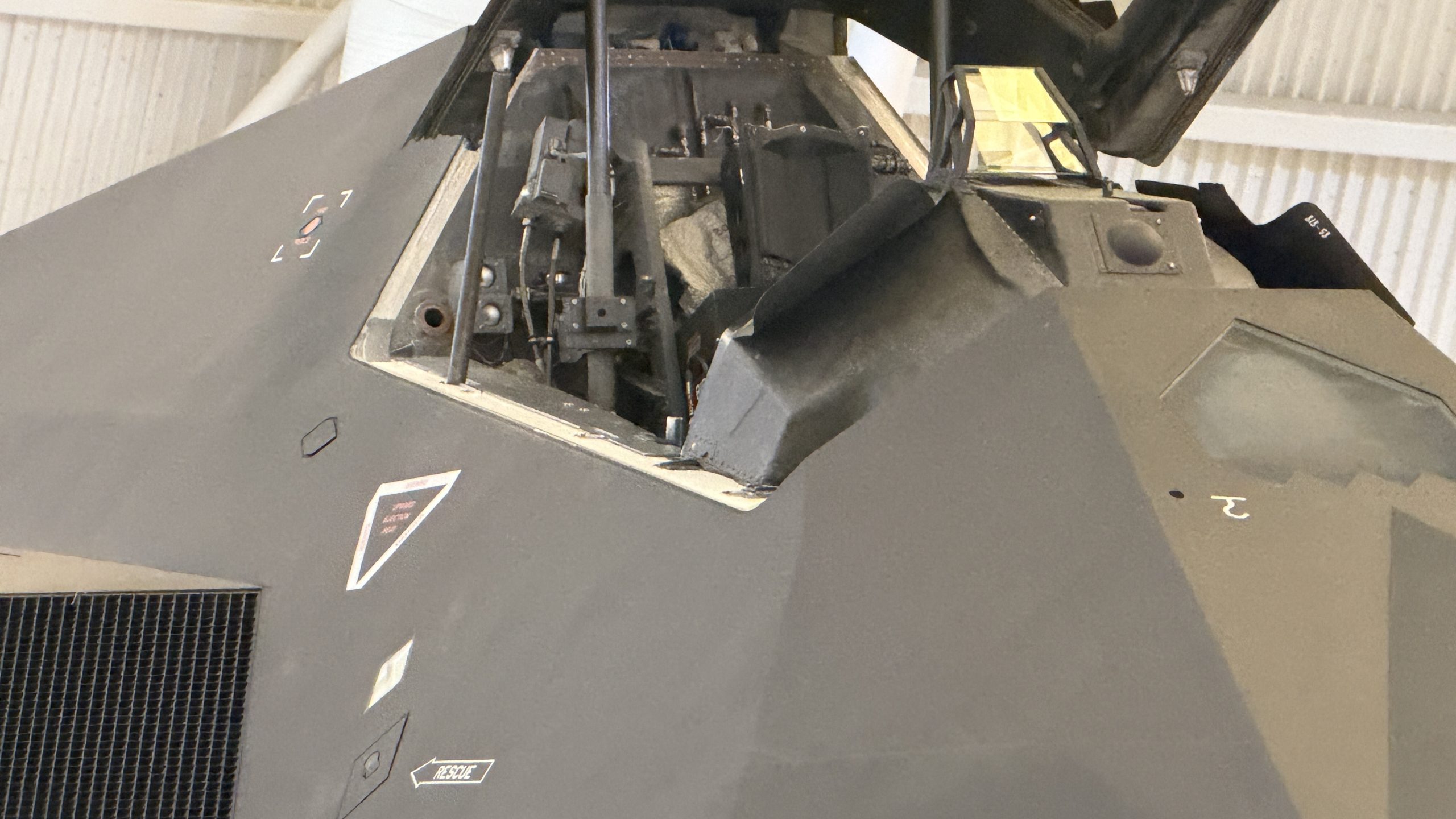
F-117 Nighthawk at the Smithsonian. 19FortyFive Original Image by Christian D. Orr.
So Anderson named the plane himself when no one in his chain of command answered his requests for an official designation.
The Need for Stealth
The F-117 dates back to the 1970s, when Lockheed was tasked with creating a workaround to increasingly advanced Soviet air defenses.
Because Soviet surface-to-air (SAM) systems and radar networks increasingly threatened American combat aircraft, conventional methods of penetrating defended airspace relied on speed, low-altitude flight, electronic countermeasures, and suppression of enemy air defenses (SEAD).
Lockheed developed the idea that, rather than flying higher or faster than Soviet SAMs, they would design a plane with a significantly reduced radar signature to make detection and tracking by those Soviet sites difficult.
Surprisingly, a Soviet physicist named Pyotr Ufimtsev, who studied how electromagnetic waves scatter off surfaces and edges, played a key role in the F-117’s design.
Ufimtsev did not directly contribute to Lockheed’s F-117 design.
Instead, US intelligence acquired a publicly produced copy of the legendary physicist’s work in the Soviet Union.
Once that publication was translated into English, Lockheed engineer Deny Overholser saw that the research could help engineers predict radar reflections from aircraft surfaces.
By using computer modeling, Lockheed developed designs that redirected much of the incoming radar energy away from its source.
That effort produced the F-117.
Two Lockheed legends had a bit of a disagreement.
During the F-117’s design, Ben Rich ran Skunk Works.
He fully supported the F-117’s concept.
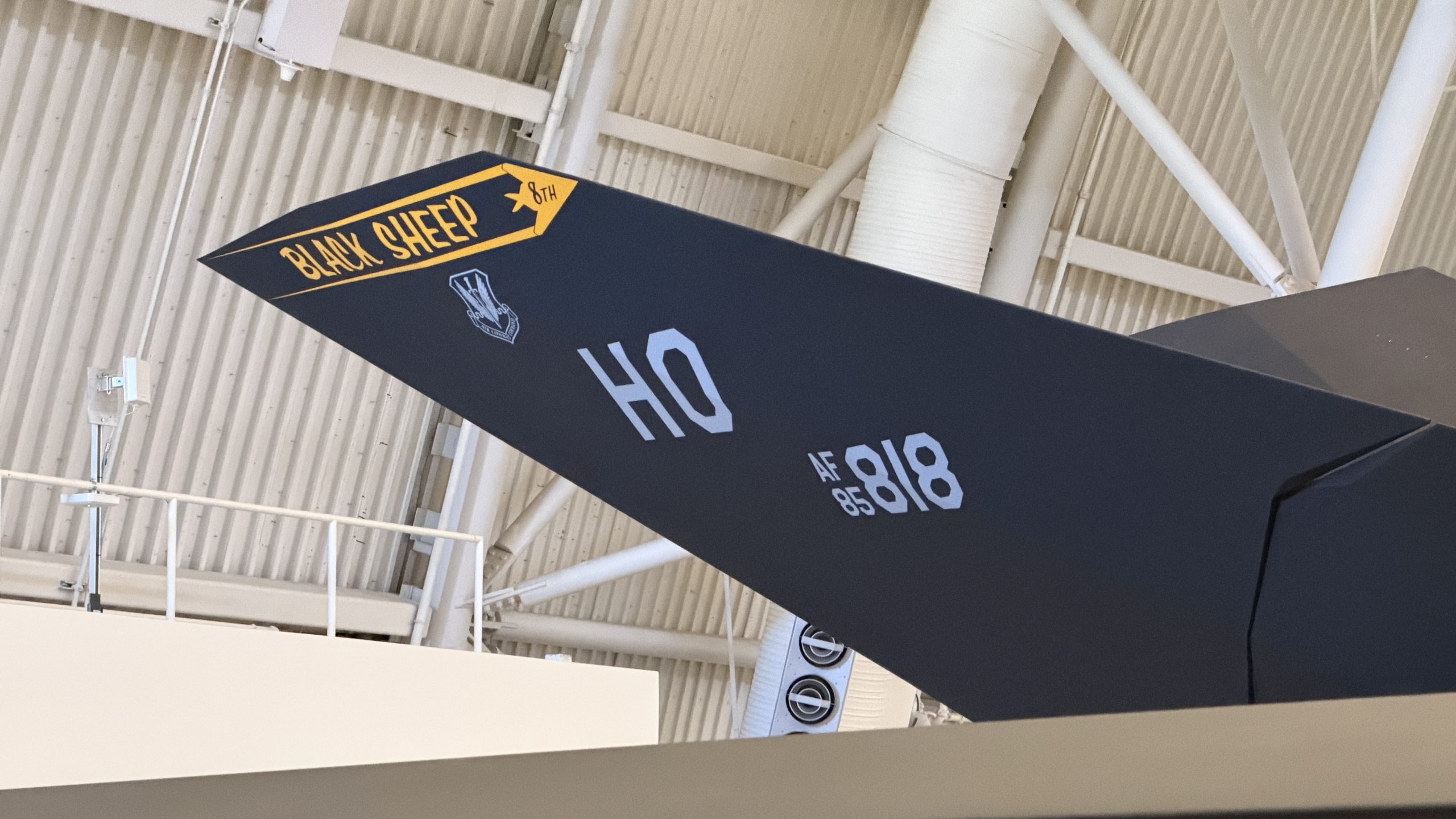
F-117 Nighthawk at the Smithsonian. 19FortyFive Original Image by Christian D. Orr.
His predecessor, the legendary Clarence “Kelly” Johnson, disliked the F-117. He worried the F-117 sacrificed aerodynamic efficiency and high-speed maneuvering for stealth.
The plane’s designation was confusing, because “F” identifies a plane in the United States Air Force as a fighter, while “A” specifies an attack aircraft.
The Air Force disputed the classification.
At Area 51, the team selected the YF-117A because they couldn’t wait for the bureaucratic war over the F-117’s name to be resolved.
To compound matters, the F-117’s designation did not follow the US military’s aircraft designation sequence established in 1962.
Fighting In the Shadows
On June 18, 1981, the first Nighthawk took to the air.
It achieved initial operational capability two years thereafter, and it remained classified until November 1988. Lockheed produced five developmental aircraft followed by 59 F-117As.
The F-117 first saw combat during Operation Just Cause in Panama in December 1989. But it wasn’t until Desert Storm that the F-117 made a name for itself.
During Desert Storm, the Nighthawk flew more than 1,200 combat sorties with an 80 percent mission success rate. It did so without suffering any combat losses or battle damage.
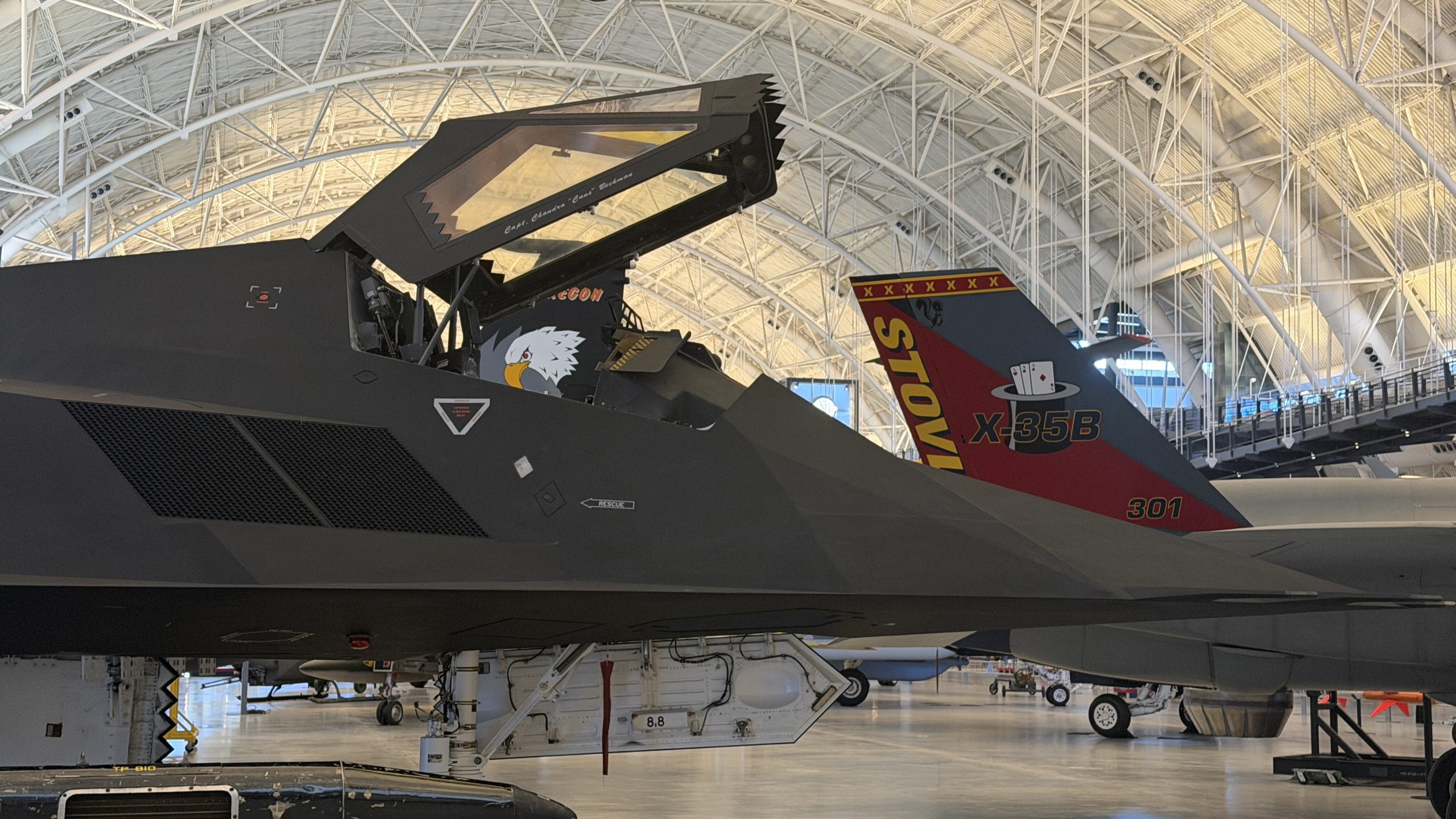
F-117 Nighthawk at the Smithsonian. 19FortyFive Original Image by Christian D. Orr.
Although the F-117 accounted for only 2 percent of coalition combat sorties, these planes attacked about 40 percent of strategic targets.
The F-117 again fought in the unfriendly skies above Yugoslavia during NATO’s 1999 air war.
One F-117 was downed on March 27, 1999, demonstrating that stealth technology did not make aircraft impervious to attack.
And if you read how the Serbs were able to identify and shoot down the American stealth warplane, it was an incredible feat (but a replicable one).
The Air Force Just Can’t Quit the F-117
At the end of its active duty service, the Nighthawk was again employed against Saddam Hussein’s Iraq, this time in the US invasion of the Baathist state in 2003.
Although the Air Force officially retired the F-117 on April 22, 2008, it didn’t go permanently into the good night.
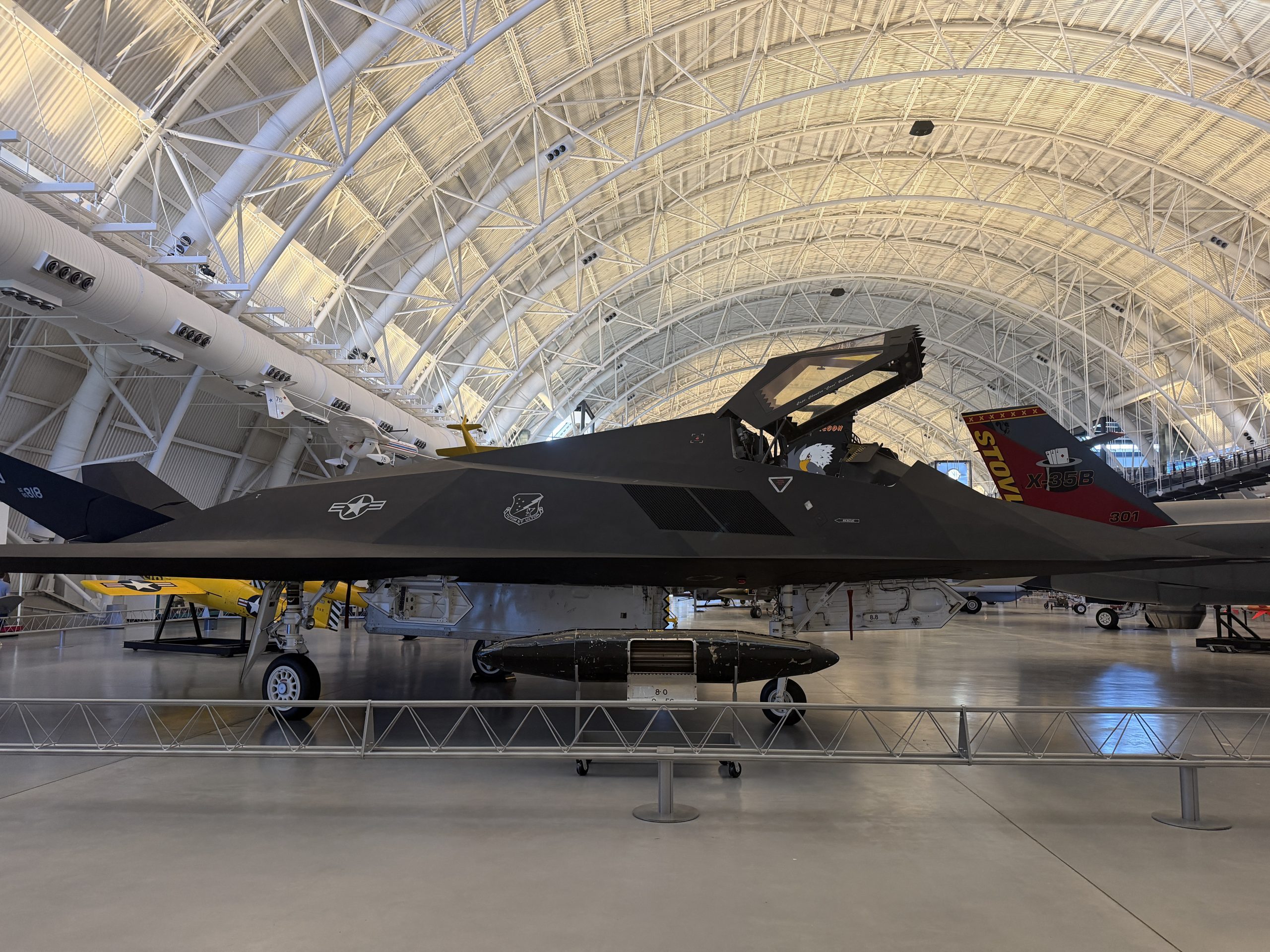
F-117 Nighthawk at the Smithsonian. 19FortyFive Original Image by Christian D. Orr.
Instead, several aircraft remained operational for testing, training, and adversary simulation.
The Air Force even contracted to operate the Nighthawk through at least 2034. So, the F-117 that Lt. Col. Anderson named 40 years ago remains in use today, years after its official retirement.
Not bad for government work.
About the Author: Brandon J. Weichert
Brandon J. Weichert is the Senior National Security Editor at 19FortyFive.com. He also manages The Weichert Brief on Substack. Weichert is the co-host for The Mario Nawfal Show on Twitter/X. He is the author of four bestselling national security books, most recently A Disaster of Our Own Making: How the West Lost Ukraine (Encounter Books). His next book, Fortress Americas: A New Monroe Doctrine (Tucker Carlson Books), is due out December 8. Follow him via Twitter/X @WeTheBrandon.